Home Xiamen China Xiamen Hotels About
Home  ›  Asia  ›  China  ›  Xiamen  ›  First-Timer Guide
🇨🇳 First-Timer Guide · Xiamen 2026

First Time in Xiamen
No guesswork — plan it confidently before you land

The seaside city the Chinese call a "garden on the sea" — car-free Gulangyu Island, colonial mansions, piano music drifting on the breeze, what many call the prettiest university in China, and fresh-off-the-boat seafood. This guide pulls together real facts and real reviews so you can plan with confidence before you leave home.

Why Xiamen

One of the most relaxed seaside cities in China

Here's the honest pitch: if your mental image of "China" is one giant, frantic city, Xiamen will change your mind. It sits on an island off the south coast of Fujian province, with a pleasant subtropical climate almost all year, leafy green streets, seafront promenades and a slower pace than most cities. The Chinese themselves rank Xiamen among the country's most livable places. The star is Gulangyu Island, a UNESCO World Heritage site that is completely car-free, covered in old European-style mansions and so full of piano music it's nicknamed "Piano Island."

Easy to get around — Xiamen now has a metro, with single rides at ¥2–7 (~฿10–35). Line 1 crosses the sea from the island over to the Jimei side, and the view is the reason a lot of people ride it on purpose. A short flight away — about three and a half hours direct from Bangkok, with the airport on the island itself, only ~12 km from downtown. Great base for day trips — high-speed rail reaches the World Heritage city of Quanzhou in ~30 minutes, or you can tour the Hakka people's Fujian Tulou earth houses in a day.

Note: the information in this guide is drawn from public sources and real reviews. Prices and opening hours can change — always check the latest before you travel.
Plan your trip

How many days is enough?

The straight answer is two to three days covers the main highlights — a full day on Gulangyu Island, half a day for Xiamen University and Nanputuo Temple, the seafront Huandao Road, Zhongshan Road old town and the Zengcuoan seaside village. With four or five days it's far more relaxed, leaving time for a high-speed-rail trip to Quanzhou, a Fujian Tulou tour, and unhurried café-hopping.

🗓️
2-3 days — the main highlights
Best for first-timers on limited time

Day 1: ferry across for a full day on Gulangyu Island → Sunlight Rock → Shuzhuang Garden. Day 2: Xiamen University → Nanputuo Temple → cycle along seafront Huandao Road. Day 3: Zhongshan Road old town → the Zengcuoan seaside village for the evening breeze.

See the full plan: 3-day itinerary →
📆
4-5 days — relaxed + day trips
Best if you want to go deeper

+Day 4: a day trip to the World Heritage city of Quanzhou (high-speed rail ~30 min) or a tour of the Hakka Fujian Tulou earth houses. +Day 5: Jimei School Village, Hulishan Fortress with its giant coastal cannon, and Wuyuan Bay for an easy seafront afternoon.

See the full plan: 5-day itinerary →

There's a plan for every length of stay: 2 days · 3 days · 4 days · 5 days

Before you fly

When to go + the visa

The best window
October–December + March–May

October to December is Xiamen's golden season — dry, clear and comfortable at around 20-26°C, ideal for the islands and seafront all day. March to May (spring) is the next best, though May–June brings plum rain. Summer (Jun–Aug) is hot and very humid, and July to September is typhoon season, when the island ferry occasionally stops. See the month-by-month breakdown at when to visit China →

Avoid: Chinese New Year (packed islands, higher prices) · Golden Week 1–7 Oct · Chinese public holidays
Visa for Thai travellers
Visa-free for 30 days (check before you go)

Since 1 March 2024, Thailand and China have a permanent mutual visa-free arrangement. Thai ordinary passport holders can enter China for tourism, business or family visits and stay up to 30 days per trip (and no more than 90 days in any 180-day period) without a visa in advance. Check the latest at the China visa-free guide for Thais → before booking.

Bring: passport valid 6+ months · a booked hotel · a return ticket
⚠️ Xiamen-specific tip — the Gulangyu ferry: Gulangyu Island is the one sight everyone comes for, but remember you can only reach it by ferry (the island is car-free). Tourists board at the Xiamen International Cruise Terminal (邮轮中心厦鼓码头), not the local-resident pier in the city centre. You need your physical passport to buy a ticket and to board, and tickets are timed for the outbound trip — for the return you simply queue with the same ticket (keep it until you're back on the mainland). It gets very busy on public holidays, so book ahead and go early.
Arriving

Getting into the city after you land

Flights from Bangkok land at Gaoqi International Airport (XMN — 厦门高崎国际机场), which sits on Xiamen Island itself, only about 12 km from the city centre — very close compared with the big mainland-city airports. If you arrive by high-speed rail, you'll usually pull in at Xiamen North Station on the Jimei side, the main rail hub, or Xiamen Station in the centre of the island.

From Gaoqi Airport (XMN)
Flights from Thailand land here

Taxi/DiDi — easy and not expensive since the airport is close to town: ~¥30-50 (~฿150-250) and 15-25 minutes to the centre, ideal with luggage. Metro — lines now connect the airport (Line 3/4) into the city for ¥2-7. BRT + airport buses — several routes run into town and are the cheapest option; check the destination before boarding. Most visitors with bags take a taxi or DiDi because the ride is short and saves time.

Arriving by high-speed rail
Xiamen North + Xiamen Station

Xiamen North Station (Jimei side, on metro Line 1) is the national rail hub for trains to Fuzhou, Shanghai and Shenzhen, while Xiamen Station in the centre is closer to the old town. Popular routes: Quanzhou ~30 min, Fuzhou ~1.5 h, Shenzhen/Guangzhou 3–4 h, Shanghai ~6-7 h. Book tickets via Trip.com or the 12306 app.

Tip: Gaoqi Airport is on the island and very close to the city, so you'll reach your hotel quickly — but sights like the Tulou earth houses or Quanzhou need an onward train, so keep your first day light for check-in and exploring near your hotel.
Getting around + paying

What to use in the city

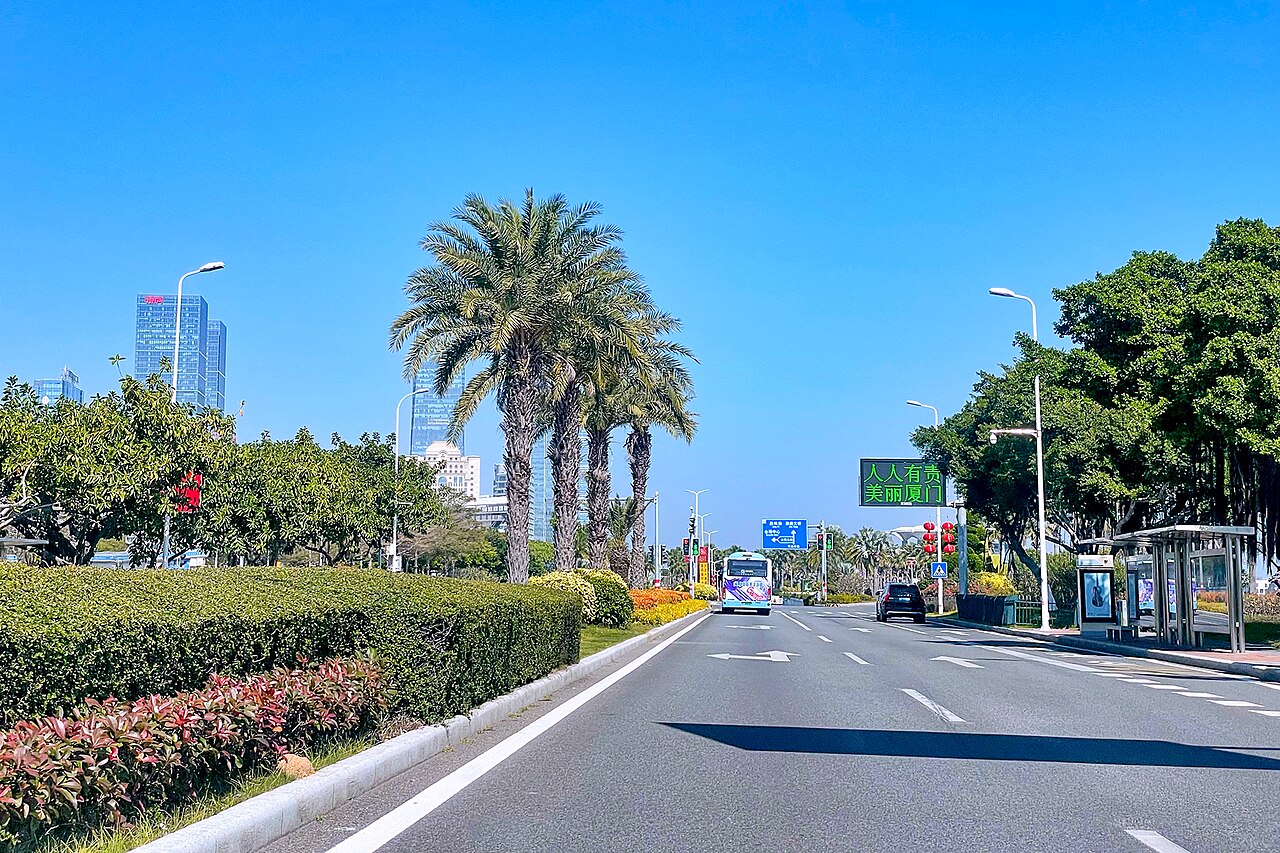
Seafront Huandao Road in Xiamen — a long cycle and walking path beside the beach, framed by palm trees and blue sea
Metro + ferry + bikes
Metro · island ferry · BRT · shared bikes

Xiamen now has a metro at ¥2–7 (~฿10–35) per ride. Line 1 is the famous one — it crosses the sea from the island to Jimei, with a gorgeous view. Line 2 links the Haicang side to the island, and Line 3 connects the Xiang'an side and the airport. Add the elevated BRT bus rapid transit, city buses and shared bikes (Hellobike/Meituan ~¥1.5/30 min) — perfect for riding along Huandao Road. Gulangyu Island itself is reached by ferry only. See the Xiamen getting-around guide →

Maps: use Amap (Gaode) or Apple Maps — Google Maps doesn't work in China · DiDi is cheap and easy for cabs
💳
Paying in Xiamen
Alipay · WeChat Pay · cards · cash

Xiamen, like other Chinese cities, is nearly cashless. Most places take Alipay and WeChat Pay first; hotels and big malls accept Visa/Mastercard. Seafood restaurants, shacha noodle shops and market stalls often take mobile payment only. Set up the tourist version of Alipay before you go (it accepts foreign cards), or withdraw yuan from an ATM as a backup. See the full guide at paying in China →

Internet: Google/Facebook/LINE need a VPN or eSIM — see the VPN + eSIM guide →
Where to stay

Which area to base yourself

Choosing a base in Xiamen is straightforward — get to know the areas and picking a hotel gets much easier. Read the first-timer's where-to-stay guide → or see 10 reviewed Xiamen hotels for every budget →

South of the island / Siming (思明)
The tourist heart — best base for first-timers

The southern side of Xiamen Island is the main tourist district, covering the Gulangyu ferry terminal, Zhongshan Road old town, Xiamen University, Nanputuo Temple and seafront Huandao Road. Staying here gives you the smoothest access of all, and it's the best base for first-timers because everything is close.

Best for: first-timers, walkers, those who want convenience
Zengcuoan (曾厝垵)
Seaside village — cafés + guesthouses

An old fishing village turned hip seaside neighbourhood, full of cute guesthouses, cafés and street-food stalls, right next to Huandao Road and walking distance to the beach. The vibe is young and easygoing, with stays from cheap to charming little boutiques.

Best for: younger travellers, café lovers, mid-budget, beach fans
Gulangyu Island (鼓浪屿)
Stay on the car-free island — romantic

Want to wake up to a quiet island before the morning ferries arrive? Try a guesthouse on Gulangyu in an old European-style mansion — extremely romantic, but you'll be hauling luggage onto the ferry and up sloped lanes. It suits couples and anyone who wants a special experience more than convenience.

Best for: couples, photographers, special-atmosphere seekers
Wuyuan Bay / near the airport (五缘湾)
Modern, bayside, easy airport access

A newer district in the north of the island around Wuyuan Bay, with a marina and a wetland park. The hotels are newer and modern, close to Gaoqi Airport and the convention centre — good for late arrivals, early departures or trade fairs, and quieter than the tourist zones.

Best for: early/late flights, business travellers, peace and quiet
Don't miss

The highlights no first-timer should skip

Xiamen has a lot to see, but on a first visit these six spots are the core everyone should experience — see the full list at all Xiamen attractions → or day trips around the city →

Gulangyu Island in Xiamen — colonial tile-roofed houses among green trees, with the sea and the city seen from above
UNESCO Heritage · car-free · Piano Island

A car-free World Heritage island covered in hundreds of old European-style mansions, lanes made for getting happily lost, and piano music on the breeze. It's an easy full day, and climbing Sunlight Rock gives a 360° view over the island. This is the one a first-timer absolutely cannot skip.

How to get there: ferry from the Cruise Terminal (bring your passport)
Sunlight Rock on Gulangyu Island — a large boulder at the summit and a viewing platform looking over the island's rooftops and the surrounding sea
The island's highest point · 360° view

The highest point on Gulangyu Island — a short climb up to the viewing platform on top of the boulder, looking over the colonial rooftops across the whole island, the Xiamen skyline opposite, and the sea all around in a full 360°. It's the island's prettiest set-piece, and quietest with clear skies in the morning.

Location: centre of Gulangyu Island · entry fee
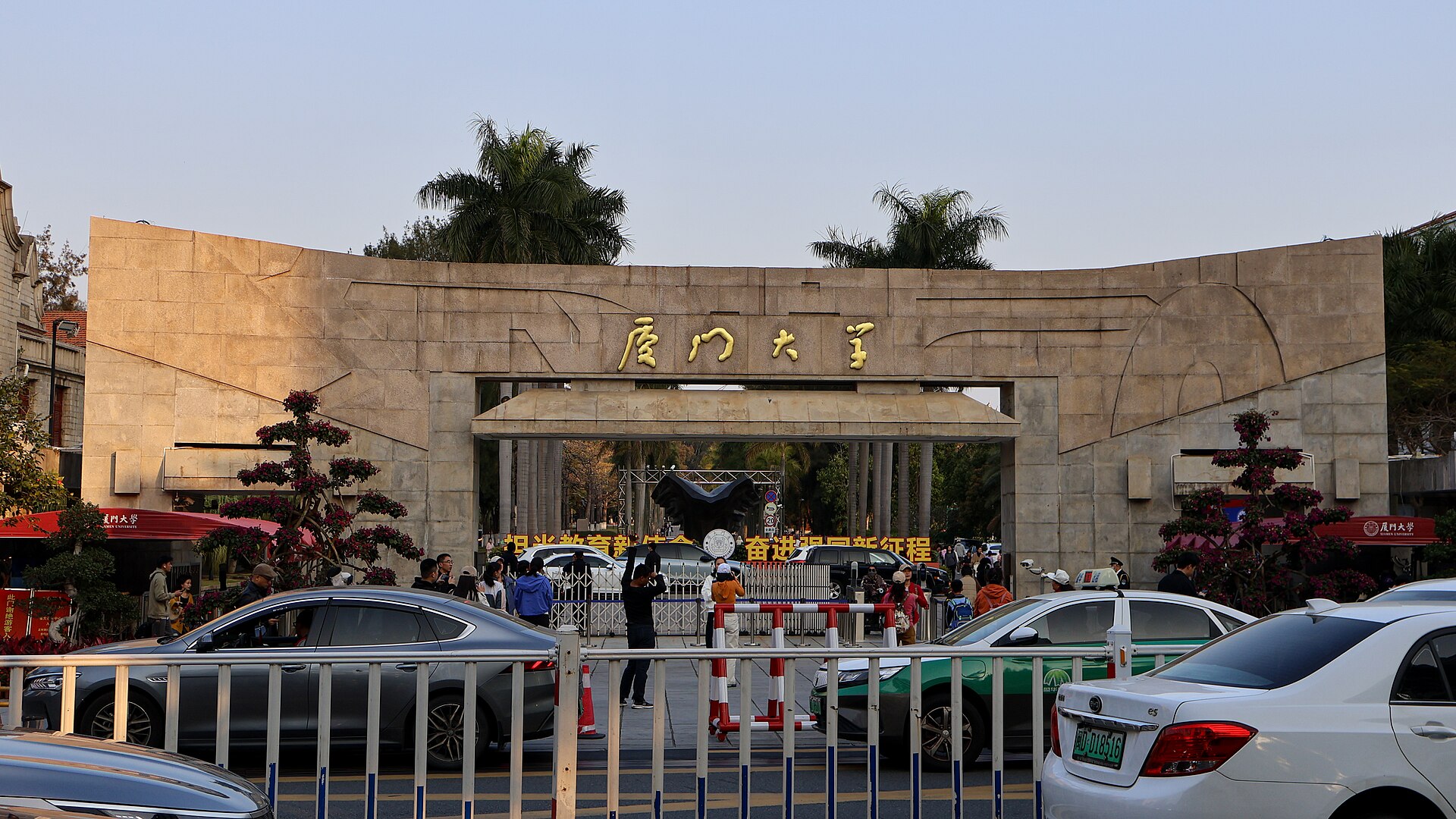
Xiamen University — Chinese-Western style buildings with sweeping red-tiled roofs among palm trees and green hills
Often called China's prettiest campus · art tunnel

Many call it the prettiest university in China — Chinese-Western buildings with curved roofs, a campus lake, and the Furong tunnel covered in student street art. It sits right beside Nanputuo Temple and the beach, so you can string them together. Check the latest entry rules first, as some periods require booking ahead.

Location: south of the island, next to Nanputuo Temple
Nanputuo Temple in Xiamen — gold curved-roof temple halls at the foot of a hill, with a lotus pond and rising incense smoke in front
Thousand-year Buddhist temple · famous vegetarian food

A Buddhist temple over a thousand years old at the foot of Wulao Peak, right next to Xiamen University, with beautiful curved-roof halls, a lotus pond, and an in-temple vegetarian restaurant that's a local favourite. Climb the hill behind for a city viewpoint. It's a calm, leafy pocket in the middle of the city.

Location: next to Xiamen University · free entry
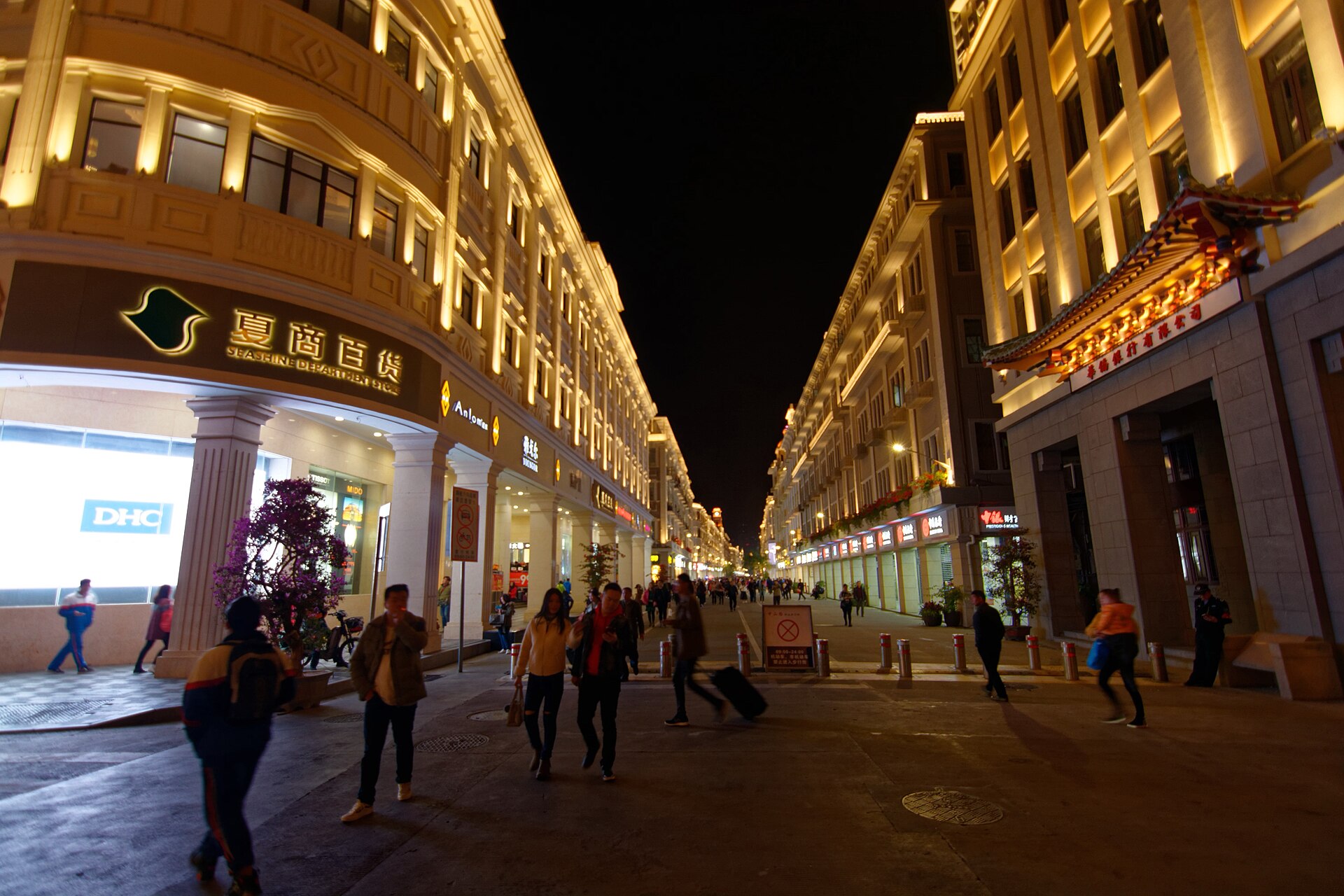
Zhongshan Road in Xiamen — an old-town pedestrian street lined with colonial arcade shophouses, full of shops and visitors
Old-town pedestrian street · arcades · street food

The pedestrian street through the old town, lined with handsomely preserved colonial arcade (qilou) shophouses, packed with shops, local sweets and Xiamen street food. It's lovely to wander in the evening, and the side lanes still hide plenty of old-school shops.

Metro: Zhongshan Park / near the island ferry
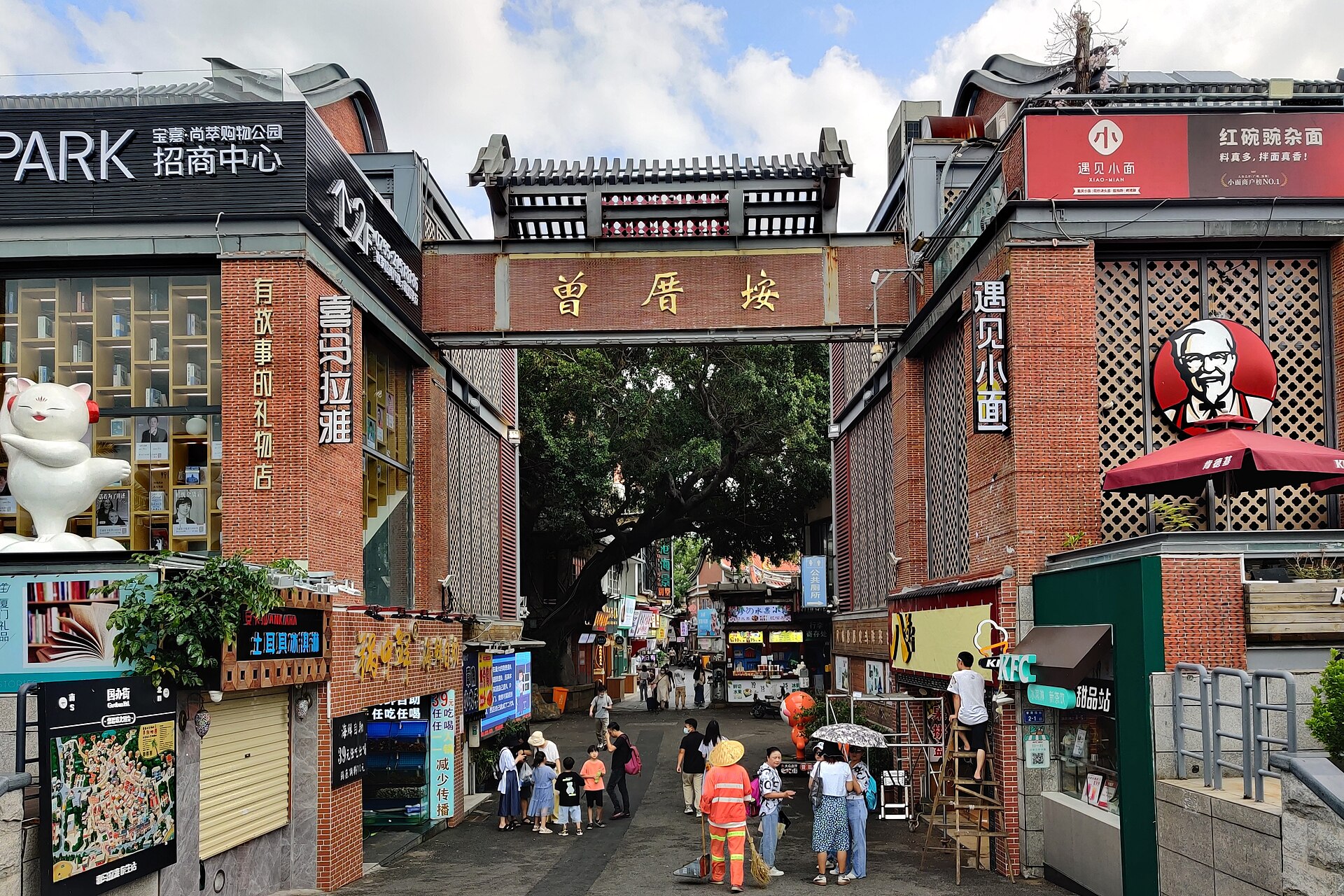
Zengcuoan in Xiamen — a seaside village lane full of food shops and cafés, with neon signs and visitors in the evening
Coastal road · cycling · seaside village

Huandao Road runs along the island's southern shore with the city's prettiest cycle path and seafront walk — ride in the sea breeze past sandy beaches and sculptures, ending at Zengcuoan village, which is full of cafés and street food. It's especially lovely at sunset.

Tip: rent a bike and ride the seafront in the evening
What to eat

A seaside city with Minnan flavours

Xiamen food is Minnan (southern Fujian) cooking — built on fresh seafood, light little snacks and mellow, gentle flavours rather than fiery heat. It's a city you can graze your way through all day. See the details at the Xiamen food guide →

🍜
Shacha noodles (沙茶面)
Noodles in shacha broth · the city's signature

Xiamen's signature bowl — noodles in a shacha broth fragrant with peanuts, dried shrimp and spices, mellow with a touch of sweet-salty. You pick your own toppings: prawns, squid, fishballs, pork liver. It's a great breakfast or light meal that every first-timer should try at least once.

Price: ¥12–30 (~฿60–150) · see the shacha noodles guide →
🦪
Oyster omelette (海蛎煎)
Small oysters fried with egg and sweet-potato starch

The Minnan oyster omelette — small fresh oysters fried with egg and sweet-potato starch until crisp outside and soft inside, served with a sweet-and-sour dipping sauce. You'll find it at markets and street-food stalls all over the city. It's a cheap, delicious Xiamen classic.

Price: ¥15–35 (~฿75–175) · see the oyster omelette guide →
🦐
Fresh seafood (海鲜)
Prawns, crab, shellfish, fish · pick and cook

Xiamen is a sea city, so the seafood is fresh and varied. Choose your live prawns, crab, shellfish or fish and have the kitchen cook it as you like — steamed, stir-fried or in soup. The seafood markets near Zengcuoan and along the shore are the spots, but always confirm the price per catty (jin) before ordering so the bill holds no surprises.

Price: by weight/season · see the seafood guide →
🥟
Minnan snacks (闽南小吃)
Popiah · peanut brittle · sweet sausage

Xiamen is famous for little snacks — popiah (fresh spring rolls), peanut brittle, meat pastries, sweet sausage and a long list of local sweets along Zhongshan Road and the old lanes. You can graze your way through them all day. It's the charm of the city, and worth trying a good variety.

Price: ¥5–25 (~฿25–125) · see the Minnan snacks guide →

More Xiamen eating: Xiamen street food → · Xiamen cafés → · the full food guide →

Set a budget

How much does it cost?

Xiamen works on any budget — stays run from hostels to five-star, the metro is cheap, and many sights are free (walking Gulangyu Island, Nanputuo Temple, Huandao Road and Zhongshan Road cost nothing), apart from the island ferry, Sunlight Rock and some garden entries. Local restaurants and street food are great value, though luxury stays or famous seafood places climb high. See the full breakdown at the Xiamen trip budget →

Level Stay/night Food/day Total/day (rough)
Budget ¥150–320 (฿750–1,600) hostel or guesthouse ¥60–130 (฿300–650) ¥280–500 (~฿1,400–2,500)
Mid-range ¥400–850 (฿2,000–4,250) 3–4 star hotel ¥150–380 (฿750–1,900) ¥650–1,300 (~฿3,250–6,500)
Luxury ¥1,200–4,000+ (฿6,000–20,000+) ¥450–1,600+ (฿2,250–8,000+) ¥2,000–6,800+ (~฿10,000–34,000+)

The metro is ¥2–7 a ride, and the Gulangyu ferry is about ¥35 return (standard cabin) or ¥80 (deluxe). Many sights are free; the main costs are Sunlight Rock and a few garden entries, the train to Quanzhou, and seafood. See more at the China travel guides →

Good to know

What first-timers get wrong

Google / Facebook / LINE don't work
Set up before you leave home

China blocks all Google services (Maps, Gmail, Translate), Facebook, Instagram, LINE, YouTube and WhatsApp. Without a working VPN you'll be cut off from all of it. Download and set up a VPN on your phone before you leave, and also download Amap (maps) and Baidu Translate. See the VPN + eSIM guide for China →

Substitutes: Amap instead of Google Maps · Apple Maps works · WeChat instead of LINE
Gulangyu needs a passport + a booked ferry
Board at the Cruise Terminal, not the city pier

A lot of first-timers wait at the wrong pier — tourists must take the Gulangyu ferry from the Cruise Terminal (邮轮中心厦鼓码头), not the local-resident pier in the city. You need your physical passport to buy a ticket and board, and tickets are timed for the outbound trip. Slots fill fast on holidays, so book ahead and go early to get the island quiet before the crowds.

Small shops take mobile pay only
Xiamen is nearly cashless too

Seafood restaurants, shacha noodle shops, street stalls and food carts mostly take Alipay or WeChat Pay only — there's no card machine. Set up the tourist version of Alipay (it accepts foreign Visa/Mastercard) before you go, or keep some ATM cash as a backup; ¥500–1,000 should cover small purchases.

See the guide: paying in China →
Always check seafood prices first
Priced by weight (catty/jin)

Xiamen's seafood is fresh and good, but most restaurants price it by weight (a jin = 500 g) on what you pick live before cooking. First-timers who don't ask first can get a bigger bill than expected. Confirm the price per jin clearly, check the scale, and agree before the kitchen starts — it makes the meal far more relaxing.

Tip: photograph the price board / confirm the total before cooking
Islands get packed on long holidays
Avoid Chinese New Year + Golden Week

Xiamen is a top domestic destination, so on long holidays (Chinese New Year, Golden Week 1-7 Oct, Labour Day) the whole country shows up. Gulangyu Island and the university get very crowded, ferry queues are long, and hotel prices rise. If you can dodge these dates it's far easier; if not, book the ferry and your hotel ahead and reach each sight early.

Good window: Oct (after Golden Week)–Dec · Mar–May · avoid long holidays
Summer is hot and humid + typhoon season
Pack an umbrella and an indoor plan B

Xiamen sits on China's southern coast. Summer (Jun–Aug) is hot and very humid, and July to September is typhoon season, which can pause the island ferry and delay flights; May–June also brings plum rain. Walking outdoors all day is tiring, so pack an umbrella, breathable clothes and sunscreen, and keep an indoor plan B (malls, museums, cafés). Check typhoon forecasts in the rainy season.

Tip: do outdoor sights morning and evening, avoid midday sun · check typhoon forecasts in the wet season
Frequently asked

FAQ · before you go

How many days should I spend in Xiamen as a first-timer?
Two to three days cover the main highlights — Day 1 a full day on car-free Gulangyu Island, up Sunlight Rock and through Shuzhuang Garden; Day 2 Xiamen University and Nanputuo Temple, then a cycle along seafront Huandao Road; Day 3 Zhongshan Road old town and the Zengcuoan seaside village. With four or five days it's far more relaxed and you can add a high-speed-rail trip to Quanzhou or a Fujian Tulou tour. See all the plans: 2 days · 3 days · 5 days
Do Thai nationals need a visa for Xiamen?
Since 1 March 2024, Thailand and China have a permanent mutual visa-free arrangement. Thai ordinary passport holders can enter China for tourism, business or family visits and stay up to 30 days per trip (and no more than 90 days in any 180-day period) without a visa in advance. The policy can change, so verify the current requirements with the Chinese embassy or the China visa-free guide for Thais → before booking.
What if I don't have Alipay or WeChat Pay in Xiamen?
Large hotels and department stores accept Visa and Mastercard, but local restaurants, shacha noodle shops and market stalls usually take mobile payment only. Xiamen, like other Chinese cities, is nearly cashless. Set up the tourist version of Alipay (it accepts foreign cards; download it before you leave) or withdraw Chinese yuan from an ATM as a backup. See the full guide at paying in China →
Does Google Maps work in Xiamen?
Google Maps and all Google services, plus Facebook, LINE and Instagram, don't work in China without a VPN. Download Amap (Gaode Maps) before you leave, or use Apple Maps (which works in China). For VPN and eSIM, see the VPN + eSIM guide →
What is the best month to visit Xiamen?
October to December is the best — dry, clear and comfortable at around 20-26°C, great for the islands and seafront all day. March to May is next, while summer (Jun–Aug) is hot and very humid and July to September is typhoon season, when the island ferry can stop; May–June brings plum rain. Avoid Chinese New Year and Golden Week (1-7 Oct), when the islands are packed and prices rise. See the details at when to visit China →
Is Xiamen safe for solo travellers?
Xiamen is very safe for solo travellers — a relaxed seaside city with low crime, and the metro has English signs. Walking around Zengcuoan or Zhongshan Road at night is no problem. Just watch your bag in busy tourist spots like Gulangyu Island on holidays, and always confirm the price before ordering fresh seafood.
Klook · Xiamen activities

Book Xiamen ferries, tours and tickets ahead — skip the queue at the gate

Gulangyu Island ferry tickets · Fujian Tulou earth-house tours · Quanzhou day trips — book ahead on Klook and save time waiting in line.

See Xiamen activities on Klook →
Wherebest is a Klook affiliate partner — we may earn a commission when you book through our links, at no extra cost to you.