Home Xiamen China Xiamen Hotels About
Home  ›  China  ›  Xiamen  ›  4-Day Itinerary
🗓️ Xiamen Itinerary · 4 Days · 2026

4 Days in Xiamen —
The whole island, plus a day out of town

A full, unhurried day on car-free Gulangyu, the Xiamen-island highlights done properly, a third day that rides the train just ~30 minutes to UNESCO Quanzhou or out to the Fujian Tulou earth houses, then Jimei and waterfront cafés to finish — this is Xiamen with the rest of Fujian folded into the same holiday.

Why four days

Between too rushed and more than you need

Three days in Xiamen covers the highlights well — but every three-day plan has the same problem: you cut the day out of the city. And that's a shame here, because Xiamen is the gateway to two UNESCO World Heritage sites: the old city of Quanzhou, just a ~30-minute train ride away, and the Hakka Tulou earth houses. You can wedge a trip out of town into three days, but you'll feel rushed throughout.

Four days solves that directly. Day one gives a full day to Gulangyu Island — the part most people short-change. Day two takes care of the Xiamen-island highlights (Xiamen University, Nanputuo Temple, Hulishan Fortress, the Huandao coastal road). Day three is the one a three-day trip never has time for — out of town to Quanzhou or the Tulou. And day four mops up Jimei and the Shapowei cafés before you fly.

The difference from the five-day itinerary: this plan keeps to one out-of-town day and doesn't overnight on Gulangyu. It's for travellers with exactly four days who want to use every one of them.

4 days · 3 nights Includes a day trip out of town Metro + ferry + high-speed rail Budget ¥1,400–2,800 per person
Day One

A full day on Gulangyu — a car-free island, old villas, and piano music

Cross the ferry to a car-free UNESCO island, climb Sunlight Rock for a 360-degree view, stroll the seaside Shuzhuang Garden, and get happily lost in colonial lanes — the slowest and prettiest day of the trip.
01
Day 1
Gulangyu Island · Sunlight Rock · Shuzhuang Garden · the old lanes
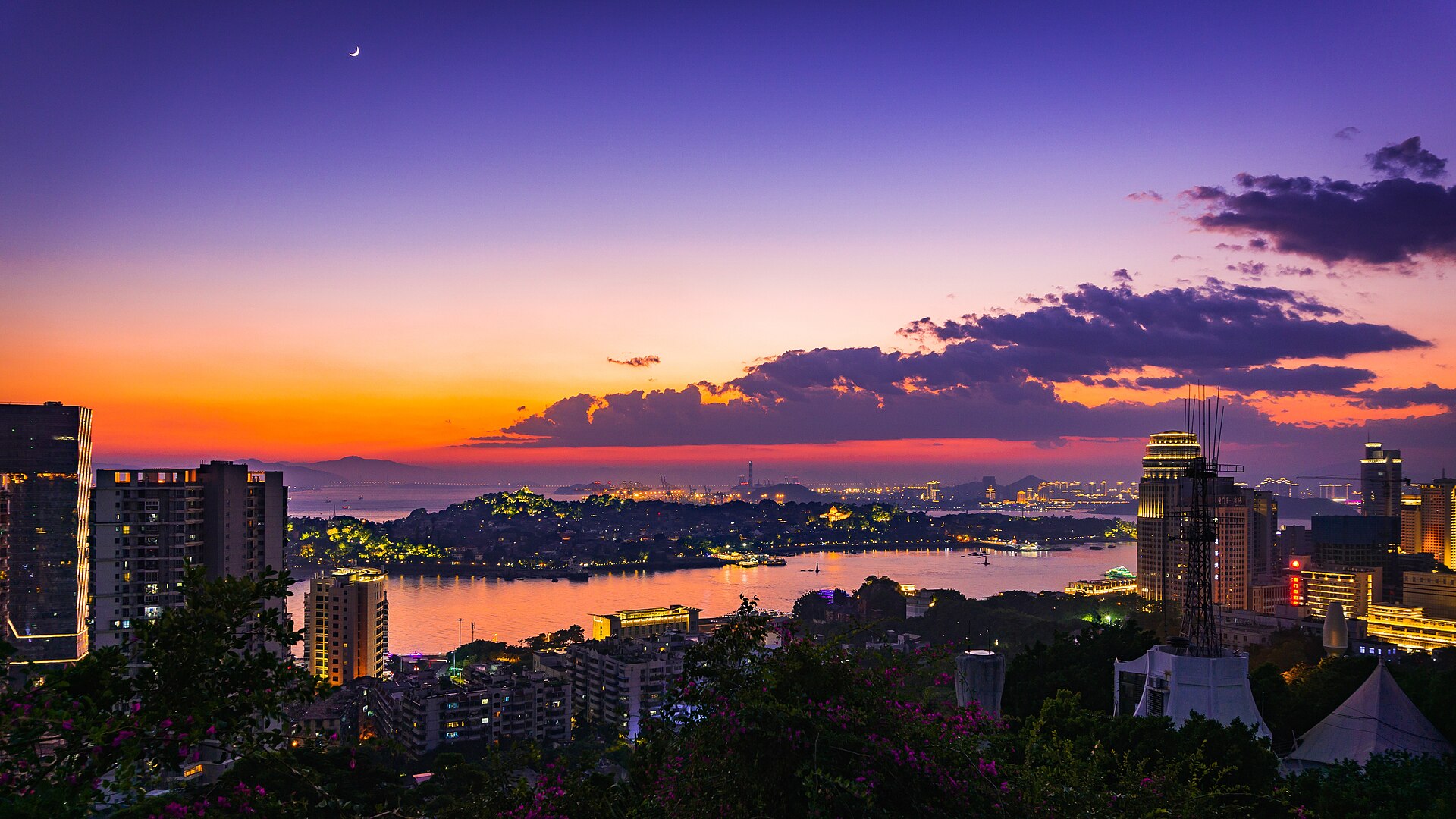
Gulangyu Island, Xiamen — red-roofed colonial villas on a car-free UNESCO World Heritage island
Morning · leave before 09:00
Gulangyu Island (鼓浪屿) — the ferry to a UNESCO island

Start the day on Gulangyu Island — a small island off the city that UNESCO inscribed as World Heritage for its trove of colonial-era villas built by many nations a century ago. The whole island is car-free — only footpaths and small electric carts — so it's calmer and easier to walk than the city. Go early for an island before the crowds and better light.

Tourists board at the Cruise Terminal (邮轮中心厦鼓码头) on the northwest side of Xiamen island (not the central Lundu pier locals use). Buy a timed ticket with your passport and book your slot online in advance — sailings fill up fast on holidays.

Ferry pier: Cruise Terminal (厦鼓码头) · reach it by BRT/metro/taxi
Ferry ticket: return ~¥35–50 (~฿175–250) · crossing ~20 min · book a timed slot online
Come prepared: passport for the ticket · comfortable shoes · the whole island is on foot
Late morning–afternoon · ~3–4 hours

On the island, climb Sunlight Rock — the highest point, where a stairway up to the boulder summit opens to a view of the whole red-roofed island set against the Xiamen skyline across the water. It's the best 360-degree view of the trip. Then walk to Shuzhuang Garden — a Chinese seaside garden that reaches out over the water, with zigzag bridges, pavilions and a small piano museum (Gulangyu is nicknamed "Piano Island" for having more pianos per head than anywhere in China).

In the afternoon, let yourself wander the old lanes — don't rush to tick off every spot, because Gulangyu's charm is in the aimless walking: a pretty villa, a garden café, a snack stall along the way.

Sunlight Rock: entry ~¥50–60 (~฿250–300) · some tickets bundle nearby sites
Shuzhuang Garden: entry ~¥30 (~฿150) · piano museum inside the garden
Lunch: island snacks — popiah spring rolls, fish balls, local sweets · ¥30–80 per person
Evening · back to the city side
Ferry back to Xiamen + a seafood dinner

Take the evening ferry back to the city — the first night calls for a Fujian seafood dinner. Xiamen is a coastal port, so prawns, clams, crab and fish are fresh all day, or try local specialities like oyster omelette (o-a-jian) and shacha noodles in a fragrant, mildly spicy peanut-and-shrimp broth. Read more in the Xiamen seafood guide and the Xiamen food guide.
Dinner: seafood / oyster omelette / shacha noodles in Siming · ¥60–200 per person
Getting back: metro/BRT covers the central Xiamen-island area
Tip: Gulangyu is bigger and more walking than it looks — give it the whole day and don't cram anything else in, and book both ferry legs in advance, since evening sailings sell out fast at peak times. More in the full Gulangyu Island guide.
Day Two

The Xiamen-island side — the prettiest campus, a hillside temple, and the sea

Walk Xiamen University, often called the loveliest in China, the hillside Nanputuo Temple below Wulao Peak, Hulishan Fortress looking across the strait to Kinmen, and a cycle along the seaside Huandao road — a day of culture and sea air.

02
Day 2
Xiamen University · Nanputuo Temple · Hulishan Fortress · the Huandao coastal road
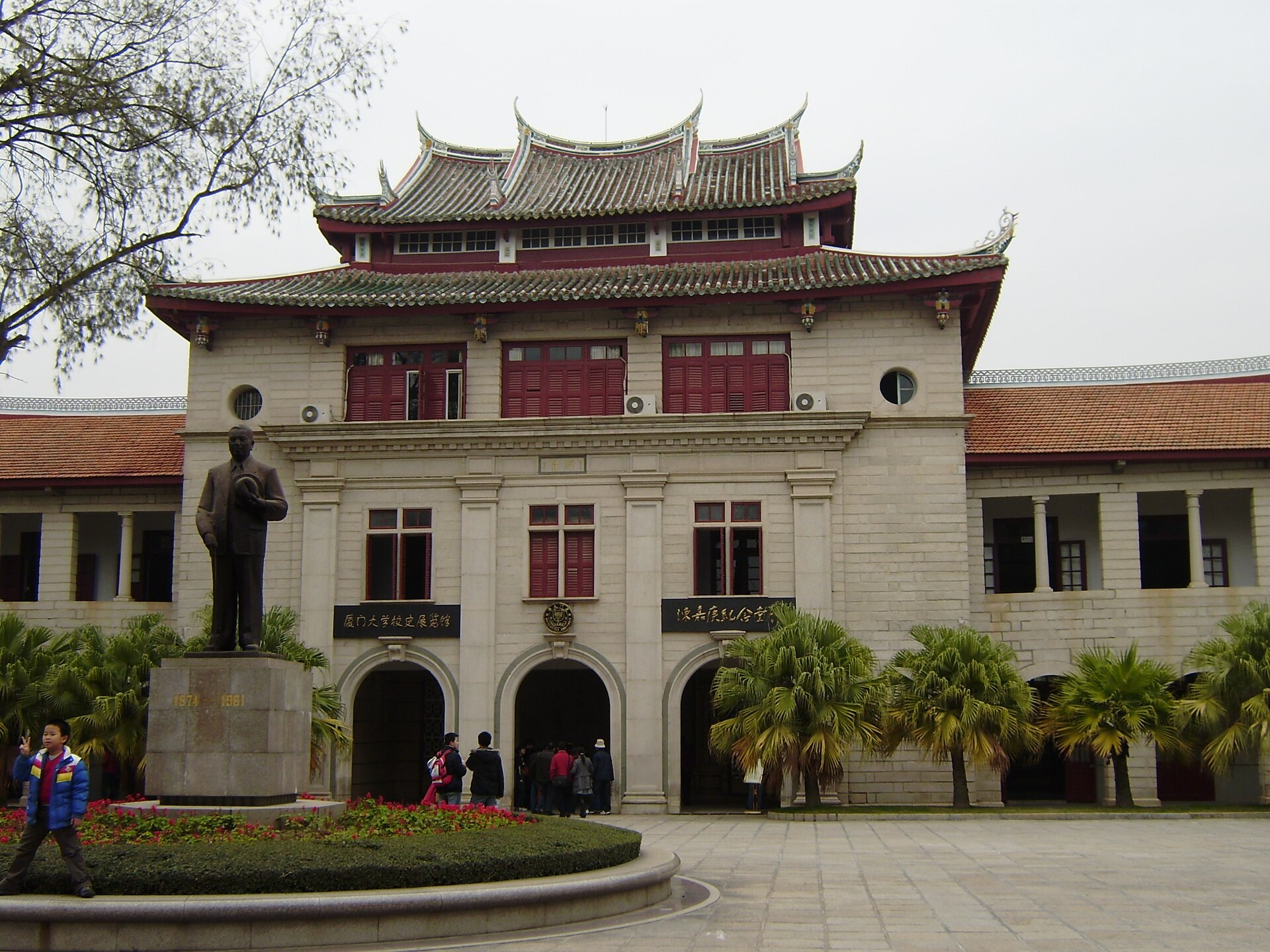
Xiamen University — Chinese-roofed buildings on Western façades set in seaside gardens
Morning · ~3 hours

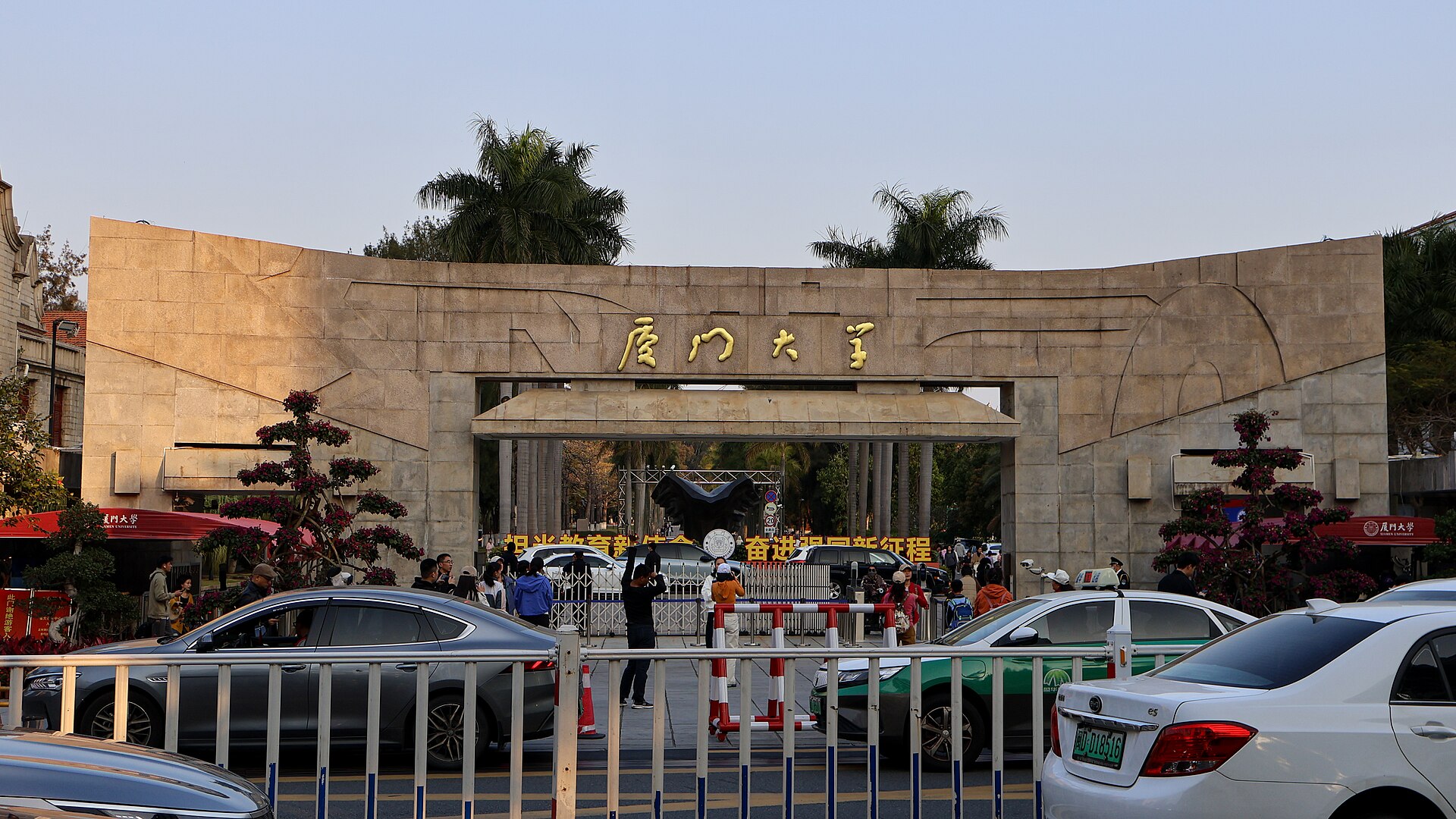
Start the morning at Xiamen University — a seaside campus the Chinese widely rank as the country's most beautiful, with Chinese-tiled roofs on Western buildings, a lake, leafy grounds and the painted Furong tunnel. It's a lovely walk for a morning. Note: the university caps visitor numbers, so you need to book a slot or register in advance and enter with your passport (check the current booking system before you go).

Right beside it is Nanputuo Temple — a thousand-year-old Buddhist temple set against Wulao Peak, with lotus ponds, twin pagodas and pavilions up the hillside you can climb for a city view. It's calm, incense-scented all day, and a temple Xiamen locals genuinely come to worship at.

University: free, but you must book/register in advance + passport (check the system first)
Nanputuo Temple: free · open ~08:00–17:30 · vegetarian food on site
Getting there: BRT/metro + bus to the university area; both are within walking distance
Afternoon · ~2–3 hours

In the afternoon, walk along the coast to Hulishan Fortress — an old stone coastal battery from the late Qing dynasty, home to an enormous German Krupp cannon recognised by the Guinness records. From the ramparts you look across the strait to Kinmen (in Taiwan's jurisdiction), and there's a costumed cannon-firing show a few times a day (check the show times before you go).

The fortress sits right at the start of the Huandao coastal road — so you can carry straight on to walk it or rent a bike by the beach in the next stretch.

Hulishan Fortress entry: ~¥25–30 (~฿125–150) · cannon show a few times a day
Hours: ~07:30–18:00 · cannon museum inside the fort
Getting there: bus/taxi from the university area, ~10 min
Evening · ~2 hours

Close the day on the Huandao Road — a wide seaside boulevard lined with palms, with a cycle lane and a beachfront path running for kilometres. Late afternoon, when the light softens, is the best time: rent a bike for the breeze, photograph the sand and the roadside sculptures, or sit with a drink and watch the sun drop into the sea — an easy end to day two before you rest up for tomorrow's trip out of town.

Huandao Road: free · bike rental ~¥1.5–3/30 min (Hellobike/Meituan)
Best time: late afternoon to sunset · avoid the hot midday hours
Dinner: seafood restaurants/cafés along Huandao · ¥60–200 per person
Worth knowing: If you're choosing the Fujian Tulou tomorrow (day three), have an early night — tours leave very early (~07:00–08:00). If you're choosing Quanzhou it's more relaxed, with frequent trains all day.
Day Three

A day trip out of town — choose one

This is the day that separates four days from three. Xiamen is the gateway to two of Fujian's UNESCO sites — pick the trip that suits you and give it your full energy.

03
Day 3 · Your choice
UNESCO Quanzhou old city (~30-min train) — OR — the Fujian Tulou (day tour)
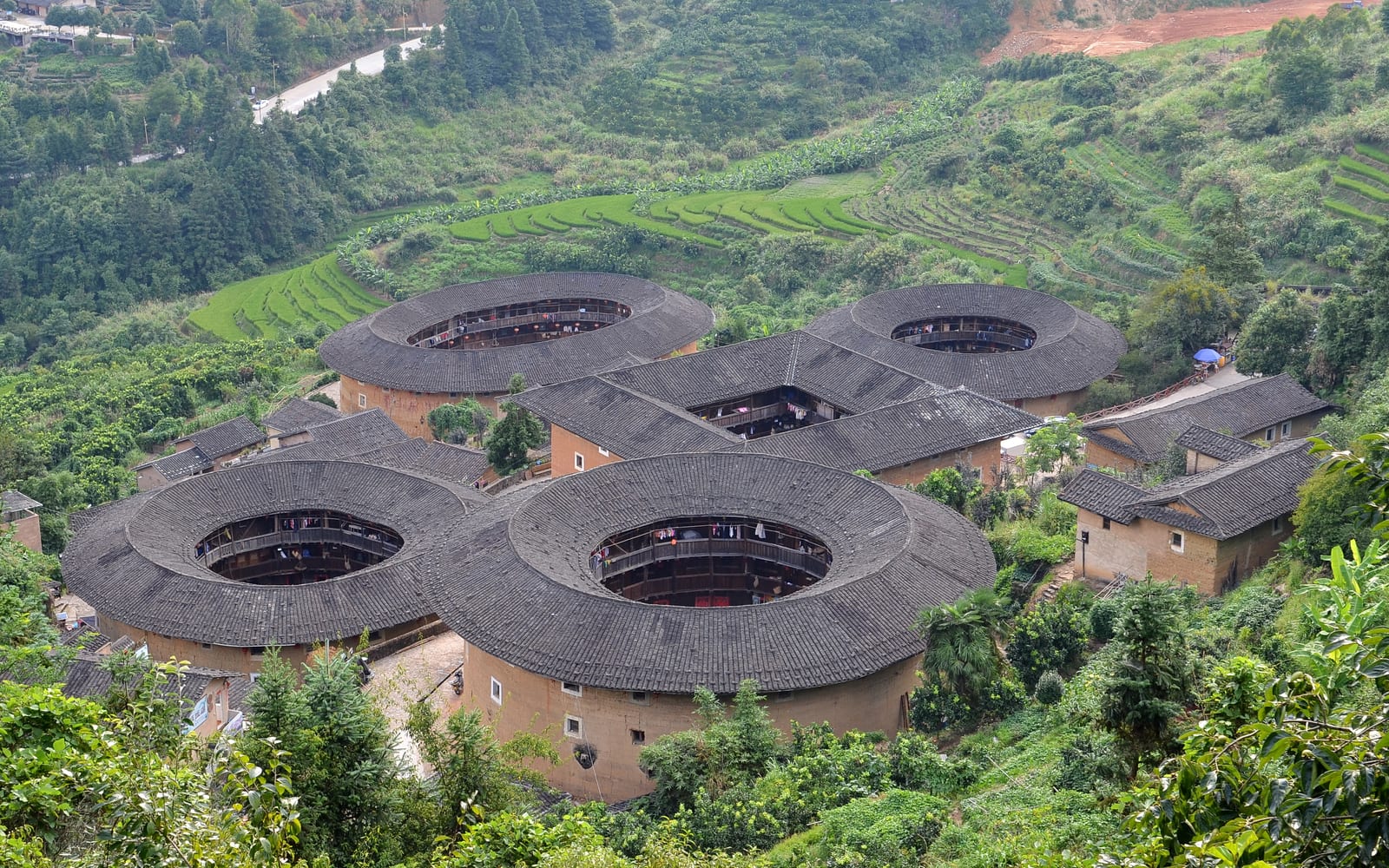
Hakka Fujian Tulou earth houses — round earthen fortress dwellings, UNESCO World Heritage near Xiamen
Choose one

🚄 Option A — Quanzhou

Best for: travellers who want an easy, low-effort day, anyone who loves old cities, temples and historic lanes, those who don't want a long ride, or anyone who wants a relaxed evening back in Xiamen. It's the UNESCO-listed starting point of the Maritime Silk Road, just ~30 minutes away by train.

Getting there: high-speed rail from Xiamen/Xiamen North ~30 min (80+ pairs of services a day), then bus/taxi into the old city Train ticket: ~¥30–50 each way (~฿150–250) · book via Trip.com or 12306 Time needed: a full day, an easy return, no overnight Don't miss: Kaiyuan Temple · Qingjing Mosque · the old Xijie lanes

🏯 Option B — the Fujian Tulou

Best for: travellers who want the most extraordinary thing in Fujian, anyone who loves architecture and villages, those happy with a long ride, or groups travelling with a tour. They're the round Hakka earth-fortress houses — UNESCO-listed, farther out, and unlike anywhere else on earth.

Getting there: a day tour with transfers (leaving ~07:00–08:00) is easiest · ~2.5–3.5 hr each way Entry: the Nanjing Tulou cluster ~¥90–100 (~฿450–500) · most tours include it Time needed: a long full day (back in Xiamen in the evening) Don't miss: the Tianluokeng tulou cluster · Yunshuiyao water village
Option A — Quanzhou old city in a day
Quanzhou (泉州) — the start of the Maritime Silk Road

Head to Xiamen or Xiamen North station in the morning and take the ~30-minute high-speed train to Quanzhou — a thousand years ago one of the world's greatest trading ports and the start of the Maritime Silk Road, now a UNESCO World Heritage city. Visit Kaiyuan Temple (开元寺) with its 700-year-old twin stone pagodas, Qingjing Mosque (清净寺) — one of China's oldest mosques — and the old Xijie lanes, still lined with timber houses, teahouses and small shrines.

Because trains run frequently all day, this trip is very flexible — explore Quanzhou until evening, then take the train back to Xiamen in time for dinner in the city. See the day trips from Xiamen for route detail and more stops.

Train: Xiamen/Xiamen North → Quanzhou ~30 min · easy evening return
In Quanzhou: bus/taxi/bike rental · the sights cluster in the old town
The easiest, fastest choice: If this is your first China trip or you'd rather not tire yourselves out, pick Quanzhou — a 30-minute train, about the same as a cross-town metro ride, but it delivers a whole World Heritage city.
Option B — the Fujian Tulou as a full day
The Hakka Tulou (福建土楼) — a day tour

The Fujian Tulou are giant round earthen fortress dwellings (and some square ones) that the Hakka built centuries ago to house a whole clan and defend it — metre-thick rammed-earth walls enclosing several storeys of timber homes around a central courtyard. They're UNESCO World Heritage and architecture you'll see nowhere else. The classic stop is the Tianluokeng (田螺坑) cluster, where from a hillside you see five tulou arranged like "four saucers around one".

The Tulou are far out (~2.5–3.5 hours each way), so almost everyone goes on a day tour with transfers that leaves very early and returns to Xiamen in the evening. Tours often pair them with the Yunshuiyao (云水谣) water village — an ancient hamlet along a stream beneath thousand-year-old banyan trees, in the same area.

Day tour: transfers + guide · leaves ~07:00–08:00 · book via Klook
Entry: the Nanjing Tulou cluster ~¥90–100 (~฿450–500) · most tours include it
Allow time: a long day, ~5–7 hr of driving round trip — best as a full day only
Day Four

Jimei, cafés and an old street — the city-side last calls before you fly

The Jimei school village, with Chinese-meets-Western architecture as good as anywhere, the cafés in the Shapowei lanes by the old harbour, and a final round of snacks and souvenirs on Zhongshan Road.

04
Day 4
Jimei · Shapowei cafés · Zhongshan Road
Jimei School Village, Xiamen — Chinese-roofed buildings on Western façades by the water
Morning · ~3 hours

This morning, head to Jimei School Village — a cluster of schools and colleges that the overseas-Chinese magnate Tan Kah Kee built in a "Chinese cap on a Western suit" style: Chinese tiled roofs over European buildings. It's striking and very photogenic, with Longzhou Lake, a memorial park and Tan Kah Kee's tomb nearby. It's on the Jimei side, easy to reach by Metro Line 1 — and the stretch where the line runs along the bay on an elevated viaduct is a view many people ride out for on purpose.

Metro: Line 1 to the Jimei side (the seaside viaduct stretch is the scenic bit)
Entry: walking the village/lakefront is free · some museums charge
Time needed: a relaxed morning of photo-walking
Afternoon · ~2 hours
Cafés in the Shapowei lanes (沙坡尾)

In the afternoon, come back to the island side and stop at Shapowei — an old fishing harbour turned into Xiamen's arty, hip café quarter. Wooden fishing boats still moor along the water, ringed by cafés in old buildings, design shops, studios and small eateries. It's a good place to sit with a coffee and rest before the last stop, and it's near Xiamen University and the coastal road too. Read more in the Xiamen café guide.

Getting there: metro/BRT + walk · near Xiamen University
Coffee/snacks: cafés in the lanes ¥30–70 per person
Hours: most shops ~10:00–22:00
Evening · the send-off

Finish on Zhongshan Road — Xiamen's oldest shopping street, where Fujian-overseas arcade (qilou) shophouses run all the way down to the sea. It lights up beautifully at night, so graze the street snacks, pick up local souvenirs (peanut pastries, Fujian cut-sweets, tea) and shop before you go — a relaxed last dinner in the area to send Xiamen off.

Metro (Zhongshan): Line 1 to the Zhongshan Road / Lundu area · free
Airport (XMN Gaoqi · next day): BRT/airport bus/taxi/DiDi ~¥40–60 (~฿200–300) · ~15–25 min to the centre · be at the airport at least 3 hours before boarding
Note: Gaoqi airport isn't directly served by the metro yet — use the BRT, taxi or buses
✈️
Want more time?
The 5-day plan adds a slow island day AND an out-of-town high-speed rail trip
See the 5-day plan →
Before you go

Where to stay · Getting around · Budget

🏨
Book 3 nights — where to base yourself

Siming, on Xiamen island, is the best base for this plan — it's central, near the Gulangyu ferry, and close to Xiamen University, Nanputuo Temple and Zhongshan Road, with easy metro and BRT links. If you'd rather be near the high-speed rail station (the one you use for Quanzhou on day three), the area around Xiamen Station works well, while Wuyuan Bay suits anyone who wants to wake up to a bay view. See the top 10 hotels in Xiamen or the six luxury hotels.

🚇
Getting around the city

Lean on the metro and the BRT (an elevated bus rapid transit) — Xiamen runs Metro Lines 1/2/3, with Line 1's famous over-sea stretch, at ¥2–7 per journey. Pay by scanning a QR code in Alipay or WeChat Pay at the gate, or use a transit card. For Gulangyu you take the ferry from the Cruise Terminal, and shared bikes (Hellobike/Meituan ~¥1.5/30 min) are everywhere. Signs are bilingual. Use Amap or Apple Maps — Google Maps doesn't work in China. More in the Xiamen city guide.

💳
Payments, VPN and visa

Link a Visa or Mastercard to Alipay via its international mode before leaving home — most shops accept Alipay or WeChat Pay only. Download and test a VPN before you fly too (Google Maps and many Western apps are blocked in China). Thai passport-holders can enter China visa-free (around 30 days — check the latest terms before you go). See the Alipay guide · internet/VPN guide · China high-speed rail guide.

Budget

Estimated costs per person for 4 days

Item Budget Mid-range Comfortable
Hotel · 3 nights ¥240–540
(~฿1,200–2,700)
¥750–1,350
(~฿3,750–6,750)
¥1,650–3,300+
(~฿8,250–16,500+)
Food · 4 days ¥280–440
(~฿1,400–2,200)
¥560–960
(~฿2,800–4,800)
¥1,200–2,400
(~฿6,000–12,000)
City transport · 4 days ¥50–90
(~฿250–450)
¥90–150
(~฿450–750)
¥160–300
(~฿800–1,500)
Gulangyu + island tickets (days 1–2) ¥150–220
(ferry + Sunlight Rock)
¥250–360
(+ garden + fort)
¥400–600
(everything)
Day 3 out of town ¥60–110
(Quanzhou, rail + entries)
¥150–250
(full-day Quanzhou)
¥350–600+
(Tulou tour)
Total per person (approx.) ¥780–1,400
(~฿3,900–7,000)
¥1,800–3,070
(~฿9,000–15,350)
¥3,760–7,200+
(~฿18,800–36,000+)

Exchange rate reference: ¥1 ≈ ฿5. Estimates may vary by season and personal spending. The Tulou tour costs more than Quanzhou on day three because it bundles transport and a guide. Best months are Oct–Dec (dry, clear autumn) and Mar–May; summer (Jun–Aug) is hot and humid and Jul–Sep is typhoon season (occasional closures — check). Avoid Chinese New Year and the National Day holiday (1–7 Oct), when hotel prices and ferry queues spike.

Common questions

FAQ · 4-Day Xiamen Itinerary

Is 4 days too long for Xiamen?
Not at all. Four days is the sweet spot: you cover the main highlights across a full day on Gulangyu Island (Sunlight Rock, Shuzhuang Garden, the colonial lanes) and the Xiamen-island side (Xiamen University, Nanputuo Temple, Hulishan Fortress, the Huandao coastal road) just as a 3-day plan does, then add a third day that leaves the city — a ~30-minute high-speed-rail day trip to UNESCO-listed Quanzhou, or a tour out to the Hakka Tulou — and use day four for Jimei and the Shapowei cafés before you fly. With less time, see the 3-day plan; with more, see the 5-day plan.
Should I do Quanzhou or the Fujian Tulou on day three?
Choose Quanzhou if you want an easy, low-effort day out — the high-speed train from Xiamen or Xiamen North takes only about 30 minutes (there are 80-plus pairs of services a day) to a UNESCO World Heritage city that was once the starting point of the Maritime Silk Road, where you can wander temples, a mosque and old lanes and be back in Xiamen for dinner.

Choose the Fujian Tulou if you want the most extraordinary thing in Fujian — the round Hakka earth-fortress houses, also UNESCO-listed, but far enough that almost everyone goes on a day tour with transfers (roughly 2.5 to 3.5 hours each way).

In short: Quanzhou is fast and easy; Tulou is far but worth it if you want architecture you'll see nowhere else. See the day trips from Xiamen.
Where do I catch the ferry to Gulangyu, and do I need to book ahead?
Tourists board at the Cruise Terminal (邮轮中心厦鼓码头) on the northwest side of Xiamen island, not the central Lundu pier that locals use. Buy a timed ticket with your passport and book your slot online in advance — sailings fill up fast on holidays, so book ahead.

A return ticket runs about ¥35–50 (~฿175–250) and the crossing takes around 20 minutes. Gulangyu is entirely car-free, so you walk everywhere — wear comfortable shoes for a full day on foot. See the full Gulangyu Island guide.
Which district should I stay in for this 4-day plan?
Siming, on Xiamen island, is the best base for this plan: it's central, near the Gulangyu ferry, and close to Xiamen University, Nanputuo Temple and Zhongshan Road, with easy metro and BRT links.

If you'd rather be near the high-speed rail station (the one you use for Quanzhou on day three), the area around Xiamen Station works well, while Wuyuan Bay suits anyone who wants to wake up to a bay view. See the top 10 hotels in Xiamen to compare.