Home Xiamen China Xiamen Hotels About
Home  ›  Asia  ›  China  ›  Xiamen  ›  5-Day Itinerary
🗓 Xiamen Itinerary · 5 Days 4 Nights · 2026

Xiamen Without the Rush —
5 Days of Gulangyu, Quanzhou and the Hakka Tulou

A slow day on car-free Gulangyu, a day trip to UNESCO-listed Quanzhou, the round earthen tulou homes of the Hakka, and a final day of Jimei, seaside cafés and Zhongshan Road — an unhurried plan that still misses nothing.

Why 5 days?

Xiamen is a city that slows you down the longer you stay

Plenty of people do Xiamen in 2 or 3 days and end up rushing — which is a shame, because the whole appeal of this city is its easy pace. Xiamen isn't about ticking everything off; it's about lingering over coffee by the sea, wandering a car-free island, and having the time to head out of town to see the real thing. Five days is exactly what it takes to do all of that without hurrying — Gulangyu Island without watching the clock, the Xiamen University and Nanputuo Temple side right on the water, and, crucially, enough time for two day trips that are nothing like each other.

This plan is built to feel different from a shorter trip — the real reward of five days is the pair of day trips. On Day 3 you take a 20–40-minute train to Quanzhou, a UNESCO city that was once China's biggest port; on Day 4 you head out to the round earthen tulou homes of the Hakka, another World Heritage site. Day 1, meanwhile, lets Gulangyu fill the day at its own speed (an overnight on the island is even better). If you have less time, see our 4-day plan instead.

Before you go, read our Xiamen day trips guide for all the options, and pick a base from the Top 10 Xiamen hotels — whether you stay near the ferry pier on Xiamen Island, in the university area, or near Xiamen North station shapes how convenient each day of this plan feels.

5 Days · 4 Nights Two Day Trips Car-Free Island + UNESCO Tulou Budget ¥1,600–3,000/person
1
Day 1
A Slow Day on Gulangyu — Sunlight Rock, Shuzhuang Garden and a Night on the Island
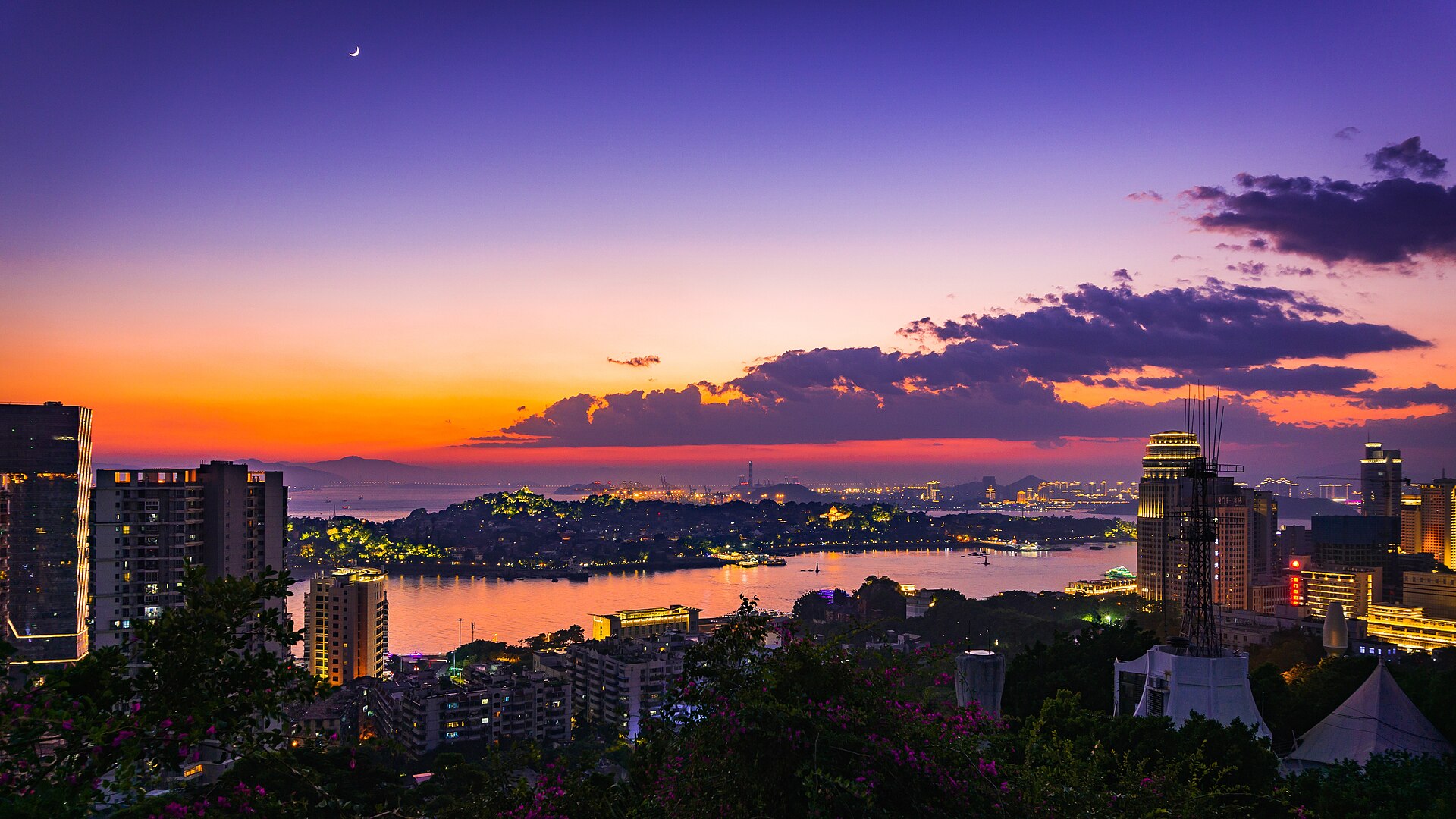
Colonial-era villas and lush greenery on Gulangyu Island, Xiamen — a car-free UNESCO World Heritage island
⛴️ Morning
Start the first day slowly on Gulangyu Island (鼓浪屿), a car-free UNESCO World Heritage island. Tourists board at the Cruise Terminal (邮轮中心厦鼓码头) — not the Lundu pier locals use — with a passport and a timed ticket booked ahead; the return fare is around ¥35–50 (~฿175–250). Once you're across, the whole island is on foot, so let yourself get lost in the little lanes of early-20th-century European mansions, big shade trees, and piano music drifting on the breeze (Gulangyu is nicknamed "Piano Island"). Full detail in our Gulangyu Island guide.

🌿 Afternoon
In the afternoon, pick off the island's two highlights at an easy pace — Sunlight Rock (日光岩), the island's highest point, a short climb for a view over the whole island and the Xiamen skyline opposite (admission around ¥50 / ~฿250) — then wander down to Shuzhuang Garden (菽庄花园), a seaside Chinese-Western garden built out over the water, with a piano museum inside holding hundreds of antique pianos. It's a wonderfully quiet spot. More in our Sunlight Rock guide and Shuzhuang Garden guide. Snack on local treats along the way, like pie-crust pastries and seaweed crisps.

🌙 Evening
Here's what many people miss — Gulangyu in the evening, once the day-tour groups have gone, is quiet and beautiful in a different way. With five days to play with, consider an overnight on the island in a small guesthouse inside an old mansion, then come out to walk the lanes after dark, warm lamplight on the old façades. No cars — just the sound of the waves and a piano. It's an evening utterly unlike a big city. If you don't stay over, take the ferry back to Xiamen and find a good dinner — see the Xiamen food guide.
Tip: Book your Gulangyu ferry 1–2 days ahead, especially on holidays — timed slots sell out fast — and always carry your physical passport to board. Don't try to cram in every site; the joy of Gulangyu is getting lost in the lanes with no plan, so today is the day to take it slow.
2
Day 2
Xiamen University, Nanputuo Temple, Hulishan Fortress and the Island Ring Road
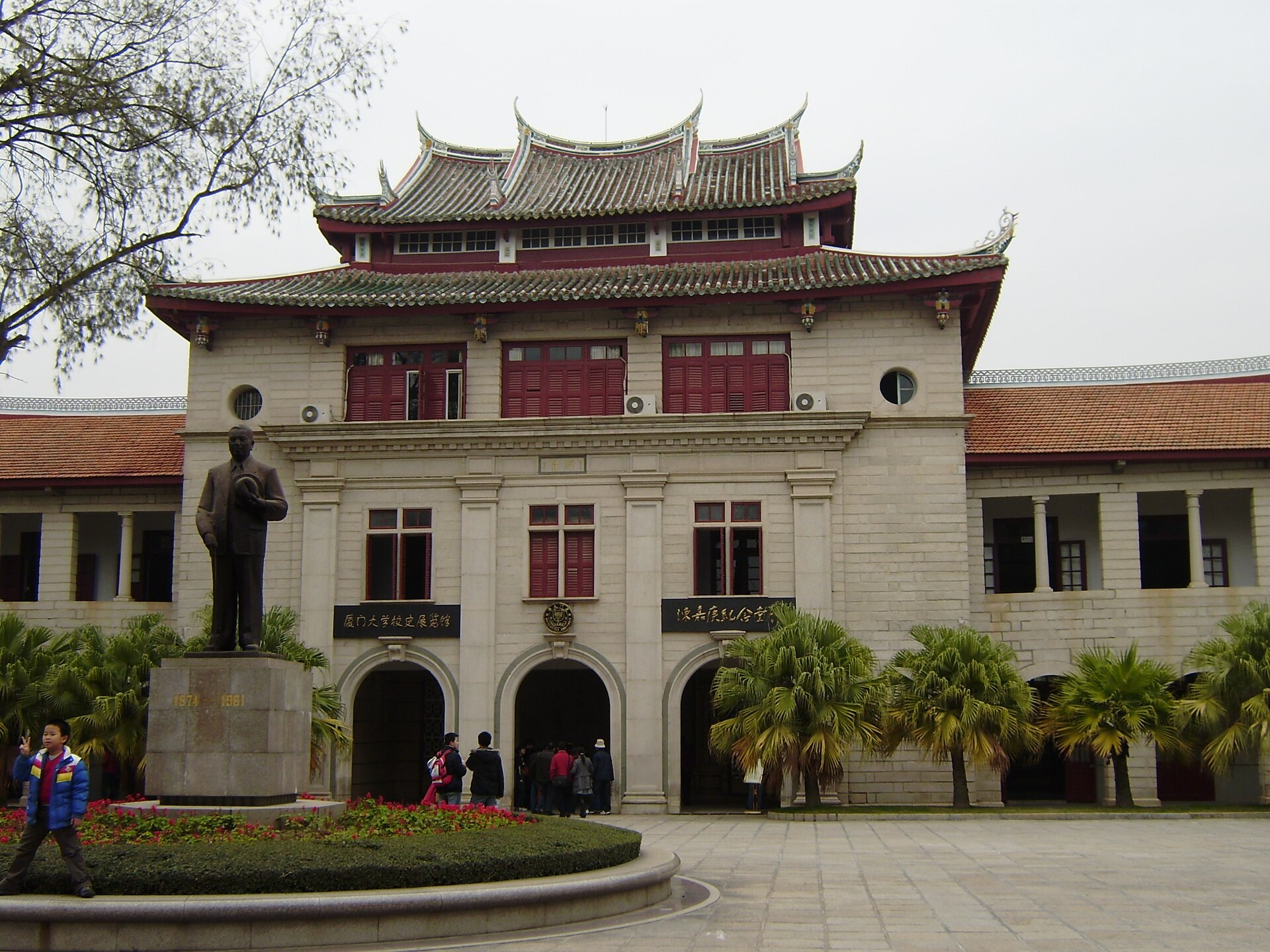
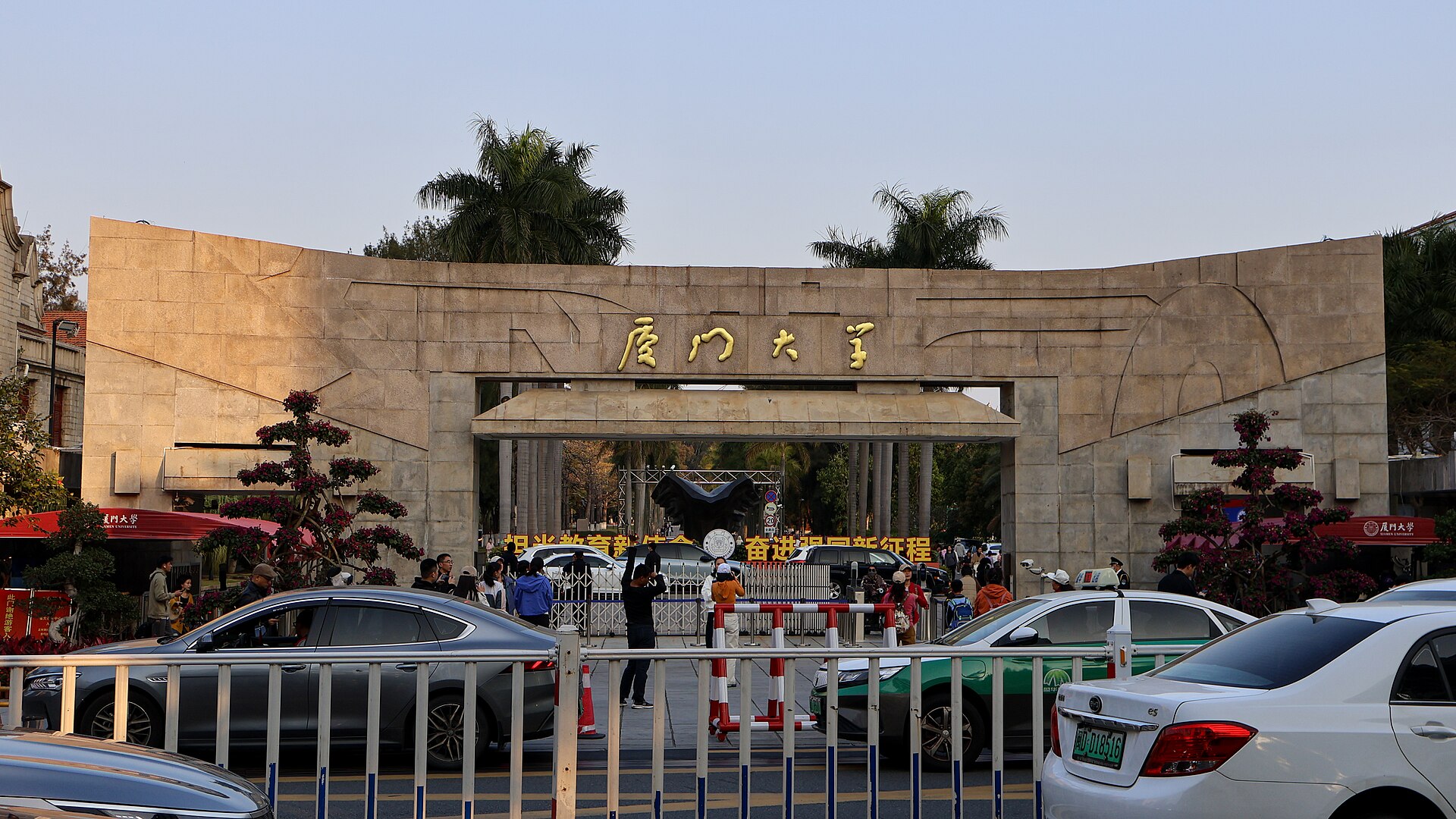
Chinese-Western buildings and a lake on the campus of Xiamen University, one of China's prettiest universities
🎓 Morning
Begin at Xiamen University (厦门大学), widely called one of the prettiest campuses in China — Chinese-Western buildings, a lake at its heart, palm trees, and a student graffiti tunnel. Visitor numbers are capped per day and you must book ahead through the official system (with your passport), so check the current rules before you go, as they change from time to time. More in our Xiamen University guide. Take Metro Line 1 to a nearby station and transfer, or simply grab a taxi from the centre.

🛕 Late morning to afternoon
It's a short walk from the university to Nanputuo Temple (南普陀寺), a thousand-year-old Buddhist temple set against a hillside on the sea, with halls rising up the slope and the character "佛" (Buddha) carved into a giant boulder — climb up for a lovely view of the sea and campus. It's free (you may pay for incense). In the afternoon, carry on to Hulishan Fortress (胡里山炮台), a late-Qing coastal artillery fort from 1894 that still holds an enormous German Krupp cannon, with a costumed cannon-firing demonstration. More in our Nanputuo Temple guide and Hulishan Fortress guide.

🚲 Evening
Close the day on the Island Ring Road (环岛路 Huandao Road), Xiamen's loveliest coastal stretch, with a cycle path and walkway running along a long sandy beach. Rent a bike and ride into the sea breeze in the golden light, looking across the water to Kinmen Island. This is when locals come out to run, cycle and photograph the sunset — the most relaxed hour of the trip. More in our Island Ring Road guide. For fresh seafood at dinner, see the Xiamen seafood guide.
Tip: Everything today is on the south-east of Xiamen Island and lined up close together — short transfers or a bike link them easily. Xiamen University caps daily visitors, so book your slot first thing or in time for the booking window opening; otherwise you may not get in.
3
Day 3 — Day Trip
Quanzhou, the UNESCO Maritime-Silk-Road City
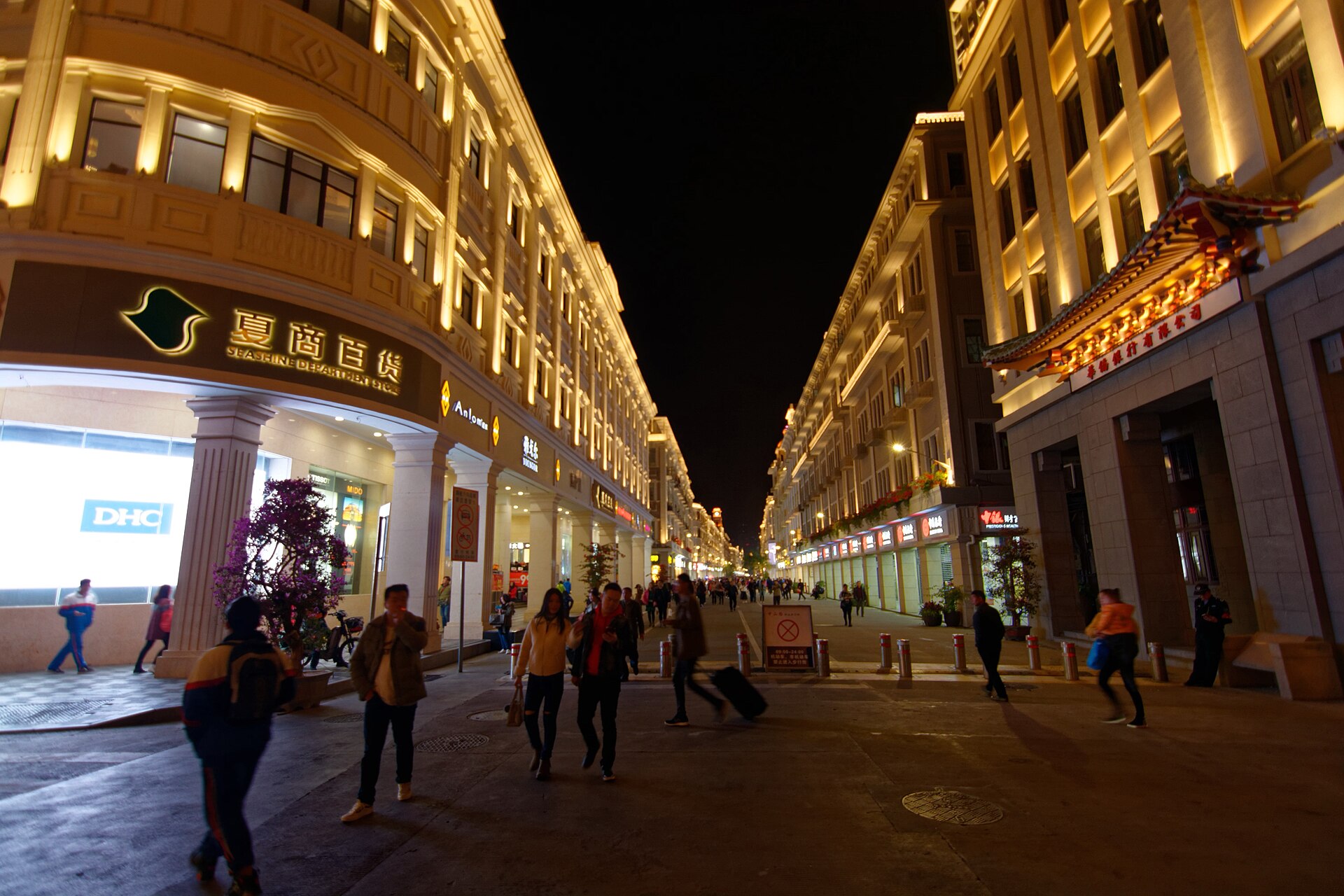
Arcaded pedestrian street in Xiamen in the Southeast Asian style, much like the old streets of UNESCO-listed Quanzhou
🚄 Morning — go early, it pays off
The first of the five-day bonuses is that Quanzhou is right next door — take a high-speed train from Xiamen North (厦门北站) or Xiamen Station (厦门站) to Quanzhou (泉州) in just ~20–40 minutes, with a 2nd-class ticket around ¥25–35 (~฿125–175) each way and frequent departures from morning to night. Book ahead through the 12306 app with your passport, and leave early for a full day in the old town. Quanzhou is UNESCO-listed as the "Emporium of the World in Song-Yuan China" — the very start of the maritime Silk Road.

🕌 All day in Quanzhou
Quanzhou is a city where many faiths and cultures have lived side by side for a thousand years — start at Kaiyuan Temple (开元寺), the largest Buddhist temple in Fujian, over 1,300 years old, with a pair of ancient stone pagodas. Then visit the Qingjing Mosque (清净寺), the oldest Arab-style mosque in China, built in 1009. Wander West Street (西街), a Tang-dynasty lane packed with alleys, shops and Quanzhou street food, and Zhongshan Road (中山路), lined with Southeast Asian-style arcaded shophouses — easy to graze your way along all day. See other options in our Xiamen day trips guide.
Tip: Quanzhou's old town (Licheng district) is great on foot, but the sights are fairly spread out — use DiDi to bridge the longer gaps and save your legs. Don't miss the local mee sua paste noodle soup (面线糊) and clear braised-beef broth. Plan your return train carefully — check the last departure back to Xiamen when you buy the outbound ticket.
4
Day 4 — Day Trip
The Fujian Tulou, the Hakka Earthen Roundhouses
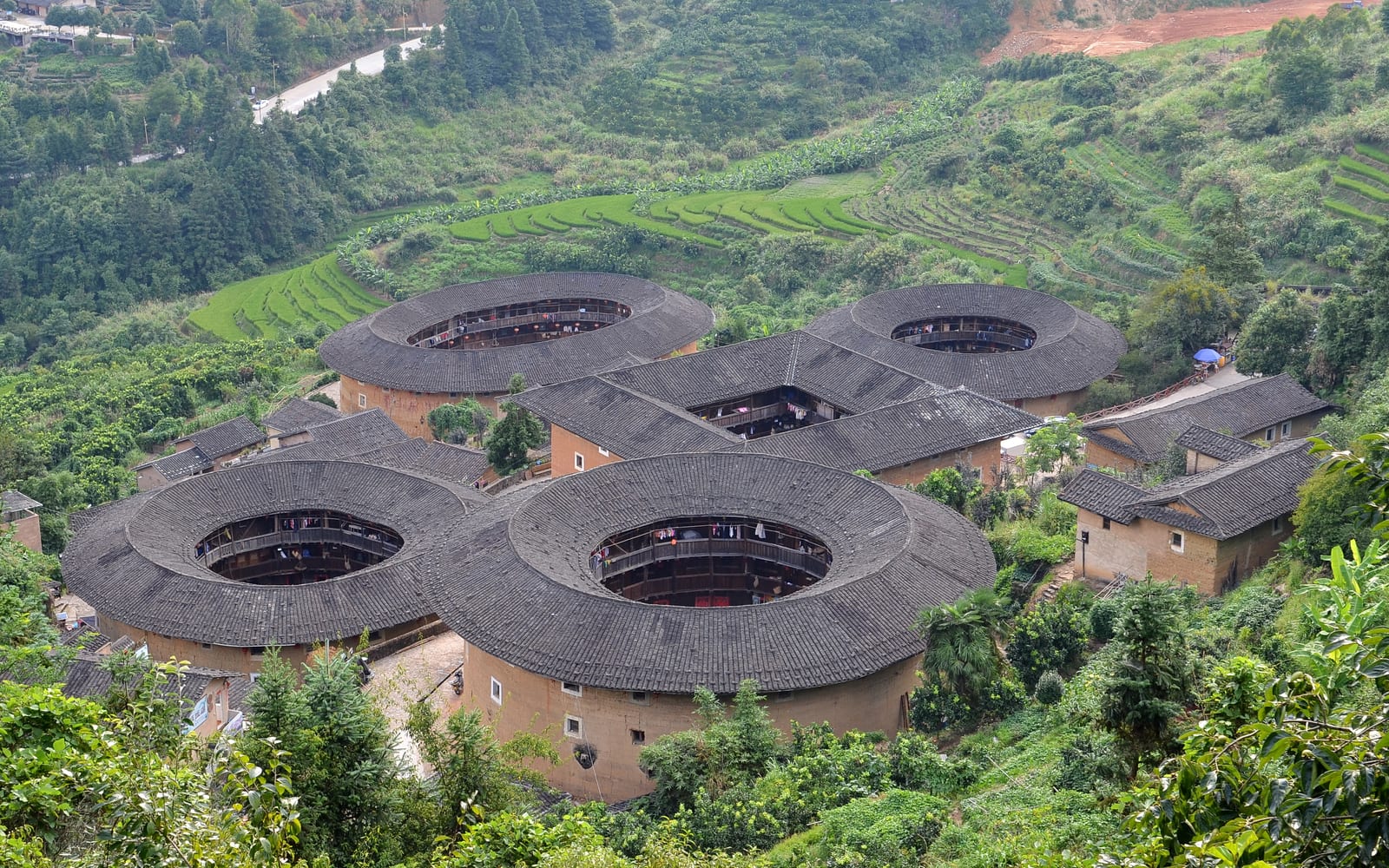
A large round earthen tulou roundhouse of the Hakka people in rural Fujian, a UNESCO World Heritage site
🚐 Morning — an early start
The second bonus is the one thing that sets Fujian apart from anywhere else in China — the Fujian Tulou (福建土楼), vast round (and square) communal homes built from rammed earth by the Hakka people centuries ago, each one once housing dozens of families from a single clan, and now a UNESCO World Heritage site. The tulou are about 2.5–3 hours from Xiamen by road (the Nanjing cluster ~2.5 hours, the Yongding cluster ~3 hours). For a single day, the easiest and most time-efficient choice is a join-in tour or a car with a driver, leaving your hotel around 07:30–08:00.

🏯 All day in Hakka country
Most day tours visit the closer Nanjing tulou cluster (南靖土楼) — like Tianluokeng village (田螺坑), whose five tulou clustered together earned the nickname "four dishes and a soup," and landmark roundhouses such as Yuchanglou (裕昌楼), whose pillars lean yet have stood for over 600 years. Step inside and you'll see real Hakka life — families still living there, the central courtyard, and the wooden galleries ringing several storeys. The Yongding tulou cluster (永定土楼) has the equally striking Hongkeng cluster (洪坑). One day comfortably covers a single cluster.
Tip: The distance makes this a "travel day" — choose a tour that leaves early and doesn't over-pack the stops, so it doesn't wear you out. If you want both Nanjing and Yongding, or a deeper look at the tulou, stay a night in a tulou guesthouse (a wonderful experience); but for a five-day, Xiamen-based plan, out-and-back works well. Check the weather first, as the mountain roads are winding.
🚄
China High-Speed Rail
Book your own HSR tickets with the 12306 app — no agent needed
Full guide →
5
Day 5 — Easy Day
Jimei, the Seaside Cafés, the Beaches and Zhongshan Road Before You Fly
Chinese-Western roofed buildings at Jimei School Village in Xiamen, in the Jiageng architectural style
🏫 Morning — Jimei
Spend the last day at an easy pace close to the city, starting at Jimei School Village (集美学村) in the north — an education district founded by the philanthropist Tan Kah Kee (Chen Jiageng), famous for its "Jiageng style" architecture that marries Chinese roofs to Western building bodies. The seaside Ao Garden (鳌园) and its memorial are beautiful. Jimei is on the same side as Xiamen North station and sits on Metro Line 1, along its celebrated elevated stretch over the sea. More in our Jimei School Village guide.

Afternoon — seaside cafés and beaches
Head back onto the island for a relaxed afternoon in the waterfront café districts — Shapowei (沙坡尾), an old fishing harbour turned into a quarter of cafés, design shops and art studios where fishing boats still bob at the dock; or the wider Wuyuan Bay (五缘湾), with its bridge and yacht marina, where you can sip coffee over the bay all afternoon. If you want to swim, drop by a beach along the Island Ring Road. See the best spots in our Xiamen café guide.

🛍️ Evening — Zhongshan Road before you leave
Close the trip on Zhongshan Road (中山路), the old pedestrian street in central Xiamen, lined with Southeast Asian-style arcaded shophouses (骑楼) and full of local snacks, souvenirs and long-standing shops. Round up the last bites — satay (shacha) noodles, oyster omelette and Minnan snacks. See our Zhongshan Road guide. Then head for the airport — Gaoqi Airport (XMN) is on the island, about 10 km from the centre; take the BRT or an airport bus, or a taxi/DiDi for ¥40–60 (~฿200–300), about 15–25 minutes. Allow at least 2.5 hours before your flight.
Last-day tip: The metro doesn't yet reach Gaoqi Airport directly, so allow extra time for evening traffic. With an evening flight, make the most of the Jimei/Shapowei afternoon before heading out; with an early flight the next morning, a night near the airport or near Xiamen North station is more convenient.
Before You Go

Where to Stay and How to Get Around

🏨
Which Base for This Plan
Three areas suit this itinerary — central Xiamen Island near the ferry pier / Zhongshan Road if you want to be in the thick of it and walk to the Gulangyu ferry; the Xiamen University / Island Ring Road area (southern Siming) if you like a seaside feel, close to Nanputuo Temple and the cafés; or near Xiamen North station if you'll do the Quanzhou and tulou trips often and have an early flight.

Days 3 and 4 are out-of-city trips departing from Xiamen North or a tour pick-up, reachable from any of these bases — so you won't need to change hotels mid-trip.
🚇
Getting Around — Metro and BRT
The city has a 3-line metro (¥2–7) — scan Alipay/WeChat Pay or tap a 交通卡 card at the gate — backed up by the BRT (an elevated bus rapid transit), city buses and shared bikes. Key lines:

Line 1 — the famous elevated-over-the-sea stretch; island ↔ Jimei / North station
Line 2 — Haicang ↔ island, out to Wuyuan Bay
Line 3 — island ↔ Xiang'an, near Xiamen Station
BRT + bikes — link the Ring Road, Shapowei and spots the metro misses
Airport: Gaoqi (XMN) has no direct metro yet — use the BRT/taxi/DiDi, ¥40–60 Navigation: Amap (高德地图) is far more accurate in Mainland China than Google Maps
Budget

What 5 Days in Xiamen Actually Costs

Figures below are per person per day, excluding flights and travel insurance. Accommodation uses mid-range hotels (¥350–750/night/room). Two people sharing a room cut the accommodation figure significantly. For a full breakdown, see our Xiamen trip budget guide.

Item Day 1
(Gulangyu)
Day 2
(City)
Day 3
(Quanzhou)
Day 4
(Tulou)
Accommodation (per person) ¥350–750
~฿1,750–3,750
¥350–750 ¥350–750 ¥350–750
Admission / activities ¥85–150
~฿425–750
¥25–80
~฿125–400
¥0–80
~฿0–400
tour incl.
~¥350–550
Ferry / metro / rail ¥40–55
(Gulangyu ferry)
¥10–25 ¥50–70
(Quanzhou return)
incl. in tour
(road)
Food ¥100–220 ¥100–220 ¥100–220 ¥80–180
Total / person / day ¥575–1,175 ¥485–1,075 ¥500–1,120 ¥780–1,660
5-day total per person (estimate): ¥3,200–6,200 (~฿16,000–31,000) including accommodation, admissions, food, the tulou tour and rail — excluding flights. Budget travellers (hostel + cheap eateries + going to the tulou independently): ¥1,600–2,800 (~฿8,000–14,000). Luxury (5-star + private tour + fine seafood dinners): ¥7,000+ (~฿35,000+).

See all hotel options at Top 10 Xiamen Hotels or 6 Luxury Hotels in Xiamen.

Plan Further

Read Before You Go

Less time? See the 4-Day Xiamen Itinerary for the main highlights in a more compact form, or browse all the day trips to choose what's right for you.
Frequently Asked Questions

Before Your 5-Day Xiamen Trip

Is 5 days enough for Xiamen?
Comfortably, yes. Five days lets you do Gulangyu Island slowly (perhaps with an overnight stay), the Xiamen University and Nanputuo Temple side, Hulishan Fortress and the Island Ring Road, and two different day trips — UNESCO-listed Quanzhou on Day 3 and the Hakka earthen tulou roundhouses on Day 4. The last day is for Jimei, the seaside cafés, the beaches and Zhongshan Road. If you have less time, see the 4-day plan.
Where do I catch the ferry to Gulangyu, and what does it cost?
Tourists board at the Cruise Terminal (邮轮中心厦鼓码头, on the west side of Xiamen Island), not the Lundu pier that locals use. You need your passport and a timed ticket booked in advance (online or via app), and the return fare is around ¥35–50 (~฿175–250). Gulangyu is car-free — you explore entirely on foot. Book the ferry 1–2 days ahead, especially on holidays, as timed slots sell out fast. More in our Gulangyu Island guide.
How do I get to the Fujian Tulou from Xiamen, and is a day trip enough?
The tulou are about 2.5–3 hours from Xiamen by road (the Nanjing tulou cluster ~2.5 hours, the Yongding cluster ~3 hours). For a single day, the easiest and most time-efficient option is a join-in tour or a car with a driver, leaving your hotel around 07:30–08:00. To go independently you can take a long-distance bus, or a train to Nanjing station (南靖) and transfer onward, but it eats a lot of time and you must plan the return carefully. One day comfortably covers a single tulou cluster; to see both Nanjing and Yongding, stay a night. See our Xiamen day trips guide.
On Day 3, is Quanzhou worth it, and how far is it?
Very much so, and it's close. A high-speed train from Xiamen North (厦门北站) reaches Quanzhou in just ~20–40 minutes, with a 2nd-class ticket around ¥25–35 (~฿125–175). Quanzhou is a UNESCO World Heritage city — once China's biggest port in the Song-Yuan era and the start of the maritime Silk Road — with the 1,300-year-old Kaiyuan Temple, the Qingjing Mosque (the oldest in China), and West Street lined with local food. Go in the morning, back in the evening.
How do I get from Xiamen airport into the city?
Gaoqi Airport (XMN 高崎国际机场) sits on Xiamen Island, about 10 km north-east of the city centre. To be honest, the metro does not yet serve Gaoqi directly (the future Xiang'an airport will have metro). The easiest way in is the BRT or an airport bus, or a taxi/DiDi for around ¥40–60 (~฿200–300), about 15–25 minutes to the centre. The city itself does have a metro — three lines covering the main sights.
Which apps do I need to get around Xiamen?
For the metro and BRT, just scan Alipay or WeChat Pay at the gate, or buy a stored-value 交通卡 card. For intercity trains use the 12306 app (available in English; you'll enter your passport number). For maps and restaurants, Amap (高德地图) is far more accurate than Google Maps in Mainland China, where Google Maps is blocked. If you want Google, Instagram or Facebook, set up a VPN before you leave home. See our China internet and eSIM guide.
Klook · Xiamen Activities

Gulangyu ferry tickets, Quanzhou and Fujian Tulou tours — all on Klook

Klook has tickets and tours for most of this itinerary — the Gulangyu ferry, island attraction tickets, and day tours to Quanzhou and the Fujian Tulou roundhouses, plus activities around Xiamen.

Browse Xiamen on Klook →
Wherebest is a Klook affiliate partner — we may earn a commission when you book through this link, at no extra cost to you.