Home Xiamen China Xiamen Hotels About
Home  ›  China  ›  Xiamen  ›  Xiamen Shacha Noodles
🍜 Xiamen's signature dish · 2026

Xiamen Shacha Noodles (沙茶面)
Yellow noodles in a satay-peanut broth

Soft yellow noodles in an orange, deeply nutty broth built on peanuts and satay sauce, where you pick your own toppings one by one — prawn, squid, pork intestine, tofu skin, fish balls. The one bowl that tells the story of Xiamen's overseas-Chinese roots. Savoury, not fiery, and eaten morning, noon and night.

Before You Dig In

Shacha noodles — the dish Xiamen calls home

If you only have room for one dish in Xiamen, locals will tell you to eat shacha noodles (沙茶面 shāchá miàn) — the satay noodle soup that is the face of this city. A bowl of yellow noodles in an orange-brown broth that smells nutty and rich before you've even lifted the spoon. It isn't a fancy dish you have to hunt down; it's sold in every lane and market across town, eaten from breakfast right through the evening, and it's the flavour people here think of when they think of home.

The heart of shacha noodles is the shacha broth — built on shacha sauce (沙茶酱), a paste ground from peanuts, sesame, dried shrimp or fish, garlic, turmeric, chilli and a dozen or more spices, then loosened into a pork or prawn stock. Some shops add a splash of milk to make the broth creamy and gently sweet. What you get is nutty richness from the peanuts and a deep savoury edge from the dried seafood, finished with a warm hum of spice that, in some shops, is mildly hot (微辣) but never burning. It's a mellow, very easy-to-eat flavour — nothing like the thick dipping sauce that "satay" means elsewhere.

And what makes shacha noodles more than just another bowl of noodles is this: that satay flavour was never originally Chinese. Xiamen's overseas Chinese (华侨, huaqiao) brought it home from Southeast Asia. Fujian is one of the biggest ancestral homes of Chinese who settled in Indonesia, Malaysia and Singapore, and when they came back they brought the taste of satay with them, then reworked it into a noodle broth. The bowl is, in a real sense, a map of the whole city's travels.

Anatomy of the Bowl

Broth, noodles and toppings — what's in the bowl

Get your head around these four and you'll see why a bowl of orange noodles can hook an entire city.
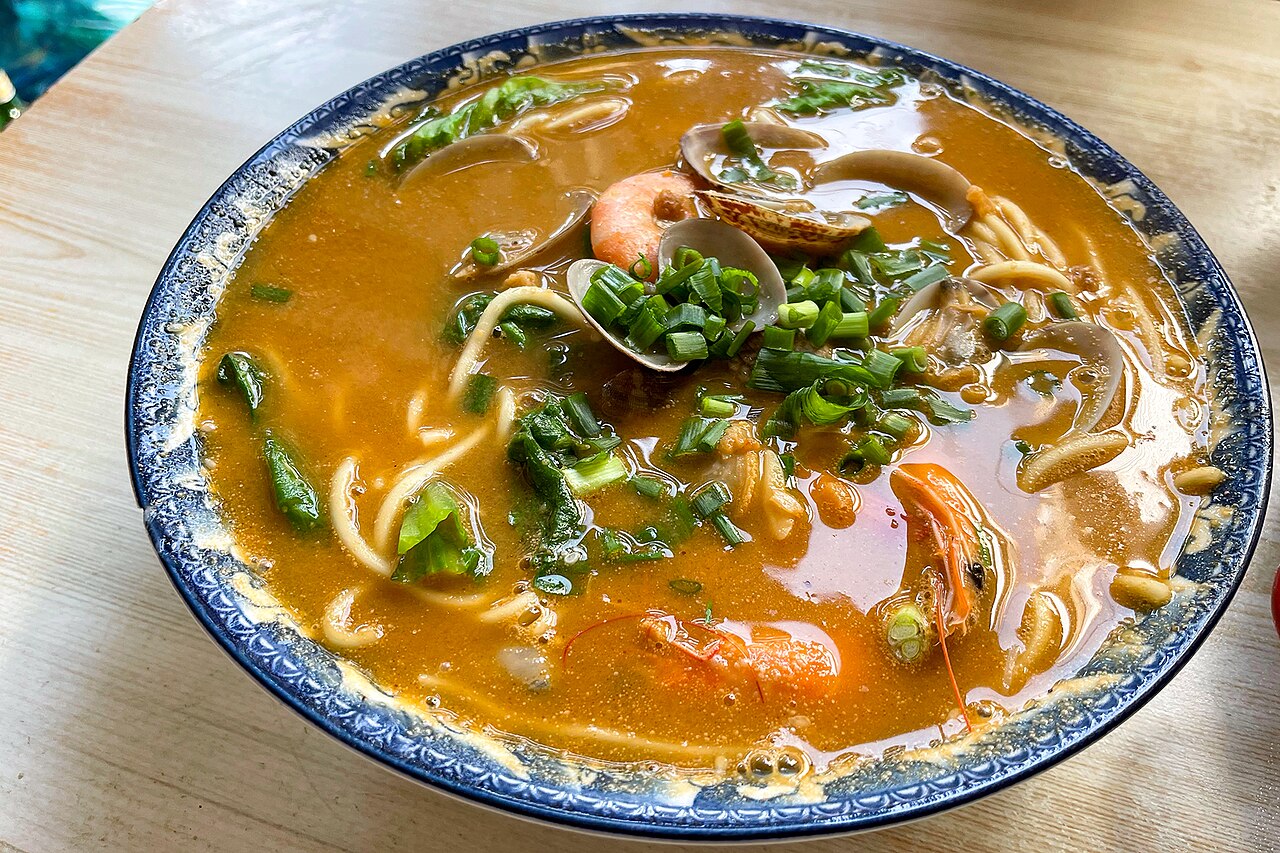
A bowl of Xiamen shacha noodles — yellow noodles in an orange-brown satay broth topped with prawn, clams and chopped spring onion 1
The Shacha Broth
沙茶汤 · the satay-peanut soup, heart of the dish

The broth is what makes shacha noodles shacha noodles — it starts with shacha sauce (沙茶酱), ground from peanuts, sesame, dried shrimp or fish, garlic, turmeric, chilli and a dozen more spices to each shop's secret recipe. The paste is fried until fragrant, then loosened into a pork or prawn stock and simmered until the soup is thick and orange-brown — nutty from the peanuts, deeply savoury from the dried seafood. Some shops add milk to make it creamier and a touch sweet, and no two shops' broths taste quite the same.

Core flavour: nutty peanut, savoury dried seafood, deep and mellow — gently warm, not fiery
Tip: a thicker broth means a richer shacha — busy shops tend to have the deeper soup
Good to know: the shacha recipe is each shop's signature — try a few, find your favourite
🍜2
Yellow Alkaline Noodles
碱面 · thick, round, yellow strands that drink up the broth

The standard noodle for shacha mian is the yellow alkaline noodle (碱面) — thick, round, yellow strands blanched soft with little spring, on purpose, because the noodle's whole job is to soak up the thick, nutty broth. Lift them out and every strand is coated in the orange, fragrant soup. Some shops also offer thin rice vermicelli (the Fujian style) or flat noodles if you'd rather skip the yellow ones — just say so when you order. For a first bowl, though, go with the traditional yellow alkaline noodles, as they suit the shacha broth best.

Texture: thick round yellow strands, soft, soaks up the broth (rice vermicelli or flat noodles available)
Key point: the noodle's job is to carry the nutty broth into every bite
Tip: first time, go with the traditional yellow alkaline noodle
🦐3
Pick-Your-Own Toppings
配料自选 · seafood, pork offal and meat-free picks

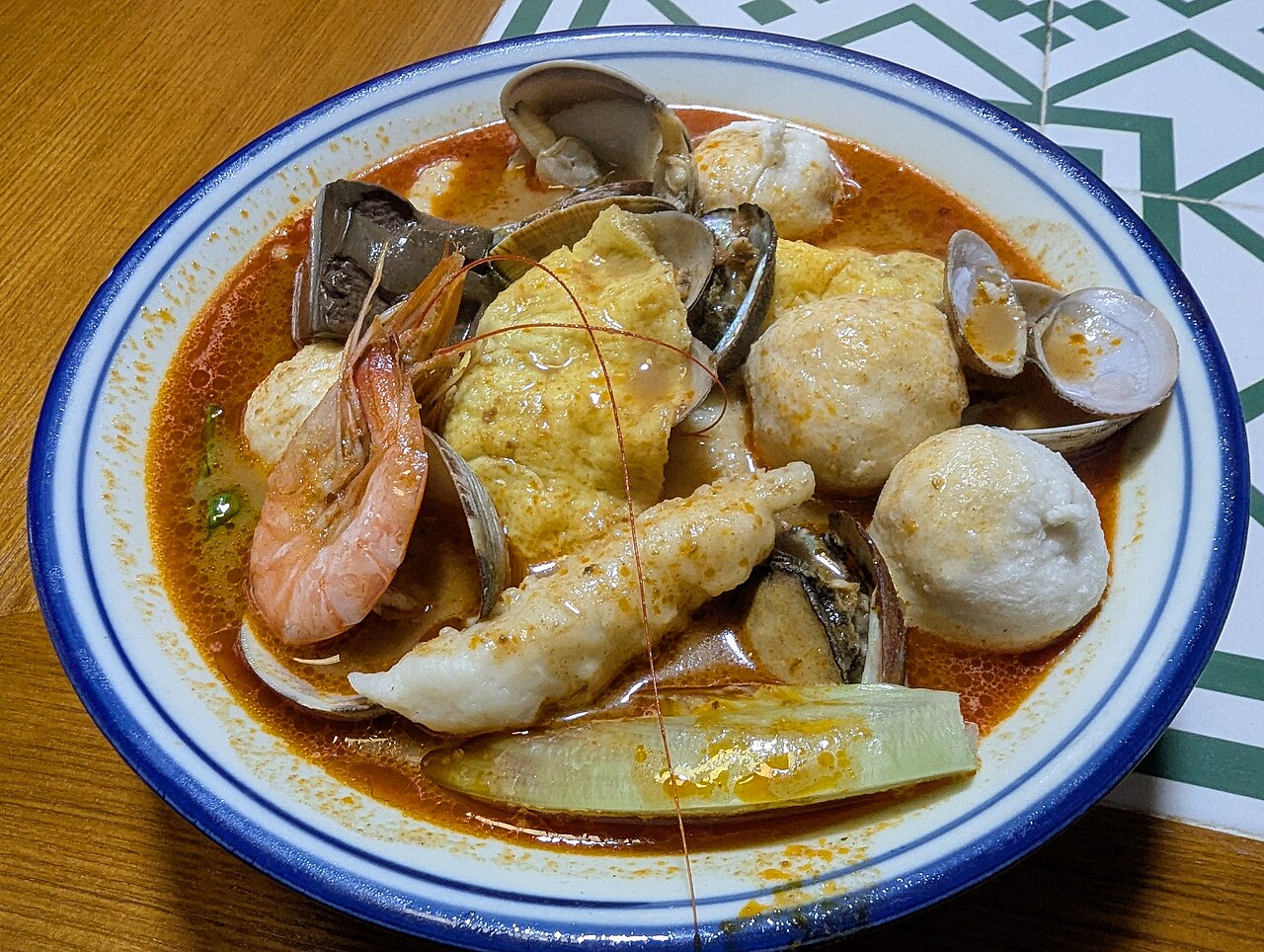
This is the best part — the shop has a case or row of trays of raw ingredients, and you point at what you want, one by one. Seafood includes prawn, squid, clams, mussels and fish balls; pork offal includes intestine, liver, stomach, duck-blood curd and pork balls; and the meat-free picks include tofu skin, fried tofu, ngoh hiang (五香 fried pork rolls) and bean sprouts. The cook blanches your picks, lays them on the noodles in a bowl, and ladles the hot shacha broth over the top. You're charged by what you chose — so no two bowls are ever the same.

The favourites: fresh prawn, squid, fish balls, and pork intestine for the offal fans
First-timers: start with prawn, fish balls and tofu skin — safe picks that suit the broth
Good to know: more toppings means a higher price; some shops have a fixed-price set bowl
🌏4
A Satay That Sailed Home
华侨 · the overseas-Chinese legacy

Why does a Chinese city have a satay noodle? The answer is the overseas Chinese (华侨). Fujian is one of the biggest ancestral homes of Chinese who went to make a living in Indonesia, Malaysia and Singapore, and when they came home they brought the taste of satay with them. The Malay word satay (sate) became sa-te in the Minnan (Hokkien) dialect and then shacha (沙茶) in Mandarin. Locals say Xiamen's first shacha noodle shop was opened by a man who returned from Indonesia around 1935 — so the bowl is far more than noodles. It's the story of a whole city's journeys.
Origin: a Southeast Asian satay flavour the overseas Chinese brought home
The name: satay (Malay) → sa-te (Minnan) → shacha 沙茶 (Mandarin)
Good to know: the first shop opened around 1935, by a returnee from Indonesia
It is NOT Thai-style satay: hear the word "satay" and you might picture grilled pork skewers with a thick peanut dip — shacha noodles are nothing like that. This is a noodle soup with the satay-peanut flavour built into the broth, not a grilled dish and not a dipping sauce. It's nutty, rich and mellow, with only a faint warmth of spice or none at all depending on the shop — a soup you can sip to the last drop.
A loaded bowl of Xiamen shacha noodles topped with prawn, fish balls, fried tofu, clams and offal in an orange satay broth
Picking your own toppings is the charm of shacha noodles — this bowl is loaded with prawn, fish balls, fried tofu and clams in a creamy satay broth.
Eat Like a Local

How to order and eat — without the awkwardness

How to order — point and pick at the counter

Most shacha noodle shops work on a point-and-blanch system — walk up to the case or trays of raw ingredients and point at what you want, one item at a time: a couple of prawns, two or three fish balls, some tofu skin, a little pork intestine. The cook takes your picks, blanches them, arranges them on the noodles in a bowl and ladles the hot shacha broth over the top. You're charged by what you chose. No Chinese? Just point — it's easy and it's fun. And if you'd rather not choose at all, many shops have a fixed-price set bowl (套餐) you can simply order.

First time and not sure what to pick? Start with prawn, fish balls and tofu skin — the safest combination and the one that suits the broth best. If you're into offal, try the pork intestine and duck-blood curd; in Xiamen, the offal is considered the best part of the bowl.

How to eat it — sip the broth and noodles together

Step 1: take a spoonful of broth first, to get to know that nutty, rich satay flavour. Step 2: lift the broth-soaked noodles and eat them with the toppings — prawn and fish balls bring a sweetness that plays against the savoury soup, and the tofu skin drinks up the broth until it's soft and juicy. Step 3: alternate broth and noodles all the way to the bottom; a good shacha broth stays drinkable to the last drop without turning heavy. Some shops put out chilli or black vinegar to adjust to taste, but most of the time the bowl as it comes is just right.

Paying: most shops take WeChat Pay and Alipay; a few small ones still take cash in yuan but rarely foreign cards, so set up Alipay or WeChat in advance. When to go: shacha noodles are eaten all day, but several of the famous shops (Wutang among them) only sell from morning until the afternoon and then sell out. If you're chasing a legend, go before noon to be sure of a bowl and the freshest ingredients.

Where to Eat

Which place — where locals queue

Spots locals and food lovers have talked about for years — several of the legendary shops only sell from morning into the afternoon, so always check the hours, and go a little earlier for fresher ingredients.

1
Wutang Shacha Noodle (乌糖沙茶面)
A local legend · Minzu Road (民族路), old town · sells morning until ~2pm

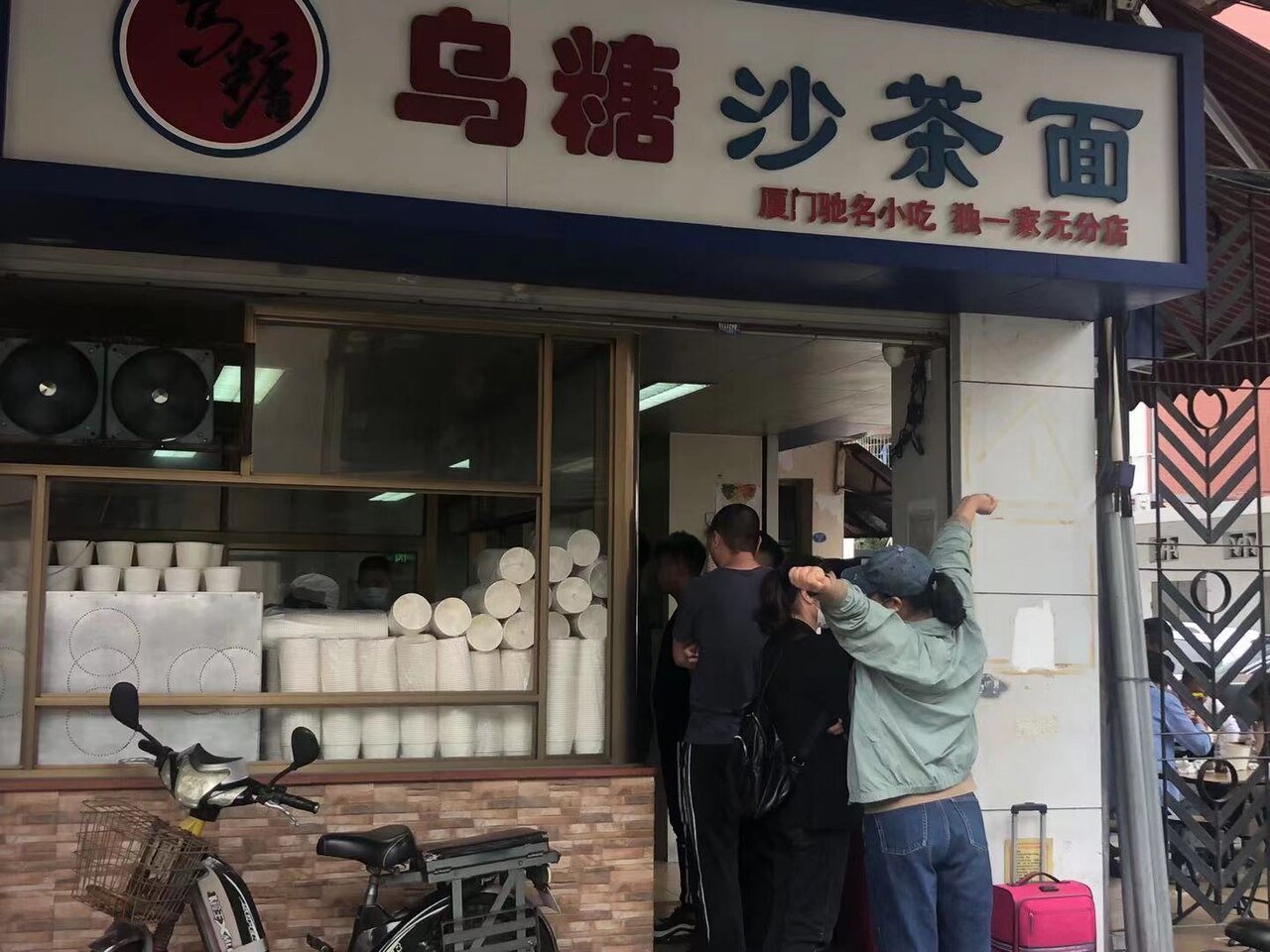
Name a shacha noodle shop Xiamen locals love and Wutang comes first — a tiny place near Minzu Road in the old town that's become a spot people queue for. The broth is thick and deep, fragrant with spice, with a gentle warmth but never greasy. Toppings run about ¥13–25 each plus around ¥2 for the noodles, so two or three picks puts you over ¥40, but it's worth it for how loaded and full-flavoured the bowl is. The thing to know: it only sells from morning until around 2pm and then closes, so arriving late risks missing out — before noon is safest.

Where: Minzu Road (民族路), old-town area, near Bashi Market
Hours: morning until ~2pm (closes when sold out) · Price: toppings ¥13–25 each + ¥2 noodles (~฿175+ a bowl)
2
Sili Shacha Noodle (四里沙茶面)
A longstanding favourite · Hubin Sili / Jinbang Road · perfectly balanced broth

The other big name locals pair with Wutang — Sili stands out for a thick, beautifully balanced broth, the peanut-to-shacha ratio just right, never leaning too far one way. The flavour is mellow and easy, which makes it a great choice if you want traditional, un-spicy shacha noodles. Reckon on around ¥30 per person (~฿150). There are several branches around the city, with the ones near Hubin Sili and Jinbang Road (金榜路) being well known. Check for the branch nearest your hotel on the Dianping app before you go.

Where: Hubin Sili (湖滨四里) / Jinbang Road (金榜路) · several branches
Hours: morning into afternoon/evening (varies by branch) · Price: ~¥30/person (~฿150)
3
Dazhong Shacha Noodle (大中沙茶面)
The old-school flavour · "gu-zao", the taste older Xiamen locals remember

If you want the gu-zao (古早, old-fashioned traditional) shacha flavour that older Xiamen locals remember, Dazhong is the one many of them name — a thick, spice-fragrant broth, sweet and rounded with a faint warmth, the kind of homely taste that sticks with you without any flashy tweaks. Dazhong is one of Xiamen's "four uniques" of shacha noodles that locals rate as must-tries (alongside Wutang, Sili and the 1980 roast-pork zongzi shop). It's for anyone who wants shacha noodles the way locals have eaten them for decades.

Where: central Xiamen · check the open branch on the Dianping app before you go
Hours: mostly morning into the afternoon · Price: ¥15–28/bowl (~฿75–140)
4
Shops in Bashi Market (八市) + the Zhongshan Road lanes
The local tip · the small market shops are often the most real and the cheapest

The truth about shacha noodles is that the small shops in the markets and lanes, where locals actually eat, are often just as good as the famous names — and cheaper. Walk into Bashi Market (第八市场, 八市), the legendary wet market of the old town, or the lanes off Zhongshan Road (中山路), and look for a shop where locals are packed in, the ingredients turning over fast, the broth on a constant simmer — that's the one. A basic bowl starts around ¥12–18 (~฿60–90), climbing to ¥25–35 with plenty of seafood. Ask a market stallholder or your hotel where the good shacha noodles are nearby; you'll often get a better answer than any online review.

Where: Bashi Market (八市) · the Zhongshan Road (中山路) lanes · where locals actually live
Hours: early morning into the afternoon · Price: ¥12–18/bowl (~฿60–90), cheapest and most authentic
The storefront of Wutang Shacha Noodle (乌糖沙茶面), a legendary shacha noodle shop in Xiamen old town, with customers ordering at the window
The storefront of Wutang Shacha Noodle (乌糖沙茶面) in Xiamen's old town — a local legend where people queue from early morning. The sign reads "a famous Xiamen snack, one shop only, no branches".
Frequently Asked

FAQ · what to know before your shacha noodles

What are shacha noodles (沙茶面), and are they spicy?
Shacha noodles are Xiamen's signature satay noodle soup — yellow alkaline noodles in an orange-brown broth built on shacha sauce (沙茶酱), a paste ground from peanuts, sesame, dried shrimp or fish, garlic, turmeric, chilli and a dozen or more spices. The dominant flavour is nutty and rich from the peanuts and savoury from the dried seafood. It is not fiery like Sichuan or Hunan food; some shops make the broth gently warm (微辣) but never burning. It's a mellow, very easy-to-eat flavour — quite different from Thai-style satay, which is a thick dipping sauce.
Why does Xiamen have a satay noodle when satay comes from Southeast Asia?
Because Xiamen's overseas Chinese (华侨, huaqiao) brought it home. Fujian is one of the biggest ancestral homes of Chinese who settled in Indonesia, Malaysia, Singapore and the Philippines, and when they came back they brought the taste of satay with them. The Malay word satay (sate) became 'sa-te' in the Minnan (Hokkien) dialect and then 'shacha' (沙茶) in Mandarin. Locals say Xiamen's first shacha noodle shop was opened by a man who returned from Indonesia around 1935. The dish is, in effect, a map of the whole city's travels in a single bowl.
How do you order shacha noodles — do you really pick your own toppings?
Yes, and that's the charm of it. Each shop has a case or row of trays of raw ingredients: seafood (prawn, squid, clams, fish balls), pork offal (intestine, liver, stomach, duck-blood curd) and meat-free options (tofu skin, fried tofu, ngoh hiang 五香 fried pork rolls, bean sprouts). You point at the items you want, one by one. The cook blanches your picks, lays them on the noodles in a bowl, and ladles the hot shacha broth over the top. You're charged by what you chose, so the more you add the more it costs. Some shops also offer a fixed-price set bowl if you'd rather not choose.
What noodles are used in shacha noodles?
The standard is yellow alkaline noodles (碱面) — thick, round, yellow strands blanched soft with little spring, because they're meant to soak up the thick, nutty broth. When you lift them out, every strand is coated in the orange, fragrant soup. Some shops also offer thin rice vermicelli (Fujian-style) or flat noodles if you'd rather not have the yellow noodles — just tell the cook when you order. For a first bowl, though, go with the traditional yellow alkaline noodles, as they suit the shacha broth best.
How much do shacha noodles cost, and how do you pay?
A basic bowl is around ¥12–18 (about ฿60–90). Load it with seafood like prawn, squid and clams and it can climb to ¥25–35 (about ฿125–175) a bowl. At a famous shop like Wutang (乌糖), toppings are about ¥13–25 each plus around ¥2 for the noodles, so two picks already put you over ¥40 — but it's worth it for how loaded the bowl is, and still cheaper than a seafood noodle bowl back home. Most shops take WeChat Pay and Alipay; a few small ones still take cash in yuan but rarely foreign cards, so set up Alipay or WeChat in advance.
Where should I eat shacha noodles in Xiamen?
The local legend is Wutang (乌糖沙茶面) on Minzu Road (民族路) in the old town — the richest, thickest broth, but it only sells from morning until around 2pm and then sells out. Sili (四里沙茶面) around Hubin Sili has a beautifully balanced peanut-to-shacha ratio. Dazhong (大中沙茶面) does the old-school traditional flavour. And the small shops inside Bashi Market (八市) and the lanes off Zhongshan Road (中山路), where locals actually eat, are cheap and just as good as the famous names. Go a little earlier for fresher ingredients and no risk of a sell-out.
Klook · Food Tour

Xiamen Food Tour — track down the best shacha noodles, with someone who knows

A Xiamen food tour with a local guide who walks you through Bashi Market and the old town, takes you where locals eat their shacha noodles, shows you how to point and pick your toppings, and gets you onto oyster omelette and the rest of the Minnan spread — no language stress, no gambling on which shop to choose.

See Xiamen food tours on Klook →
Wherebest is a Klook affiliate partner — we may earn a commission when you book through our links, at no extra cost to you.