6 things to try at the Bashi market
From the favourites every table orders, to the local oddity that tests your nerve.
 1
1
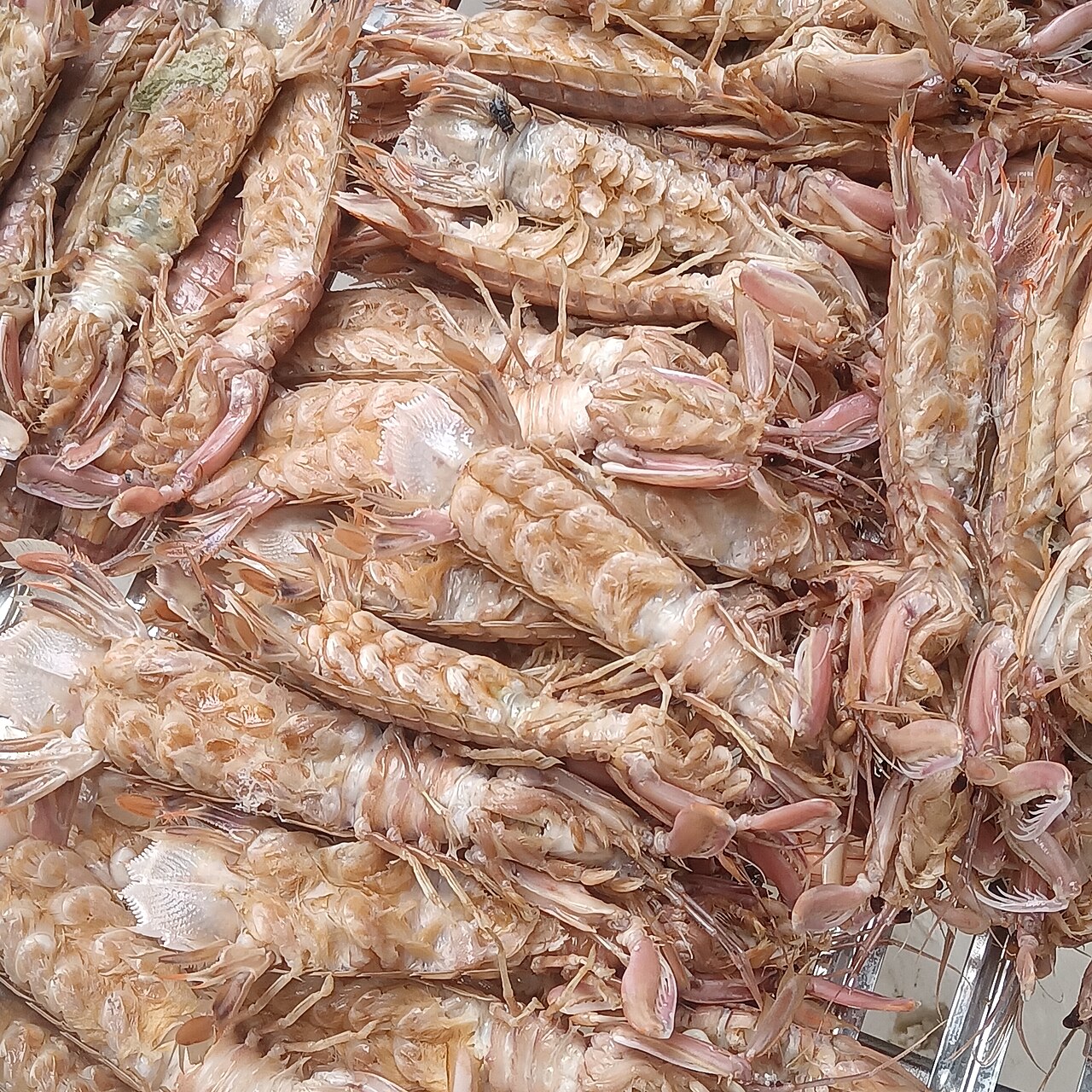
Mantis shrimp (虾蛄, also called 皮皮虾) are a Xiamen favourite — plump and sweet. The best way to eat them is steamed plain, to get the full natural sweetness, with a ginger-vinegar dip on the side; some places do them stir-fried with garlic or salt-and-pepper too. They're a little fiddlier to peel than prawns but well worth it, and in season they're packed with roe. It's one of the dishes that says "sea town" loudest about Xiamen. Prices swing with the season, so ask the price per catty before you order.
Razor clams (圣子/蛏) are long, blade-shaped shells with sweet, tender meat, and Bashi has fresh piles of them daily. Xiamen locals like them stir-fried with plenty of ginger, scallion and garlic, or steamed over glass noodles with crispy garlic, to keep the clam's sweetness front and centre. When choosing, look for ones whose foot reacts when touched — that means they're alive. Razor clams cook fast, so overcooking turns them rubbery; a good kitchen flash-fries them over high heat so the meat stays juicy. A dab of seafood dip and they're a full mouthful — an easy starter for anyone new to less familiar seafood.
Blood cockles (血蚶/泥蚶) are small cockles that, when you open them, hold a red liquid that looks like blood — hence the name — long eaten along China's southern coast. The classic way is to blanch them in hot water just until the shells barely open, so the meat stays tender and juicy, then dip them in soy-garlic-chilli sauce; the taste is sweet, rich and lightly salty, and fans call it the truest taste of the sea. Honestly, if they're served very rare some people won't be used to it — so choose a busy stall with fast turnover, have them blanched through properly, and eat them hot for the safest and best result.
Fujian crab — both the big-clawed mud crab (青蟹) and the swimming crab (梭子蟹) — has firm, rich meat. The most classic Minnan move is to steam it whole, to keep all the sweetness and the roe intact, with a ginger-vinegar dip. Some places do sticky rice steamed with crab, where the rice soaks up the crab fat, or a satay (沙茶) stir-fry. Crab is best when it's full of roe (often in autumn into winter). When choosing, look for one that's still moving strongly and feels heavy for its size — that means the meat is dense. It's a centrepiece dish you order to share, and the whole table smiles.
Bashi has several kinds of fresh fish each day, depending on what the boats brought in. The Minnan method that honours freshness most is to steam a whole fish with soy, scattered with shredded ginger and scallion, then finished with hot oil and steamed-fish soy — giving you sweet, tender flesh and a clean sea aroma that isn't buried under heavy seasoning. If the fish is truly fresh there's barely any fishy smell at all. This is a great dish for anyone who doesn't eat spicy, and the clearest example of how the Minnan kitchen favours freshness over heavy seasoning. A whole fish is priced by weight, so ask the price per catty before you order.
 6
6
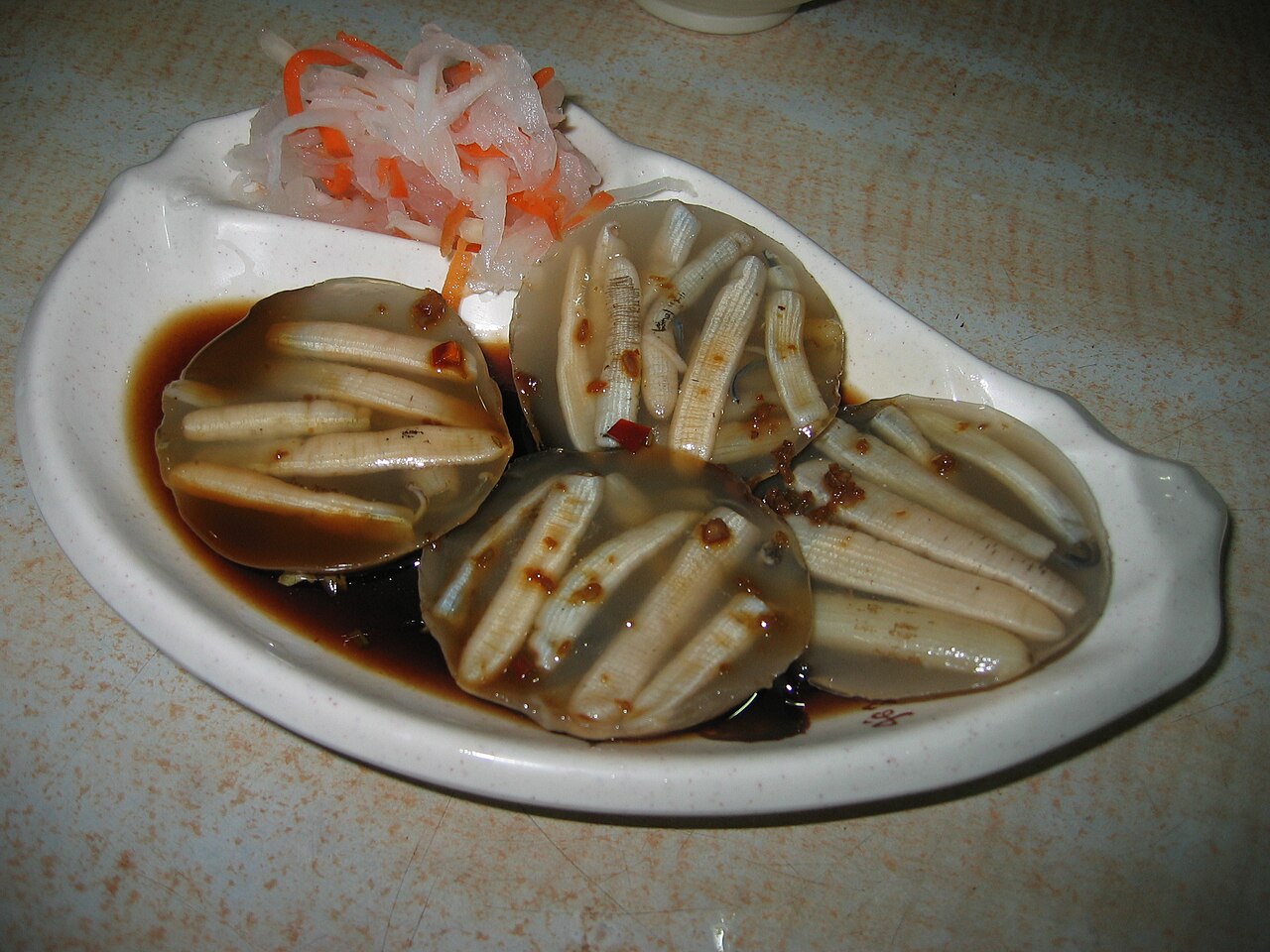
And now the most famous oddity of Minnan cooking — 土笋冻 (tǔsǔndòng) is a cool, translucent jelly set from the collagen of a coastal "sea worm" (a sipunculid that lives in the mudflats). The worms are boiled until they release their collagen, and as it cools it sets into jelly with the worms suspended inside. It's eaten chilled with dips of soy, vinegar, garlic or mustard; the taste is mildly salty and umami, the jelly springy. Honestly, the look and the backstory put a lot of people off — but it's something Xiamen locals are genuinely proud of and rate among the city's top snacks. If you're game, one bite is a taste of the real local thing.