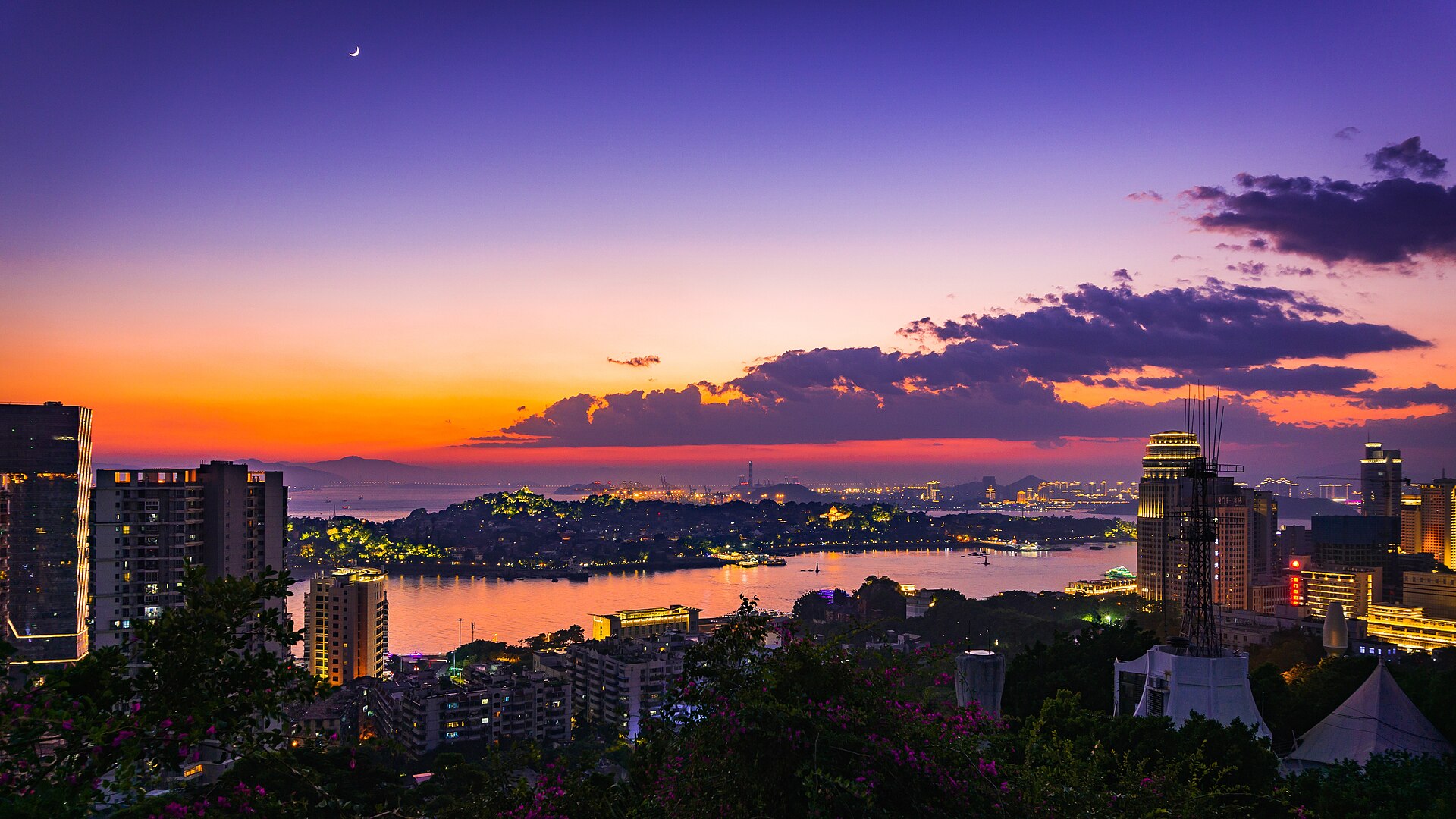
A 15-minute ferry from Xiamen and you step into another world — a tiny island with not a single car, just winding stone lanes, colonial villas built by a dozen nations, dense greenery, and piano notes drifting on the breeze, which is how it earned the nickname 'the piano island'.
Picture this: you step off the ferry at a small pier, walk into a lane, and suddenly the traffic, the horns, the familiar noise of a city all disappear — because Gulangyu has not one single car. What is left is the sound of footsteps, birds in the banyan trees, and now and then a few bars of piano floating out of an old house. This is a tiny island, barely 2 square kilometres, sitting right off Xiamen and separated only by a narrow strait you can cross by boat in under 20 minutes.
Gulangyu (鼓浪屿) was inscribed as a UNESCO World Heritage Site in 2017 as a historic international settlement. After Xiamen opened as a treaty port in the mid-19th century, Western powers and overseas Chinese merchants built homes, consulates, churches and schools here, leaving behind more than a thousand colonial-era villas that mix European, southern-Chinese and a hybrid local style sometimes called 'Amoy Deco'. Walk a few steps and the building beside you is in a completely different style, until the whole island feels like an open-air museum.
So where does the 'piano island' nickname come from? Families here have loved classical music for generations — Gulangyu is said to have one of the highest numbers of pianos per resident in China, and it has produced several famous concert pianists. Today the island has a Piano Museum displaying rare antique pianos from around the world inside the seaside Shuzhuang Garden, and as you wander you really might catch someone practising at a window in one of the old houses.
Tourists and locals board at different piers — knowing this means you won't end up at the wrong terminal and miss your slot.
This is what trips people up most often. During the day, tourists (anyone without Xiamen household registration) must board at the Xiamen International Cruise Terminal (邮轮中心厦鼓码头), on the north side of Xiamen island — not the old 'Lundu' ferry pier (轮渡) downtown near Zhongshan Road, which is reserved for local residents and pass-holders. The tourist ferry lands on Gulangyu mainly at Sanqiutian Pier (三丘田), or at Neicuo'ao Pier (内厝澳) on the other side of the island.
The crossing takes about 15–20 minutes. A round-trip ticket is around ¥35 (~฿175) on the ordinary boat and around ¥50 (~฿250) for an air-conditioned premium cabin. Tickets are return-only and valid for about 20 days. At night the routing can switch piers, so check the evening sailings ahead if you plan to come back late.
Gulangyu ferry tickets are sold under your real name: when you buy, you enter your passport number, and you must choose a timed ferry slot for the crossing, because each slot has a limited quota. Foreign visitors can book ahead through the 'Xiamen Ferry' mini-program in WeChat or Alipay (linked to a verified passport) up to about 10 days in advance, or buy at the terminal counter — but in high season the good slots sell out fast.
On the day, arrive at the terminal about 30–45 minutes before your booked slot, because you pass through a ticket and passport check rather like boarding a flight. Miss your slot and you have to queue for the next one that still has space.
From the island's highest point to its seaside garden, lanes of old villas and small eats — knowing what's where makes the walking pay off.
A giant granite outcrop that is the highest point on the island. Climb the steps to the viewing platform and you get a 360-degree sweep of the whole of Gulangyu, the red-tiled roofs of the old villas, and the skyline of Xiamen across the strait. It is the island's signature photo, and the ticket is around ¥50–60 (~฿250–300). Honestly, the platform on top is small and tends to be busy — on holidays you queue to go up — so come early when the crowd is thin and the light is soft.
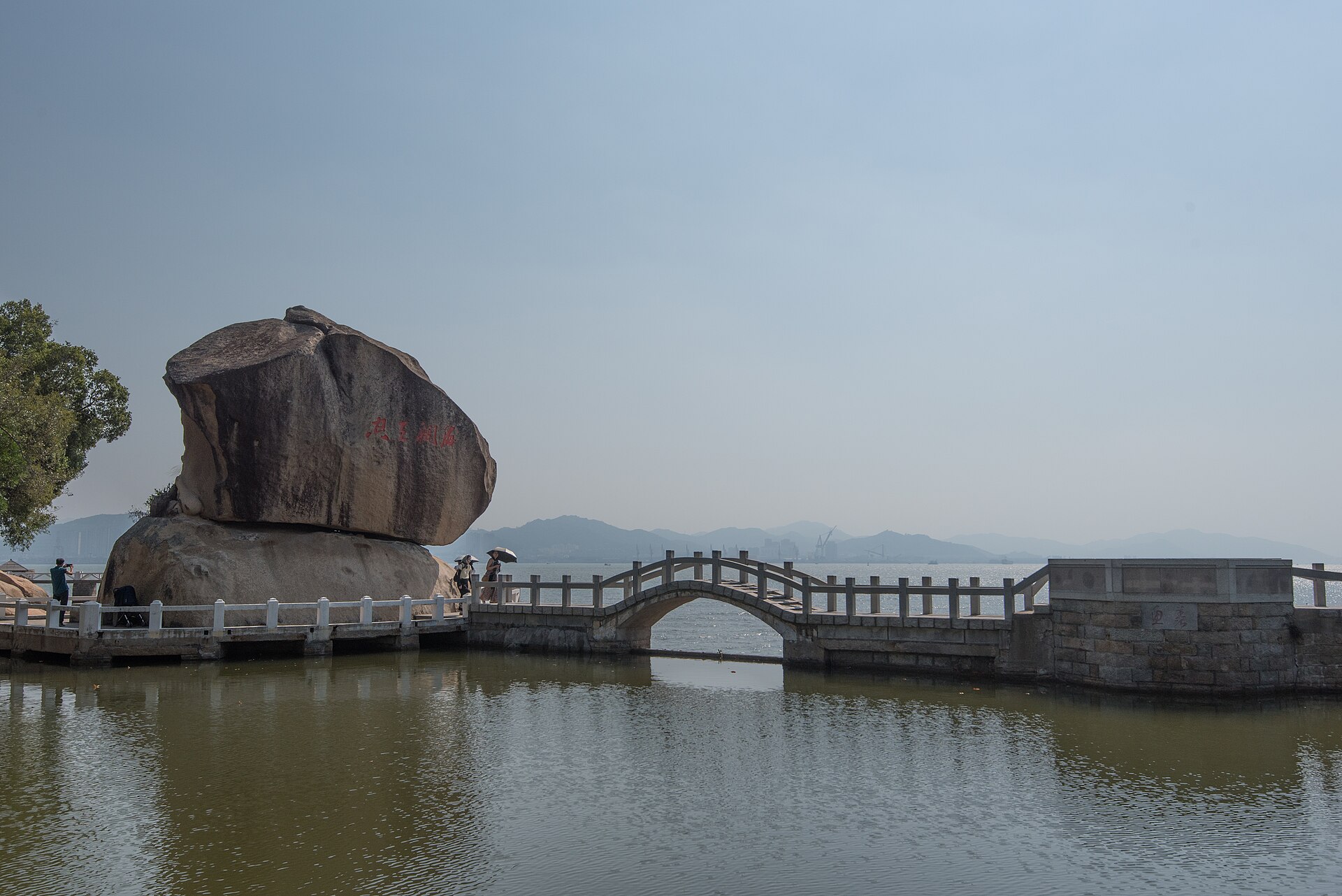
A seaside garden built in 1913 by an overseas-Chinese magnate, designed so that the sea becomes part of the garden itself, with a zig-zag stone bridge reaching out over the water, little pavilions and carefully placed rocks. Inside the garden is the Piano Museum, home to hundreds of rare antique pianos collected from around the world. The ticket is around ¥30 (~฿150) and includes the museum. It is an easy add-on after Sunlight Rock, since the two sit close together.
The true heart of Gulangyu isn't a ticketed sight — it is wandering the small lanes for free and slowly stumbling on one beautiful old house after another, each in its own style: Roman columns, fretwork timber balconies, an old church, a former consulate, street signs in Chinese mixed with English. Some are now cafés or guesthouses, some are still lived in. The further you stray from the busy main streets into the inner lanes, the quieter and prettier the island gets — keep a map or GPS open, because the lanes are a maze and easy to get lost in (though getting lost is half the fun).
Longtou Road (龙头路) is the main street, packed tightest with food stalls, souvenir shops and cafés. The famous things people queue for include meat pies (馅饼), fresh milk tofu, ice cream, fresh juices and Fujian sweets. Be honest with yourself, though: this strip is crowded and a lot of it is tourist-priced. Better to graze on a few small bites here until the hunger passes, then save your real meal for seafood or Minnan food back on the Xiamen side, where it's better value.
Around the island are several small sandy coves where you can sit, catch the sea breeze and look back across the strait at the Xiamen skyline. In the late afternoon the golden light on both the water and the old buildings is lovely — especially if you are staying overnight, because once the last tourist ferry has gone, the lanes that were jammed by day fall completely silent, leaving just the warm glow from the old houses and the sound of the waves. It is a side of Gulangyu that day-trippers never get to see.
If your time is tight, a day trip easily covers the main sights in one day — cross over in the morning, walk Sunlight Rock and Shuzhuang Garden, get lost among the villas, then head back before evening. The thing to watch is the late afternoon, roughly 15:00–18:30, when the whole island crowds back to the mainland at once and the ferry queue is at its longest, so allow extra time if you're returning then.
But if we're being honest — staying one night in a guesthouse on the island is well worth it. Once the last tourist ferry leaves, Gulangyu turns calm again, like a different place. The lanes you shuffled through by day are easy and pleasant to stroll at night under warm lamplight, and at dawn, before the first tourist ferry arrives, you nearly have the whole island to yourself. That is exactly why so many people say the real charm of Gulangyu only appears once the day-trippers have gone.
Gulangyu has no cars, and its surface is all stone lanes that climb and dip, so footwear matters: wear trainers or comfortable walking shoes with grip, not heels — you can easily clock up ten thousand steps in a day. If you are staying over, bring only a small bag or backpack and leave your large suitcase at your Xiamen-side hotel or in a terminal locker. Some guesthouses offer an electric-buggy luggage pickup, so ask your accommodation in advance.
On crowds: during the long Chinese holidays (Spring Festival · National Day, 1–7 October · Labour Day) the island is especially packed, with the ferry queues, the viewpoint queues and the crush in the lanes all at their peak. If you can avoid those windows, the visit is far more pleasant — a weekday outside holiday season is the sweet spot. Carry your passport and have WeChat/Alipay ready to scan for entry and to pay, since most shops on the island take payment by app.
The two headline sights on the island, plus the Xiamen-side spots worth adding to the same trip.