Home Xiamen China Xiamen Attractions Xiamen Hotels About
Home  ›  Asia  ›  China  ›  Xiamen  ›  Shuzhuang Garden
🌊 Xiamen Attractions · Gulangyu Island

Shuzhuang Garden (菽庄花园)
The garden designed to borrow an entire sea

On car-free Gulangyu, a merchant built a seaside garden in 1913 — walk the stone bridge that runs out over the open sea, thread through a rockery maze, then step into a pavilion that holds more than a hundred antique pianos. All on one ticket.

Why it matters

A Chinese garden that stole the whole sea

Picture this: you walk through a stone gateway and, at first, you see only what you'd expect from a classical Chinese garden — boulders, pavilions, narrow winding paths. Then a wall opens and the sea is suddenly in front of you, a pale stone bridge zigzagging out across the water, waves breaking beneath your feet, salt wind in your face. That single move is what sets Shuzhuang Garden (菽庄花园) apart from gardens elsewhere — its designers didn't build the view, they borrowed the sea around Gulangyu and made it the backdrop for everything.

The garden was built in 1913 by Lin Erjia (林尔嘉), a wealthy merchant of Taiwanese descent whose family resettled in Xiamen after 1895. He named it after his own courtesy name, "Shuzang" (叔臧), which sounds close to "Shuzhuang," and drew inspiration from his family's garden in Taipei, reinterpreting it on the Fujian shoreline. In 1955 his heirs donated the garden to the public, which is why anyone can wander it today.

It splits into two halves with wonderfully poetic names. Canghai Garden (藏海园) means "hiding the sea" — the side that reveals the seascape slowly, a little at a time. Bushan Garden (补山园) means "mending the mountain" — the side where piled rockeries stand in for peaks. Three features draw the most attention: the Forty-Four Bridge that runs out over the water, the Twelve Caves of Heaven rockery maze, and the Piano Museum in a pavilion right by the waves — and the best part is that all of it sits behind one ¥30 ticket.

Garden highlights

5 things not to walk past

Take the winding paths slowly and each corner opens its own view.
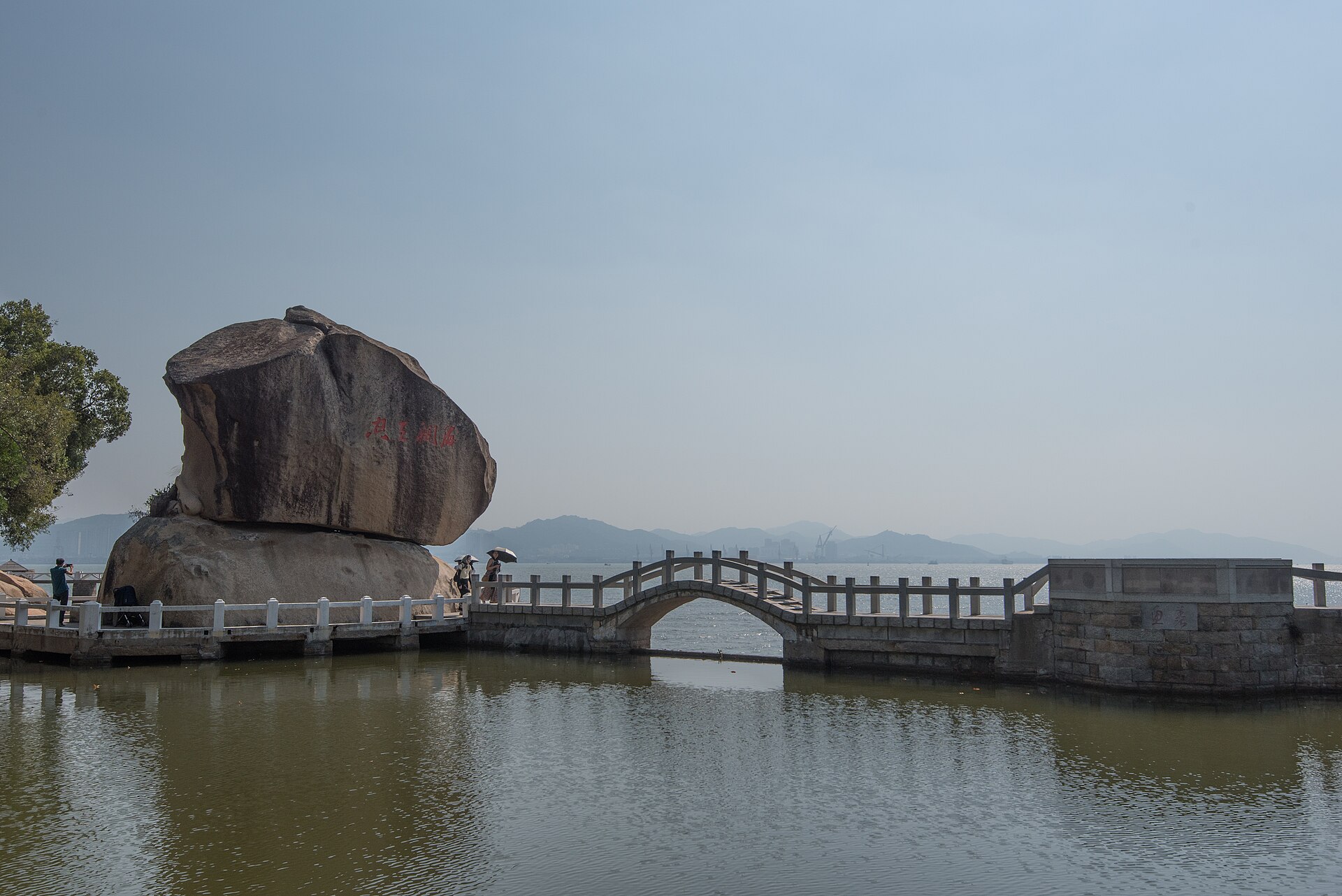
Shuzhuang Garden, Gulangyu, Xiamen — a boulder carved with red Chinese characters and an arched stone bridge crossing a seaside pond, with distant islands beyond 1
The Forty-Four Bridge (四十四桥)
Zigzag stone bridge over the sea · the garden's signature shot

This is the star. A pale stone bridge that doesn't cross a garden pond but runs out over the open sea, kinking back and forth like a path in a Chinese ink painting. The "forty-four" comes from Lin Erjia's age when he built it. Beneath the bridge, sluice gates let seawater in and split it into three separate pools, so the water inside the garden rises and falls with the real tide. Stand at the far end on a windy day and you'll understand why the pavilion here is named "listening to the waves."
Where: the Canghai Garden side, against the southern sea
Best at: high tide, when waves wash right up to the bridge
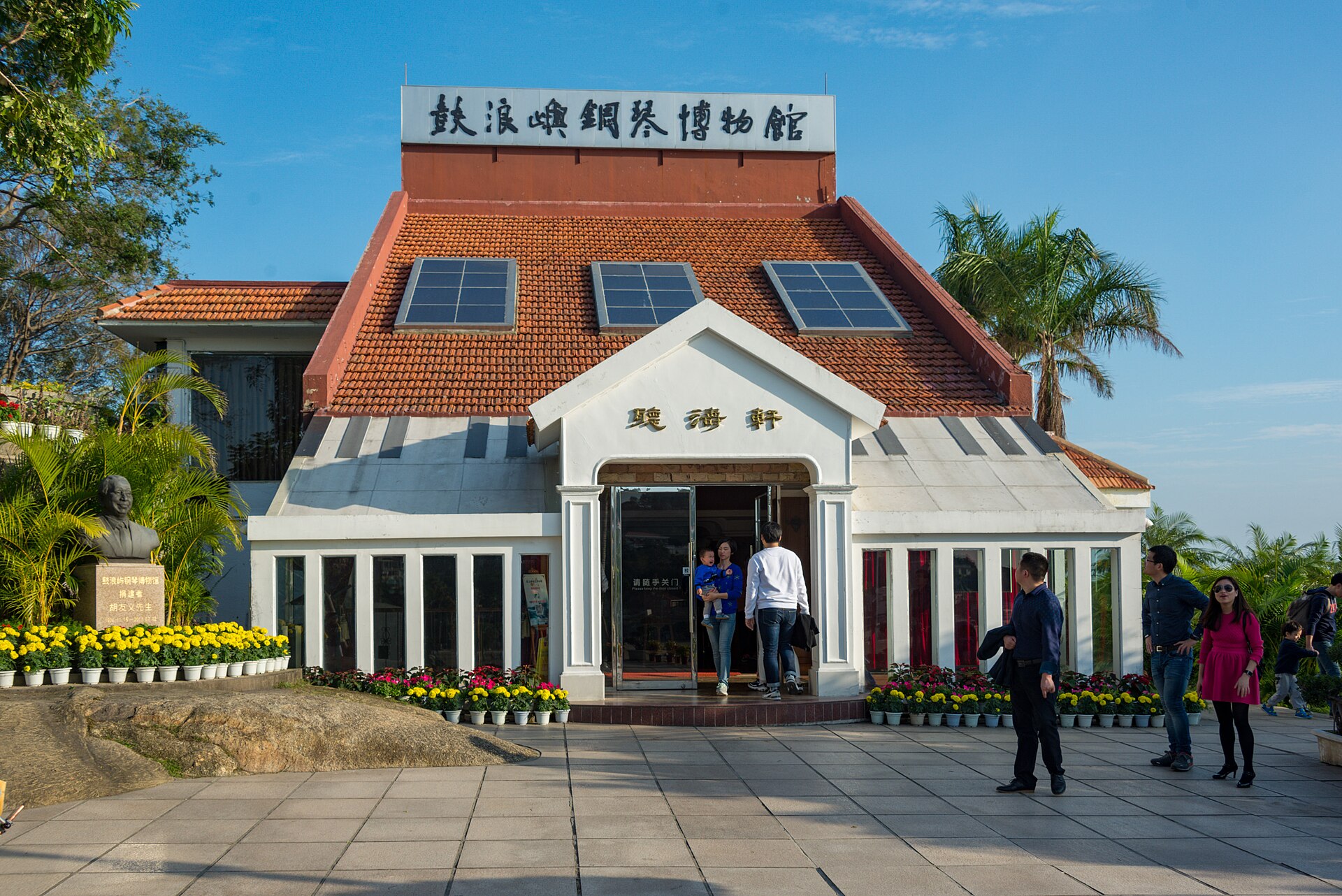
The Gulangyu Piano Museum building inside Shuzhuang Garden, Xiamen — a white building with a red-tiled roof and a Chinese-language sign reading Piano Museum 2
The Piano Museum (钢琴博物馆)
100-plus antique pianos in a seaside pavilion · included in the ticket

Gulangyu is nicknamed "Piano Island" for having more pianos per head than anywhere else in China, and the heart of that story sits inside Shuzhuang Garden. The Tingtao Pavilion (听涛轩, "listening to the waves") became China's first piano museum, opened in 2000. It holds more than a hundred antique pianos from the 18th and 19th centuries, all belonging to Hu Youyi (胡友义), a Gulangyu native who built a life in Australia and then collected pianos from around the world to give back to his birthplace. Among them are a gold-plated piano, the world's oldest four-cornered piano and self-playing pianos.

Where: Tingtao Pavilion, inside the garden · two floors
Entry: included in the ¥30 garden ticket — nothing extra to pay
🪨3
The Twelve Caves of Heaven (十二洞天)
A man-made rockery maze you can actually climb through

Over on the Bushan side is a rockery built into a stack of caves and tunnels, twelve interlinked passages named after the twelve animals of the Chinese zodiac. Duck inside and you hit forks, narrow staircases and shafts of light that open onto sea views at random. Kids love it because it plays like hide-and-seek, and adults get drawn into finding the way out — it's one of the most genuinely fun stretches of the garden. The passages are tight and dim, though, so wear shoes you can move in.

Where: the Bushan Garden side, near the slope up
Mind: narrow, dark passages · watch your head and uneven steps
🏯4
Sea pavilions & the borrowed view (借景)
The spots where garden and sea become one picture

The charm of Shuzhuang Garden is the "borrowed scenery" technique (借景) — instead of walling the sea out, the designers cut openings and placed pavilions so that Gulangyu's water slides in as the backdrop of every angle. Sit in a pavilion and look out and you'll frame the garden rocks, a red-timber hall and a ship passing through the strait all in one view. Many visitors say these are the best spots to rest — grab a bottle of water, sit and listen to the waves, and let an hour go quietly by.
Where: spread along the seafront of the Canghai Garden
Tip: look for an angle that catches pavilion, rock and sea together
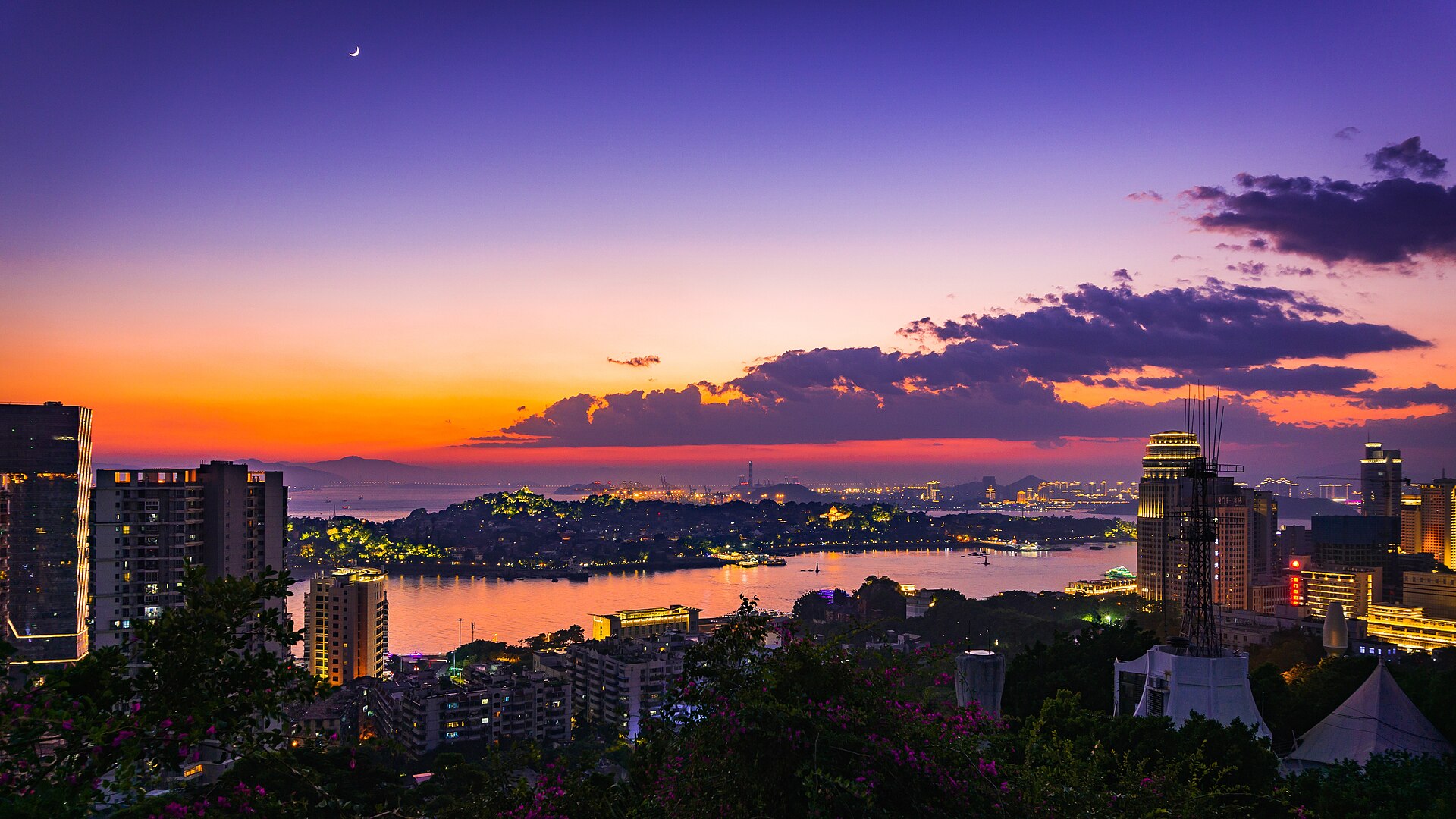
View over Gulangyu Island, Xiamen, at sunset — rooftops on the island, the strait, and the Xiamen city skyline in the distance 5
Pair it with Sunlight Rock (日光岩)
The two sit close together · do both in a half-day

Sunlight Rock, the highest granite peak on Gulangyu, is only a few minutes' walk from Shuzhuang Garden, so most people do the two back to back — climb Sunlight Rock first for the panorama over the whole island, then come down and stroll Shuzhuang Garden along the sea at an easy pace. If you're doing both on the same day, the ¥100 combo ticket covering five island sights is better value than buying tickets one by one.

Distance: a few minutes' walk from Shuzhuang Garden to Sunlight Rock
Combo: ¥100 covers five sights including Sunlight Rock + the Piano Museum
Plan before you go

Tickets, hours and how to get there

Everything you need to know on one page.

Admission
¥30 (~฿150) adult
Piano Museum is included · the five-sight combo (with Sunlight Rock) is ¥100, better value if you climb several spots
Opening hours
8.30 am–5.30 pm (to 6 pm in summer)
1 Oct–31 May closes 5.30 pm (last entry 5 pm) · 1 Jun–30 Sep closes 6 pm (last entry 5.30 pm) · open daily
Getting there
Ferry to Gulangyu + a 15–20 min walk
Tourists board at the Xiamen Cruise Terminal (邮轮中心厦鼓码头) with passport + timed ticket · then walk south on the island
Time needed
1–2 hours
Garden + Forty-Four Bridge + Twelve Caves of Heaven + the Piano Museum · add time if you like to sit and listen to the sea
Best time
Early after the first ferries, or late afternoon
Avoid midday, when tour groups land together · soft morning and evening light by the sea beats harsh sun for photos
Quietest times
Weekdays, outside the long holidays
Golden Week (1–7 Oct) and Chinese New Year pack the whole island and ferry tickets sell out fast — book well ahead
The tip regular visitors pass on: the real bottleneck isn't the garden ticket, it's the timed ferry ticket, which has a daily quota and sells out fast in high season. Booking your ferry (and any combined attraction pass) online in advance saves a lot of stress — see Gulangyu ferry & tours on Klook →
Getting there

Catch the ferry, then walk on

Gulangyu is car-free — there are no private cars or taxis on the island, and everyone arrives by ferry. Shuzhuang Garden is on the southern side, a short walk from the island's piers:

Xiamen to the island (ferry)
Cruise Terminal 邮轮中心厦鼓码头 · ~20 min

Foreign visitors board at the Xiamen Cruise Terminal, not the downtown pier, and need a passport plus a timed ferry ticket. You can book online in advance — arrive at the terminal about 30 minutes before your slot.

Return ferry: roughly ¥35–50 · Crossing: ~20 min
To the terminal by metro
Metro Line 1 · Cruise Center station 邮轮中心

From central Xiamen, take Metro Line 1 to Cruise Center station and walk on to the terminal — quick and traffic-free. If you're staying on Xiamen Island near the centre, a taxi or DiDi to the terminal is also fast.

Metro: ¥2–4 · Taxi from town: ¥20–40
On the island: pier → garden
Walk ~15–20 min

You land at Sanqiutian (三丘田) or Neicuoao (内厝澳) pier, then walk toward the south of the island, following little lanes past colonial-era villas until you reach the garden. There are signs along the way, and the walk is half the fun — the whole island is an open-air museum of architecture.

Walk: ~15–20 min · Slopes: a few — wear comfy shoes
Half-day plan: the south of the island
Shuzhuang Garden + piano + Sunlight Rock

With a half-day, start at Sunlight Rock in the morning (cooler air, fewer people) for the view over the island, then come down and wander Shuzhuang Garden and the Piano Museum mid-morning. Finish with the old lanes and a bite to eat before catching the ferry back.

Total: 4–5 hours · Combo ticket: ¥100 is the best fit for this plan
Where to stay near Gulangyu

Where to sleep near the ferry and the island

To catch the first ferry before the crowds, stay on the Xiamen Island side near the terminal — or stay overnight on Gulangyu itself to have the island after the day-trippers leave. Here are the options we've pulled together:

Frequently asked

FAQ · before you visit Shuzhuang Garden

How much is Shuzhuang Garden, and is the Piano Museum a separate ticket?
Adult admission is ¥30 (about ฿150), and it already includes the Piano Museum inside the garden — there is no separate ticket. If you also plan to climb Sunlight Rock, the combo ticket covering five sights (Sunlight Rock, Shuzhuang Garden, Haoyue Garden, the Piano Museum and the Organ Museum) costs ¥100 and works out cheaper than buying each one individually.
What are Shuzhuang Garden's opening hours?
From 1 October to 31 May the garden is open 8.30 am to 5.30 pm, with last entry at 5 pm. From 1 June to 30 September it stays open later, 8.30 am to 6 pm, with last entry at 5.30 pm. It is open every day of the week.
How do I get to Shuzhuang Garden — do I need to take the ferry?
Yes. The garden is on Gulangyu, a car-free island reachable only by ferry. Tourists board at the Xiamen Cruise Terminal (邮轮中心厦鼓码头) on the mainland and need a passport plus a timed ferry ticket, which can be booked online in advance. The terminal is easy to reach on Metro Line 1 (Cruise Center station). Once on the island it is a 15–20 minute walk south to the garden, near the foot of Sunlight Rock.
How long should I spend at Shuzhuang Garden?
About 1 to 2 hours is comfortable — enough to walk the garden, photograph the Forty-Four Bridge, wind through the Twelve Caves of Heaven and browse the two floors of the Piano Museum. Add half an hour if you want to sit by a pavilion and listen to the waves. Most people pair Shuzhuang Garden with nearby Sunlight Rock in a single half-day.
What is worth seeing in the Piano Museum at Shuzhuang Garden?
The Gulangyu Piano Museum sits in the Tingtao Pavilion (听涛轩) inside the garden and was China's first piano museum. It displays more than a hundred antique pianos from the 18th and 19th centuries, all collected and donated by Hu Youyi (胡友义), a Gulangyu native who settled in Australia. Highlights include a gold-plated piano, the world's oldest four-cornered piano and self-playing pianos — one reason Gulangyu is nicknamed Piano Island.
Klook · Gulangyu ferry & tickets

Book your Gulangyu ferry and sights ahead — beat the sold-out slots

The thing that sells out fastest on the island is the timed ferry ticket, not the garden admission. Booking the ferry and a combined attraction pass (covering Shuzhuang Garden + Sunlight Rock) ahead of time through Klook saves stress, especially over long holidays.

See Gulangyu on Klook →
Wherebest is a Klook affiliate partner — we may earn a commission when you book through our links, at no extra cost to you.