Home Xiamen China Xiamen Hotels About
Home  ›  China  ›  Xiamen  ›  Xiamen Café Guide
☕ Xiamen Coffee, Tea & Drinks · 2026

Xiamen — A Seaside Coffee City,
and Tieguanyin Oolong Tea

An old treaty port where coffee and tea have lived side by side for a century — from the heritage villa cafés of Gulangyu Island and the artsy seaside harbour of Shapowei to the quiet garden cafés of Huaxin Road and the oolong teahouses where Fujian locals sip all day long.

Why Xiamen

A city where coffee and tea have lived side by side for a century

Picture yourself in an old treaty-port villa on Gulangyu Island, a sea breeze drifting in, a latte in your hand — while at the next table a Xiamen auntie brews oolong in a tiny clay pot and pours it into thimble-sized cups. That single scene sums Xiamen up, because here coffee and tea were never separate things. Xiamen opened as a foreign-trade treaty port in 1843, Western merchants and missionaries carried coffee in through Gulangyu, and overseas-Chinese returning from Southeast Asia brought their own coffee habits home. Café culture has been rooted here since the early 20th century.

The upshot is that Xiamen is now one of the densest café cities in China — walk a few steps and there's another coffee shop. You'll find old villa cafés converted from heritage houses, sea-view spots looking out over the water, and serious new specialty roasters obsessing over their beans; a couple of local baristas have even judged at world-level coffee competitions. The tea roots run just as deep, because Fujian is the home of oolong, above all the Tieguanyin (铁观音) grown in Anxi County just up the road.

Before you head out, one thing to understand: Xiamen has both neighbourhoods where tourists cluster and neighbourhoods where locals actually sit. Honestly, cafés on Gulangyu Island and around Zengcuo'an (曾厝垵) are pretty but crowded and pricier. If you want the local feel at a fairer price, look to Shapowei (沙坡尾) by the sea and the villa cafés of Huaxin Road (华新路), which are far quieter and leafier. We'll walk you through it neighbourhood by neighbourhood.

The city's roots

Fujian oolong — the flavour that came before coffee

Long before coffee arrived, people in Xiamen were drinking oolong from tiny cups — and they still drink it every day.
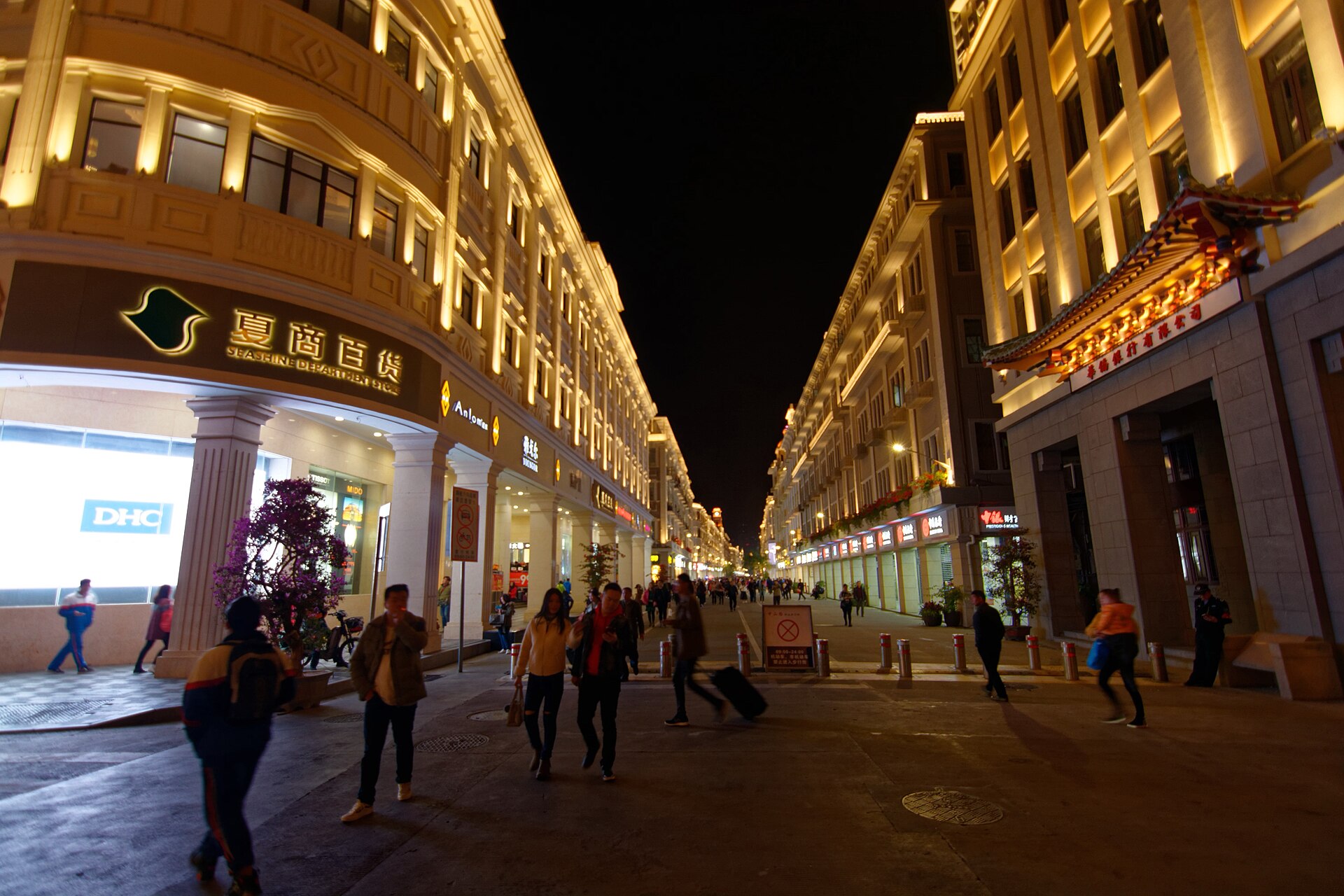
Zhongshan Road (中山路) pedestrian street in Xiamen at night, lit-up treaty-port arcade buildings — the old-town district where oolong teahouses and tea shops are scattered

Zhongshan Road (中山路) pedestrian street, the old town — this area is dotted with oolong teahouses and tea shops

Fujian is the home of China's most famous oolong, and the star is Tieguanyin (铁观音) — the "Iron Goddess of Mercy" — a floral, smoothly mellow oolong grown in Anxi County (安溪) not far from Xiamen. Locals brew it gongfu-cha style (功夫茶): a small clay pot and tiny cups, quick steeps poured often, with the leaves yielding 6 to 8 infusions that shift in flavour cup by cup. You sip and chat, sip and chat — it's a social ritual woven into everyday life far more than just a drink.

The charm of the tea here is that it stays cheap and genuinely everyday — not some pricey luxury. At teahouses (茶馆) around the Zhongshan Road old town, at tea shops across the city, even in Xiamen homes, you'll see a brewing set sitting on every table. Sit down for one round of hot Tieguanyin and you'll understand why this city carries cafés and teahouses side by side so easily.
Tip: If you want to buy Tieguanyin as a gift, go to a tea shop that lets you taste before buying (most are happy to brew you a cup). Check the grade and aroma first — prices vary a lot with quality — and compare two or three shops in the old town to get the best value.
Xiamen's world of drinks

What can you drink in this city?

Get a feel for each one first, then decide whether today calls for specialty coffee, proper oolong tea, or a cold drink with a sea view.

1
Specialty Coffee
Pour-over · Latte · One of China's densest café scenes

The heart of Xiamen's coffee scene — independent specialty shops that care about their beans and their brew, pulling consistent pour-overs and lattes. Some roast in-house; some have baristas of competition calibre. Xiamen has so many cafés that you trip over one every few steps, from tiny shops down alleys to slick design spots inside old villas. If you take your coffee seriously, this is a city you won't get bored exploring.

Where: Shapowei · Huaxin Road · Gulangyu · citywide
Price: ¥25–45 (~฿125–225) / cup
Known for: Pour-over · latte · skilled baristas
🍵2
Tieguanyin Oolong 铁观音
Tieguanyin Oolong · Brewed gongfu-cha style · Cheap local ritual

Fujian's most famous oolong, from Anxi County just up the road — floral, smoothly mellow, brewed in a small clay pot and tiny cups gongfu-cha style, yielding 6 to 8 infusions that change flavour cup by cup. Fujian people drink it as a daily ritual, sipping and chatting away a whole afternoon. It's the cheapest drink in the city and the most genuinely everyday thing you can order in Xiamen.

Where: Teahouses · Zhongshan Rd tea shops · citywide
Price: ¥10–30 (~฿50–150) / pot · easy entry
Known for: Floral aroma · 6–8 steeps · gongfu cha
🌊3
Sea-view Cafés
Sea-view Café · Around the coast · Top photo spots

Xiamen is an island city by the sea, so sea-view cafés come with the territory — from spots on Gulangyu looking out over the water and the boats, to cafés along the Island Ring Road (环岛路) and Shapowei right on the old harbour. Many are designed so the upstairs seating faces the sea. Settling in with a coffee or a cold drink in the late afternoon, looking out at the water, is something Xiamen pulls off far better than any inland city.

Where: Gulangyu · Island Ring Road · Shapowei
Price: ¥30–50 (~฿150–250) · sea views cost a touch more
Best time: Afternoon–evening, soft light and clear skies
🏛️4
Old Villa Cafés
Villa Café · Treaty-port houses · Huaxin Road & Gulangyu

Xiamen's signature charm is the café set inside an old treaty-port villa or an overseas-Chinese mansion — above all on Huaxin Road (华新路), lined with 1930s garden houses, shaded by trees, quiet, and far more local than touristy. You sit in the high-ceilinged rooms of an old house with a little garden outside, coffee in one hand and a book in the other. It's a café atmosphere that's hard to find in other cities.

Where: Huaxin Road (华新路) · Gulangyu Island
Price: ¥28–45 (~฿140–225) / cup
Known for: Treaty-port houses · quiet · local crowd
🧋5
Milk Tea & Cold Drinks
Milk Tea · Fruit tea · New-wave cold drinks

Like every Chinese city, Xiamen is full of big-name milk-tea and cold-drink chains — bubble milk tea, fresh fruit teas, seasonal coolers. They're lighter on the wallet than specialty coffee and perfect for Xiamen's warm, humid weather. Some local shops play with hometown ingredients, turning oolong into milk tea or tea-scented coolers. Grab one and wander the old town or the seafront — it suits this city perfectly.

Where: Citywide · old town · along the seafront
Price: ¥12–25 (~฿60–125) / cup
Known for: Easy on the wallet · drink-and-walk · oolong milk tea at some shops
🍺6
Craft Beer & Shapowei Bars
Craft Beer · Seaside bars · Where the cafés go after dark

Come evening, Shapowei's café scene turns into a bar scene. This art zone on the old boat harbour has small bars, craft-beer spots, and places that are cafés by day and bars by night — including a brewery started by Germans who settled here. The vibe is mellow, nowhere near as hectic as the tourist streets. Sip a beer, listen to some music, watch the fishing boats in the harbour — a fitting end to a Xiamen day, especially for a younger crowd.

Where: Shapowei art zone (沙坡尾) · on the water
Price: Beer/cocktails ¥30–60 (~฿150–300)
Best time: Evening, once the bars get going
Where to sit

An area-by-area guide

Four scenes, each its own thing — hipster-by-the-sea, quiet local villas, the legendary view island, and the buzzy tourist street.

Shapowei (沙坡尾)
Seaside art zone · Xiamen's last fishing village · Local crowd

The last old fishing village inside urban Xiamen, tucked between Xiamen University and the sea. Its old boat harbour has been turned into an art zone full of indie cafés, bars, design shops and street-art murals, all sitting next to fishing boats that still dock there. The vibe is mellow and hipster, right on the water — photos and coffee by day, bars by night. It's the café neighbourhood young people and locals love most.

Getting there: Near Xiamen University & Nanputuo Temple · Price: coffee ¥25–40 · Best time: afternoon–evening
Huaxin Road (华新路)
Villa cafés in old garden houses · Leafy & quiet · Properly local

If you want a good, quiet café the way Xiamen locals do it, Huaxin Road is the answer. The street is lined with 1930s overseas-Chinese villas and garden houses, many converted into cafés that keep the old-house feel intact — high ceilings, big windows, little gardens, and big shade trees. You can nurse a coffee and a book here all afternoon. Far fewer tourists than Gulangyu, and a neighbourhood where locals genuinely come to sit.

Getting there: Central, near the old town · Price: coffee ¥28–45 · Best time: late morning–afternoon
Gulangyu Island (鼓浪屿)
Treaty-port villas · Sea-view cafés · World Heritage · Birthplace of Xiamen coffee

A World Heritage island that's the birthplace of Xiamen's coffee culture, going back to treaty-port days. It's full of old Western villas, pretty gardens, and sea-view cafés looking out over the boats and the mainland. The classic atmosphere is hard to match elsewhere — but honestly it's a full-on tourist island now, crowded, with coffee pricier than in the city. It's better for a single cup to soak up the atmosphere and history than for settling in regularly.

Getting there: Ferry from the city terminals · Price: coffee ¥35–55 (higher) · Best time: morning, before the crowds
Zengcuo'an (曾厝垵) & the seafront
Beachside food street · Tourist cafés · Buzzy but pricey

A beachside village turned into a hugely popular food-and-café street. The lanes are packed with drink stands, photogenic cafés and snacks, and it sits near the Island Ring Road where sea-view cafés line up. The atmosphere is fun and lively, great for grazing as you wander. But honestly it's a full tourist zone — pricier and less local than Shapowei or Huaxin Road. Come for the breezy seaside fun, but for a good, quiet coffee, the other areas do it better.

Getting there: On the Island Ring Road · near the beach · Price: coffee ¥30–50 · Best time: afternoon–evening
Worth knowing

Cafés, teahouses and drinking spots people talk about

Some are famous for atmosphere, some for the coffee or the local flavour — pick by what you're in the mood for.

1
Shapowei Art Zone (沙坡尾)
Cafés + bars on the old harbour · Former fishing village · Where locals sit

Not a single shop but a whole neighbourhood, and the beating heart of Xiamen's new-wave café scene. The old fishing harbour has been reborn as an art zone full of indie cafés, design shops, bars and street-art murals, all alongside fishing boats that still dock here for real. You'll find everything from tiny specialty coffee spots to cafés that flip into music bars after dark. The mood is laid-back and right on the sea — nowhere near as frantic as the tourist streets. This is where young Xiamen genuinely comes to sit.

Address: Shapowei (沙坡尾) · Siming District · near Xiamen University & Nanputuo Temple
Price: coffee ¥25–40 · beer ¥30+ · Pays: WeChat Pay · Alipay · some take cards
2
Huaxin Road Villa Cafés (华新路)
1930s garden houses · Quiet, leafy · Genuinely local

Huaxin Road is the answer for anyone who wants a good, quiet coffee the way Xiamen locals do it. The street is lined with 1930s overseas-Chinese villas and garden houses, many turned into cafés that keep every bit of the old-house feel — high ceilings, big windows, little gardens, and great shade trees overhead. You can sit with a coffee and a book the whole afternoon. There are far fewer tourists than on Gulangyu, and it's the kind of place that tells you exactly how much this city loves sitting in cafés.

Address: Huaxin Road (华新路) · central Xiamen
Price: coffee ¥28–45 (~฿140–225) · Tip: come on a weekday afternoon for a quiet table
3
Old Cafés on Gulangyu Island (鼓浪屿)
Treaty-port villas · Sea-view cafés · Birthplace of Xiamen coffee

Gulangyu is where Xiamen's coffee culture began, well over a century ago. Today the island has old cafés set inside Western treaty-port villas — some run by old families that have been here for generations, some with balconies looking straight out over the sea and the boats. The draw is the classic atmosphere and history you won't find elsewhere. Honestly it's pricier than the city and crowded, so come for one cup to soak in the island mood rather than hoping for a bargain.

Address: Gulangyu Island (鼓浪屿) · ferry from the city
Price: coffee ¥35–55 (~฿175–275) · Tip: arrive in the morning to dodge the midday–afternoon crowds
4
Oolong Teahouses (茶馆) in the Old Town
Tieguanyin · Gongfu-cha brewing · Cheap local ritual · Zhongshan Road

If you want to drink the way Fujian locals do at the lowest price, find a teahouse (茶馆) in the old town around Zhongshan Road (中山路). These places serve oolong, especially Tieguanyin from Anxi, brewed in a clay pot and tiny cups gongfu-cha style, with the leaves re-steeped many times over. You sit and chat for ages. Nothing fancy, but completely genuine — the everyday drink of Xiamen at the cheapest price, offering something coffee can't. The same streets also have tea shops where you can buy leaves to take home.

Address: Old town around Zhongshan Road (中山路) · Siming District
Price: tea ¥10–30 / pot · Read more: Xiamen food guide
5
Sea-view Cafés on the Island Ring Road (环岛路)
Full sea views · Near the beach · Afternoon cold drinks

Xiamen's Island Ring Road (环岛路) is lined with cafés and drink spots looking out over the sea and the sand. Many have outdoor seating or an upstairs balcony facing the water — ideal for a coffee or a cold drink in the late afternoon when the light softens and the breeze picks up, sea air included. It's the kind of scene that an island city like Xiamen does far better than anywhere inland. Cycling the road and hopping between cafés is a hugely popular thing to do here.

Address: Island Ring Road (环岛路) · the southern–eastern beach stretch
Price: coffee/drinks ¥30–50 (~฿150–250) · Best time: afternoon–evening
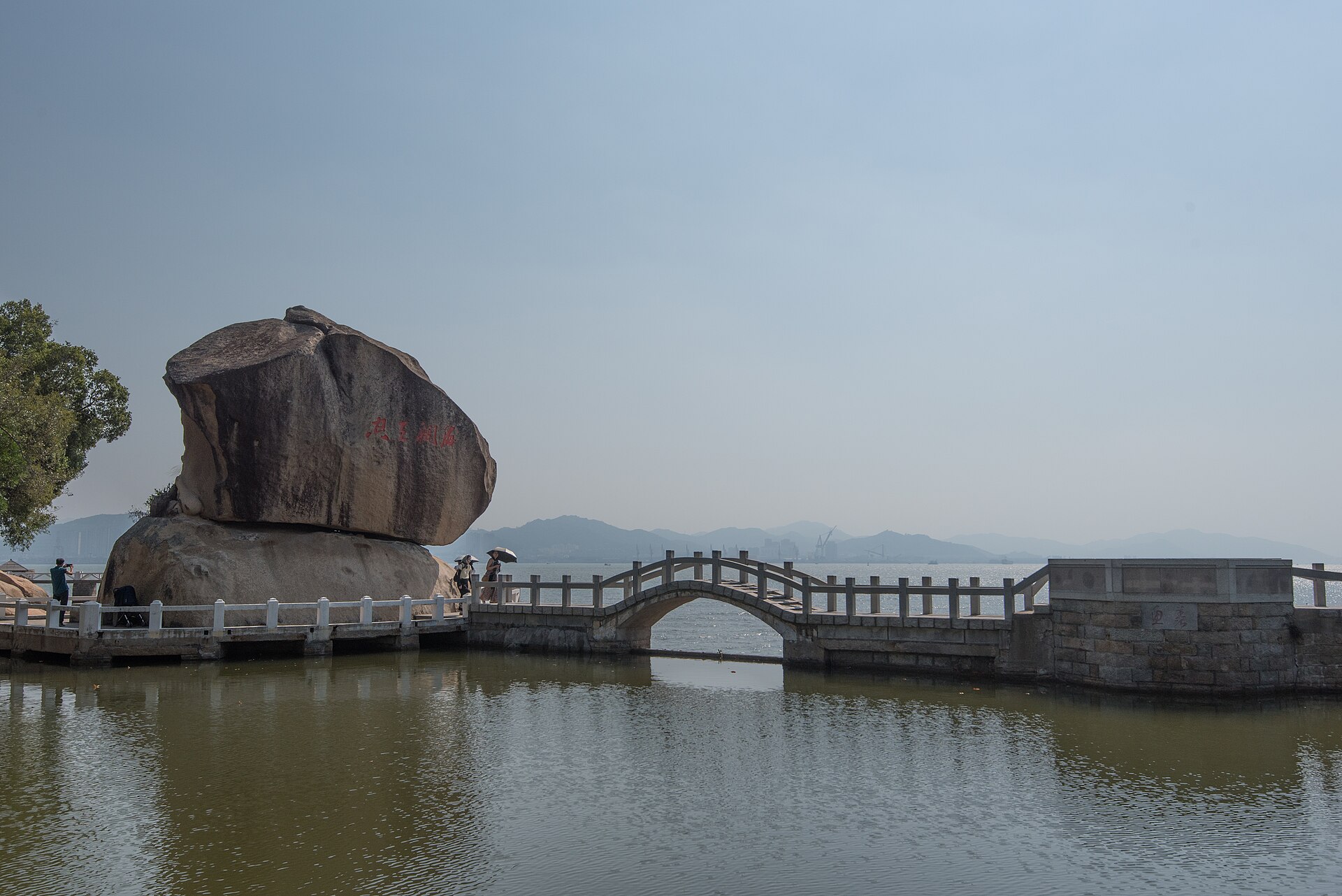
Shuzhuang Garden on Gulangyu Island, Xiamen — an arched stone bridge and seaside pavilion looking out over the water, the kind of sea view Gulangyu's cafés enjoy

Shuzhuang Garden by the sea on Gulangyu Island — the kind of sea view the island's old cafés look out on

What to order

Drinks worth trying

Things you can drink in Xiamen but struggle to find elsewhere.

🍵1
Tieguanyin (铁观音)
Anxi oolong · Brewed gongfu-cha style · Floral

The one drink that sums up Fujian's roots in a single cup — Anxi oolong, floral and smoothly mellow, brewed in a clay pot and tiny cups gongfu-cha style, with 6 to 8 infusions that slowly shift. It's the best place to start if you want to understand this city's tea culture. Sit down for a round in an old-town teahouse and you'll get why Fujian people drink it every single day.

Where: Teahouses · Zhongshan Road tea shops
Price: ¥10–30 (~฿50–150) / pot
2
Specialty Coffee (Pour-over / Latte)
Independent bean-focused shops · A dense café scene

Xiamen has so many specialty cafés that coffee lovers can explore for days without getting bored — a pour-over pulled from good beans, or a latte with silky microfoam. Pick a shop in Shapowei or on Huaxin Road and you get both good coffee and good atmosphere. Some have baristas of competition calibre, so chatting with them about the beans is part of the fun — coffee with both flavour and a story.

Where: Shapowei · Huaxin Road · citywide
Price: ¥25–45 (~฿125–225)
🥥3
Coconut Coffee & Southeast-Asian-leaning Drinks
Coconut Coffee · Overseas-Chinese heritage · Cold drinks

Because Xiamen is a city of overseas-Chinese who returned from Southeast Asia, many cafés carry a tropical streak — above all coconut coffee (coffee blended with coconut water or milk), sweet and creamy and a great match for the city's warm, humid air. It's a cold drink that tells the story of the treaty port and migration in a single glass. If you spot it on a menu, order one — this flavour is at home in a Fujian port city like this.

Where: City cafés · some Gulangyu spots
Price: ¥28–48 (~฿140–240)
🧋4
Oolong Milk Tea & Fruit Tea
Oolong Milk Tea · New-wave cold drinks

Some of Xiamen's newer milk-tea shops play with the city's tea roots, turning oolong into milk tea or fruit tea with a deeper, leafier flavour than the usual cup — alongside the bubble milk tea and fresh fruit teas you find all over China. Lighter on the wallet than specialty coffee and perfect to sip while wandering the old town or the seafront — a cool option for one of Xiamen's warm, humid days.

Where: Citywide · old town · seafront
Price: ¥12–25 (~฿60–125)
Before you go

Practical tips that actually help

Xiamen runs on mobile payments almost everywhere — most cafés, teahouses and gift shops take WeChat Pay and Alipay first. Smaller teahouses and street stalls often take only WeChat Pay or cash. Before you travel, set up Alipay and link a Visa/Mastercard via its international mode (it works for tourists · see our China payments guide).

On prices, understand that Xiamen has both tourist-heavy areas and genuinely local ones. Cafés on Gulangyu Island and around Zengcuo'an are pretty but pricier and crowded. For the local feel at a fairer price, head to Shapowei or Huaxin Road. And if you really want to save, oolong tea at a local teahouse is much cheaper — and the most genuinely everyday thing this city drinks.

On getting around: reaching Gulangyu means taking a ferry from the city terminals (book ahead in peak season). In the city itself there's a very handy metro — especially Line 1, which runs along the coast with lovely views as it crosses the bridge. Café districts like Shapowei sit right by Xiamen University and Nanputuo Temple, so you can walk over from the sights easily. If you'll need general internet access in China, set up a VPN before you travel — see our China Internet & VPN guide.

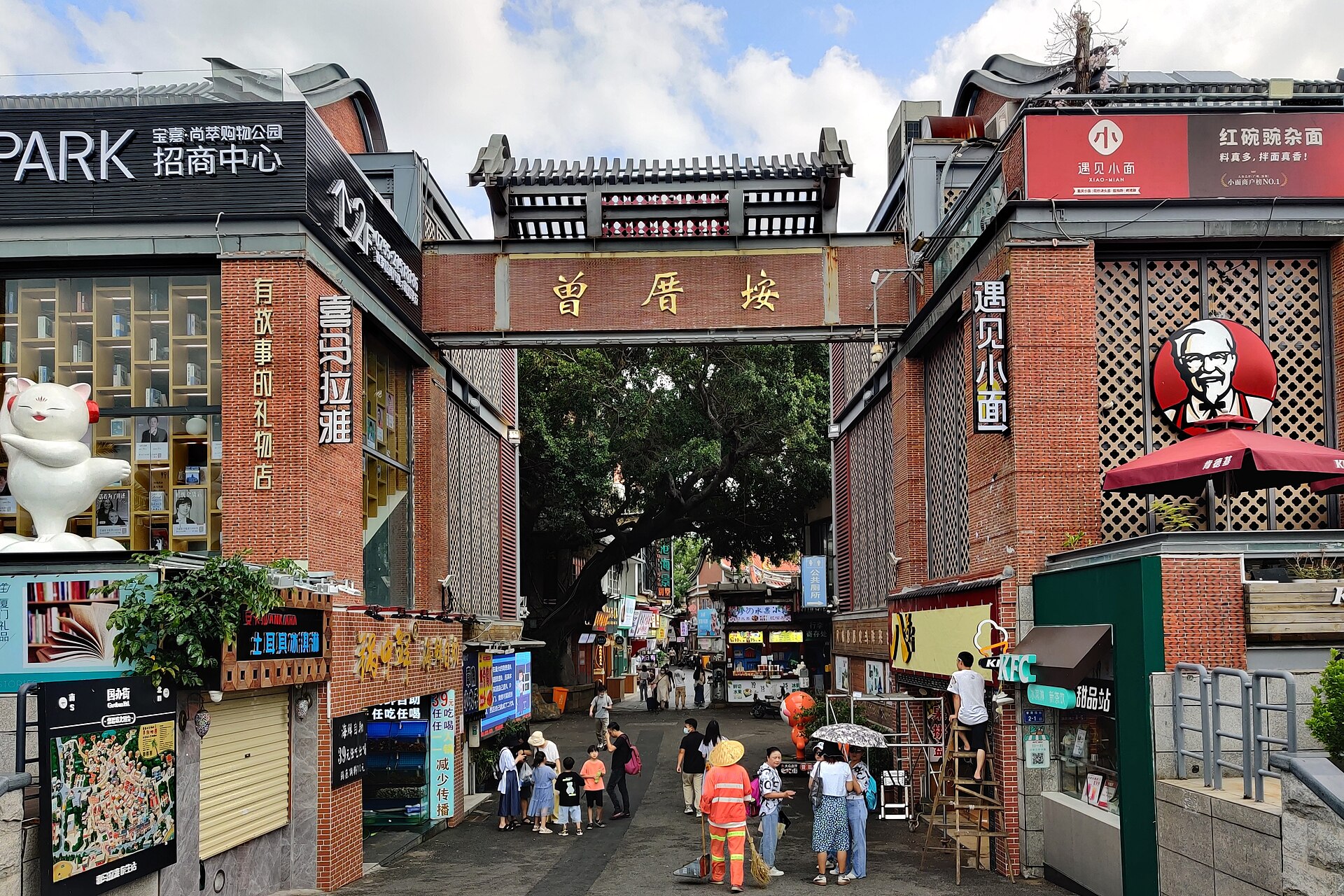
The entrance gate arch of Zengcuo'an village (曾厝垵) in Xiamen, a beachside food-and-café street busy with shops and tourists

Zengcuo'an village (曾厝垵) — a beachside café-and-food street, lively but a full tourist zone

Hotels near the cafés and the sea

Stay near the cafés, the sea and Gulangyu

Stay in the old town to walk to the teahouses and cafés, or by the sea near Shapowei and the Island Ring Road.

Frequently asked

FAQ · what people ask before café-hopping and tea-sipping in Xiamen

How much does coffee cost in Xiamen — is it expensive?
Specialty coffee in most Xiamen cafés runs about ¥25–45 (~฿125–225) for a latte or pour-over, which is typical for a Chinese café city. Honestly, though, cafés on Gulangyu Island (鼓浪屿) and in tourist areas like Zengcuo'an (曾厝垵) tend to be pricier, and you're paying for the view and the atmosphere. The villa cafés on Huaxin Road (华新路) sit at similar prices but are quieter and far more local. If you want to save, local oolong tea is much cheaper at around ¥10–30 (~฿50–150) a pot and you can sip it all afternoon.
Why is Xiamen a coffee city — what's the history?
Xiamen opened as a foreign-trade treaty port back in 1843, and Western merchants and missionaries brought coffee and café culture in through Gulangyu Island. Add the overseas-Chinese (华侨) who came home from Southeast Asia carrying their own coffee habits, and coffee and tea have sat side by side in island life since the early 20th century. Today Xiamen is one of the densest café cities in China — everything from old villa cafés and sea-view spots to serious new specialty roasters obsessed with their beans.
What is Tieguanyin (铁观音) tea, and where can I try it in Xiamen?
Tieguanyin (铁观音, the "Iron Goddess of Mercy") is Fujian's most famous oolong, grown in Anxi County (安溪) not far from Xiamen. It's floral and smoothly mellow, and locals brew it gongfu-cha style (功夫茶) — a small clay pot and tiny cups, with 6–8 infusions that shift in flavour cup by cup. Fujian people drink it as an everyday ritual. Try it at teahouses (茶馆) around the Zhongshan Road (中山路) old town, at tea shops across the city, and at some cafés that serve oolong alongside coffee.
Where is Shapowei (沙坡尾), and why are there so many cafés there?
Shapowei (沙坡尾) is the last old fishing village inside urban Xiamen, tucked between Xiamen University and the sea. Its old boat harbour has been turned into an art zone now packed with indie cafés, bars, design shops and street-art murals — all sitting next to fishing boats that still dock there. The vibe is laid-back and hipster, right on the water, and it's the café neighbourhood that young people and locals love most. Wander and shoot photos all day, then roll into the bars in the evening.
Cafés on Gulangyu Island versus in the city — which should I pick?
Gulangyu Island (鼓浪屿) is gorgeous, full of old treaty-port villas and sea-view cafés, and it's where Xiamen's coffee culture began. But honestly it's a full-on tourist island — crowded, with coffee pricier than in the city. It's worth stopping for one cup for the atmosphere and history. If you'd rather sit like a local at a fairer price, head to Shapowei (沙坡尾) or the villa cafés of Huaxin Road (华新路) — quieter, far more local, and every bit as lovely.
Do cafés and tea shops in Xiamen take credit cards, or do I need Alipay?
Most cafés and tea shops in Xiamen take WeChat Pay and Alipay first. Smaller teahouses and street stalls often take only WeChat Pay or cash, while bigger cafés and some shops in tourist areas also accept Visa/Mastercard. The smoothest plan is to download Alipay and link a foreign card via the international mode before you travel, since China runs almost entirely on mobile payments. Note that getting to Gulangyu means taking a ferry, while the city itself has a very handy metro (Line 1 runs along the coast).
Klook · Xiamen Tours

Visit Gulangyu Island & Xiamen — book ferry tickets and tours ahead

Ferry tickets to Gulangyu Island sell out fast in peak season, so booking ahead through Klook is easier than gambling at the pier. Pair it with a Xiamen tour that hits the island, the cafés and the best sea-view spots in a single day.

See Xiamen tours on Klook →
Wherebest is a Klook affiliate partner — we may earn a commission when you book through our links, at no extra cost to you.