A car-free island of colonial villas on the first day, a seaside campus and an old temple on the second, and a third day that starts with a metro ride out over the water to Jimei before coffee by the harbour — three days is exactly enough to see every side of Xiamen in one trip.
If you have done the big mainland cities, Xiamen lands differently the moment you arrive: a seaside island city with clean air, plenty of greenery and a slower rhythm. Locals rate it one of the most liveable cities in China and a favourite for honeymoons. At the heart of any trip are the UNESCO-listed island of Gulangyu, a seaside university often called the prettiest campus in China, and a Metro Line 1 that runs out over the sea on an elevated viaduct — all in one city.
This plan is built for a first visit to Xiamen, with each day grouped by zone so you don't waste hours doubling back: Day 1 is all on Gulangyu, a car-free island you walk on foot for old villas, a viewpoint hill and a seafront garden; Day 2 stays on the south of Xiamen Island for the university, an old temple, a coastal fort and a seafront road; Day 3 heads off the island to Jimei School Village by the over-sea metro, then loops back for harbour-side coffee and local food. Every leg runs on the ferry, metro and your own two feet — you barely need a taxi.
Want a shorter or longer trip? See the 2-day plan for a weekend, the 4-day plan that adds a trip out of the city like the Fujian tulou, or browse all Xiamen attractions first.
A morning ferry across · lanes of old European villas · the island's highest viewpoint · a seafront garden and the sound of pianos to finish — a day done entirely on foot, and worth every step.
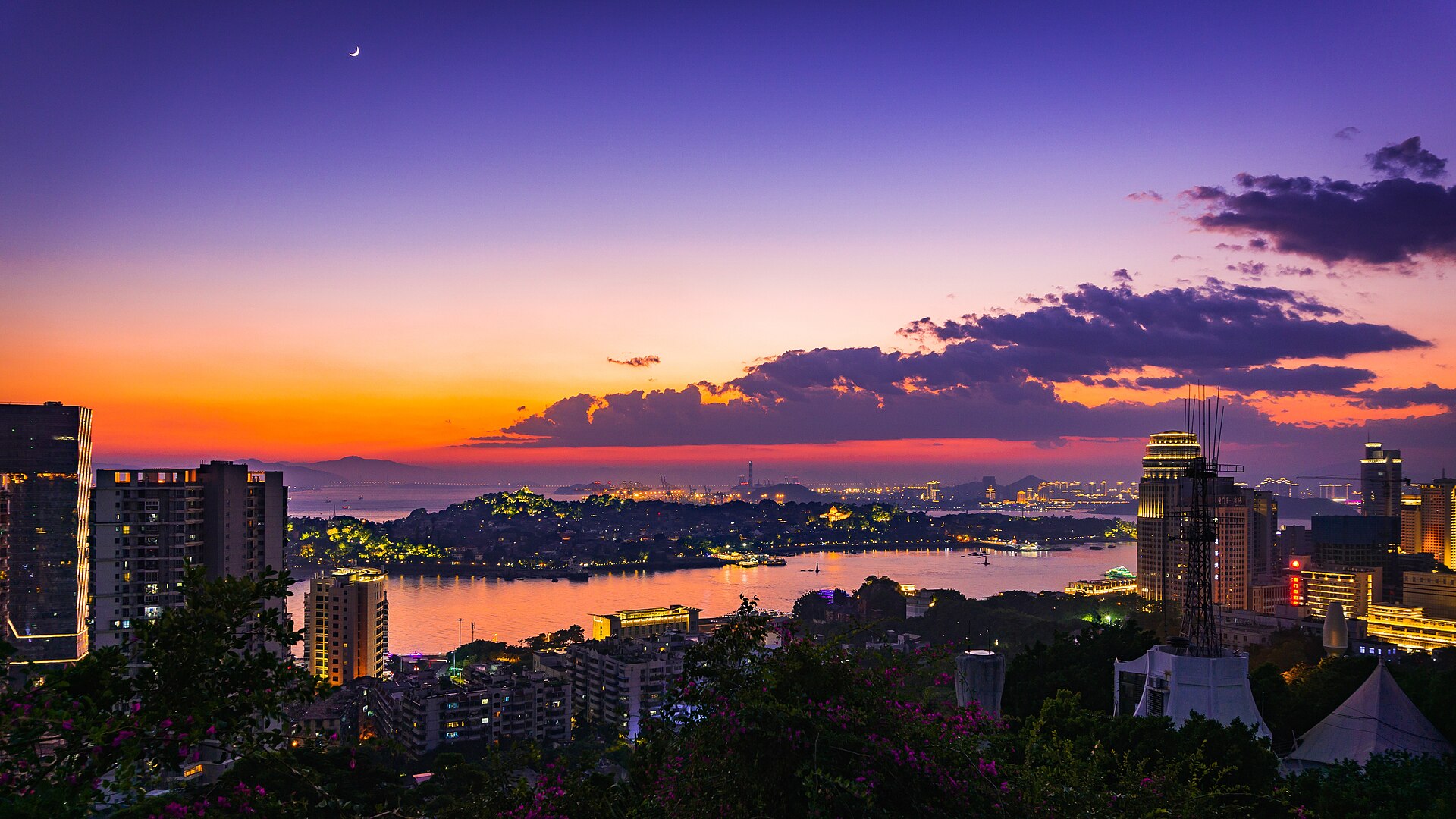
Start the trip with the ferry across to Gulangyu Island, the tiny UNESCO-listed isle that is the heart of any Xiamen trip. The whole island is car-free — just pedestrians and a few electric carts — which makes wandering a pleasure. Once ashore, head for Sunlight Rock (日光岩), the island's highest point; it is a short climb to a 360-degree view over the island, the city skyline across the water and the sea all around — the best photo spot on Gulangyu. For routes and opening hours see the Sunlight Rock guide, and for the bigger picture the Gulangyu Island guide.
Going early is best — the sun is gentler and the crowds are thinner. The island is small but its lanes are a maze made for getting lost in, so let yourself drift, stop at a pretty villa for a photo, and don't rush.
In the afternoon walk over to Shuzhuang Garden (Shuzhuang Garden), a seafront garden in a Chinese-meets-European style built out over the water back in 1913 — with a zigzag bridge across the sea, viewing pavilions and a Piano Museum holding dozens of antique pianos (Gulangyu is nicknamed "Piano Island" for having the highest number of pianos per head in China). Sit by the water and listen to the waves; it is the most romantic corner of the island. See the Shuzhuang Garden guide for details.
Spend the rest of the afternoon wandering the lanes, taking in the colonial villas once built by consuls and overseas-Chinese merchants, stopping at a stylish café or trying island snacks — ice cream and local sweets alike. Browse our pick of Xiamen cafés.
Before dusk, take the ferry back to Xiamen (check the time of the last sailing carefully so you don't miss it). Once ashore, walk over to Zhongshan Road (中山路), the city's oldest pedestrian shopping street, just by the ferry. It is a strip of qilou arcades (covered colonnaded walkways) that light up beautifully at night, packed with food stalls, local sweets and souvenirs — an easy place to round off the first day with dinner.
There is plenty to try here: satay noodles (沙茶面), Xiamen's signature bowl, oyster omelette and Minnan snacks of every kind. Read more in the Zhongshan Road guide, the Xiamen food guide and our piece on satay noodles.
The prettiest campus in China in the morning · a thousand-year-old temple on the hillside · a historic coastal fort · and a seafront road at sunset to finish — several sides of Xiamen in one walkable zone.
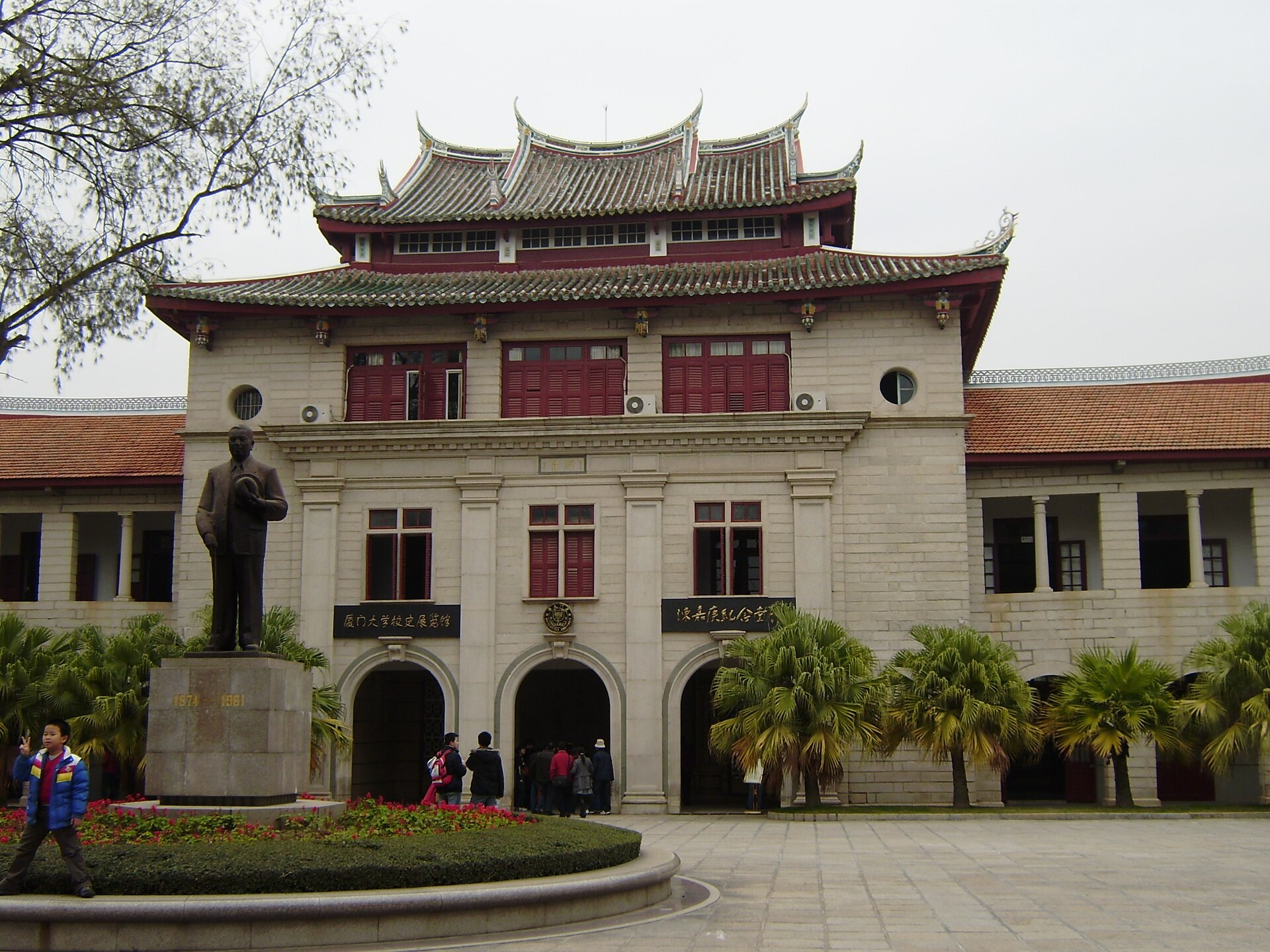
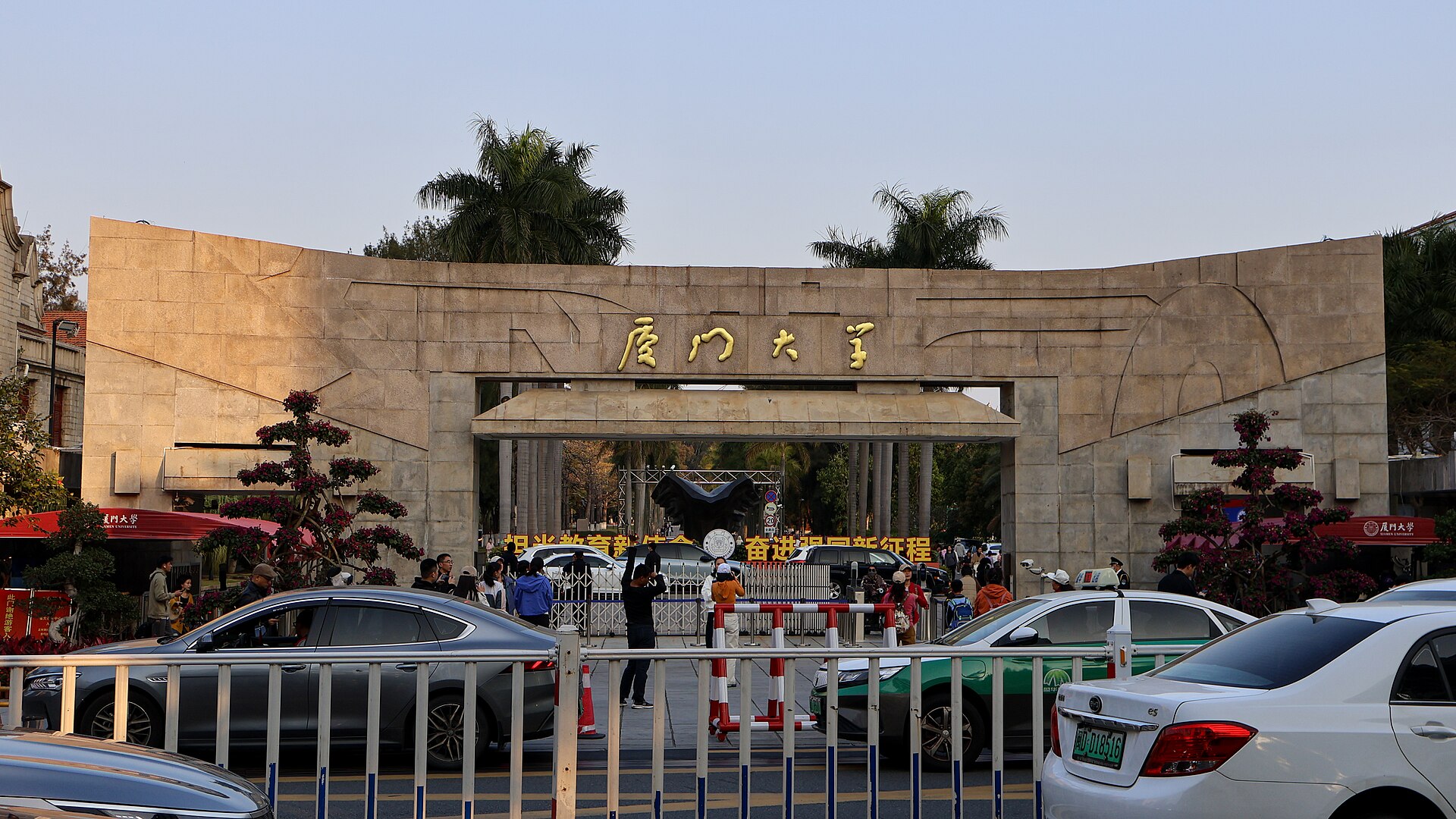
Start the second day at Xiamen University, the seaside campus many call the prettiest in China. Founded in 1921 by Tan Kah Kee, an overseas-Chinese businessman, its buildings blend Chinese and Western architecture, with a lake at the centre and mountains behind. The one thing not to miss is the Furong Tunnel (芙蓉隧道), a long pedestrian tunnel where students have covered the walls in colourful graffiti — a great photo stop. For how to get in and where to shoot, see the Xiamen University guide.
An important note: the university admits only a limited number of visitors per day and you must register or book ahead (usually via the university's WeChat account), and it is especially busy during the holidays and term breaks. Check the latest rules and reserve a slot before you go.
Right next to the university is Nanputuo Temple, a Buddhist temple over a thousand years old at the foot of Wulao Peak — Xiamen's most revered and most beautiful. Halls climb the hillside in tiers, and you can keep walking up the hill behind for a lovely view back over the temple and the sea. The temple also has a well-known vegetarian restaurant, a good spot for a meat-free lunch. Read more in the Nanputuo Temple guide.
In the late afternoon, walk along the coast to Hulishan Fortress, a Qing-dynasty coastal gun battery (built in 1894) that still keeps a giant Krupp cannon from Germany. There are mock cannon-firing demonstrations at certain times, and sea views out to the small islands offshore. For show times and highlights see the Hulishan Fortress guide.
Round off the second day on Huandao Road, the seafront road running for kilometres along the south and east of Xiamen Island, with stretches of beach, a cycle lane and a coastal promenade to stroll. The sky is gorgeous at sunset; locals come out to run, cycle and take photos, and it is the most relaxing free spot in the city. Hiring a shared bike for a seafront ride is a lovely way to do it. For routes and stops see the Huandao Road guide.
Nearby is Zengcuoan (曾厝垵), a former fishing village turned food-and-guesthouse quarter — an easy place to graze on snacks and street food for dinner. See our Xiamen street food and oyster omelette guides.
A morning ride on the over-sea Metro Line 1 out to Jimei School Village · an afternoon at Wuyuan Bay or the Shapowei café quarter · a final evening of local food on Zhongshan Road.
On the last morning, ride Metro Line 1 from the island out to Jimei — part of Line 1 runs on an elevated viaduct over the sea (跨海段), a stretch tourists love to ride and photograph, so grab a window seat and enjoy the water on both sides. The end point is Jimei School Village, a cluster of schools and colleges built by Tan Kah Kee, the overseas-Chinese businessman who also founded Xiamen University. The riverside Chinese-meets-Western architecture is lovely, and there is the Ao Yuan (鳌园) memorial garden by the water and a museum to explore. For highlights and how to get there, see the Jimei School Village guide.
Jimei is off the island, and the metro makes it both easy and great value. Allow about three hours there and back, including time to wander; it is quieter than the city centre and made for an easy morning stroll.
In the afternoon, head back onto the island and take your pick. For a nature-and-family mood, stop at Wuyuan Bay (Wuyuan Bay), a bay on the north-east of the island with open parkland, a cycle lane, a yacht marina and wetlands — airy and relaxed, ideal for lounging by the water (reachable on Metro Line 2/3).
For a café-and-art mood, make for Shapowei (Shapowei), an old fishing harbour in the middle of the city turned into Xiamen's hipster quarter — old fishing boats moored in the basin, ringed by indie cafés, craft shops, art studios and little bars. It is where Xiamen's younger crowd hangs out; sit with a coffee by the water to rest your legs. Browse our pick of Xiamen cafés, and for snacks see the Minnan snacks guide.
Close out your last night in Xiamen with a big local feast around Zhongshan Road. Nearby is the Bashi market (八市), an old morning-to-evening market where Xiamen people actually buy fresh seafood and eat. Several places in the lanes cook proper local dishes — satay noodles, oyster omelette, fresh seafood and the full range of Minnan snacks — a fitting way to end the trip on the city's real flavours.
Xiamen eats well and stays affordable, so order what you fancy — figure on ¥50–200 per person. See the Xiamen food guide, the Xiamen seafood guide and the Zhongshan Road guide.
For this trip, base yourself in Siming (思明) district, especially around Zhongshan Road (中山路) — by the Gulangyu ferry and within walking distance of the food streets and local shops. The alternatives are the university / Zengcuoan (曾厝垵) area in the south, close to the beach and Nanputuo Temple, or — if you use the high-speed rail often — somewhere near Xiamen North Station on Line 1. See the top 10 hotels or the 6 luxury hotels.
Xiamen has three metro lines covering the main sights — Line 1 (with the over-sea stretch out to Jimei and the north station), Line 2 (onto the island and out to Wuyuan Bay) and Line 3, at ¥2–7 a trip. Pay via Alipay/WeChat Pay (scan a QR) or a transit card (交通卡). Back them up with the BRT, buses, shared bikes (~¥1.5 per 30 min) and DiDi. Signs are bilingual; use Amap or Apple Maps for routing (Google Maps is unreliable). Gulangyu Island is reached by ferry only.
Link a Visa or Mastercard to Alipay (via its international mode) before you travel. Most places in Xiamen take Alipay/WeChat Pay first, and some no longer take cash — see the Alipay & WeChat Pay guide to set it up beforehand, and check entry rules for your passport in the China visa-free guide.
| Item | Budget | Mid-range | Comfort |
|---|---|---|---|
| Hotel (per night) | ¥120–250 (~฿600–1,250) |
¥280–550 (~฿1,400–2,750) |
¥700–1,500+ (~฿3,500–7,500+) |
| Three meals | ¥60–110 (~฿300–550) |
¥90–230 (~฿450–1,150) |
¥280–550 (~฿1,400–2,750) |
| Metro / bus / bike | ¥10–25 (~฿50–125) |
¥15–35 (~฿75–175) |
¥40–90 (~฿200–450) |
| Ferry + entry tickets | ¥35–90 (Gulangyu ferry + free sights) |
¥90–250 (ferry + Sunlight Rock / Shuzhuang / Hulishan) |
¥250–450 (island combo + several sights) |
| Total per day (approx.) | ¥225–475 (~฿1,125–2,375) |
¥475–1,065 (~฿2,375–5,325) |
¥1,270–2,590+ (~฿6,350–12,950+) |
Exchange rate used: ¥1 ≈ ฿5 · prices are approximate and vary by season (they spike over Chinese New Year and Golden Week).