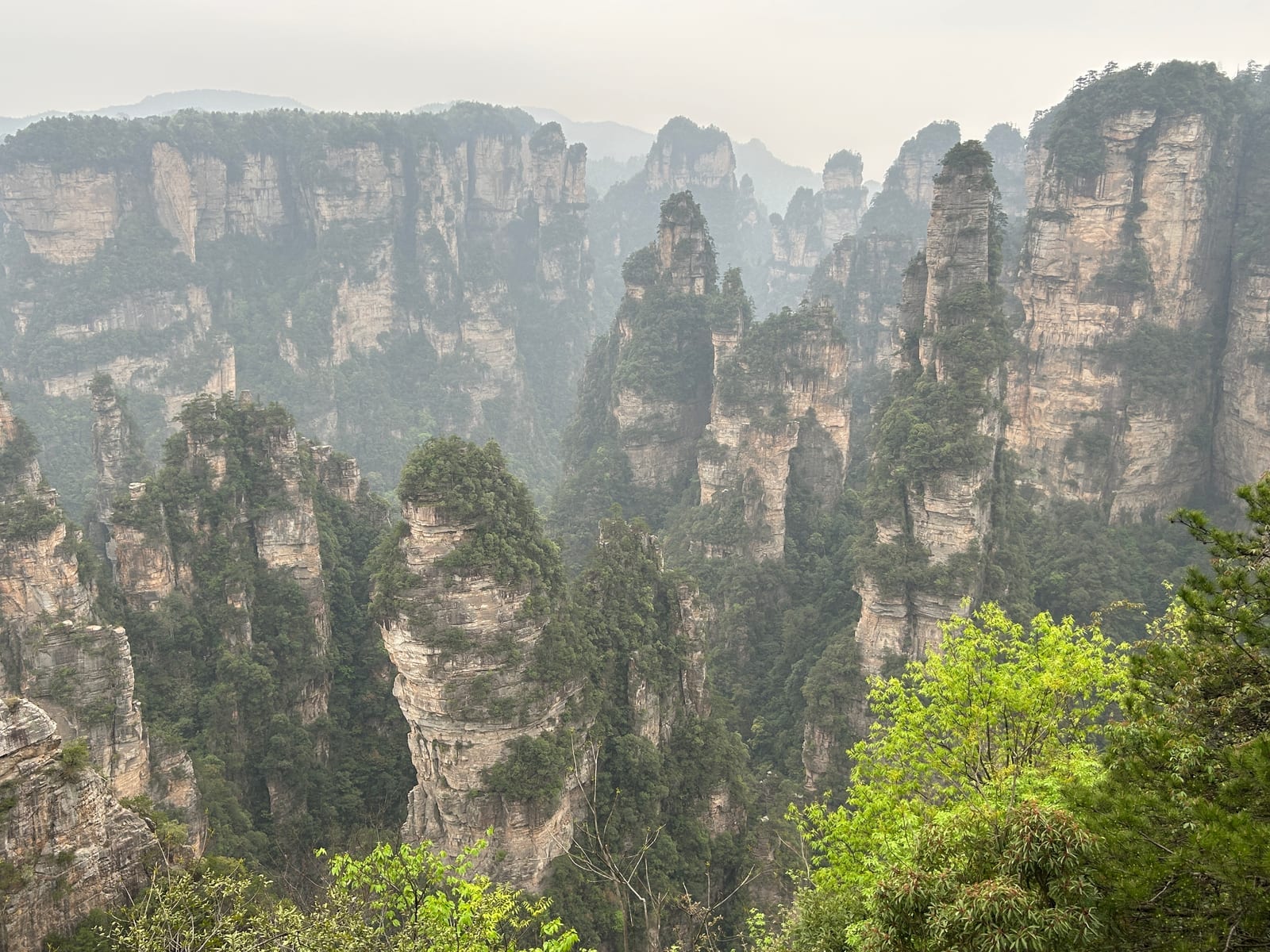
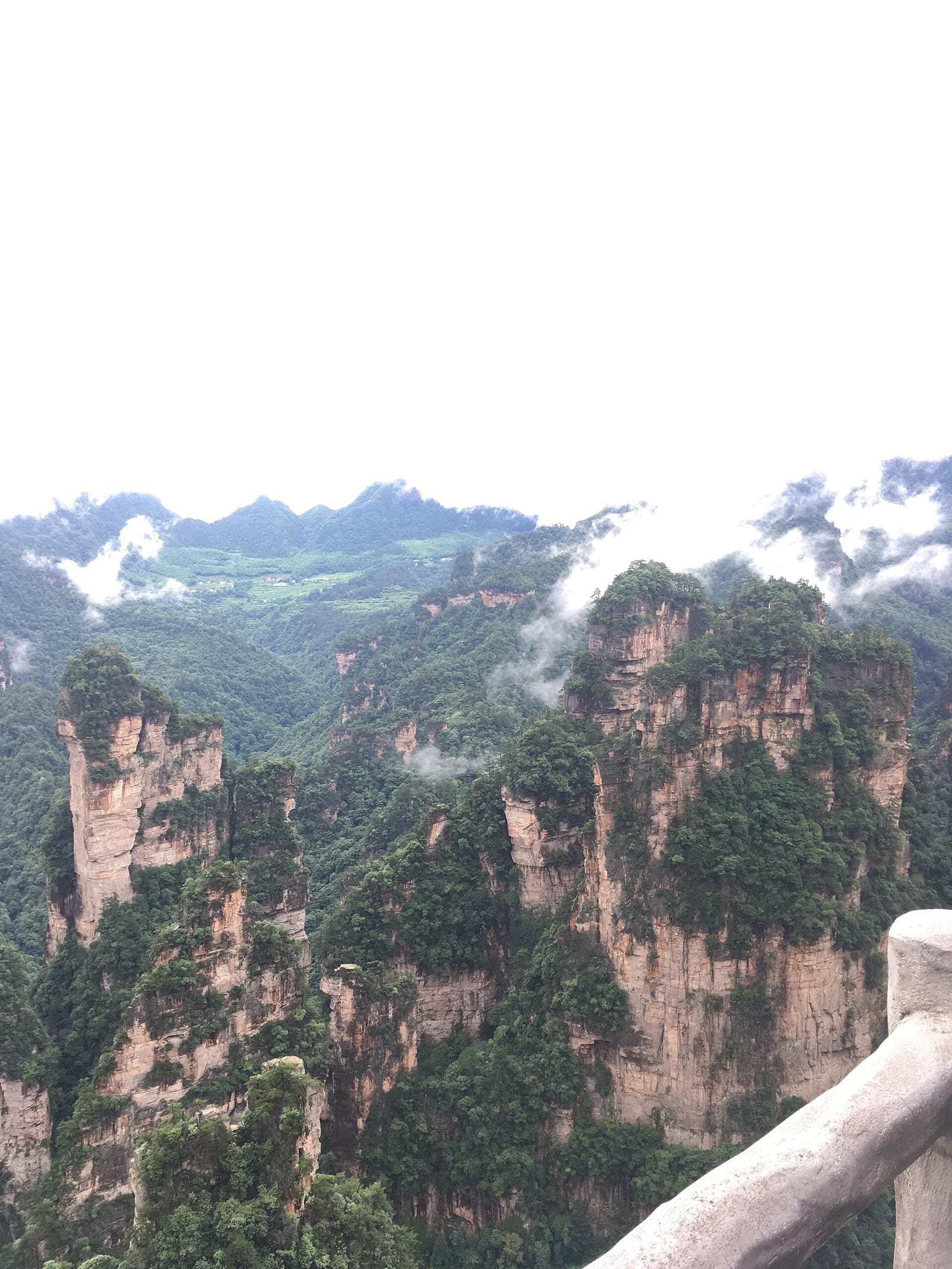
Thousands of slender stone pillars pierce a veil of mist and rise into the sky like a fantasy world — this is the landscape that inspired the floating mountains in Avatar, and one of the natural wonders people want to see at least once. This guide is built from verified facts and real visitor accounts to get you ready before you leave home.
Seen the images of tall, slender stone columns floating above a sea of cloud? That is Zhangjiajie — a place in Hunan province where nature has carved thousands of sandstone pillars into a primeval forest. These pillars inspired the floating "Hallelujah Mountains" in Avatar, and the Wulingyuan scenic area is a UNESCO World Heritage natural site. This is not a city of skyscrapers — it is somewhere you come to hike, ride cable cars and stand open-mouthed in front of peaks that look like nowhere else on earth.
The heart of the trip is three highlights — the National Forest Park (the Avatar mountains), where the Wulingyuan pillars stretch as far as you can see · Tianmen Mountain, with the world's longest cable car and "Heaven's Gate", a natural arch punched through the mountain · and the Grand Canyon Glass Bridge, spanning a gorge almost 300 metres deep. The three sit in different parts of the region, so a little planning lets you see them all without wearing yourself out — see the full picture in our complete Zhangjiajie guide →
The single most useful thing to understand about a Zhangjiajie trip is that it splits into two zones about 33 km apart (roughly an hour by road). The main sights are not clustered in one place. Knowing this upfront makes booking hotels and planning your days far easier.
A small town about 33 km northeast, the gateway to the National Forest Park — the Avatar pillars, Tianzi Mountain, Yuanjiajie, Golden Whip Stream and the Bailong glass elevator. Base here for easy access in and out of the park — two nights is ideal.
The city proper (Yongding district) is home to the Tianmen cable car base, which climbs straight from the city centre, plus DYG airport and the high-speed rail stations. Base here for your Tianmen day and for flying in and out — many people spend their final night in the city before leaving.
The honest answer: three days covers the three core highlights — two days in the National Forest Park (the Avatar mountains), then Tianmen on your way out. To add the Glass Bridge, the Yellow Dragon Cave or Fenghuang ancient town, allow four or five days, because the sights are spread out and involve a lot of cable cars and shuttle buses.
Days 1–2: the National Forest Park — the Avatar pillars, Tianzi Mountain, Yuanjiajie, Golden Whip Stream and the Bailong glass elevator (sleeping in Wulingyuan). Day 3: Tianmen Mountain — the world's longest cable car, Heaven's Gate and the glass skywalk — before you fly out.
+Day 4: the Grand Canyon Glass Bridge, Baofeng Lake or the Yellow Dragon Cave. +Day 5: an overnight in Fenghuang ancient town (~4 hours south), or a slow extra day on the park trails you missed the first time.
There is a plan for every length of trip: 1 day (short visit) · 2 days · 3 days · 4 days · 5 days
April to May and September to October are the best, with green landscapes, clearer skies and comfortable walking. Summer (Jun–Aug) brings the famous sea of cloud after rain, but it is also the wettest and most crowded (school holidays), with afternoon storms. Winter (Dec–Feb) is cold; snow on the sandstone pillars is rare and stunning, but some trails and cable cars close in ice — check before you go. See month-by-month detail in when to visit →
As of 2026, Thai passport holders enter China visa-free for short tourist stays. The policy can change, however, so check the latest at our China visa-free guide for Thais → before booking your flights.
Flights from Thailand usually land at Zhangjiajie Hehua Airport (DYG), which is very close to the centre, about 5 km away (some travellers connect via Changsha CSX and the high-speed rail, ~1.5 hours). Zhangjiajie has no airport metro — plan your way in before you arrive.
Into the city (~5 km) — a taxi or DiDi runs ¥20–40 (about ฿100–200), 15–20 minutes, or there is an airport bus. Straight to Wulingyuan (~33 km) — a taxi or charter is roughly ¥150–200 (about ฿750–1,000) and about an hour, or take the bus into the city and connect onward. Many Wulingyuan hotels arrange a paid pickup — worth arranging ahead.
Zhangjiajie has two stations — Zhangjiajie West (张家界西站), the main bullet-train hub (Changsha ~1.5 hours, and the Zhangjiajie–Fenghuang rail line runs from here), and Zhangjiajie (张家界站), the older central station for regular trains and some HSR. From Zhangjiajie West it is about 40 km to Wulingyuan (bus or taxi). Book through Trip.com or the 12306 app.
Zhangjiajie has no metro or subway, but inside the National Forest Park there is a free green shuttle-bus network (included with your ticket) running between the sights. The climbs are handled by the Tianmen cable car, the Tianzi and Yangjiajie cable cars, and the Bailong glass elevator. Between zones (Wulingyuan ↔ city is ~33 km) and outside the park you use taxis and DiDi, intercity buses and the high-speed rail. Allow about an hour to cross between zones. See detail in our getting around Zhangjiajie guide →
Most places run on Alipay and WeChat Pay. Hotels and larger venues take Visa and Mastercard, but small restaurants, market stalls and street carts often accept mobile payment only. Set up the tourist version of Alipay before you leave (it links foreign cards), or keep some yuan from an ATM as backup. See the full guide to paying in China →
In Zhangjiajie you choose your base by the plan — Wulingyuan for easy access to the Avatar park, the city for the Tianmen cable car and the airport. Most people mix both zones. Learn the areas first and choosing a hotel gets much easier. See real hotel reviews in our Top 10 Zhangjiajie hotels →
The gateway town for the National Forest Park, with an easy walk or shuttle to the gate and karst peaks all around when you wake up. Options run from hostels to mountain-view resorts. This is the answer if you want to spend real time in the park — two nights is ideal.
Stay central, near the Tianmen cable car base that climbs straight from town, with restaurants, the night market and easy access to the airport and rail stations. Best for your Tianmen day and the night before you fly out.
What most visitors actually do — two nights in Wulingyuan to do the park first, then one night in the city for the Tianmen day on the way out. It cuts the back-and-forth between zones and lets you pack by day. See how to pick in our where to stay guide →
Both zones have stays at every level. The Wulingyuan side leans to mountain-view resorts and chain hotels near the park; the city side to convenient hotels near the cable car and airport. Read real reviews and prices first to find your style.
Zhangjiajie has plenty to see, but on a first visit these are the core everyone should experience — see the full list in Zhangjiajie attractions → or day trips from the city →
The heart of Zhangjiajie — the thousands of Wulingyuan sandstone pillars that inspired the floating mountains in Avatar, including Tianzi Mountain, Yuanjiajie and the Hallelujah viewpoint. The ticket is valid for several days, and a free shuttle runs between the sights inside.
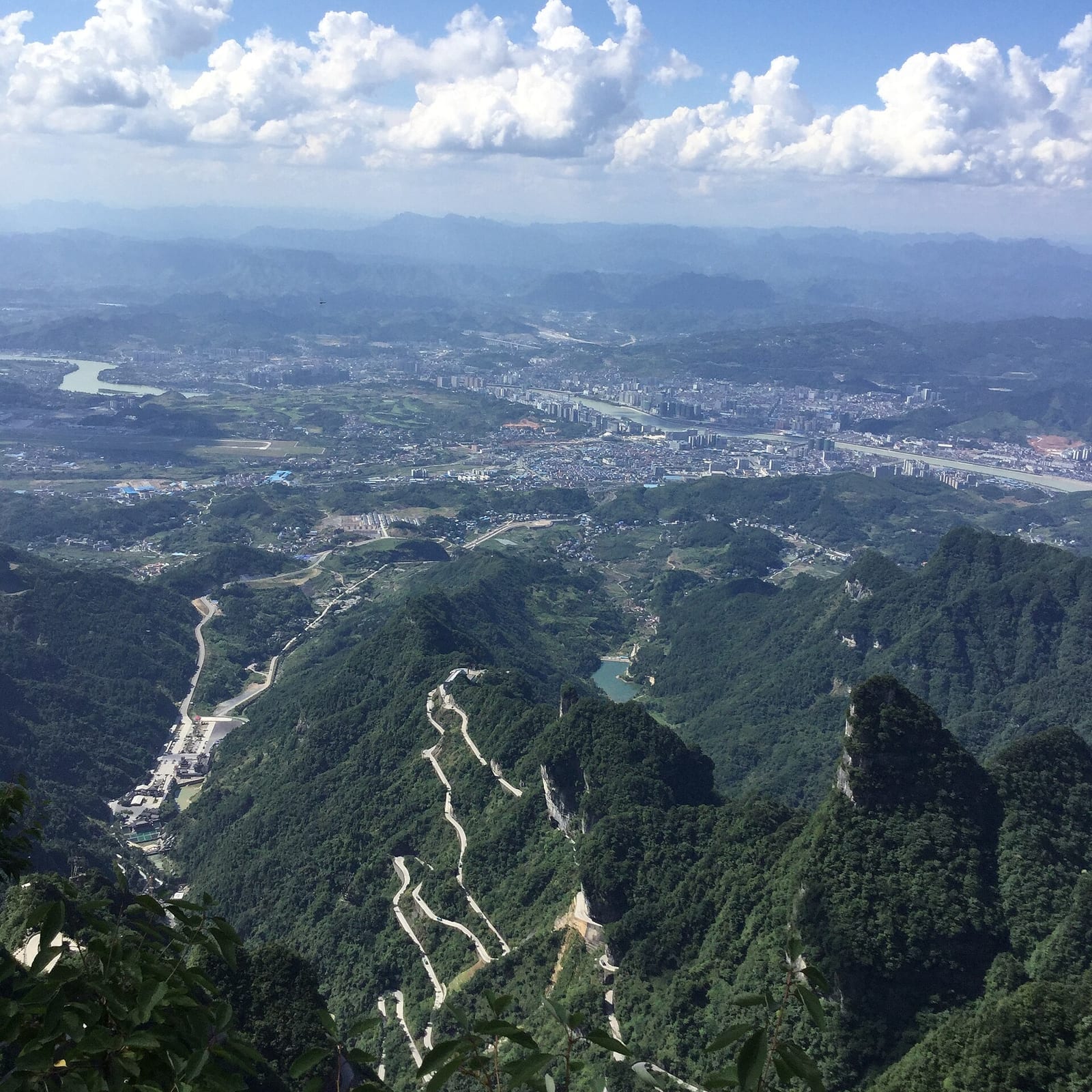
The Tianmen cable car is 7,455 metres long — the longest in the world — climbing from the city centre to the summit in about 28 minutes. Up top are "Heaven's Gate", a natural arch through the mountain, the 999-step stairway, and glass skywalks along the cliff face. It is on the city side, so it pairs well with your arrival or departure day.
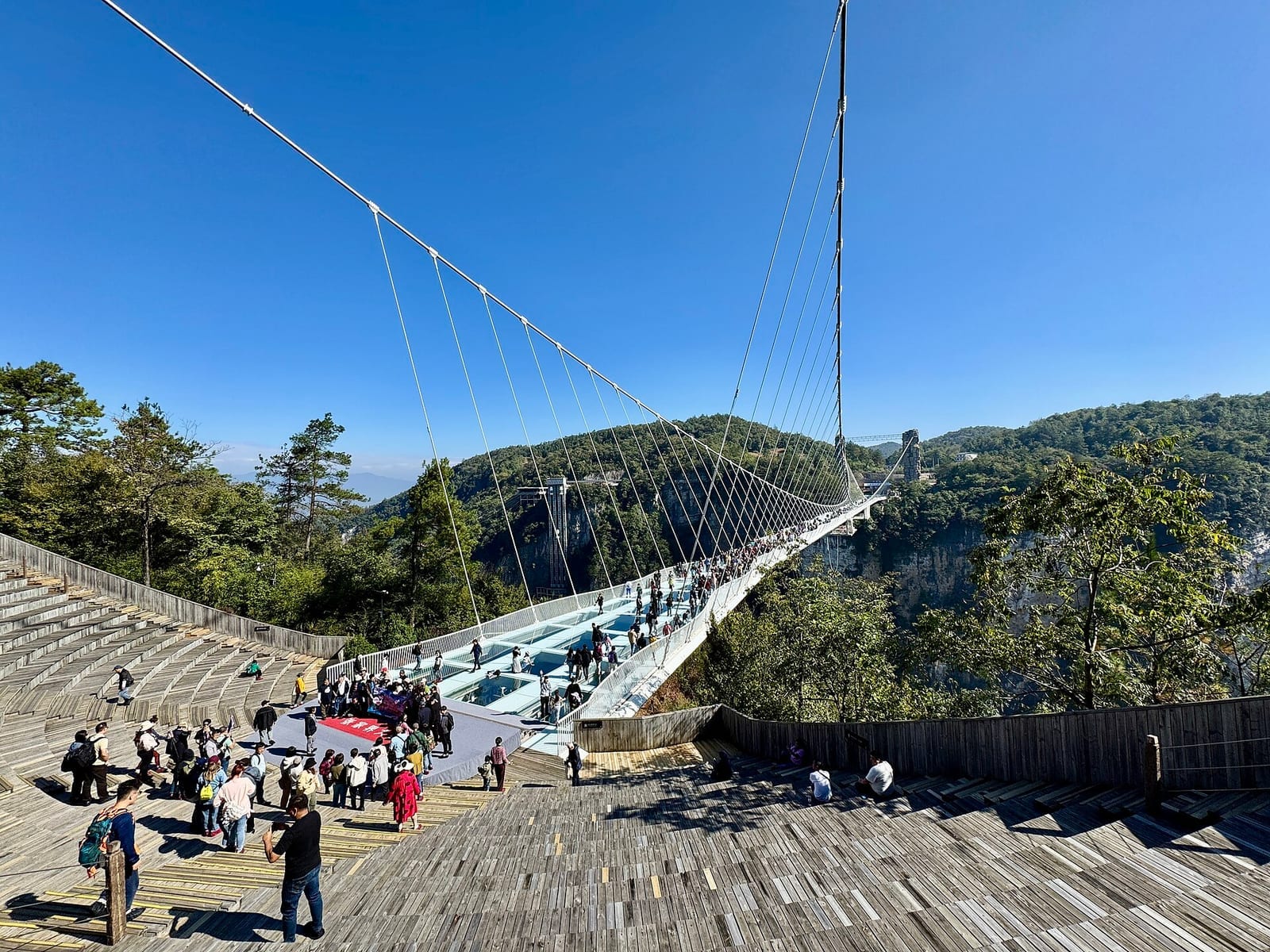
A clear glass-floored bridge spanning the Zhangjiajie Grand Canyon, almost 300 metres above the canyon floor. Walking across, you look straight down through the glass to the bottom of the gorge — nerve-jangling, with a tremendous view. It sits in a separate area ~15–30 km from Wulingyuan, and you should book ahead.
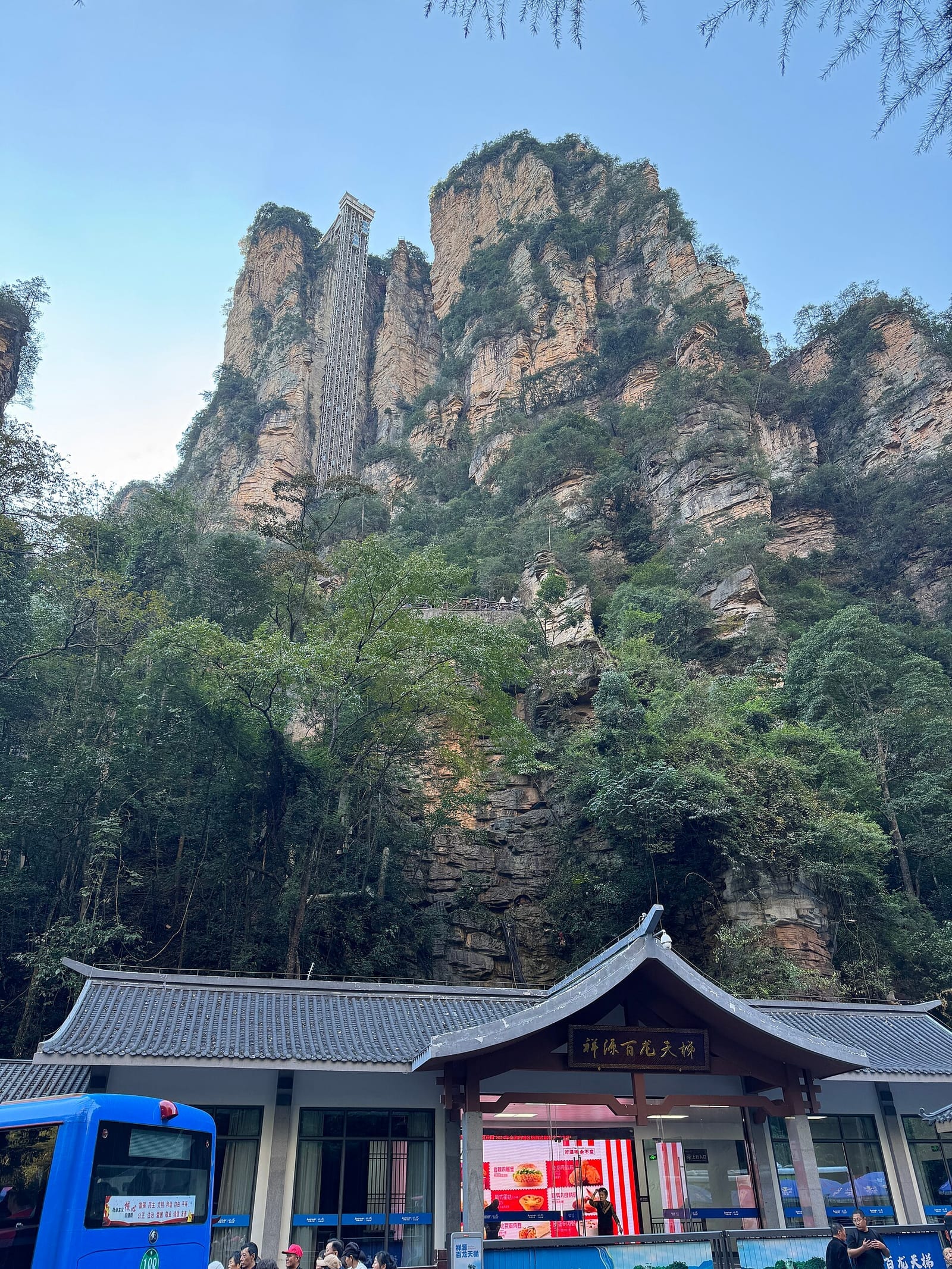
An outdoor glass elevator bolted to a sandstone cliff about 326 metres high, lifting you from the park floor up to Yuanjiajie in well under a minute. The view of the pillars through the glass on the way up is the highlight, and it saves a long climb — expect to queue.
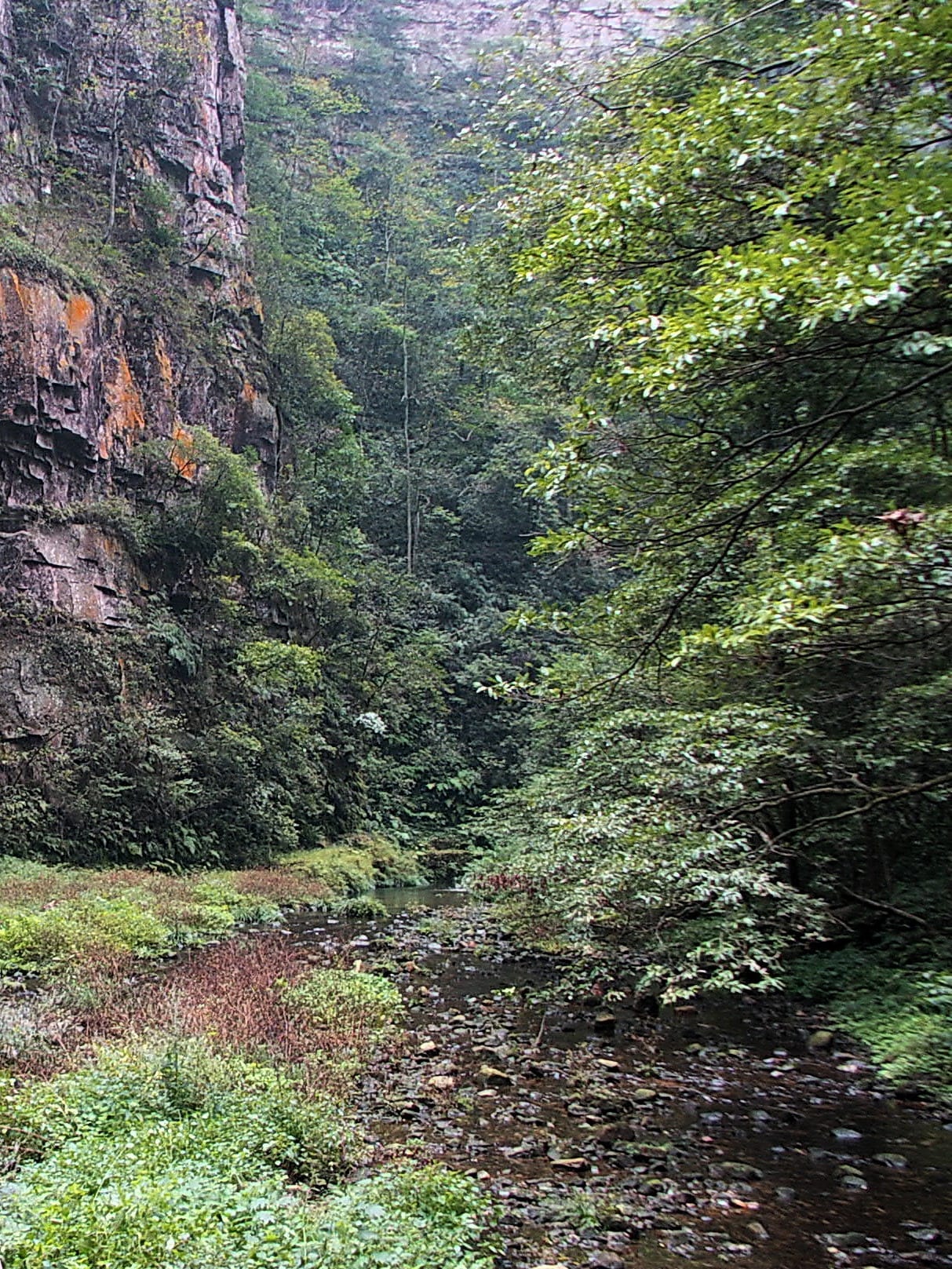
A roughly 7.5 km trail following a clear stream through the park, flat and easy underfoot, passing the foot of towering pillars and shady forest, with wild monkeys greeting you along the way. It is Zhangjiajie without any climbing, at its most atmospheric.
The Wulingyuan scenic area is the World Heritage zone that takes in the National Forest Park, Tianzi Mountain, Baofeng Lake and the Yellow Dragon Cave. Read the whole-zone overview to understand where each sight sits before you set your order of visits.
Zhangjiajie food is Hunan cooking with a Tujia mountain accent — fiery, smoky and bold, built around sanxiaguo dry pots, Tujia smoked pork and Hunan chilli dishes. See more in our Zhangjiajie food guide →
A dry pot of three ingredients stir-fried together with bold spices in a single pot — often pork belly, smoked offal and pickled vegetables, in a fiery Hunan style. It is the signature dish of Zhangjiajie that nearly every local restaurant makes, and it hits the spot with steamed rice. More in our sanxiaguo guide →
Pork salted then smoked over a wood fire until the skin is chewy and the meat is fragrant — a Tujia way of preserving meat in the mountains. Stir-fried with dried chilli and garlic greens, it is salty, smoky and full-flavoured, a backbone ingredient of the Zhangjiajie kitchen. More in our Tujia cuisine guide →
Hunan cooking leans on fresh-chilli heat and the sourness of pickled vegetables, unlike Sichuan's numbing peppercorn. Signatures include fish-head with chopped chilli, smoked meat stir-fried with chilli, and bold vegetable dishes. Great if you love spice — ask for less chilli if you don't. More in our Hunan spicy food guide →
The city's night markets and pedestrian streets cover it all — grilled skewers, stinky tofu, spiral fried potato and Tujia sticky-rice snacks. They are the perfect thing to graze on after a day out in the park. More in our street food → · snacks guide →
More Zhangjiajie food: street food → · cafés →
Zhangjiajie works on any budget — there are cheap places to stay and food is good value. The single biggest cost is admission tickets, especially the National Forest Park ticket (which includes the shuttle), the Tianmen ticket (which includes the cable car), the Bailong glass elevator and the Glass Bridge — all charged separately and none of them cheap. See the full breakdown in our Zhangjiajie trip budget →
| Tier | Stay / night | Food / day | Total / day (rough) |
|---|---|---|---|
| Budget | ¥120–300 (฿600–1,500) hostel or budget hotel | ¥60–120 (฿300–600) | ¥350–700 (~฿1,750–3,500) |
| Mid-range | ¥350–800 (฿1,750–4,000) 3–4 star hotel | ¥150–350 (฿750–1,750) | ¥700–1,600 (~฿3,500–8,000) |
| Luxury | ¥1,200–4,000+ (฿6,000–20,000+) mountain-view resort / luxury hotel | ¥400–1,500+ (฿2,000–7,500+) | ¥2,000–6,500+ (~฿10,000–32,500+) |
Budget extra for tickets — the National Forest Park ticket (4 days, including the shuttle), the Tianmen ticket (including the cable car), the Bailong glass elevator and the Glass Bridge add up to the single biggest line of the trip. See more in the China travel budget guide →
Unlike other large Chinese destinations, Zhangjiajie has no metro or subway. Inside the park a free shuttle moves you around; the climbs use cable cars and the glass elevator; between zones you take taxis, DiDi and buses. With the sights spread out (park ↔ city ↔ Glass Bridge), the trick is to group your sights into day clusters by zone, then match the transport to each.
Tianmen tickets often specify a cable car time slot, and the Glass Bridge limits the number of visitors per day; in peak season they sell out fast. Book ahead on Klook or the official channels, and allow time to make your slot, or you may miss out or queue for a long time.
China blocks all of Google's services (Maps, Gmail, Translate), Facebook, Instagram, LINE, YouTube and WhatsApp. Without a working VPN you are cut off from all of it. Set up a VPN on your phone before you leave, and download Amap (maps) and Baidu Translate. See the VPN + eSIM guide for China →
Local restaurants, market stalls and street carts mostly take Alipay or WeChat Pay only — there is no card terminal. Set up the tourist version of Alipay (it links foreign Visa and Mastercard), or withdraw some cash from an ATM as backup; ¥500–1,000 should cover small purchases.
Zhangjiajie has a lot of stairs and mountain paths; even with the cable cars and the elevator, you still walk up and down a fair bit. Stone paths get slippery on misty, drizzly days, so pack shoes with grip, a light rain jacket and water. And if you wake to fog, don't despair — the sea of cloud is the most beautiful image this place gives you.
During Golden Week (1–7 October) the whole country travels at once; the cable cars and viewpoints get packed, queues for the cable car run to an hour, and hotel prices double or triple. Chinese New Year (Jan/Feb) is also busy, with some sights closed in ice. See detail in when to visit →