A mountain city with a tea all its own — vine tea (莓茶), grown on the red cliffs, sweet-then-mellow and easy on the throat; Tujia oil tea you can take as a meal. And Wulingyuan's Xibu Street is the waterside café-and-bar scene where hikers from all over come to rest before and after a full day in the park.
Picture yourself having spent a whole day climbing the glass skywalks and pillar-forests of Zhangjiajie's park. On the way down, someone hands you a warm cup of amber-gold tea — a faint bitterness at the first sip, then a clean sweetness rising in the throat. That is vine tea (莓茶), Zhangjiajie's signature herbal tea, made from the shoots of a wild vine that grows on the red mountains. Locals drink it to shake off tiredness and cool the body, and it tells the story of this city better than anything else.
Zhangjiajie's drink culture is unlike the big cities of China. It doesn't trade on skyline-view coffee or European heritage the way Shanghai does — it trades on the mountain in a cup: vine tea so rich in flavonoids it's nicknamed the "King of Flavonoids", Tujia oil-tea soup (油茶汤) where tea is fried in oil then poured over puffed rice and peanuts so it stands in for a meal, and kudzu tea (葛根茶) the Tujia drink to cool the system. All of it is the heritage of the Tujia people, who have lived with these mountains for generations.
The other scene you can't skip is Xibu Street (溪布街) — a riverside pedestrian street in Wulingyuan District, the gateway to the park, that has become the waterside café-and-bar district for hikers from all over. At night, coloured lights glitter on the stream and the bars start their live music; there's Western-style coffee, English signboards and somewhere to put your feet up. To be straight with you, it is a full-on tourist district and pricier than in town, but sipping coffee by the water after a day on the trails is worth it. For the cheap, everyday, genuine thing, look to the city's local tea houses and real Tujia food.
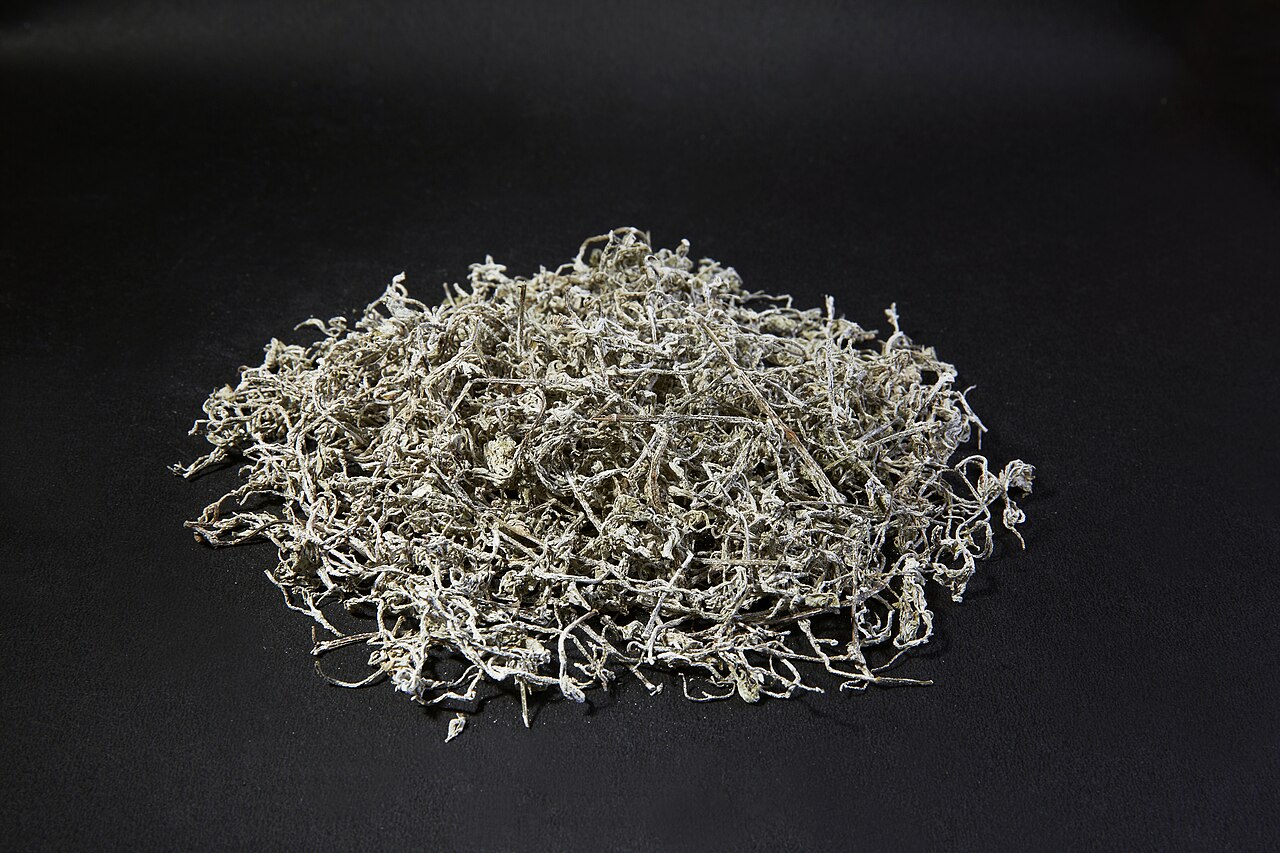
A wild herbal tea grown on red cliffs at 800–1,500 metres; once dried, the leaves carry a white, frost-like dusting — natural flavonoids.
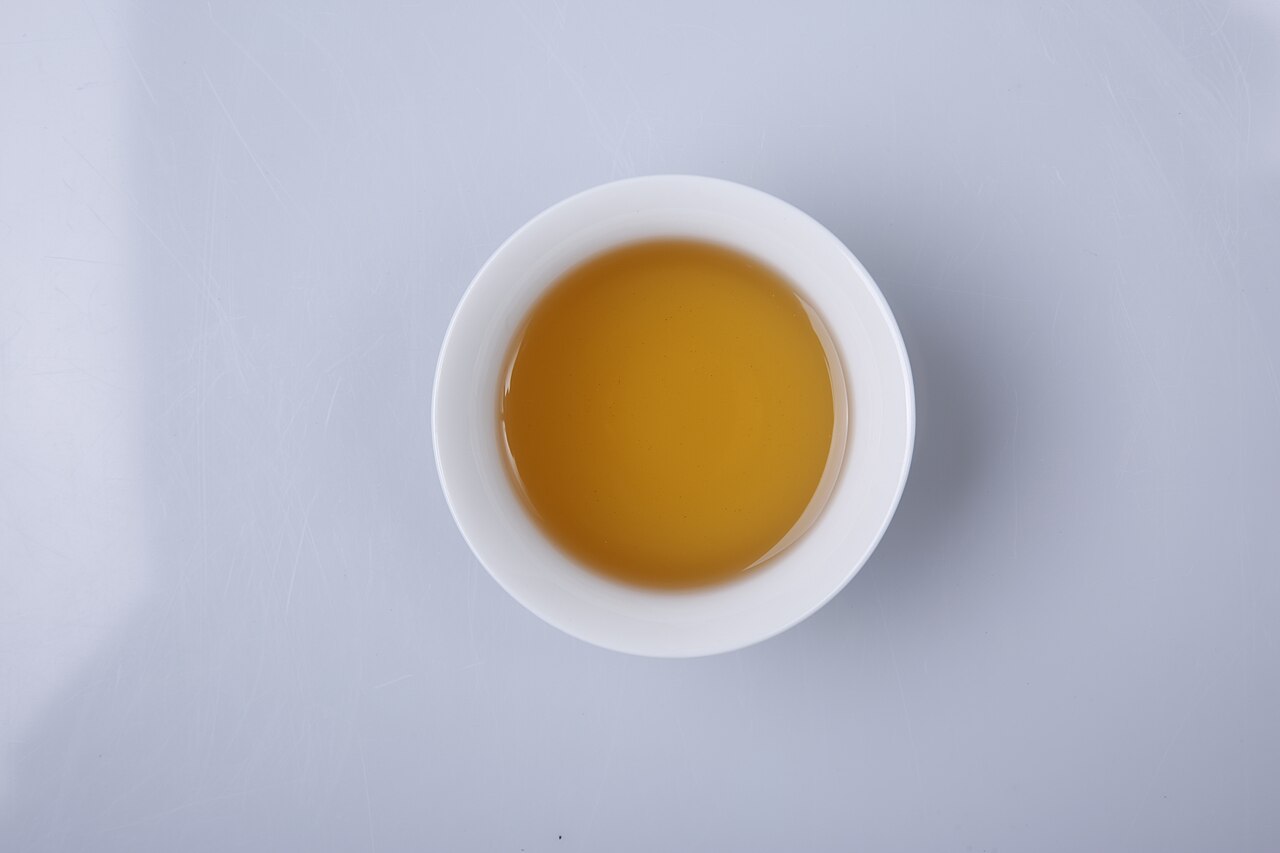
Vine tea (莓茶) brews to an amber-gold liquor — faintly bitter at first, a clean sweetness on the throat after. Zhangjiajie's everyday drink.
Vine tea, known as 莓茶 or 藤茶, isn't an ordinary tea at all. It's made from the tender shoots of a wild vine, scientific name Ampelopsis grossedentata, that grows on the red sandstone cliffs of the Wuling range at 800–1,500 metres, among the mist and damp. During processing the leaf cells break down and the flavonoids seep to the surface as a white, frost-like coating. Locals call it "Tujia nectar" and "immortal grass", believing it soothes the throat, cools internal heat and is good for the body.
The taste is the charm — a light bitterness on the first sip, like a strong green tea, then a sweetness that comes back up the throat as you swallow. Drink it hot or iced; it has little caffeine, so you can have it before bed. It's very cheap, around ¥10–20 a cup at a tea house, and it is Zhangjiajie's number-one souvenir — a bag of the dried tea travels home easily. Have a cup here and you'll understand why locals drink it every single day.
Get the types straight first, then decide whether today is about a local mountain tea, a riverside café mood, or a good coffee after the hike.
1The drink that represents Zhangjiajie best — made from the shoots of a wild mountain vine, dried until a white flavonoid frost coats the leaves, then brewed to an amber-gold liquor: faintly bitter at first, sweet on the throat after. It has little caffeine and works hot or iced. Locals drink it to shake off tiredness and cool internal heat. It's the lightest on the wallet and the easiest to find — at tea houses, souvenir shops and Tujia restaurants citywide. Drinking it feels like sipping the mountains of Zhangjiajie.
It reads as strange but it's genuine Tujia heritage — tea leaves fried in oil until fragrant, simmered into a savoury broth with ginger and garlic, then poured over puffed rice, peanuts, walnuts, soybeans and toasted corn. The result is a half-meal drink that's fragrant, crisp and warming. The Tujia of Zhangjiajie and Xiangxi serve it to welcome guests and share it at festivals. The first sip can surprise you, but it grows on you fast. Try a set and you'll understand the mountain people's way of hospitality here.
Kudzu (葛根) is a mountain-vine root the Tujia use as both food and medicine. The root is made into a powder and a tea — plain with a faint sweetness, cooling on the throat. Locals drink it to cool internal heat and slake thirst after a hike, and consider it good for the body. You'll find it at souvenir shops and herb sellers around the park; some sell kudzu powder you can brew at home. It's another taste of the Zhangjiajie mountains that's easy to try and cheap.
Xibu Street (溪布街) in Wulingyuan is where Western coffee meets the mountains of Zhangjiajie — a riverside pedestrian street lined with waterside bars, cafés, food stalls and Tujia and Miao folk shops. At night the coloured lights come on and reflect off the stream, the bars run live music, but there are also quiet coffee spots playing soft tunes. It's the meeting point for hikers from all over who come to rest before or after a full day in the park. Honestly, today it is a full-on tourist district, busy and pricier than in town, but sitting by the water in the evening has a charm all its own.
Beyond the tourist-focused park district, Zhangjiajie city itself has more independent specialty cafés opening all the time. Small, serious-about-beans places pour a steady pour-over and latte, with a quieter mood and more locals than Wulingyuan. Some play with hometown ingredients — dropping vine tea into a signature drink. If you take your coffee seriously and want to escape the bustle of the park district to rest somewhere calm, these in-town cafés are a good call, and cheaper too.
If you want to drink the way locals do, at the lowest price, look for the small tea houses scattered across the city and around the Dayong Fucheng block. They serve vine tea, kudzu-root tea and local teas for a few yuan, with free hot-water refills. The mood isn't fancy but it's the real thing — locals sit and chat all day. This is Zhangjiajie's everyday drink at its cheapest and most genuine. Sit with a hot cup of vine tea after a day on the trails and you'll understand why people here are so attached to their mountain tea.
Three very different scenes — a waterside café-and-bar mood near the park, the local thing in town, and budget-friendly tea houses.
A riverside pedestrian street lined with waterside bars, cafés, food stalls and Tujia and Miao folk shops. It's busiest at night when the coloured lights reflect off the stream and the bars play live music; by day it's good for a coffee to rest your legs before or after a hike. It's a full-on tourist district and pricier than in town, but the convenience of finding a riverside seat a few steps from the park is hard to beat — this is the hiker's café scene of Zhangjiajie.
In the heart of Zhangjiajie city, the Dayong Fucheng (大庸府城) culture-and-food block has vine-tea shops, oil-tea houses, souvenir stores selling teas and mountain herbs, new specialty cafés and real Tujia restaurants. You can browse local goods and sip a tea in one area. It's a good starting point if you want to taste both Tujia drinks and new-wave coffee without going all the way out to the park. The mood is a real city and the prices are lower than the tourist district.
Around Zhangjiajie's train station and the inner city is where locals actually live — ordinary cafés, tea shops and souvenir stores spread about, at clearly lower prices than the tourist areas. It's handy for picking up vine tea as a souvenir before your train out, or a coffee to fight off drowsiness while you wait. It isn't a flashy district, but it's where you get local prices and a full souvenir run in one spot before you leave.
If you want to drink the way the Tujia do, at the lowest price, look for the small tea and oil-tea houses scattered across the city. Tea houses serve vine tea and local teas for a few yuan with free hot-water refills; oil-tea houses serve 油茶汤 that stands in for a meal. The mood isn't fancy but it's the real thing — locals sit and chat all day. This is Zhangjiajie's everyday drink at its cheapest and most genuine.
Some are known for atmosphere, some for the genuine local thing — pick by what you're in the mood for.
It's not a single shop but a whole district — the café-and-bar scene of Zhangjiajie. A riverside pedestrian street in Wulingyuan that brings together waterside bars, cafés, a food street and Tujia and Miao folk shops. Walk in and you'll find places to sip coffee, live-music bars, English signboards and spots to nurse a beer by the water as coloured lights ripple on the stream. It's the meeting point for hikers from all over who come to rest before or after a day in the park. Today it's busy and pricier than in town, but the atmosphere of sitting by the water in the evening after a full day on the trails is something you won't find anywhere else.
It's not one shop but a whole souvenir culture — around the Dayong Fucheng block in town and the shops near the park, you'll find stores selling vine tea (莓茶), kudzu-root tea and mountain herbs lined up to choose from. Many let you taste the tea before you buy and will tell you about the white flavonoid frost on the leaves. To be straight with you, shops near the park cost more than in town, so it's worth comparing prices — but this is where you'll find the full range of Zhangjiajie's signature gift, vine tea, in one place: a genuinely local thing that's light and easy to carry home.
If you want to try a drink that's genuine local heritage, look for the Tujia oil-tea houses (油茶汤) at Tujia restaurants and around the Dayong Fucheng block. They fry the tea leaves in oil until fragrant, simmer them into a broth with ginger and garlic, then pour it over puffed rice, peanuts, walnuts and toasted corn for you to drink as a meal. The mood is simple, and locals take it as a welcome ritual and at festivals. It's a cheap drink that gives you a cultural experience coffee can't. Have a set and you'll understand Tujia hospitality.
Beyond the tourist-focused park district, Zhangjiajie city has more independent specialty cafés opening all the time, around the Dayong Fucheng block and the inner city. They're serious about beans and brewing, pouring a steady pour-over and latte, with a quieter mood and more locals. Some play with vine tea, dropping it into a signature drink. If you want to escape the bustle of the park district to sit with a good coffee somewhere calm, at lower prices, the in-town cafés are the answer.
After a full day in the park, many people close out the evening at the waterside bars on Xibu Street, with both lively live-music bars and quieter spots to nurse a drink and listen to soft tunes by the stream. The coloured lights on the water make Wulingyuan's nights feel different from other places. There are local craft beers and cocktails, and it's a meeting point for travellers swapping park stories. To be straight with you, it's pricier than in town, but if you want a riverside night mood after a day on the mountains, this is the place.
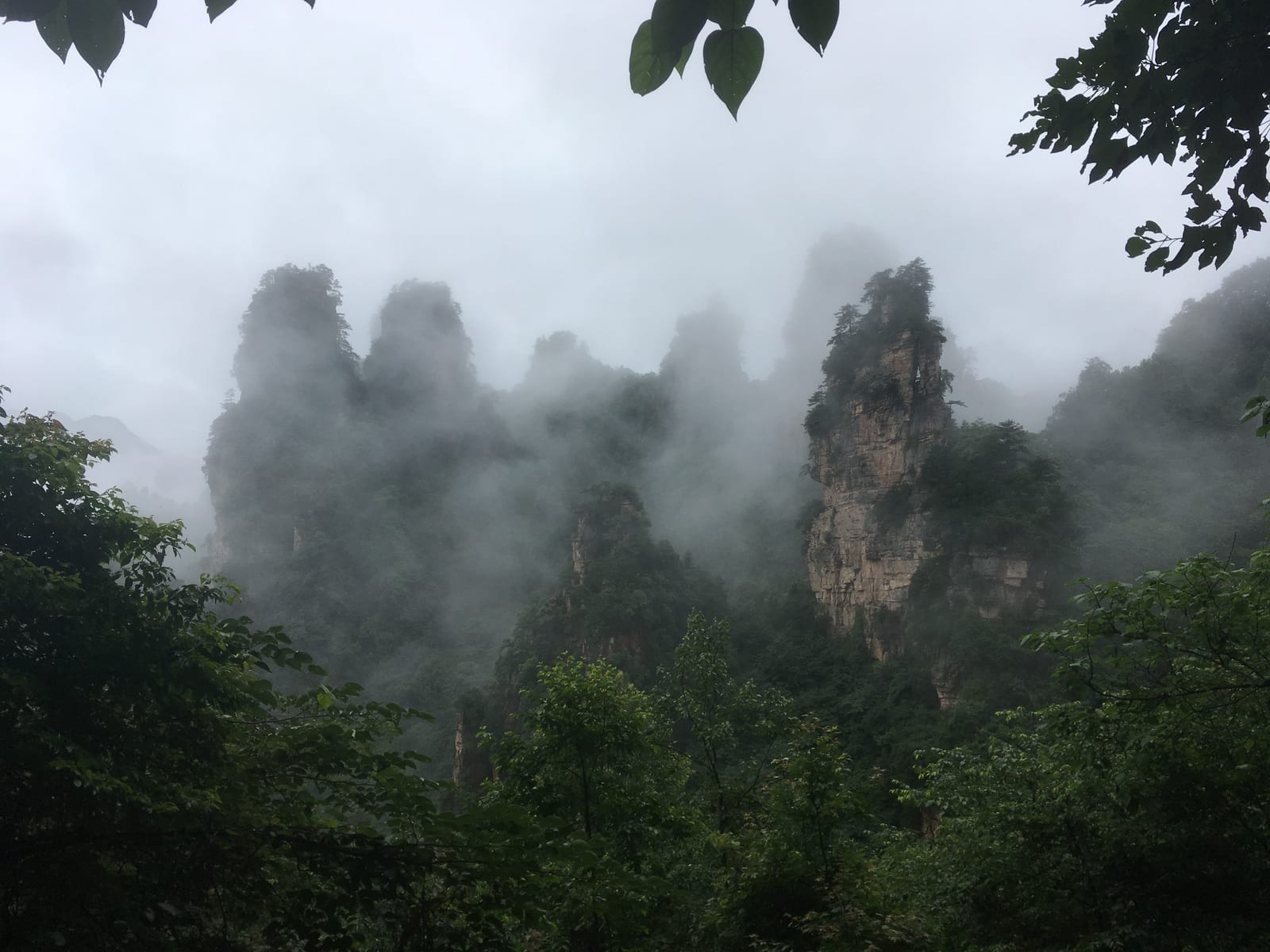
Wulingyuan's pillar peaks — the scenery, not a café · the mountains hikers come back from to rest over vine tea and coffee by Xibu Street
The things you can drink in Zhangjiajie but struggle to find elsewhere.
The drink that sums up Zhangjiajie in a single cup — tea from the shoots of a wild mountain vine, the leaves dusted with white flavonoid frost, brewed to an amber-gold liquor: a little bitter, then sweet on the throat. Low in caffeine, drunk all day, the lightest on the wallet and the easiest to find. It's the best place to start if you want to know the city's mountain flavour. Have a cup, then take a pack home as a souvenir.
A hot drink made from tea leaves fried in oil until fragrant, simmered into a broth with ginger and garlic, then poured over puffed rice, peanuts, walnuts, soybeans and toasted corn. The first sip can surprise you, but it grows on you fast. It's a half-meal drink the Tujia take as a welcome ritual — recognised as cultural heritage and something to try at least once.
Kudzu root, which the Tujia use as both food and medicine, made into a powder and a tea — plain with a faint sweetness, cooling on the throat. Locals drink it to cool internal heat and slake thirst after a hike. You'll find it at souvenir shops and herb sellers around the park, and some sell the powder to brew at home. Another taste of the Zhangjiajie mountains that's easy to try and cheap.
Some new-wave cafés in Zhangjiajie play with the hometown ingredient, dropping vine tea into a latte or an iced drink — the mountain's genuine local thing in a modern cup, lightly sweet-then-mellow, the kind of thing you won't find elsewhere. If you spot a café with this on the menu, give it a go. It's a way to drink the flavour of Zhangjiajie in a café version that's unique to this city.
Zhangjiajie and Wulingyuan run on mobile payment almost everywhere — most cafés, tea houses and souvenir shops take WeChat Pay and Alipay first. Small tea houses and street stalls often take WeChat Pay or cash only. Before you travel, set up Alipay and link a Visa/Mastercard through its international mode (it works for visitors · see our China payment guide).
On prices, understand first that Wulingyuan and Xibu Street are the park's gateway district, so coffee and drinks cost noticeably more than in town. To keep it cheap, local things like vine tea and Tujia oil tea at local houses are far less — and taste more genuinely like Zhangjiajie too. For souvenirs like vine tea at shops near the park, compare a couple of stores first, since it's a tourist area — you usually get a better price in the city.
On getting around, the Wulingyuan park district and Zhangjiajie city are about 32 km apart, reached by bus or taxi/DiDi (there's no metro here). Many people split their stay — sleep near the park while hiking, then sleep in town the night before moving on. Xibu Street is busiest in the evening when the bars start live music and the riverside lights come on. And if you need general internet access in China, set up a VPN before you travel — see our China internet & VPN guide.
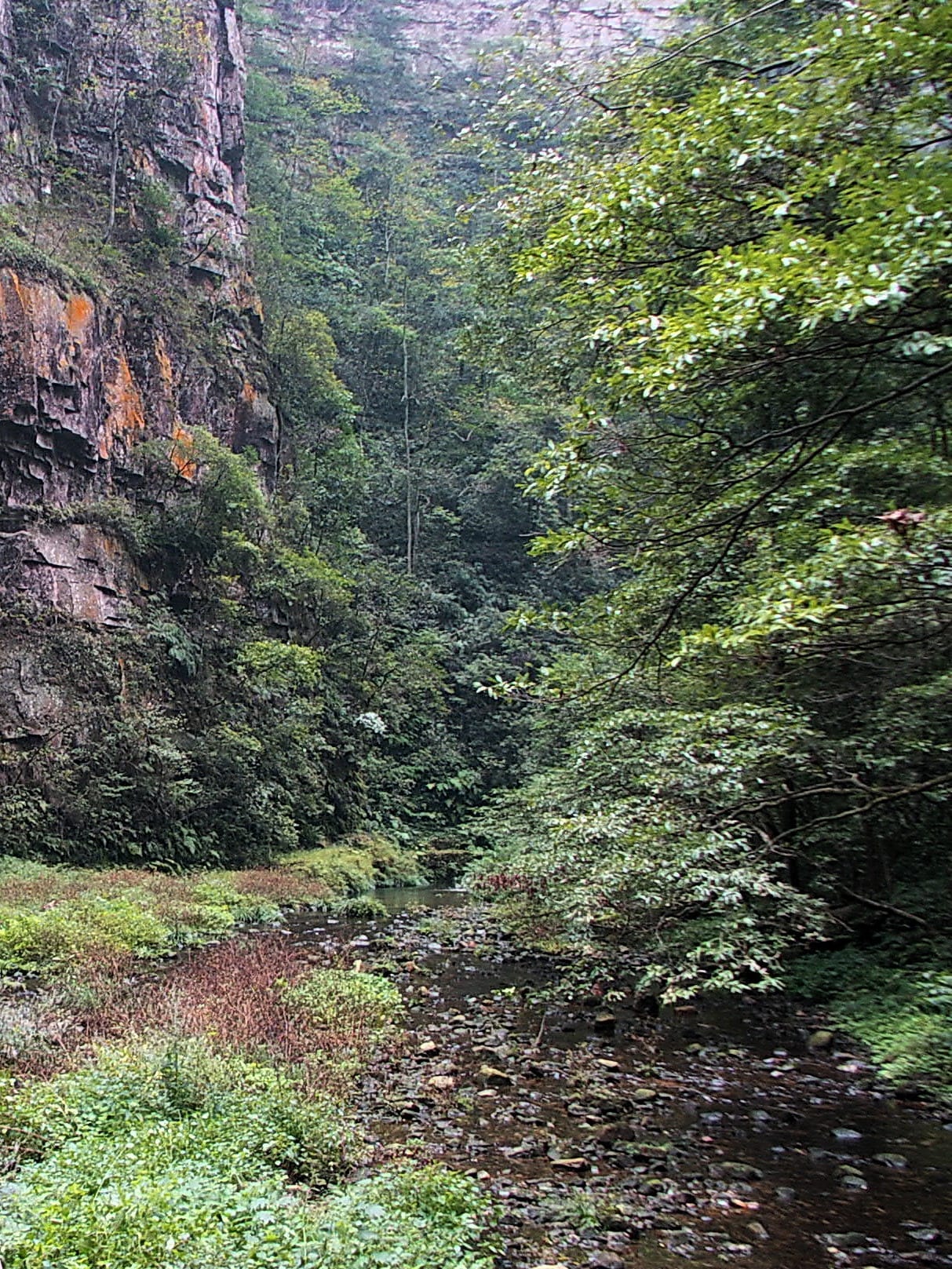
Golden Whip Stream in Zhangjiajie's park — the mountain setting that makes resting over a cup of vine tea after a hike worth it.
Stay in Wulingyuan to walk to Xibu Street and the park entrance, or stay in the city near Dayong Fucheng and the local tea houses.