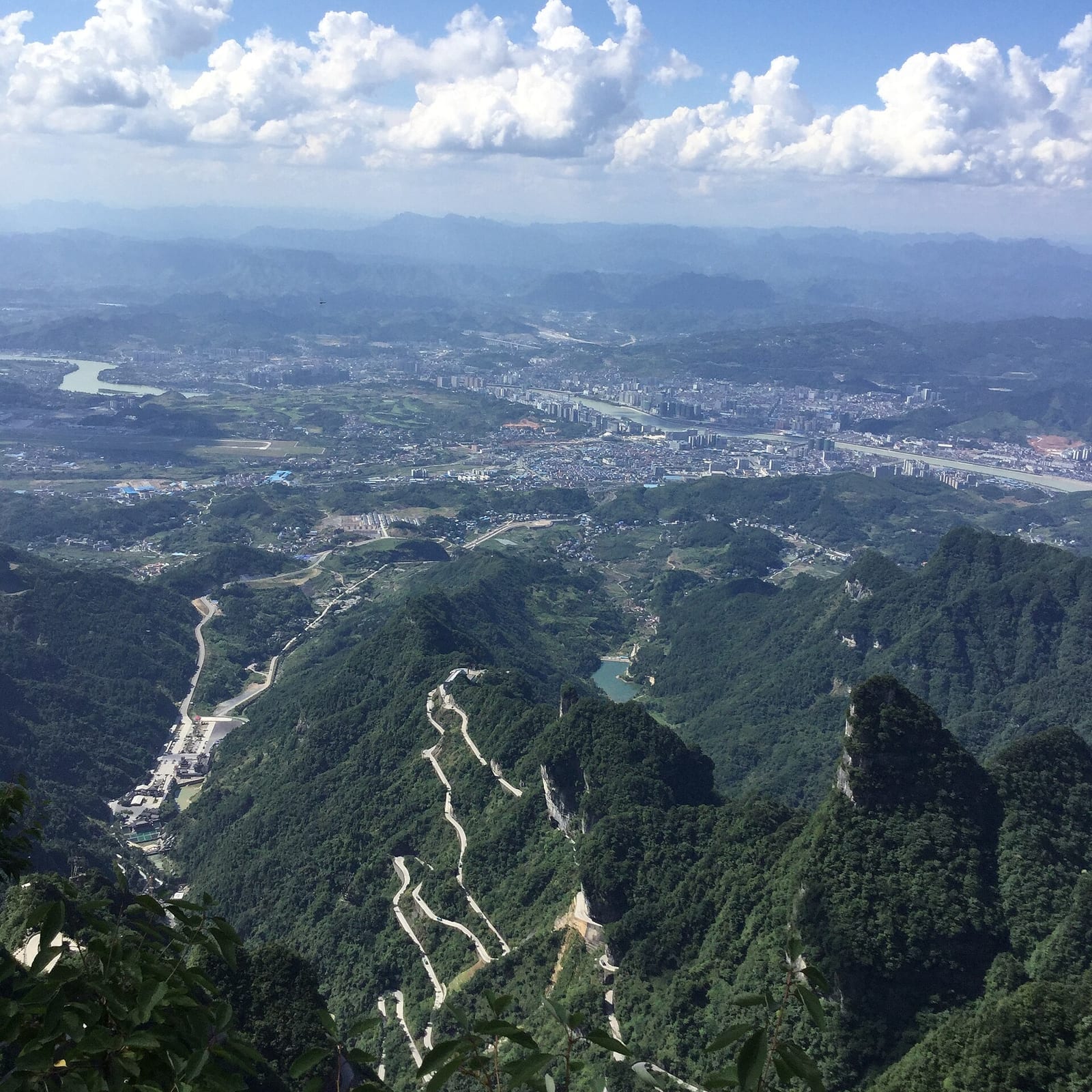
Two days lost among the sandstone pillars of the National Forest Park — riding the Bailong Elevator up to Yuanjiajie, the viewpoint behind the floating mountains of Avatar, walking beside Golden Whip Stream, and watching the sea of clouds at Tianzi Mountain. Then a final day on Tianmen Mountain: the world's longest cable car gliding over the city, the 99-bend road, and the huge natural arch of Heaven's Gate. This is the trip most travellers should do — the length that lands just right.
Zhangjiajie is not a place you can see in a single day, because its best parts split across two zones about 33 kilometres apart. There is Wulingyuan, the UNESCO scenic area that holds the National Forest Park — thousands of quartz-sandstone pillars rising out of the valleys, the ones that inspired the floating mountains in Avatar (at Yuanjiajie), the sea of clouds at Tianzi Mountain, and the 326-metre Bailong glass elevator. And there is Zhangjiajie city, which has Tianmen Mountain — the flat-topped mountain right beside town, with the world's longest cable car, the 99-bend road, and Heaven's Gate — plus the airport and the train stations.
This 3-day plan is built for most first-time visitors to Zhangjiajie, and three days is the length that fits best. The first two days are spent inside the National Forest Park / Wulingyuan (one ticket valid for four days, which more than pays off), and day three covers Tianmen Mountain beside the city before you head out. It deliberately leaves out Fenghuang ancient town and the Grand Canyon glass bridge, which each need extra time — if you want those too, step up to the 4-day plan. Every leg here runs on buses, taxis, DiDi, the park shuttle, elevators and cable cars. Zhangjiajie has no urban rail; everything moves on roads and up the mountains.
Shorter trip? See the 2-day plan, which squeezes Wulingyuan and Tianmen tighter. More time? The 4-day plan adds the Grand Canyon glass bridge or Fenghuang ancient town.
A walk beside a clear stream under sheer cliffs, a 326-metre glass elevator that rises in seconds, and standing before the pillars that became the floating mountains in Avatar — the day you understand why the whole world wants to come here.
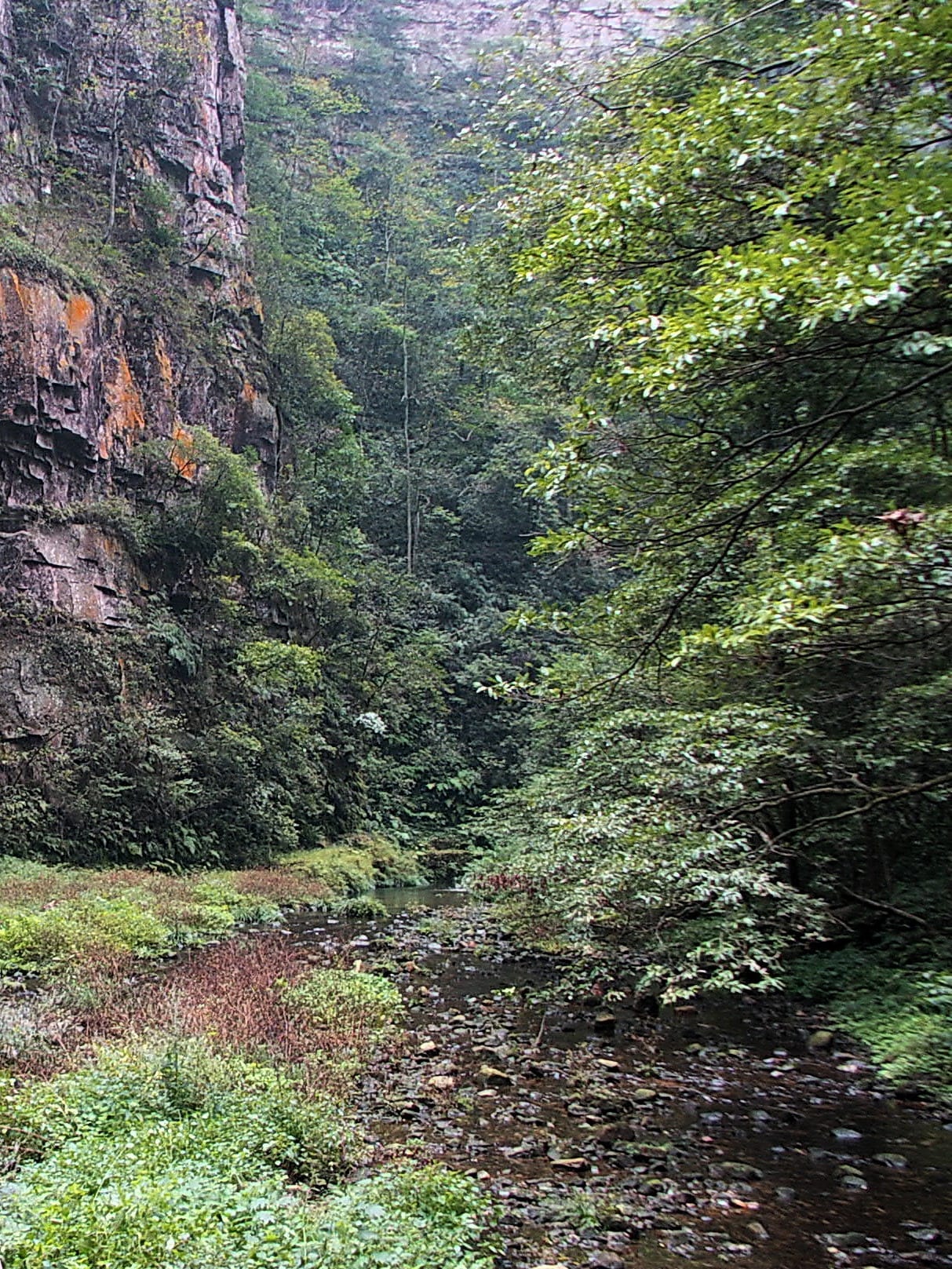
Start the first day at the Forest Park gate on the Wulingyuan side, buy your entry ticket (one ticket, valid four days), and walk in along Golden Whip Stream — a 5–7 km path that follows a clear stream flanked by tall sandstone pillars on both sides. It is the prettiest, gentlest way to warm up: flat and easy, with wild macaques popping out to say hello (watch any food in your hands). Take your time and let the stone forest soak in; there is no need to rush.
Golden Whip Stream brings you out near the Bailong Elevator station, which is a fine way to begin the day before riding up to the high pillar views. Read the route and highlights in the Golden Whip Stream guide.
In the afternoon, ride the Bailong Elevator, a glass elevator bolted to a 326-metre cliff face that carries you from the valley floor to the top of the pillars in under two minutes — clear glass looking straight out over the stone forest dropping away below, equal parts thrilling and beautiful. From the top, a park shuttle runs to Yuanjiajie, the most famous viewpoint in Zhangjiajie.
Yuanjiajie is home to the "Hallelujah" (Avatar) pillar that inspired the floating mountains in the film, the First Bridge Under Heaven — a natural stone span linking two peaks — and the Lost Souls Platform, looking out over pillars as far as the eye can see. Follow the viewpoints and shoot to your heart's content. See the routes in the Zhangjiajie National Forest Park guide and the Bailong Elevator guide.
Come down from the park in the early evening to Wulingyuan town, check into your hotel, and stroll the Wulingyuan pedestrian street, lined with restaurants, souvenir shops and lights after dark. For dinner, try the local cooking of the Tujia people, who are native to this area — bold Hunan flavours, hot and sour, with their own preserved and smoked specialities.
The dish to order is sanxiaguo (三下锅), a Zhangjiajie hotpot-stew of mixed ingredients, spicy and warming, alongside Tujia smoked pork, all with steamed rice — exactly what you want after a day on your feet. See where to eat it in the what to eat in Zhangjiajie guide.
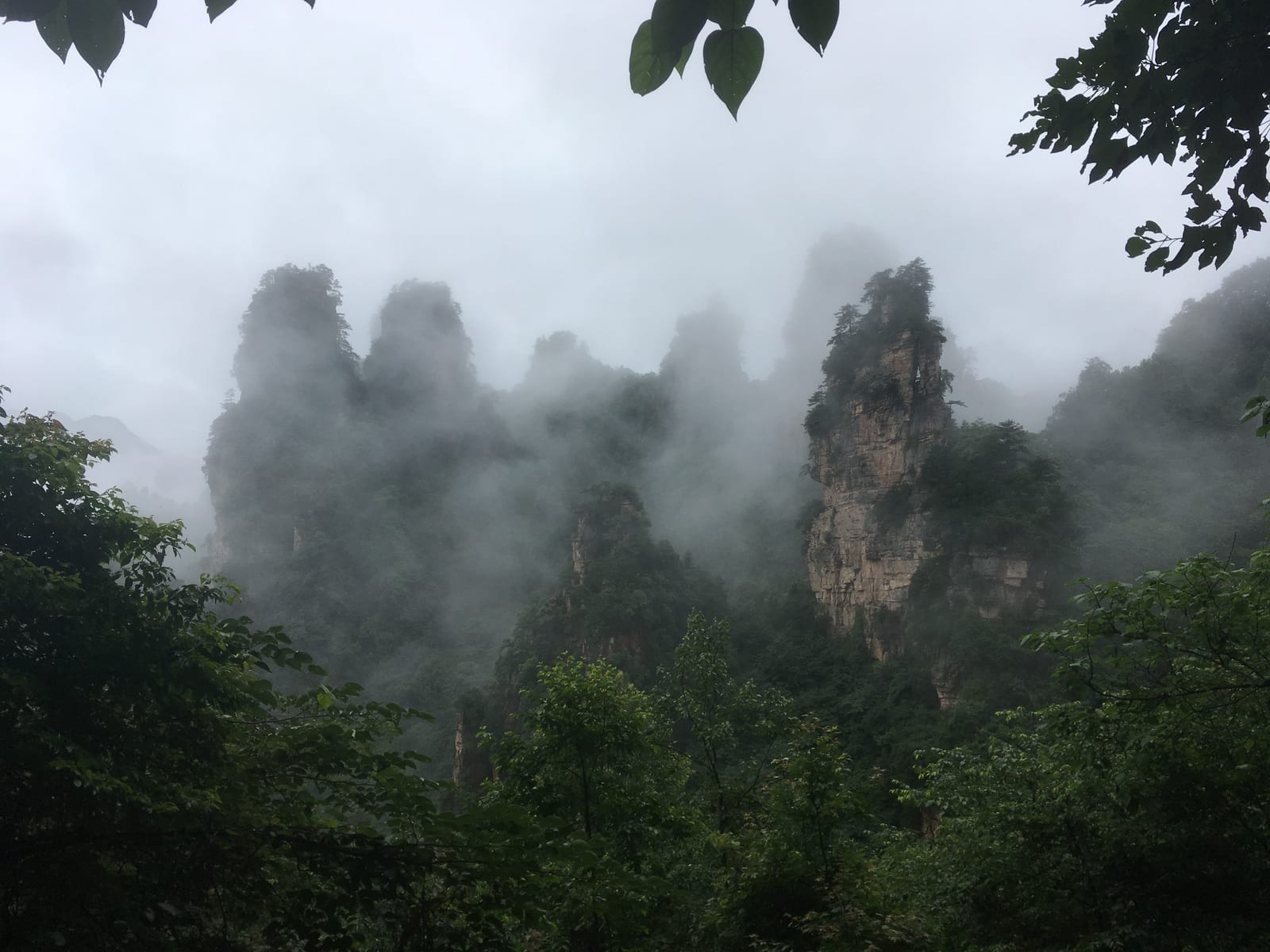
Day two is still inside the park (same ticket) — up to Tianzi Mountain for the pillars of the West Sea in the mist, then on to quieter Yangjiajie with its huge views. Or, if you have had your fill of cliffs, swap to Yellow Dragon Cave and Baofeng Lake to rest your eyes.
Use the same park ticket and head back in early to climb Tianzi Mountain, which has the widest viewpoints in Zhangjiajie — looking out over the pillars of the "West Sea (西海)" stretching to the horizon. If you are lucky enough to come on a cloudy morning or just after rain, you will see the sea of clouds drifting around the pillars until they look like islands floating in a white sea — the classic photo everyone is after. The highlights here include the Emperor's Brush Peak (御笔峰) and the Helong viewing terrace.
You can reach Tianzi Mountain by cable car (fast and easy) or on foot up the stairs, your choice. It sits in the north of the park and connects to Yuanjiajie and Yangjiajie by park shuttle. See the viewpoints and the best times for mist in the Tianzi Mountain guide.
In the afternoon, take the park shuttle to Yangjiajie, a zone many visitors skip but which rivals Yuanjiajie for beauty with far fewer crowds. The highlight is the Heavenly Rampart (天波府), a wall of pillars standing like fortress towers, and the "One Step to Heaven" viewpoint, reached up a steep stairway that earns its view. This is the zone for anyone who wants to escape the tour groups and have the pillars to themselves.
If two days of stone-forest trails have started to tire you, the alternative is to come down in the afternoon for Yellow Dragon Cave (黄龙洞), an enormous cave of stalactites with an underground river you can boat on, or Baofeng Lake (宝峰湖), a mountain lake where a boat cruise reflects the pillars on the water. Both lie within the Wulingyuan area and make a good change of pace from climbing. See more in the Yellow Dragon Cave guide and the Baofeng Lake guide.
Tonight is your last night in Wulingyuan; come back, rest and recharge, because tomorrow you move to Zhangjiajie city for Tianmen Mountain. For dinner, try a local dish you have not had yet — fried stinky tofu, or spicy Hunan rice noodles from the pedestrian street — then pack up.
Before bed, firm up tomorrow's plan: your transfer time and check-out. Wulingyuan and the city are about 33 km apart, roughly an hour, and many Wulingyuan hotels arrange a transfer or help you book a DiDi. If you have a hotel booked on the Tianmen side in the city, day three becomes much smoother.
A cable car gliding over the city and the fields up onto a flat-topped mountain, a glass skywalk clinging to the cliff at 1,400 metres, and 999 steps up to Heaven's Gate — the most thrilling, most monumental day of all, before you head out of the city.
Move into Zhangjiajie city this morning and head straight to the Tianmen cable-car station, which sits in the city centre near the railway station — the headline here is the world's longest passenger cable car, over 7.4 kilometres long, gliding over the rooftops and the fields and climbing the sheer cliffs up to the summit of Tianmen Mountain at around 1,500 metres. The view shifts from the city below to limestone peaks as you rise, a ride of about 20–30 minutes.
At the top there is a cliffside walkway and a glass skywalk hugging the edge at about 1,400 metres — glass underfoot looking straight down into the gorge, genuinely heart-stopping (the shoe covers for the glass walk are now included in the ticket). Loop the summit and take in the flat-topped-mountain views. See the routes and slots in the Tianmen Mountain guide and the glass walk / bridge guide.
In the afternoon, come down to Heaven's Gate (Tianmen Cave) — a vast natural arch about 131 metres tall punched clean through the mountain, the symbol of Zhangjiajie you stand and crane your neck at. If you have the legs, climb the 999 steps up to the mouth of the gate (hard, but worth it), or take the in-mountain escalators instead. Standing under the arch with the sky showing through is a sight you will find nowhere else.
On the way down from Heaven's Gate, the mountain's bus runs the 99-bend road (通天大道) — a road that switchbacks 99 times down the sheer cliff, a drive famous the world over. You sit on the bus holding your breath through every bend down to the foot of the mountain, then transfer back into the city.
This evening, head out of Zhangjiajie — the Tianmen cable-car station is in the city, so onward travel is easy. There are two main options. Zhangjiajie Hehua International Airport (DYG) is only ~5–10 km from the city centre: a DiDi or taxi is ~¥20–40 (~15–20 min), or take the airport bus. Or take the high-speed train from Zhangjiajie West railway station, which links to Changsha in ~1.5 hours and has direct trains to Fenghuang ancient town as well.
If your return flight leaves in the afternoon or evening of day three, Tianmen's city-centre location fits the departure well — leave your bags at the hotel or in a locker while you visit Tianmen, then collect them before the airport. Or, if you fly out the next morning, sleep in the city tonight and head to the airport at a relaxed pace.
This plan sleeps in Wulingyuan for the first two nights (the in-park gateway town, close to the gate and a short ride from the Avatar pillars), then moves to Zhangjiajie city / the Tianmen side for the last night, because day three is Tianmen, whose cable car is in the city centre and whose onward travel is easy. The two zones are about 33 km / one hour apart. See options in the Top 10 Zhangjiajie hotels or the 6 luxury picks.
Zhangjiajie has no urban rail — inside the park you use the free green shuttle buses (included in the ticket), and going up the mountains means the Bailong Elevator, cable cars and in-mountain escalators. Between Wulingyuan and the city (~33 km) you use taxis / DiDi, intercity buses or a hotel transfer. Use Amap or Apple Maps rather than Google Maps. See the high-speed rail guide if you are continuing to another city.
Link a Visa or Mastercard to Alipay (via its international mode) before you travel. Most shops in Zhangjiajie and Wulingyuan accept only Alipay or WeChat Pay, and some take no cash at all — see the Alipay & WeChat Pay guide and the internet, VPN & eSIM guide to set up before you go.
| Item | Budget | Mid-range | Comfort |
|---|---|---|---|
| Hotel (per night) | ¥80–180 (~$11–25) |
¥250–500 (~$35–70) |
¥600–1,500+ (~$85–210+) |
| 3 meals | ¥60–110 (~$8–15) |
¥130–250 (~$18–35) |
¥280–500 (~$39–70) |
| Transport (road / lift / cable car) | ¥30–100 (~$4–14) |
¥100–250 (~$14–35) |
¥250–500 (~$35–70) |
| Tickets / activities | ¥225 (park ticket · over 2 days) |
¥288–450 (Tianmen + lift / cable car) |
¥450–800 (add cave / lake / show) |
| Daily total (approx.) | ¥395–615 (~$55–86) |
¥768–1,450 (~$108–203) |
¥1,580–3,300+ (~$221–462+) |
Indicative rates at roughly ¥7 ≈ $1 USD · the park ticket ¥225–240 (valid 4 days, best value if you spend two days inside the park) plus Tianmen ¥288 are the trip's biggest costs · prices are approximate and vary by season — check before you go.