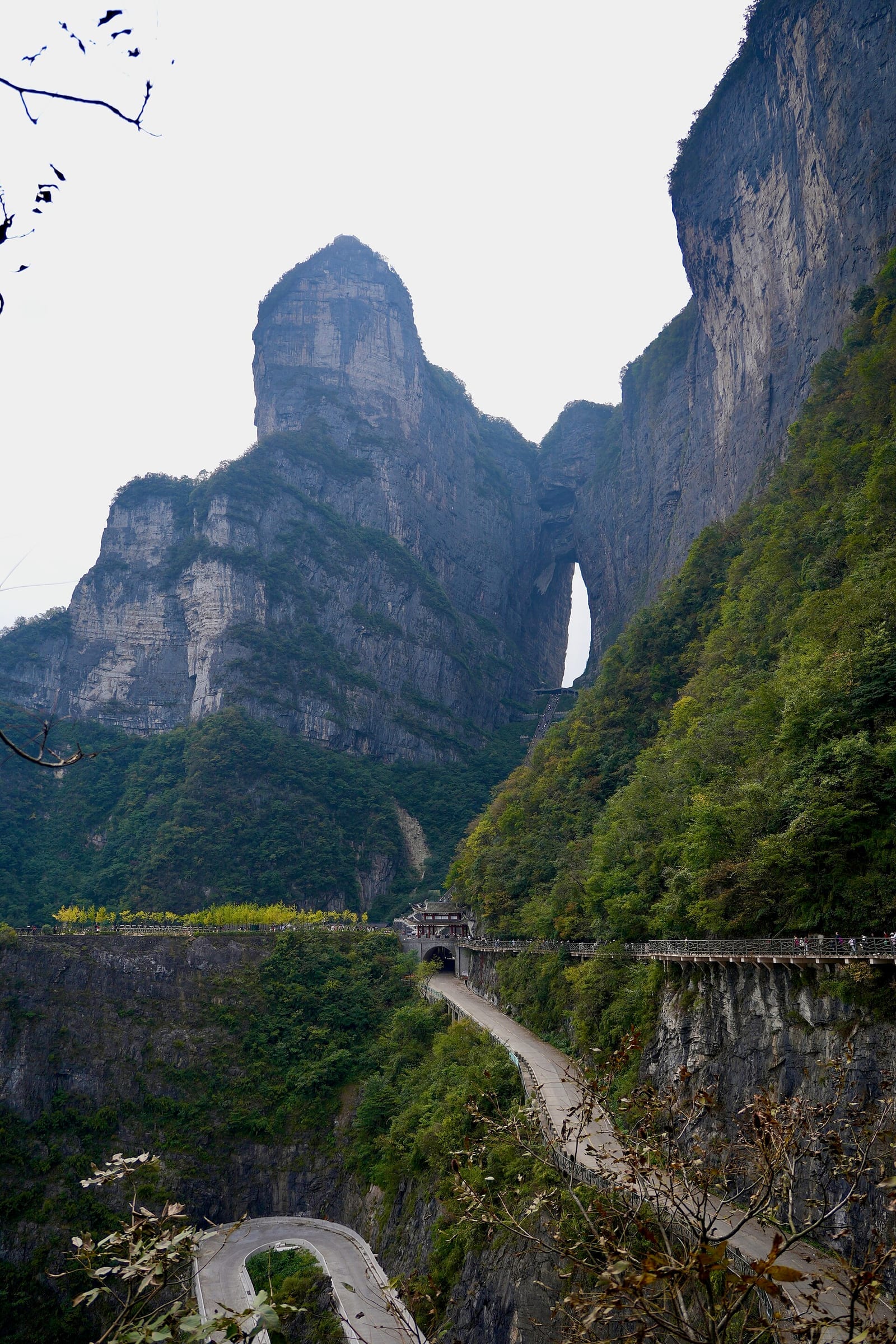
Zhangjiajie has no subway — but inside the National Forest Park a free green shuttle network is included with your ticket, you go up by cable car and the 326 m Bailong Elevator, and between the zones it's DiDi, a ~¥13 coach and the high-speed train. The one thing to plan from the start: Wulingyuan and the city/Tianmen sit ~33 km apart, so map out your transfers.
If you've travelled in Shanghai or Guangzhou and grown used to hopping on a subway to get anywhere, here's the first thing to know: Zhangjiajie has no metro or MRT. This land of sandstone pillars — the spires that inspired the floating mountains in Avatar — is spread out and runs mostly on wheels. It sounds like a hassle, but it's easier than you'd think once you know what to use and when.
The heart of getting around here is simple: inside the National Forest Park and Wulingyuan, a free green shuttle network does the heavy lifting, already included in your park-entry ticket. That's what carries you between trailheads, viewpoints and lift bases. To go up the steep peaks you take a cable car or a lift — the Tianmen cable car in the city, and the Tianzi cable cars and the Bailong Elevator in the park. And to travel between the zones or out of the park, you use taxis, DiDi, intercity coaches and the high-speed train.
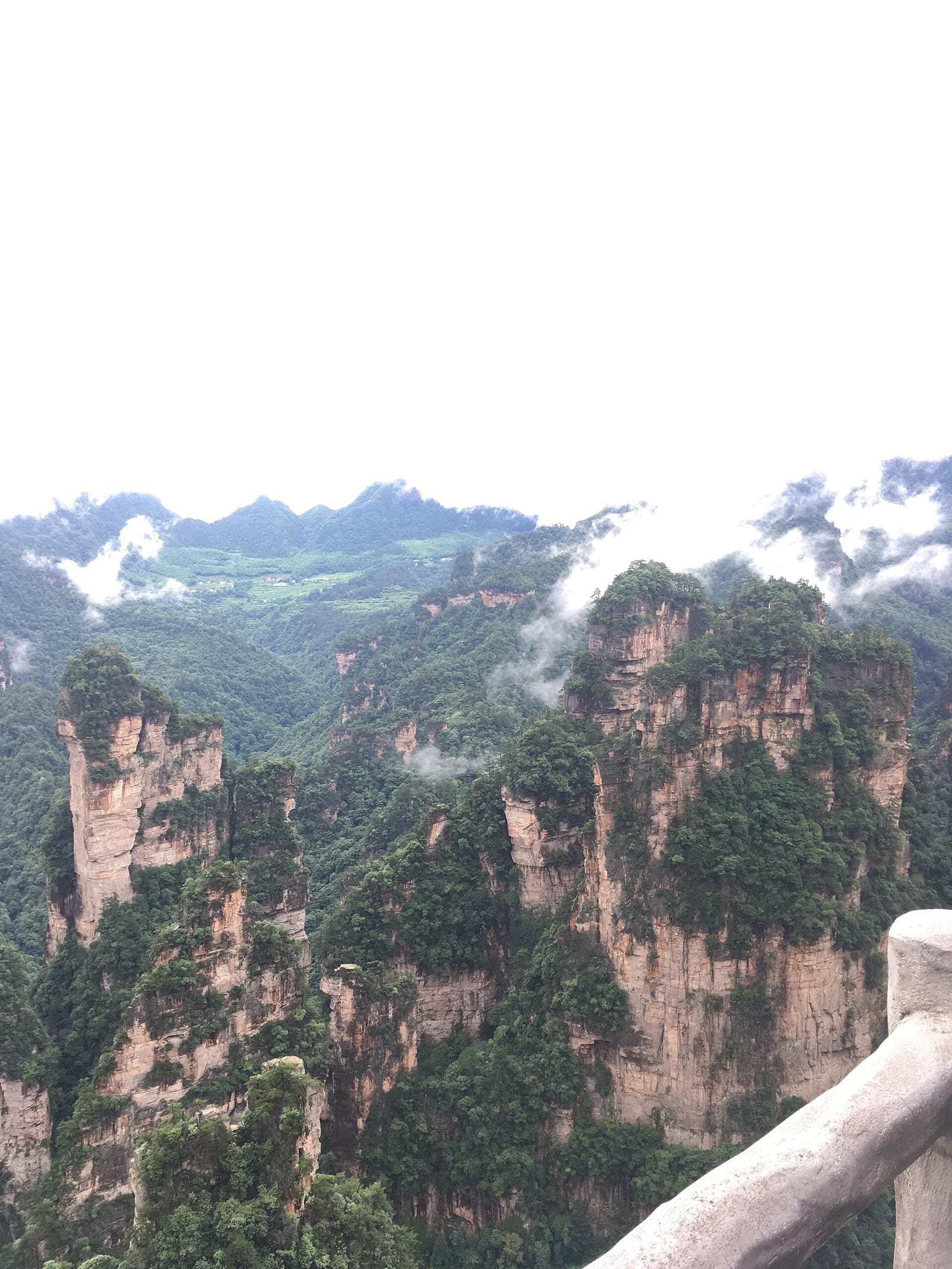
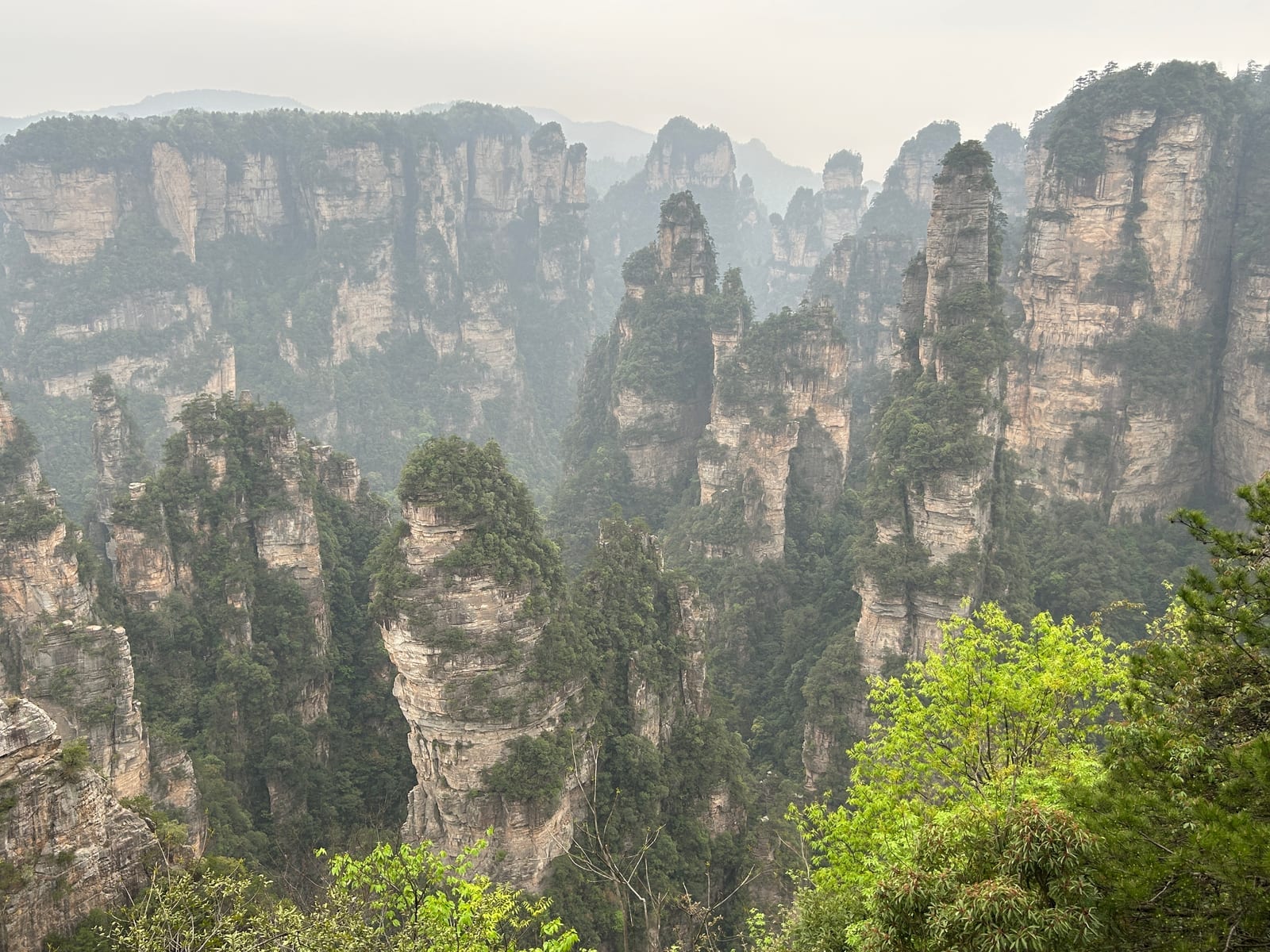
But there's one thing to grasp from the start: Zhangjiajie has two main zones that sit far apart. One is Wulingyuan (武陵源), the gateway town for the Forest Park — the Avatar pillars, Yuanjiajie, Tianzi Mountain, Golden Whip Stream, the Bailong Elevator. The other is Zhangjiajie city (永定), home to the Tianmen cable-car base, the airport and the train stations. They're about 33 km apart, roughly an hour by road, with no in-city train tying them together. This guide walks through every way to move around — then helps you plan your transfers before you even leave the hotel.
Inside the National Forest Park and Wulingyuan, the green eco-buses are included with your ticket — this is how you'll get around all day.
Here's the good news many people don't know before they go: getting around inside Zhangjiajie National Forest Park and Wulingyuan is mostly free, because green eco-buses shuttle you between the park's spots as part of your ticket. A standard park ticket is around ¥228 (about ฿1,140) and valid for 4 days, and you can ride the in-park shuttles as many times as you like for the life of the ticket — no paying per trip.
The green buses are the lifeblood of the park, running between the entrance gates, the trailheads and the major viewpoints — for example from Golden Whip Stream to the foot of the Bailong Elevator, or from Yuanjiajie over to Tianzi Mountain and Yangjiajie. Distances inside the park are long and the terrain is steep, so these buses save you a lot of unnecessary walking.
Using them is easy: walk to a stop and board the route heading your way. Signs are usually in both Chinese and English; if you're unsure, ask the staff. In high season queues can be long, so allow time to wait — and knowing your start and end stop names in Chinese helps.
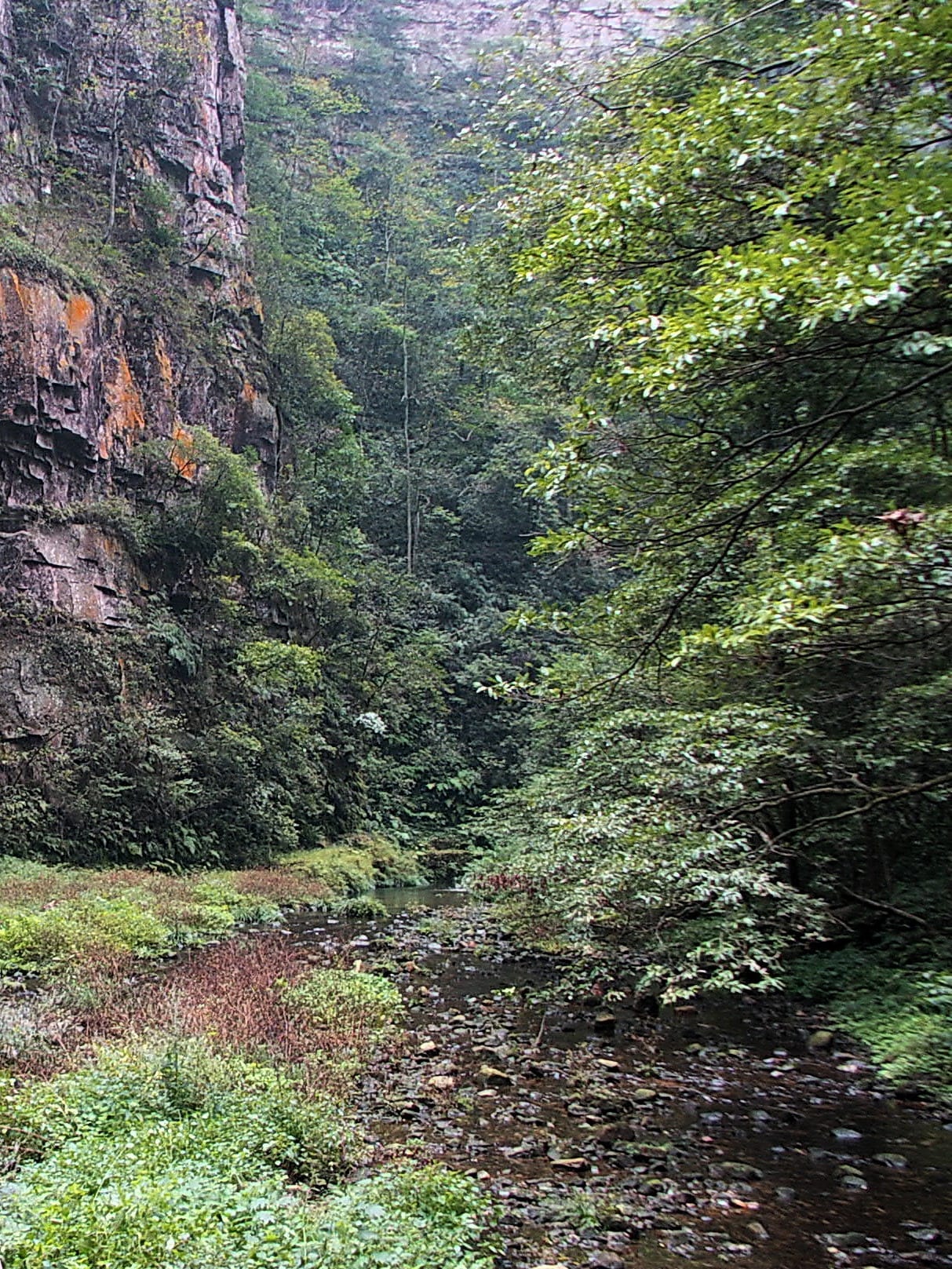
On foot
Some parts of the park are at their best on foot. Golden Whip Stream is a flat path along a clear stream beneath the sandstone pillars, about 5–7 km, easy and level — ideal for soaking up the scenery. At the far end you simply hop on a free eco-bus to continue to the Bailong Elevator.
Up on the summits, the trails around Yuanjiajie and Tianzi Mountain are scenic clifftop walks with some ups and downs. Mix walking with the shuttles to pace yourself, wear comfortable shoes, and carry water and a rain layer — the weather up high changes fast.
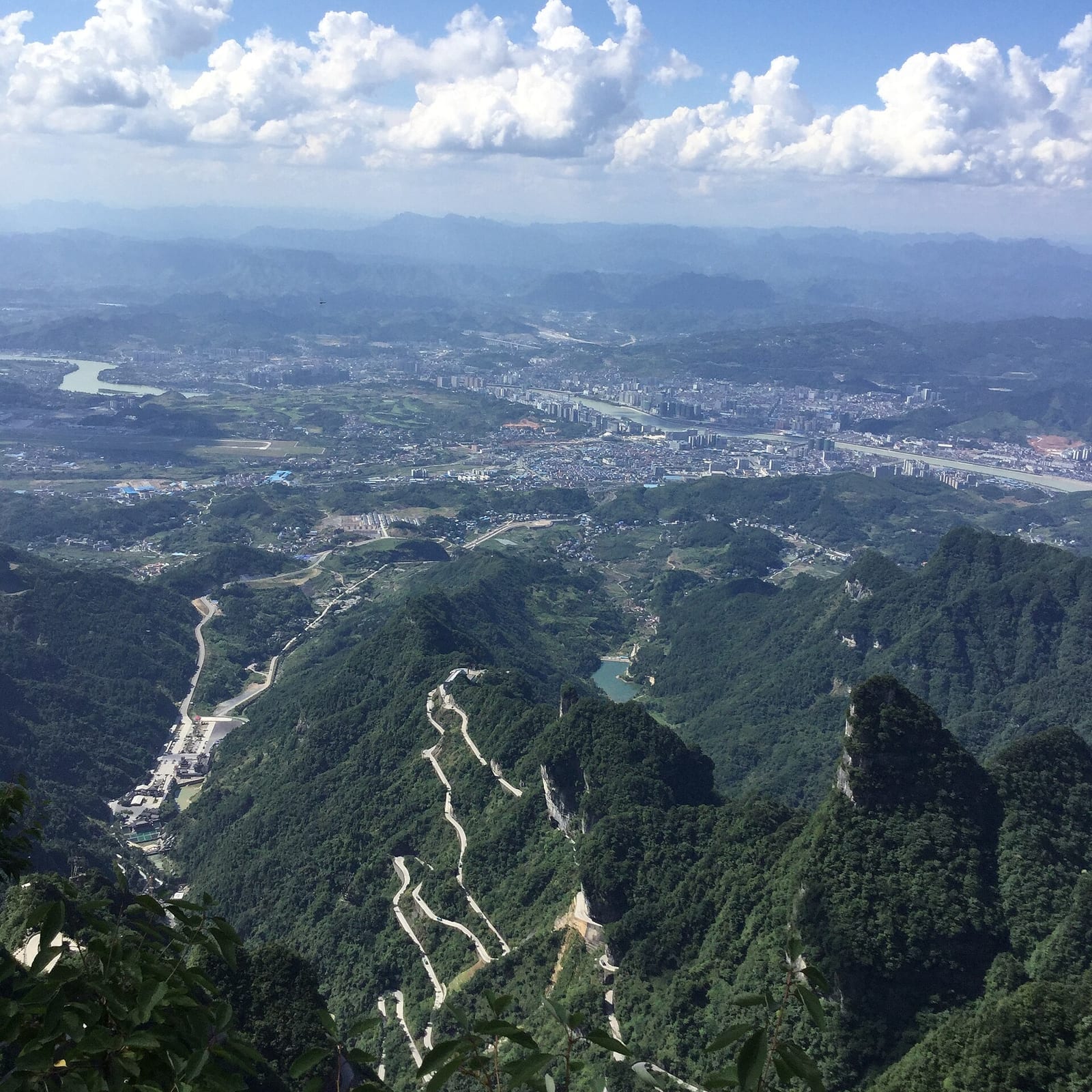
The peaks here are seriously steep, so reaching the top means a cable car or a lift — a separate system from the free shuttles, and charged separately.
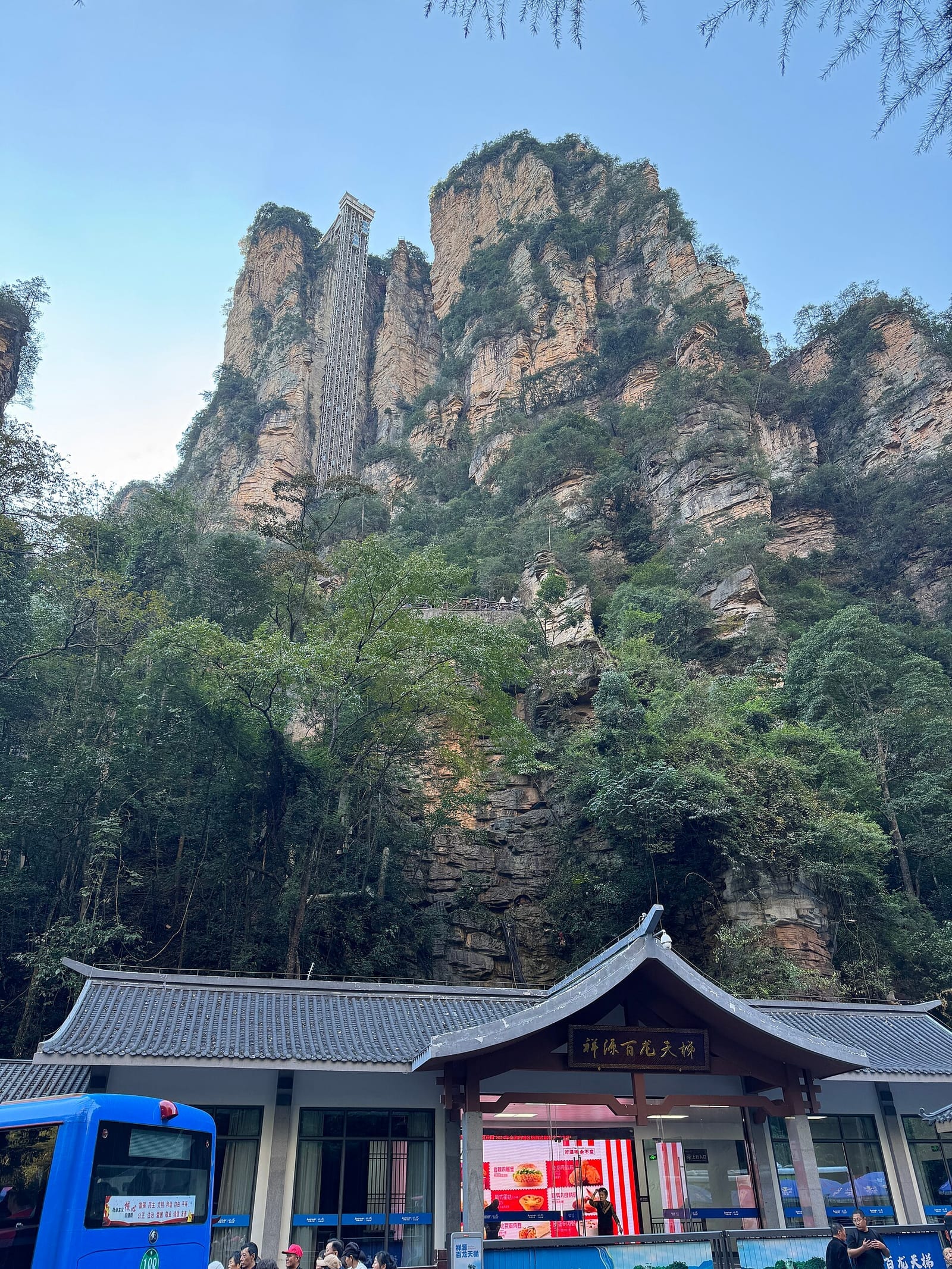
Zhangjiajie's sandstone pillars rise hundreds of metres, so standing on top to see the sea of stone means a cable car or a lift. That's part of the charm here — the ride up is an experience in its own right, taking in the world's longest cable car and the world's tallest outdoor lift. All of these are charged separately from the free shuttles; some are bundled into the park ticket, others cost extra.
In the city
Tianmen Mountain sits right in Zhangjiajie city, and you reach the summit on the longest cable car in the world, about 7,455 metres. It starts near the downtown train station, floats over the famous 99-Bend Road and up to the top in roughly 28 minutes, with jaw-dropping views the whole way. It's around ¥225–258 (about ฿1,125–1,290) depending on the season, with the round trip included in the Tianmen ticket.
At the top there are glass walkways and escalators, and a shuttle takes you down to see Heaven's Gate (Tianmen Cave), the giant natural arch that's the city's icon. Give Tianmen a full day, since the cable-car queues and viewpoints all take time.
In the park
In the Forest Park / Wulingyuan zone, the Bailong Elevator is the tallest outdoor glass lift in the world, bolted to a cliff face: 326 metres, climbed in about 1.5 minutes. It whisks you from the valley floor up to the plateau around Yuanjiajie, sparing you thousands of stone steps — both a way up and a highlight in itself.
The park also has the Tianzi Mountain and Yangjiajie cable cars to help you up and down the various summits — mix and match them with the free shuttles and the stairs. The Bailong Elevator queues are long in high season, so go early or late afternoon for shorter waits.
Once you leave the park, travel goes back to wheels on roads — and Wulingyuan and the city/Tianmen sit ~33 km apart, about an hour away.
DiDi (China's version of Grab) is the go-to for getting around outside the park — easy to hail, with an English interface, lets you type your destination in English, shows a fare before you book, and bills your Alipay or WeChat in the app. It's ideal when you're loaded with luggage, heading to a train station or the airport, or crossing from Wulingyuan into the city.
Metered taxis are there too, with a flagfall of a few yuan, charged by distance — a few dozen yuan around town. Crossing from Wulingyuan to the city/Tianmen, a chartered taxi runs about ¥150–200 (about ฿750–1,000) straight to the door. Have your destination written in Chinese characters in case you flag a taxi on the street.
The cheapest way to cross between the two zones is the coach from Wulingyuan Bus Station to Zhangjiajie Central Bus Station, about ¥13 (about ฿65), leaving roughly every 30 minutes and taking 40 minutes to an hour. It's the most economical option if you're not in a rush and don't have big bags.
Within Zhangjiajie city there are also ¥1–2 city buses you pay for by scanning a QR code, but signs are Chinese-only with multiple transfers. For tourists, DiDi is far more comfortable. The intercity coach shines on the Wulingyuan–city run, which is frequent and genuinely cheap.
High-speed train
Arriving in Zhangjiajie from elsewhere in China, the high-speed train is the main option. Zhangjiajie West Station is the bullet-train hub, about 1.5 hours from Changsha and the starting point for the Zhangjiajie–Fenghuang train. The older Zhangjiajie Station downtown sits near the Tianmen cable-car base.
Outside Zhangjiajie West Station, shuttle buses to Wulingyuan leave roughly every 10 minutes for about ¥13 and take 30–40 minutes — very convenient. Book train tickets ahead on Trip.com or the 12306 app, and carry your passport every time.
Separate area
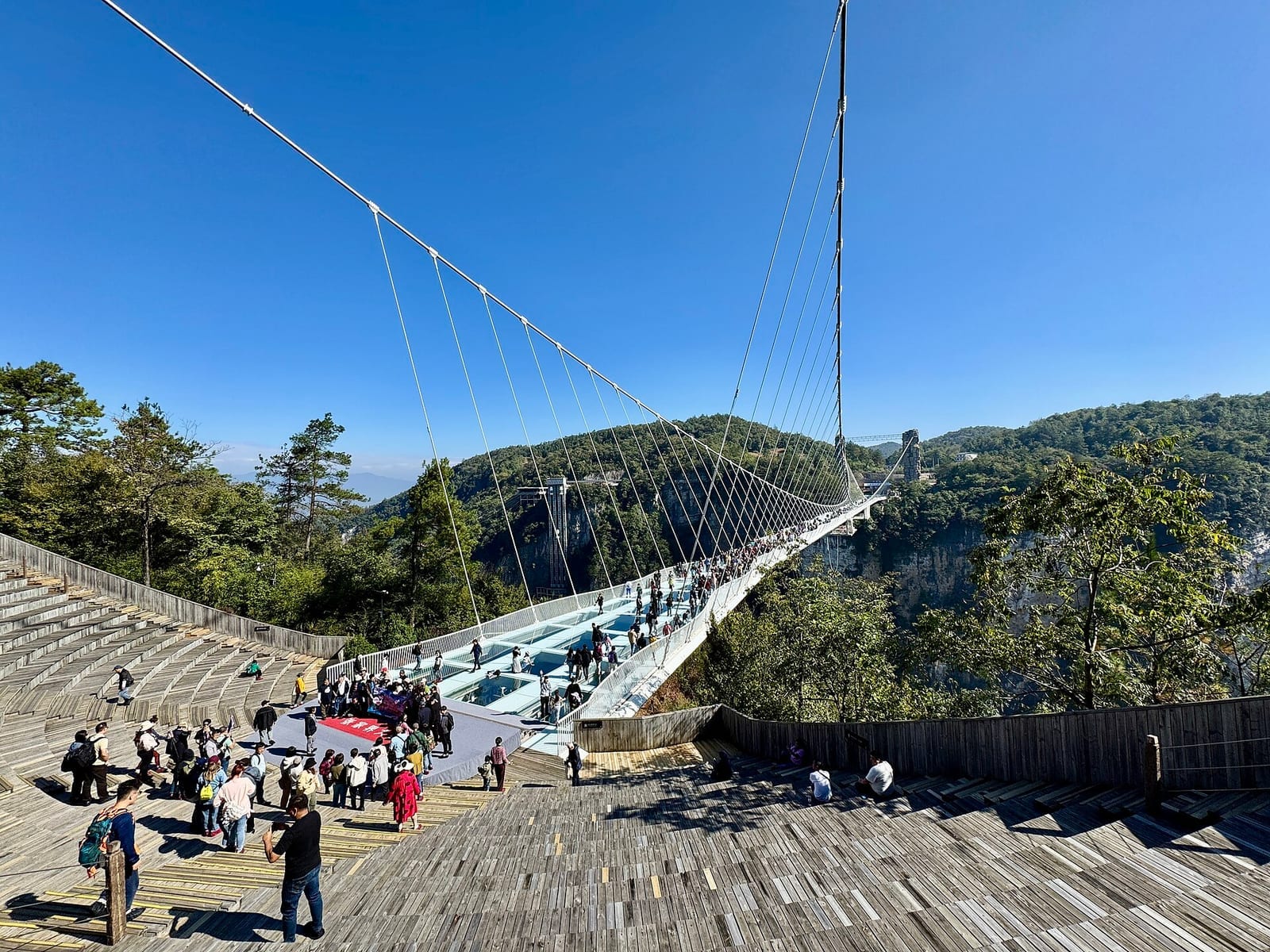
The famous glass bridge is in the Zhangjiajie Grand Canyon, which is a separate area from the Forest Park, about 15–30 km from Wulingyuan. You travel there on your own — it's not part of the park's free shuttle network, and the canyon has its own lifts/walkways and a separate ticket.
The easiest way is a DiDi or charter from Wulingyuan, or a tour with transport included, since public buses to this spot aren't frequent. If you want to do it the same day as the park, plan the timing carefully — both are big and time-consuming.
China is almost cashless, and Zhangjiajie is no exception. Everything from DiDi to coaches to cable-car tickets and the street stalls in Wulingyuan is paid by scanning a QR code. Setting up Alipay or WeChat Pay before you fly is the single most important thing you can do, because it's the key to moving around for the entire trip — including buying park and train tickets.
Link a Visa/Mastercard in international mode to pay for DiDi, coaches, cable-car tickets, restaurants and train tickets — set it up before you travel.
A companion to Alipay with a similar setup. Link a foreign card and scan QR codes to pay for transport and shops just the same.
Board a city bus and scan the QR with Alipay/WeChat at the reader by the door — no coins needed, though a few in reserve never hurt.
Buses take cash dropped in the box (no change given) — keep ¥1–2 coins handy in case Alipay isn't ready, but most people just scan.
Honestly, if you set up Alipay with a linked card before you leave home, your Zhangjiajie trip gets smoother instantly — beyond transport, you'll use it for a sizzling sanxiaguo (three-cup) pot, Tujia local dishes, cafés and attraction tickets. For a step-by-step on linking a foreign card, see our Alipay & WeChat Pay guide.
This is what sets Zhangjiajie apart from other cities, and it's worth understanding before you plan the trip.
If you remember one thing from this page, make it this: "Zhangjiajie" covers two big zones about 33 km apart, roughly an hour by road. One is Wulingyuan, the gateway town for the Forest Park — the Avatar pillars, Yuanjiajie, Tianzi Mountain, Golden Whip Stream, the Bailong Elevator. The other is Zhangjiajie city, home to the Tianmen cable-car base, the airport and the train stations. There's no in-city train stringing the two together, so you'll plan the transfers between them yourself.
| Destination | Distance + time | How to get there |
|---|---|---|
| Inside the Forest Park / Wulingyuan | In the park · walk + free shuttle | Avatar pillars · Yuanjiajie · Tianzi Mountain · Golden Whip Stream |
| Wulingyuan ↔ Zhangjiajie city | ~33 km · ~40 min–1 hr | Coach ~¥13 · DiDi/charter ~¥150–200 |
| Tianmen Mountain (in the city) | In town · near the downtown train station | World's-longest cable car · ~28 min to the summit |
| Grand Canyon + Glass Bridge | ~15–30 km from Wulingyuan · separate area | DiDi/charter · tour with transport |
| Zhangjiajie West Station | → Wulingyuan ~30–40 min | Shuttle ~¥13 every ~10 min · DiDi/taxi |
| Zhangjiajie Airport (DYG) | ~6–10 km from the city · ~15–20 min | Airport bus · DiDi/taxi ~¥30–60 |
This matters: in mainland China, Google Maps doesn't show accurate public-transport data. The map may load with a VPN, but bus and routing info is often wrong or missing. There are two apps that actually work for navigating Zhangjiajie — especially for estimating the travel time between Wulingyuan and the city.
Amap has accurate bus data, lets you hail DiDi inside the app, supports searching places in English, has full route planning with stop details, and gives reliable estimates for the cross-zone ride. Download it from the App Store worldwide and it works without a VPN — an essential app for Zhangjiajie, especially around Wulingyuan where signs are in Chinese.
Apple Maps uses Amap's map data inside China, so its routes and directions are accurate, and it works without a VPN. Ideal for iPhone users who'd rather not install anything extra — you can search in English too.
Want to use LINE, Instagram, Gmail or full Google Maps while in China? You'll need a VPN downloaded and tested before you travel, since most VPN sites are blocked inside China. See the details in our China internet & VPN guide.
If we had to boil it down to two points: one — set up Alipay or WeChat with a linked card, and download DiDi and Amap before you leave home. These three apps are the complete getting-around kit for Zhangjiajie, because outside the park it runs on ride-hailing and QR payments, while inside the park you use the free shuttles. The moment you land, you can open the app and hail a DiDi without any fuss at the airport.
Two — plan your transfers between the two zones before you travel. Wulingyuan and the city/Tianmen sit ~33 km apart, and crossing between them can eat the best part of half a day if you don't plan it. Booking your train, park ticket, cable-car/lift tickets and two separate stays ahead of time saves a lot of time — especially over the Chinese public holidays, when tickets sell out fast and prices rise.