Ticket, gates, buses and a plan — in the order you'll need them
From how to buy the ticket, which gate to enter and how the buses work, to a sane 2-day plan and a clear answer on where Tianmen Mountain and the Glass Bridge sit.
 1
1
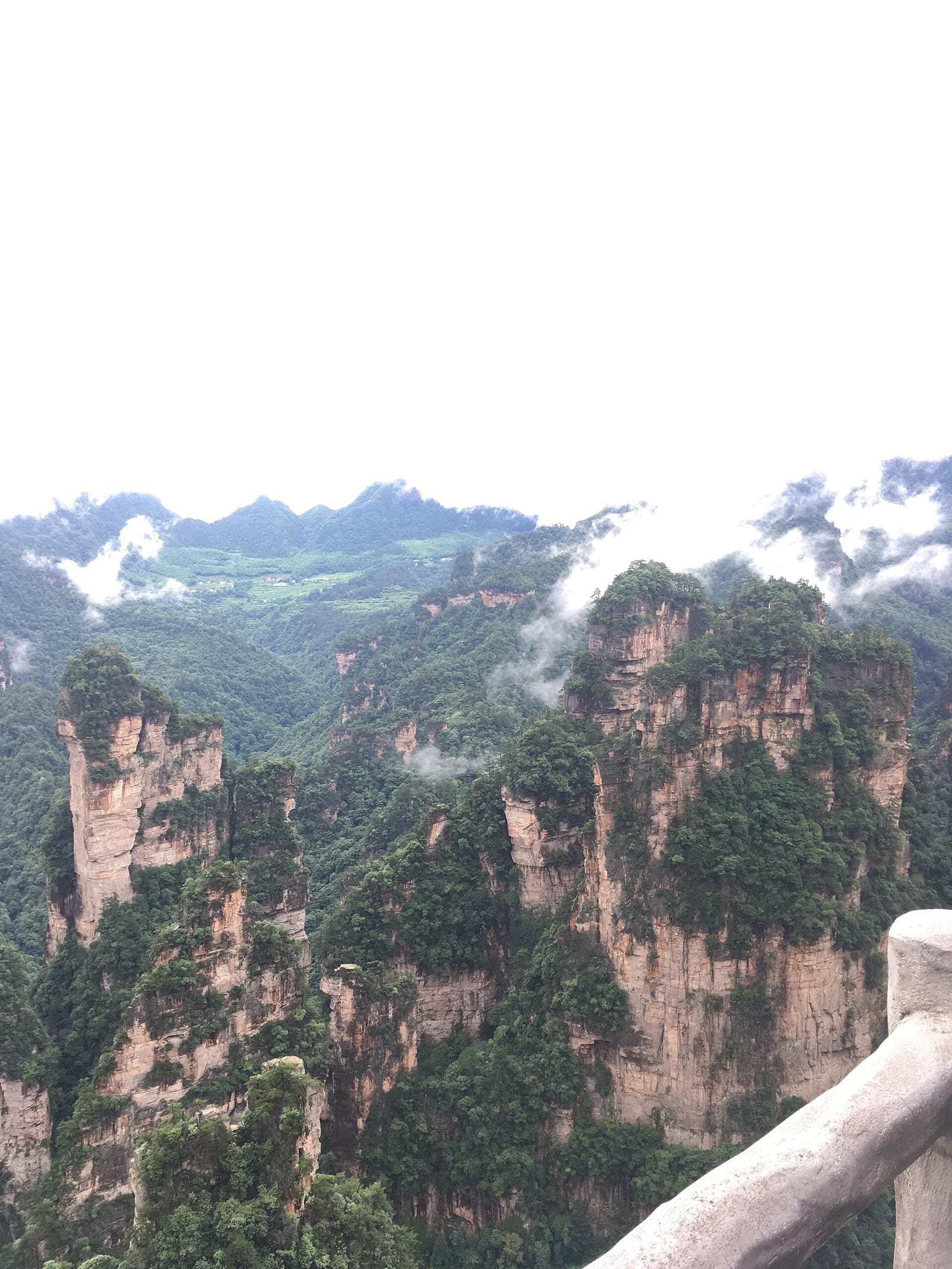
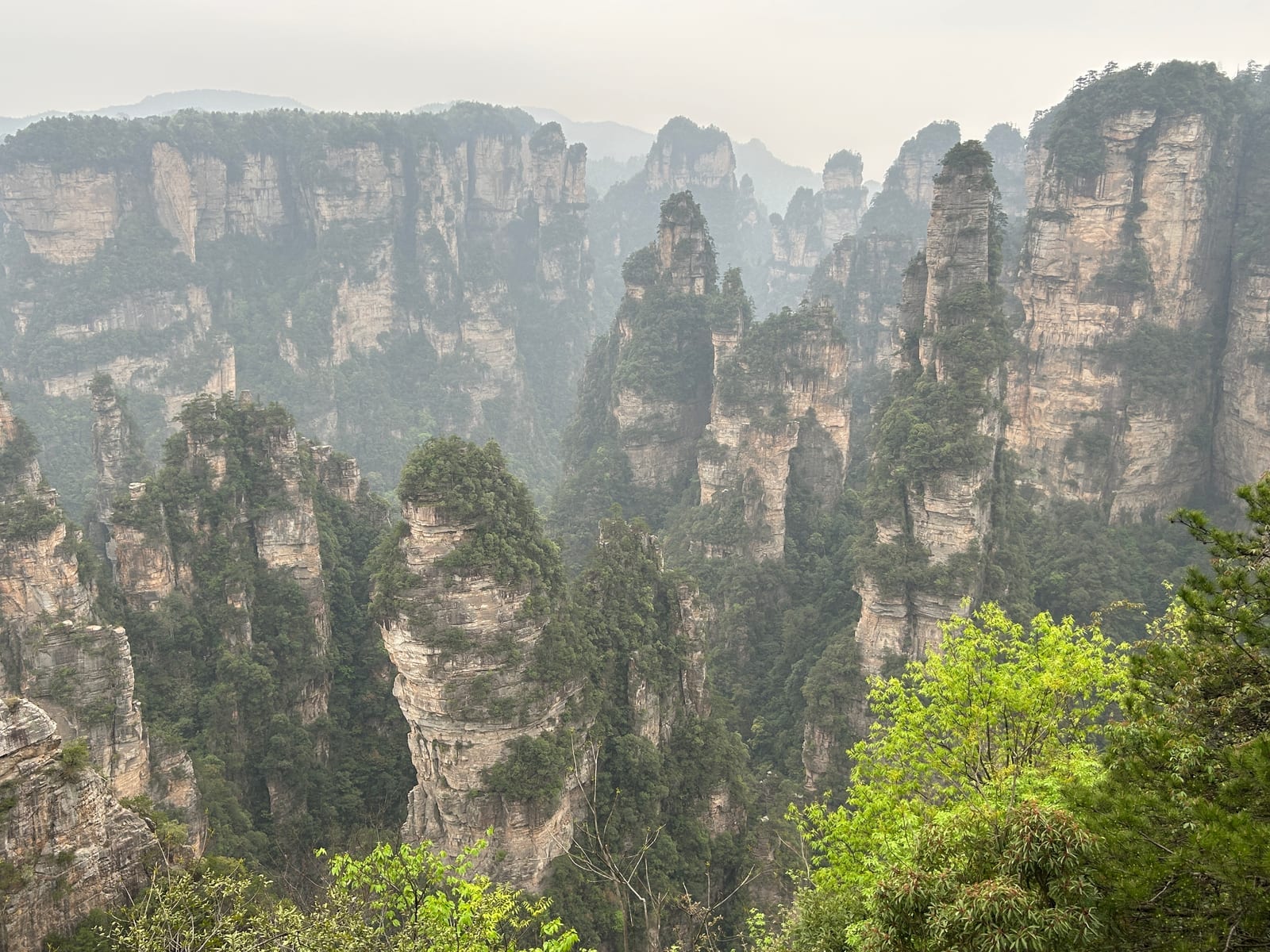
Start with the part that confuses everyone — the Wulingyuan ticket is one big single ticket covering every main zone in the stone forest (the Forest Park, Yuanjiajie, Tianzi, Yangjiajie, Golden Whip Stream). It costs about ¥227 (~฿1,135) in peak season, March to November, dropping to about ¥116 (~฿580) in low season, December to February. What many people miss is that it is valid for up to four consecutive days and already includes the internal shuttle buses (worth ¥60).
What the ticket does not cover is the Bailong Elevator, the cable cars up Tianzi and Yangjiajie, and some sightseeing trams — you pay for those on the day. Since mid-2025 the park requires a timed entry reserved online in advance to manage crowds, so lock in your visit dates first.
 2
2
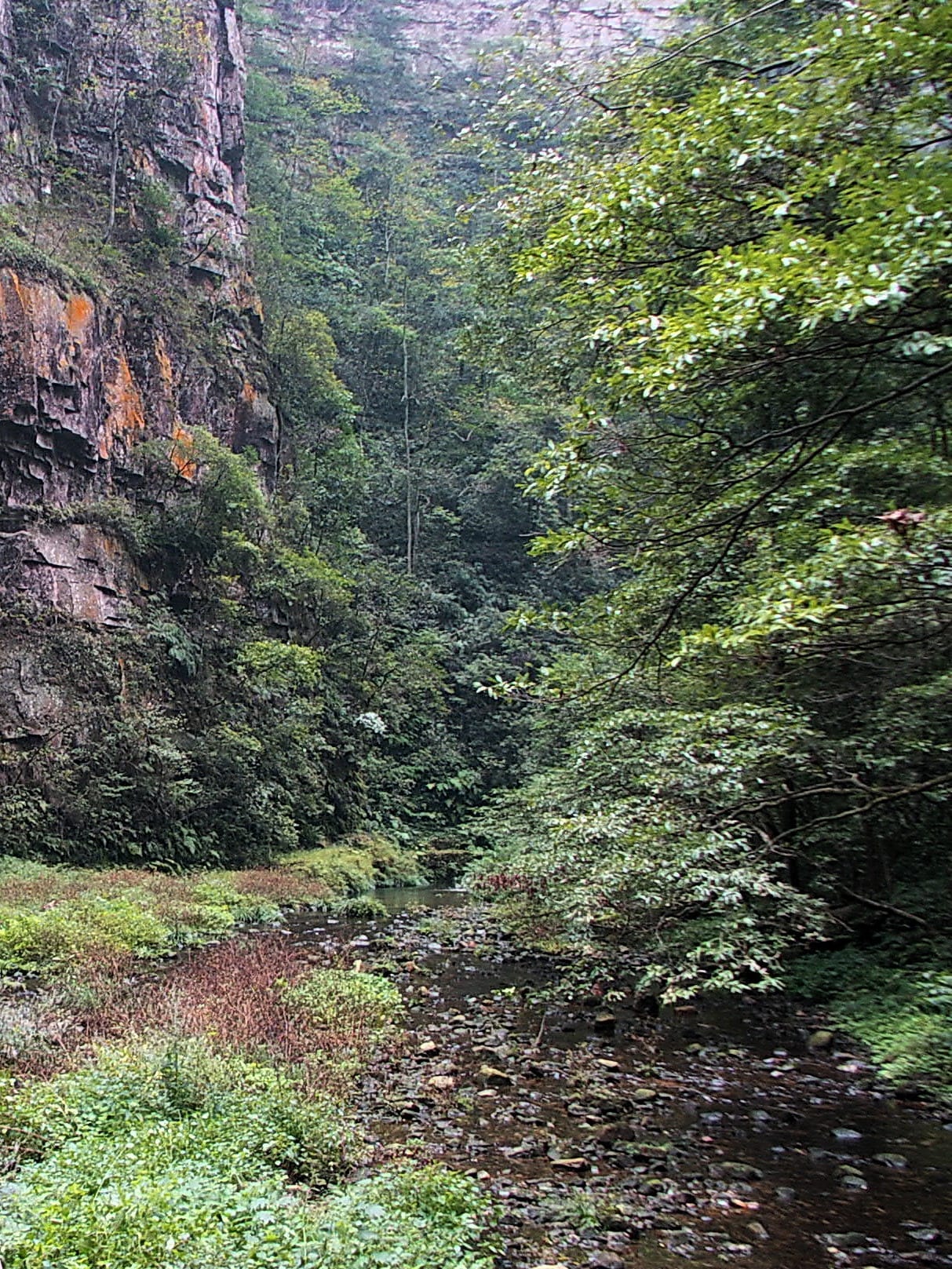
This is what makes Wulingyuan easier than it looks — inside the park, green shuttle buses run between viewpoints for free (already in your ticket, no extra charge), roughly 7am to 6pm, with hours extended on the busy holidays. The main line runs from the Wulingyuan gate along the Ten Mile Gallery (十里画廊) to Shuiraosimen (水绕四门), about 19.6 km, with a branch line straight to the lower station of the Bailong Elevator.
Honestly, the wonders here are spread out — viewpoints sit on different peaks, so planning is more about "which point next, which bus after" than long walks. Bus stops have maps and usually some English, but to be safe, save the route map to your phone first, and budget extra time for bus queues in peak season.
Wulingyuan has several entrances, but four main gates do most of the work — the Forest Park gate (森林公园门) to the south, handy for starting Golden Whip Stream straight away and for the in-forest village; the Wulingyuan gate (武陵源门), the big gate on the Wulingyuan-town side with the most hotels and restaurants; the Tianzishan gate (天子山门) to the north, near the Tianzi cable car; and the Yangjiajie gate (杨家界门) to the west, the quietest of the four.
The simple rule is to enter at the gate nearest your hotel, because once you've registered your face on the first day, on later days you can walk in at any gate — no need to loop back to the same one. Most general travellers stay on the Wulingyuan-town side and use the big gate, while hikers favour the Forest Park gate to start Golden Whip Stream at first light.
 4
4
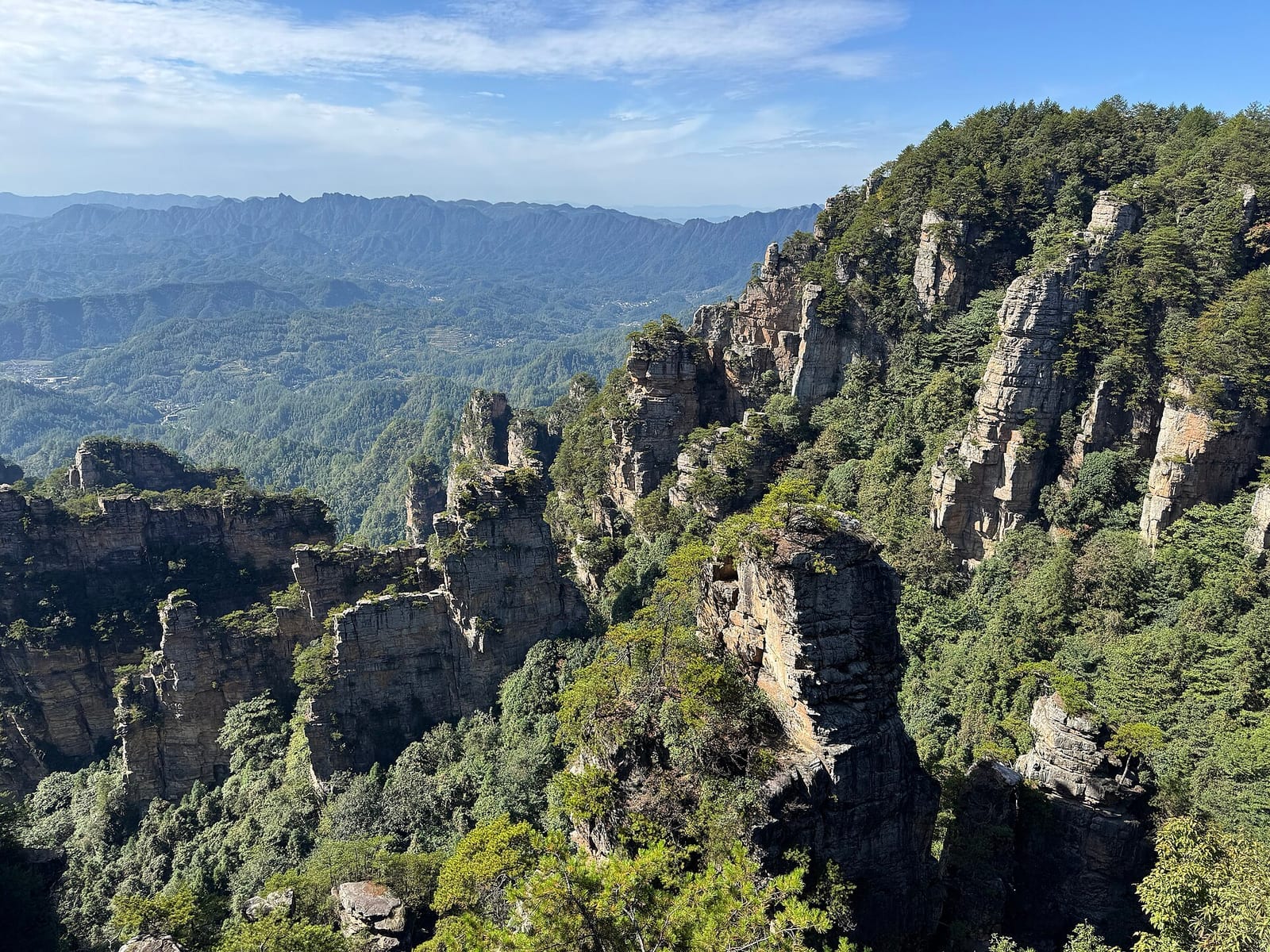
Two full days is just right for the main highlights, and it can be done without doubling back — day one, start at Golden Whip Stream (金鞭溪), a flat 5–6 km path along a clear stream beneath the pillars (watch the wild macaques eyeing your snacks), then take the Bailong Elevator (百龙天梯), a ~326 m glass lift that turns a 3-hour climb into a 2-minute ride, up to Yuanjiajie (袁家界) for the Avatar peaks and the First Bridge Under Heaven.
Day two, take a park shuttle to Tianzi Mountain (天子山) for the sea of clouds and the Imperial Brush Peaks (御笔峰), then on to Yangjiajie (杨家界), every bit as dramatic but quieter. With only one day, pick Yuanjiajie plus Tianzi together. Yellow Dragon Cave and Baofeng Lake are extras for a third day if you have the time.
 5
5
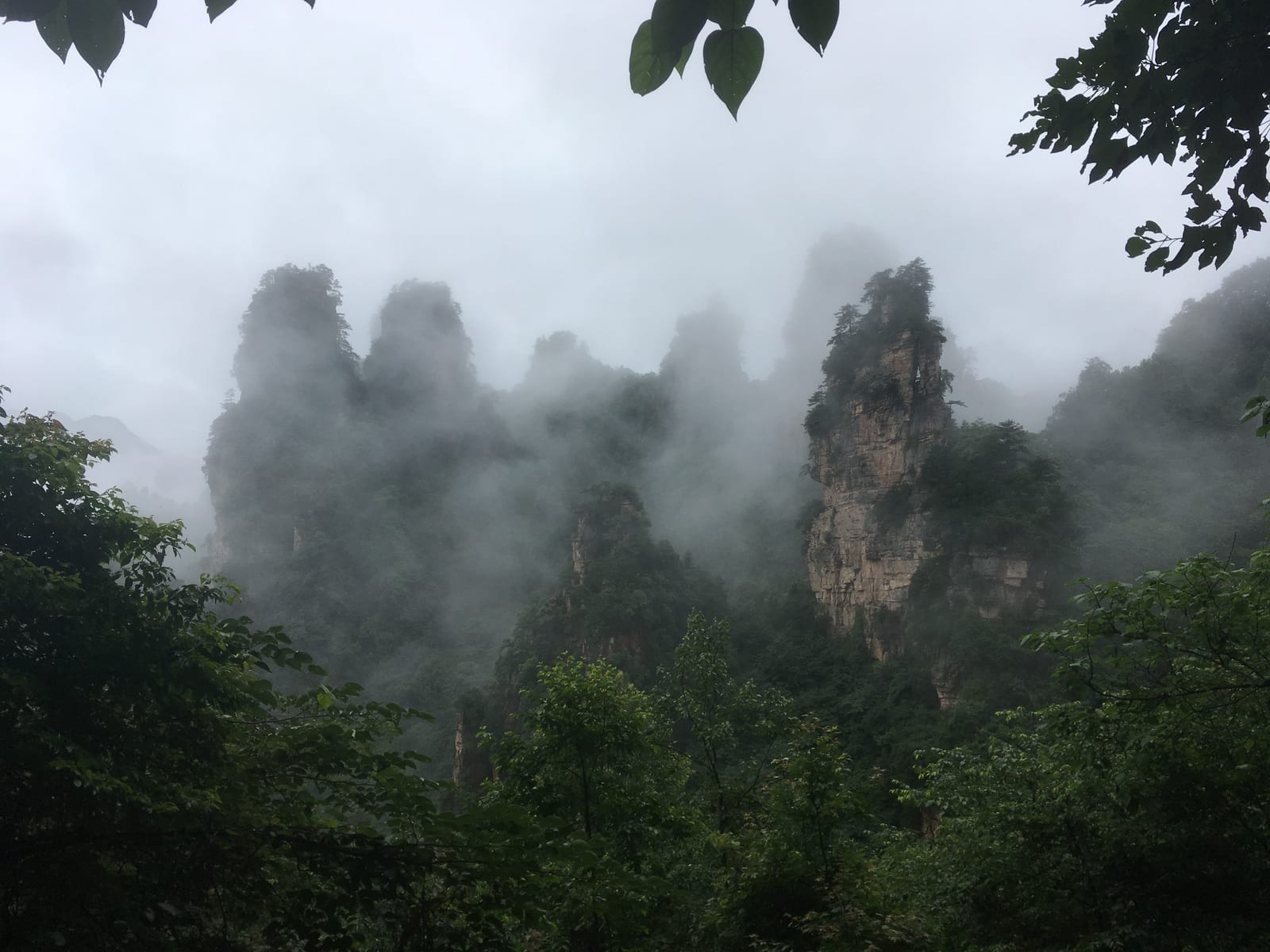
This is the thing people get wrong most often — Wulingyuan and Tianmen Mountain are not the same place, and they need separate tickets. Wulingyuan (武陵源) is the sandstone Avatar forest about 33 kilometres northeast of the city, while Tianmen Mountain (天门山) is a flat-topped peak right beside Zhangjiajie city, reached by one of the world's longest cable cars from downtown, with the Heaven's Gate cave (天门洞), a cliff-edge glass skywalk and the 99-bend road.
The easy way to hold it: Wulingyuan = the stone forest outside town (two days), and Tianmen = the mountain in town (half to full day). The Tianmen ticket runs about ¥260–288 (cable car included) and is a separate system from the stone-forest ticket. So to see Zhangjiajie properly, set aside at least three to four days.
 6
6
Another spot people assume is on the Wulingyuan ticket — the Zhangjiajie Grand Canyon Glass Bridge (张家界大峡谷玻璃桥) is about 430 metres long and around 300 metres above the canyon floor, one of the world's highest and longest glass bridges. But it is not in the stone forest and needs a separate ticket. It sits in the Grand Canyon scenic area, roughly 15–30 kilometres northeast of the forest park.
The bridge alone costs around ¥130, or about ¥178–259 for a combo that adds the canyon walk and a boat. The key point is that you must book ahead, since daily numbers are capped. Most people do it as a half-day trip separate from their stone-forest days. The glass deck is properly see-through down into the deep canyon if you fear heights, but the railings are solid and it's a one-way walk.