8 snacks and souvenirs to try in Zhangjiajie
From hot-off-the-grill roadside snacks to the dry goods and tea you can carry home.
 1
1
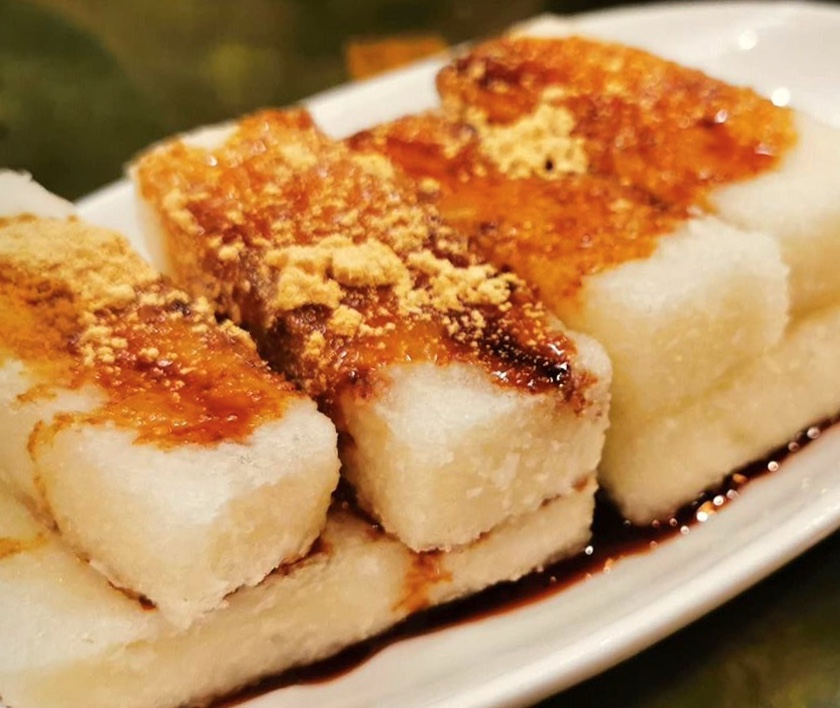
This is a Tujia festival food that's become a roadside favourite. It's made from steamed glutinous rice pounded in a mortar until smooth and elastic, cut into bars or blocks. To serve, it's grilled over a fire or fried until the surface blisters and crisps — crunchy and fragrant outside, soft and chewy inside — then dipped or rolled in brown sugar, toasted soybean powder or sesame. Some stalls add a sweet syrup, and it's best eaten hot, right off the grill. It's one of the easiest and most enjoyable snacks for getting a taste of the Tujia mountains.
Kudzu (gegen) is the root of a vine that grows wild in the Wuling Mountains. Tujia people treat it as a wellness food, and it's sold all over the parks as one of Zhangjiajie's "three treasures". There are two forms — the powder (葛根粉), a greyish-white starch you stir into hot water until it turns clear and thick like a loose jelly, sweetened a little and drunk warm to soothe the throat; and the jelly (葛根糕), sold ready-made as a clear, springy block topped with syrup and eaten cool. One thing to watch: genuine kudzu powder is often cut with cheap tapioca or fern-root flour, so buy it in a supermarket or a shop you trust.
A cooling snack you'll find easily in markets and on the food streets, rice tofu is made from finely ground rice cooked until it sets into a soft pale-green or white block — it looks like tofu but is made from rice, with a springy, slippery texture. Served cool, sliced into pieces or strips, it's dressed with a sour-spicy Hunan sauce of pickled chilli, vinegar, garlic, scallion and pickles, sometimes scattered with crushed peanuts. It's bright, sour and just spicy enough — a popular refresher on a day when you've hiked yourself hot and want something light to cut the richness. If you don't eat chilli, ask for it mild (微辣).
Mei cha (莓茶), also called vine tea (藤茶), is a mountain herbal tea that's a signature product of Zhangjiajie. It's made from the young shoots of a wild vine in the Wuling Mountains, and the tender leaves carry a natural white frosting, like a faint dusting of frost. Brewed, it gives a pale yellow liquor that's slightly bitter then turns sweet on the finish. People in China drink it for its high flavonoid content and refreshing taste. It's a popular souvenir because it's light, keeps well and is genuinely local. It ranges from a few tens of yuan a bag up to much pricier tender-bud (芽尖) grades — taste before you buy and compare a few shops for the best value.
The Hunan mountains are a home of the Chinese kiwi (猕猴桃, literally "monkey peach"), which grows wild in the forests. The fruit is smaller than imported kiwi but intensely sweet-tart and fragrant. Fresh kiwi comes into season around late autumn into early winter, sold in the markets, while dried kiwi and other dried mountain fruit are sold as snacks and souvenirs all over the parks — easy to nibble as you hike. Beyond kiwi there's other dried fruit in season, from jujubes and persimmon to candied fruit. Choose the sealed-pack versions and they're easy to carry home and keep well.
Come autumn, mountain villages around Zhangjiajie hang racks of orange persimmons to dry under the eaves — a lovely seasonal sight. Sun-dried and pressed until firm, they become persimmon cakes (柿饼), their skins dusted with a white sugar bloom, the flesh soft and chewy and deeply honey-sweet with none of the astringency of raw persimmon. They're both a snack and a souvenir that keeps well and travels easily — good eaten plain, or torn into a cup of hot tea. It's a traditional mountain sweetness that captures the Tujia autumn, sold by weight in bags at markets and souvenir shops.
Corn (called 苞谷, baogu, in the local dialect) is a staple crop in the Tujia mountains, so it turns up everywhere as a snack. The most popular form is whole sticky corn roasted over charcoal, faintly smoky and chewy-sweet, eaten warm as you walk. There's also corn candy (苞谷糖), corn boiled down with sugar into a chewy traditional sweet, and home-made corn liquor that villagers brew. These are genuine mountain-country flavours that are cheap and good to graze on, found at roadside stalls, in markets and at the park gates — the perfect thing to keep you going between viewpoints, and a fitting match for the karst scenery.
Beyond snacks, Zhangjiajie has edible mountain souvenirs people love to carry home — wild honey (蜂蜜) from bees in the Wuling Mountains, fern-root flour (蕨根粉) made into noodles and local sweets, and dried mushrooms and seasonal foraged goods for keen cooks. Together with vine tea, kudzu powder and dried persimmon, these make up the distinctive Xiangxi mountain gift box. The same advice applies: buy in a city supermarket or souvenir shop, where it's cheaper and less likely to be fake than at the park gates. Choose sealed packaging and check the use-by date to be safe.