11 dishes to try before you leave the mountains
Ordered by how distinctive they are — the dishes that say Hunan-Tujia most clearly.
The dish everyone has to try here — a dry pot of three (or more) things cooked together. Smoked pork (腊肉), beef tripe, radish, tofu and other ingredients are stir-braised with dried and fresh chilli dry, with no soup. Legend says it goes back to the Ming dynasty, when Tujia soldiers about to go to war threw everything they had into one pot before setting off — hence its other name, 合菜 (the "combined dish"). You eat it dry first with steamed rice, and some places add broth afterwards to turn it into a hotpot. It's fragrant, fiery and made to share around the table.
The defining flavour of Tujia mountain cooking — pork (along with sausage, chicken and fish) is salted then hung and smoked over the fire-pit for weeks, sometimes months, until it's dense, dark and deeply smoky. It's how the mountains kept meat through a fridge-free winter. To serve, it's sliced thin and stir-fried with garlic stems, dried chilli or dried bamboo shoot; the salt, smoke and fat play off the chilli's fragrance. Every Tujia household keeps some hanging above the stove.
The rarest foraged ingredient in Zhangjiajie — yan'er is a wild black fungus that grows clinging to the steep rock cliffs of Wulingyuan. It has to be climbed for, which makes it scarce and several times the price of ordinary fungus. The texture is springy, a little like wood-ear but thicker, and it's usually simmered in soup with free-range chicken or old duck for a clear, sweet broth. Tujia families serve it to honoured guests. If it's on the menu and the budget stretches, it's worth trying once — you'll rarely find it outside Xiangxi.
The heart of Tujia preserving — fish and pork are packed with rice bran (糟), salt and toasted rice, then fermented in a jar for months or even a year, until they take on a deep, lactic sourness. They're fried or steamed to serve: firm meat that's tangy, salty and fragrant with toasted grain. It's a taste outsiders find unfamiliar and Tujia people love, born of a fridge-free era when protein had to be stored through the winter. Few dishes tell the story of mountain life better.
 5
5
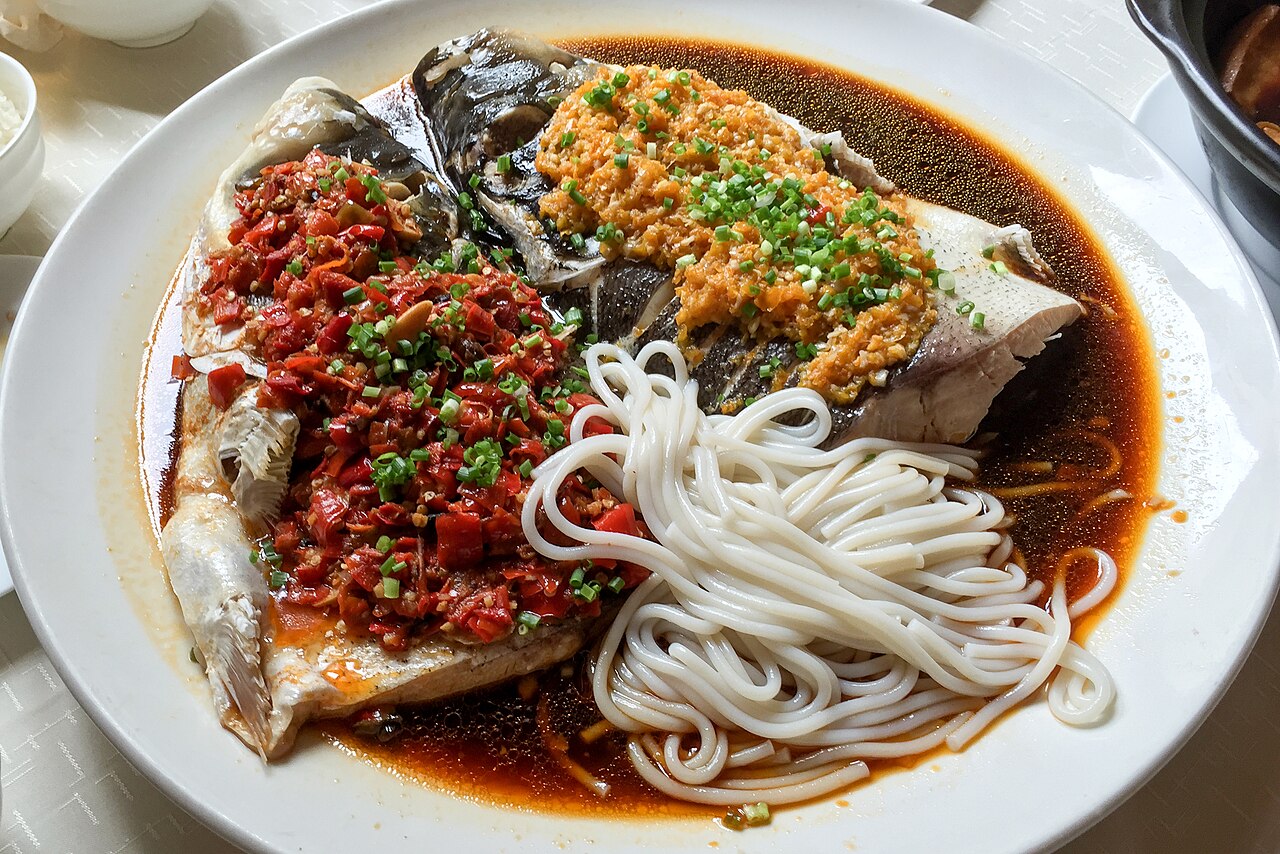
The most famous Hunan dish, and you'll find it all over Zhangjiajie — a big fish head split open, smothered in bright-red fermented chopped chilli (剁椒), garlic and ginger, then steamed and finished with hot oil and soy. The cheek meat and head turn soft and juicy, the fermented chilli is fragrant-hot and cuts any fishiness. It's a centrepiece to share with rice, and the heat is the Hunan kind — aromatic, not numbing. If you don't want it too hot, ask the kitchen for 微辣 (less spicy).
Another fire-pit staple — tofu mashed with pig's blood, minced pork and seasoning is pressed into blocks and smoked until dry, giving dark, dense blocks with a smoky scent. To eat, it's sliced thin and stir-fried with garlic stems and chilli, or dropped into a sanxiaguo pot. It's salty, smoky and chewy, a little like smoked sausage but firmer. Tujia families make it when they slaughter a pig for the New Year, and it's a regular ingredient in the mountain stir-fries.
Everyday Tujia comfort food cooked in every household — finely ground soybean simmered together with chopped greens (mustard greens or pickled greens), making a thick, pale-green pot that's gentle and nutty. Some families add chilli or minced pork. Tujia people have a saying, "a bowl of hezha a day and you'll live to ninety-nine." It's filling, cheap and easy on the palate, a good counterweight to the spicy plates — if you've been eating chilli all day, a pot of hezha gives your tongue a rest.
A mountain food sold all around the park gates — gegen (kudzu root) is turned into several things: kudzu powder (葛根粉) stirred into a thick, clear hot drink, kudzu jelly (葛根糕) that's translucent, springy and cooling, and dried snacks. Locals treat it as a "health" food and a popular thing to take home from the park areas. The taste is plain with a faint sweetness. To be honest, the stalls right at the park gate cost more than the city markets, so if you want some to take home, buying it in town is better value.
A Tujia festival food that's become a street snack — ciba is made from steamed glutinous rice pounded in a mortar until chewy, shaped into discs or balls, then grilled over charcoal or fried until the outside crisps and the inside stays soft. It's eaten with sugar, ground peanut or sesame, fragrant with warm rice. Markets and park gates have stalls grilling it fresh so you can eat it hot as you walk. Tujia families traditionally pound ciba at New Year as a ritual; kids love it and travellers snack on a lot of it.
A mild mountain dish worth ordering to break up the meal — the Xiangxi hills are full of wild mushrooms in season, simmered with free-range chicken (土鸡) raised loose in the mountains. Cooked low and slow, the chicken turns tender and the broth goes sweet and fragrant with mushroom. It's clear, warm and unspicy, a good foil to the Hunan heat, and some pots even include cliff rock fungus if the budget allows. It carries the smell of the forest and the warmth of mountain cooking — ideal on an evening after a full day of hiking when you want something gentle.
To finish, something sweet from the mountains — Xiangxi grows small kiwifruit (猕猴桃) with a deeper sweet-tart flavour than the imported kind. In season (around the end of the rains into early winter) they're sold fresh and made into dried kiwi, kiwi juice and kiwi wine to take home. You'll also find dried persimmon (柿饼), mountain honey and other seasonal wild fruit around the park gates and city markets. The sweetness is natural — these are light snacks and souvenirs after a spicy meal, and buying them in the city markets costs less than at the park gates.