Home Zhangjiajie China Zhangjiajie Hotels About
Home  ›  Asia  ›  China  ›  Zhangjiajie  ›  Best Time to Visit
Zhangjiajie Seasonal Guide · 2026

Best time to visit Zhangjiajie
an honest season-by-season guide

Zhangjiajie is a forest of sandstone pillars and a sea of clouds that changes face with the seasons — misty peaks in spring, the dramatic post-rain cloud of summer, clear skies and autumn colour in October, and cold, quiet calm with rare snow in winter. This guide tells you straight which month gets you the view you came for.

The short answer
The best windows are April–May and September–October

If you can only pick one month, pick October (after the 7th). Temperatures sit at a comfortable 16–25°C, rainfall is low, the skies are clear and visibility is at its best — you can see the sandstone pillars to the horizon. And from mid-to-late October the foliage on Tianzi Mountain and Yuanjiajie turns red and orange against the grey-white rock, a striking combination. The one catch: avoid the first week. October 1–7 is China's National Day Golden Week, when hundreds of millions of domestic travellers move at once, cable-car queues at Tianmen stretch for an hour or more, and hotel prices peak.

If October doesn't fit, April is beautiful in a different way — 13–22°C, fresh green forest, the frequent sea of clouds over the pillars, full waterfalls and Golden Whip Stream, and thinner crowds. Summer (June–August) is when the post-rain sea of clouds is at its most dramatic, but you trade for it with heavy rain and the holiday crowds; winter (December–February) is quiet and can dust the pillars with rare snow, but you'll need to check whether the cable cars and glass walkways are open.

Four seasons

What each season actually feels like

The weather, what it delivers, and what you are trading for it — told straight.
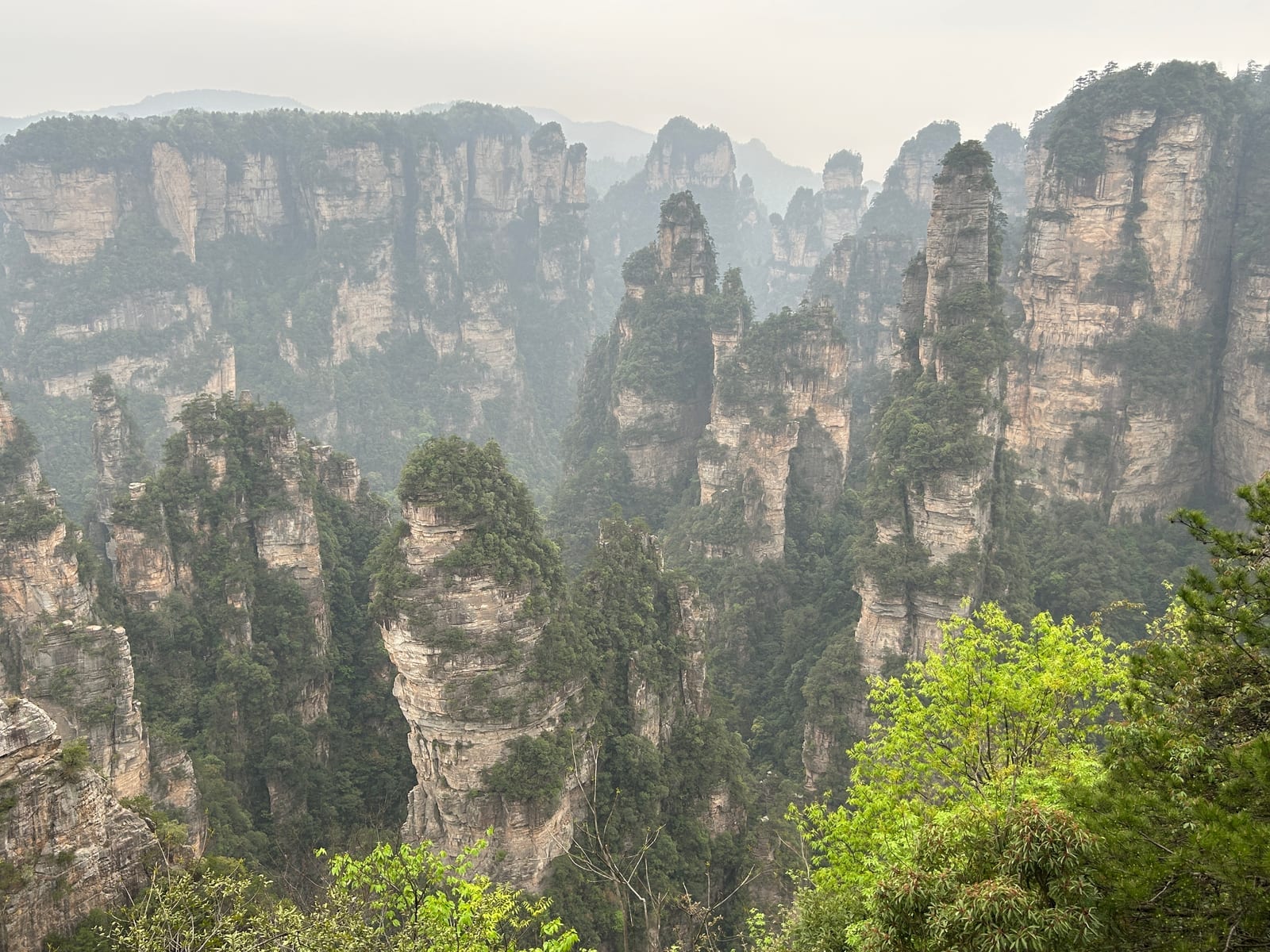
The Avatar sandstone pillars in Zhangjiajie rising above a thin veil of mist in spring Avatar pillars · Spring Great
Spring
March – May · 8–27°C

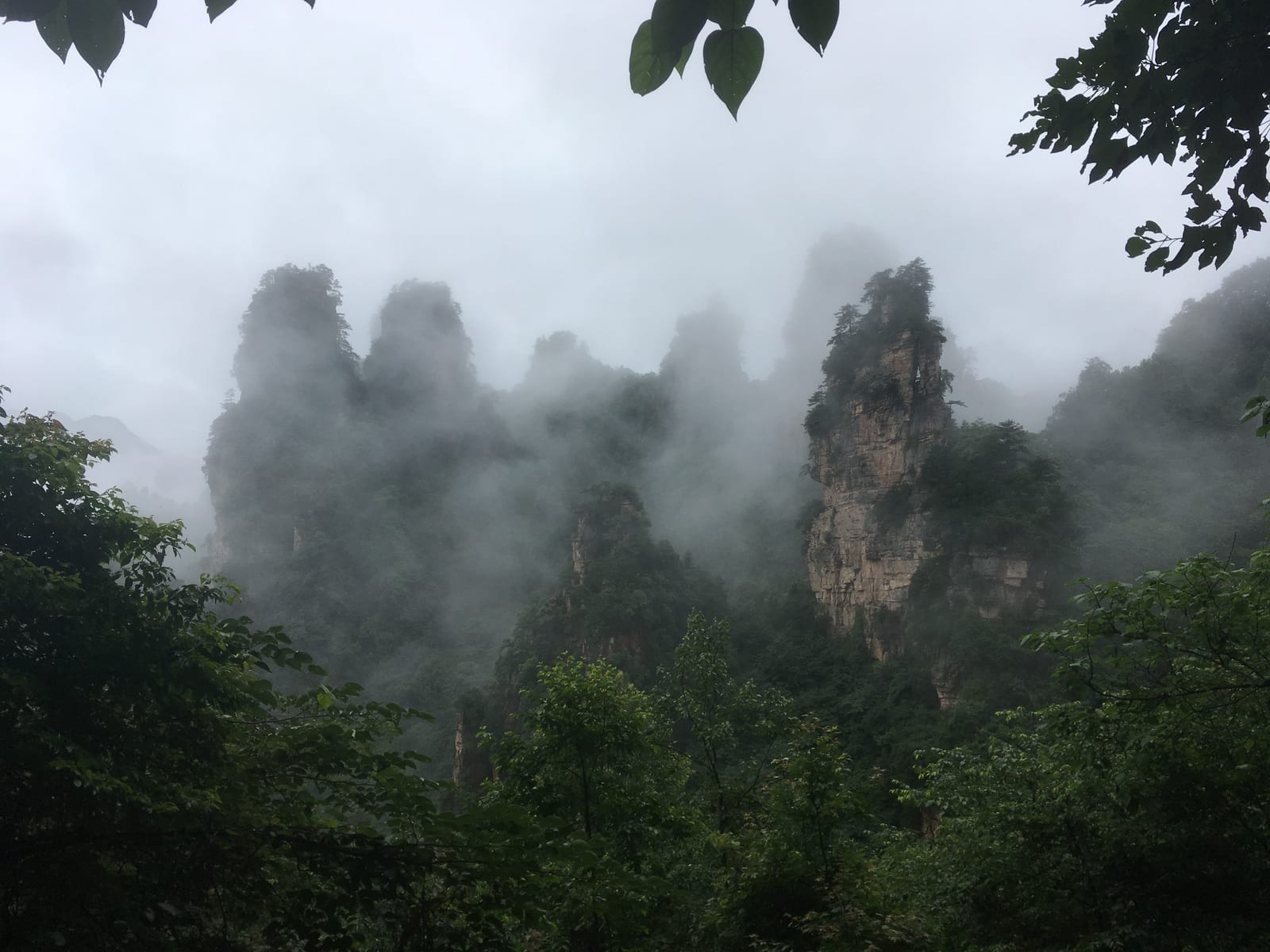
A season many people love for one thing: mist. From March to May this is when the sea of clouds wraps the pillars most often — a light drizzle followed by rising vapour that drapes the peaks and makes the pillar forest look exactly like the scenery from Avatar. Crowds are still thin, prices are good, and the waterfalls and Golden Whip Stream run full from the early-season rain. It greens up fully by April — a fine time to walk the park, climb Tianzi Mountain and follow it with Tianmen.

March can still be cool, with mornings and evenings dropping to 8–12°C; May warms up and the rain starts to build, and the Labour Day Golden Week (1–5 May) brings a clear spike in crowds and longer queues for the Bailong Elevator and the cable cars. If you can skip that week, early April is the sweet spot of spring.
Temperature: 8–27°C (March evenings can drop to 5–10°C)
Rain: Moderate, frequent drizzle, building towards late May
Crowds: Low to moderate; busy around Labour Day
Hotel prices: Good value, rising over Golden Week
March to May is the cloud-chaser's window — get up to the Tianzi Mountain or Yuanjiajie viewpoints early. A grey, drizzly sky after rain gives you the floating-pillars-in-mist look that blazing sun never will.
A post-rain sea of clouds covering the pillar tops on Tianzi Mountain, Zhangjiajie, in summer Tianzi Mountain · Summer Come prepared
Summer
June – August · 23–35°C

Zhangjiajie summers are hot and humid — daytime highs of 28–35°C and the heaviest rain of the year, especially in June. But this is also when the post-rain sea of clouds is most frequent and most dramatic: the rain clears, the sun breaks through mid-morning, and the cloud swirls around the pillars in the look people come halfway around the world for. The waterfalls and streams run full and the forest is at its greenest.

It does take preparation. Heavy rain makes the stone steps and walkways slippery, and these are the busy Chinese school holidays (July–August) — at weekends the cable-car queue at Tianmen can reach two hours. Check the forecast daily, explore early or just after the rain, carry a rain jacket and grippy shoes, keep an indoor backup like the Yellow Dragon Cave in your pocket, and build in time for queues.
Temperature: 23–35°C (July–August hottest and most humid)
Rain: Heaviest in June; afternoon thunderstorms Jul–Aug
Crowds: Highest of the year over the school holidays
Hotel prices: High over the July–August holidays
Heavy rain makes the glass walkways and stone steps slippery, and cable cars can pause in storms — check the status, keep a sun-and-rain umbrella with you all trip, and reach the gates early to beat the queue.
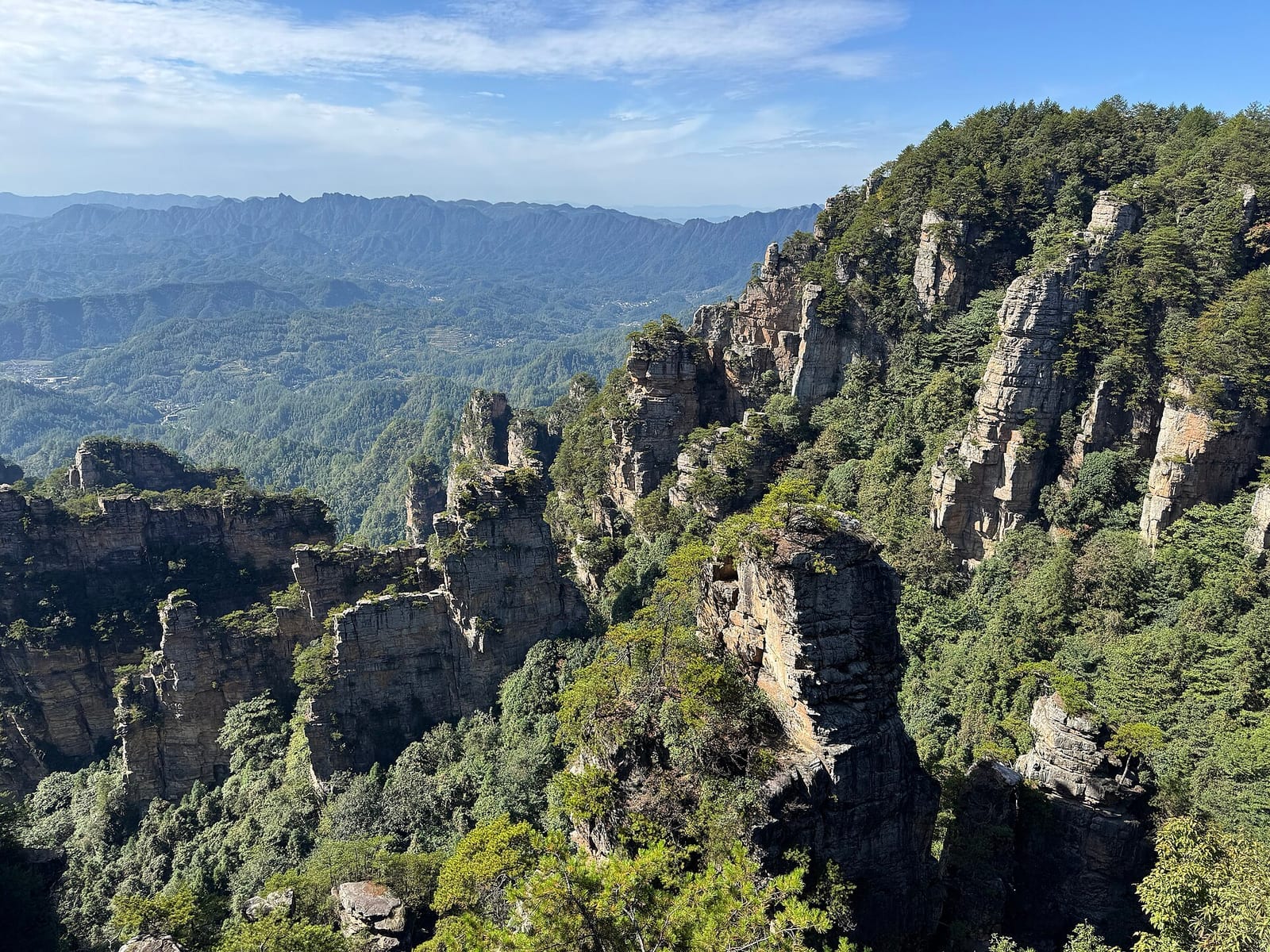
The Yuanjiajie pillars in Zhangjiajie under clear skies with foliage starting to turn in autumn Yuanjiajie · Autumn The best
Autumn
September – November · 8–30°C

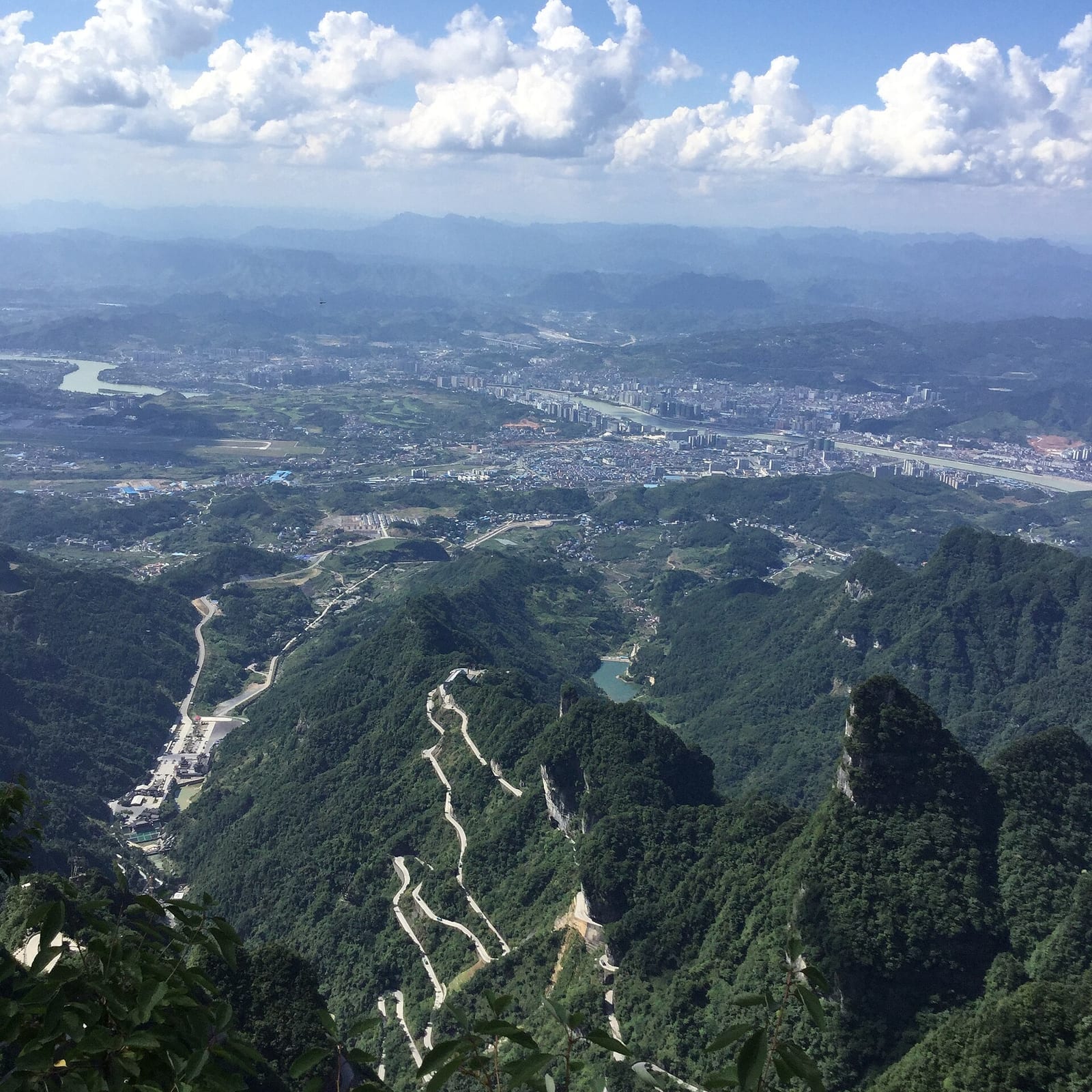
This is Zhangjiajie at its finest. The summer heat breaks, the air turns cool and comfortable, rainfall drops sharply, and the skies are clearer than at any other time of year — you can see the pillars to the horizon. Best of all, from mid-October into early November the foliage on Tianzi Mountain, Yuanjiajie and the Grand Canyon turns red, orange and yellow against the grey-white sandstone — a combination photographers wait all year for. You can walk the park and climb Tianmen all day without flagging.

September still carries some heat and the odd shower; October after National Day sees the crowds thin and prices return to normal; November cools further. This is the most comfortable, best-value stretch of the year. The one caveat: cooler mornings and evenings and some returning mist arrive in late November.
Temperature: 8–30°C (November cools to 8–18°C)
Rain: Much lower than summer; clearest skies in October
Crowds: High — National Day Golden Week 1–7 Oct is peak
Hotel prices: Highest of the year over Golden Week
October after the 7th is the ideal: great weather, clear skies, the foliage turning, crowds thinning noticeably and prices back to normal. Book one to two months ahead.
The peak of Tianmen Mountain in Zhangjiajie under a grey, cold winter sky Tianmen Mountain · Winter Its own kind of charm
Winter
December – February · 1–10°C

Zhangjiajie winters are cold — averages run 1–10°C — and humidity makes it feel colder than the numbers suggest, with grey skies and frequent fog. The upside many people chase: in some years the pillars are dusted with snow or ice, a rare white Avatar version of the landscape, and you'll meet the fewest people of the year. Hotels and restaurants drop their prices by around 30%.

The key thing to know: the National Forest Park and Tianmen Mountain don't close in winter, but the glass bridge and glass walkways on Tianmen close when they're covered in ice or snow, and the cable cars can pause during storms, high winds or heavy snowfall. Chinese New Year (late January or February) is festive but crowded and expensive. Check the status of each section before you fix your Tianmen day.
Temperature: 1–10°C (humidity makes it feel colder)
Rain: Low, but damp and foggy; some days bring snow
Crowds: Fewest of the year, except Chinese New Year
Hotel prices: Lowest of the year (except Chinese New Year)
Ice and snow can close the Tianmen glass walkways and pause the cable cars — confirm before you fix your climbing day. During Chinese New Year (late Jan–Feb), crowds and prices spike; plan ahead.
Month by month

Zhangjiajie every month at a glance

Temperature, rainfall, crowds and the verdict — in one table for easy comparison.

Month Temperature Rain Crowds Verdict
January 1–9°C Low Low Cold, damp, foggy · some snow · glass walkways may close · cheapest hotels
February 3–12°C Low–moderate High (CNY) Chinese New Year — crowds, peak prices · still cold and damp
March 8–17°C Moderate Low Beautiful sea of clouds on the pillars · thin crowds, good prices
April 13–22°C Moderate Moderate Excellent weather · lush green · frequent mist, full waterfalls
May 18–27°C Moderate–heavy High (Labour Day) 1–5 May crowds · deep green · rain building
June 22–31°C Heavy (wettest) Moderate Rainiest month · post-rain sea of clouds · full waterfalls
July 25–35°C Heavy High (holidays) Hot and humid · long cable-car queues · thunderstorms
August 25–35°C Moderate–heavy High (holidays) Hottest, most humid · busy domestic season · forest at its greenest
September 20–29°C Moderate Moderate Heat eases · skies clearing · crowds starting to thin
October 16–25°C Low High (Golden Week) 1–7 Oct: peak crowds · after 8th: best of the year, foliage turning
November 8–18°C Low Moderate Cool and pleasant, autumn colour · fog returns late in the month
December 3–11°C Low Low Cold, foggy · rare snow on the pillars · low prices · glass walkways may close

Figures are typical monthly high–low ranges drawn from multi-year climate data; it is always cooler on the peaks than in the city, and any given year may differ. Check the forecast before you travel.

When to avoid

The three Golden Weeks to plan around

China's national holidays generate the largest annual human movements on Earth. Here is what that means for your trip.

Jan
Feb
Chinese New Year (Spring Festival)
Late January or February · date shifts each year with the lunar calendar

China's largest holiday. Hundreds of millions of people travel to their home towns and tourist spots at once. The atmosphere is genuinely festive, but hotels charge peak prices, small restaurants and local shops close for 7–14 days, and trains and flights book out weeks ahead. It also falls in the cold season, when the Tianmen glass walkways can close because of ice. To experience the festival itself, plan everything well in advance; for a normal trip, pick a different time.

1–5
May
Labour Day Golden Week
May 1–5 every year

China's second major holiday window. Domestic tourism surges; honeypots like the Bailong Elevator, the Yuanjiajie viewpoints and the Tianmen cable car become difficult to walk through, and queues for the lifts and cable cars grow long. Hotels fill and prices rise by 30–60%. If you must travel during this period, book accommodation 4–8 weeks ahead, reach the gates as early as you can, and brace for the crowds.

1–7
Oct
National Day Golden Week
October 1–7 every year

The largest Golden Week of the year — hundreds of millions of domestic trips occur in this single week, and Zhangjiajie is one of the country's most popular destinations. The park and the Tianmen cable car become so crowded that walking slows to a shuffle, queues can run up to two hours, and hotel prices hit their annual peak. The weather is excellent and the foliage is turning, though, so if you book well ahead and accept the crowds it's not impossible — or simply wait for 8–31 October, when the weather stays just as good, the colour is still there, and the crowds thin noticeably.

Worth knowing about

Seasonal moments that add to the trip

These are reasons to time your visit, not reasons to avoid it.

After
rain
The Sea of Clouds (Zhangjiajie's signature shot)
Spring (Mar–May) and rainy-season mornings (Jun–Aug) · the real Avatar look

The shot of sandstone pillars floating in a sea of cloud — the look that made Zhangjiajie world-famous — happens on overcast, drizzly or just-after-rain days, not in blazing sun. Moisture condenses into mist, especially at dawn and after a storm passes. The mistiest periods are spring and rainy-season mornings; get up to the Tianzi Mountain or Yuanjiajie viewpoints early, then wait for the sun to break through around 9–10am, when the cloud lifts and swirls at its most dramatic. See our full Tianzi Mountain guide

Mid Oct
Early Nov
Autumn Colour on the Pillars
Mid-October to early November · the most colourful window

From around mid-October to early November, the foliage on Tianzi Mountain, Yuanjiajie and the Grand Canyon turns red, orange and yellow against the grey-white sandstone — a contrast photographers wait all year for. The skies are clear and the air is comfortable enough to walk all day. The exact timing can shift by one to two weeks with the weather each year, so check before you go. Read our National Forest Park guide

All
year
Tianmen Mountain & Heaven's Gate (year-round)
Open all year · lovely in every season; check the glass walkways in winter

Tianmen Mountain and the Heaven's Gate arch, right by Zhangjiajie city, are a year-round experience — ride one of the world's longest cable cars to the top, walk the 99 Bends road and the cliff-edge glass walkways. Spring and summer often bring beautiful mist, autumn is crisp and clear, and a rare winter snowfall makes for unforgettable photos. The glass walkways close when iced over, though, so check before you fix your day. See all Zhangjiajie attractions

Packing by season

What to bring for each season

Not exhaustive — just the things that actually matter for Zhangjiajie.

Spring
March – May
  • Layering pieces — the peaks are cooler than the city; mornings and evenings are cold in March
  • Compact umbrella or light rain jacket — drizzle and morning mist are common
  • Grippy footwear — stone steps and park paths get slippery when damp
  • Sunscreen — the sun strengthens from April
  • Camera or charged phone — the sea of clouds at dawn is the highlight
Summer
June – August
  • Breathable fabrics only — linen or technical dry-fit
  • A sun-and-rain umbrella plus a rain jacket — fierce sun alternates with afternoon storms
  • A reusable water bottle — drink constantly; the heat and humidity are real
  • A dry bag for phone and documents — sudden heavy downpours are frequent
  • Grippy footwear — the stone steps and glass walkways get very slippery in the rain
  • Insect repellent — mosquitoes are common in the forest and by the streams
Autumn
September – November
  • Light layers — mornings and evenings are 5–10°C cooler than midday
  • A mid-weight jacket — November and the peaks turn cool quickly
  • Good walking shoes — this is the season to explore on foot
  • Camera or a good phone — the autumn colour against the pillars is the year's best shot
  • A windproof layer — it's windy on the Tianzi and Tianmen summits
Winter
December – February
  • A proper heavy coat — the summits run several degrees colder than the city
  • A scarf, gloves and a hat — the wind on the peaks is sharp
  • A thermal base layer — for the cold ridge-top viewpoints
  • Non-slip footwear — snow, ice and damp make the steep paths slick
  • Confirm the cable car and glass-walkway status ahead — ice can close some sections
The city every season

Zhangjiajie has something to see year-round

Whatever month you arrive, this landscape of pillars always has something worth seeing.

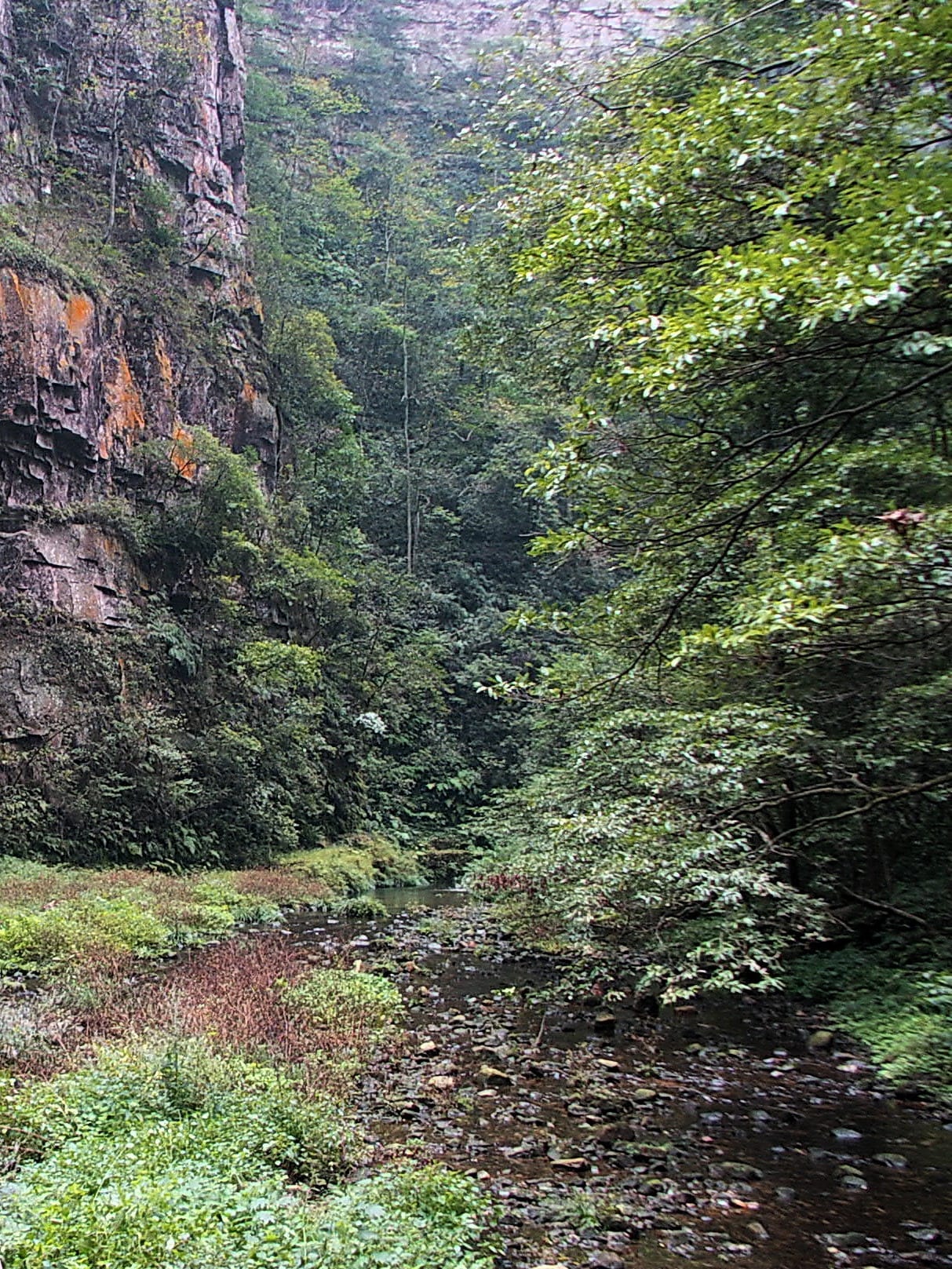
Golden Whip Stream in Zhangjiajie — a walking path following the stream through the pillar forest
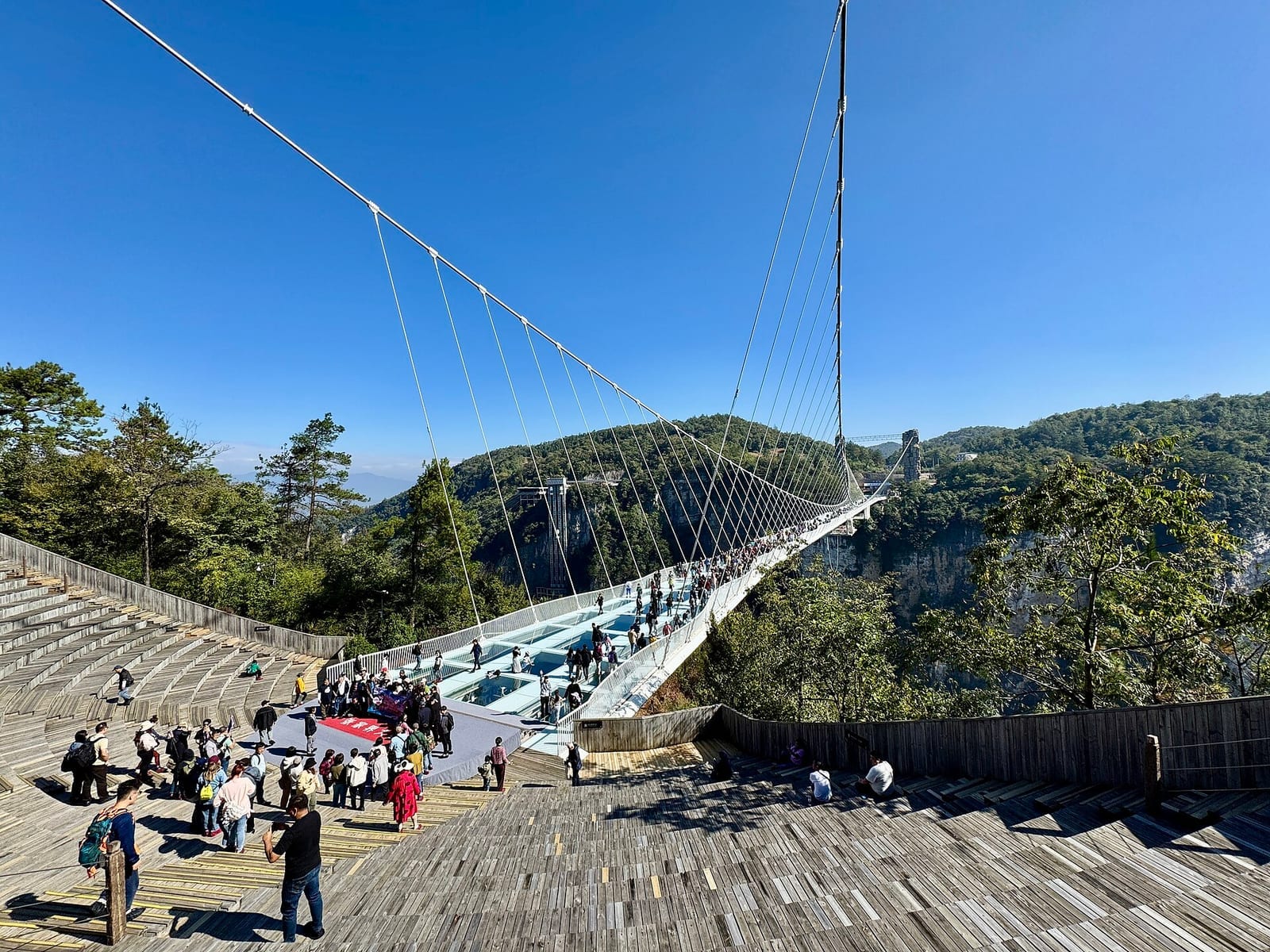
The Grand Canyon Glass Bridge in Zhangjiajie spanning the deep gorge
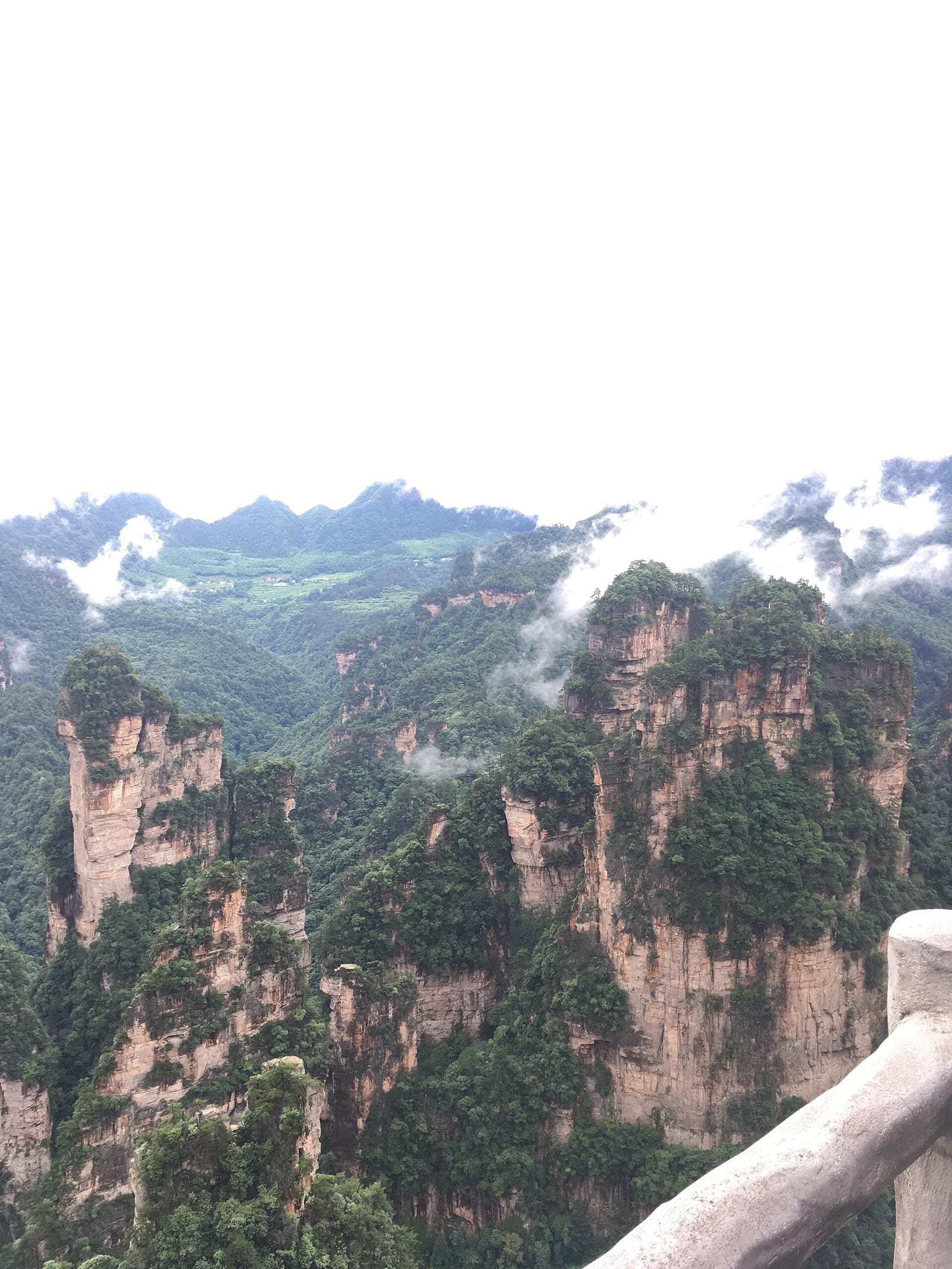
The sandstone pillar forest in the Wulingyuan scenic area of Zhangjiajie, a natural World Heritage site
Frequently asked

FAQ · Before you book

When is the best time to visit Zhangjiajie?
April–May and September–October are the best windows: mild 13–27°C weather, clear skies, good visibility, fresh green forest and the sharpest views of the sandstone pillars. If you can only pick one month, choose October (after the 7th) — cool and comfortable, low rainfall, and from mid-to-late October the foliage on Tianzi Mountain and Yuanjiajie turns red and orange against the grey-white pillars. April is a close second, with the frequent sea of clouds, full waterfalls and thinner crowds. For the wider picture, see our best time to visit China guide.
When do you get the sea of clouds and the misty-pillar photos?
The sea of clouds wrapping the pillars — the look made famous by Avatar — usually appears on overcast, drizzly or just-after-rain days, not in blazing sun. Moisture from the rain condenses into mist, especially at dawn and after a storm passes. If the rain stops in the morning and the sun starts to break through around 9–10am, the mist lifts and swirls around the peaks at its most dramatic. The mistiest periods are spring (March–May) and early mornings in the rainy season (June–August). Get up to the viewpoints early and don't fear a grey sky. See the routes in our Tianzi Mountain guide.
Can you visit Zhangjiajie in winter, and do the cable cars or walkways close?
Yes, and it has its own appeal — the National Forest Park and Tianmen Mountain do not close in winter, and in some years the pillars are dusted with snow or ice, a rare white Avatar version of the landscape. You'll meet the fewest people of the year and prices drop by around 30%. The catch: the glass bridge and glass walkways on Tianmen close when they are covered in ice or snow, and the cable cars can pause during storms, high winds or heavy snowfall. Always check the status of each section before you go. Browse winter stays in our top 10 Zhangjiajie hotels.
When should you avoid visiting Zhangjiajie?
Avoid China's two big Golden Weeks: National Day (1–7 October) and Chinese New Year (late January or February), when hundreds of millions of domestic travellers move at once. The park, the Bailong Elevator and the Tianmen cable car become extremely crowded — cable-car queues at Tianmen can run up to two hours — and hotel prices spike 2–3 times. Labour Day (1–5 May) and the Chinese summer school holidays (July–August) are busy too. If your dates can't shift, book 4–8 weeks ahead and reach the gates as early as possible. Plan it with our Zhangjiajie 3-day itinerary.
What is summer like in Zhangjiajie?
Summer (June–August) is hot and humid, with daytime highs of 28–35°C and the heaviest rain of the year, especially in June. The upside is that this is when the post-rain sea of clouds is most frequent and dramatic, the waterfalls and streams run full, and the forest is at its greenest. The downsides: heavy rain makes the stone steps and walkways slippery, and these are the busy Chinese school holidays, when weekend cable-car queues at Tianmen can reach two hours. Pack a rain jacket and grippy shoes, start early, and keep an indoor backup like the Yellow Dragon Cave for the wettest hours. See all the sights in our Zhangjiajie attractions guide.
How many days do you need, and where should you stay by season?
Three days is the standard plan — base in Wulingyuan town near the park gate for two nights for the Avatar pillars, Tianzi Mountain, Yuanjiajie and Golden Whip Stream, then move to Zhangjiajie city near the Tianmen cable car for one night for your Tianmen day and your flight out. The season doesn't change how you split the zones, but in the rainy months allow more time for queues and an indoor backup plan, and in winter check the cable car and glass-walkway status before you fix your Tianmen day. See where to base yourself in our Wulingyuan area guide.
Klook · Tours & Activities

Book Zhangjiajie activities in advance — skip the queue, not the experience

National Forest Park tickets, the Tianmen cable car and Heaven's Gate, the Grand Canyon Glass Bridge and Avatar-pillar day tours — book through Klook before you arrive. Over Golden Week and the school holidays especially, the on-site queues are long, so book ahead.

Browse Zhangjiajie Activities on Klook →
Wherebest is an affiliate partner of Klook — we may earn a commission when you book through our links, at no extra cost to you.