Home Zhangjiajie Must-Eat Dishes China About
Home  ›  Asia  ›  China  ›  Zhangjiajie  ›  Street Food
China · Zhangjiajie Food Guide · 2026

Zhangjiajie Street Food
Where to Walk — and What to Order

Come down off the mountain at dusk and the smell of grill smoke and grilled glutinous-rice cakes drifts down the whole street. This guide walks you through four food areas, tells you straight which ones Zhangjiajie locals actually eat on and which are mostly for photos, and lists the Tujia snacks you shouldn't leave without — with real prices.

Before You Go

The honest version of where to eat

Picture this: 8 pm in Zhangjiajie city, you've just come down off Tianzi Mountain after a full day. You wander into the Nanmenkou lanes, grill smoke hanging in the air, an old man flipping a whole river fish on the grate and dusting it with chilli and cumin while, beside him, a woman pounds sticky rice in a wooden mortar to make ciba fresh, grills it until it puffs, then rolls it in ground peanuts. Locals sit at low tables nursing cold beer with a pile of skewers between them — this is the dinner Zhangjiajie actually eats, and it's the best place to start eating your way through.

Zhangjiajie sits in northwest Hunan province, in the Xiangxi region that's home to the Tujia (土家族) and Miao peoples, so its food is Hunan fragrant-hot-and-sour crossed with mountain cooking — smoked, cured and fermented — not the tongue-numbing heat of Sichuan, and not Cantonese either. Its street food revolves around ciba, kudzu jelly, grills and fried snacks. We take you to four food areas that are genuinely alive, with honest notes on which are worth your time and which are mostly for tourists. For the dishes themselves, read our Zhangjiajie must-eat dishes guide alongside this.

4 Food Areas

Area by area, honest and current

Ordered from central Zhangjiajie city out to the park-gate town of Wulingyuan
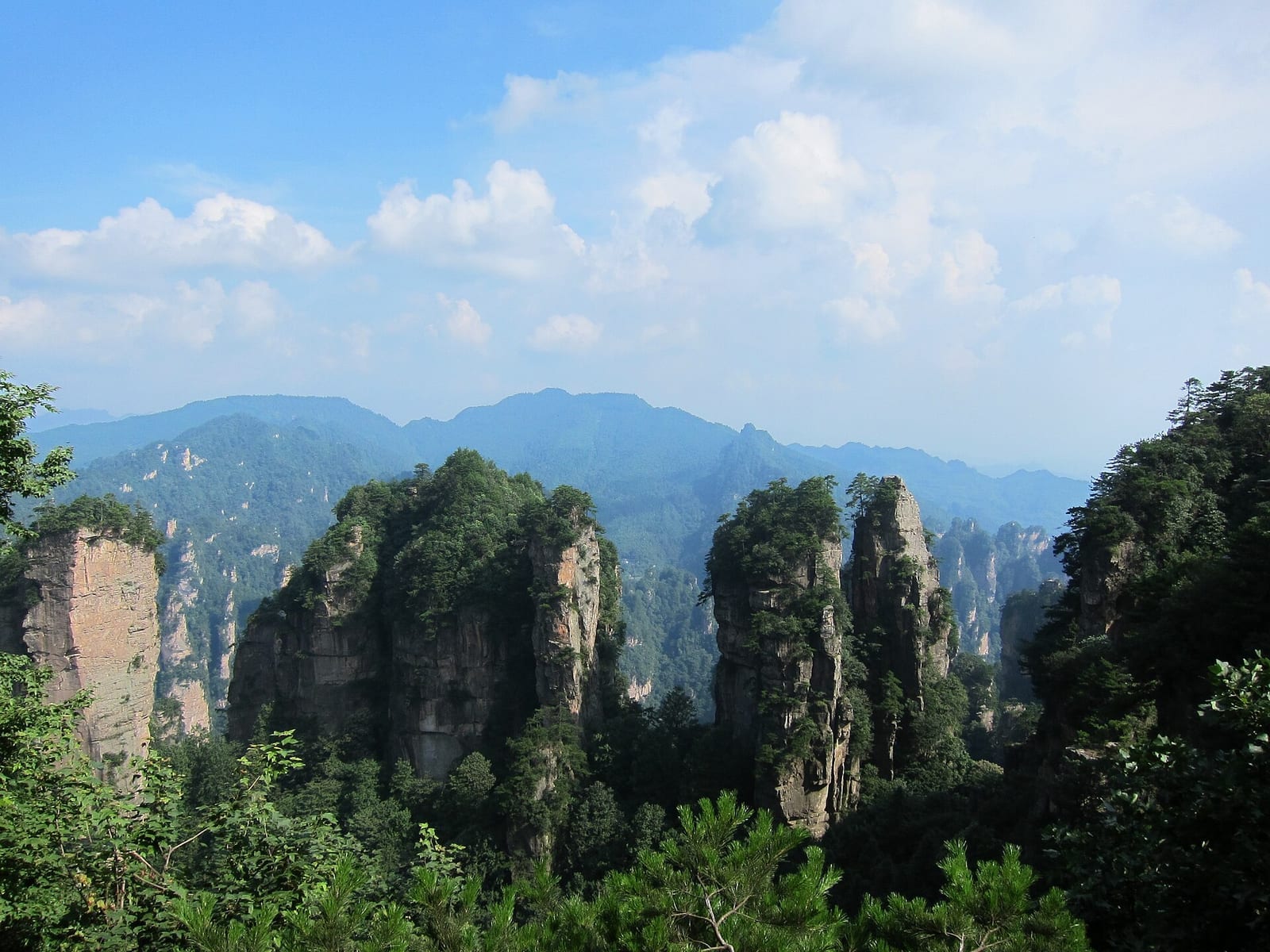
The sandstone peaks of Zhangjiajie at dawn — a scenery shot of the city and its mountains, standing in for the old-town mood in the city centre, not any one eatery 1
Iconic — but tourist-priced
Dayong Fucheng
大庸府城 · Jiefang Road, central Zhangjiajie city, Yongding District · a riverside rebuilt old town

Honestly, this is the most famous and convenient food-and-culture block in Zhangjiajie city. Built on the site of a 600-year-old government seat, it's a rebuilt old town gathering buildings in Tujia, Miao, Bai, Yao and Dong ethnic styles, with riverside food streets, folk bars and Xiangxi culture shows in the evening. If you want to sample a lot of Tujia snacks while getting pretty photos of the old town in one place, this works.

What to try: grilled ciba (糍粑), with some stalls letting you pound your own; rice tofu (米豆腐) in a sour-spicy dressing; Tujia smoked-meat skewers; grilled stinky tofu; cool kudzu jelly; and grilled fish and skewers.
Where: Central Zhangjiajie city, Jiefang Road · ~10 min by taxi/DiDi from the train station
Prices: ¥5–30 / item (฿25–150) · ¥40–70 to graze well
Best time: 6–9 pm — lit up, with evening shows
Pay with: WeChat Pay / Alipay / cash
The honest caveat: this is a full-blown tourist zone, with per-item prices above the ordinary city lanes and some snacks made purely for visitors. To eat the way Zhangjiajie locals do, and cheaper, cross the road to Nanmenkou (No. 2), directly opposite the Fucheng, or head to the Hourong Street night market where locals go late.
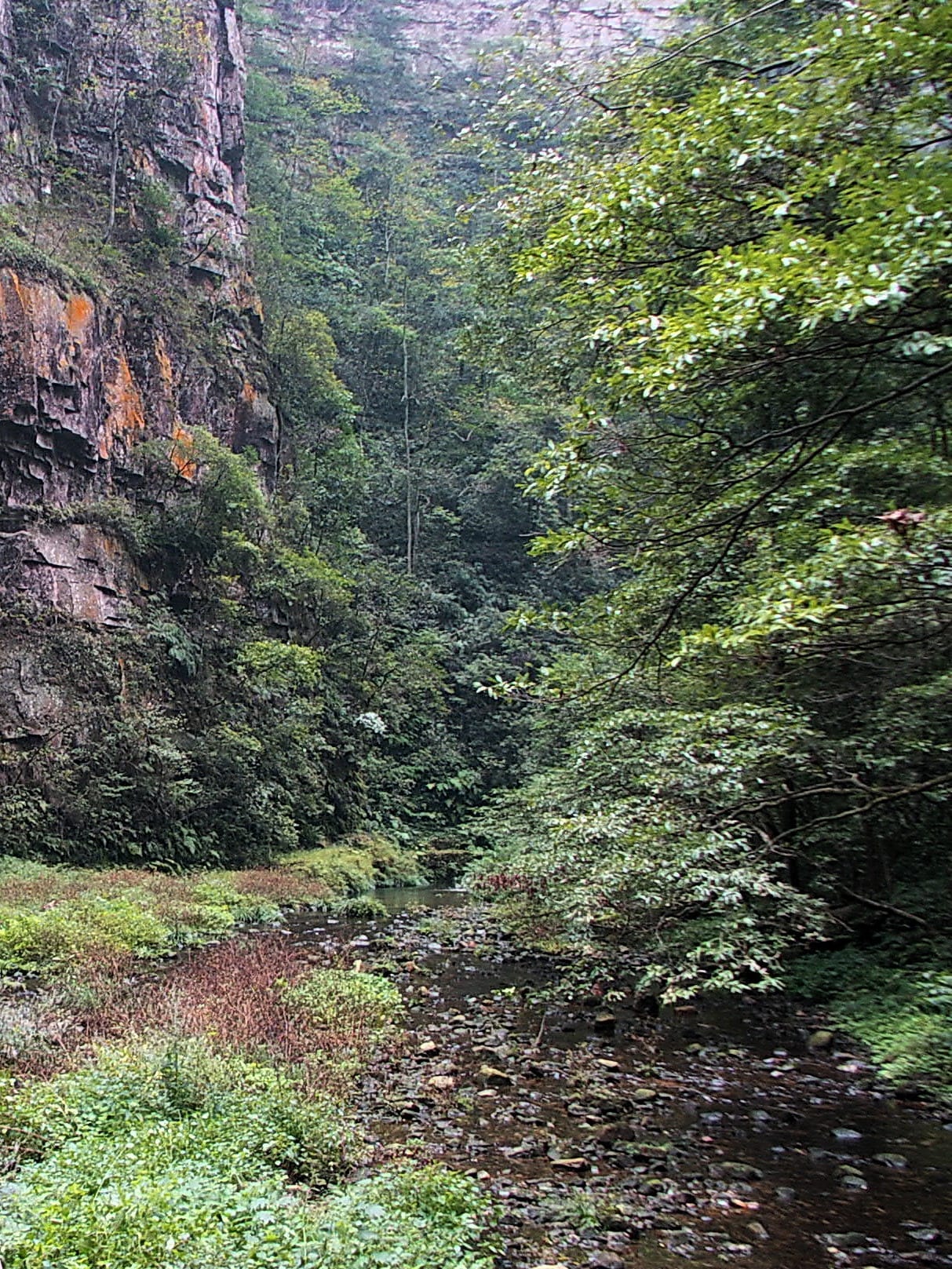
A stream running through the Zhangjiajie canyon below the rock cliffs — a nature shot of the area, standing in for the city's late-night eating lanes, not any one eatery 2
Where locals actually eat late · cheap and punchy
Huilong Road / Nanmenkou
回龙路 · 南门口 · near Renmin Road (人民路), central Yongding District · opposite Dayong Fucheng

It's just across the road from Dayong Fucheng, but the mood is noticeably different — Nanmenkou (南门口) on Huilong Road is where Zhangjiajie locals actually eat late. Close to Renmin Road, the city's main avenue, it gathers dozens of local shops and well-known names from across Hunan: Yueyang barbecue, Xinjiang barbecue, grills, fried snacks and hotpot, at prices far friendlier than the Fucheng.

What to try: skewers (烧烤) of meat, vegetables, mushrooms and tofu dusted with chilli and cumin; whole grilled fish (烤鱼) in a spicy sauce; oba'ba (油粑粑), crisp fried rice-dough rounds; cold noodles and jelly (凉面 / 凉粉) tossed in a sour-spicy sauce; and a late bowl of Tujia noodles.
Where: Huilong Road / Nanmenkou, near Renmin Road · walk across from Dayong Fucheng
Prices: ¥2–20 / item (฿10–100) · ¥30–50 per person to fill up
Best time: 9 pm onward — livelier the later it gets, until midnight
Pay with: WeChat Pay / Alipay / cash
Why we like it: next to Dayong Fucheng across the way, Nanmenkou is where Zhangjiajie people actually sit down to eat after work — punchier, cheaper, and the real late-night local scene. There's not much English signage, so just point at a photo or at the skewers in the case.
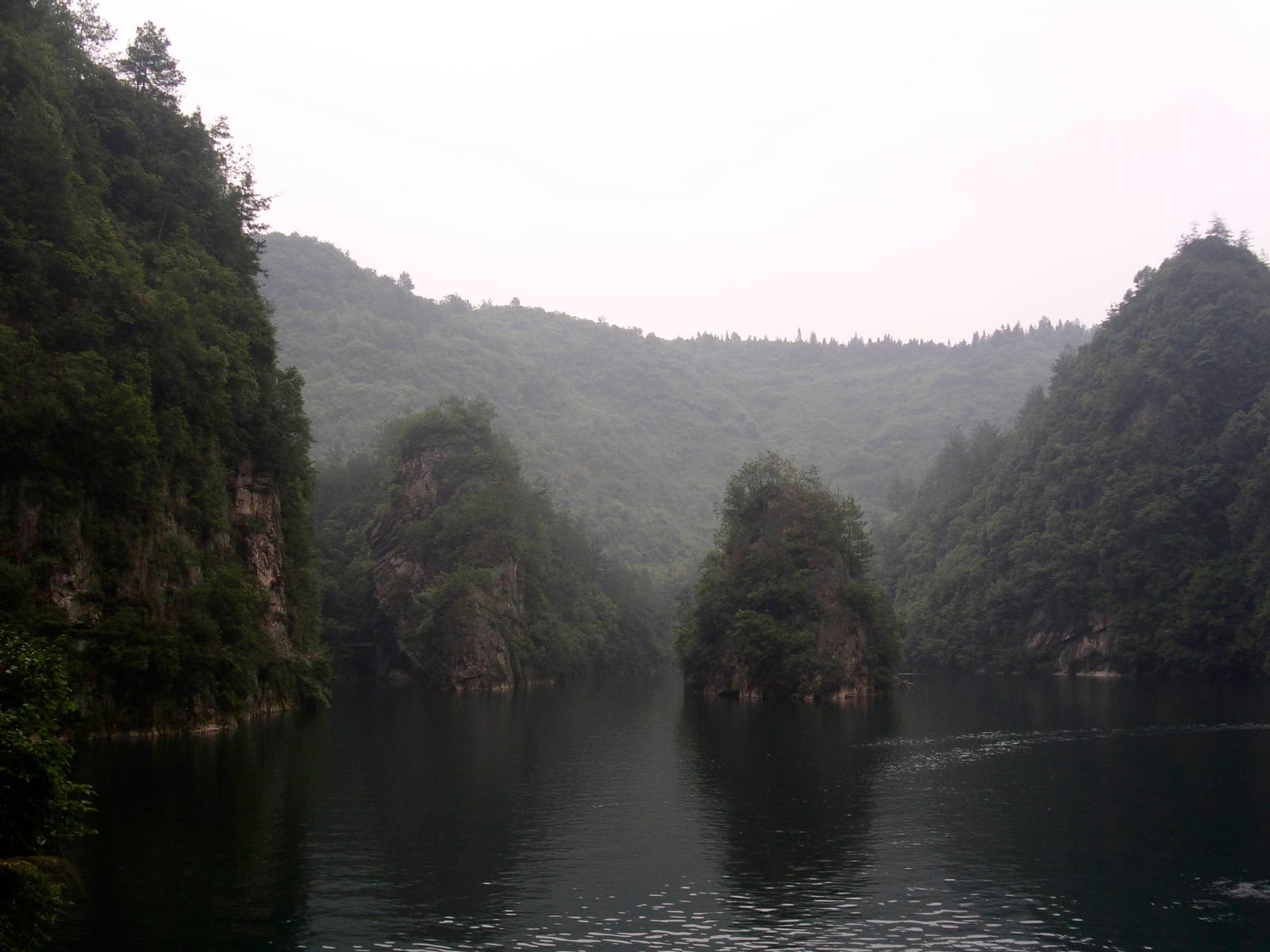
Baofeng Lake among the Zhangjiajie peaks — a nature shot of the area, standing in for the city night market, not any one stall 3
The city's biggest night market · the young crowd's canteen
Hourong Street Night Market
后溶街夜市 · Ziwu Road, Yongding District · a big city-centre night market

Hourong Street is one of the largest night markets in Zhangjiajie city, with over a hundred stalls selling all kinds of snacks. Locals call it the young crowd's late-night canteen — students and young workers pack it out every night. It isn't fancy, but it's real and it's fun.

What you'll find: grilled ciba; all kinds of skewers; roujiamo (肉夹馍), the Xi'an-style Chinese burger; bingfen (冰粉), an iced jelly with toppings; punchy pickled and fermented snacks; noodles, fried snacks and seasonal fruit — spread across several zones, so you can graze your way through.
Where: Ziwu Road, central Zhangjiajie city · easiest by taxi / DiDi
Prices: Snacks ¥3–20 (฿15–100) · ¥30–40 per person to graze
Best time: 7:30 pm–midnight, busiest late
Pay with: WeChat Pay / Alipay / cash
Straight advice: if you're here to eat cheaply and authentically like a local, Hourong and Nanmenkou (No. 2) are far better value than the Fucheng or Xibu Street. They're ideal for a late graze after coming down from the mountain — don't expect anything polished, because the whole appeal is the genuinely local, punchy food at gentle prices.
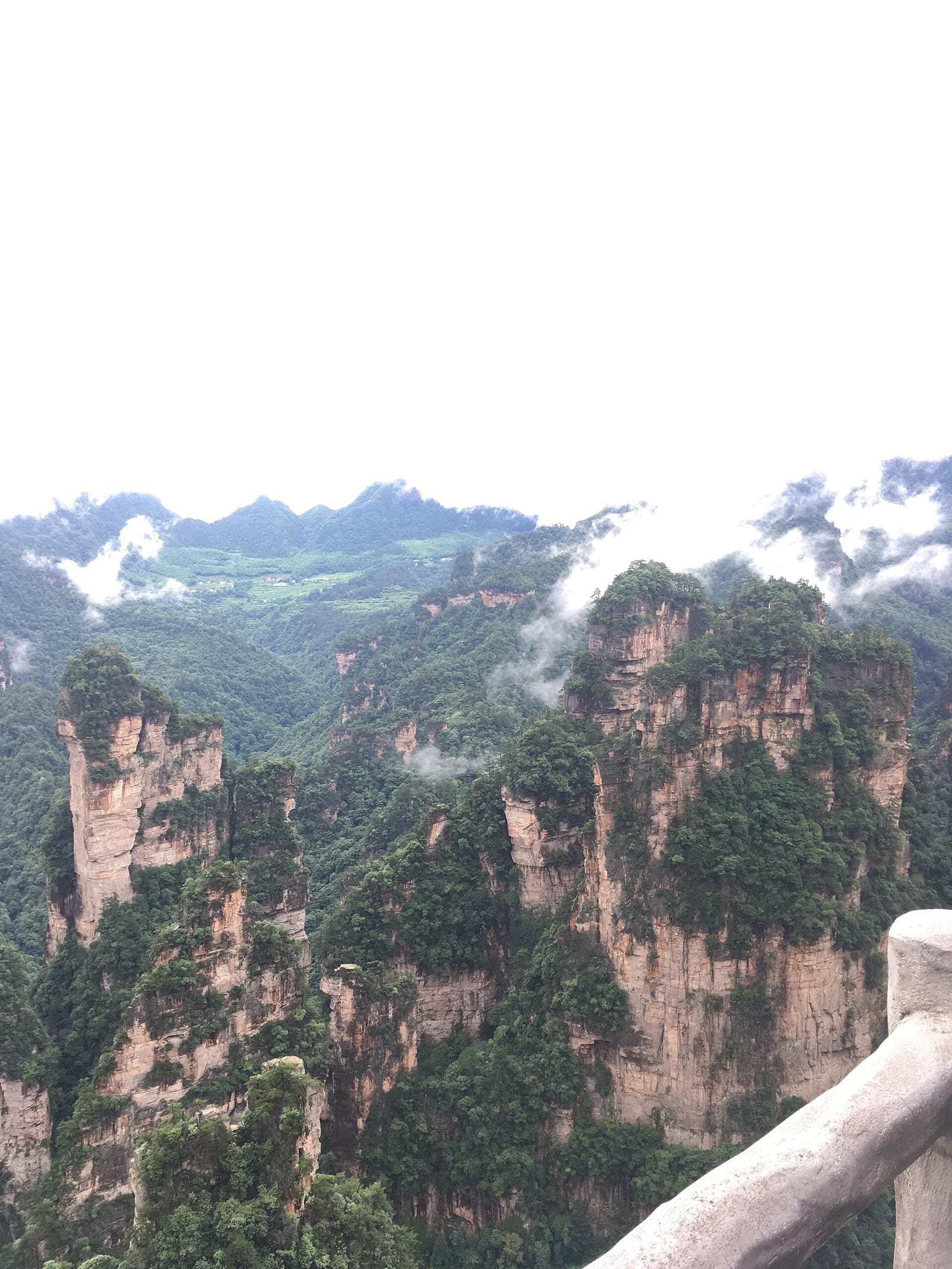
The sandstone pillars of Wulingyuan rising through the mist — a scenery shot of the park-gate town, standing in for Xibu Street, not any one stall 4
Pedestrian street by the park · very touristy but fun
Wulingyuan Xibu Street
溪布街 · Wulingyuan town, along the Suoxi River · ~2 km from the Forest Park East Gate · ~40 min from Zhangjiajie city

It's in Wulingyuan, the gateway town to the National Forest Park, about 40 minutes from Zhangjiajie city — but essential if you're staying near the park. Xibu Street is Wulingyuan's most famous pedestrian street, running along the Suoxi River and nicknamed "Little Lijiang," gathering riverside bars, cafés, craft shops and a Xiangxi street-food street in one place, open day and night.

The standouts: Changsha stinky tofu (臭豆腐), fried with sauce; Wugang sauced duck; Xiangxi grills; ciba and kudzu jelly at the stalls; and skewers and fruit ice creams — plus there's a separate night-market lane about 50 metres off Xibu Street where the food is cheaper and more authentic.

Getting there: Bus / taxi / DiDi from Zhangjiajie city, ~40 min · walkable if you stay in Wulingyuan
Prices: Snacks ¥10–30 (฿50–150) · sit-down meals ¥60–120 per person
Best time: Early evening onward — riverside bars run until 2–3 am
Pay with: WeChat Pay / Alipay / cash
The honest caveat: Xibu Street is a heavily tourist zone — lots of variety, but prices above the city, especially the sit-down spots on the main street and the riverside bars. To eat cheaper, duck into the night-market lane beside Xibu Street, or save your serious meal for back in Zhangjiajie city — far better value.
Know Your Snacks

The Tujia snacks not to miss

Found across all 4 areas above — just point and order

🍡
Ciba
糍粑 · Grilled Glutinous Rice Cake
A pounded glutinous-rice cake, grilled until it puffs up — crisp outside, chewy inside — then rolled in ground peanuts and sugar or dipped in sesame. A Tujia festival snack, easy to find in every area, smoky and gently sweet. ¥3–8 a piece.
🍠
Kudzu Jelly
葛根 · Kudzu Root Jelly
A jelly made from mountain kudzu root (gegen), which grows plentifully around Zhangjiajie — translucent and slippery, cool and refreshing, eaten plain or with syrup. Sold as a "health" snack all around the park gates. ¥5–12 a bowl.
🍢
Grilled Fish & Skewers
烤鱼 / 烧烤 · Grilled Fish & Skewers
A whole river fish grilled and dusted with chilli and cumin, plus skewers of meat, vegetables, mushrooms and tofu. The star of every late-night area, smoky and Hunan-punchy, best with cold beer. ¥2–8 per skewer · whole grilled fish ¥30–60.
🧊
Rice Tofu
米豆腐 · Rice Tofu
A tofu made from ground rice, not soybeans — soft and springy, pale green, cut into cubes and served with a sour-spicy dressing and pickles. Eaten cool and slippery, a Xiangxi hot-weather snack, found at markets and the Fucheng. ¥5–10 a bowl.
🧇
Oba'ba
油粑粑 · Fried Rice Dough
Rice-flour batter with beans deep-fried in hot oil until crisp outside and soft within — round and golden. A favourite Xiangxi breakfast and snack, eaten hot and savoury; some stalls add a vegetable filling. ¥2–5 a piece.
🍜
Cold Noodles & Jelly
凉面 / 凉粉 · Cold Noodles & Jelly
Cold noodles and cool starch jelly tossed in a sour-spicy sauce of vinegar, garlic, chilli, sesame and peanuts — chewy noodles, slippery jelly. A Xiangxi summer cooler, sour-spicy and mouth-watering. ¥6–12 a bowl.
🥝
Kiwi & Sugar-Cane Juice
猕猴桃汁 / 甘蔗汁 · Fresh Kiwi & Sugar-Cane Juice
Zhangjiajie grows a lot of kiwi (mihoutao) in its mountain forests, so fresh kiwi juice — sweet-tart and refreshing — pairs perfectly with a cold cup of fresh sugar-cane juice. The ideal antidote after a full day on the mountain. ¥6–10 a cup.
🍢
Stinky Tofu
臭豆腐 · Stinky Tofu
Fermented tofu fried or grilled until crisp outside and soft within, topped with a garlic-chilli sour-spicy sauce. Strong up close but moreish, a Hunan classic you'll meet all over the Fucheng and Xibu Street. ¥8–15 a plate.
A One-Day Eating Plan

Eat your way through Zhangjiajie in a day

A sample route for a day coming down off the mountain — adjust to your appetite

1
Morning · oba'ba + Tujia noodles before the climb
Start the way Zhangjiajie does — find a stall frying hot oba'ba or a Tujia noodle shop near your hotel in the city or Wulingyuan, and fill up before a long day on the mountain. Budget ~¥8–15
2
Midday · mountain snacks + kudzu jelly
Prices up in the park run higher than the city — stop at the trailside stalls for grilled ciba, boiled corn and grilled sausage with a cool bowl of kudzu jelly, and carry a bottle of kiwi juice. Budget ~¥20–30
3
Early evening · Dayong Fucheng + a Xiangxi show
Back down in the city, swing by Dayong Fucheng for photos of the riverside old town, a plate of rice tofu and local grills, and an evening culture show. Budget ~¥40
4
Late · grilled fish + skewers + cold beer at Nanmenkou
Finish late — cross to Nanmenkou / Huilong Road or the Hourong market, order grilled fish, skewers and cold noodle jelly, and eat with cold beer the way locals do until midnight. Budget ~¥40–50
Know Before You Go

A few things worth knowing first

📱
Set up WeChat Pay first
Since 2023, foreign visitors can link a Visa/MC to WeChat Pay or Alipay. Do it before you head out — many market and mountain stalls have only a QR code and won't take cards.
🌶️
Hunan heat is hot-and-sour, not numbing
Zhangjiajie food is fragrant, hot and sour in the Hunan way — direct heat, not the tongue-numbing Sichuan kind. If you don't take chilli well, say "wei la" (微辣, mild) or "bu yao la" (不要辣, no chilli) up front.
🌃
The city is cheaper than the park
Shops in Zhangjiajie city (Nanmenkou / Hourong) are cheaper and more authentic than the in-park and Wulingyuan spots. If you stay near the park for convenience, save your serious meals for a day in the city.
🚕
Get around by taxi / DiDi
Zhangjiajie has no metro. In the city, a taxi or a DiDi ride is easiest; in the park you use the in-area shuttles, cable cars and the Bailong Elevator. Allow time to get from your hotel to the food areas.
🗺️
Load a Chinese map app
Google Maps barely works in China. Try Amap or Baidu Maps to find stalls and night-market lanes — far more accurate. English signage at stalls is rare, so point at a photo or at the food in the case.
🌡️
Summer is hot, humid and tiring
June–August in Zhangjiajie is hot, humid and rainy, and midday grazing up on the mountain is tiring. Hit the food areas after dark instead, and lean on cool kudzu jelly, rice tofu and fresh kiwi juice.
Frequently Asked

FAQ · the things people ask before heading out

How much does Zhangjiajie street food cost?
Cheaper than you'd think. Tujia snacks like grilled glutinous-rice cake (糍粑) are ¥3–8 a piece (about ฿15–40); a bowl of kudzu jelly (葛根) or rice tofu (米豆腐) is ¥5–10 (฿25–50); grilled skewers are ¥2–8 each; a whole grilled fish is ¥30–60; a cup of fresh kiwi or sugar-cane juice is ¥6–10. Grazing the Huilong Road / Nanmenkou eats in the city comes to around ¥30–50 per person and leaves you full. Dayong Fucheng and Wulingyuan's Xibu Street are tourist zones, with per-item prices roughly 20–40% higher than the city lanes.
Is Dayong Fucheng (大庸府城) worth eating at?
It's worth it for the atmosphere. Dayong Fucheng is a rebuilt old town in central Zhangjiajie city, built on the site of a 600-year-old government seat, with buildings in Tujia, Miao, Bai, Yao and Dong ethnic styles, riverside food streets and folk shows. It's convenient for sampling a lot of Tujia snacks in one place. But honestly, it's a full-blown tourist zone with per-item prices above the city lanes. To eat the way Zhangjiajie locals do, and cheaper, cross over to Nanmenkou (南门口) opposite the Fucheng, or head to the Hourong Street night market where locals go late.
Do I need cash in Zhangjiajie or does WeChat Pay work?
Most vendors run on WeChat Pay and Alipay, especially night-market stalls and the ones up on the mountain. Since 2023, foreign visitors can link a Visa or Mastercard directly to both apps — set this up and test it before leaving your hotel. Cash RMB still works everywhere as a fallback, but some tiny stalls only have a QR code and no card reader, and in-park prices run noticeably higher than in the city, so keep some on hand.
What is the best time of day for Zhangjiajie street food?
Zhangjiajie's food areas are mostly an after-dark thing. Dayong Fucheng and Wulingyuan's Xibu Street are busiest from early evening to around 9 pm, when the lights and old buildings look their best. Huilong Road / Nanmenkou and the Hourong Street night market in the city get livelier the later it gets, with locals grilling and eating until midnight. In Wulingyuan, the riverside bars run until 2–3 am. If you've spent the whole day up in the park, it's easier to eat dinner back in the city or near your hotel.
Which Zhangjiajie snacks shouldn't I miss?
Start with ciba (糍粑), the Tujia pounded glutinous-rice cake, grilled smoky and crisp outside, chewy inside, rolled in ground peanuts and sugar. Then kudzu jelly (葛根), a cool slippery root jelly; rice tofu (米豆腐), soft with a sour-spicy dressing; oba'ba (油粑粑), crisp fried rice-dough rounds; grilled fish and skewers dusted with chilli and cumin; cold noodles (凉面) tossed in a sour-spicy sauce; and fresh kiwi juice, since Zhangjiajie grows a lot of kiwi. The flavour here is Hunan-Tujia — fragrant, hot and sour, not the tongue-numbing kind from Sichuan.
How is eating in Zhangjiajie city different from Wulingyuan by the park?
Zhangjiajie city (Yongding District) is the cheaper, more authentic place to eat, with Dayong Fucheng for strolling and shows, plus Huilong Road / Nanmenkou and the Hourong night market where locals eat late. Yangshuo aside, Wulingyuan (武陵源) is the gateway town to the Forest Park, about 40 minutes from the city, with Xibu Street along the Suoxi River — nicknamed "Little Lijiang" — leaning on bars, cafés and street food for tourists. It's handy if you stay near the park but pricier than the city. The sensible combo is to tour the park while staying in Wulingyuan, then find a day to eat well in the city.
Klook

Eat through Zhangjiajie with a local guide
into the lanes the guidebooks miss

A Zhangjiajie food walking tour — try grills and Tujia snacks at local shops, sample food with no English signs, and walk the old town with someone who knows it, or book the Forest Park and Tianmen Mountain tours at the same time.

See Zhangjiajie tours on Klook →
Wherebest is a Klook affiliate partner — we may earn a commission when you book through our links, at no extra cost to you.