10 places worth your time
Ordered by geography — start in the Wulingyuan pillar forest, then come to Tianmen by the city and the day trips.
 1
1
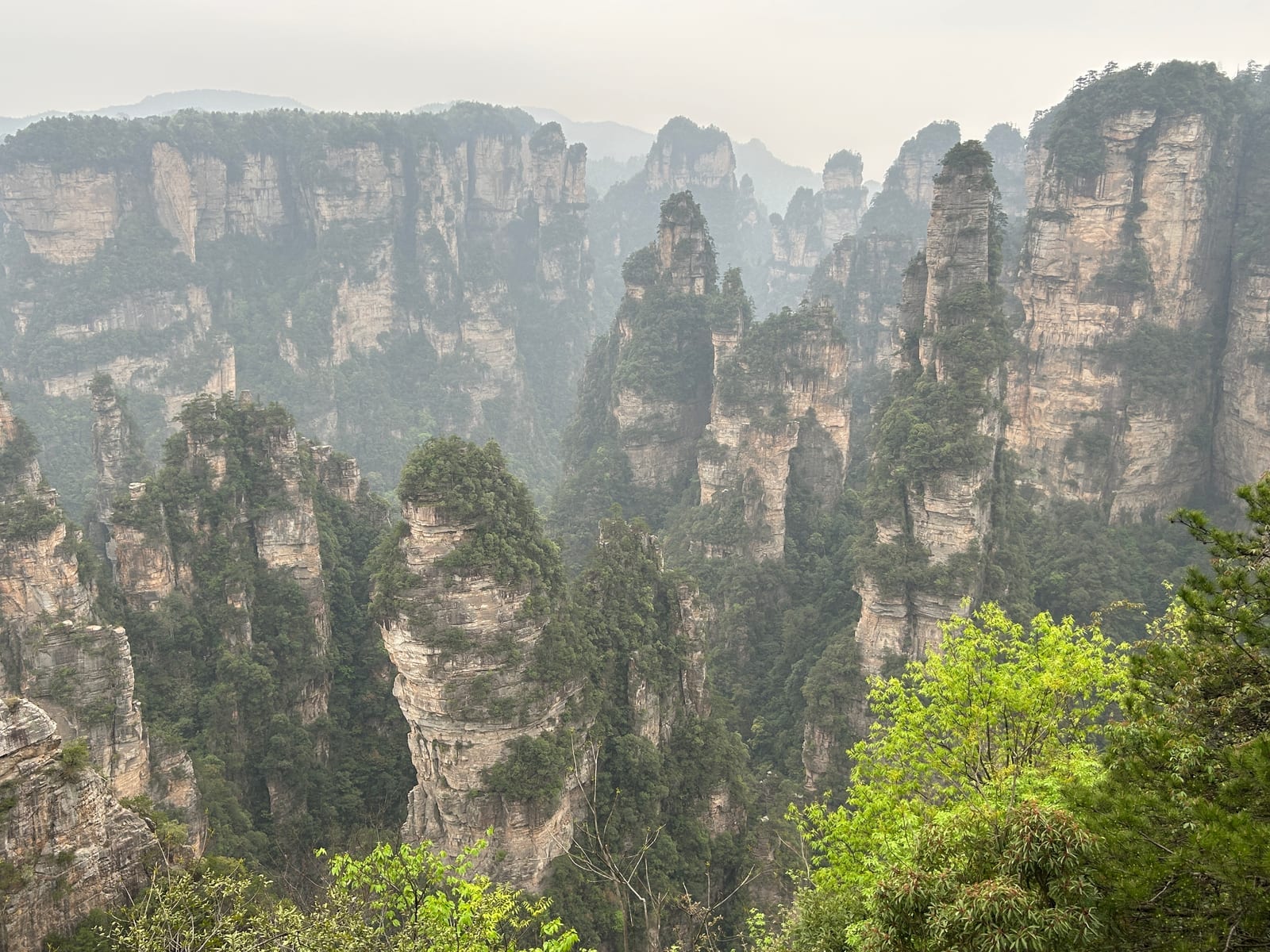
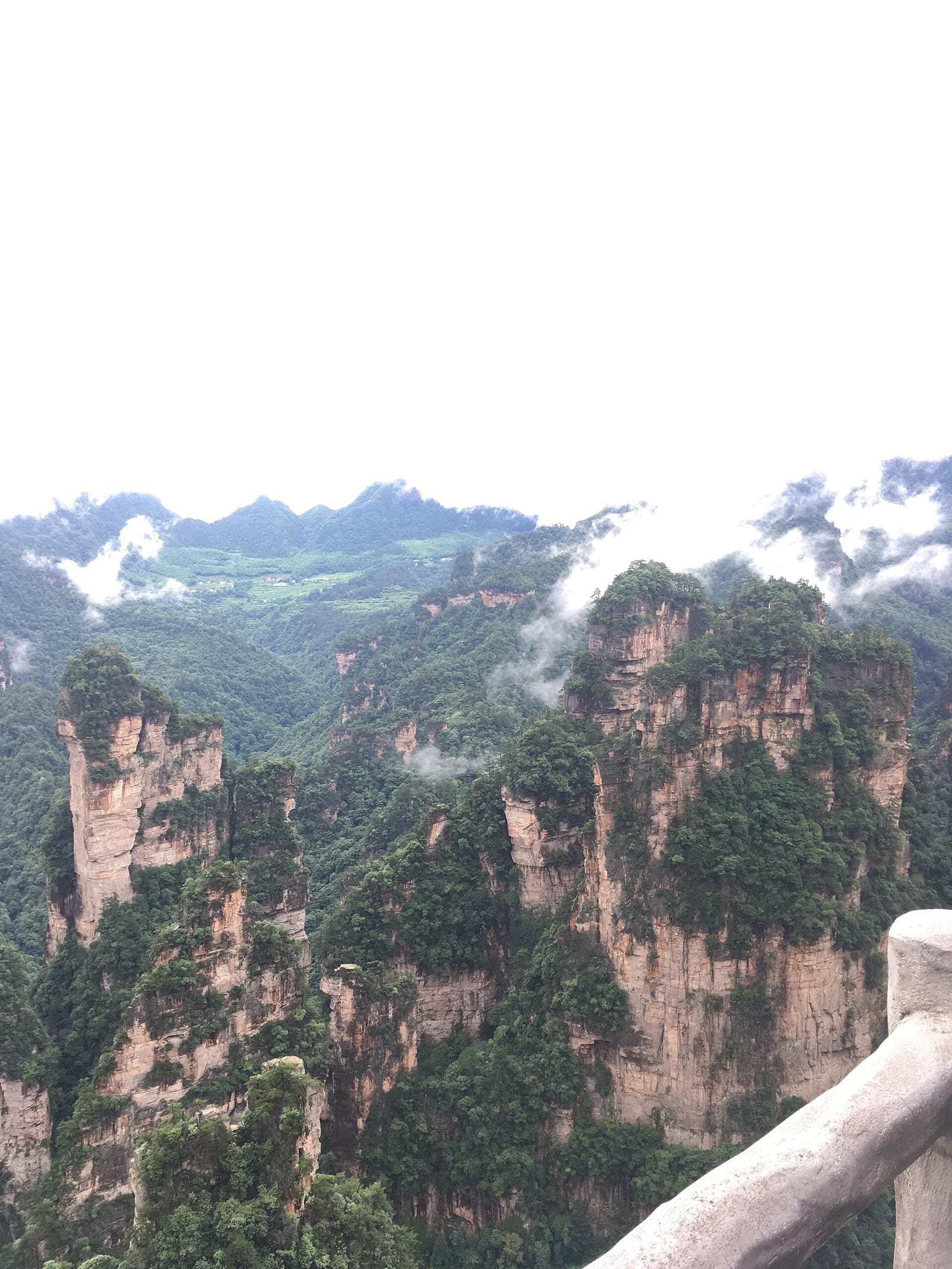
Picture this: you are standing on a viewing balcony and thousands of sandstone pillars spread out in front of you to the horizon, some crowned with pines like floating islands. This is Zhangjiajie National Forest Park, the core of the Wulingyuan area. The highlight is Yuanjiajie (袁家界), home to the Avatar Hallelujah Mountain and the First Bridge Under Heaven (天下第一桥), a natural rock arch linking two summits. You reach it by the Bailong Elevator or on foot. The entry ticket is valid for several days and the shuttle buses inside are free. This is the one thing in Zhangjiajie you should not miss.
 2
2
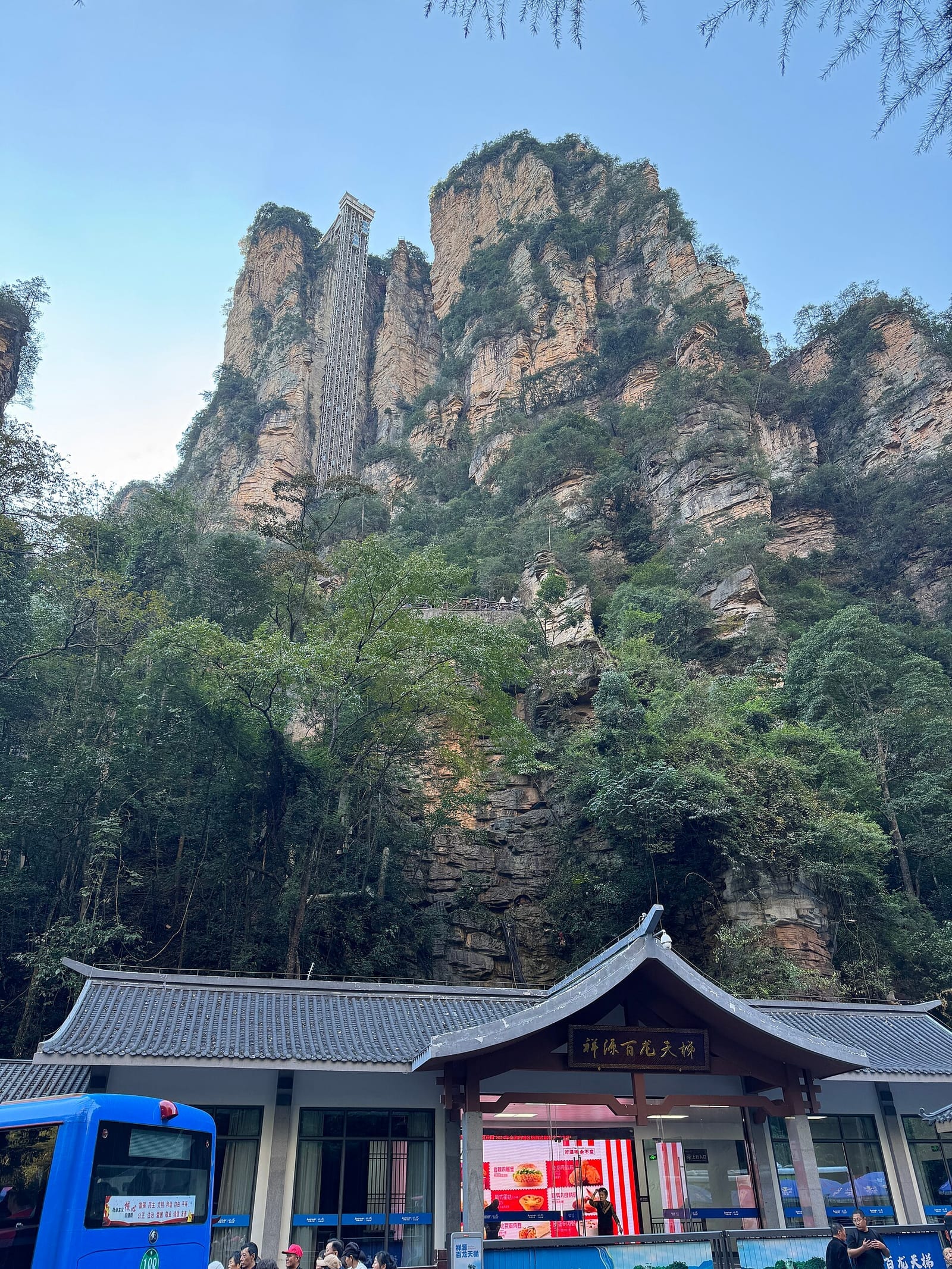
Honestly, this lift is one of the little highlights everyone remembers — the Bailong Elevator is an outdoor glass elevator built onto a roughly 326-metre vertical cliff in the middle of the pillar forest, once a Guinness-record outdoor lift. It carries you from the valley floor up to the Yuanjiajie level in about two minutes, the pillars sliding past the glass as you rise, and it saves a long climb up many flights of steps. Be honest with yourself about timing: in the high season the queue can be very long, especially mid-morning. Go early if you want to avoid it, or walk up and ride the lift down.
 3
3
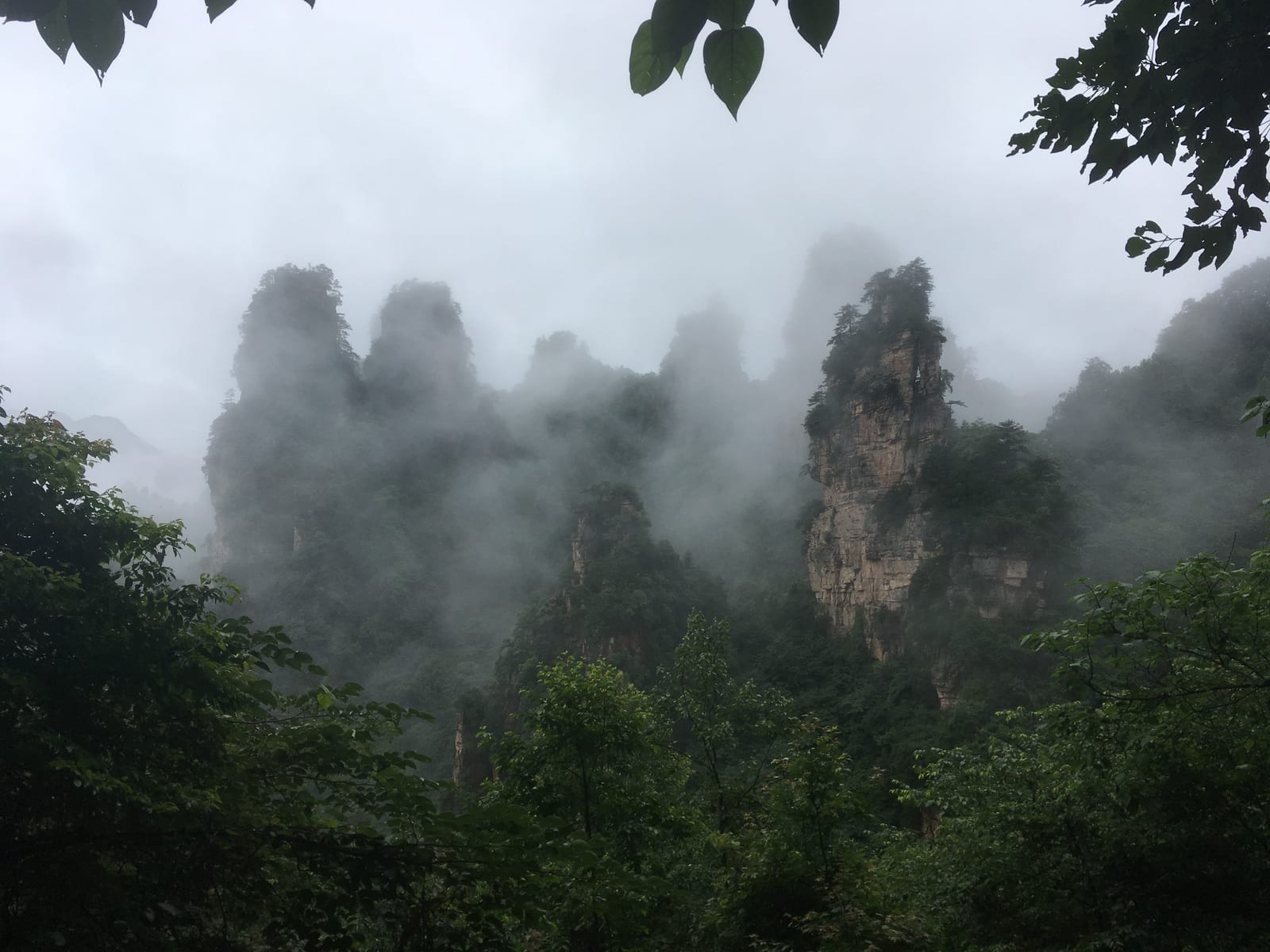
In the north of the park is Tianzi Mountain, the "Son of Heaven", famous above all for Zhangjiajie's best sea of clouds. On a clear morning after rain, or at first light, mist flows between the pillar tops until they look like islands in a white ocean. The standout viewpoints are Helong Park and the Imperial Brush Peaks (御笔峰), a cluster of sharp pillars lined up like upright writing brushes. You reach it by the Tianzi cable car or on foot from Yuanjiajie or Yangjiajie. It is one of the most beautiful corners of the whole area — though you do need some luck with the weather, since the cloud sea depends on the day and the season.
 4
4
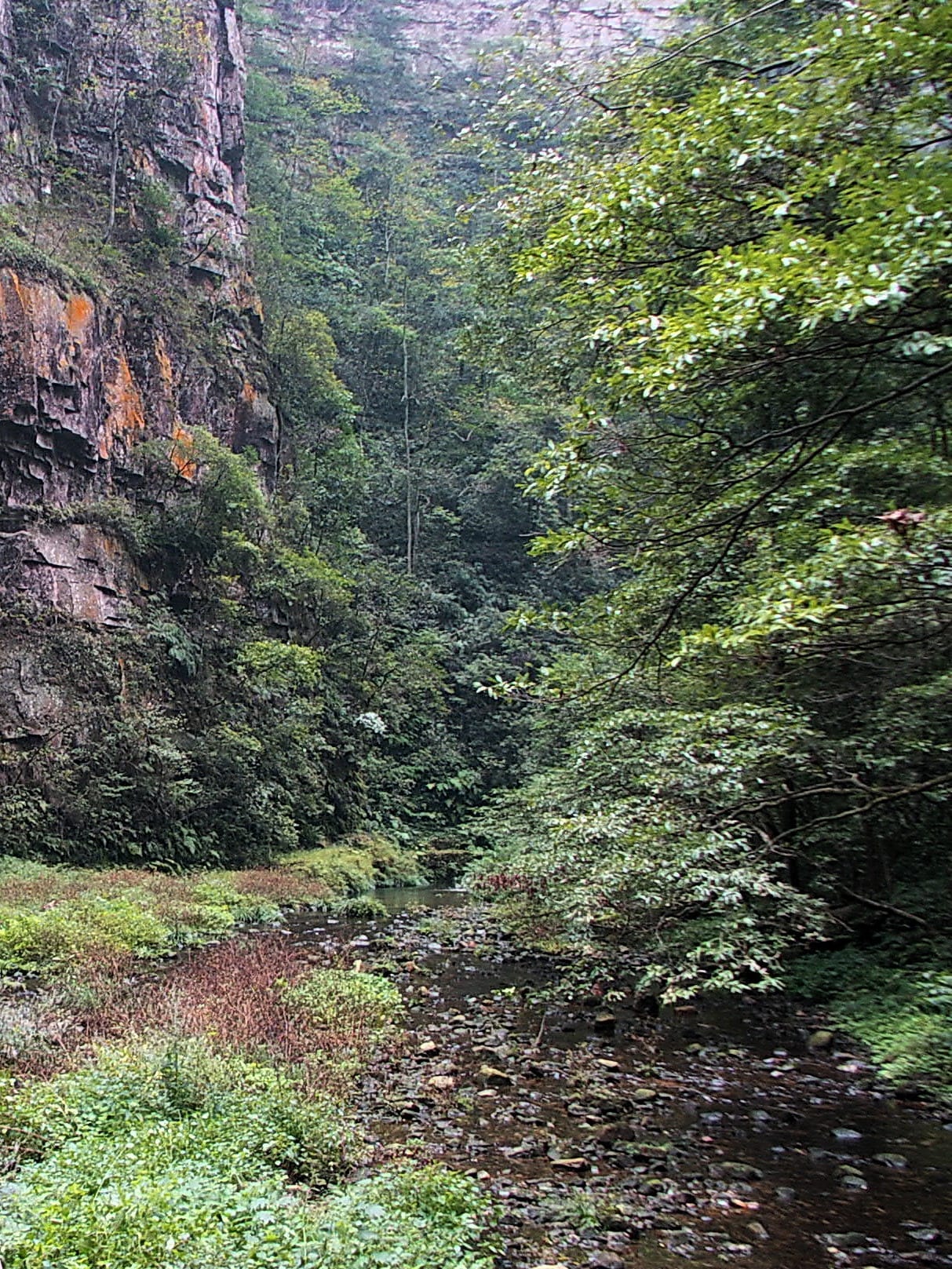
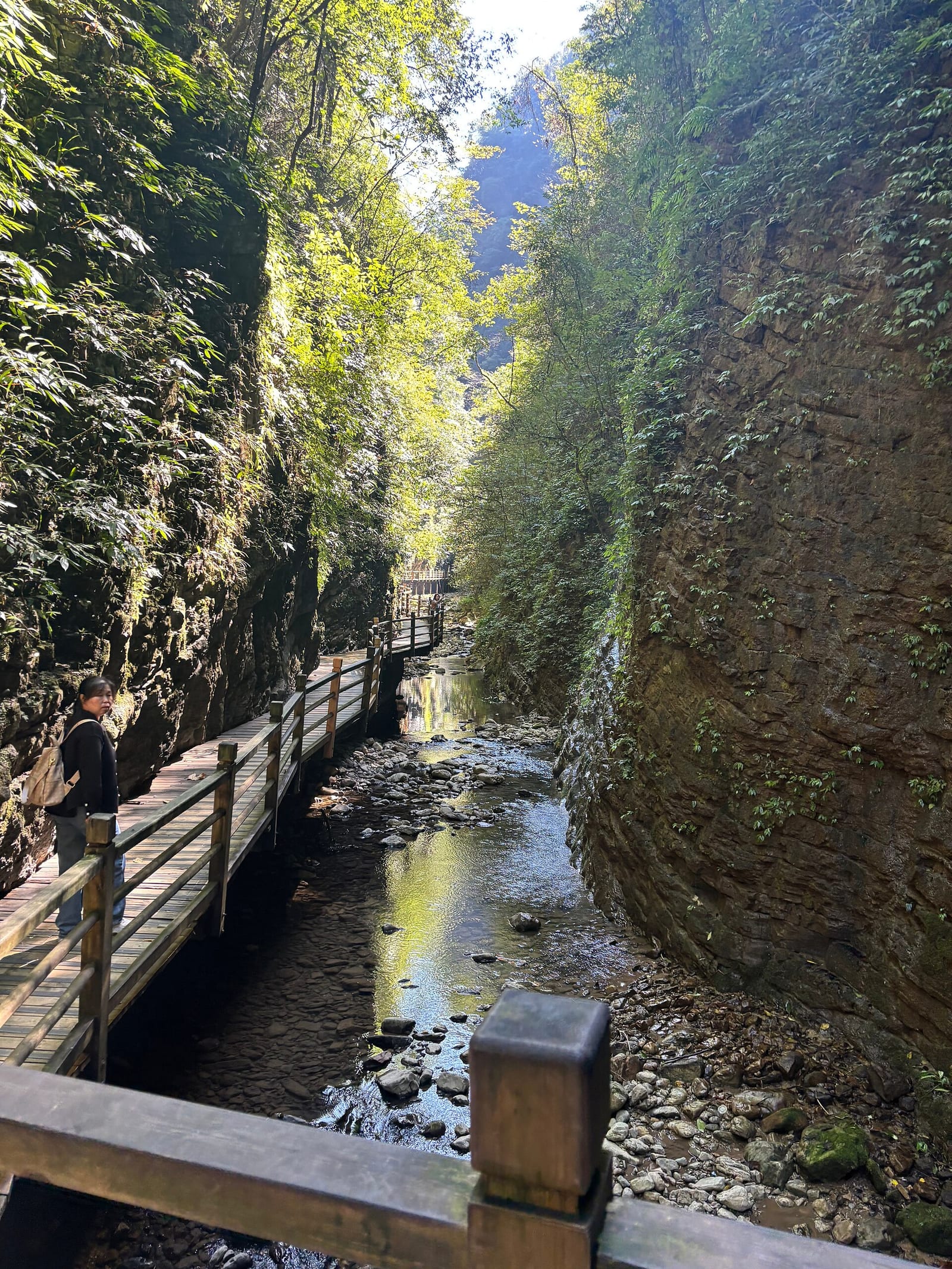
If the clifftop viewpoints are about looking down at the pillars, Golden Whip Stream is about walking among them, looking up — a flat path beside a clear stream that runs about 5.7 km, shaded by forest on both sides. It is the easiest trail in the park and the one everyone loves. Along the way you pass Golden Whip Rock (金鞭岩), the tall pillar that gives the stream its name, and you will often meet wild macaques on the trail (don't wave food at them). The full walk takes about 2–3 hours and is included in the entry ticket. Most people do it in the morning and ride the Bailong Elevator up to Yuanjiajie afterwards.
 5
5
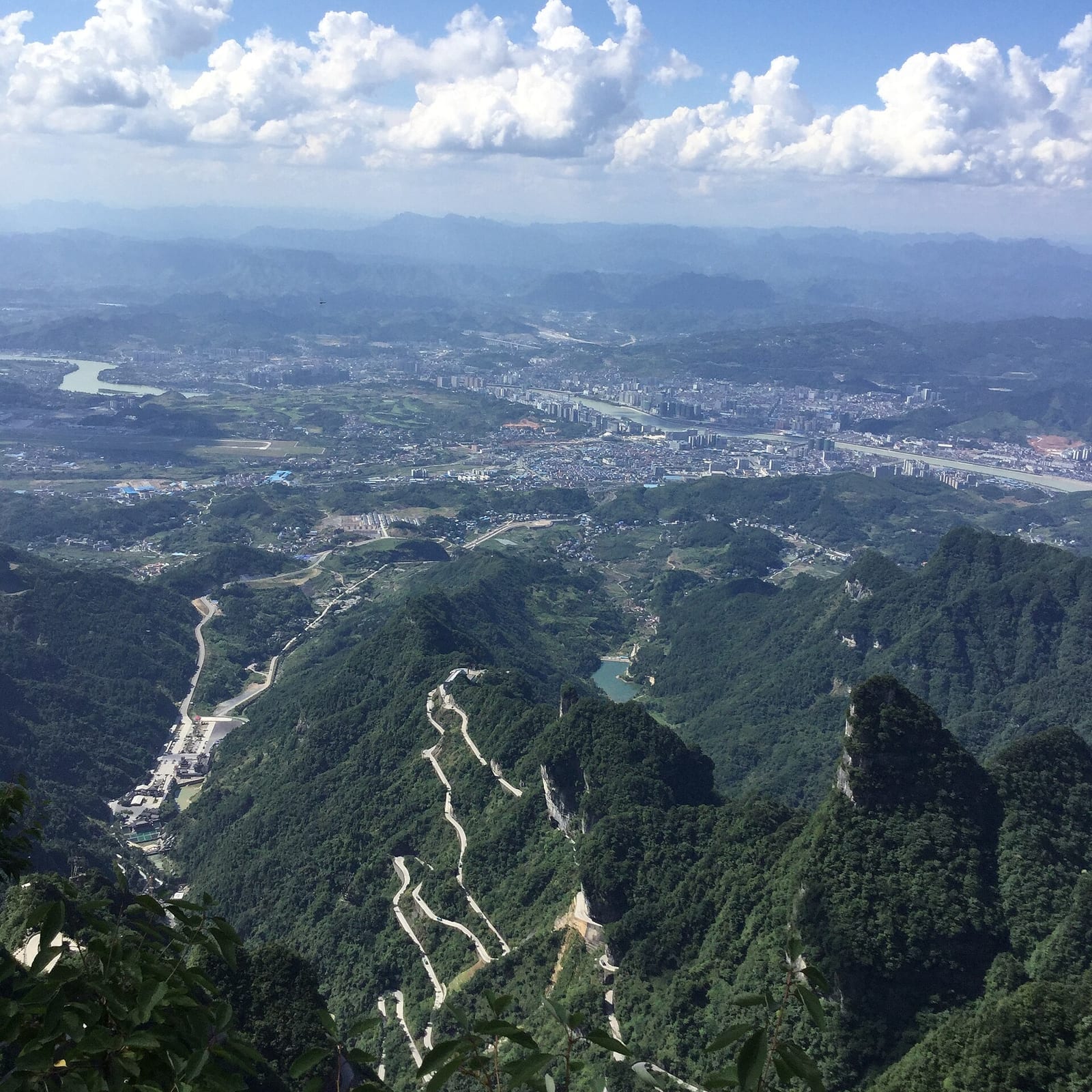
Switch from the pillar forest to Tianmen Mountain, a big limestone tabletop peak right beside Zhangjiajie city, about a 15-minute drive from the centre. It starts with a cableway about 7.5 km long, one of the longest passenger cableways in the world, floating you up the mountain over the 99-bend road. The highlights are Heaven's Gate (天门洞), a natural arch cut clean through the mountain about 131 metres high that you climb to up a 999-step stairway, and the clifftop glass walkways (the Coiling Dragon Cliff, 鬼谷栈道) that edge along the precipice on a clear glass floor. The ticket including the cableway is about ¥258 in high season, and it takes half a day to a day. It is a separate place from the pillar park, so most people visit it on its own day.
 6
6
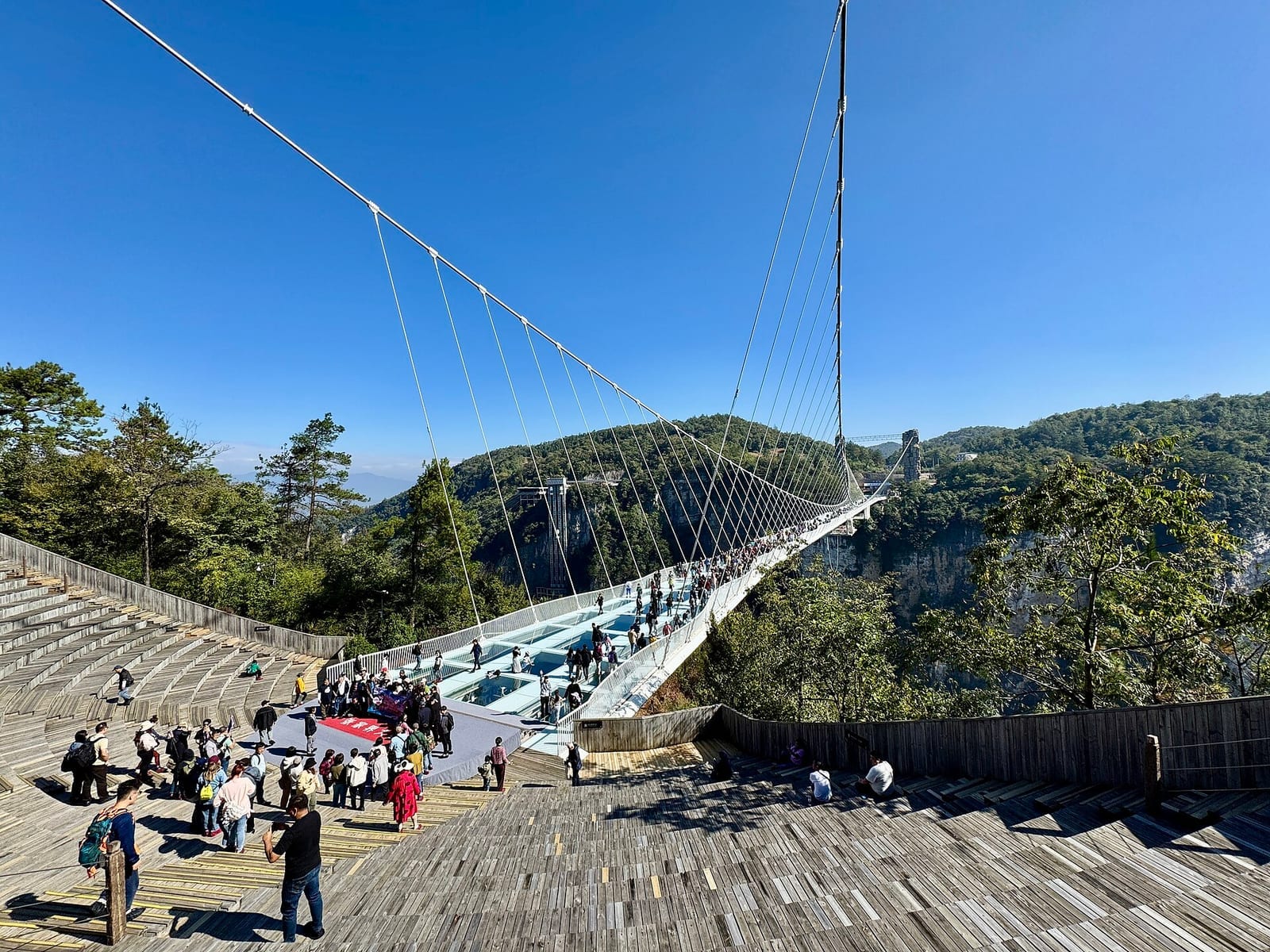
For anyone who wants to test their nerve, the Zhangjiajie Grand Canyon Glass Bridge is the highlight a lot of people come for — a glass-decked suspension bridge about 430 metres long, crossing the canyon at roughly 300 metres above the valley floor, once one of the world's longest and highest glass bridges. Stand in the middle and you look straight down through the glass into the canyon below. There are several ticket types, canyon-only or a canyon-plus-bridge combo, and it opens around 9 am to 3.30 pm. It caps daily numbers and needs a timed booking in advance, especially on public holidays. After crossing you can walk down to explore the canyon below. The bridge is about 30–40 km from Wulingyuan.
 7
7
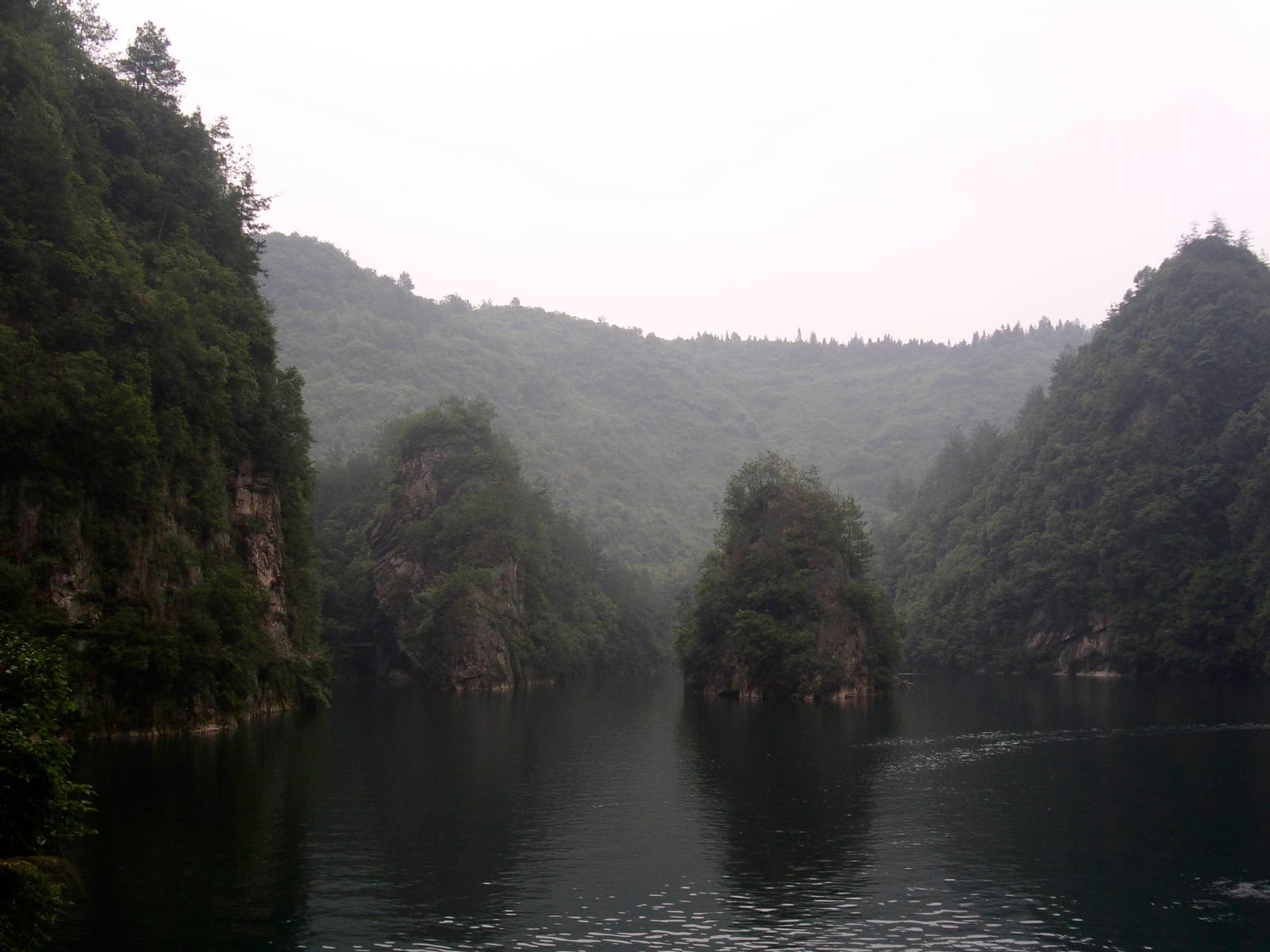
After days of hiking and climbing cliffs, Baofeng Lake is the easy day — a high mountain lake ringed by green pillar peaks, its still water mirroring the hills. The highlight is a roughly 30-minute boat ride with Tujia and Miao singers in folk dress trading songs back and forth from the boats and the bank, followed by a short walk around the lake. It is a calm contrast to all the climbing. It is in the Wulingyuan area, so you can pair it with the nearby Yellow Dragon Cave in half a day.
 8
8
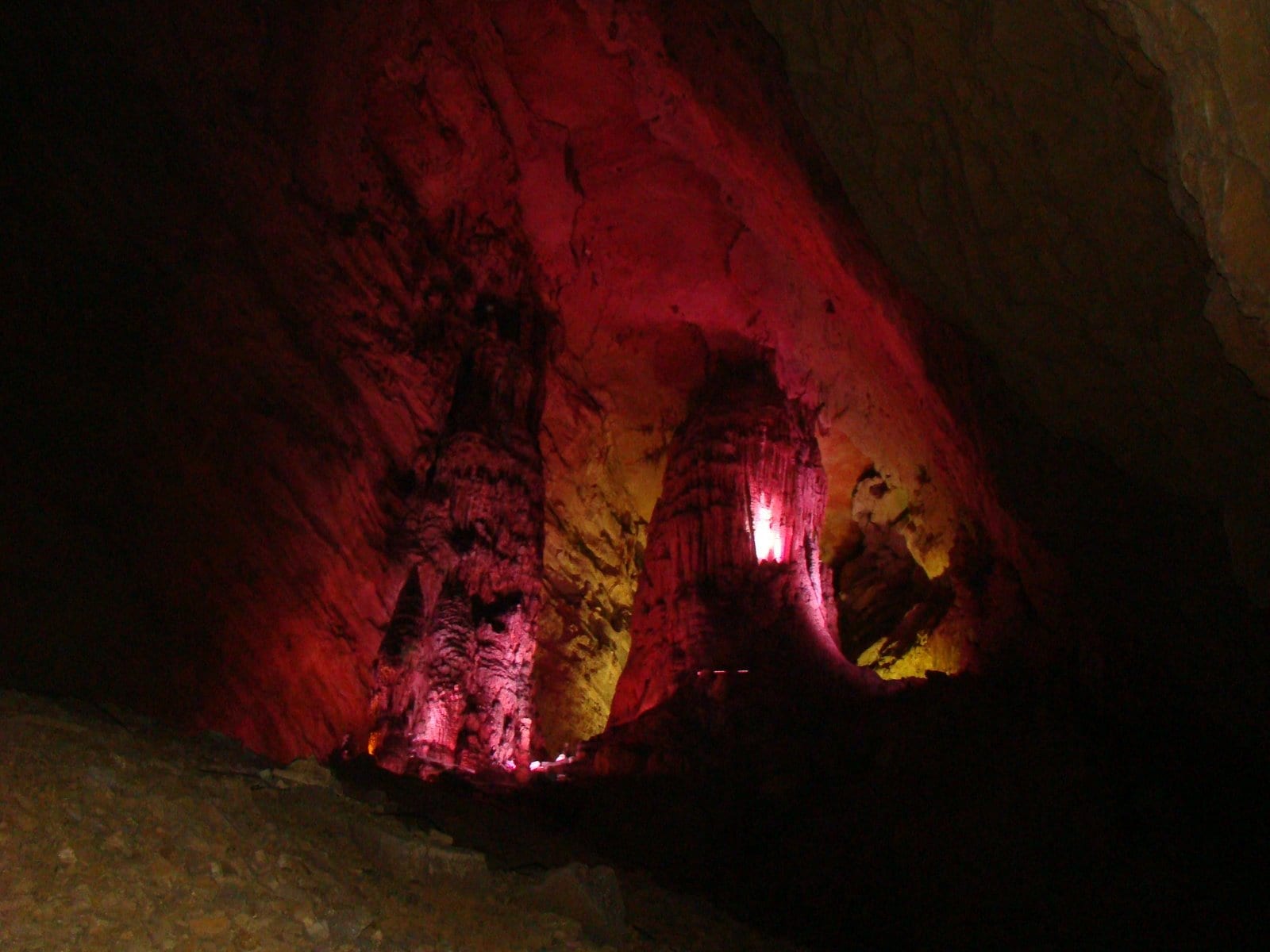
Near Wulingyuan is an enormous limestone cave that makes a great rainy-day option — Yellow Dragon Cave, a multi-level cavern lit to show off its stalactites and stalagmites. The visitor route runs about 3.2 km, including a roughly 800-metre stretch of underground river you cross by boat. The star is the "Dinghai Needle" (定海神针), a tall, slender stalagmite that is the cave's symbol. It is a guided loop of about two hours, all indoors and pleasantly cool, so keep it for a day when the weather is not on your side.
 9
9
If the National Forest Park is the "star", Wulingyuan is the whole "system" that contains the entire pillar forest — the Forest Park + Yuanjiajie + Yangjiajie + Tianzi Mountain + Golden Whip Stream + Suoxi Valley, all one UNESCO site. A single big ticket of about ¥240 is valid for around four days, lets you re-enter by fingerprint scan, and comes with a free shuttle network running right across the area. There are several gates (Forest Park / Wulingyuan / Tianzi / Yangjiajie) — pick the one that suits your hotel and your walking plan. This is the "how to actually visit" page that explains how the ticket, the gates and a two-day plan inside the area all work.
With a spare day, Fenghuang Ancient Town is the most popular add-on of all — a riverside old town on the Tuo River lined with the stilt houses (吊脚楼) of the Tujia and Miao peoples, where the lanterns light up and reflect in the water at night. You walk the old stone bridges across the river, take a small boat through town, and find lively bars along the bank. Fenghuang is about 240 km south of Zhangjiajie — about 1 hour by high-speed train to Fenghuanggucheng station, or roughly 4 hours by bus (about ¥90). Many people stay one night to catch both the daytime atmosphere and the lights after dark. There are other Zhangjiajie day trips to choose from too.
 +
+
Many of Zhangjiajie's best sights are out of town — so we have gathered the popular day trips into a separate guide: Fenghuang Ancient Town (~240 km, HSR ~1 h), the riverside old town many people stay over in; Furong Ancient Town (芙蓉镇), the "town that hangs on a waterfall", much closer at ~80 km and ~30 minutes by HSR; the Mengdong River (茅岩河) drift for the adventurous; and Zhangjiajie city sights such as the Tujia Dayong Fucheng. Pick by whether you have one spare day or two.