Home Chengdu China Chengdu Hotels About
Home  ›  Asia  ›  China  ›  Chengdu  ›  First-Timer Guide
🐼 Chengdu First-Timer Guide · 2026

Your first trip to Chengdu
Everything you need, nothing you don't

A city where you can spend the morning watching pandas crunch bamboo, the afternoon reclining in a bamboo chair over a cup of jasmine tea in an old lane, and the evening around a bubbling red hotpot with new friends. This guide is built from verified facts and real visitor accounts to get you ready before you land.

Why start here

The city of pandas, hotpot and a slower pace

If you have always wanted to see China but worried it would feel rushed, Chengdu is the city that lets you breathe. Locals take real pride in their unhurried way of life — sipping tea, playing mahjong, sitting in the park talking the whole afternoon away. The capital of Sichuan province is the birthplace of mouth-numbing red hotpot and home to the world's largest giant panda breeding base.

Easy to get around — a metro network of 15-plus lines connects every major attraction; fares run ¥2–8 (~฿10–40) per ride, and you scan a QR code straight through the gate. Safe and welcoming — crime rates are low, people are warm, and tourist districts are well-lit at night. Layered in a single day — pandas in the morning, the Three Kingdoms-era Wuhou Shrine and Jinli street in the afternoon, fiery hotpot at night — and the next day you can take a high-speed train to the largest stone-carved Buddha on earth.

A note on this guide: All prices, hours and logistics here are drawn from public sources and verified visitor accounts. Details change — check for the latest before you travel.
Trip planning

How many days do you need?

The honest answer is three days for the in-city highlights — pandas, Kuanzhai, Wuhou Shrine and Jinli, People's Park, and hotpot. With five days you have far more room to breathe and can add a day trip out to the Leshan Giant Buddha or Mount Emei.

🗓️
3 days — the in-city highlights
Best for first-timers short on time

Day 1: the Panda Base at opening (pandas are most active early) → Kuanzhai Alley. Day 2: Wuhou ShrineJinli street → tea in People's Park. Day 3: hotpot and shopping around Chunxi Road.

See the full plan: 3-day itinerary →
📆
5 days — relaxed, plus a day trip
Best if you want to go deeper

+Day 4: a high-speed train to the Leshan Giant Buddha (a 71-metre carving in the cliff). +Day 5: Mount Qingcheng and the Dujiangyan irrigation system, or a sacred hike up Mount Emei.

See the full plan: 5-day itinerary →

There is a plan for every length of trip: 1 day · 2 days · 3 days · 4 days · 5 days

Before you fly

When to go + the visa question

The best window
Spring + autumn

March to June is mild, with rapeseed fields blooming yellow in early spring. September to November brings comfortable temperatures and less rain — for many people the nicest stretch of the year. Chengdu is famously overcast almost year-round (there is even a local joke that the dogs bark at the sun because it shows up so rarely), but that damp, soft light is exactly what locals credit for Chengdu women's complexions. See the month-by-month breakdown at when to visit →

Avoid: Golden Week 1–7 Oct + Chinese New Year (Jan/Feb) — crowds and price surges
Visa for Thai nationals
30 days visa-free (verify before you go)

Under the mutual visa-exemption agreement between Thailand and China for ordinary passport holders, Thai travellers can stay up to 30 days per visit for tourism without applying in advance. The policy can change, so check the latest at the China visa-free guide for Thais → before booking your tickets.

Have ready: a passport valid for 6+ months + a confirmed hotel booking
From the airport

Getting into the city after you land

Chengdu has two airports — TFU (Tianfu), the large newer airport to the southeast, where most direct flights from Bangkok land · and CTU (Shuangliu), the older airport closer to the centre, mainly handling domestic and short-haul regional flights. Don't mix the two up: they sit on opposite sides of the city and are a fair distance apart.

From TFU (Tianfu International)
Where most flights from Thailand land

Metro Line 18 — the station sits beneath the terminals; the express service reaches Chengdu South Railway Station in about 35 minutes for ¥10 (~฿50), where you transfer to Line 1 for Tianfu Square / Chunxi Road. Metro Line 19 — links TFU directly to Shuangliu (CTU) in around 30 minutes if you need to connect. Taxi / DiDi — about an hour into the centre because the airport is far out; worth it if you have a lot of luggage or arrive late.

From CTU (Shuangliu)
Closer in, ~16 km southwest

Metro Line 10 runs directly from beneath the terminals to Taipingyuan station, where you transfer to Line 3/7/9 for the centre — about 35–45 minutes to Tianfu Square for a few yuan. The metro runs roughly 06:00–23:30. A taxi into the centre is around ¥40–70 (~฿200–350). This airport is much closer in than TFU.

Direct flights from Bangkok: non-stop BKK/DMK → TFU takes around 3.5 hours, with several airlines to choose from — Thai Airways, Sichuan Airlines (3U, hubbed here), Air China, China Eastern and Spring Airlines (9C). Compare them at the flights to Chengdu guide →
Getting around + paying

What to use around town

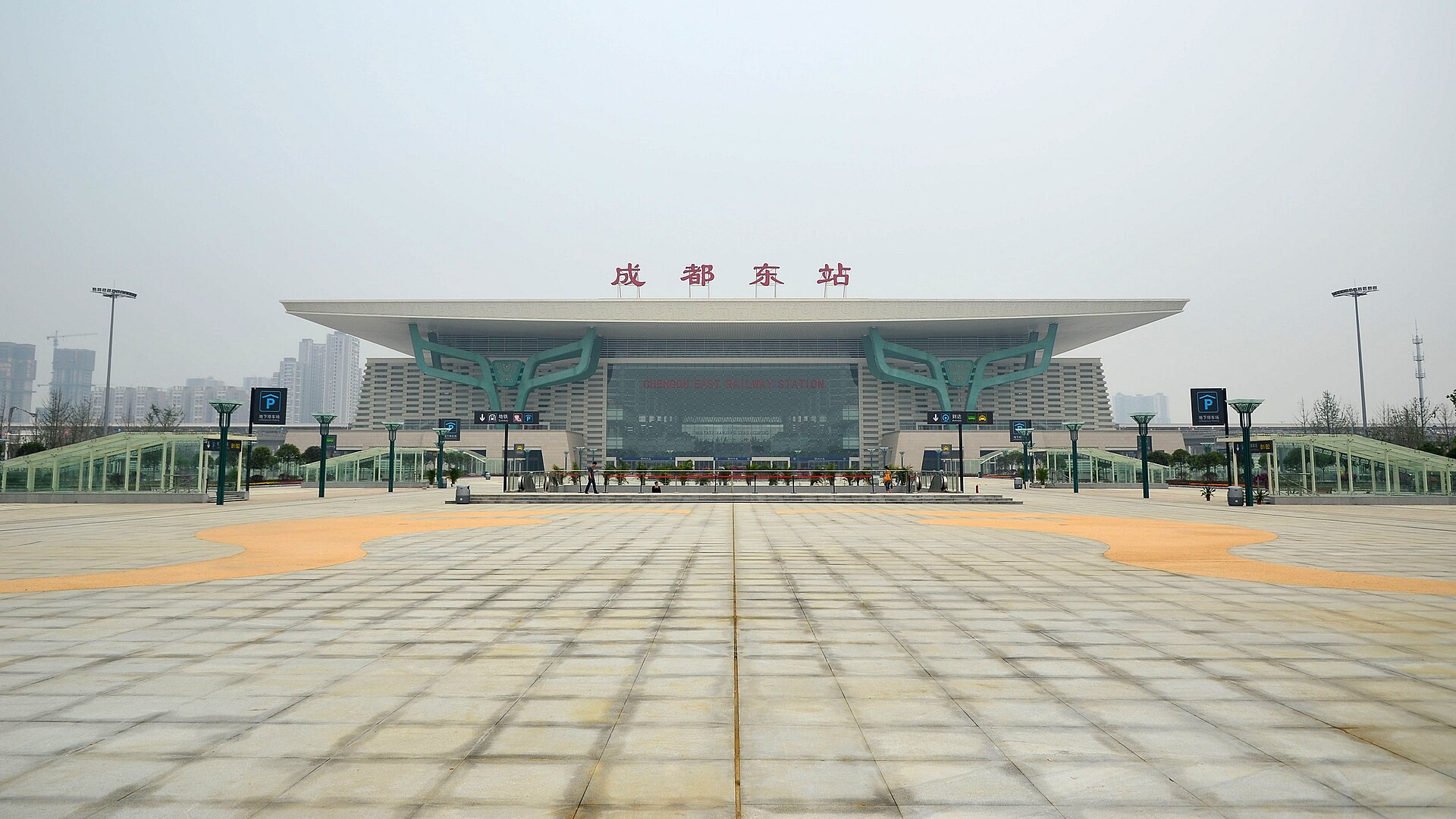
Chengdu East Railway Station — the large station building that serves as the main high-speed rail hub for Leshan, Emei and Chongqing
Chengdu Metro
15+ lines · covers every major sight

Chengdu's subway has more than 15 lines at ¥2–8 (~฿10–40) per ride. Key stations: Tianfu Square (Line 1) in the centre · Chunxi Road (Line 2/3) for shopping · Kuanzhai Alley (Line 4) for the old lanes · for the Panda Base, take Line 3 to Panda Avenue (熊猫大道) and connect to the shuttle. Scan an Alipay/WeChat QR straight through the gate, or buy a 天府通 (Tianfu Tong) card. Full details at the Chengdu metro guide →

Tip: use Amap (高德地图) or Apple Maps to navigate — Google Maps does not work in China
💳
Paying in Chengdu
Alipay · WeChat Pay · credit cards · cash

Most places take Alipay and WeChat Pay first. Hotels and larger shops accept Visa and Mastercard, but hotpot joints, street-food stalls and small tea houses usually take mobile payment only. Set up the tourist version of Alipay before you arrive (it accepts foreign cards), or withdraw yuan from an ATM as a backup. See the full guide at paying in China →

Internet: Google/Facebook/LINE need a VPN or eSIM — see the VPN + eSIM guide →
Heading out of the city: 成都东 Chengdu East is the main high-speed rail hub for Leshan, Emei, Chongqing and Xi'an · 成都西 Chengdu West serves the Qingcheng/Dujiangyan line · book train tickets in advance on Trip.com. See all the options at day trips from Chengdu →
Where to stay

Which neighbourhood?

Chengdu is big, but the main sights cluster in a handful of districts. Get to know the areas first and choosing a hotel becomes much easier — see the full where-to-stay guide →

Chunxi Road / Taikoo Li
Where most first-timers stay

The central shopping district, walkable to almost everything, with Metro Lines 2 and 3 running through it. Luxury malls and restaurants pack the streets, and the Daci Temple hides among the modern blocks. Accommodation spans every budget — the most convenient base for a first visit.

Best for: first-timers, convenience, shopping
Tianfu Square
The dead centre of the city

The central plaza with its Mao statue and the science museum, where Metro Lines 1 and 2 cross. Walk from here to People's Park and the old streets. This location sits in the middle of everything — ideal if you want to make every minute count.

Best for: solo travellers, business, a metro hub
Kuanzhai / People's Park
Old-town character

The old lanes of Kuanzhai (宽窄巷子), with their courtyard houses, tea shops and lane cafés, sit beside People's Park where locals recline over tea all afternoon. This is Chengdu at its most authentic and unhurried — step out early and the lanes are quiet and yours.

Best for: heritage atmosphere, photography, slow strolling
Near the Panda Base (north)
For an early start

The panda breeding base is in the north of the city, and the pandas are most active feeding in the early morning. Staying nearby lets you arrive early without a pre-dawn start — though plenty of visitors simply stay central and taxi or metro out first thing.

Best for: panda lovers wanting to beat the tour groups
Near Chengdu East (东站)
The high-speed rail hub

If you plan to take trains to Leshan, Emei or Chongqing across several days, staying near Chengdu East station is handy — head out early and catch your train. There is less to see right here than in the centre, but Metro Lines 2 and 7 connect you in without trouble.

Best for: multi-city trips, frequent train catchers
By hotel style
Luxury vs boutique vs budget

Chengdu has landmark five-star hotels (Ritz-Carlton, St. Regis, Niccolo), design stays like The Temple House, and good-value mid-range chains like Atour. Pick by budget and style — read the comparison at luxury vs boutique stays in Chengdu →

Best for: every budget, from backpacker to a special occasion
The must-dos

The sights a first-timer shouldn't miss

Chengdu has plenty to see, but for a first visit these six are the core that everyone should experience — see the full list at all Chengdu attractions → or activities and pre-booked tickets →

A giant panda at the Chengdu panda breeding base sitting on the grass and chewing a green bamboo stalk
Ticket ~¥55 · opens 07:30 · go as early as you can

The reason many people fly to Chengdu in the first place — the world's largest giant panda breeding base. The trick is to arrive as early as possible (gates open 07:30), because pandas wake up to feed in the morning and tend to sleep through the afternoon. The cubs in the nursery are the highlight nobody stops photographing.

Metro: Line 3 to Panda Avenue, then the shuttle
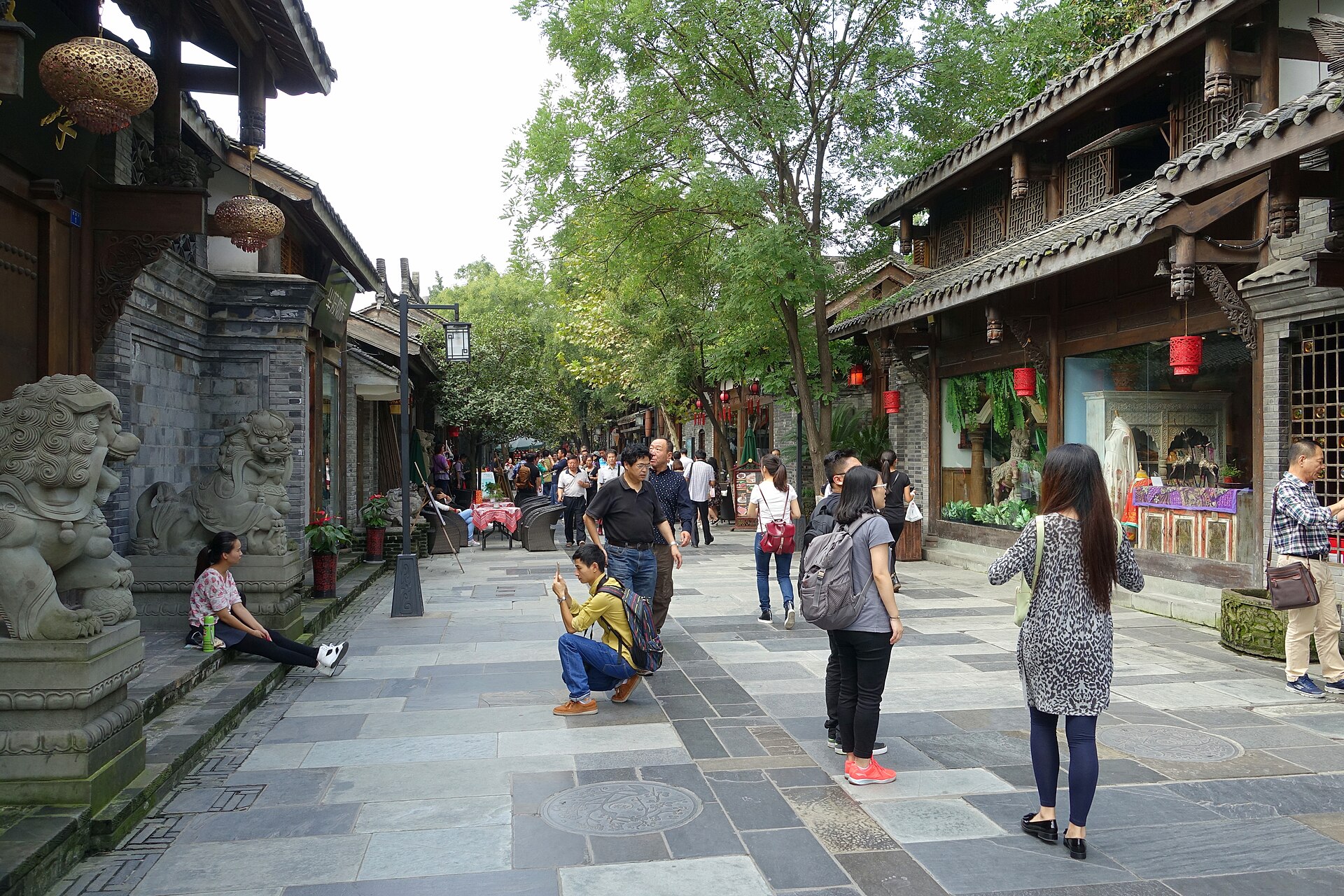
Kuanzhai Alley in Chengdu — a lane of grey-brick Sichuan courtyard houses with tea shops and red lanterns on both sides
Free · shops open late morning to evening

Three lanes of restored Sichuan courtyard houses in the heart of the city — the Wide Lane, the Narrow Lane and the Well Lane — full of tea houses, restaurants and cafés tucked into old homes. Watch a Sichuan ear-cleaning master at work, catch a face-changing opera, and find a quiet corner for tea, all in one afternoon.

Metro: Kuanzhai Alley, Line 4
Wuhou Shrine in Chengdu — red timber Three Kingdoms-era halls set among lush green gardens
Ticket ~¥50 · open 08:00–18:00

A memorial to Zhuge Liang and Liu Bei of the Three Kingdoms era. If you grew up on the Romance of the Three Kingdoms, walking in here is like stepping into the pages. Shaded red halls and green gardens connect straight through a side gate to the old Jinli street.

Metro: Gaoshengqiao, Line 3, then a short walk
Jinli Ancient Street in Chengdu at night — a pedestrian street strung with red lanterns lined with street-food and souvenir stalls
Free · best at night when the lanterns glow

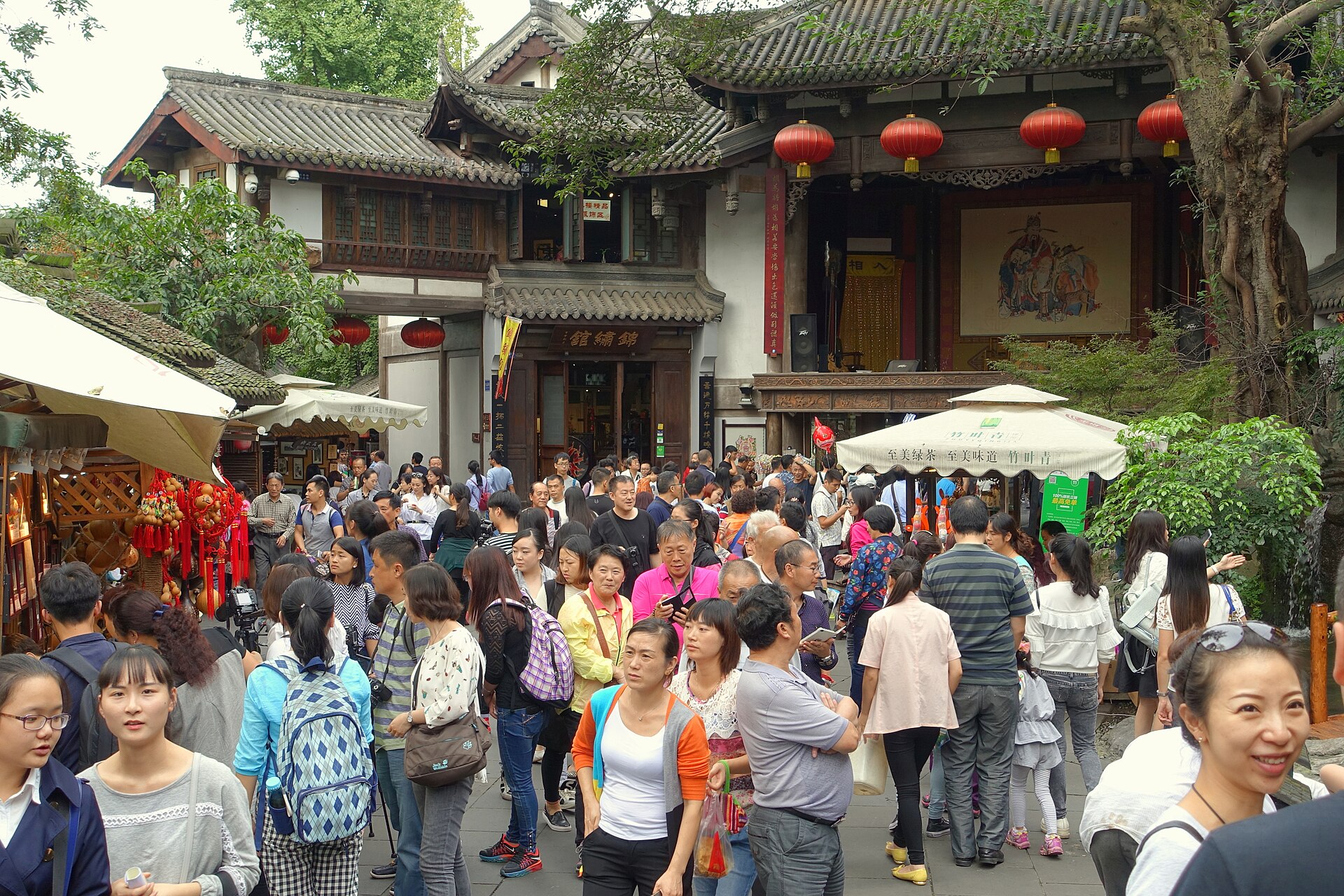
An ancient pedestrian street beside Wuhou Shrine, strung with red lanterns and packed with Sichuan street-food stalls — grilled pork belly, stinky tofu, local sweets. After dark, when the red lanterns light up, is when the street looks its best.

Metro: Gaoshengqiao, Line 3 (next to Wuhou Shrine)
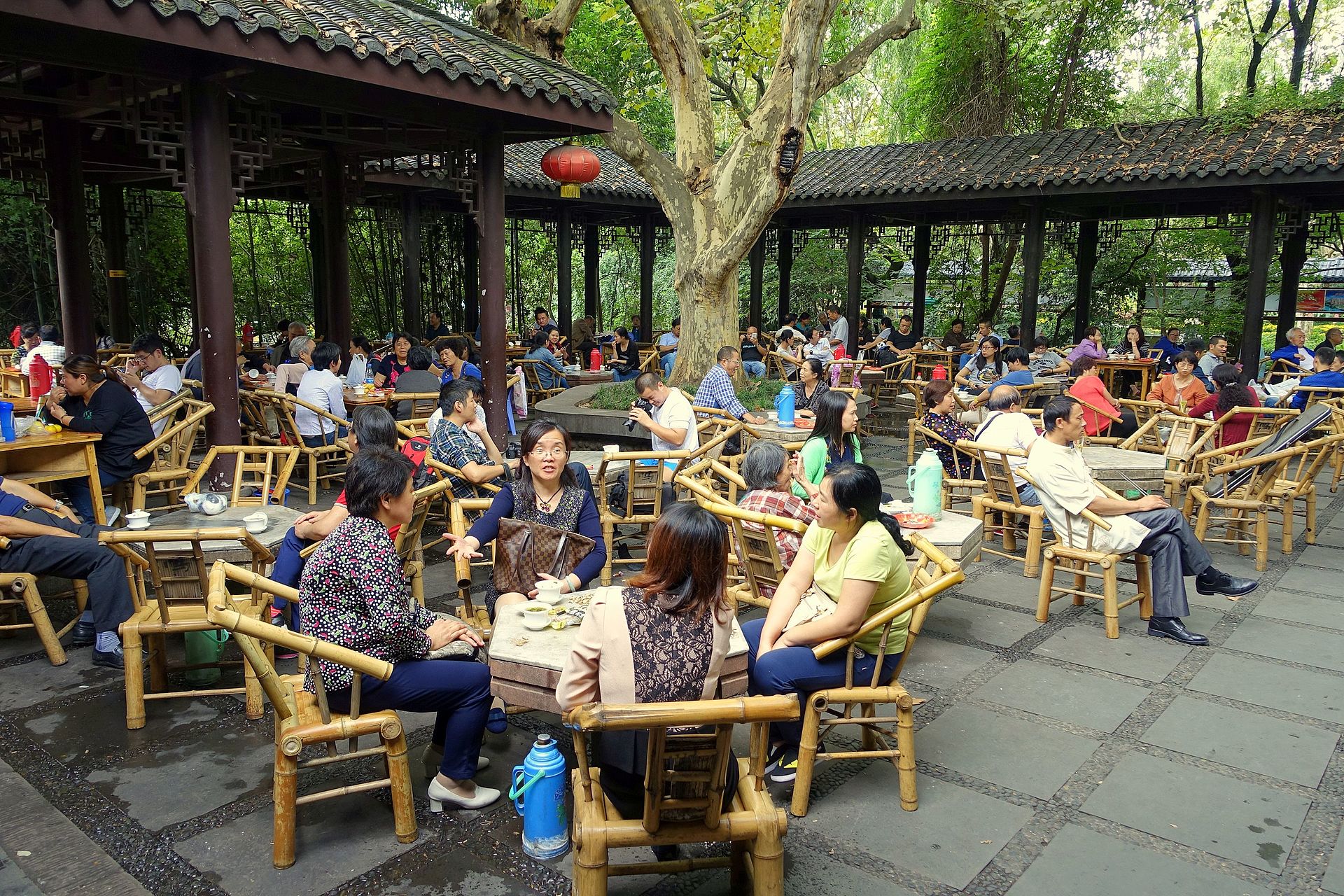
People's Park in Chengdu — an open-air tea house by a pond where people sip tea in bamboo chairs under the trees
Free · the He Ming tea house runs all day

The heart of Chengdu's pace of life — the He Ming tea house by the pond, where locals recline in bamboo chairs over tea all afternoon and ear-cleaning masters work the tables. Order a glass of jasmine tea, sit back, and watch Chengdu drift slowly past — the kind of thing a hurried city cannot offer.

Metro: People's Park, Line 2
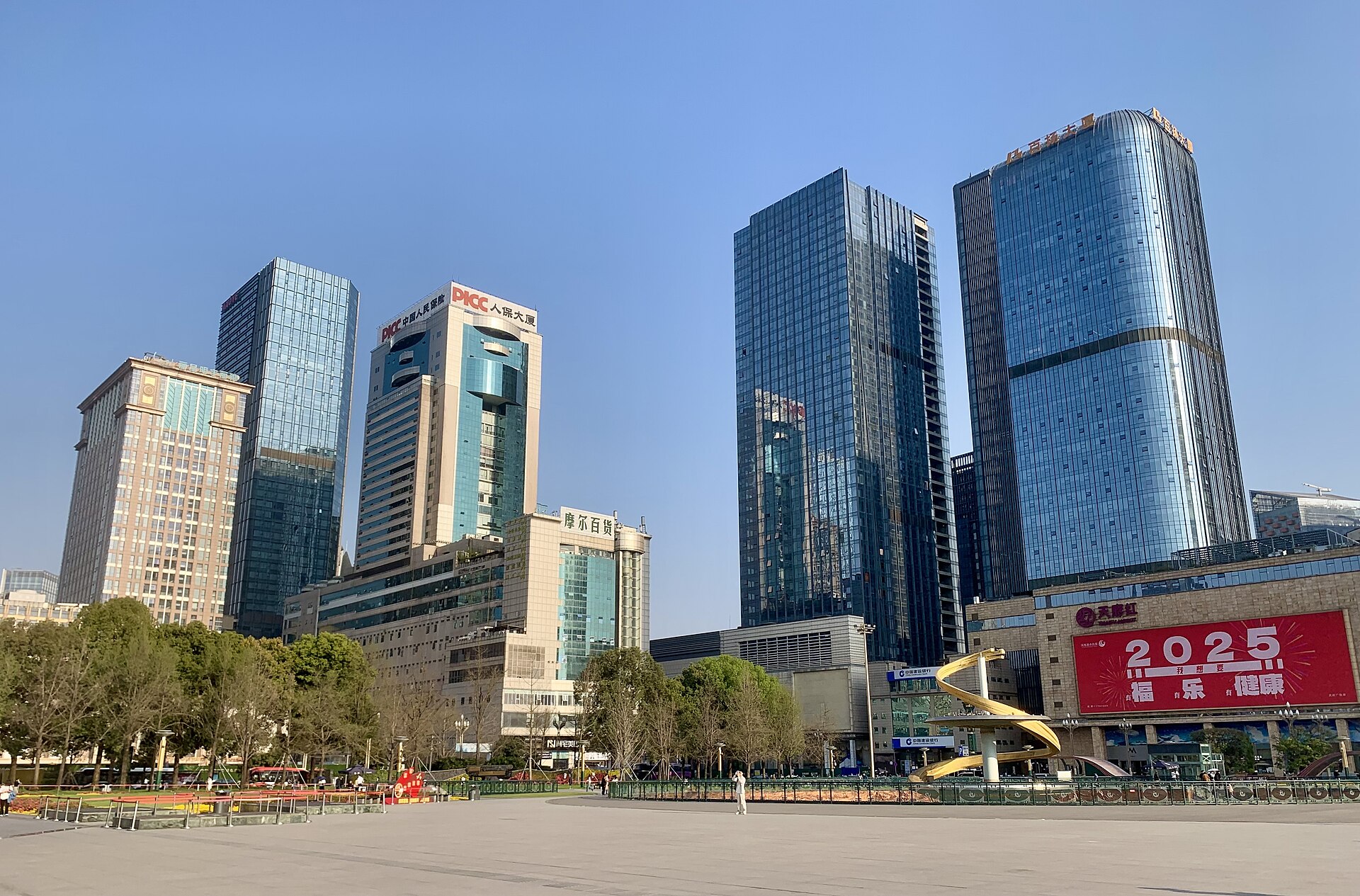
Tianfu Square in Chengdu — a broad central plaza with fountains ringed by modern buildings
Free · the dead centre of the city

The central plaza where Metro Lines 1 and 2 cross, with its Mao statue and the science museum. It's a good place to get your bearings on the city, and an easy walk from here to People's Park or the old streets.

Metro: Tianfu Square, Line 1/2
For hotpot and street-food lovers: Chengdu is the birthplace of numbing-spicy hotpot — find the restaurants and how to eat it at the Chengdu hotpot guide →, graze the street-food district →, and don't miss tea at the tea house culture guide →
What to eat

The Sichuan dishes you have to try

Chengdu is the capital of Sichuan cooking, and its signature is "mala" (麻辣) — heat from chillies layered over a tingling numbness from Sichuan peppercorns (花椒), a flavour unlike spice anywhere else. If you're nervous about heat, you can always order a non-spicy broth. See the full guide at the Chengdu food guide →

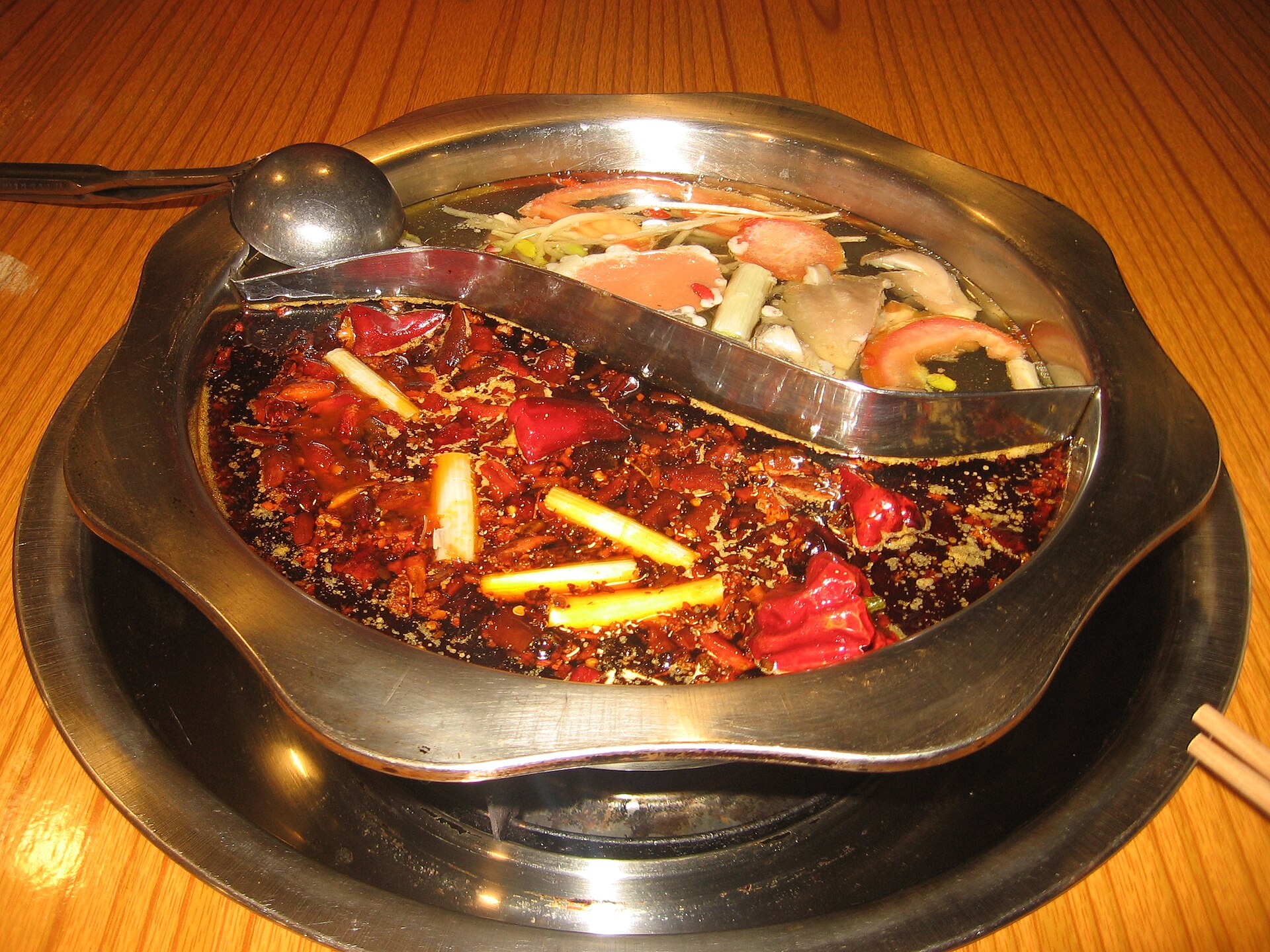
Chengdu hotpot — a pot of bubbling red broth full of dried chillies and Sichuan peppercorns, served with plates of meat and vegetables
Sichuan Hotpot (火锅)
Red mala broth · the must-eat in Chengdu

Everyone who comes to Chengdu says the same thing — you have to do hotpot at least once. A bubbling red broth full of chillies and Sichuan peppercorns; you dip meat, vegetables and tofu to cook. Worried about the heat? Order a divided pot (鸳鸯锅), half spicy, half a mild bone broth. See recommended spots at the hotpot guide →

Price: ¥80–150 (~฿400–750) per person · found in every district
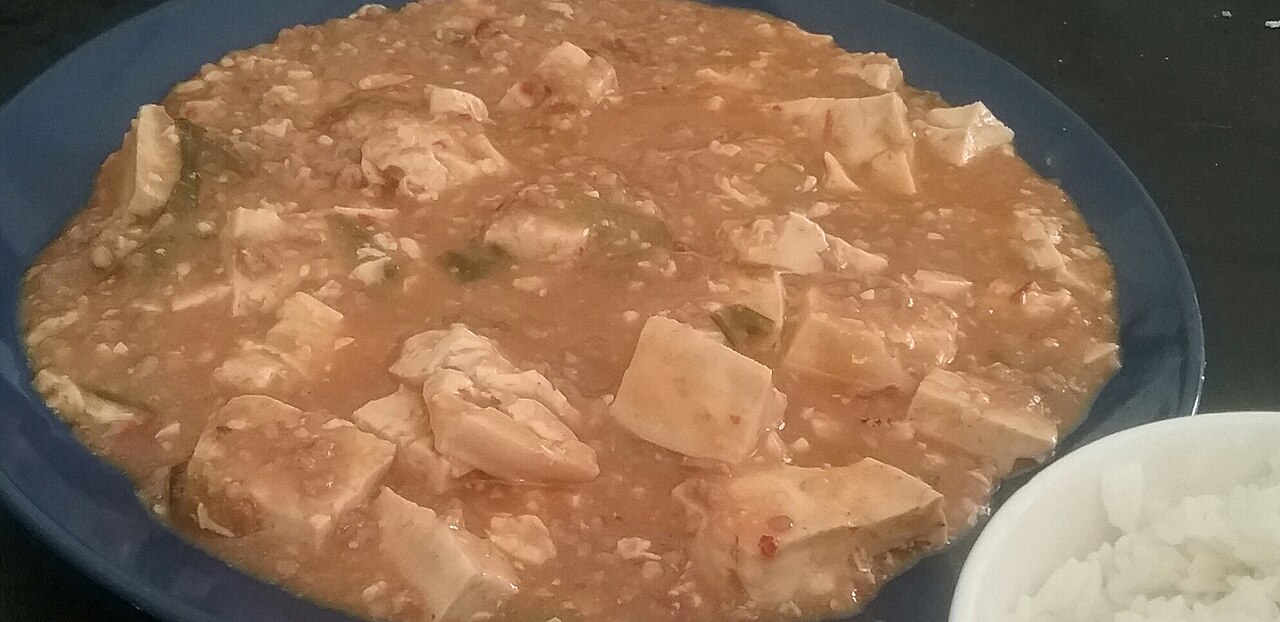
Chengdu mapo tofu — soft white tofu in a glossy red chilli-bean sauce topped with spring onion and ground Sichuan peppercorn
Mapo Tofu (麻婆豆腐)
Tofu in mala sauce · born in Chengdu

A classic born in Chengdu more than 150 years ago — soft tofu in a fiery fermented-bean sauce with minced pork. The "ma" tingle from Sichuan peppercorn leaves your lips gently buzzing; eaten over hot steamed rice, it's a simple pleasure. You'll find it in every Sichuan restaurant, and it's easy on the wallet.

Price: ¥20–40 (~฿100–200) · see the food guide here →
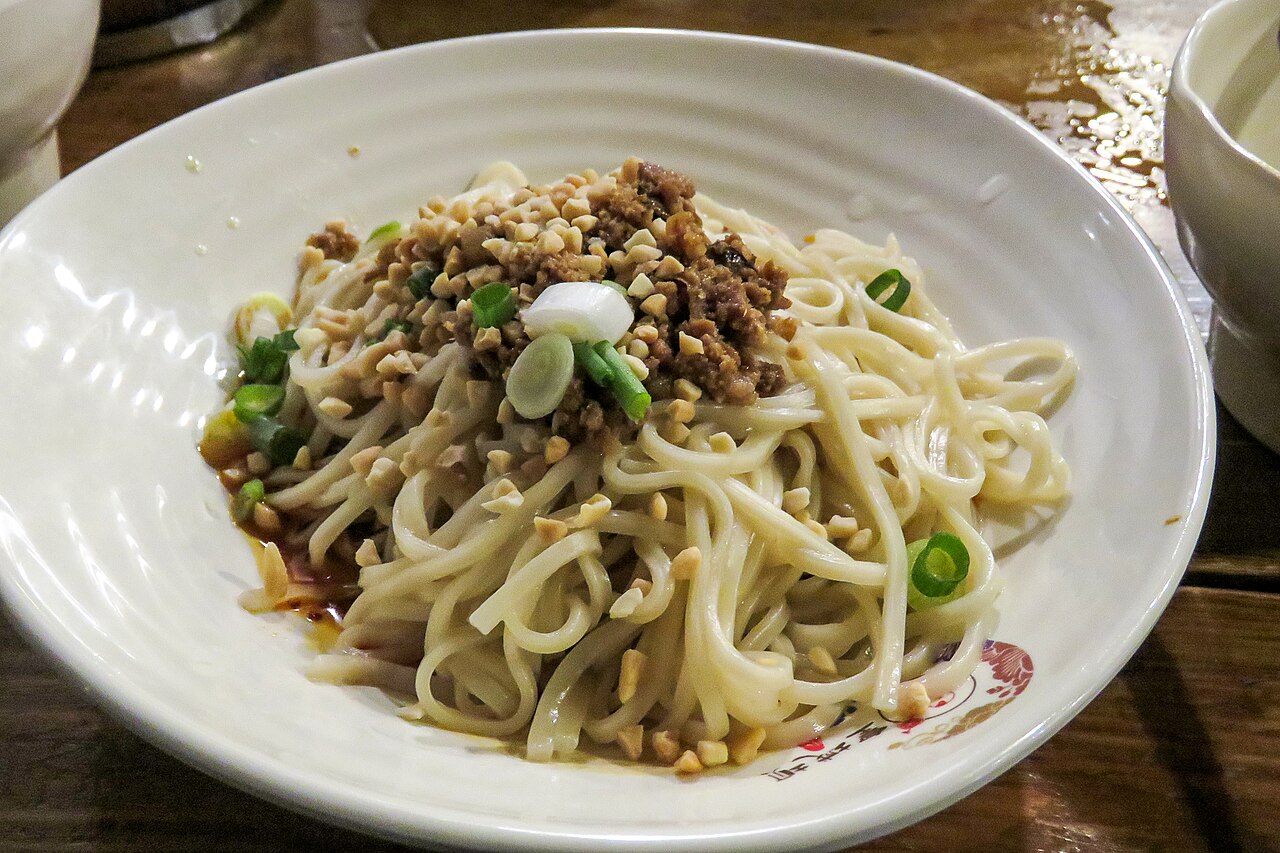
Chengdu dandan noodles — thin noodles tossed in a red chilli sauce topped with crushed peanuts and minced pork
Dandan Noodles (担担面)
Noodles in mala sauce · a street classic

Thin noodles tossed in chilli, sesame oil, crushed peanuts and minced pork. The name comes from the shoulder-pole carts ("dandan") that once sold them. Spicy, nutty and fragrant, it's a small bowl that makes a perfect snack between sights. Find it at street-food stalls and noodle shops across the city.

Price: ¥10–20 (~฿50–100) · try it in the street-food district →
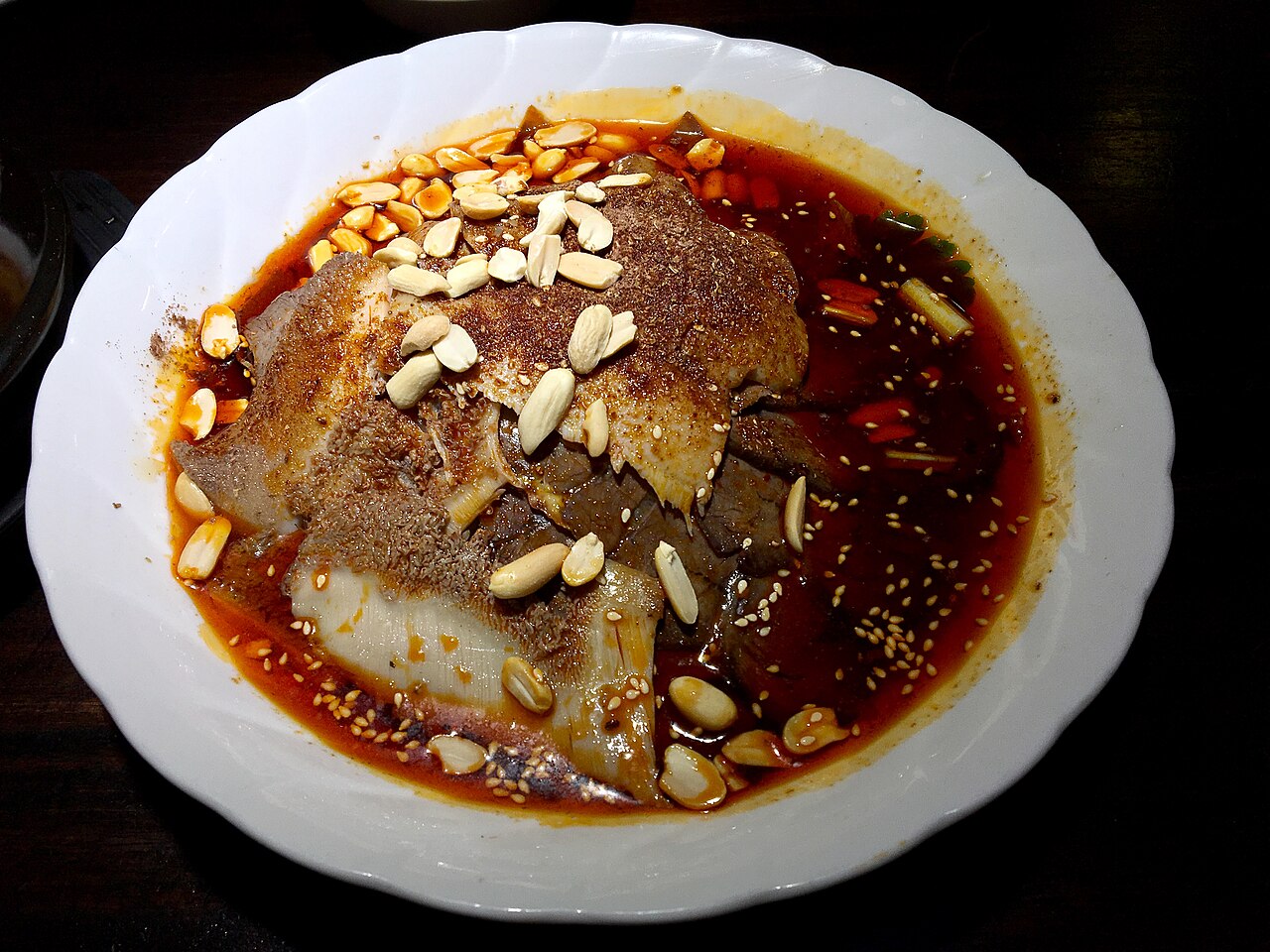
Chengdu fuqi feipian — thinly sliced beef and offal in a red chilli oil topped with peanuts and sesame
Fuqi Feipian (夫妻肺片)
Cold sliced beef in chilli oil · a famous starter

The name translates as "husband-and-wife slices." Thinly sliced beef and offal under a glossy red chilli oil, topped with peanuts and sesame, served cold — spicy, fragrant and faintly sour. It's a classic Chengdu starter; the name sounds alarming but it's a firm favourite for anyone who loves bold flavours.

Price: ¥25–50 (~฿125–250) · see the food guide here →

More Chengdu food: Sichuan local cuisine → · the street-food district → · tea house culture →

Setting a budget

How much will it cost?

Chengdu works for every budget and is noticeably cheaper than coastal cities like Shanghai — budget rooms are easy to find, the metro is very cheap, and hotpot and street food are great value. If you want to stay in one of the landmark luxury hotels, of course, the price climbs. See the full breakdown at the Chengdu trip budget →

Level Stay/night Food/day Total/day (rough)
Budget ¥120–280 (฿600–1,400) hostel or budget hotel ¥60–130 (฿300–650) ¥220–450 (~฿1,100–2,250)
Mid-range ¥350–700 (฿1,750–3,500) 3–4 star hotel ¥150–350 (฿750–1,750) ¥600–1,200 (~฿3,000–6,000)
Luxury ¥1,200–4,000+ (฿6,000–20,000+) ¥400–1,500+ (฿2,000–7,500+) ¥2,000–6,500+ (~฿10,000–32,500+)

Metro rides are ¥2–8, and most attractions cost ¥0–55 (the Panda Base is ~¥55). A day trip like the Leshan Giant Buddha adds train fare plus entry. See more at the China travel budget guide →

Good to know + culture

The Chengdu pace and what first-timers miss

Chengdu is not a city to tick off and rush from — locals say it's "the city you come to and don't want to leave." The pace is slow, the people are easy-going. Build in an afternoon to sip tea in a park, and you'll start to understand why people fall for this place.

Google / Facebook / LINE don't work
Set up before you leave home

China blocks all of Google's services (Maps, Gmail, Translate), Facebook, Instagram, LINE, YouTube and WhatsApp. Without a working VPN you'll be cut off from all of it. Download and set up a VPN on your phone before you leave, and grab Amap (maps) and Baidu Translate too. See the China VPN + eSIM guide →

App swaps: Amap for Google Maps · Apple Maps works · WeChat for LINE
Small places take mobile pay only
Credit cards aren't accepted everywhere

Street-food stalls, tea shops, small hotpot joints and carts usually take only Alipay or WeChat Pay — no card machine, even somewhere that looks modern. Set up the tourist version of Alipay (which links a foreign Visa or Mastercard), or carry some cash from an ATM as a backup; ¥500–1,000 should cover the small everyday spends.

See the guide: paying in China →
Go to the Panda Base early
Pandas feed and play in the morning

The number-one first-timer mistake is arriving at the Panda Base late in the day. Pandas eat and play in the morning (gates open 07:30) and tend to sleep through the afternoon up in the trees. Aim to be there before 09:00 to catch them awake and active — and to beat the big tour groups that roll in later.

Tip: book tickets ahead and ride the in-park shuttle to the cub nursery first
Carry destinations in Chinese
English signs are common, but taxi drivers can't read them

Metro stations and the airport have full English signage, but most taxi drivers can't read English place names. Save your destinations in Chinese characters on your phone, or use Amap / Baidu Maps and turn the screen to the driver — or hail a DiDi (ride-hailing) with the pin already dropped.

Examples: Panda Base = 熊猫基地 · Kuanzhai Alley = 宽窄巷子 · Jinli = 锦里
It's genuinely spicy — order a split pot
Mala is not ordinary heat

Sichuan heat comes with a numbing "ma" tingle from peppercorns that can catch the unaccustomed off guard. Most hotpot places offer a divided pot (鸳鸯锅) — half spicy, half a mild bone broth — so order it without hesitation, and keep some soy milk or yoghurt on hand to cool things down.

Golden Week & Chinese New Year — very crowded
Avoid if you can

During National Day Golden Week (1–7 October), the whole country travels at once — the Panda Base and major sights heave, and hotel and ticket prices double or triple. Over Chinese New Year (Jan/Feb) many places close and transport gets chaotic. See the detail at when to visit →

Sweet spots: March–June / September–November
Frequently asked

FAQ · before you go

How many days should I spend in Chengdu as a first-timer?
Three days covers the in-city highlights — Day 1 for an early panda visit and the old lanes of Kuanzhai, Day 2 for Wuhou Shrine, Jinli street and tea in People's Park, Day 3 for hotpot and shopping around Chunxi Road. With five days you have far more room to breathe and can add a day trip to the Leshan Giant Buddha or Mount Emei. See all the plans: 1 day · 3 days · 5 days
Do Thai nationals need a visa for Chengdu?
Under the mutual visa-exemption agreement between Thailand and China for ordinary passport holders, Thai travellers can stay up to 30 days per visit for tourism without applying in advance. The policy can change, so verify the latest with the Chinese embassy or the China visa-free guide for Thais → before booking your tickets.
Which airport do flights from Bangkok land at in Chengdu?
Chengdu has two airports. Most direct flights from Bangkok land at Tianfu International (TFU), the newer airport ~50 km southeast — take Metro Line 18 (express) to Chengdu South Railway Station in about 35 minutes. Shuangliu (CTU) is the older airport, closer in, mainly handling domestic flights. See the detail at the airport transfer guide →
Does Google Maps work in Chengdu?
Google Maps and all Google services, plus Facebook, LINE and Instagram, do not work in China without a VPN. Download Amap (高德地图) before you leave home, or use Apple Maps (which works in China). For VPNs and eSIMs, see the VPN + eSIM guide →
What is the best month to visit Chengdu?
Spring (March–June) and autumn (September–November) are the best seasons. Rapeseed fields bloom yellow in early spring. Chengdu is overcast almost year-round, and winters are damp and cool. Avoid Golden Week (1–7 October) and Chinese New Year, when crowds peak and prices surge. See the month-by-month detail at when to visit →
Is Chengdu safe for solo travellers?
Chengdu is one of the safest and most relaxed large cities in China. Crime rates are low, locals are friendly, the metro has English signs, and walking the main districts like Chunxi Road or Kuanzhai at night is not a concern. The main thing to watch for is the tea house scam in tourist areas (a stranger invites you to taste tea, then a large bill arrives) — politely decline and walk on if it happens.
Still deciding between Chengdu and Chongqing? The two cities are only ~1.5 hours apart by high-speed train, and many people do both in one trip. Read the comparison at Chengdu vs Chongqing → · or start with the big picture at the first time in China guide →
Klook · Chengdu activities

Book Chengdu tickets and tours ahead — skip the queue at the gate

Panda Base tickets · Leshan Giant Buddha and Mount Emei tours · Sichuan opera face-changing shows · high-speed rail tickets — book ahead on Klook and save time queuing.

See Chengdu activities on Klook →
Wherebest is a Klook affiliate partner — we may earn a commission when you book through our links, at no extra cost to you.