11 things to eat before you leave Chengdu
Ranked by how unmistakably Chengdu they are — dishes the city does better than anywhere, because this is where they began.
 1
1
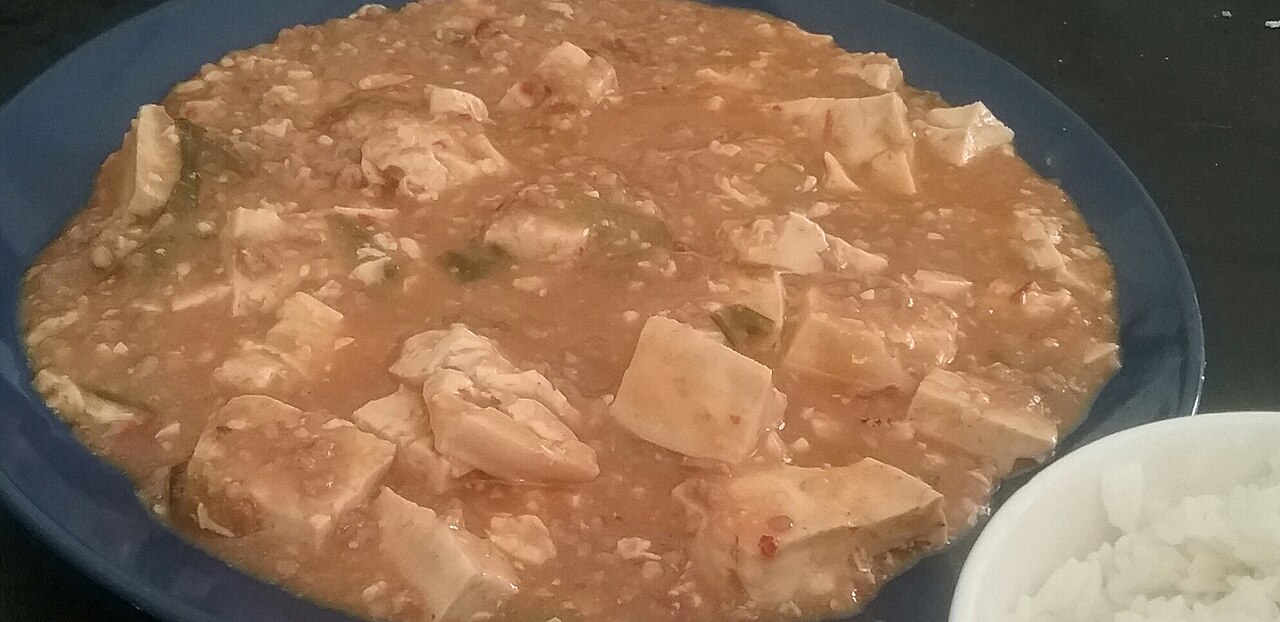
Born in Chengdu in 1862, supposedly by an elderly woman the neighbourhood called "Pockmarked Granny Chen." Soft tofu sits in a deep-red sauce of Pixian chili-bean paste and minced pork or beef, finished with a snow of ground Sichuan peppercorn that sets your tongue buzzing. Locals say the real version has to hit eight notes at once — numbing, spicy, hot, tender, crisp, fragrant, fresh and smooth. The original Chen Mapo Tofu shop is still open today.
 2
2
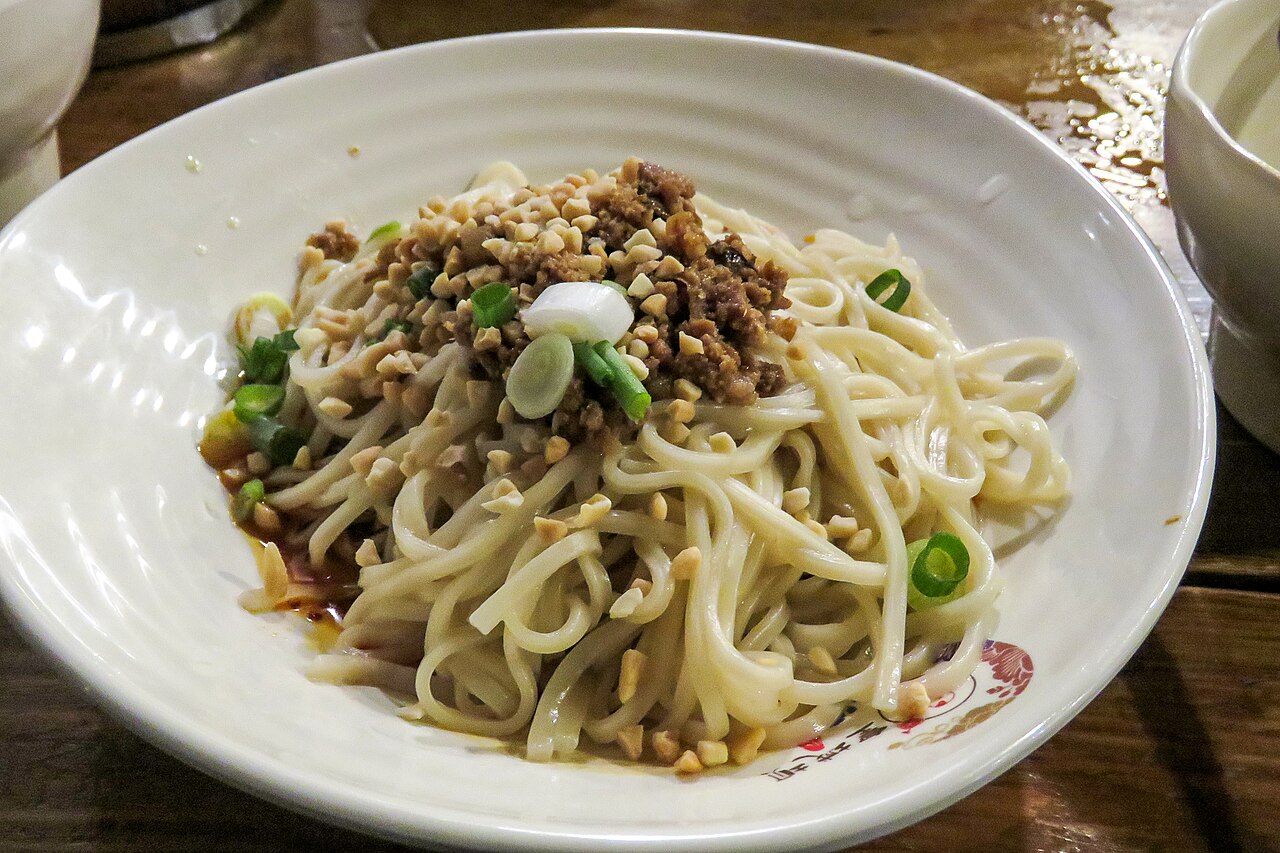
Here's the thing: real Chengdu dan dan noodles have no soup. They come dry, in a small bowl, and you toss them yourself. Hidden at the bottom is a concentrated sauce of Sichuan peppercorn, sesame and chili oil, crowned with dry-fried minced pork and yacai (preserved mustard greens from Yibin). Stir until every strand is coated and you'll understand why a tiny ¥10 bowl keeps people coming back every morning. The name comes from the carrying pole — the dàn — that old street vendors used to balance their noodle pots through the lanes.
If you're shy about heat, this dish is your friend. Diced chicken is stir-fried with dried chilies, Sichuan peppercorn and roasted peanuts in what Sichuan cooks call "lychee flavour" (荔枝味) — sweet and sour first, with a gentle numbing warmth behind it. Legend ties the name to Ding Baozhen, a late-Qing governor of Sichuan whose private chef created it. The Chengdu original skips the heap of vegetables you'll find in overseas versions — it's just chicken, chilies, peanuts and scallion.
 4
4
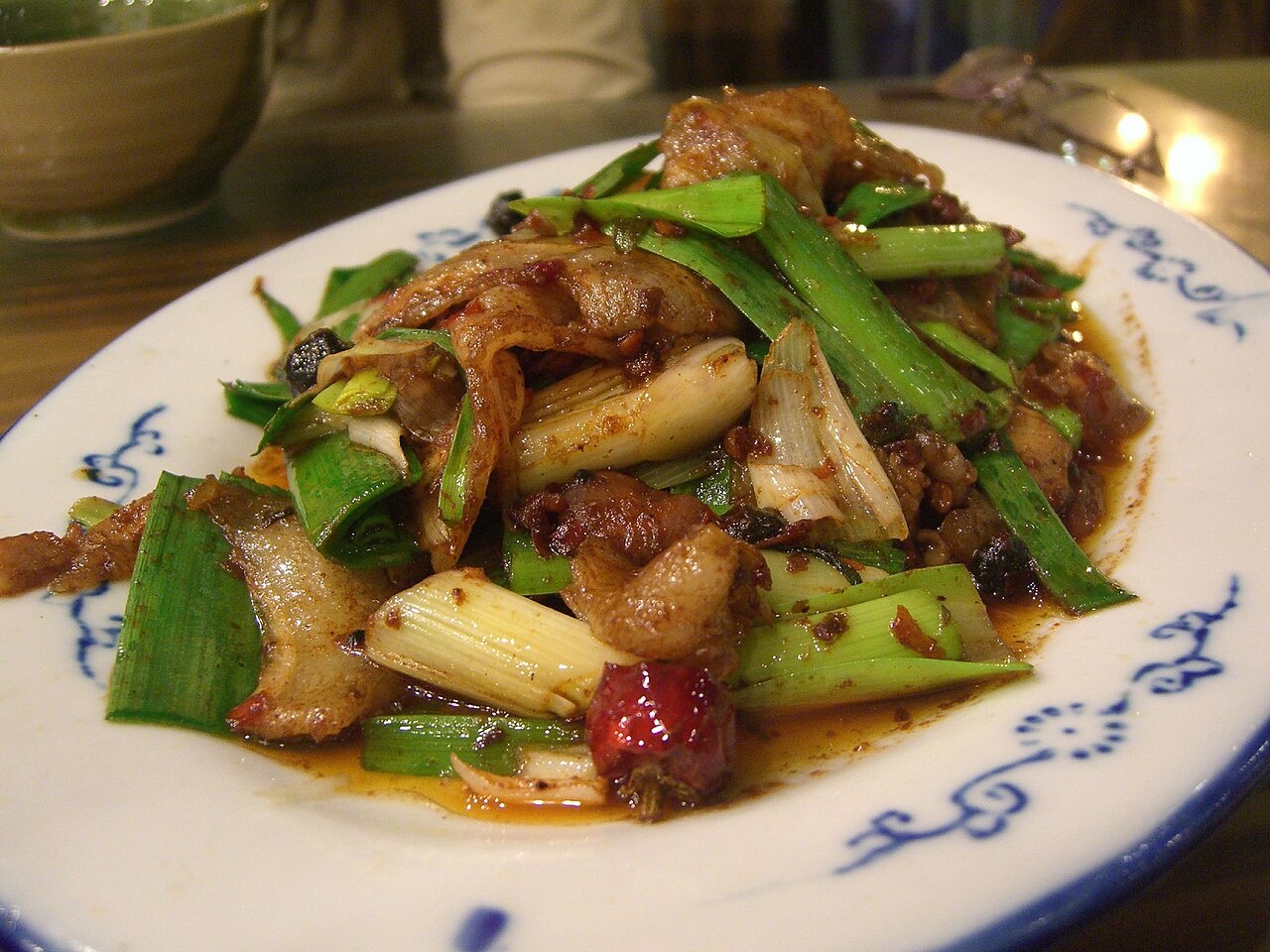
The name means "meat that goes back into the wok." A whole piece of pork belly is simmered until cooked, sliced thin, then returned to a screaming-hot wok where the edges curl into little cups. It's tossed with Pixian chili-bean paste (郫县豆瓣) and green garlic until the fat glistens and the sauce turns fragrant and deep. Sichuan cooks crown it the king of their cuisine — and over a bowl of hot rice, it's the most homely pleasure in Chengdu.
The most misleading name on a Sichuan menu — "fish fragrant" (鱼香) comes not from fish but from the seasoning Sichuan cooks traditionally used for fish: pickled chilies (泡辣椒), ginger, garlic, sugar and vinegar. Shredded pork is flash-fried with wood-ear mushroom and bamboo shoot, landing sour, sweet, spicy and savoury all in one mouthful. It's a weeknight staple in Sichuan homes, and another dish that's easy on spice-shy palates.
For when you want to push your limits — a bubbling red pot loaded with jelly-soft duck blood, beef tripe, intestine and chicken gizzard, all afloat in chili oil and Sichuan peppercorn. The magic is in the contrast of textures in one bowl: the blood slips, the tripe is crunchy, the gizzard is chewy. It started in neighbouring Chongqing but it's beloved in Chengdu too. Seriously spicy and seriously rich — pace yourself.
 7
7
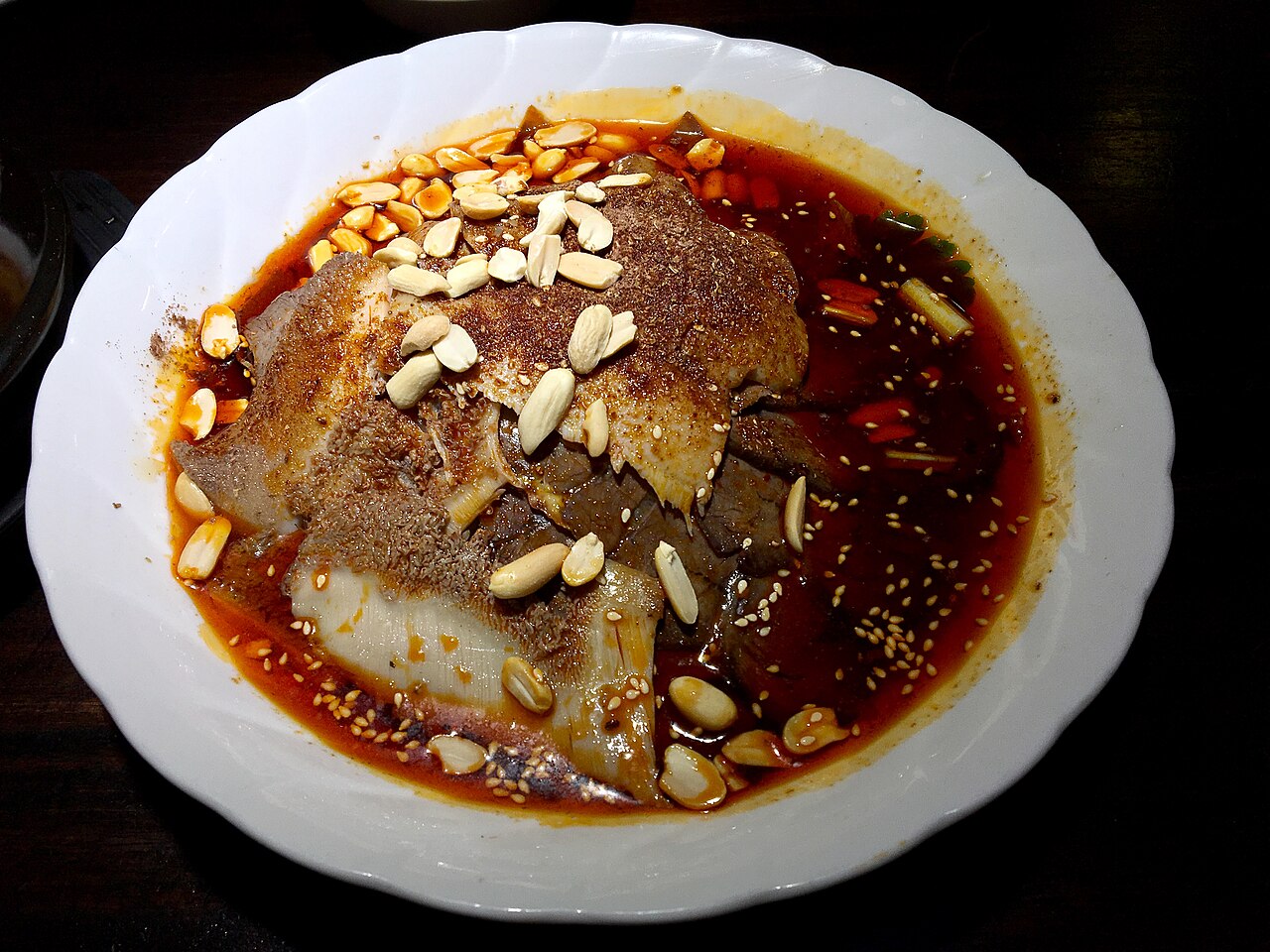
The name translates, oddly, to "husband-and-wife lung slices" — it comes from a real 1930s Chengdu couple, Guo Zhaohua and Zhang Tianzheng, who got famous selling cold beef slices on the street. Beef and offal (tongue, tripe, heart) are braised, sliced wafer-thin, then bathed in fragrant chili oil and soy and showered with crushed peanuts and toasted sesame. Served cold as an appetiser, it's numbing, fragrant and rich. The word "offal" scares people off — until they taste it and order a second plate.
Half-moon boiled dumplings named after Mr Zhong, who created the recipe in 1893. His twist was an all-pork filling with no vegetables — unusual at the time — dressed in a special sweetened soy sauce, fragrant chili oil and minced garlic. The result is sweet, spicy and garlicky in one bite, and not fiercely hot, so they suit just about everyone, kids included. Zhong dumplings are one of Chengdu's "three famous snacks" alongside long chao shou and lai tangyuan, and a recognised Sichuan intangible cultural heritage.
In Sichuan, wontons are called chao shou (抄手), and "long" means dragon. Thin-skinned wontons wrap a soft pork filling and float in a red málà broth — or a clear soup, your choice. The original Long Chao Shou shop has been going since 1941, moved to Chunxi Road in the 1960s, and is still the legendary stop tourists seek out. Order them in clear soup (清汤) if you're not in the mood for heat, or red oil (红油) if you are. Another of the city's famous snacks.
"Sweet water noodles" actually have no broth at all. They're thick, chopstick-width strands — locals call them gungunmian (棍棍面) — chewy like udon, tossed with a soy sauce cooked down with brown sugar and spices until syrupy, plus fragrant chili oil and ground sesame. Sweet first, then a slow chili buzz and a nutty finish. It's a genuine Chengdu snack you'll rarely find outside the province — those bouncy, sauce-slicked noodles are worth seeking out once.
 11
11
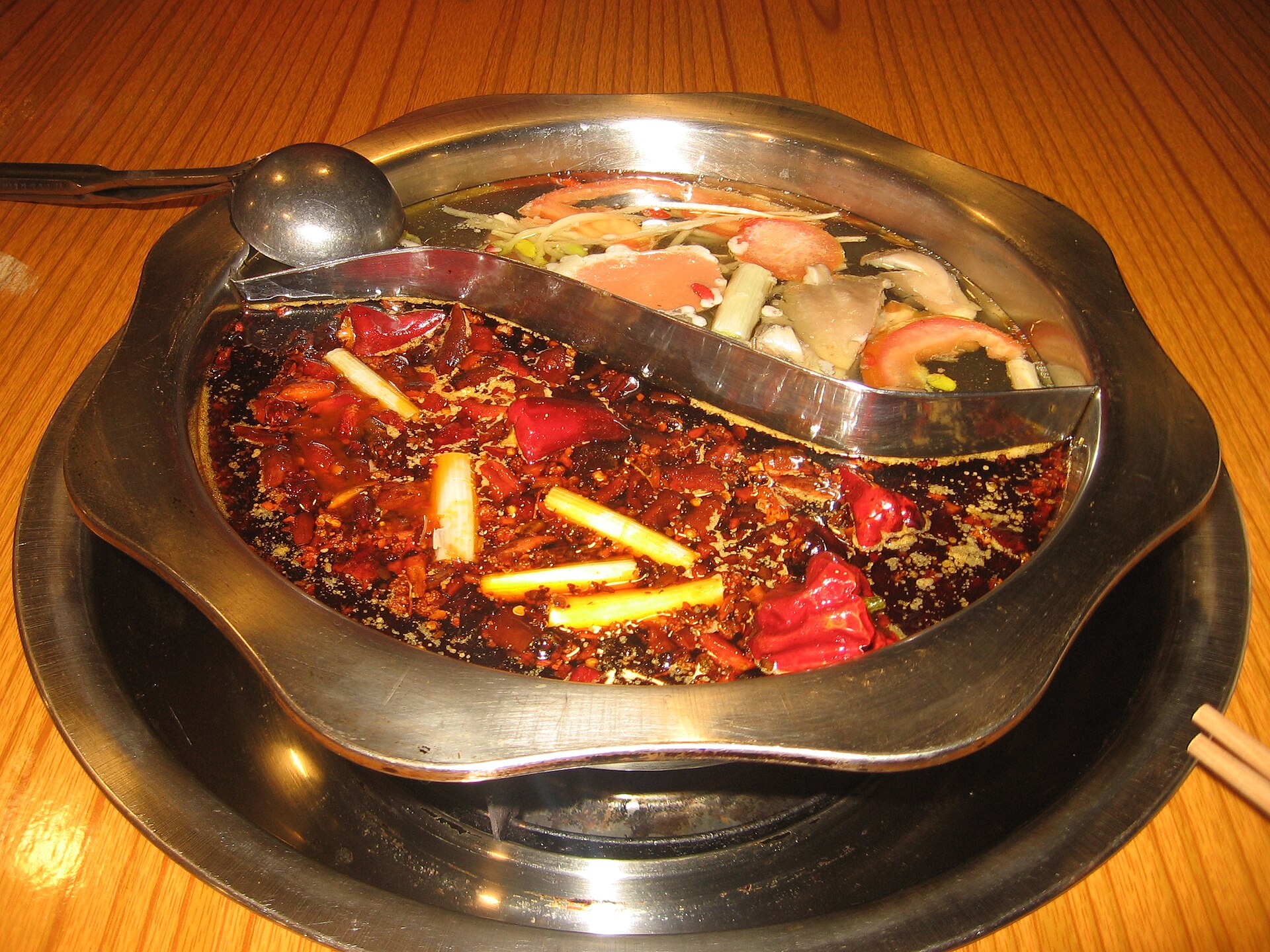
Picture a Sichuan hotpot, except everything arrives pre-threaded onto skewers — meat, vegetables, mushrooms, tofu, meatballs — which you dunk into the bubbling red málà pot yourself. When you're done they tally the bill by counting your sticks. Chuan chuan was born in Chengdu in the mid-1980s from street vendors, and it's now the city's way of eating late: gathered around a table, dipping skewers, talking for hours. For the full Sichuan hotpot experience, read our dedicated hotpot guide.