Chengdu's centre is more compact than Shanghai or Beijing, but the wrong area can still cost you an hour of travel a day. Here is how to choose your base — honestly, area by area.
It happens all the time: you book a great-value hotel, then discover that reaching the shopping lanes or the Panda Base means two metro changes and a walk on top. On a three-day trip, that quietly eats into every morning and evening. The good news is that Chengdu has a genuinely compact core — Chunxi Road, Tianfu Square and Kuanzhai Alley sit within a few metro stops of one another.
We've split the city into five main neighbourhoods, each with its own character — price, atmosphere and what's within easy reach all differ. Chengdu has one big advantage over Beijing and Shanghai: hotels are noticeably cheaper. Good 3- and 4-star chains in central locations start at just a few hundred yuan a night.
If you want the short answer on where to sleep, read on. For the wider picture of the city first, open the Chengdu city guide alongside this.
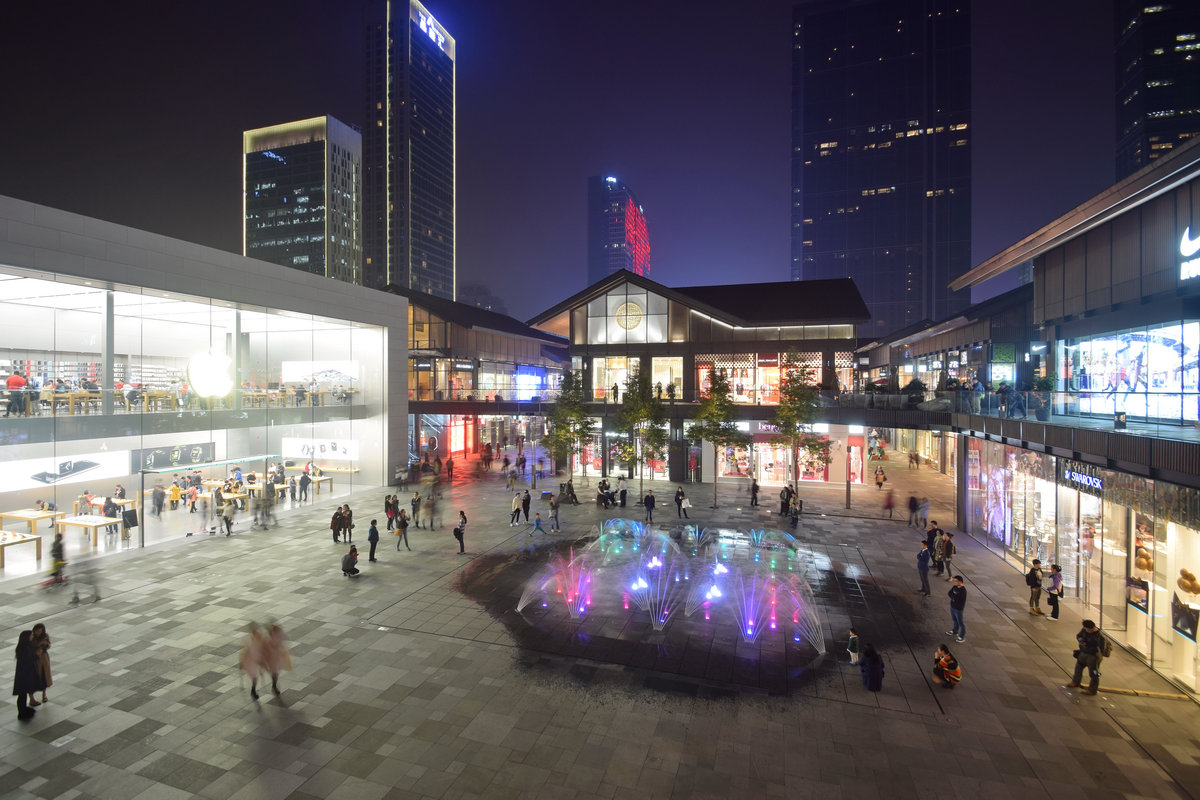
For most people visiting Chengdu for the first time, this is the most practical base by a clear margin. Chunxi Road station is an interchange for metro Lines 2 and 3, so you reach every part of the city without juggling complicated changes. Take Exit C and you're a three-minute walk from Taikoo Li, the open-air shopping district built around the historic Daci Temple, with the IFS mall (and its famous giant panda climbing the wall) right beside it. Hotpot restaurants and street food are close by. Hotel prices run an unusually wide range here, from around ¥120 a night (roughly ฿600) up to suites on top of the IFS tower. On your first morning, that convenience counts.
A strong pick for this area: Atour Hotel Chunxi Road Taikoo Li — a warm, design-led 4-star with a lobby library, walking distance from Taikoo Li and good value for the location. For the high end, Niccolo Chengdu sits at the top of the IFS tower with full city views.
See all Chengdu hotels →Honest vibe, nearest metro, and real reviewed hotels in each (prices ¥1 ≈ ฿5).
Area 1
Right for: Anyone who wants one base for the whole city, with shopping and food on the doorstep. Taikoo Li and Chunxi Road form Chengdu's biggest retail district, and the IFS tower with its wall-climbing panda is the city's signature photo spot. Evenings here are the liveliest in town and hotels are dense at every price level. The honest trade-off: it's busy and crowded — if you want quiet, look at another area.
Area 2
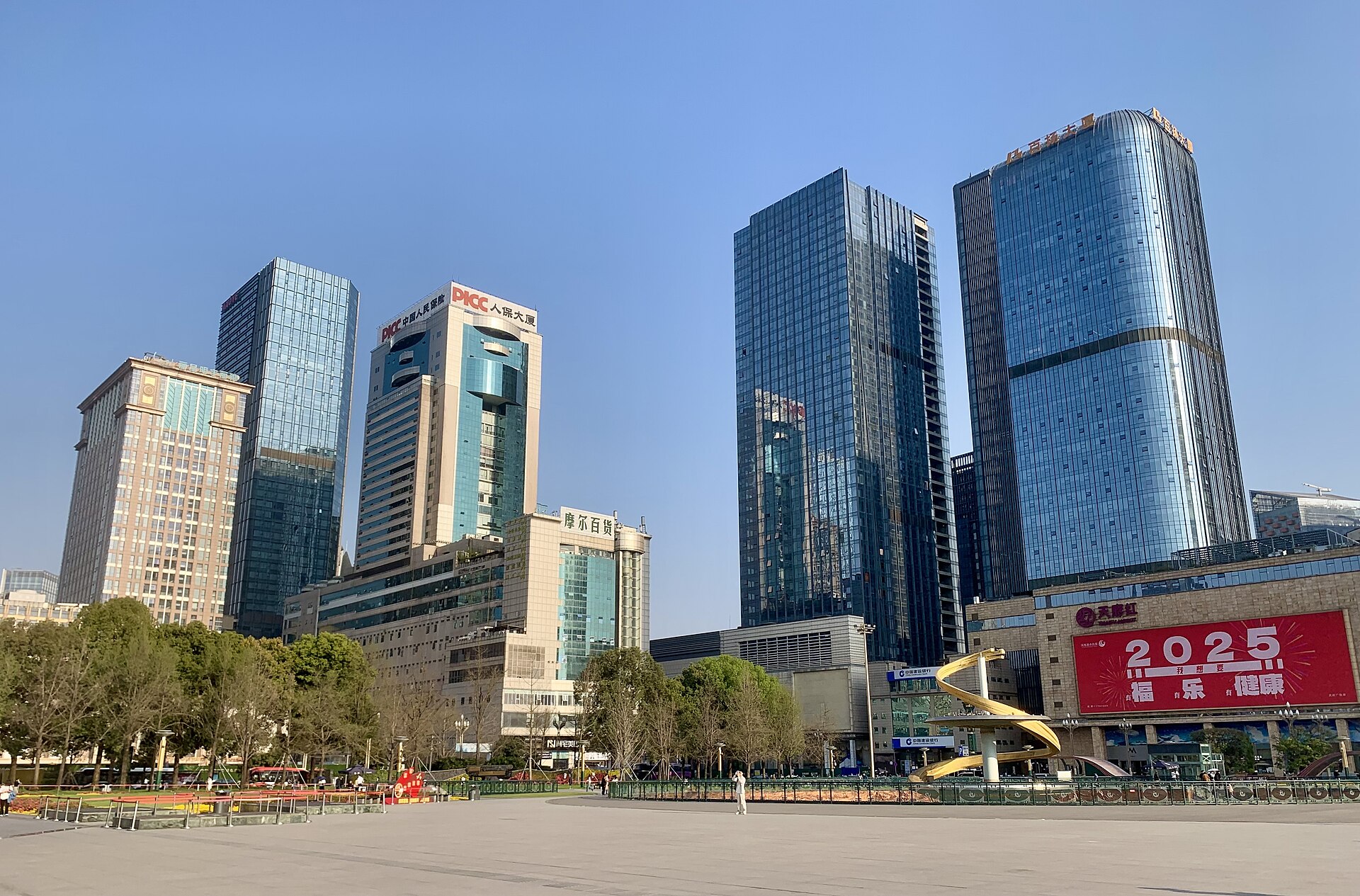
Right for: Travellers who want to be at the exact centre of the city. Tianfu Square is Chengdu's textbook midpoint — the interchange of metro Lines 1 and 2, with the Sichuan Museum and the science museum around the plaza. Chunxi Road is a 15-minute walk or one to two metro stops away. It suits anyone who wants a base that's equidistant from everything. The mood is a touch more formal and civic than the shopping side.
Area 3
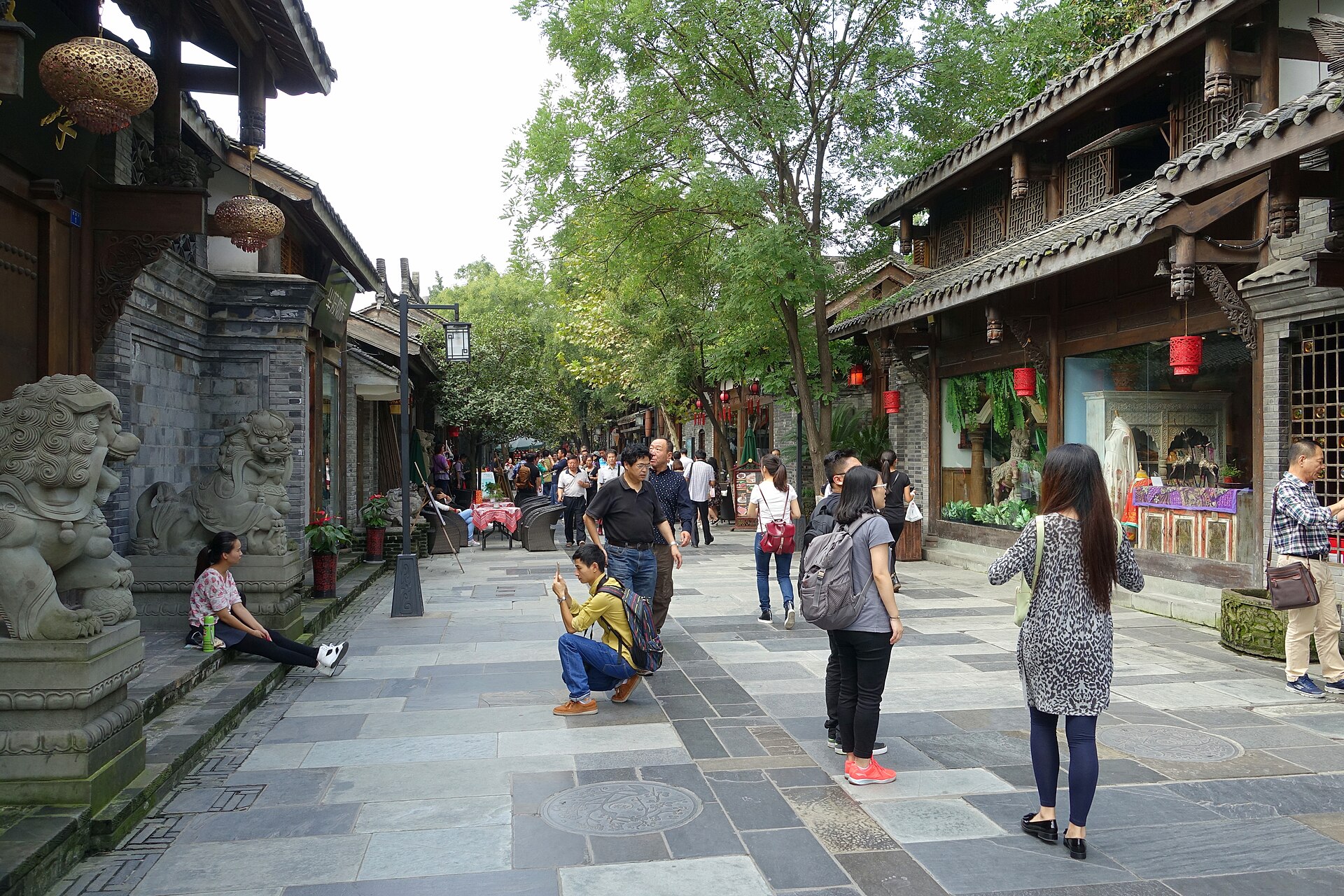
Right for: Anyone who values the slower side of Chengdu over pure convenience. Kuanzhai Alley is a restored cluster of grey-brick Qing-dynasty courtyard lanes with traditional Sichuan teahouses, and nearby People's Park is where locals spend whole afternoons sipping tea, playing mahjong and getting their ears cleaned. Evenings are calmer and friendlier than Chunxi Road. The trade-off: fewer hotels to choose from, and shops close earlier.
Area 4
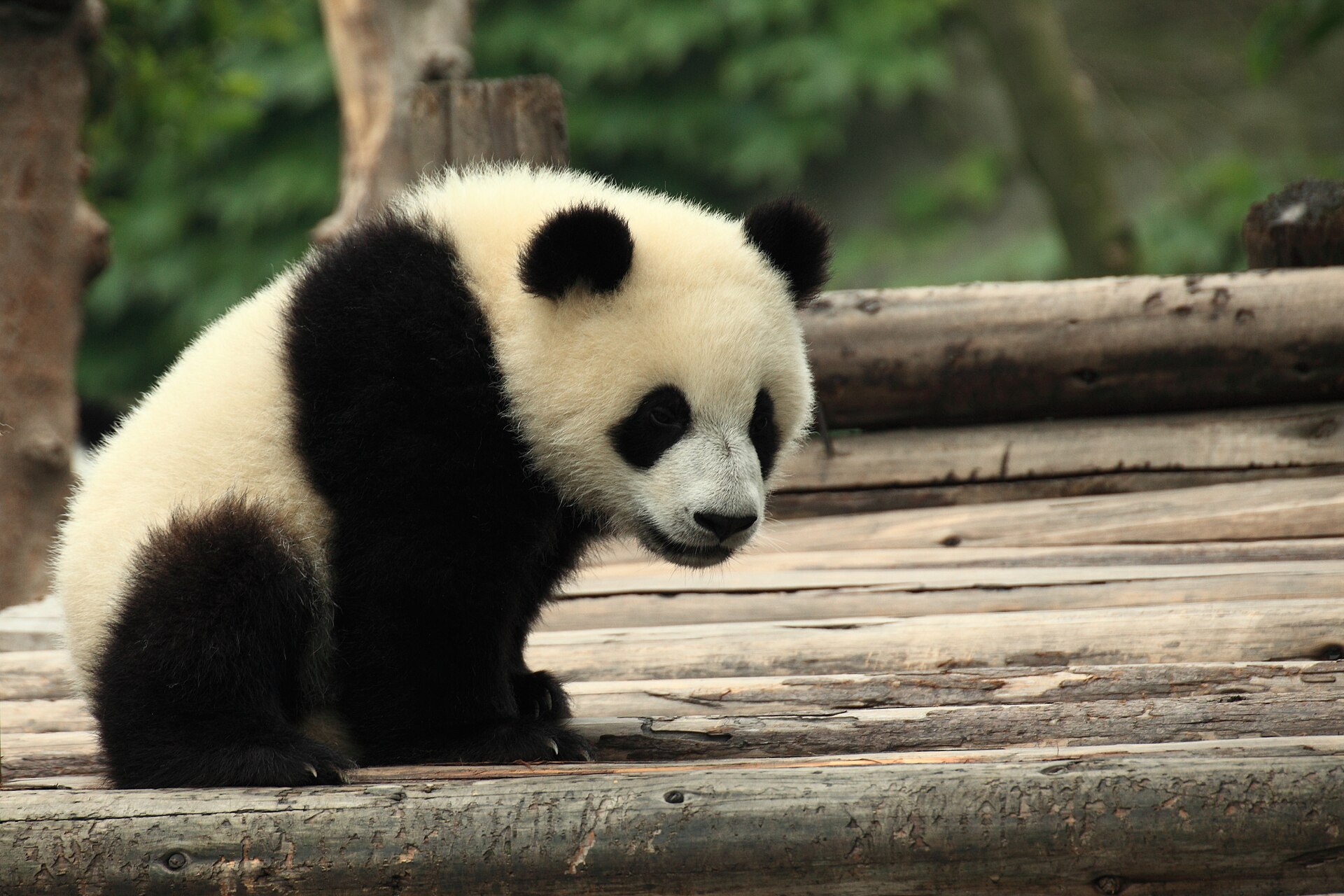
Right for: Visitors for whom the pandas are the number-one priority. The breeding base is north of the city and the pandas are most active between roughly 8 and 10 am, so staying nearby means being at the gate when it opens — no pre-dawn taxi across town. The honest downside: the area is far from the city's other sights and central restaurants. Most people stay central and take a taxi or Didi out for a single early morning, which works fine. This area only pays off if you want a full, unhurried panda morning.
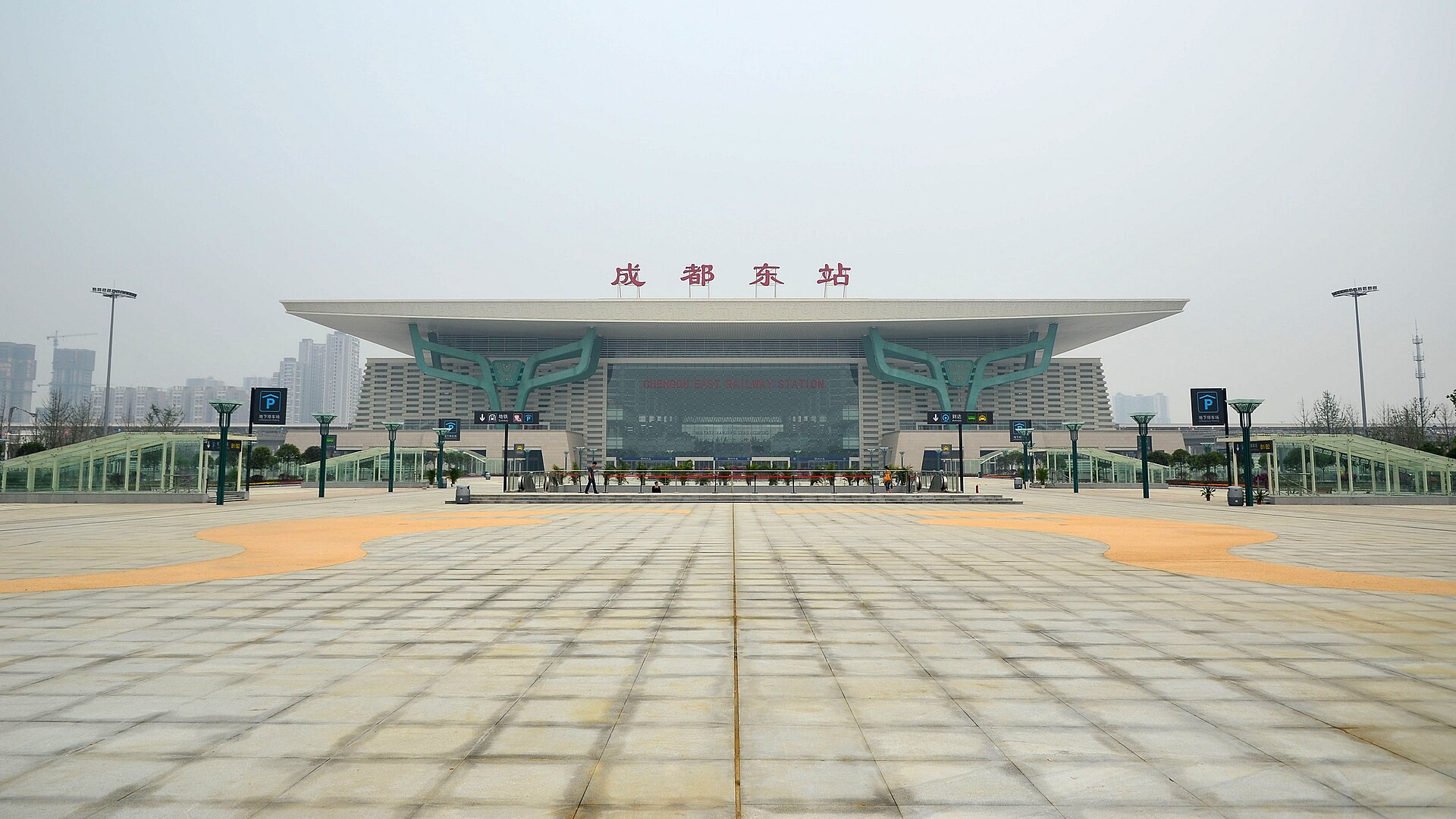
Area 5
Right for: Travellers planning a high-speed train to Chongqing, Leshan, Mount Emei or Xi'an during the trip. Chengdu East is the main HSR hub, so staying nearby means rolling your suitcase straight onto an early train — handy too if you're moving on to another city on your last day. Metro Line 2 reaches Tianfu Square in about 15 minutes, and the circular Line 7 connects the wider city. The downside: this is not a tourist neighbourhood and there's little to do in the evenings. Treat it as a transit base, not a sightseeing one.
Chengdu is genuinely good value for accommodation — solid 3-star chains like JI Hotel and Orange Hotel in central spots start around ¥110–160 per night (฿550–800), while design-led 4-stars such as Atour, Mercure and Manxin sit around ¥160–350 (฿800–1,750). The full shortlist across every budget is at Top 10 Hotels in Chengdu.
If you simply want the best without overthinking it, Chengdu has several landmark 5-star options — the Top 6 Luxury Hotels in Chengdu gathers Niccolo, the Ritz-Carlton, the St. Regis and the Upper House (formerly The Temple House, in Taikoo Li) in one place.
Chengdu is the capital of Sichuan cooking — a great hotel is wasted if you eat at the wrong place. The Chengdu Food Guide explains each dish and where to find it, the Sichuan Hotpot guide covers the fiery chilli-oil broth, and Teahouse Culture is, honestly, the heart of this city.