Pandas at their liveliest in the early morning, the old courtyards of Kuanzhai Alley, tea in the park the way the locals take it, and a bubbling mala hotpot to finish — forty-eight hours is enough to feel the best of this easy-going city.
Chengdu is a city that famously refuses to be rushed. People here are known for taking life slowly — sipping tea all afternoon, playing mahjong under the trees — and the city rewards visitors who give it time far more than those chasing ten sights in a day. But if you only have two days, on a short weekend or a stopover en route to Chongqing, this plan picks out the Chengdu that everyone talks about without speeding past the rhythm that makes it special.
The heart of these two days is pandas in the morning and a slow afternoon on Day 1, then Three Kingdoms history and Sichuan flavour on Day 2. Every stop is on the metro — Chengdu has more than fifteen lines, clean, cheap, with bilingual signage. What this plan deliberately leaves out is the out-of-city day trips: the Leshan Giant Buddha and Mount Qingcheng / Dujiangyan each need a full day. If you want those, see the 3-day plan, or the 1-day plan if you have just one day.
The single most useful thing to do before you arrive: book a hotel around Chunxi Road or Taikoo Li — it sits central, with Metro Lines 2 and 3 crossing here, which puts every stop in this plan within easy reach. See the where-to-stay guide for options at every budget.
The Panda Base when the animals are at their most active, the old lanes of Kuanzhai Alley, tea in People's Park the way locals take it, and Chunxi Road with Taikoo Li after dark.
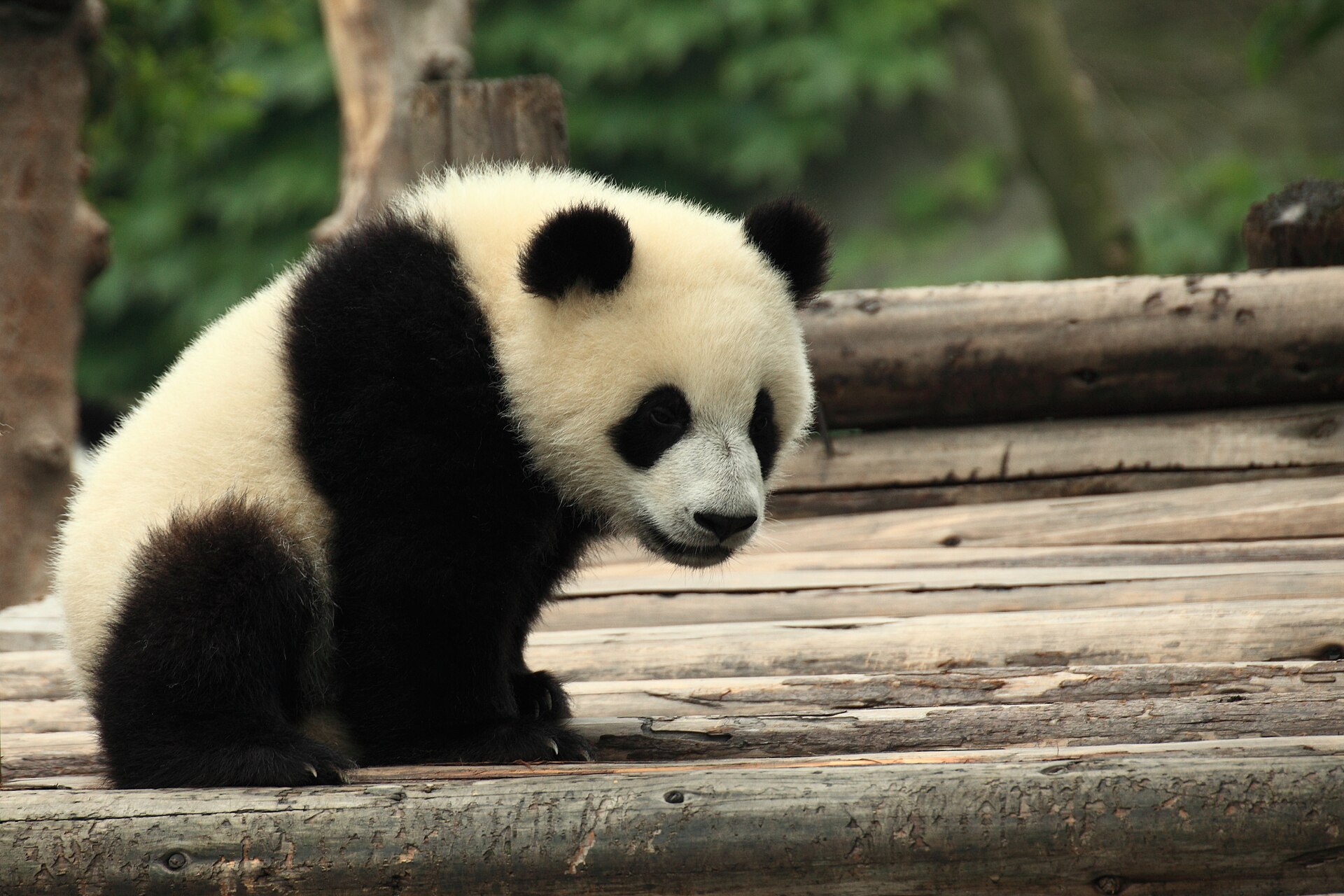
Set the alarm — this is the one stop in the plan worth getting up early for. The aim is to reach the gate before it opens at 7:30 am (8:00 am from November to February), because the pandas eat bamboo and are at their most active between 8 and 10 am. After that they find a spot to flop and sleep, and the big tour groups fill the enclosures. Arrive late and you will mostly see distant black-and-white lumps dozing in the trees.
Start at the Sunshine Nursery and Moonlight Nursery first — that is where the youngest cubs are, and the most charming. Then work your way out to the adult enclosures and the red pandas. The base is large and leafy, more forest park than zoo, with a shuttle buggy if you don't feel like walking it all. Allow a comfortable 2.5 to 3 hours. Read the full visit details in the Chengdu Panda Base guide.
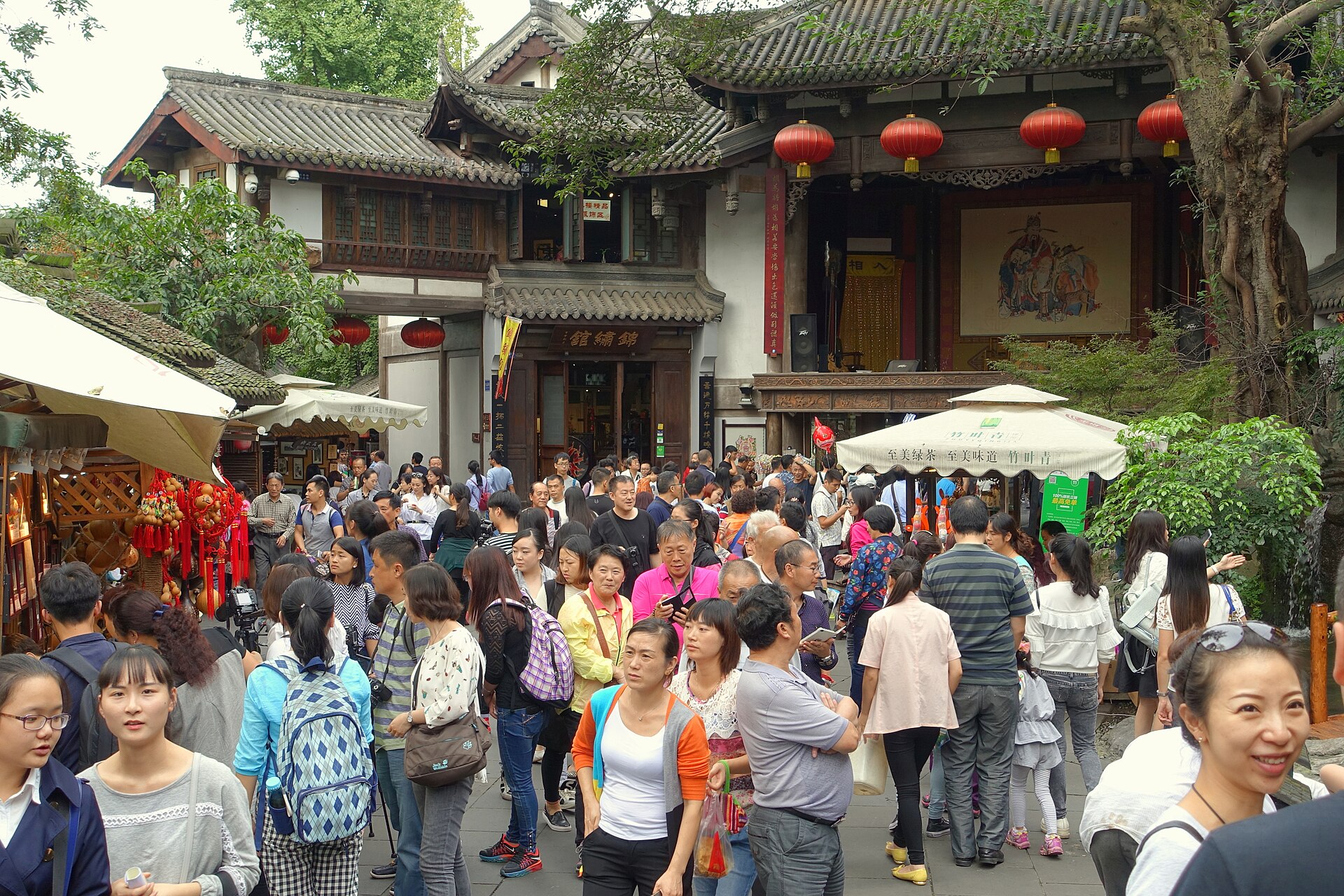
Take the metro back into the city and have lunch around Kuanzhai Alley — three parallel Qing-dynasty lanes (Wide Alley, Narrow Alley and Well Alley) of restored old courtyard houses, now full of teahouses, snack stalls, cafés and souvenir shops. Wander slowly and try Chengdu street food as you go: san da pao (三大炮), sticky-rice balls thrown to make a drum-roll thump and then rolled in soybean powder, and garlic-sauce cold pork (蒜泥白肉). Entry is free; you only pay for what you eat and buy.
From Kuanzhai Alley it is about a 15-minute walk (or one stop on Metro Line 2) to People's Park (Renmin Park) — and this is the slow Chengdu pace you came to feel. At the centre is the Heming Teahouse (鹤鸣茶社), open since the early twentieth century: a thousand bamboo chairs under big shade trees beside a lily pond, where locals sit and drink tea all afternoon, play cards and talk. Order a cup of Zhuyeqing green tea or jasmine (¥20–50) and they bring a thermos of hot water so you can keep refilling. Then try the local speciality — an ear cleaning (掏耳朵) for ¥30, where a skilled hand gently cleans your ears with fine tools while you sip.
Take Metro Line 2 to Chunxi Road — Chengdu's busiest pedestrian shopping street, all neon signs, department stores and crowds in the evening. A short walk on is Taikoo Li, a low-rise open-air shopping district of contemporary architecture wrapped around Daci Temple, an ancient monastery where the monk Xuanzang is said to have studied. Glass storefronts reflecting the old temple roofs make a striking photo once the lights come on.
Dinner here covers every price point, from mall restaurants to old Sichuan places tucked down side streets. If you want to save the hotpot for tomorrow, try single Sichuan dishes tonight instead: gong bao chicken with dried chillies, mapo tofu, dry-fried green beans, for ¥60–150 per person. See recommended dishes in the Chengdu food guide.
A shrine to Zhuge Liang and the Three Kingdoms heroes, the lantern-lit lanes of Jinli, Tianfu Square or a museum, and a mala hotpot or chuan chuan dinner to close the trip.
A later start works today. Take Metro Line 3 or 5 to Gaoshengqiao and walk to Wuhou Shrine, a memorial dedicated to Zhuge Liang and the heroes of the Three Kingdoms period, including the tomb of the emperor Liu Bei. Anyone who loves the Three Kingdoms story can spend a happy couple of hours here among the red-walled gardens, statues of generals and ancient stone steles. Allow 1.5 to 2 hours.
The bonus is that Jinli Ancient Street sits right next door, separated only by a wall — walk out the side gate and you are there. Jinli is a pedestrian street of restored Sichuan-style timber houses hung with red lanterns, with Sichuan street food lined up the whole way: fried stinky tofu, Sichuan sausage, sweet liang gao jelly, potato-flour meatballs. It makes a perfect graze-as-you-go lunch. Jinli is at its most atmospheric in the evening when the lanterns are lit, but daytime is quieter and easier to walk.
Take Metro Line 3 to Tianfu Square — the geographic centre of Chengdu, a broad open plaza with a giant statue of Chairman Mao, fountains, and the open feel of a big-city heart. The square is ringed by the city's major museums — pick one according to your interests.
The Sichuan Museum and the Chengdu Museum are both near Tianfu Square and both free (with an online timed booking; closed Mondays), telling the history of the Sichuan basin, its bronzes and local culture very well. For something far older, the Jinsha Site Museum — where the 3,000-year-old Golden Sun Bird gold foil was excavated — sits to the west (Line 7 to Jinsha Site Museum) and is worth the detour if you have time and an interest in ancient civilisations.
Come to Chengdu and skip the Sichuan hotpot (火锅) and you have missed the point — this is the home city of mala hotpot. A red broth bubbles with dried chillies and the Sichuan peppercorns that make your tongue tingle (麻 ma) alongside the heat (辣 la). Every restaurant offers a split pot (鸳鸯锅), so you can pair a mild clear broth with the mala side. If your spice tolerance is low, ask for 微辣 (wei la, mild), and dip your food in sesame sauce (麻酱) to take the edge off. For something more relaxed, try chuan chuan (串串香) — meat, vegetables and meatballs on skewers that you dip yourself, billed by the stick. Read how to eat it and which places to choose in the Chengdu hotpot guide.
For some local entertainment to finish, the face-changing show (变脸 bian lian) of Sichuan opera is an art where performers switch masks in the blink of an eye with no visible move. Several theatres in town stage it (such as Shufeng Yayun near the culture park). Book ahead on Klook for around ¥150–300 per person.
For this plan, Chunxi Road or Taikoo Li is the most practical base — central, with Metro Lines 2 and 3 crossing here, reaching the Panda Base, Kuanzhai Alley and Wuhou Shrine. Restaurants and shopping at your door. Mid-range hotels run ¥300–500 per night. See the full neighbourhood guide or browse the top-rated hotels.
The metro covers every stop in this plan — Line 3 for the pandas and Wuhou Shrine, Line 4 for Kuanzhai Alley, Line 2 for Chunxi Road, Line 1 for Tianfu Square. Fares ¥2–8 per trip, paid by scanning Alipay or WeChat Pay QR at the gate. All station signs are bilingual. See the Chengdu metro guide for setup tips.
Set up Alipay (international version, linked to a foreign Visa or Mastercard) before you leave home. Most Chengdu shops and restaurants accept Alipay or WeChat Pay only — some do not take cash at all. See the Alipay & WeChat Pay setup guide for step-by-step instructions.
| Category | Budget | Mid-range | Comfortable |
|---|---|---|---|
| Hotel (1 night) | ¥100–180 (hostel / guesthouse) |
¥300–500 (3–4 star) |
¥600–1,500+ (4–5 star) |
| Food (3 meals/day) | ¥70–110 (street food & canteens) |
¥120–250 (incl. one hotpot dinner) |
¥300–550 (restaurants + cafés) |
| Metro (both days) | ¥20–30 | ¥30–50 | ¥50–100 (+ occasional taxi) |
| Admission (full 2-day trip) | ¥105 (Panda Base + Wuhou only) |
¥105–255 (+ face-changing show ¥150) |
¥255–405 (+ show + extra tour) |
| Total for 2 days (est.) | ¥505–745 (~$70–104 USD) |
¥1,065–1,805 (~$148–250 USD) |
¥2,360–4,855+ (~$327–672+ USD) |
Exchange rate used: ¥1 ≈ $0.139 USD · Hotel cost counted as 1 night · Prices are estimates and vary by season · Kuanzhai Alley, People's Park, Jinli, Tianfu Square and the museums are all free.