Out in the morning, back for dinner
Ordered by the highlights most travellers go for — the first three have full deep-dive guides.
 1
1
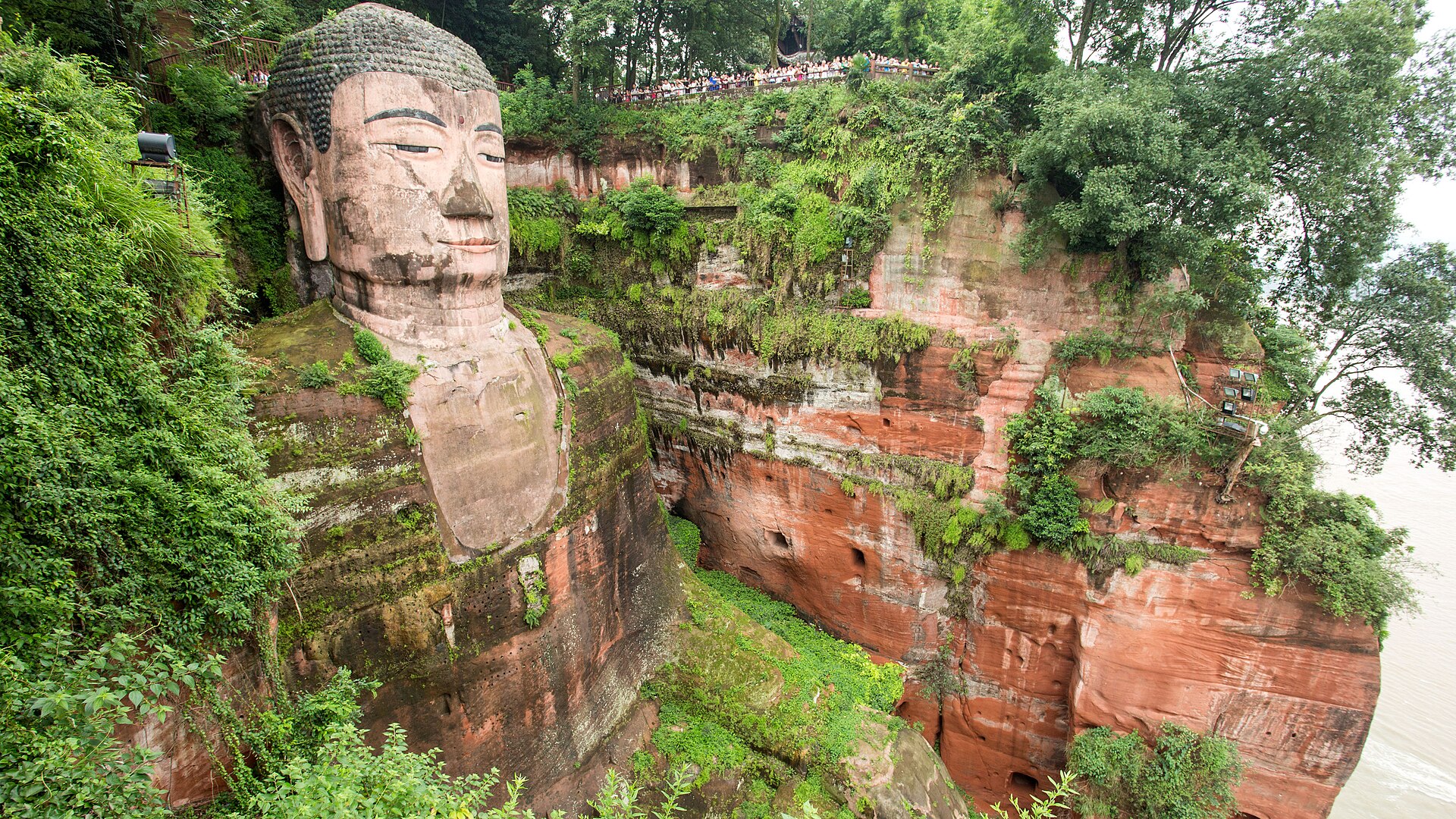
Picture a single Buddha as tall as a 23-storey building, carved out of an entire red sandstone cliff, its toes resting at the confluence of three rivers. That is the Leshan Giant Buddha — the largest stone Buddha in the world. Work began in 713 AD during the Tang dynasty and took some 90 years to complete. The head alone is as tall as the cliff face; the ears are seven metres long; a single toenail is big enough for several people to sit on. It is a UNESCO World Heritage Site, inscribed jointly with neighbouring Mount Emei.
There are two ways to see it. The first is to walk the cliff-side staircase (九曲栈道) down to the Buddha's feet and look up at the full height — overwhelming in person, though the queue can be long on holidays. The second is to take a boat on the river, which gives you the whole figure in one view with no stair queue; the boat ticket is separate, roughly ¥120–150. Half a day covers it, and it combines well with Mount Emei.
 2
2
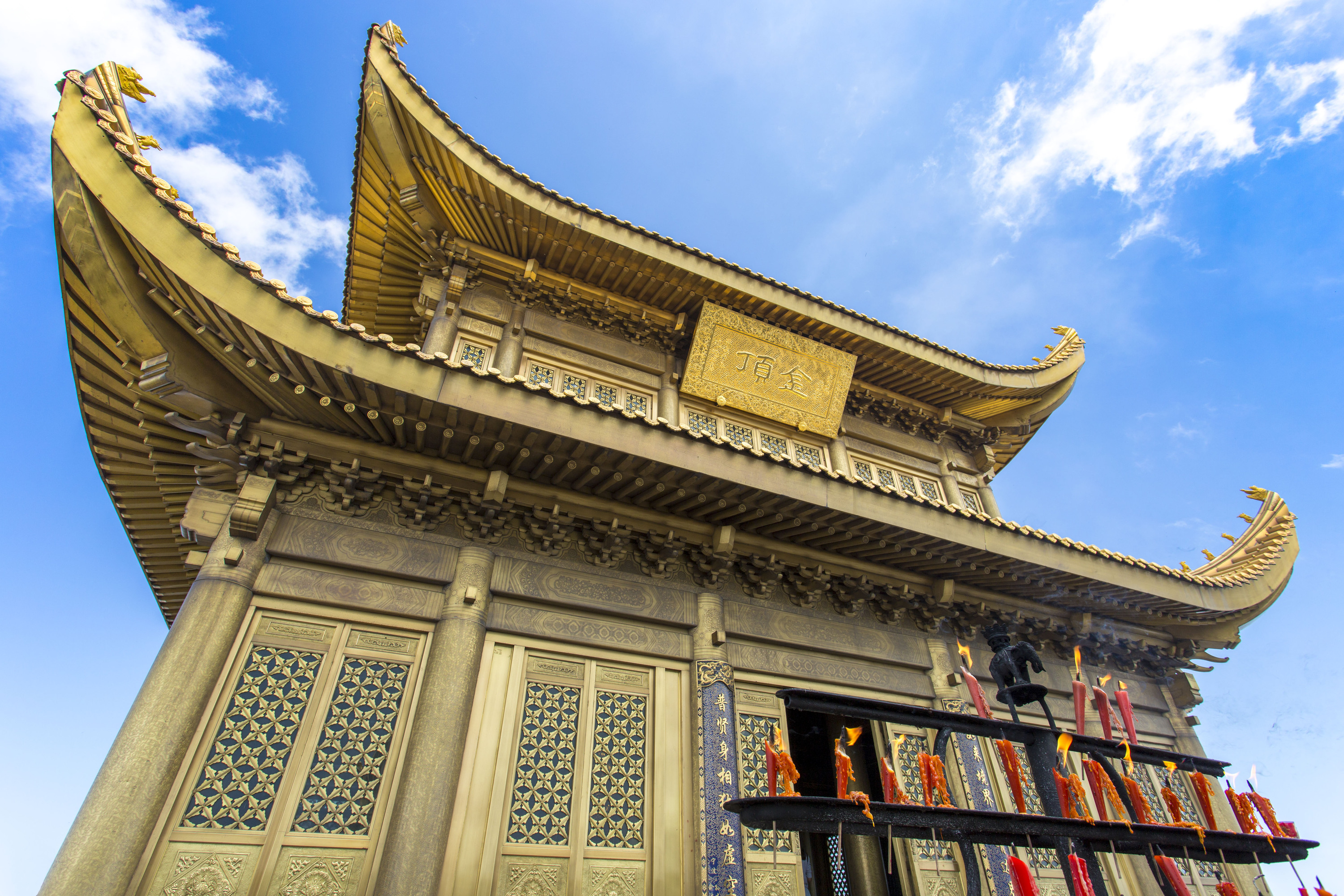
Mount Emei is one of the four sacred Buddhist mountains of China and a UNESCO World Heritage Site. Its high point is the Golden Summit (金顶 Jinding) at 3,099 metres — stand up there and the sea of clouds rolls below your feet. A 48-metre gilded statue of the Bodhisattva Samantabhadra (普贤), ten-headed and weighing 600 tonnes, was raised here in 2006, and the gold-roofed Huazang Temple blazes when the sun is out.
There is plenty on the way up. Baoguo Temple (报国寺) sits at the foot of the mountain, there are hot springs, and the mountain's famous residents — wild Tibetan macaques — are clever and bold, so mind your bags and food. Reaching the summit means a mountain bus followed by a cable car, and most people give it one to two days. Many pair it with Leshan, since the two are only 45 km apart: Leshan on day one, a night near Mount Emei, then up to the Golden Summit at dawn for the cloud sea at sunrise.
 3
3
This trip delivers two World Heritage Sites in one day, and it is the closest of the mountain trips to Chengdu. Mount Qingcheng (青城山) is regarded as the birthplace of organised Taoism in China, so densely forested it earned the nickname "the most peaceful and verdant mountain under heaven," with Taoist temples tucked along the trails. It splits into a front mountain (前山) of easy temple walking and a rear mountain (后山) of more serious hiking past waterfalls and streams.
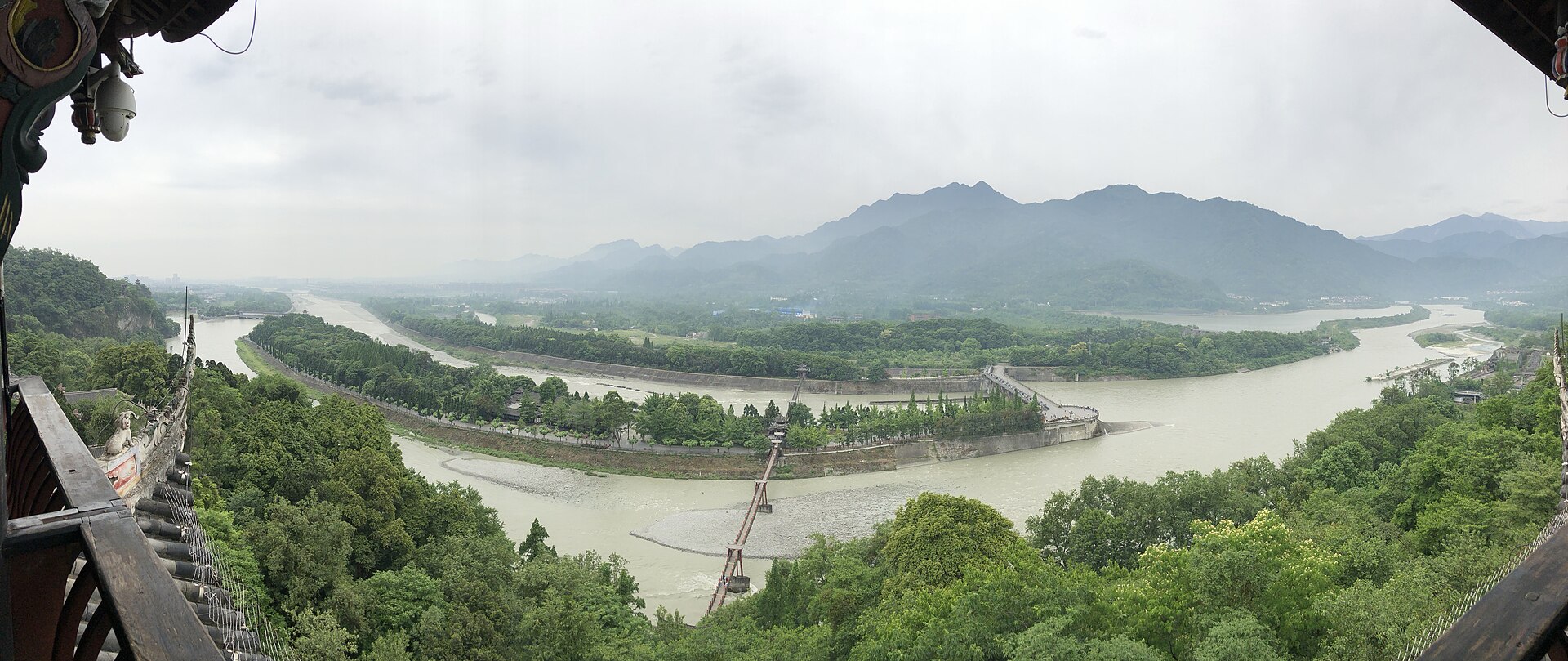
Dujiangyan (都江堰) is the irrigation system the engineer Li Bing built more than 2,200 years ago, in the Qin dynasty, to split the Min River and control flooding — and it is still in working use today. Climb the ridge to see the "Fish Mouth" (鱼嘴) that divides the water, and cross the Anlan suspension bridge (安澜索桥) over the river. Either one is a comfortable half-day; do both for a full day.
If you think ancient Chinese art means dragons and porcelain, Sanxingdui will reset that assumption immediately. The museum holds the relics of the Bronze-Age Shu civilisation, more than 3,000 years old, unearthed at the Sanxingdui site near the town of Guanghan — and they look like nothing else in Chinese art history.
The stars are the bronze masks with protruding eyes that jut out like telescopes, with great flaring ears, some gilded; and the sacred bronze trees nearly four metres tall, birds perched along the branches. The forms are so strange that people have jokingly guessed at aliens — but this was the cosmology of the ancient Shu people. The new museum building opened in 2023 and the displays are genuinely impressive.
The fastest route is the high-speed train from Chengdu East to Guanghan North — just 18–25 minutes, around ¥18, running every 30 minutes — then local Guanghan bus 13 to the museum. Or take a direct tourist bus from the Chunxi Road (IFS) area, about 1.5 hours for ¥25. Entry is ¥72 and must be booked online in advance — no tickets are sold at the gate.
Not every trip has to be a mountain or a museum. Some days you just want to wander, eat well and slow down — and Huanglongxi is made for exactly that. It is a 1,700-year-old water town about 40 km south of Chengdu, and entry is free; walking the streets costs nothing.
Old stone-paved lanes are lined with Ming and Qing dynasty timber buildings, and a clear stream runs through the centre of town. In summer, children and young people wade in to cool off. The local speciality is Huanglongxi soft tofu alongside a parade of Sichuan street snacks. If you are lucky, you may catch the town's signature water dragon dance, performed with water splashed around the dancers. The whole place is relaxed and unrushed — ideal for a half-day after several days in the city.
Buses run from the Xinnanmen Tourist Centre every 20 minutes from 8 am to 5.30 pm, cost ¥14, and take about an hour. Easy, cheap, and no advance booking needed.
The Tang dynasty poet Du Fu once wrote of "the thousand-year snows on the peaks of Xiling," seen from a window in Chengdu — and that peak is still there. Today Xiling Snow Mountain is the closest ski area to Chengdu, but it is firmly seasonal, so plan around the calendar.
In winter (late November to late March), snow reaches up to 60 cm deep, with ski runs, snowmobiles and snow activities — for many Chengdu residents it is where they touch snow for the first time. In summer (June to August) it flips into a popular cool-weather escape: hiking, and cable cars up to the alpine meadows.
One honest caveat: this is the furthest trip on the list. Buses run from Chadianzi Bus Station (reachable on Metro Line 2) and take about 2.5 hours for ¥35–38. Leave early, and always check the weather and bus timetable before you go — the distance is real and services vary by season.