There's a Sichuan saying: "one dish, one style; a hundred dishes, a hundred flavours." Behind the heat you know lies a kitchen of twenty-four flavour profiles, the home cooking of back-lane eateries, and a way of ordering that's far more balanced than you'd expect. This is Sichuan food the way Chengdu actually eats it.
Most people misread Sichuan food by half. They see the heap of red chillies in the bowl, the slick of oil on top, and write the whole cuisine off as "all spicy." In truth, Sichuan is one of China's eight great culinary schools, and it is the most complex of them in terms of flavour — not the hottest. There's a phrase chefs here live by: 一菜一格,百菜百味 — one dish, one style; a hundred dishes, a hundred flavours.
At the heart of it sits the idea of 复合味 (fùhéwèi, compound flavour) — taking a small handful of ingredients and combining them in different ratios to produce at least twenty-four distinct profiles, each unlike the next. Some are hot enough to bring tears; some are gently sweet-sour; some have no chilli at all. Chengdu, the provincial capital, is actually known for a rounder, milder hand than other parts of Sichuan — the seasoning is rich but the balance is famously gentle.
This page doesn't walk you through eleven famous dishes — that's the job of the Chengdu food guide. Instead it teaches you the language of flavour behind every plate: the compound flavours worth knowing, the home cooking (家常菜) that Sichuan families make every day, the back-lane "fly restaurants" locals queue for, and — most useful of all for a traveller — how to order a balanced table, rather than a wall of heat you can't finish.
The most common and most important of the twenty-four — learn these and you can read a Sichuan menu, and order like someone who belongs at the table.
1
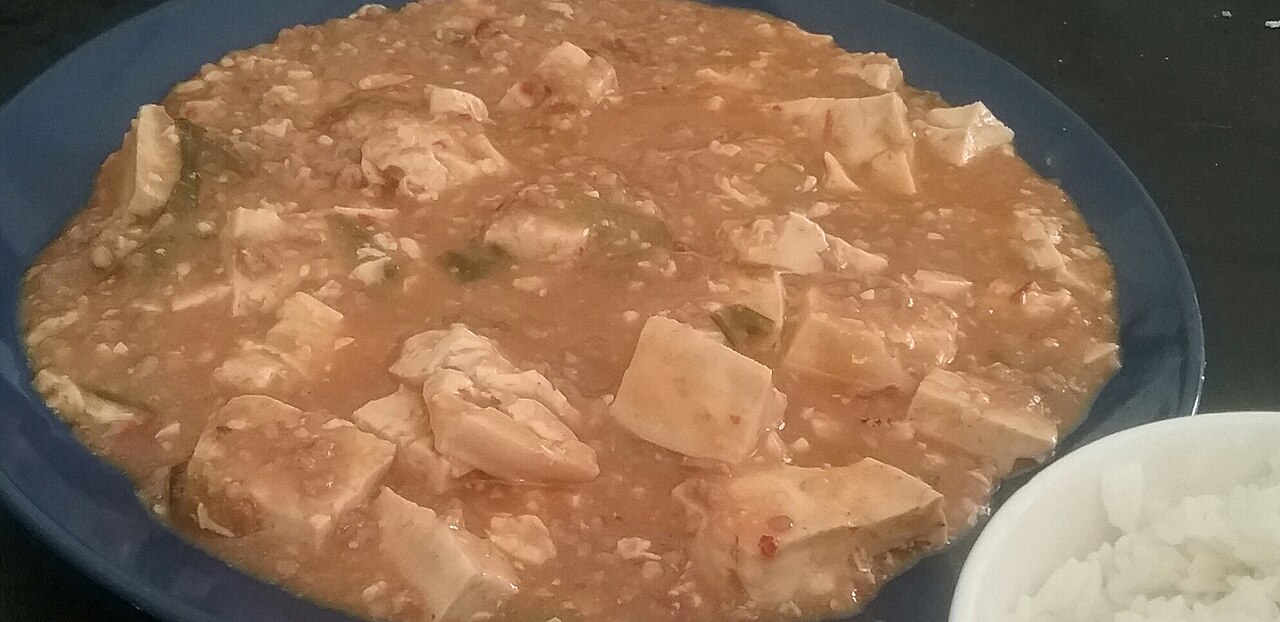
The flavour the world thinks of as "Sichuan" — and the one most people misunderstand as simply "very hot." Málà is really two things: 麻 (má), the numbness from huājiāo (花椒, Sichuan peppercorn — not a true pepper, but the dried husk of a citrus-family berry that makes the tongue buzz like a faint electric current), plus 辣 (là), the heat of dried chilli. Together they create a sensation found nowhere else: numbness first, then heat. Mápó dòufu (麻婆豆腐, mapo tofu) is the dish that shows it off most precisely.
2
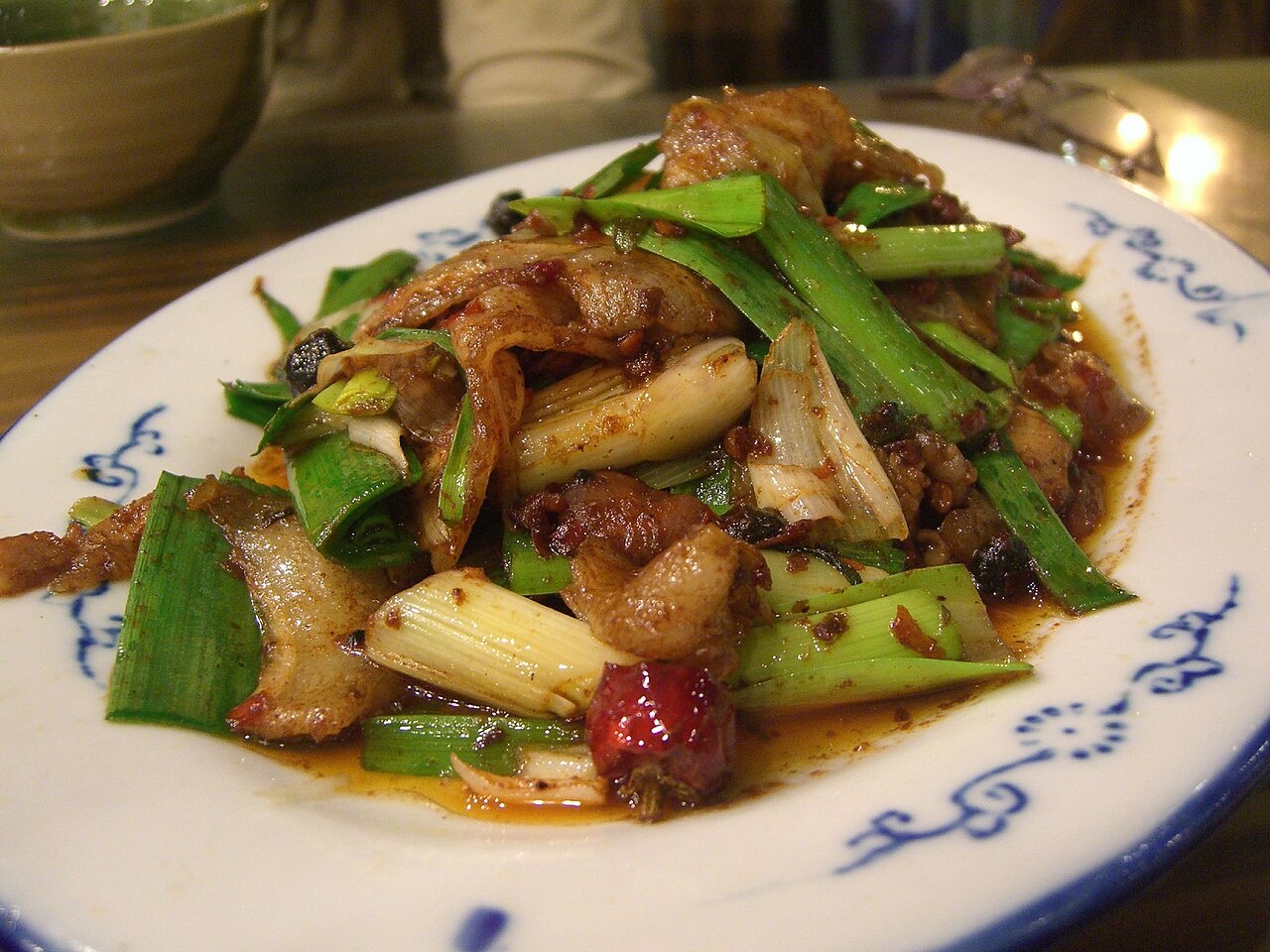
If málà is the public face, jiácháng is the daily life. The name means "what's commonly found in the home," and it's the flavour every Sichuan kitchen reaches for at dinner. Its heart is Pixian chilli-bean paste (郫县豆瓣酱), slow-cooked with soy and salt for a savoury, umami, gently spicy result and a beautiful red hue. Huíguō ròu (回锅肉, twice-cooked pork — boiled, then stir-fried again) is its finest ambassador: not searingly hot, deeply rounded, the kind of thing you can eat over rice every day without tiring of it. This is exactly what a neighbourhood fly restaurant cooks better than a tourist spot.
3
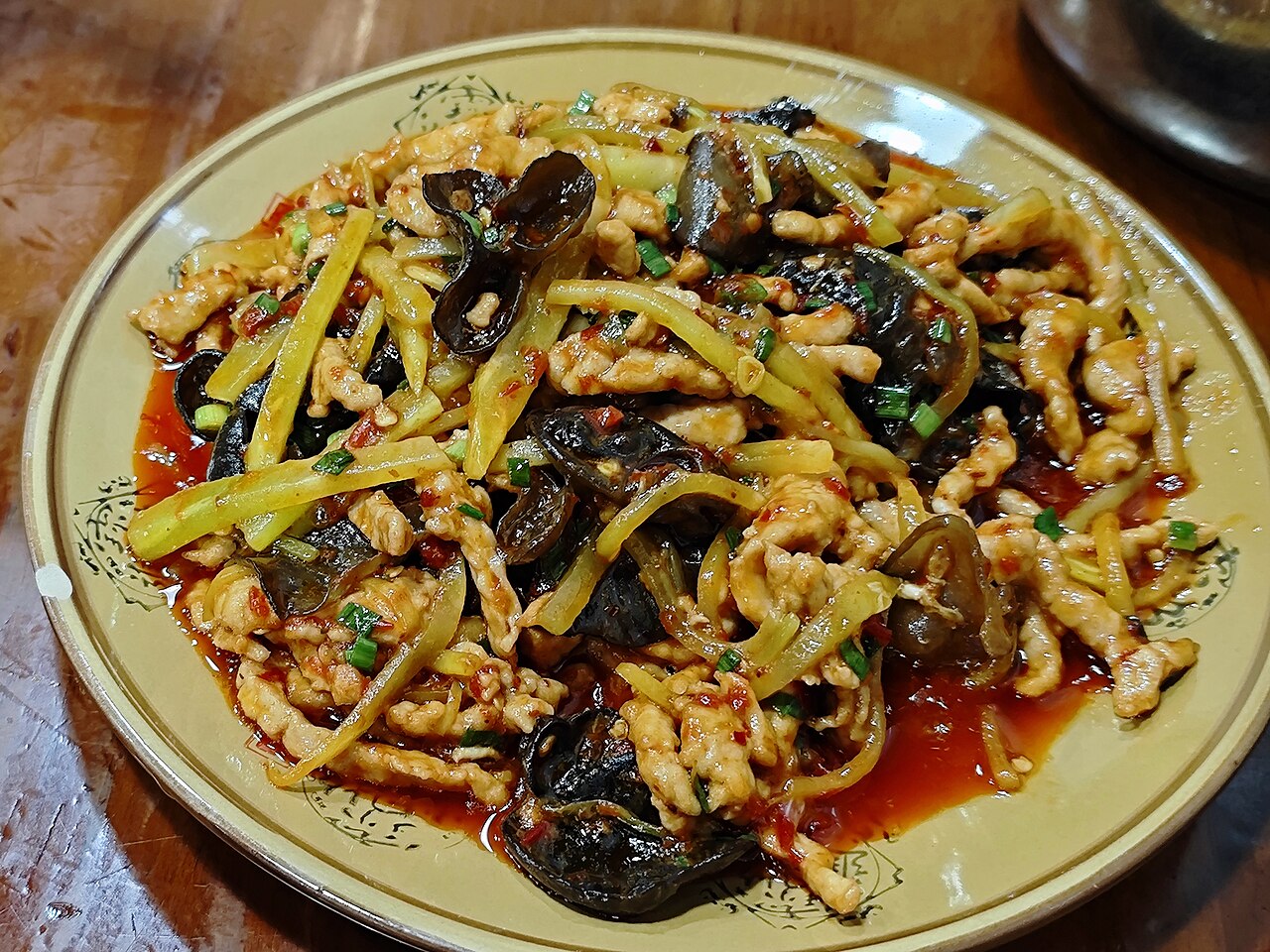
Picture a flavour whose name translates as "fish-fragrant," in a dish with not a scrap of fish in it — that's the charm of yúxiāng. The profile comes from the seasonings Sichuan cooks once used to cook fish: pickled red chilli, ginger, garlic, chopped spring onion, sugar and vinegar, balanced into a single mouthful that lands sour, sweet, savoury and lightly spicy all at once. Yúxiāng ròusī (鱼香肉丝, fish-fragrant shredded pork) is the dish that wins over people who don't think they like Sichuan food — here the chilli is a supporting note, not the star.
4
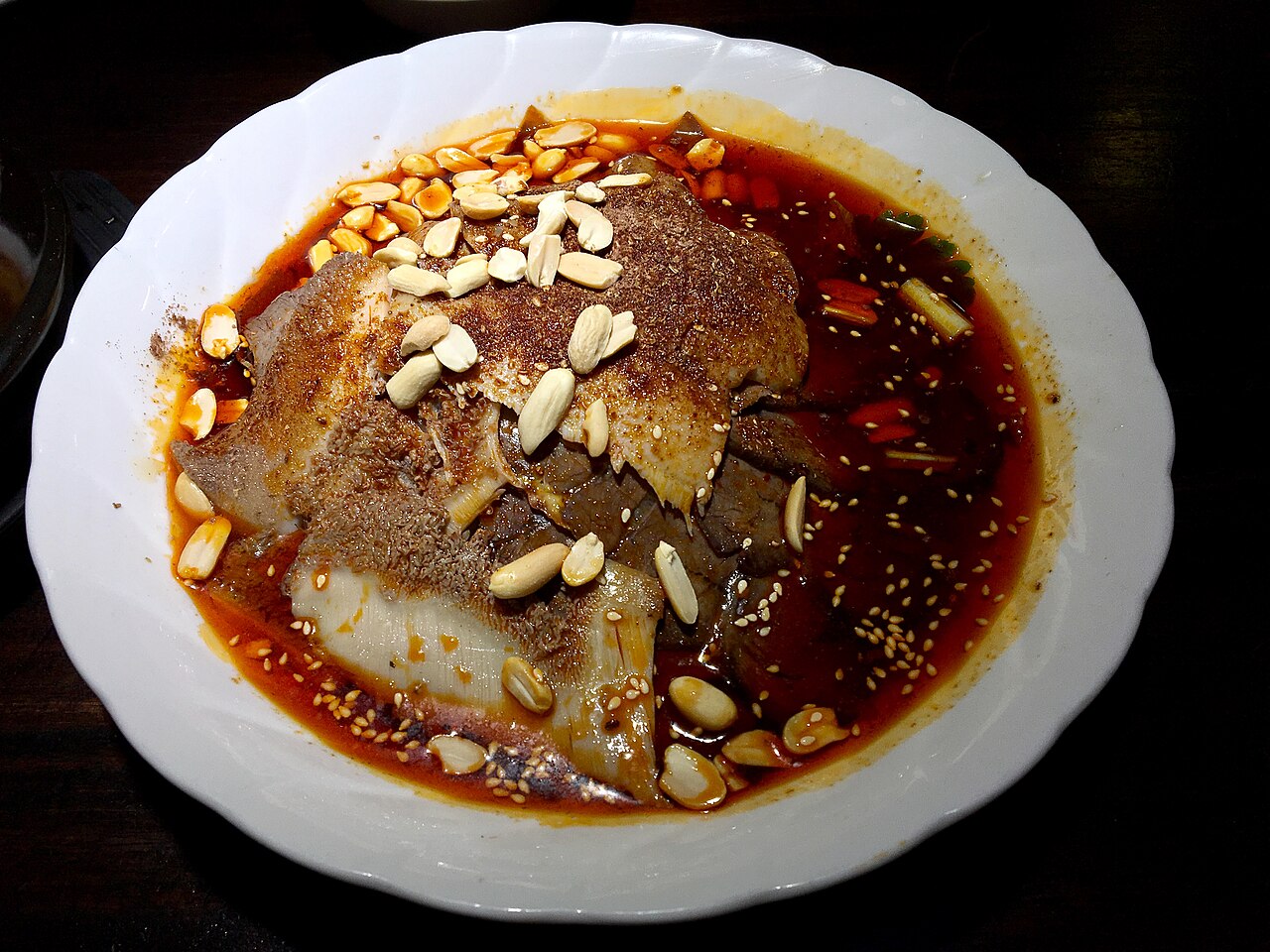
That deep-red, fragrant oil pooling beneath nearly every cold dish in Sichuan — that's hóngyóu. It isn't just chilli oil; it's oil slowly infused with several kinds of dried chilli and spices, and usually rounded out with sesame oil, soy sauce and a touch of sugar so it's fragrant and full rather than sharp. Fūqī fèipiàn (夫妻肺片, thin-sliced beef and offal in chilli oil) is the legendary dish built on it — fragrant, tender, endlessly moreish, the cold dish no Sichuan table goes without.
The name translates literally as "strange flavour," but it doesn't mean odd — it means a flavour where sweet, spicy, salty, sour, numbing and sesame all arrive in equal measure, with no single taste taking the lead. It's a true test of a cook, because everything has to be balanced just so. Bàngbàng jī (棒棒鸡, shredded chicken with sauce) and Sichuan cold sesame noodles are the dishes built on it. The first bite can be genuinely confusing — what am I tasting? — and by the third you're hooked.
A hot-and-sour profile that works very differently from the sweet-sour of yúxiāng — suānlà leans on black vinegar and chilli, a sharp sourness cut with heat that opens the appetite and gets the saliva going. Suānlà fěn (酸辣粉, hot-and-sour sweet-potato noodles) is the Sichuan street snack built on it, and the hot-and-sour soup (酸辣汤) many people already know comes from the same family. It's a flavour made for damp, cool weather — it warms you and brightens you up at once.
Two cold-dish flavours far gentler than málà. Jiāoma (椒麻) uses fresh huājiāo ground with spring onion and sesame oil for a cool, fragrant tingle, often spooned over sliced poached chicken. Suànní (蒜泥) is mashed garlic in a light chilli oil with soy and a little brown sugar — rounder and gentler than most Sichuan dishes. Suànní báiròu (蒜泥白肉, thin slices of boiled pork belly under a garlic dressing) is the classic: tender, garlicky, barely spicy — about the best choice there is for someone who wants to try Sichuan but is still nervous about heat.
8
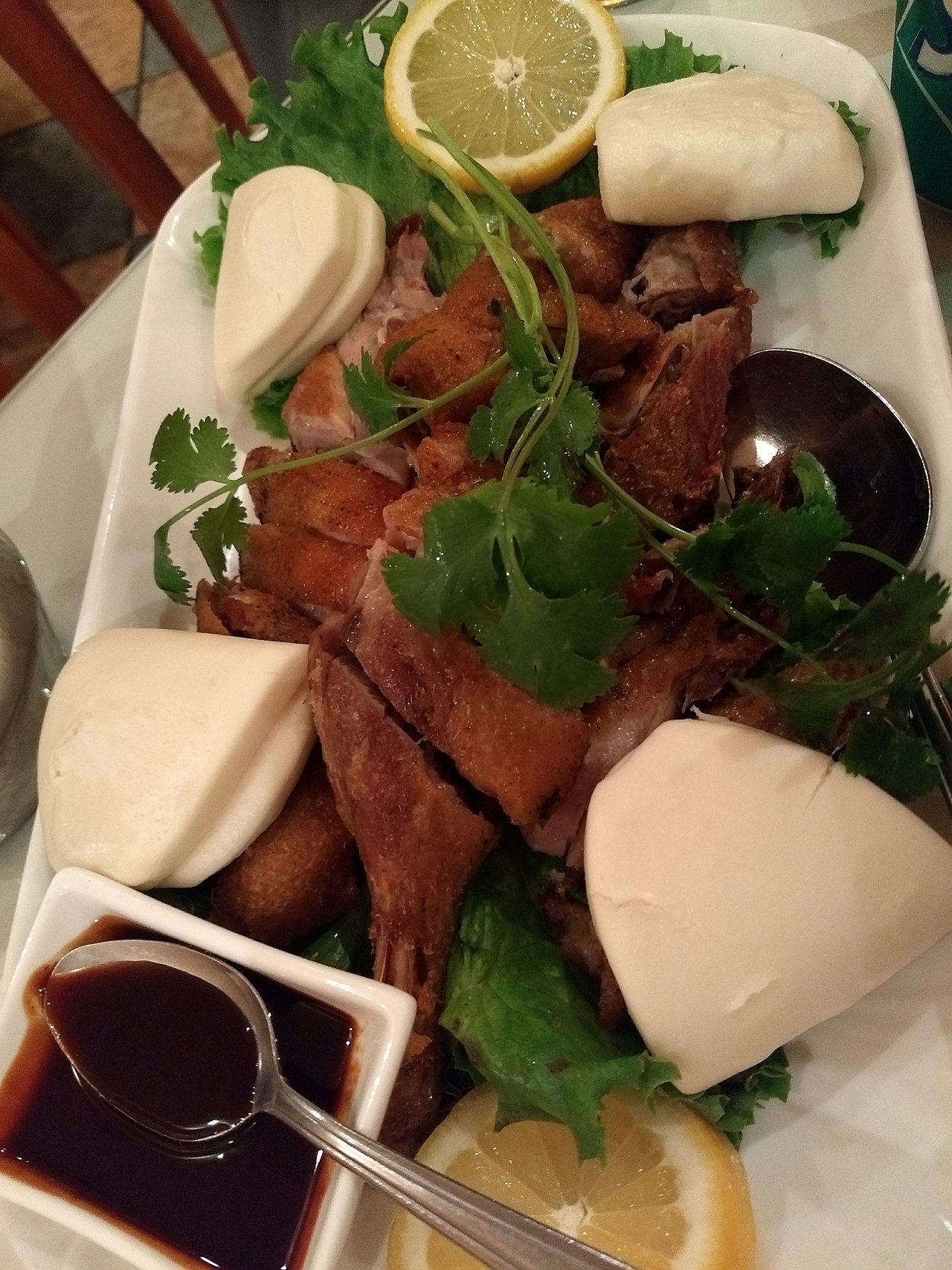
The clearest proof that Sichuan isn't all heat. Kāishuǐ báicài (开水白菜, "cabbage in plain water") is napa cabbage poached in a broth that looks like clear water — but is in fact a chicken-and-pork stock simmered for hours, then clarified until it's crystal clear. It's a state-banquet dish invented by a Qing-dynasty imperial chef, with not a trace of chilli. Zhāngchá yā (樟茶鸭, camphor-and-tea-smoked duck) has crisp, smoky skin and tender meat, eaten with little steamed buns — a labour-intensive banquet dish, also not spicy. The two of them prove Sichuan has dimensions far beyond the pepper.
You know the feeling — you order Sichuan food and somehow every plate comes out the same shade of red, and you give up halfway through the meal. Here's the thing: locals don't eat an all-spicy table either. They always order so that the table "has every flavour." A simple formula for four people: 1–2 properly hot dishes (mapo tofu, say, or chilli-fried chicken) + 1 rounded home-style dish (twice-cooked pork, or fish-fragrant shredded pork) + 1 non-spicy dish (garlic pork, or blanched greens) + 1 plain soup (clear-broth cabbage, or a mushroom soup).
The order of eating matters too. Start with the cold dishes (凉菜, liáng cài) — fūqī fèipiàn or wontons in chilli oil — set down first, to pick at while the hot food cooks. The hot dishes then arrive in waves, all placed in the centre of the table and shared, eaten with plain rice ordered separately. Soup usually comes toward the end, to close the meal gently.
Group sizes: two people order 2–3 dishes plus a soup; four people order 4–5 dishes plus a soup. Price per head: a fly restaurant or neighbourhood spot ¥40–90 (~฿200–450); a mid-range restaurant ¥90–180 (~฿450–900); fine dining ¥400 and up (~฿2,000+).
Most local places have no English menu, and staff often have no idea how much chilli a foreign guest can take. Stating your heat level up front helps enormously — 不要辣 (bú yào là) = no chilli · 微辣 (wēi là) = mild · 中辣 (zhōng là) = medium · 少花椒 (shǎo huājiāo) = less Sichuan peppercorn (to dial back the numbing).
On payment: local spots and fly restaurants run mostly on WeChat Pay and Alipay. Some take cash in yuan, but hardly any accept foreign credit cards. Link a Visa or Mastercard to Alipay's international mode before you travel (the how-to is in our Alipay/WeChat payment guide). The well-known fly restaurants usually need you to queue in advance through the Dazhong Dianping app (大众点评).
"Fly restaurant" (苍蝇馆子) is not an insult — it's a badge of honour. A humble back-lane spot so good that locals swarm to it like flies.
To understand what "fly restaurant" means, come here. It's the small place that husband-and-wife team Zhang Fuming and Zhang Ting (the restaurant's name combines theirs) opened in a lane near a vegetable market more than twenty years ago. The legendary signature is pig-brain tofu (脑花豆腐) — a mapo-style dish, rich and deep, with melt-soft brain and a stiff kick of Sichuan spice — alongside diced rabbit with green chillies and peppercorns. Office workers sit beside construction workers here; that cross-class crowd is the soul of a real fly restaurant. These are dishes that take a little nerve, but try them and you'll understand why Chengdu loves them.
If you want to see how refined Sichuan can be, this is the answer. Opened in 2017 by protégés of the legendary chef Zhang Songyun, set in an old-style Chinese courtyard with private rooms in traditional decor, it serves a tasting menu of more than twenty courses reviving classic 1920s–30s recipes, many long vanished, using top ingredients and old techniques. Crucially, it offers plenty of non-spicy dishes too — which makes it ideal for anyone who wants to know Sichuan in depth, not just a pile of chilli. Booking required.
The kind of restaurant serious eaters fly in for. Chef Yu Bo presents a tasting menu of more than thirty courses that plays with the classic Sichuan compound flavours in great depth — some courses are edible artworks plated to resemble Chinese brushwork. The room seats only a handful of tables a day, the mood is quietly elegant, and the focus is on flavour and technique over heat. This is the far end of the Sichuan spectrum — from a back-lane fly restaurant to a table you reserve weeks ahead — and both are equally, authentically Sichuan.
You don't need a famous name to eat well. Look for a small back-lane place that's packed with locals at lunchtime — plastic stools, an open kitchen with blackened steel woks, a menu hand-written on the wall. That's the signature of a home kitchen cooking true jiácháng flavour. Order twice-cooked pork, a plate of greens and a soup, and see whether the seasoning is rounded; if a kitchen nails those basics, it has the skill. Opening the Dazhong Dianping app (大众点评) and sorting nearby spots by rating is exactly what locals do — filter by score and by the food photos diners post.