A bubbling pot of red beef-tallow broth, a mountain of dried chillies, and Sichuan peppercorns that leave your lips buzzing — this is the meal Chengdu loves most. Here's how to order it, eat it, and survive the heat as a first-timer.
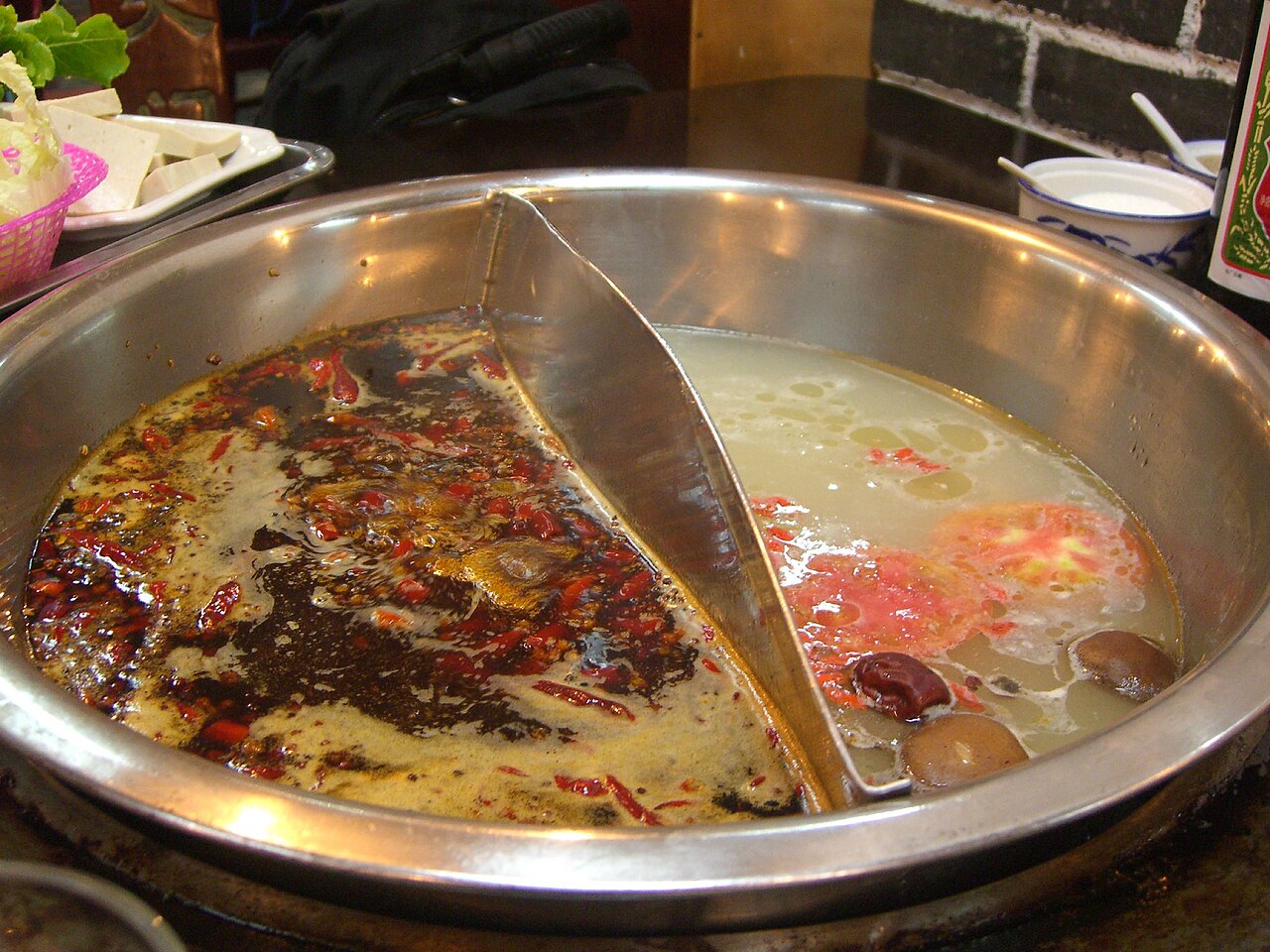
Picture a brass pot split down the middle in the centre of the table: on one side, a deep-red broth thick with dried chillies and floating Sichuan peppercorns, bubbling away and throwing off a fragrance so pungent it makes your mouth water. This scene plays out across Chengdu every single night, because hotpot (火锅 huǒguō) is less a dish than a way of eating — the whole city gathers friends and family around the table, talks for hours, and cooks ingredient after ingredient one piece at a time.
The soul of Chengdu hotpot is the word málà (麻辣), made of two characters that do completely different things: 麻 (má) means "numbing", and 辣 (là) means "spicy". The burn comes from dried chillies, but the tingling, fizzing numbness on your lips and tongue comes from huājiāo (花椒), the Sichuan peppercorn — which isn't hot at all, but sends a faint electric buzz through your mouth. Honestly, first-timers are usually more startled by the numbness than the heat, because it's a sensation almost no other cuisine delivers.
The classic red broth is simmered from beef tallow (牛油 niúyóu), toasted dried chillies, Sichuan peppercorn, star anise, cassia bark and dozens more spices until it turns deeply aromatic and slick with red oil. Locals believe the older the broth base, the better — the backstreet 老火锅 (lǎo huǒguō, "old hotpot") joints often run an oil base that's been topped up for years. Chengdu's damp, grey climate is part of the story too: people here are devoted to fierce, spicy food in the belief that it drives the dampness out of the body. You finish a meal sweating, lighter, and oddly settled.
From choosing your broth to the sesame-oil dip to the add-ins locals order every time — listed in the order you'll decide them.
1
If it's your first time and the heat worries you, order a yuānyāng pot to start. It's a single pot divided into an S-shape: one side is full-strength red málà broth, the other is a mild clear broth (pick bone, mushroom, or a sweet-sour tomato broth that goes down easily). Cook your add-ins in the red side for the full hit, then switch to the clear side the moment your mouth tips over from buzzing to overwhelmed. "Yuānyāng" means a pair of mandarin ducks — a poetic nod to two different things that belong together.
The original málà broth is built on a base of beef tallow. Simmered with dried chillies and Sichuan peppercorn, it turns intensely fragrant, and its red oil clings to every piece you cook, so the flavour lands heavier and lingers longer than a vegetable-oil broth. When it cools, the tallow sets into a soft solid — a sign the broth is genuinely rich, not a fault. Most locals choose this. If you'd rather a lighter body and softer spice aroma, some modern restaurants offer a clear-oil broth (清油 qīngyóu, made from rapeseed oil) instead.
Honestly, this little bowl is the local's secret weapon. The sesame-oil dip (油碟) is sesame oil with chopped raw garlic, and most places have a condiment station where you add spring onion, coriander, chilli flakes or oyster sauce to taste. The oil does two jobs: it coats freshly cooked pieces so they don't scald your mouth, and it noticeably tones down both the heat and the peppercorn numbness. Pull a piece out of the red broth, swirl it through the bowl, then eat — every time. This bowl is how people manage hotpot several nights a week. Don't ask for the thick sesame paste (麻酱) of Beijing hotpot; in Chengdu, the oil bowl rules.
4
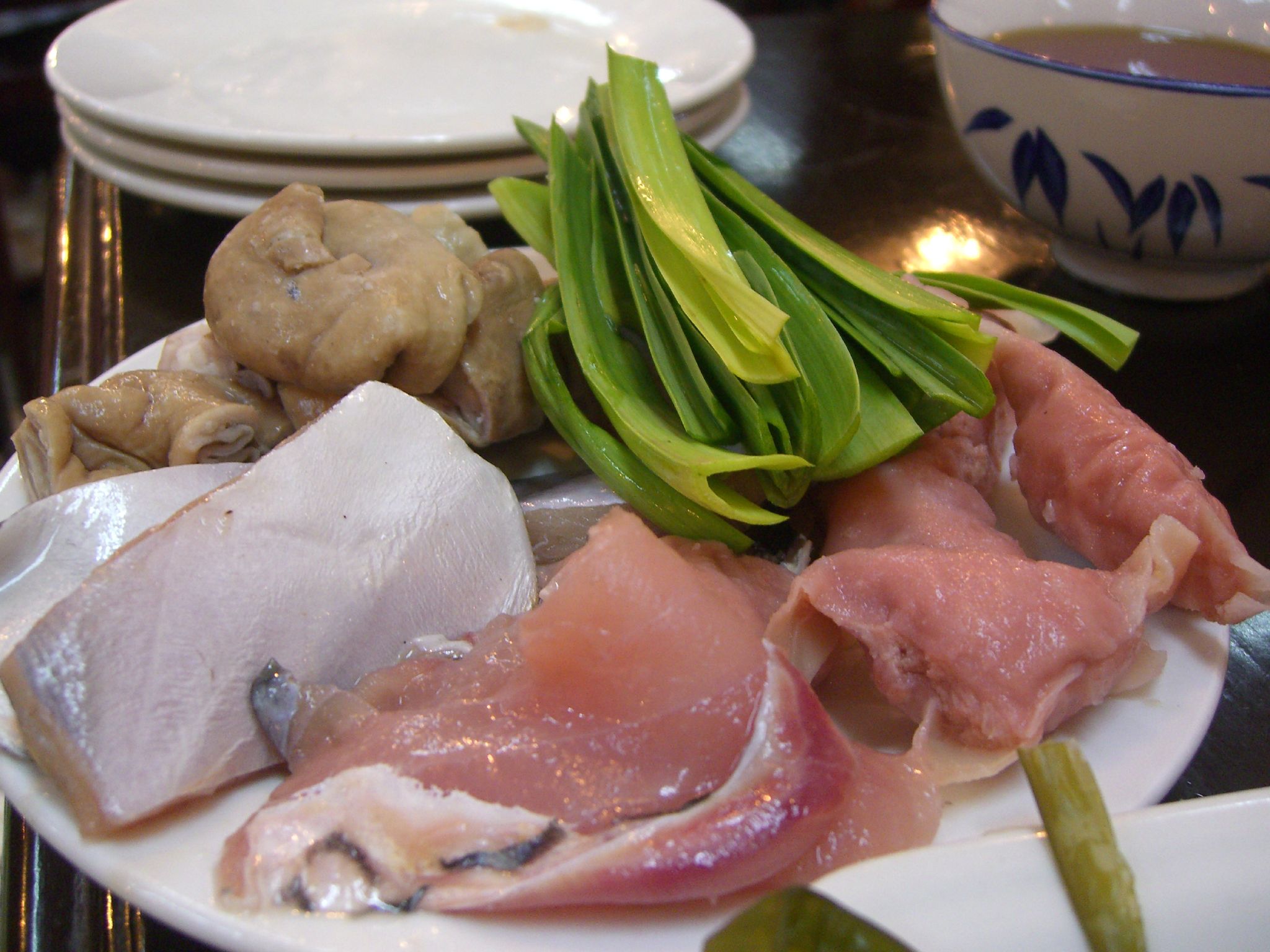
If there's one add-in you have to order, locals will name beef tripe — thin sheets that turn springy and crisp in a way nothing else does. The crucial thing is that it cooks fast. There's a saying here: 七上八下 (qī shàng bā xià), "seven ups, eight downs" — grip the tripe with chopsticks, dunk it in the boiling broth, and lift it up and down for about 10–15 seconds. The instant the surface curls and stiffens, pull it out, swirl it through the sesame-oil dip, and eat. Leave it in too long and it goes rubbery — this is the first-timer's first little test.
Duck intestine is beef tripe's constant companion: long, thin ribbons that curl up when cooked and snap with a satisfying crunch. Plenty of people hesitate at the name, but cook it right and dip it in sesame oil and you'll come around fast. It cooks even quicker than tripe — about 8–10 seconds, just until it curls, then up it comes. Locals like to hold a single ribbon in the broth and lift it the moment it tightens; freshness and crunch are the whole point. Overcook it and it turns chewy and tough.
Fair warning: this is the adventurous end of the menu. Huánghóu (黄喉) is the large blood vessel of beef or pork — it sounds alarming but has no off taste, and cooks up crunchy like cartilage; give it around 20 seconds. Brain flower (脑花 nǎohuā) is usually pork brain, soft and custard-smooth, set in a little basket and simmered in the red broth until cooked through. Locals consider both delicacies, but honestly, they're not for everyone — if you're not up for it, skip them with no loss of face. There are a hundred other things to cook.
7
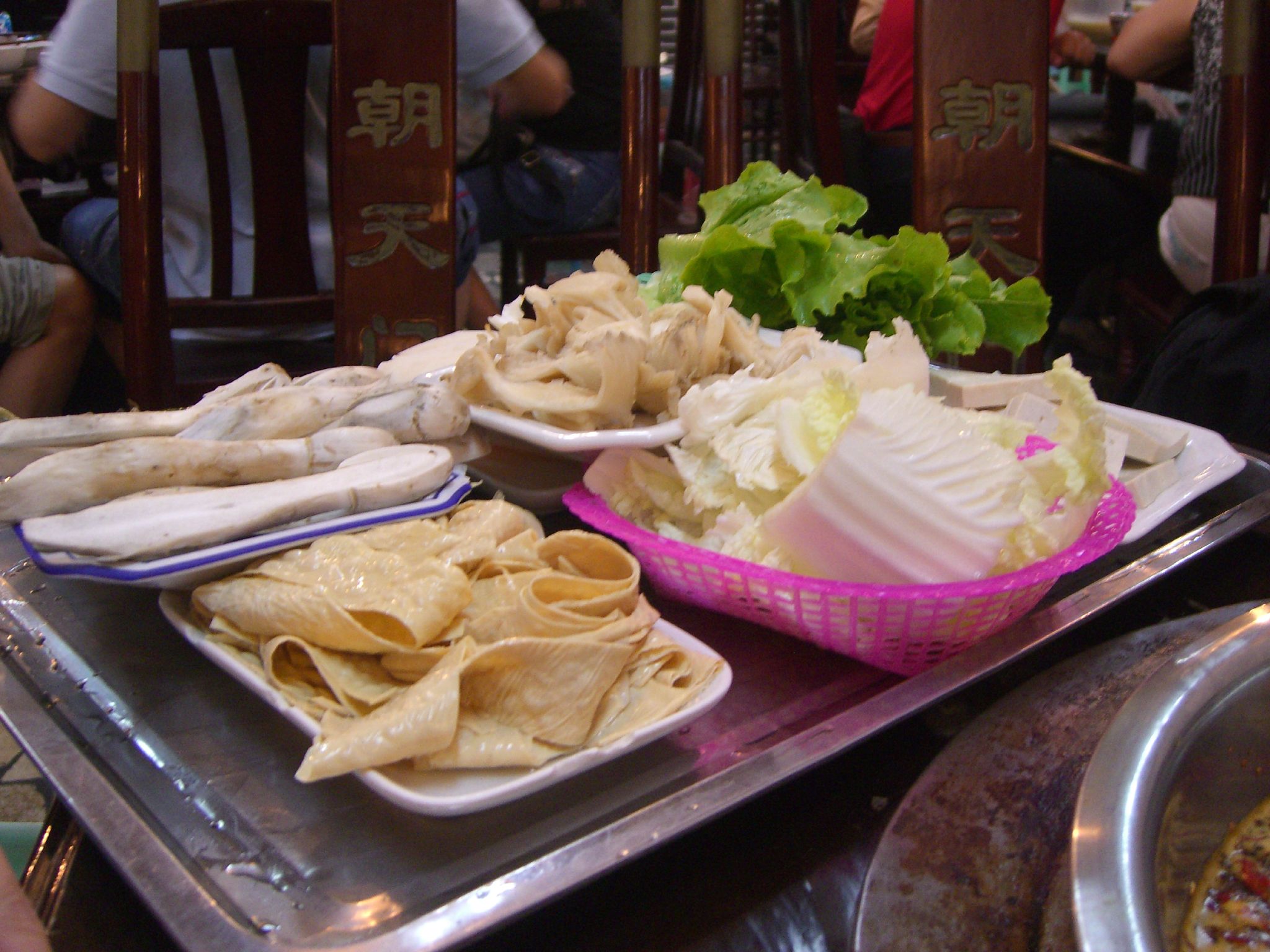
Between rounds of the heavy stuff, don't forget the vegetables and starches. Thin-sliced potato (土豆) and lotus root (藕片) soak up the málà beautifully and fill you up; tofu skin (豆皮) drinks in the broth until it's lush. Enoki mushrooms and Chinese cabbage give your tongue a proper break from the heat. Finish the meal with sweet-potato noodles (红薯粉) or wheat noodles cooked in the broth at its most concentrated — plenty of people swear the noodles at the end are the real star of the meal.
Plain water doesn't do much against málà heat, so locals order drinks that actually help. Soy milk (豆奶) and drinking yoghurt (酸奶) are the favourites, because the fat in dairy binds the chilli far better than water does. Chrysanthemum tea (菊花茶) and chilled herbal drinks help cool the body's "heat", and if you want something fizzy there's iced cola or a local beer. Many hotpot places have a self-serve drinks fridge with a flat all-you-can-drink charge. Pack wet wipes, and bring an antacid if you know your stomach runs sensitive.
Start by choosing your broth — first-timers go for a yuānyāng pot (red + clear) and specify the red side as 微辣 (mild) up front. Then order a sesame-oil dip (油碟) for each person and head to the condiment station to add garlic, spring onion and coriander.
Next, order your add-ins — begin with beef tripe and duck intestine (the stars), thin-sliced beef and meatballs, then move on to vegetables, starches and tofu. Let the broth come to a full boil before you add anything, cook just a few pieces at a time, and time each one to what it needs (tripe 10–15 seconds · duck intestine 8–10 seconds · thin beef 15–20 seconds · starches a little longer). Swirl each piece through the sesame-oil dip before it goes in your mouth.
Group size: hotpot is best with 3–6 people, so you can order a wide spread · Cost per person: a typical chain runs ¥80–150 (~฿400–750) · an upscale institution ¥150–250 (~฿750–1,250) · a backstreet 老火锅 ¥60–100 (~฿300–500) · Finish with sweet-potato noodles or wheat noodles cooked in the concentrated broth at the end of the meal.
If the heat or numbness gets to be too much: switch to cooking in the clear side · use a heavier coat of the sesame-oil dip · sip soy milk or drinking yoghurt (better than water) · eat plain rice or a starch to break it up · the huājiāo buzz fades on its own within a minute or two and is harmless.
Paying: almost every hotpot restaurant runs on WeChat Pay and Alipay. Link a Visa/Mastercard to the app before you travel to Chengdu. Some small places still take cash yuan, but almost none take a foreign credit card swiped directly. See how to set it up in our Alipay / WeChat Pay guide for travellers.
The places locals and travellers talk about most, all confirmed open — each with its own character, so take your pick.
For the loud, fun, full-energy side of Chengdu hotpot, Shu Da Xia is the name that comes up first — decked out like a martial-arts (wuxia) novel, with staff in warrior costume and a bit of theatre to the service. It's a big chain with hundreds of branches across China and a growing presence abroad. The upside is consistency: there's a fierce red pot and a milder broth, the menu has photos to point at, and it suits first-timers and groups well. Dinner queues are long — grab an app ticket and go for a wander while you wait.
Xiaolongkan was born in Chengdu and grew into one of China's most famous hotpot brands. The draw is its beef-tallow red broth at full málà strength — deeply aromatic, clinging to everything you cook. Its branches in the Chunxi Road and Taikoo Li area are easy to find and set you up to shop afterwards. If you came to Chengdu for hotpot the way it really is, with no dialling-down of the heat, this is the one — though first-timers should order a yuānyāng pot and ask for 微辣, because the house standard here packs a serious punch.
Open since 1986, Huangcheng Laoma is a Chengdu hotpot institution that older generations know well. It's a smart, multi-floor place with quiet rooms and, at some sittings, Sichuan-opera face-changing (变脸) performed between courses. Prices run higher than the everyday chains, but what makes it first-timer-friendly is the choice of milder broths and the attentive service. It's the spot for a special meal or for taking older relatives. Book ahead, especially for dinner or larger groups.
If you want hotpot the way locals eat it day to day, look for a 老火锅 (lǎo huǒguō, "old hotpot") joint down a residential lane — around Yulin (玉林), say, or the backstreets near Kuixinglou. These places are usually low tables and plastic stools, with a beef-tallow broth from a base that's been kept going for ages: properly fierce, and cheaper than the chains. The menu is often Chinese-only with no pictures, so point at what the next table is having or show a photo on your phone — people are generally happy to help if you say hello and try.