Lane by lane, honest and current
Ordered from the famous tourist lanes to the back streets where locals really eat
 1
1
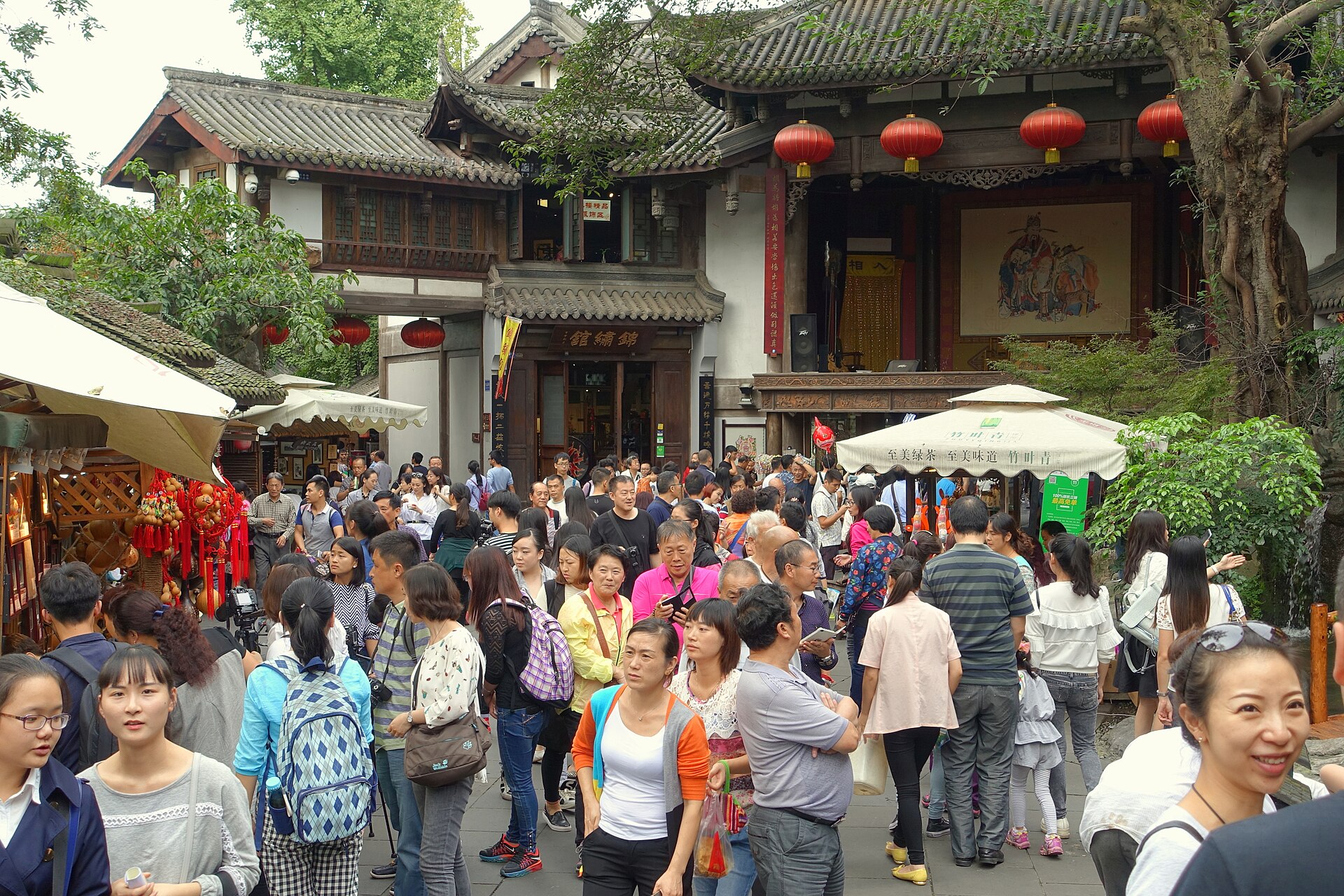
Jinli is the old street every tour bus stops at — a narrow Qing-dynasty lane beside Wuhou Shrine, strung with red lanterns and gorgeous at dusk. Its real strength is convenience: if you're short on time, this is the one place you can sample nearly every Chengdu snack in a single walk.
What to try here: San da pao (三大炮), three glutinous rice balls that vendors hurl onto a brass tray with a loud bang, rolled in soy-sesame powder and drizzled with brown sugar syrup — ¥15 · Tang you guo zi (糖油果子), deep-fried dough balls glazed in brown sugar on a skewer — ¥5 · Juntun guokui (军屯锅魁), a flaky baked pastry stuffed with peppery minced pork — ¥10 · plus Sichuan minced-pork noodles and "feichang fen" intestine noodles.
 2
2
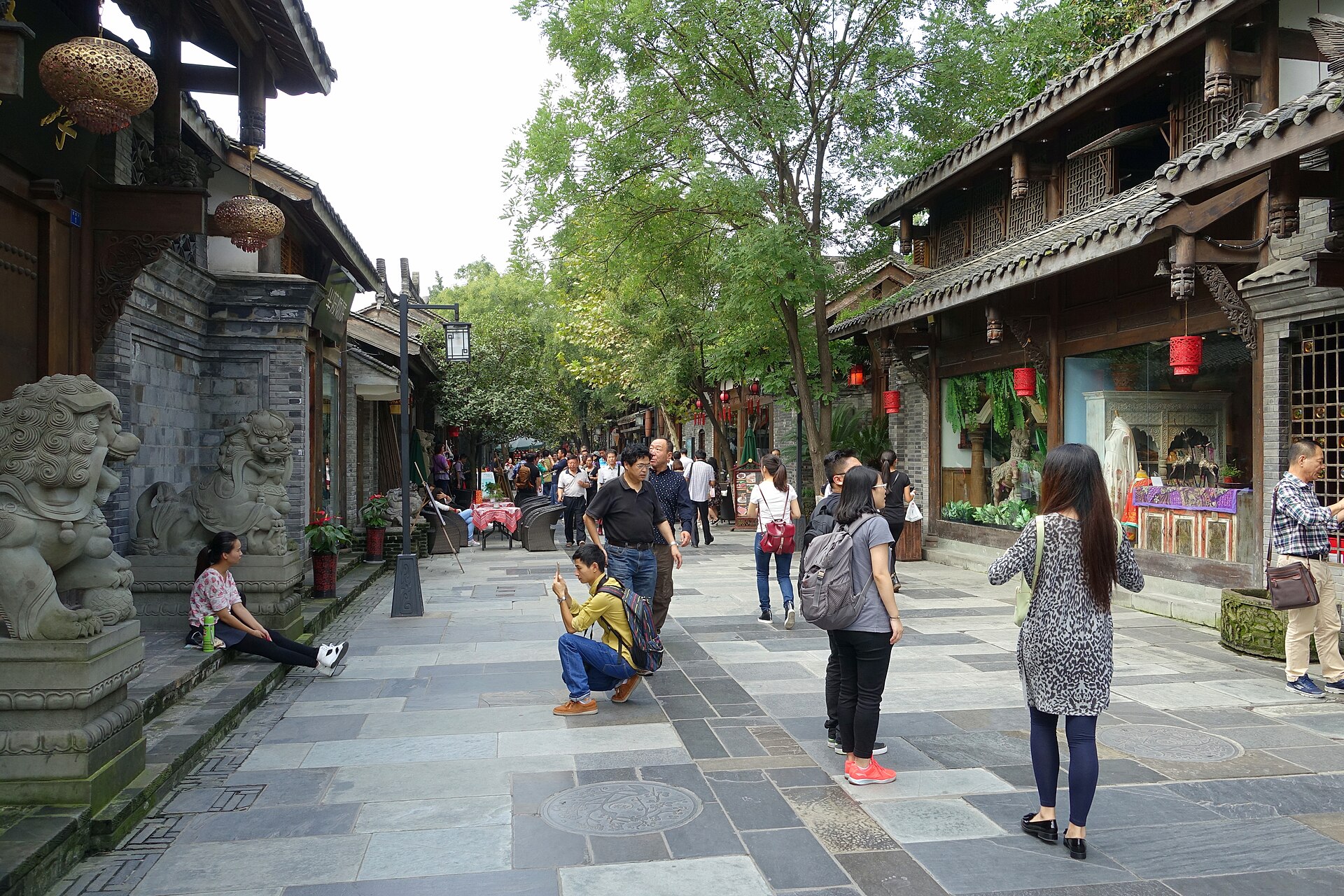
A lot of Chengdu locals will tell you Kuanzhai is better than Jinli — it's the last surviving cluster of Qing-dynasty courtyard housing in the city, split into three parallel lanes: Wide Lane (宽巷子) for the classic look, Narrow Lane (窄巷子) for cafés and design shops, and Jing Lane (井巷子) with its graffiti wall. The trick is that a few steps out the back gate puts you on local lanes at local prices.
What to look for: old teahouses where you can sip gaiwan tea (盖碗茶) the proper Chengdu way · san da pao and tang you guo zi turn up here too · several sit-down hotpot and Sichuan restaurants · cold, sweet bingfen to cut the heat.
If you want to eat the way working-age Chengdu actually eats, Kuixinglou is the answer — a roughly 500-metre lane packed with spicy-numbing skewers, creative desserts and bars, and now one of the city's favourite late-night food streets. The energy is alive and unstaged, nothing like the costume-drama old streets.
What to try: Maojiao Huola (冒椒火辣), a much-loved málà skewer joint with a queue most nights · Bingfen (冰粉), a clear, jiggly cold jelly in brown-sugar syrup with peanuts and pearl barley that does a great job of cooling a chilli-scorched mouth · plus a string of newer dessert spots that draw a young, phone-camera crowd.
 4
4
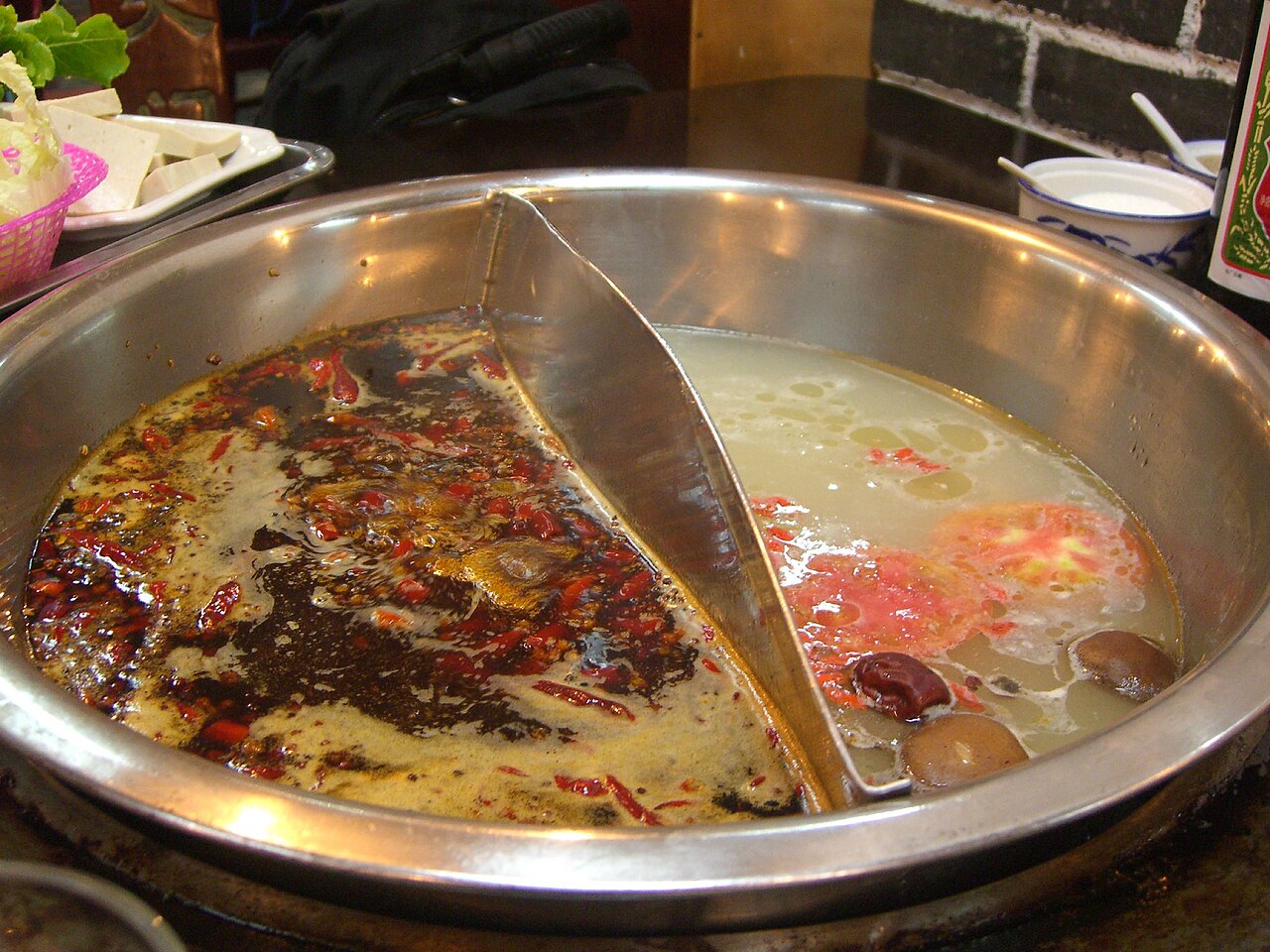
Yulin was never built for tourists — it's an older residential neighbourhood where food carts, community canteens, vintage cafés and tiny bars sit jumbled along the lanes. It spans Yulin East, West, South, North and Central streets, each hiding its own finds. Crucially, Yulin Central Road (玉林中路) was Chengdu's first hotpot street, and Yulin West is the old bar strip where people settle in late.
What to know: Yulin Chuanchuanxiang (玉林串串香) is an original skewer institution many regard as one of the birthplaces of Chengdu chuan chuan; the flagship is right here, open 24 hours, with an English menu. You'll also find no-frills cantinas — locals affectionately call them "fly restaurants" (苍蝇馆子) — serving big flavour at small prices.
 5
5
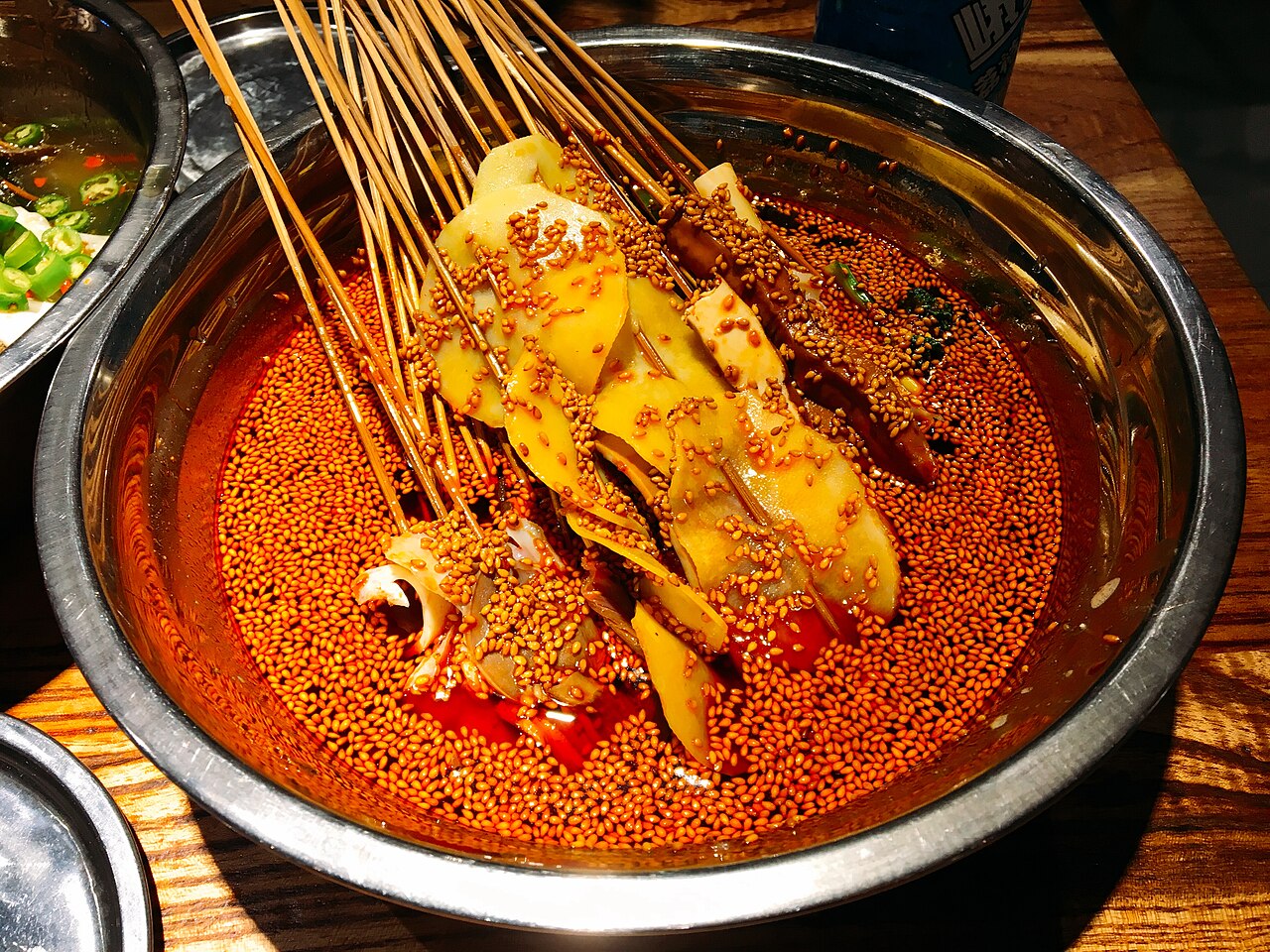
Chuan chuan xiang isn't a place — it's a way of eating you have to try in Chengdu. It's hotpot in skewer form: you pull skewers of meat, vegetables, mushrooms, meatballs and tofu from a fridge yourself, cook them in a pot of red, spicy-numbing oil at your table, then dip into a garlic-sesame oil sauce. When you're done, they count the sticks and tally the bill — usually ¥1–3 per skewer. The fun is that you only pay for exactly what you ate.
Two variants worth knowing: Leng chuan chuan (冷串串), cold skewers served pre-cooked so there's no cooking at the table — easier for first-timers · Bobo chicken (钵钵鸡), chicken and vegetable skewers steeped in a cold red chilli broth dusted with sesame, a Leshan original that's fragrant and moreish. Well-known names: Maojiao Huola, Yulin Chuanchuan, Qiang Jiao Jiao.
 6
6
If you want raw, loud, cheap street food with no staging, Jianshe Road is where Chengdu goes for snacks. Carts line up — guokui (锅魁) stuffed pastries, grilled skewers, noodle shops, fried bites — busy, noisy and properly cheap.
Right nearby, Fuqin Night Market (富琴夜市) packs in carts of grilled skewers, noodles and snacks between 6 and 9 pm. It's ideal for grazing through many small bites in one evening — a genuine Chengdu night-market feel that most tourists haven't found yet.
 7
7
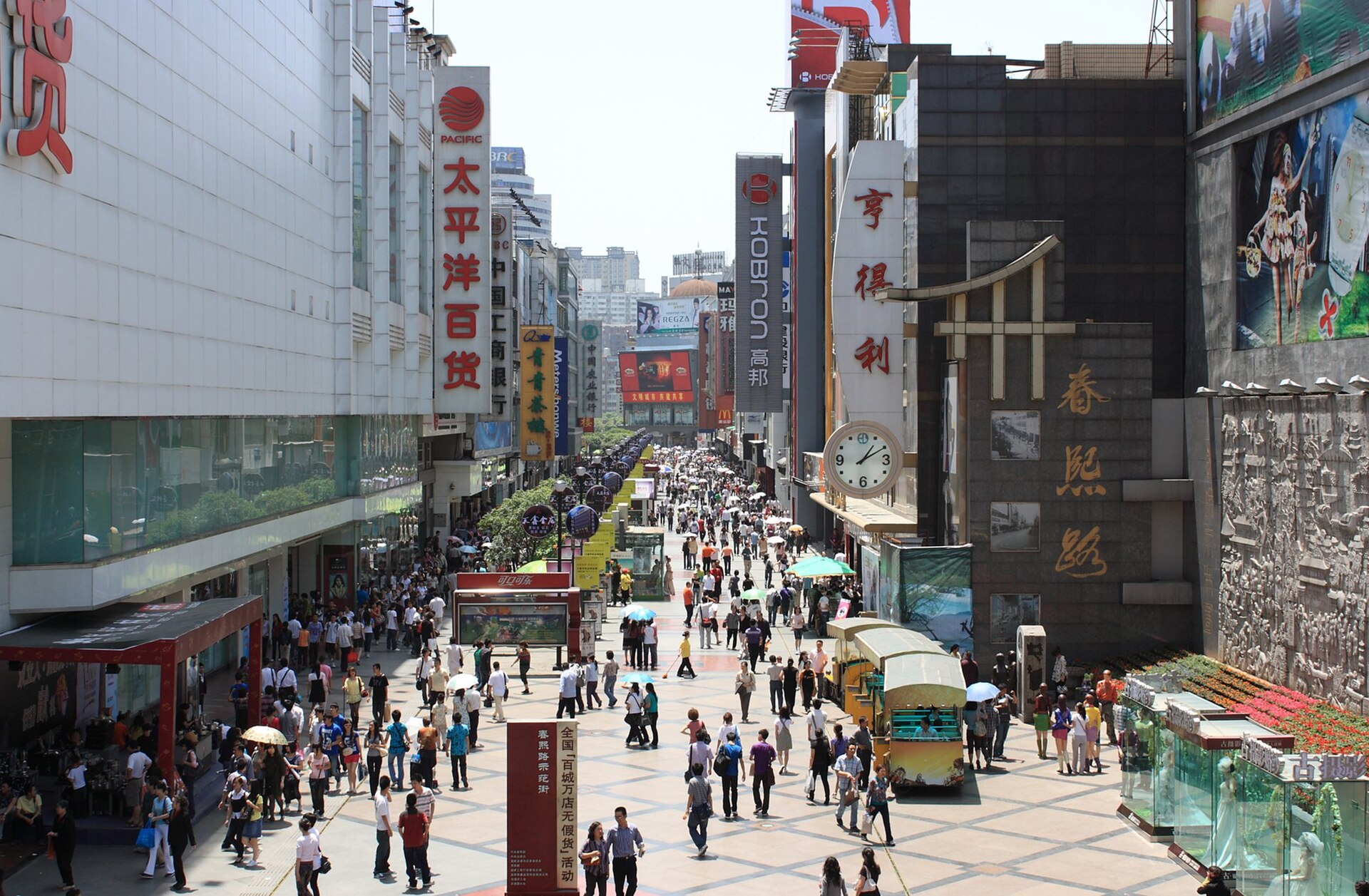
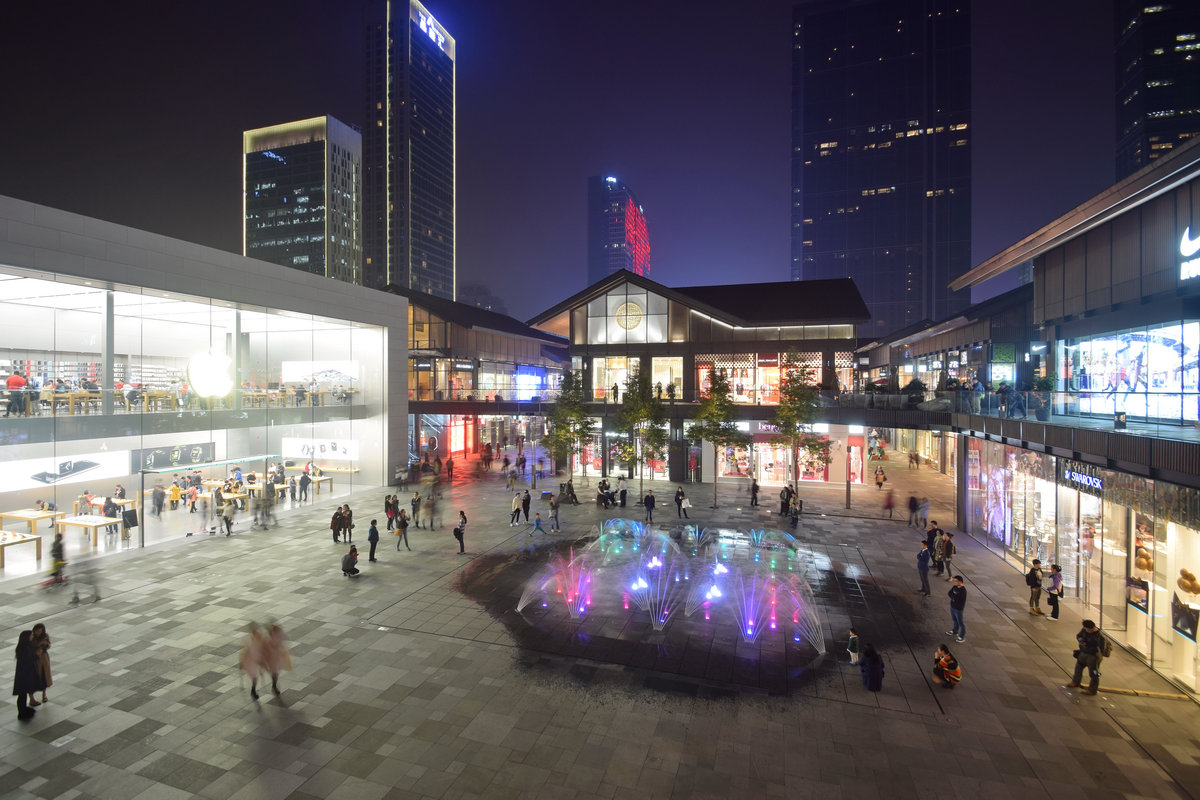
Chengdu gets rain easily and the air is humid, so mall food halls are something locals genuinely use — not overpriced tourist fare. The Chunxi Road and Taikoo Li area downtown (Metro Lines 2/3, Chunxi Road) holds several big malls that gather sit-down Sichuan restaurants, dessert spots and food courts under one roof.
IFS and Chengdu Taikoo Li have dining floors with famous Sichuan names, big-brand hotpot chains and cafés · many mall food courts have picture menus and easy app payment, perfect when it's too hot or wet to walk outdoors · several malls house outlets of popular hotpot brands so you can try one without queuing on the street.