Home Chengdu China Chengdu Hotels About
Home  ›  Asia  ›  China  ›  Chengdu  ›  Best Time to Visit
Chengdu Seasonal Guide · 2026

Best time to visit Chengdu
an honest season-by-season guide

Chengdu has four distinct seasons — yellow rape-flower fields in spring, thunderstorm afternoons in summer, and steaming hotpot with lively pandas in winter. But there is one thing to know first: Chengdu is famously overcast almost year-round. Here is the honest version of when to go and what you get.

The short answer
The best windows are March–May and September–November

If you can only pick one month, pick mid-to-late October. Temperatures sit comfortably around 15–22°C, the summer rains have eased, and the pandas are far more active than in the summer heat. One catch: skip the first week (National Day, 1–7 October), when the entire country travels at once and the Panda Base and Jinli Street fill to a crawl.

If the yellow rape-flower fields in the countryside are the draw, go in March–April. And if you want the liveliest pandas, keepers agree that winter (Dec–Feb) is when the cool air brings them out to tumble and play — the cutest they get all year. The one thing to make peace with: Chengdu sees very little sun, and grey skies are the norm. Pack an umbrella and layers and keep your expectations realistic.

Four seasons

What each season actually feels like

The weather, what it delivers, and what you are trading for it — told straight.
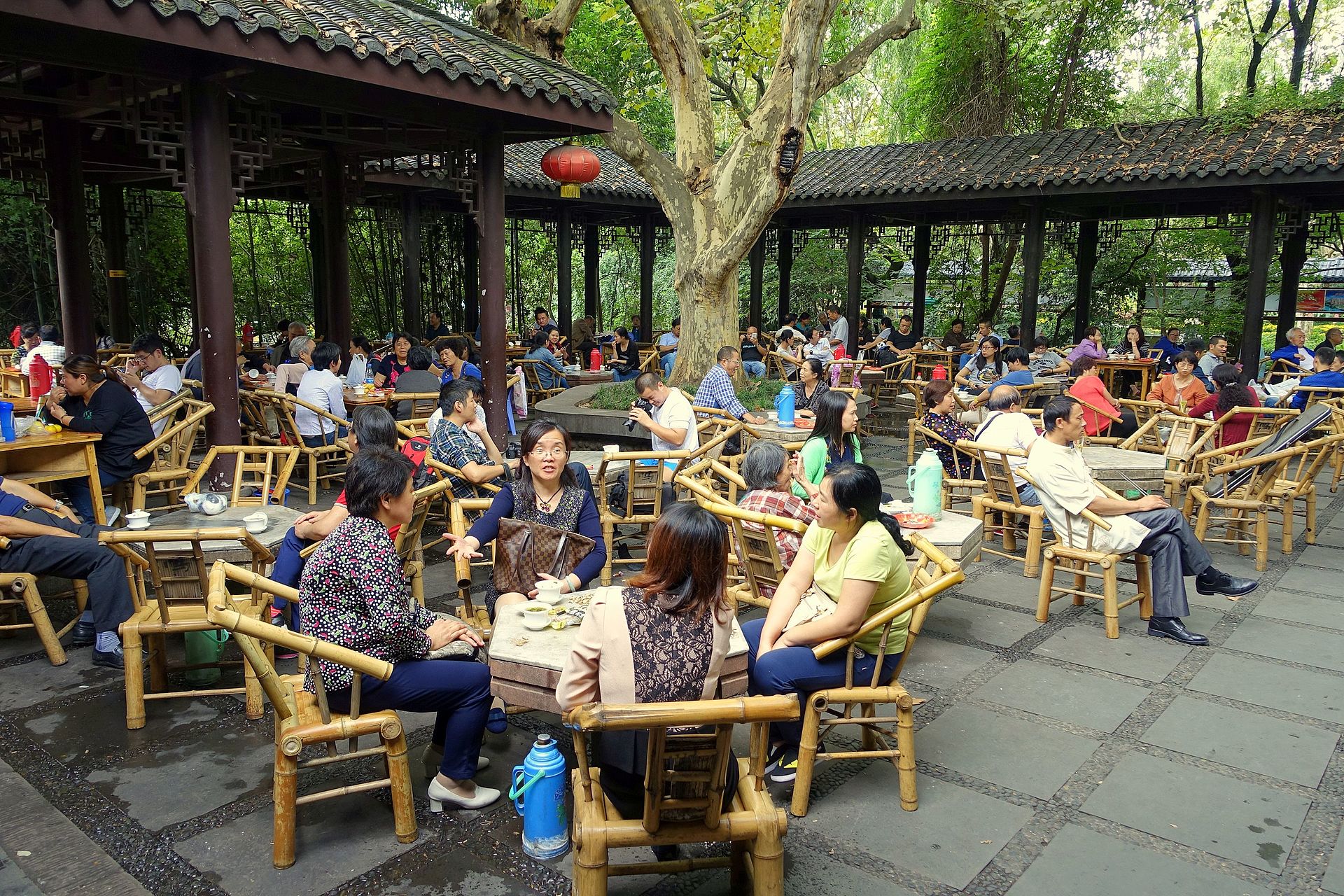
People's Park (Renmin Park) Chengdu in spring — fresh green trees and locals sipping tea by the water People's Park · Spring Great
Spring
March – May · 10–25°C

Spring is many people's favourite: mild temperatures, the city greening up, and occasional drizzle rather than heavy rain. The yellow rape-flower fields (canola blossom) carpet the countryside around Chengdu in March and April — a lovely sight on the way out to Dujiangyan or Mount Qingcheng. It is also a season when the pandas come out to play, since the air has not yet turned hot.

May warms up to 20–25°C and stays pleasant for walking, though the Labour Day holiday (1–5 May) brings a domestic travel surge. Plan around it or book ahead.
Temperature: 10–25°C (March evenings still cool, 8–12°C)
Rain: Moderate — occasional light drizzle
Crowds: Moderate to high around Labour Day
Hotel prices: Mid-range, spiking over the holiday
Get to the Panda Base when it opens at 7:30 am. The pandas feed energetically in the morning, and the cool spring air keeps them outdoors rather than retreating to shelter.
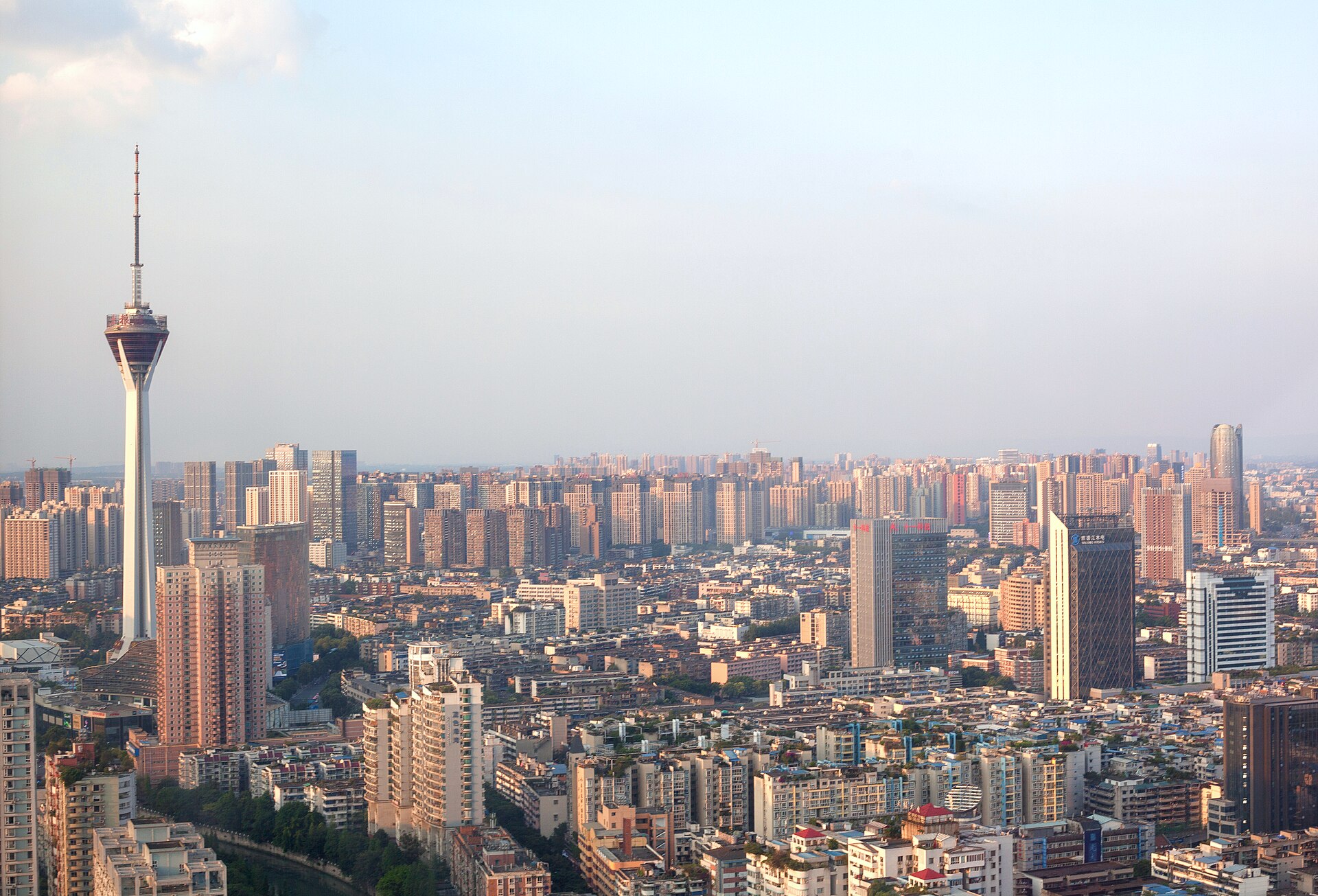
Chengdu city skyline in summer under a heavy, overcast sky Chengdu skyline · Summer Come prepared
Summer
June – August · 22–32°C

Chengdu in summer is hot, humid and wet. July is the rainiest month of the year (around 210 mm), and the rain mostly arrives as afternoon or overnight thunderstorms rather than all-day downpours. The humidity makes it feel muggier than the thermometer reads. The one upside: summer is the sunniest stretch (April–August), so the sky is brighter than the grey winter.

Worth knowing — in the summer heat the pandas retreat to air-conditioned indoor enclosures, so they are harder to spot than in cooler months. If pandas are your main reason for coming, summer is not the ideal window; go as early in the day as you possibly can.
Temperature: 22–32°C (July–August are the hottest)
Rain: Heavy — afternoon/overnight thunderstorms Jun–Sep
Crowds: High (school holidays, family travel)
Hotel prices: Mid-to-high during the school break
In summer, pandas move indoors to escape the heat in the afternoon. Arrive as early as possible (gates open 7:30 am) to catch them awake and feeding.
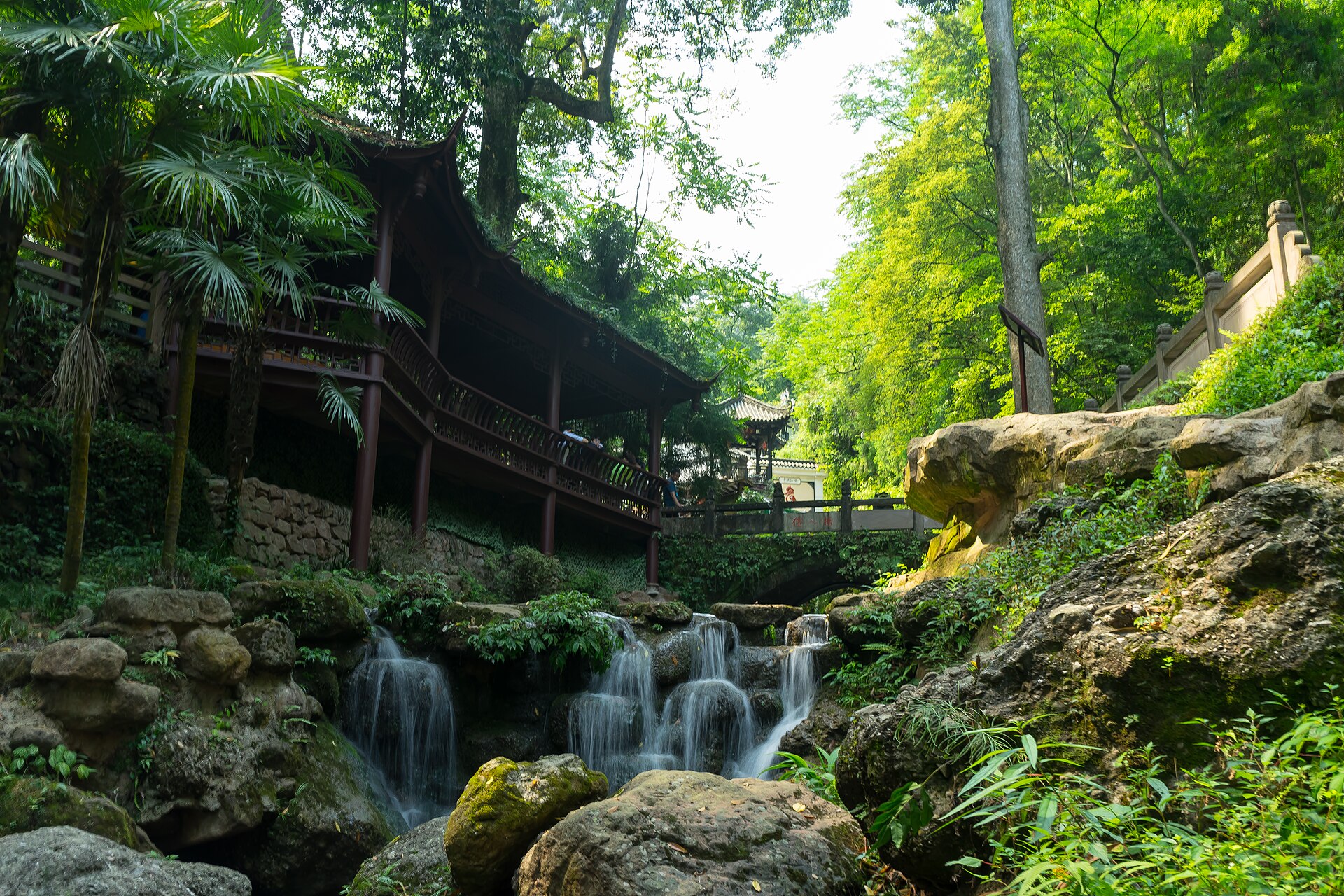
Mount Qingcheng near Chengdu in autumn — lush green forest and Taoist pavilions in mountain mist Mount Qingcheng · Autumn The best
Autumn
September – November · 10–25°C

The other answer to the question of when Chengdu is at its best. The air turns cool and comfortable, the summer rains ease off, and temperatures settle between 10 and 25°C — easy walking all day. By late October and November the leaves begin to turn, and the mountains around the city, like Qingcheng and Emei, are especially beautiful. The cool air also brings the pandas back outdoors.

The only thing to plan around is the first week of October (National Day, 1–7 Oct), when the whole country is on the move. Avoid that week and mid-to-late October is as good as it gets here.
Temperature: 10–25°C (November cools to 8–16°C)
Rain: Easing from summer — some lingers in September
Crowds: High — National Day 1–7 Oct is peak
Hotel prices: High during the October Golden Week
Arrive after October 7. The weather stays good through November, but the crowds thin immediately once the Golden Week ends and prices return to normal. Mid-October to early November is the finest window of the year.
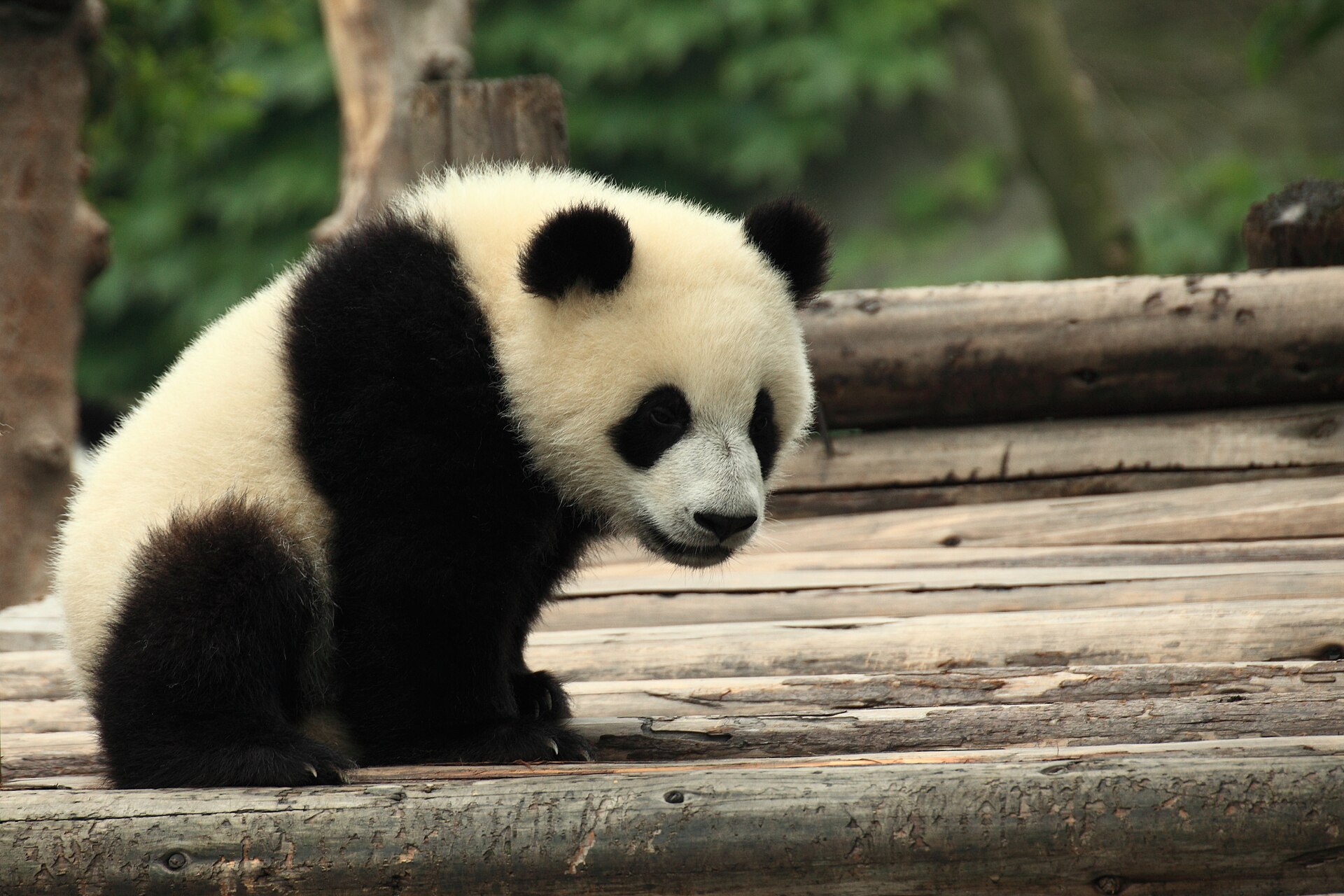
Giant panda at the Chengdu breeding base in winter, munching bamboo in the cool air and looking lively Giant panda · Winter Pandas at their cutest
Winter
December – February · 3–11°C

Chengdu's winter is not bitterly cold — average temperatures run around 3–11°C — but high humidity and an overcast sky make it feel colder than the numbers suggest. Snow is rare. The headline draw is the pandas: winter is when they are at their liveliest all year. Keepers will tell you the cool weather brings them out to tumble and roll around their enclosures, playful and impossible to photograph fast enough. It is also the season of steaming Sichuan hotpot, which has never tasted better.

Chinese New Year (late January or February) is festive, with a Grand Temple Fair at Wuhou Shrine and Jinli Street. But many small restaurants close for one to two weeks, and the major sights are packed. Outside of Chinese New Year, winter is the quietest and cheapest season by a wide margin.
Temperature: 3–11°C (humidity and grey skies make it feel colder)
Rain: Lowest of the year — damp and foggy rather than rainy
Crowds: Low, except Chinese New Year
Hotel prices: Lowest of the year (except Chinese New Year)
During Chinese New Year many small restaurants close for 7–14 days and high-speed rail tickets are hard to get. Plan well in advance.
Month by month

Chengdu every month at a glance

Temperature, rainfall and crowd levels — in one table for easy comparison.

Month Temperature Rain Crowds Notes
January 3–10°C Very low Low Coldest, greyest · lively pandas · cheapest hotels
February 5–12°C Low High (CNY) Chinese New Year — temple fair · some shops close
March 8–17°C Moderate Moderate Rape-flower fields begin · pleasant weather
April 13–22°C Moderate Moderate One of the best months · sun starts to appear
May 17–26°C Moderate High (Labour Day) 1–5 May: crowds and price spike
June 20–28°C Heavy Moderate Rain picks up · afternoon thunderstorms
July 23–32°C Heaviest High (holidays) Hottest, wettest · pandas indoors
August 23–32°C Heavy High (holidays) Still hot · the sunniest month
September 19–27°C Moderate–heavy Moderate Rain easing · weather improving
October 15–22°C Low High (National Day) 1–7 Oct: peak crowds · after 8th: best of the year
November 9–18°C Low Moderate Cool and pleasant · autumn foliage · active pandas
December 5–11°C Very low Low Driest but grey · low prices · hotpot season
When to avoid

The Golden Weeks to plan around

China's national holidays generate the largest annual human movements on Earth. Here is what that means for your trip.

Jan
Feb
Chinese New Year (Spring Festival)
Late January or February · date shifts each year with the lunar calendar

China's largest holiday. Hundreds of millions of people travel home and to tourist destinations at once. In Chengdu, a 15-day Grand Temple Fair runs at Wuhou Shrine and Jinli Street, with Sichuan folk art, face-changing opera, street food and lanterns — genuinely festive. But hotel prices spike, high-speed rail tickets are hard to book, and many small restaurants close for 7–14 days. If you want to experience the festival itself, plan everything well in advance. If you want a normal trip, pick a different time.

1–5
May
Labour Day Golden Week
May 1–5 every year

China's second major holiday window. Domestic tourism surges; the Panda Base, Jinli Street and Wuhou Shrine become difficult to walk through. Hotels fill and prices rise by 30–60%. If you must travel during this period, book accommodation a couple of months ahead and reserve your Panda Base entry tickets online in advance — they sell out fast over the holiday.

1–7
Oct
National Day Golden Week
October 1–7 every year

The largest Golden Week of the year, with hundreds of millions of domestic trips in a single week. Chengdu is one of the top destinations. The Panda Base and major sights become extremely crowded, Panda Base tickets sell out days ahead, and hotel prices hit their annual peak. The weather, though, is excellent — so if you book early and can tolerate crowds, it is doable. The cleaner workaround: come 8–31 October instead. The weather is just as good but the crowds thin noticeably.

Worth knowing about

Festivals that add to the trip

These are reasons to time your visit, not reasons to avoid it.

Jan
Feb
Grand Temple Fair (Spring Festival)
During Chinese New Year · Wuhou Shrine + Jinli Street · 15 days

Chengdu's biggest annual celebration, held at Wuhou Shrine and Jinli Street every Spring Festival. Expect Sichuan folk art, face-changing opera performances, local snacks and lanterns strung throughout the grounds. If your trip happens to land over Chinese New Year, this is an unmissable highlight — just be ready for serious crowds.

Feb
Lantern Festival
15th day of the first lunar month · Tazishan Park

The Spring Festival period closes with the Lantern Festival, which Chengdu stages on a grand scale at Tazishan Park in the east of the city. Enormous themed lantern installations are lit up alongside Sichuan opera and acrobatics. It is beautiful after dark — an authentic slice of Chinese tradition that is hard to find in many other cities.

All
year
Wenshu & Qingyang Temple Fairs
Wenshu Monastery + Qingyang Palace · throughout the year

Beyond Chinese New Year, Wenshu Monastery and Qingyang Palace hold temple fairs and events tied to the Buddhist and Taoist calendars all year. Look for Sichuan snacks, calligraphy, paper-cutting and fortune-telling. Wenshu Monastery also has a peaceful in-temple teahouse — a perfect place to sip tea on a typically grey Chengdu afternoon.

Packing by season

What to bring for each season

Not exhaustive — just the things that actually matter for Chengdu.

Spring
March – May
  • Layering pieces — warm by day, cooler in the evening
  • Compact umbrella or light rain jacket — drizzle is common
  • Comfortable walking shoes — for a full day at the Panda Base and parks
  • Sunscreen — the April sun starts to bite
  • Light long-sleeve layer for the morning queue at the Panda Base
Summer
June – August
  • Breathable fabrics only — linen or technical dry-fit
  • A serious umbrella — frequent afternoon thunderstorms
  • Quick-dry footwear — streets stay wet after rain
  • A reusable water bottle — the humidity is draining
  • Portable fan — the morning Panda Base queue gets hot
  • Insect repellent — mosquitoes are out in the parks and hills
Autumn
September – November
  • Light layers — mornings and evenings 5–10°C cooler than midday
  • A mid-weight jacket — November turns cold quickly
  • Sturdy shoes — for Mount Qingcheng or Mount Emei hikes
  • Camera or a good phone — turning leaves and active pandas
  • Compact umbrella — September can still bring rain
Winter
December – February
  • A proper heavy coat — humidity and grey skies make it feel colder
  • Gloves and a scarf — useful on cold mornings
  • Thermal base layer — for warmth indoors and out
  • Shoes with grip — pavements are damp from morning fog
  • Dining plan for Chinese New Year — research which restaurants stay open
The city every season

Chengdu has charm in every light

Whatever month you arrive, there is something worth seeing.

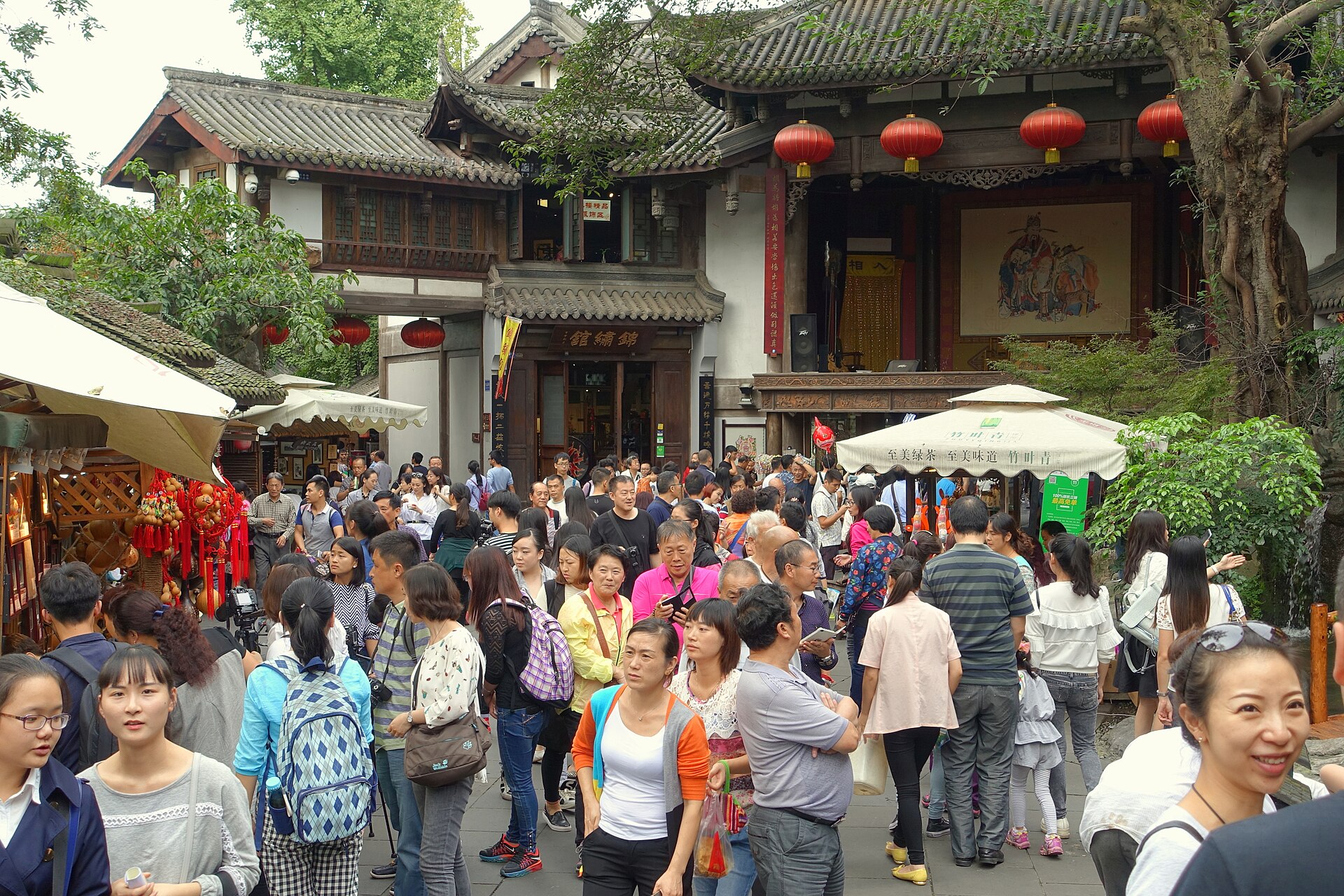
Jinli Ancient Street Chengdu — red lanterns and old Sichuan-style wooden buildings, beautiful in any season
People's Park Chengdu — a lakeside teahouse where locals relax over tea
Chengdu skyline — the sprawling city on the floor of the Sichuan Basin
Frequently asked

FAQ · Before you book

What is the best time to visit Chengdu?
The best windows are spring (March–May) and autumn (September–November), when temperatures are mild, humidity is manageable and rainfall is light. If you can only pick one month, choose October (after the 7th). The yellow rape-flower fields in the surrounding countryside bloom in March–April, and the pandas are noticeably more active than in the summer heat.
Is Chengdu really that cloudy? Will I see any sun?
Yes, it is genuinely overcast. Chengdu sits in the Sichuan Basin, where fog and cloud blanket the city for much of the year, giving it one of the lowest annual sunshine totals in China. There is even a classical idiom — "Sichuan dogs bark at the sun" (蜀犬吠日) — because clear days are rare enough to startle the animals. The sunniest stretch is April to August. But overcast does not mean rain: many grey days stay dry. Pack an umbrella and some layers and you will be fine.
When should you avoid visiting Chengdu?
Avoid the two big Chinese national holidays when the whole country travels at once: National Day (1–7 October) and Chinese New Year (late January or February). During these periods the Panda Base, Jinli Street and Wuhou Shrine are extremely crowded, high-speed rail tickets are hard to book and hotel prices spike. Labour Day (1–5 May) is a smaller third holiday that also brings a domestic travel surge.
When are the pandas most active, and what time of day should I go?
Pandas are most active in cool weather. Keepers consistently say winter (December–February) is when they are liveliest and most playful, followed by spring and autumn. In the summer heat (June–August) they retreat to air-conditioned indoor enclosures and are harder to spot. Whatever the season, go early: the Chengdu Panda Base opens at 7:30 am, and the morning feeding window of roughly 8:00–10:00 am is when pandas are awake and munching bamboo at their most energetic — before their long afternoon nap. See our Chengdu Panda Base guide for the full how-to.
What is the rainiest month in Chengdu?
July is the wettest month (around 210 mm), followed by June, August and September. Chengdu's summer rain tends to arrive as afternoon or overnight thunderstorms rather than all-day downpours. The driest month is December (around 5 mm), though winter trades rain for damp air and grey skies.
Is Chengdu worth visiting in winter?
Yes — and it is when the pandas are at their cutest. Winter temperatures average around 3–11°C, so it is not bitterly cold, but high humidity and overcast skies make it feel colder than the numbers suggest. Snow is rare. The upsides: fewer tourists (outside Chinese New Year), low hotel prices, and a steaming Sichuan hotpot on every corner. Bring a proper coat and a thermal base layer and winter Chengdu is a genuine pleasure. Browse stays at our Chengdu hotel guide.
Klook · Tours & Activities

Book Chengdu tickets in advance — don't gamble on sell-outs at the gate

Panda Base entry, Leshan Giant Buddha and Mount Emei tours, Sichuan face-changing opera shows and day trips — book through Klook before you arrive. Over Golden Week the Panda Base sells out fast, so booking ahead saves the stress.

Browse Chengdu Activities on Klook →
Wherebest is an affiliate partner of Klook — we may earn a commission when you book through our links, at no extra cost to you.