Three lanes, and what to look for in each
The lanes run parallel but feel completely different — walk them left to right and you will see the lot in one loop.
 1
1
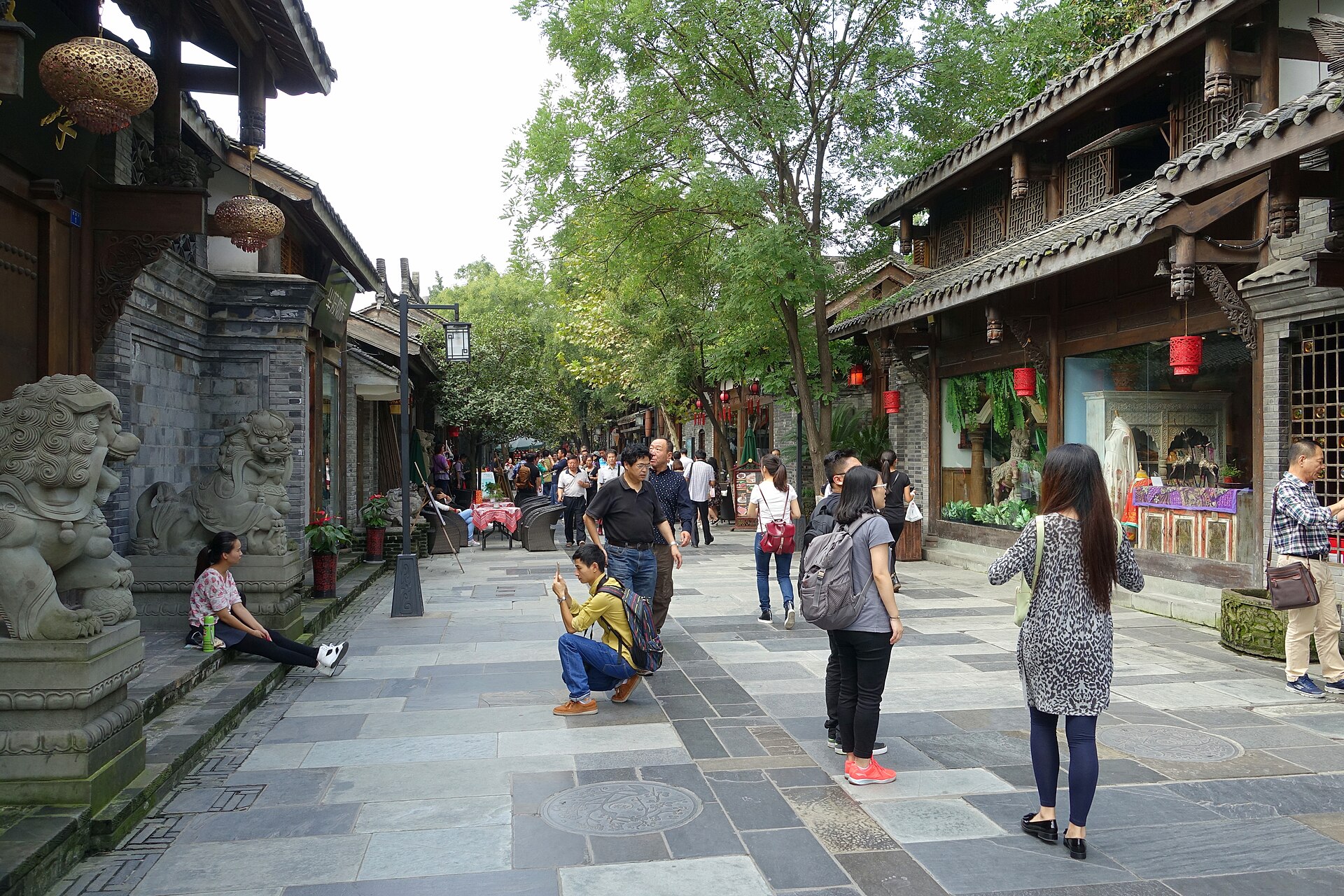
Wide Alley keeps the best-preserved Qing-era courtyard houses — more than twenty restored courtyards in all — and it carries the slowest, most relaxed mood of the three. Several teahouses set out bamboo tables in open courtyards where you can nurse a single pot of tea for an entire afternoon for a few dozen yuan, with staff topping up your hot water as you go. Some offer the classic Sichuan ear-cleaning service (掏耳朵). Take a table, order tea, and watch Chengdu drift past.
 2
2
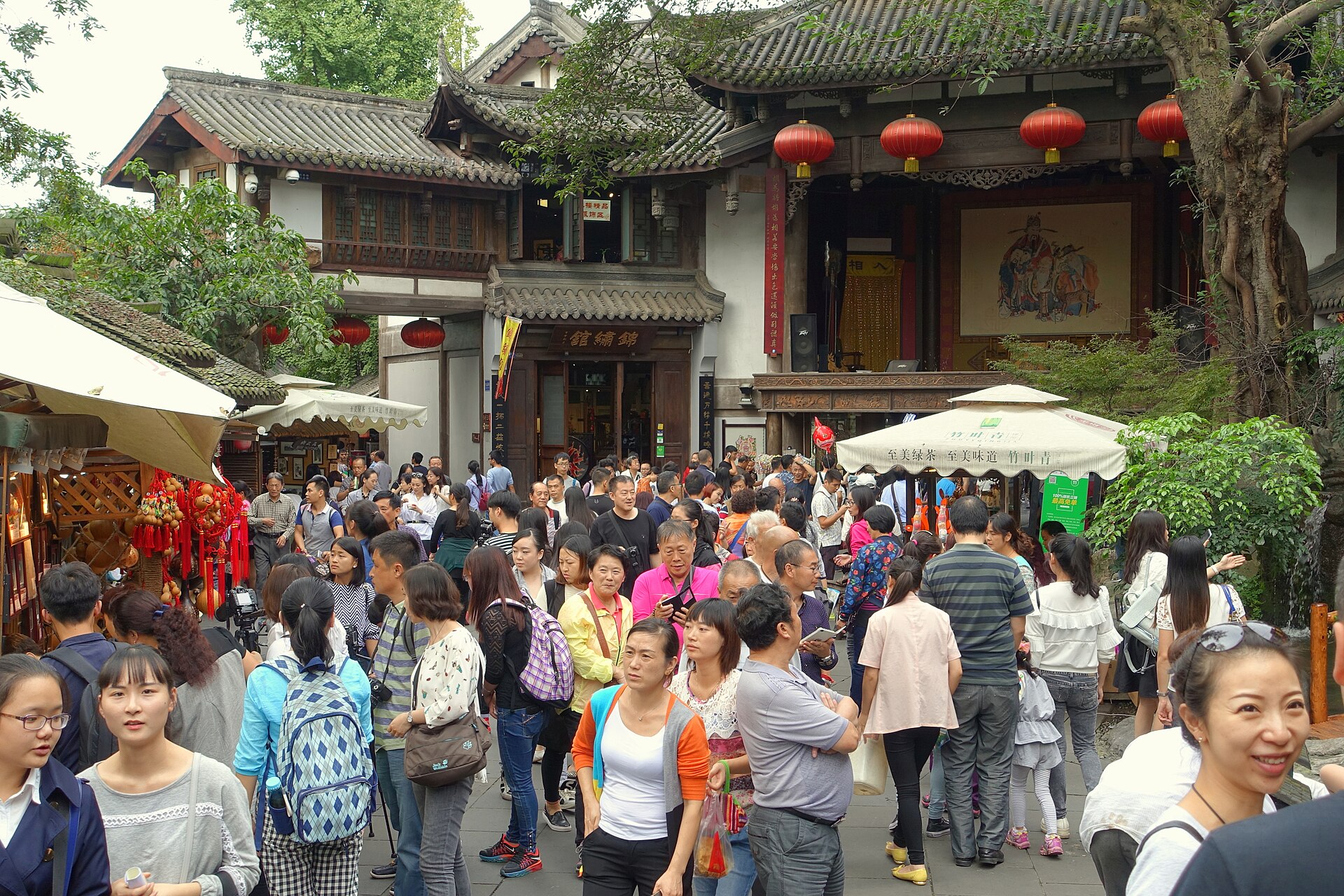
Narrow Alley is the busiest and most energetic lane. Both sides are packed with snack stalls, cafés, bars and Western restaurants tucked into late-Qing and early-Republic buildings. Sichuan street snacks run around 4–6 yuan — grilled corn cakes, danhonggao egg cakes, sticky rice — and grazing your way along is half the fun. Just be warned: weekend afternoons here are genuinely shoulder to shoulder, so a morning visit is far more comfortable.
Well Alley is the third and most modern of the lanes, mixing contemporary art, bars and exhibition space. Its signature feature is the brick museum wall (砖文化墙), which assembles old bricks from different dynasties into a wall that narrates Chengdu's history from the past to the present. Walk it slowly and read the panels and the whole quarter starts to make more sense. By evening this lane takes on a relaxed bar-and-lights atmosphere.
If you are in Chengdu, sit in a teahouse at least once. Kuanzhai Alley has several to choose from: order a single pot and you can stay for hours while staff keep refilling the hot water. Chengdu locals genuinely spend their time this way — nobody is in a hurry. The other thing to try is ear-cleaning (掏耳朵), where a practitioner uses a small kit of tools to clean your ears with surprising delicacy. It sounds strange and feels oddly relaxing — plenty of visitors get hooked. To go deeper on the tea tradition, read about Heming Teahouse in People's Park.
From around 5 pm the red lanterns strung along both sides of the lanes come on, and the warm light against the grey brick makes for far better photos than midday. The crowds thin out, too, as tour groups head off. For souvenirs, you will find panda plush toys, Sichuan embroidery, cured meats and hotpot base to take home, with trinkets starting at a few yuan. For a proper meal, though, walk on — try the Chengdu street food scene or a real Sichuan hotpot.
Close to Kuanzhai Alley, inside Chengdu Culture Park, is the Shufeng Yayun (蜀风雅韵) theatre, which stages Sichuan opera including its signature face-changing act (变脸 Bian Lian) — performers swapping painted silk masks in a fraction of a second, fast enough to look like sleight of hand. It is an art form you can really only see in Sichuan. Shows are usually in the evening and you can book ahead; see the Klook card below. It makes a natural cap to an evening spent walking the lanes.