Home Chengdu China Chengdu Hotels About
Home  ›  China  ›  Chengdu  ›  Attractions  ›  Jinli Ancient Street
Chengdu Attractions · Old Street

Jinli Ancient Street (锦里)
A Three-Kingdoms snack street that glows after dark

Narrow stone lanes, grey-tiled old Chengdu rooftops, rows of red lanterns running into the distance, and the smell of san da pao and stinky tofu drifting between stalls — all of it next door to Wuhou Shrine, and all of it free to walk in.

Why it matters

A street that tells the Three Kingdoms story in lanterns and snacks

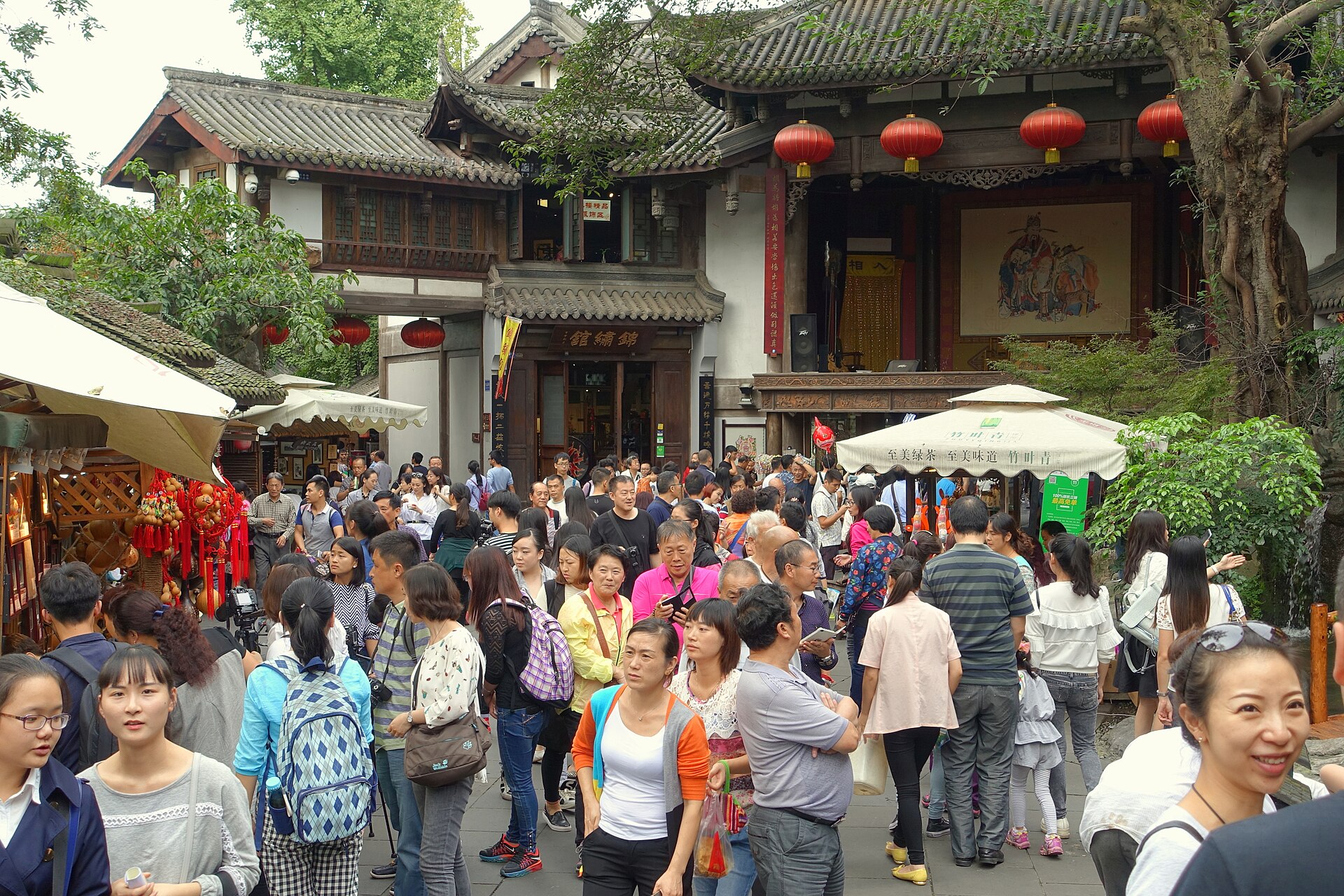
Picture a late afternoon. You walk out of the quiet, solemn halls of Wuhou Shrine, through a dark timber gate, and into a narrow stone lane — and the mood flips instantly. Grey-tiled timber buildings line both sides. Round red lanterns hang in long rows that vanish into the distance. Souvenir shops, teahouses and snack stalls press together, vendors call out for you to taste something, and the smell of brown sugar and toasted soybean drifts over from a san da pao stall where someone is slamming sticky rice onto a brass board with a loud bang. This is Jinli Ancient Street (锦里).

Jinli sits right beside Wuhou Shrine (武侯祠) in southern Chengdu. Historically, this area was one of the busiest commercial districts of the Shu Kingdom (蜀) during the Three Kingdoms period — earning it the nickname "First Street of Shu". What you see today is a pedestrian street rebuilt in Qing-dynasty architectural style, roughly 350 metres long, designed to flow naturally out of the Wuhou Shrine complex next door. Its whole theme and atmosphere are tied directly to the Three Kingdoms (三国) — Zhuge Liang, Liu Bei and the heroes of that era.

Let's be honest up front: Jinli is a full-blown tourist attraction. Many shops sell the same repeated souvenirs, and on weekends the crowds can be shoulder-to-shoulder. But is it beautiful and does it photograph well? Very much so — especially after dark when the lanterns all come on together. The appeal here is the atmosphere and the food, not the shopping. Come to soak up the setting and graze on Sichuan snacks one bite at a time, and you'll enjoy it for what it is.

What to look for

Five things not to miss

Walk it slowly from one end to the other — each stretch has something different to see and eat.

🍡1
San Da Pao (三大炮)
"Three big cannons" sticky-rice sweet · the signature snack of the street

This is the snack you genuinely come to Jinli for. The vendor shapes mashed sticky rice into balls and slams them hard onto a brass board three times — "bang, bang, bang", like three cannon shots, which is exactly where the name comes from. The rice balls bounce down into toasted, ground soybean and get drenched in brown sugar syrup. The result is chewy, warm and lightly sweet, best eaten straight away. Around ¥10–15 a portion, and watching the making is half the fun.

Price: ~¥10–15 (~฿50–75) per portion
Tip: Stand and watch the rice-slamming — it's a small show that makes a fun clip
🥟2
Beef Pastry (牛肉焦饼)
Crisp pastry filled with Sichuan-spiced beef · eat it hot off the griddle

A round pastry stuffed with minced, Sichuan-spiced beef, then fried or baked until the outside turns crisp and golden-brown. Bite in and you get the crunch of the shell and a juicy, spice-laced filling — mildly hot, fragrant with chilli and Sichuan seasonings, and substantial enough to fill a gap. It pairs well with something sweet like san da pao to balance the heat. Stalls in Jinli make them fresh to order, so you wait a little but eat it hot, which is well worth it.
Price: ~¥8–15 (~฿40–75) per piece
Heat: Mildly spicy, fragrant with Sichuan seasoning — manageable for most
Jinli Ancient Street, Chengdu — a narrow stone lane lined with grey-tiled old Chengdu timber buildings, red lanterns and snack stalls, crowded with visitors 3
Red Lanterns After Dark
When Jinli looks its best · after sunset

This is the main reason crowds pour in during the evening. Once the daylight softens, the round red lanterns strung along both sides of the street switch on together. The warm red glow reflects off the grey-tiled roofs and the stone lane, and the place becomes the picture-book old Chinese street so many people have in their heads. The sweet spot is dusk — around 6.30 to 7.30 pm — when the sky still holds a deep blue but the lanterns are already lit. That two-tone light photographs best. Walk slowly and look for an angle where the lanterns recede deep into a lane.

Best time: Dusk, ~6.30–7.30 pm (before the sky goes fully dark)
Best angle: Shoot from the head of a lane so the lanterns line up into the distance
⚔️4
The Three Kingdoms Theme (三国)
Stories of the Shu Kingdom tucked into corners along the lane

Jinli isn't only a food street — the Three Kingdoms story runs through the whole length of it, because it flows directly out of Wuhou Shrine, which honours Zhuge Liang and Liu Bei. As you walk you'll pass wall paintings, statues and decorative touches that reference characters and scenes from the Three Kingdoms. Some shops sell souvenirs themed on the Shu generals; some corners host a small opera stage or folk performance. If you've read the Three Kingdoms saga you'll enjoy spotting the references; if you haven't, the design and colour still carry the walk.

Connects to: Wuhou Shrine (武侯祠) next door — a natural pair to visit together
Look for: Wall paintings and statues along the lanes referencing Three Kingdoms figures
Chengdu at night — an old riverside district with lit buildings and people out walking, standing in for the bar-street atmosphere at the far end of Jinli 5
The Bar Street at the Far End
Where Jinli shifts into a night-time mood

Keep walking past the food stalls to the far end and the mood gradually changes. The tail of Jinli has a cluster of small bars and drinking spots that stay open later than the rest of the street. The red lanterns are still there, now joined by bar lighting and music. It's a good place to rest your legs after a whole evening of walking — order a drink and watch the crowd pass by, a relaxed way to round off the night. Drinks cost a little more than outside the tourist zone, so glance at the menu before you order.

Open until: Later than the food stalls — some places run to midnight
Good for: A rest-stop nightcap · check drink prices before ordering
Before you go

Hours, entry and how to get there

Everything you actually need to know, in one place.

Admission
Free
The pedestrian street has no entry fee · The adjacent Wuhou Shrine is a separate ticket of ~¥50 (~฿250) if you want to visit it
Opening hours
Shops approx. 8 am–10 pm
The street is an open-air lane you can walk any time · The bar street at the far end runs later · Check the hours of any specific shop you want before you go
Metro
Line 3 / Line 5 — Gaoshengqiao
Exit C or D and walk ~10 minutes · Or Line 10 to Wuhou Shrine station (武侯祠), then ~200 m to the Wuhou Shrine side
Time needed
1.5–2 hours (street only)
The street is ~350 m long — comfortable to walk, graze and photograph · Add Wuhou Shrine and it's a half-day
Best time to visit
Evening, 5–8 pm
When the red lanterns light up the whole street — the most photogenic moment · Arrive mid-afternoon, do Wuhou Shrine first, then step into Jinli as the lanterns come on
When it's quietest
Weekday mornings
Weekends and Golden Week (1–7 October) get shoulder-to-shoulder · Come on a weekday morning to walk in comfort
Worth knowing: Jinli and Wuhou Shrine sit right next to each other. The smartest plan is to visit Wuhou Shrine in the afternoon (ticket ~¥50), then walk out into Jinli at dusk as the lanterns are coming on — you get the Three Kingdoms history and the night-time street atmosphere in a single trip.
Getting there

Easy to reach by metro

Jinli sits in southern Chengdu, right beside Wuhou Shrine. It's easy to reach by metro or by DiDi:

Metro Line 3 / Line 5
Gaoshengqiao station (高升桥) · ~10-minute walk

The most common route is Line 3 or Line 5 to Gaoshengqiao. Take exit C or D and follow the signs toward Wuhou Shrine — about a 10-minute walk to the Jinli entrance. Double-check the current line and exit before you go, as Chengdu keeps expanding its metro network.

Fare: ~¥2–5 · Walk: ~10 minutes
Metro Line 10
Wuhou Shrine station (武侯祠) · ~200 m walk

Line 10 has a Wuhou Shrine station that drops you closer — from there it's roughly a 200-metre walk to the Wuhou Shrine side, which connects straight into Jinli. This is the best option if you plan to visit the shrine first and continue into Jinli on the same trip.

Fare: ~¥2–5 · Walk: ~200 m
Taxi / DiDi
~15–25 minutes from the centre

From the Tianfu Square area or Chunxi Road, a taxi or DiDi to Jinli takes about 15–25 minutes depending on traffic. Tell the driver "Wuhou Ci" (武侯祠) to be dropped at the right spot. Evenings can be slow because of the crowds heading in, so allow a little extra time.

Time: ~15–25 min · DiDi: pay easily via Alipay/WeChat
Half-day Three Kingdoms plan
Wuhou Shrine + Jinli + Sichuan snacks

With a free half-day: start at Wuhou Shrine in the afternoon (2–4.30 pm), walk the red-wall bamboo path, then come out into Jinli at dusk as the lanterns light up. Try san da pao and beef pastry, and walk all the way down to the bar street at the far end to round off the evening.

Total time: 4–5 hours · Budget: ¥80–150 per person incl. shrine ticket and snacks
Where to stay in Chengdu

Hotels with easy access to Jinli

Chengdu is easy to get around by metro, so staying central — near Tianfu Square or Chunxi Road — puts Jinli a short ride away. Here are the hotels we've reviewed in the city:

Frequently asked

FAQ · Before you visit Jinli

Is Jinli Ancient Street free, and what are the opening hours?
Yes, Jinli Ancient Street is free to enter — no ticket required. The street is an open-air pedestrian lane you can walk through at any time; most shops open around 8 am to 10 pm, and the bar street at the far end stays open later. The adjacent Wuhou Shrine is a separate museum with its own ticket of around ¥50 (~฿250).
How do I get to Jinli Ancient Street by metro?
The easiest route is Metro Line 3 or Line 5 to Gaoshengqiao station, then exit C or D and walk about 10 minutes. Alternatively, Metro Line 10 has a Wuhou Shrine station (武侯祠) — from there it's roughly a 200-metre walk to the Wuhou Shrine side, which connects straight into Jinli. Chengdu's metro is expanding quickly, so check the current line and exit before you go.
What is the best time to visit Jinli Ancient Street?
Evening is best, roughly 5 pm to 8 pm, when the red lanterns light up along the whole street and the atmosphere is at its most photogenic. To avoid the worst crowds, come on a weekday morning instead — quieter to walk, but without the lantern glow. The ideal plan is to arrive in the late afternoon, visit Wuhou Shrine first, then step out into Jinli just as the lanterns come on. Avoid Golden Week (1–7 October) if you can.
What should I eat at Jinli Ancient Street?
The classic to try is san da pao (三大炮) — sticky-rice balls slammed onto a brass board three times with a loud bang, then rolled in soybean flour and brown sugar syrup. Also worth a bite is beef pastry (牛肉焦饼), a crisp pastry filled with Sichuan-spiced beef. Beyond those you'll find stinky tofu, liangfen cold noodles, dumplings and plenty more Sichuan street snacks. For a serious session afterwards, head to Chengdu's street-food neighbourhoods.
How long do I need at Jinli, and what should I combine it with?
The street is about 350 metres long; allow 1.5 to 2 hours to walk it and graze on snacks. The natural pairing is Wuhou Shrine (武侯祠) right next door — together they make a neat half-day on the Three Kingdoms theme. If you want a serious street-food session afterwards, head on to Chengdu's street-food neighbourhoods.
Klook · Chengdu Tours & Activities

Plan the rest of your Chengdu trip — book tours and activities ahead

Jinli is free, so there's no ticket to buy. But if you want to pair it with the Panda Base, a Sichuan-opera face-changing show or a day trip to the Leshan Giant Buddha, booking ahead on Klook is convenient and often cheaper than buying on the spot.

See Chengdu activities on Klook →
Wherebest is an affiliate partner of Klook — we may earn a commission when you book through our links, at no extra cost to you.