Home Hangzhou China Hangzhou Hotels About
Home  ›  China  ›  Hangzhou  ›  First-Timer Guide
Hangzhou First-Timer Guide · 2026

Your first trip to Hangzhou
Everything you need, nothing you don't

The city Chinese poets have written about for a thousand years — West Lake in the morning mist, an ancient Zen temple in the hills, and terraced green-tea fields at the edge of town. This guide is built from verified facts and real visitor accounts to get you ready before you land.

Why start here

Hangzhou is China at its most beautiful

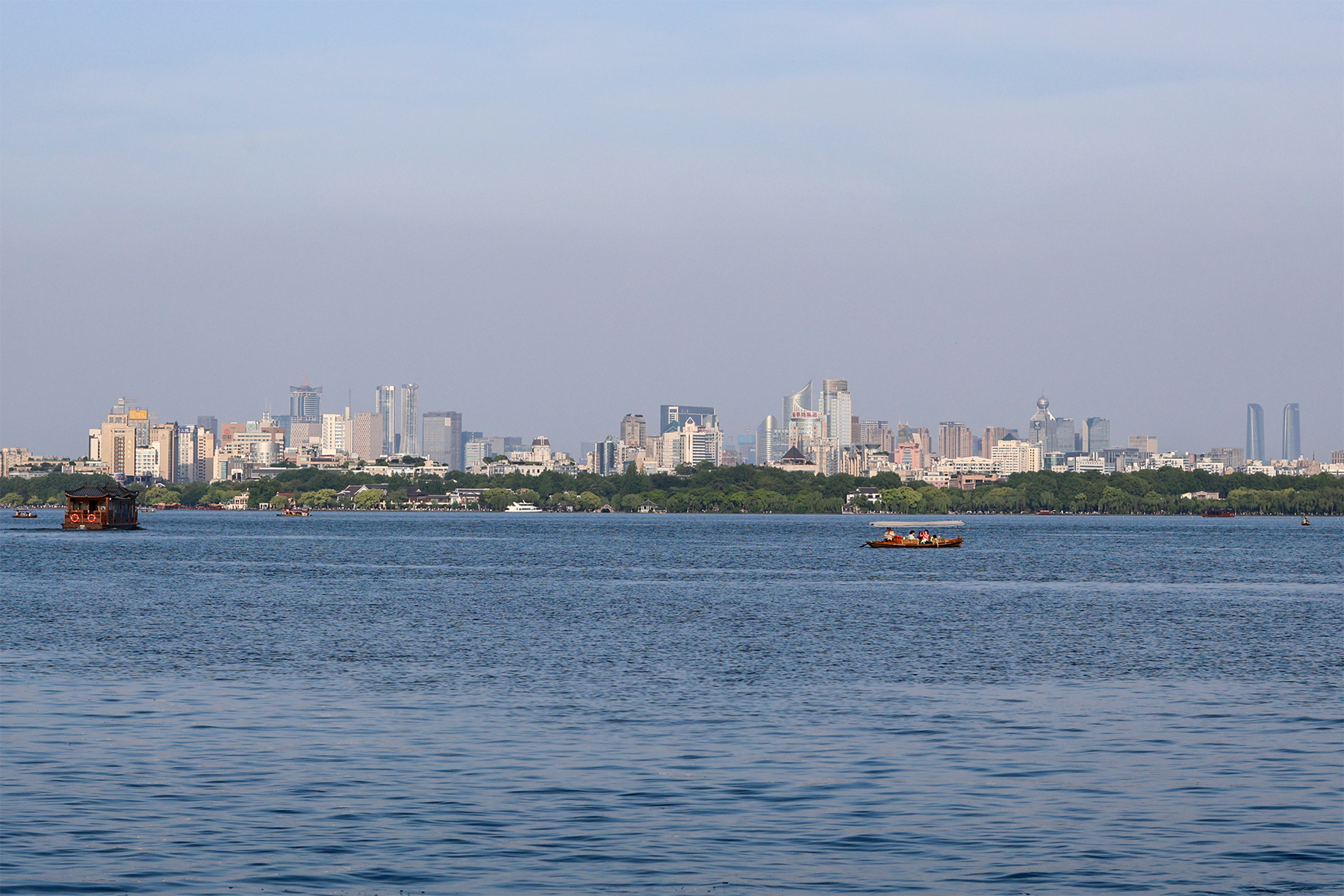
If you want a side of China that isn't all skyscrapers and traffic — the China that classical painters spent centuries trying to capture — Hangzhou is the place. The old Southern Song capital is the city Chinese tradition pairs with Suzhou in the saying "above there is heaven, below there is Hangzhou and Suzhou." Its heart is West Lake, a UNESCO World Heritage Site you can walk around, cycle alongside or cross by boat, ringed by hills and dotted with pavilions and pagodas.

Easy to get around — 12 metro lines connect the airport, the high-speed rail stations and West Lake; fares run ¥2–9 (~฿10–45) per ride. Genuinely safe — crime rates are low, and walking around the lake in the evening is routine. Pairs perfectly with Shanghai — the high-speed train from Shanghai takes just 45–60 minutes, so many travellers add Hangzhou to the end of a Shanghai trip, or build a Shanghai–Suzhou–Hangzhou triangle in one journey.

A note on this guide: All prices, hours and logistics here are drawn from public sources and verified visitor accounts. Details change — check for the latest before you travel.
Trip planning

How many days do you need?

Two to three days covers the main highlights without rushing: West Lake, Lingyin Temple, the Longjing tea hills and Hefang old street. Four to five days lets you slow down, circle the whole lake on foot or by bike, and add a high-speed-rail day trip to a nearby city.

🗓️
3 Days — the essential Hangzhou
The right answer for most first-timers

Day 1: Walk the Bai Causeway and Su Causeway around West Lake, take a boat to the island pavilions, finish at Leifeng Pagoda for sunset. Day 2: Lingyin Temple and Feilai Feng first thing in the morning, then the Longjing tea hills for an afternoon cup. Day 3: Hefang old street and the Grand Canal.

Full day-by-day plan: 3-day itinerary →
📆
4–5 Days — more depth, a day trip
The version most people wish they had booked

Days 1–3 as above, at a slower pace. Day 4: Xixi Wetland for nature, or cycle a full loop of West Lake. Day 5: A high-speed-rail day trip to Suzhou (1–1.5 hours, UNESCO classical gardens) or Shaoxing, the home of rice wine and the writer Lu Xun.

Where to go nearby: day trips from Hangzhou →

Plan in detail: 3-day itinerary · Hangzhou trip budget · day trips nearby

Before you fly

Best time to go & visas

When to visit
Spring and autumn are the sweet spots

March to May: mild temperatures, peach blossom and fresh green willows along the causeways — the lake at its prettiest. September to November: the clearest skies of the year, comfortable walking weather, and sweet osmanthus (桂花) scenting the entire city. Many regular visitors consider autumn the best season. In winter, if you are lucky, you might catch West Lake under snow — a rare sight worth the cold. Full breakdown at when to visit China →

Avoid: Golden Week (1–7 May and 1–7 Oct) and Chinese New Year (Jan/Feb) — West Lake gets overwhelmed and prices surge
Entry requirements
Visa-free for many nationalities — verify before booking

As of 2026, Thai passport holders enter China visa-free for up to 30 days for tourism. Many other nationalities have similar arrangements. Policy changes without much notice, so check the current rules at China visa-free entry guide → before committing to flights. Have your passport, a hotel booking and a return ticket ready.

Passport validity: At least 6 months remaining is strongly recommended
Getting to the city

From the airport or rail station

Hangzhou's main airport is HGH (Xiaoshan International), about 27 km east of West Lake — this is where direct flights from Bangkok land. If you are arriving by high-speed rail from Shanghai or elsewhere, you'll most likely come into Hangzhou East Railway Station (杭州东), the city's main rail hub.

From HGH (Xiaoshan)
Where flights from Bangkok arrive

Metro: Lines 1 and 7 both run to the airport. About ¥8 (~฿40) to West Lake, roughly 50–70 minutes; Line 1 reaches Longxiangqiao station, a 5-minute walk from the lake. Airport Express bus: ~¥20–30 (~฿100–150) to West Lake or the rail stations, around 60 minutes. Taxi or DiDi: ~¥120–150 (~฿600–750) into the city, about 50 minutes. There is no maglev at Hangzhou.

Full options with timings: airport transfer guide →
From the high-speed rail station
Arriving from Shanghai, Suzhou or beyond

Hangzhou is a major high-speed-rail hub — from Shanghai Hongqiao it's just 45–60 minutes, Suzhou around 1–1.5 hours, Huangshan (Yellow Mountain) about 1.5 hours. Most trains arrive at Hangzhou East, where you can transfer to Metro Lines 1 or 4 straight into the city. Book ahead with the China high-speed rail guide →

Tip: Use your passport to tap through the station gates — no need to exchange for a paper ticket
In the city

Getting around & paying for things

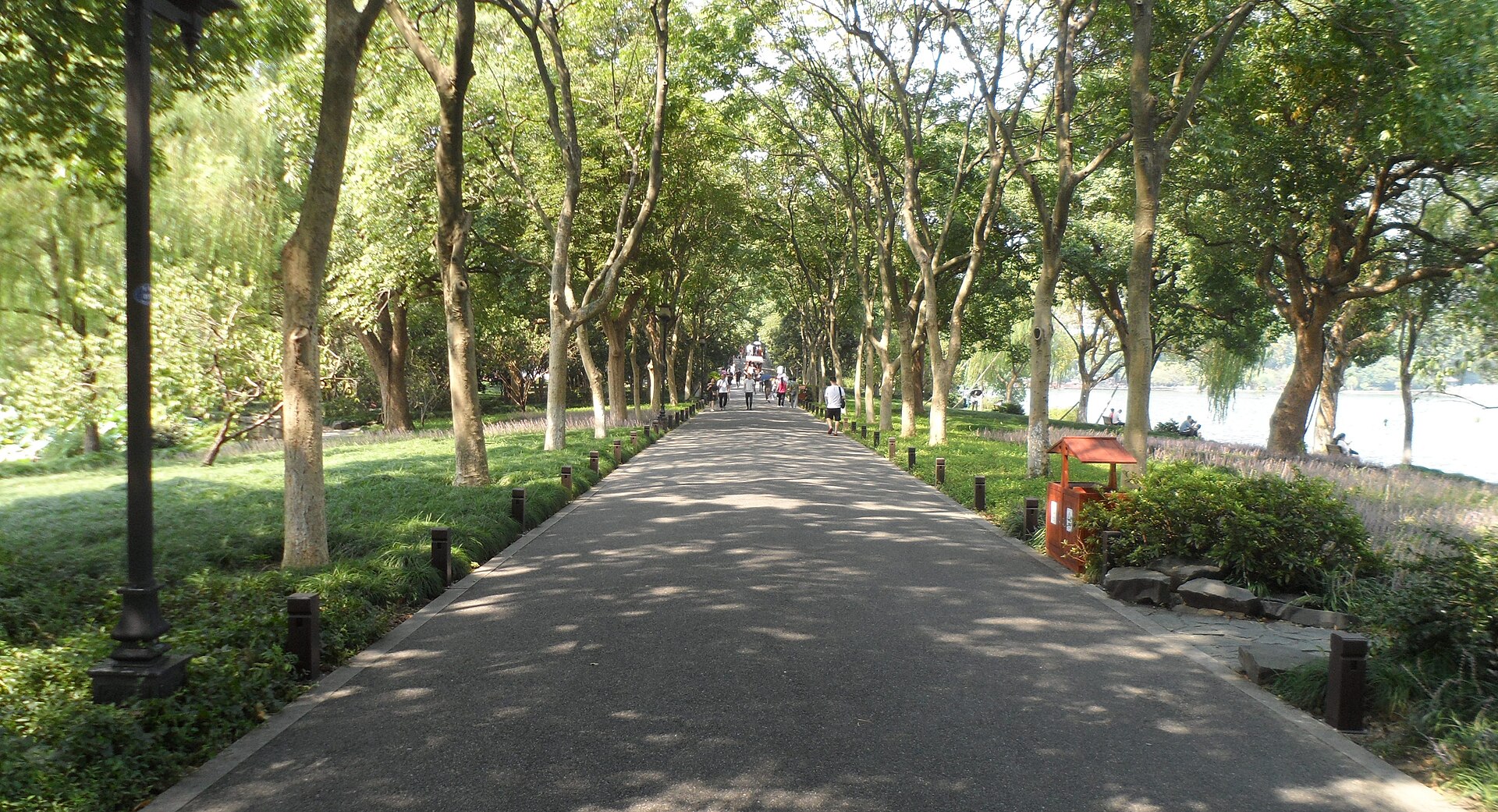
Su Causeway, West Lake, Hangzhou — a willow-lined walkway crossing the water with arched stone bridges and strolling visitors
Metro, walking and cycling
12 lines · airport, rail and West Lake covered

Hangzhou's metro runs 12 lines, fares ¥2–9 (~฿10–45) per journey. Key stations: Longxiangqiao (Line 1) is a 5-minute walk from West Lake; Ding'an Road (Line 1) is closest to Hefang old street. Pay by scanning an Alipay or WeChat Pay QR code at the gate. One thing to know: there is no metro directly to Lingyin Temple or the Longjing tea hills — take bus 7 or 27, or a DiDi. Around the lake itself, walking and cycling are the nicest way to move. Full guide at getting around Hangzhou →

Navigation: Use Amap (Gaode Maps) or Apple Maps — Google Maps does not work in China
💳
Paying for things
Alipay · WeChat Pay · credit card · cash backup

Hangzhou is the home of Alipay — Ant Group is headquartered here — so the whole city runs on mobile payment. Street stalls, tea houses and small restaurants often take Alipay or WeChat Pay only, with no card reader at all. Hotels, international restaurants and large stores accept Visa and Mastercard. Set up the tourist version of Alipay before you leave home: it accepts foreign Visa and Mastercard and works immediately. Alternatively, withdraw yuan from a Bank of China or ICBC ATM on arrival. Full guide: paying in China →

Internet: Google / social media blocked without VPN — see VPN & eSIM guide →
Accommodation

Which area should you stay in?

Hangzhou spreads out, but the main attractions cluster around West Lake. Choosing the right area before you book a hotel saves time every day of the trip. Full neighbourhood guide →

East shore / Hubin (湖滨)
The best first-timer base

Step out of your hotel and you're at West Lake — perfect for an early-morning walk along the water before the crowds. The Hubin shopping district and Hefang old street are close by. Hotels here sit at the upper end of the price range, but the position pays for itself in time saved.

Best for: First-timers who want to walk the lake every day
Wulin Square (武林)
The downtown hub — malls and metro

Hangzhou's CBD, where the department stores, restaurants and metro lines converge. You can walk to the north shore of the lake from here. A good base if you want shopping and easy transport, with hotels across every budget.

Best for: Shoppers, metro-focused trips, all budgets
Qianjiang New City (钱江新城)
The modern riverside CBD

On the Qiantang River, with modern towers, the conference centre and an evening skyline. Suited to business travellers or anyone who prefers a newer area at better value than the lakeside — though you'll take the metro in to see West Lake.

Best for: Business visits, modern-city fans, mid-range budgets
Lingyin / West Hills
Quiet, near temple and tea

The western hills near Lingyin Temple and the Longjing tea fields are quiet and leafy, with luxury resorts tucked into the tea slopes. The choice for travellers who want to wake up surrounded by nature and rest properly, in exchange for a drive into town.

Best for: Couples, honeymoons, anyone after peace and quiet
Near Hangzhou East Station
Practical for rail connections

If your trip involves several cities, or you're connecting onward by high-speed rail to Suzhou or Shanghai, the area around Hangzhou East is the most efficient base. Metro Lines 1 and 4 run from the station, though there's less to see on your doorstep.

Best for: Multi-city trips, fast in-and-out travellers
The highlights

Sights that first-timers shouldn't miss

Hangzhou has more to see than most visitors can cover in a single trip. These six are the core — the places that best explain why poets kept coming back. Full details at Hangzhou attractions → or pick a day trip at day trips from Hangzhou →

West Lake, Hangzhou — a wide stretch of water reflecting green hills, willow-lined causeways and a wooden rowing boat
Free · UNESCO site · open 24 hours

The heart of Hangzhou, and the scene printed on the ¥1 note. A UNESCO World Heritage lake ringed by hills, crossed by the Bai and Su Causeways. The classical "Ten Scenes of West Lake" are the viewpoints poets have written about for a thousand years. Walk it, cycle it, or take a boat across.

Metro: Longxiangqiao, Line 1 (5-minute walk)
Lingyin Temple, Hangzhou — a multi-tiered Zen temple hall set among green forest, with incense smoke rising
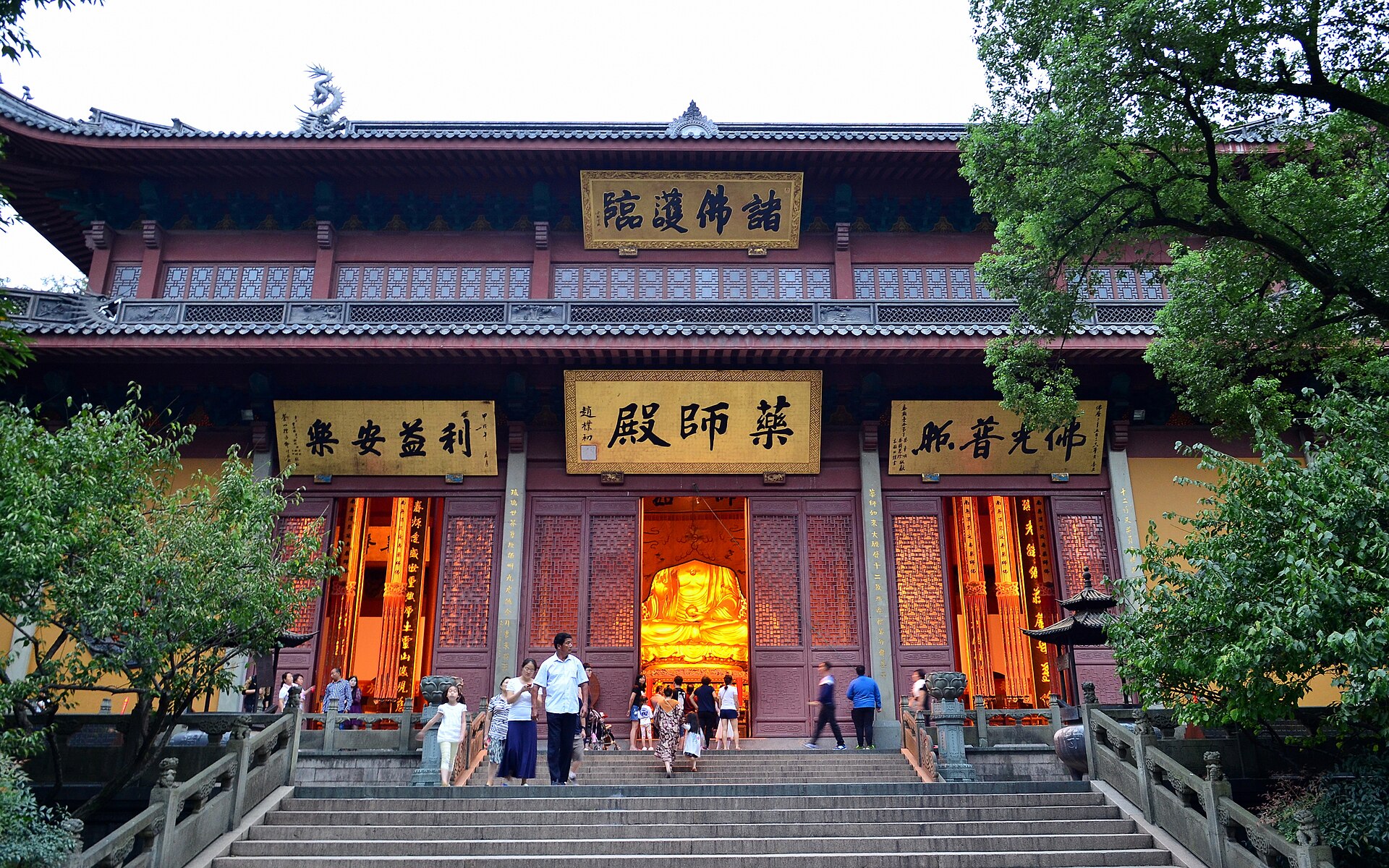
Ticket ~¥75 (incl. Feilai Feng) · open 7 am–5.30 pm

A roughly 1,700-year-old Zen temple set in a forested valley, home to a huge camphor-wood Buddha and the hundreds of Buddhist figures carved into the rock of Feilai Feng peak alongside it. Green hills, incense, the sound of chanting — quiet enough to forget you're in a city.

Getting there: Bus 7/27 or DiDi (no direct metro)
Longjing tea fields, Hangzhou — terraced rows of green tea bushes on a hillside with a farmer picking leaves
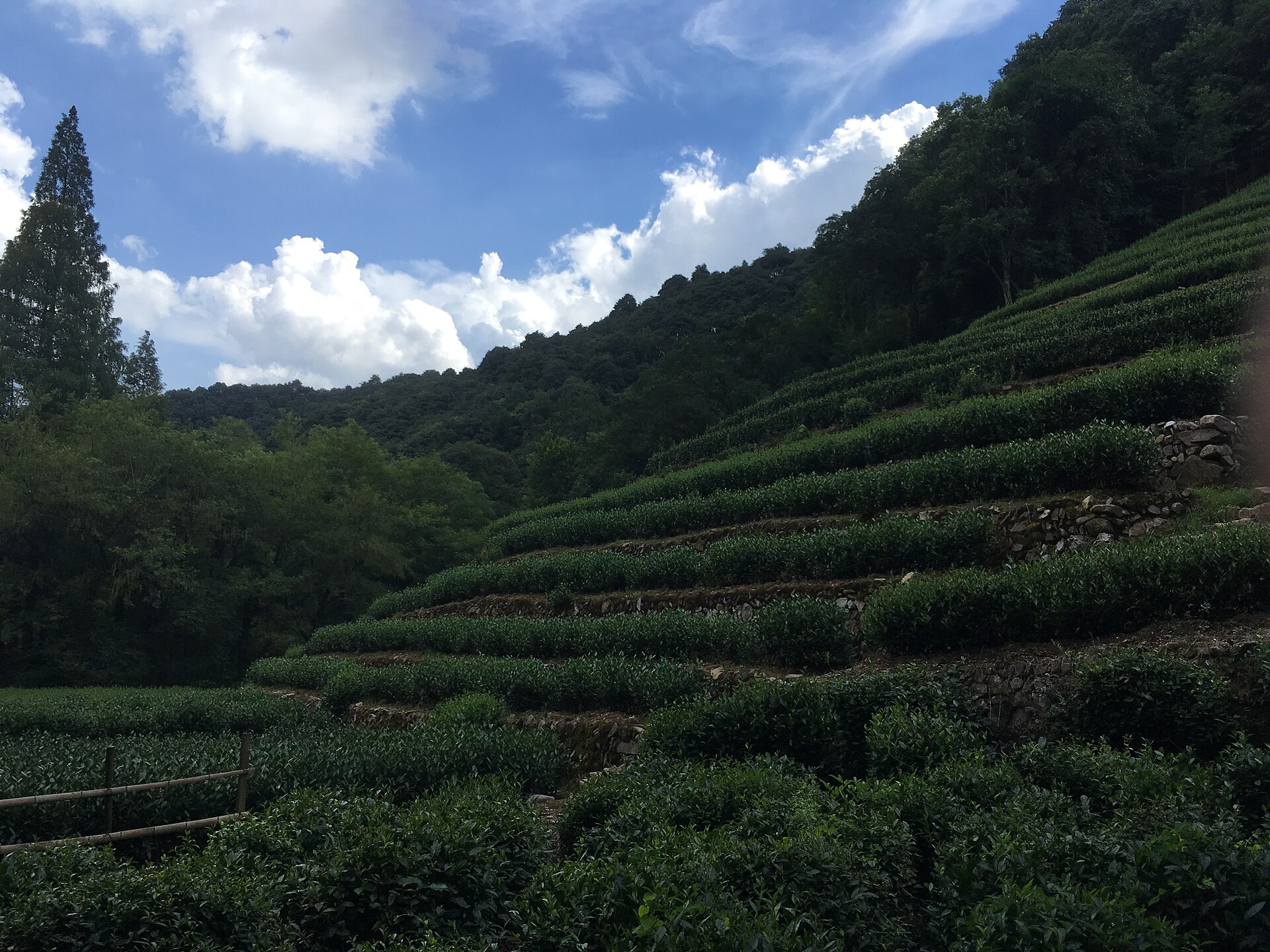
Free to wander · China's most famous green tea

A tea village on the western hills above West Lake, with terraced green tea bushes that look good in any season. Longjing (Dragon Well) is China's premier green tea. Sit for a cup in a grower's tea house, or walk the slopes during the spring harvest in March and April.

Getting there: Bus or DiDi from the lake, ~15–20 minutes
Leifeng Pagoda, Hangzhou — a tall pagoda on the shore of West Lake at sunset against a golden-orange sky
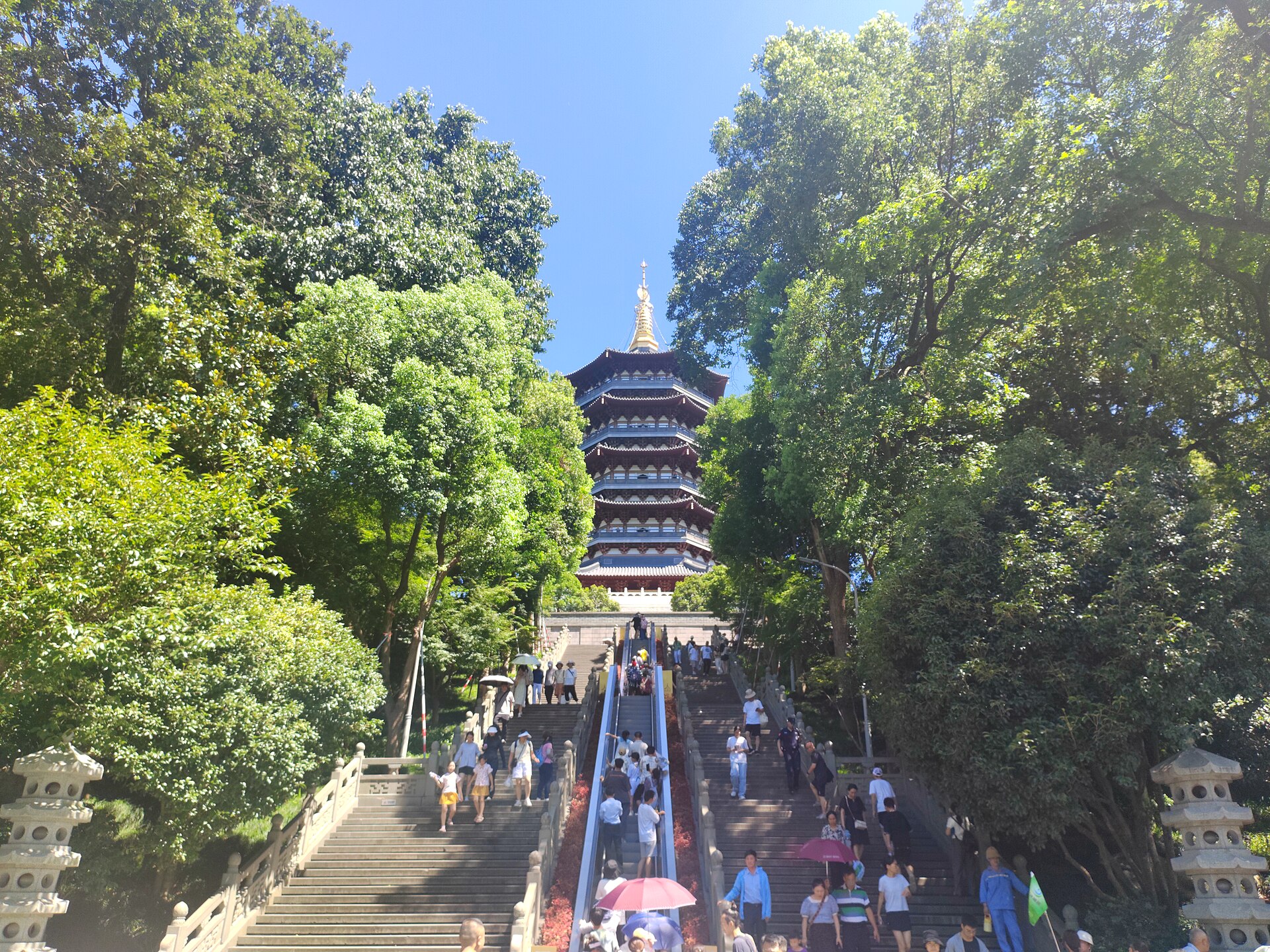
Ticket ~¥40 · the best sunset spot in town

A pagoda on the south shore tied to the legend of the White Snake. Climb to the upper floors for a view across the whole lake. "Leifeng Pagoda at Sunset" is one of the classic Ten Scenes — in the evening, golden light spreads across the water and you'll find yourself stopping to photograph it.

Metro: Near the south end of the Su Causeway, then bus or lakeside walk
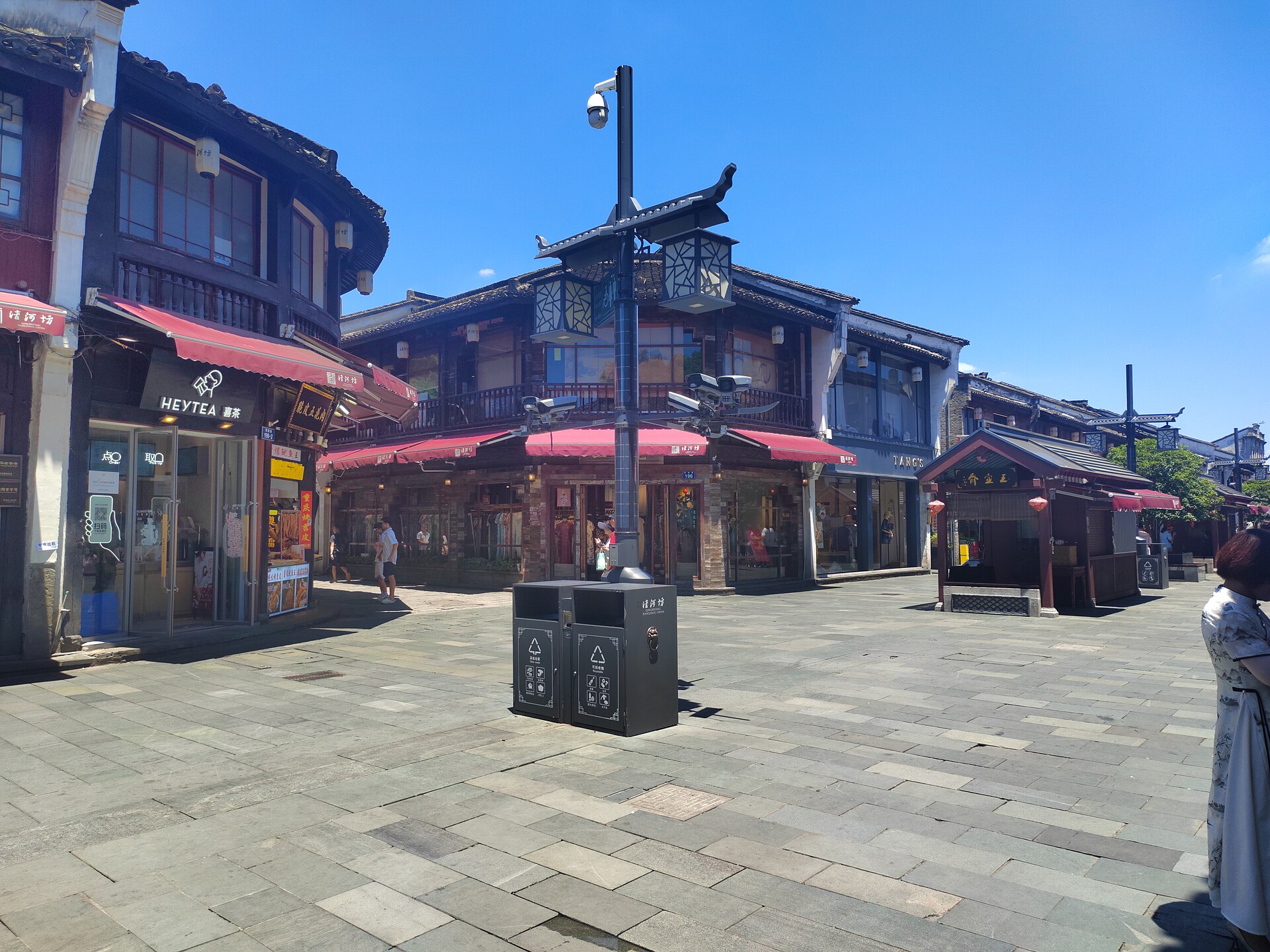
Hefang old street, Hangzhou — a pedestrian street of antique wooden shopfronts, red signs and lanterns busy with visitors
Free · shops open 10 am–10 pm

A Qing-dynasty-style pedestrian street at the foot of Wushan Hill: antique wooden buildings, shops selling tea, traditional medicine, silk fans and snacks. To try Hangzhou street food, walk it in the evening — the smell of cooking, the shop calls and the red lanterns feel like stepping back in time.

Metro: Ding'an Road, Line 1 (10-minute walk)
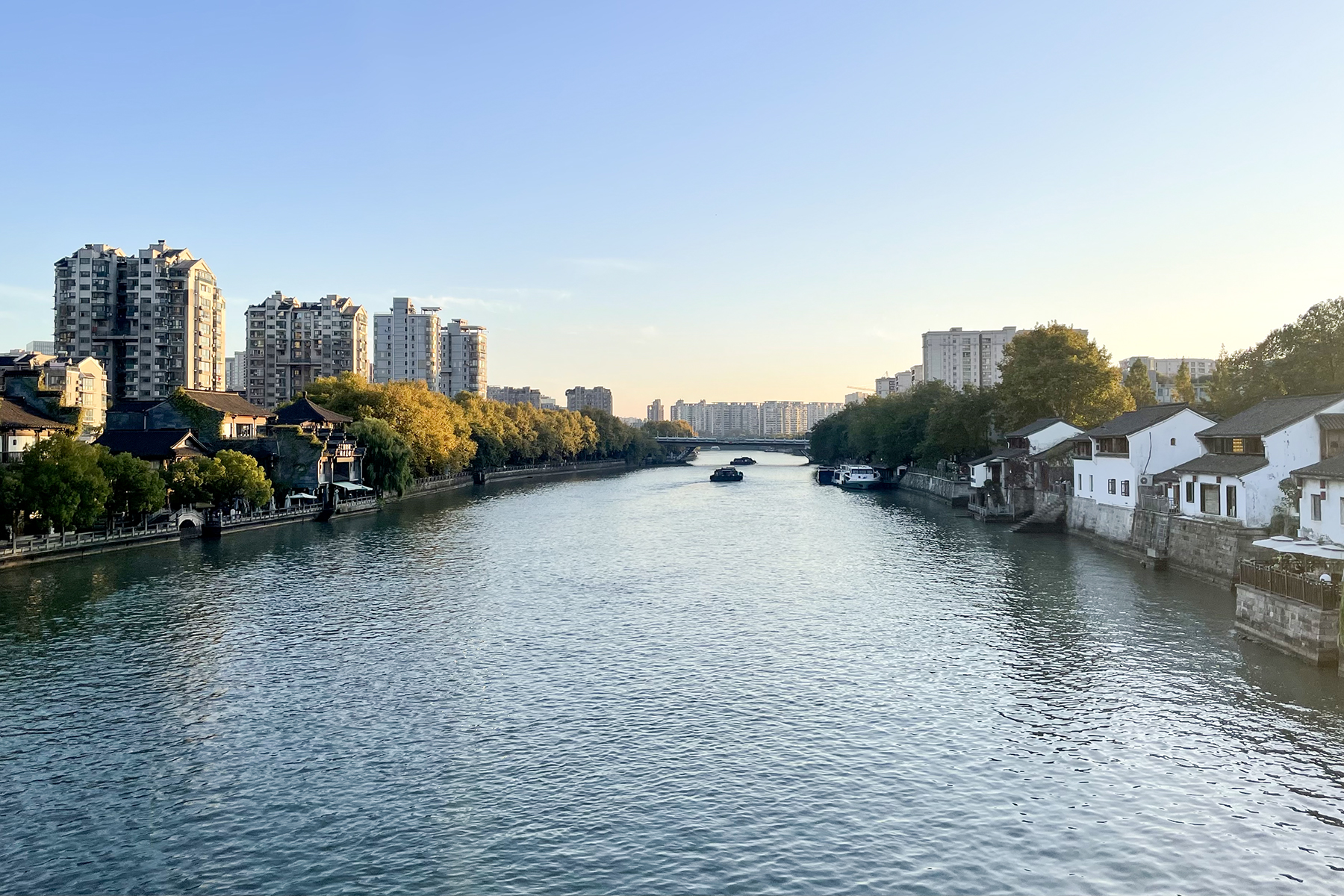
Grand Canal, Hangzhou — the historic canal with the arched Gongchen Bridge, barges and old waterfront buildings
Free · UNESCO site · southern end of the longest canal on earth

Hangzhou is the southern terminus of the Grand Canal, the longest artificial waterway in the world and a UNESCO World Heritage Site. Walk around Gongchen Bridge and the old canal-side quarter, or take a boat to see a working waterfront that is still genuinely lived-in, not staged.

Getting there: Metro or DiDi to the Gongchen Bridge area
Eating in Hangzhou

What to eat on your first visit

Hangzhou has its own regional cuisine — called hangbang (杭帮菜) — built on fresh ingredients and gentle, balanced flavours rather than spice, tied inseparably to West Lake and Longjing tea. Full guide: Hangzhou food guide →

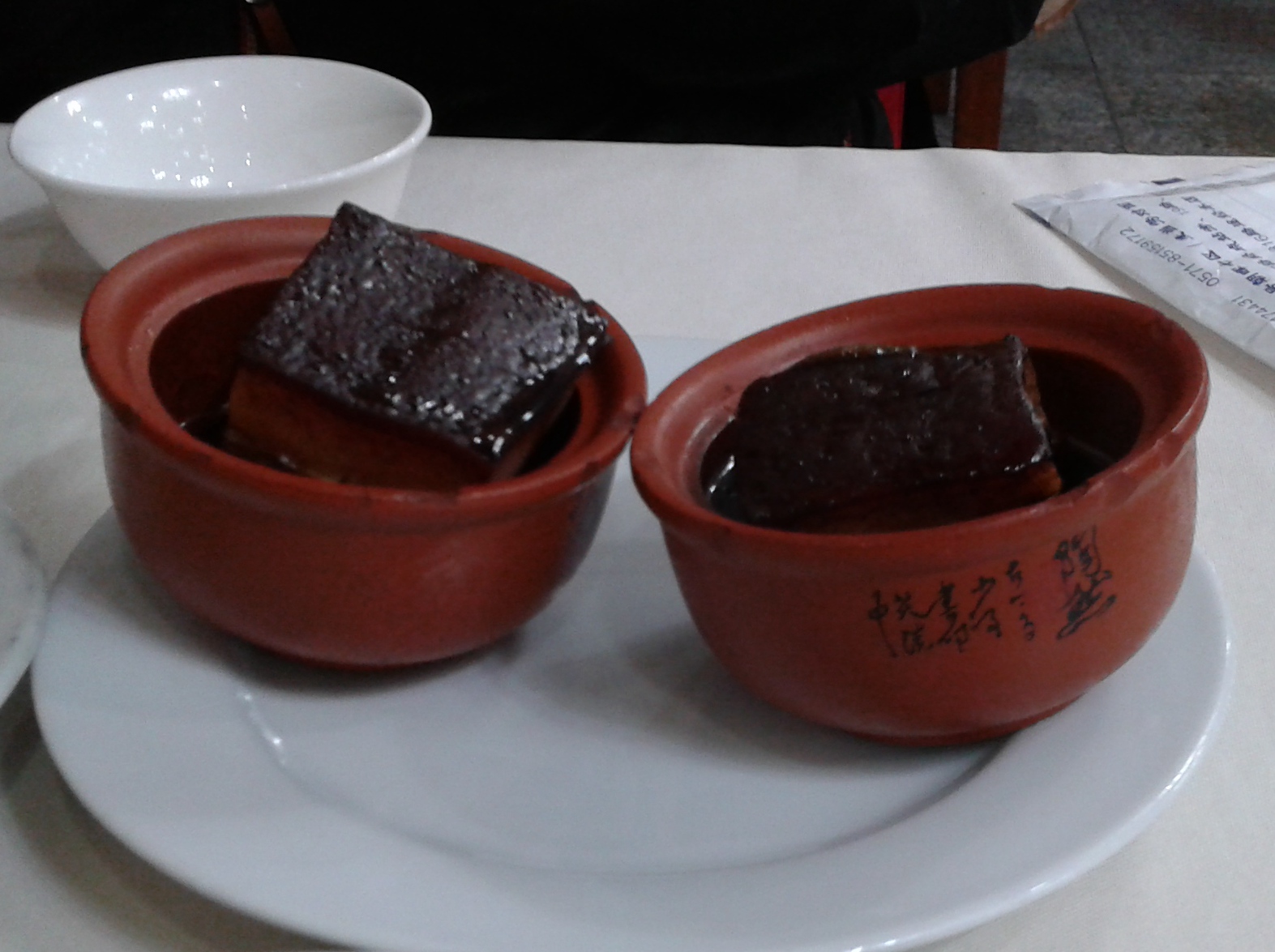
Dongpo pork, Hangzhou — glossy dark-braised cubes of pork belly tied with straw, served in a ceramic bowl
Dongpo Pork (东坡肉)
Wine-braised pork belly · the city's signature dish

Legend credits the recipe to the poet Su Dongpo during his time as Hangzhou's governor — pork belly cut into squares and braised in rice wine and soy sauce until the meat turns meltingly tender, rich but never greasy. Spoon the thick braising sauce over hot rice. On every hangbang menu in town.

Price: ¥40–90 (~฿200–450) · more at Dongpo pork →
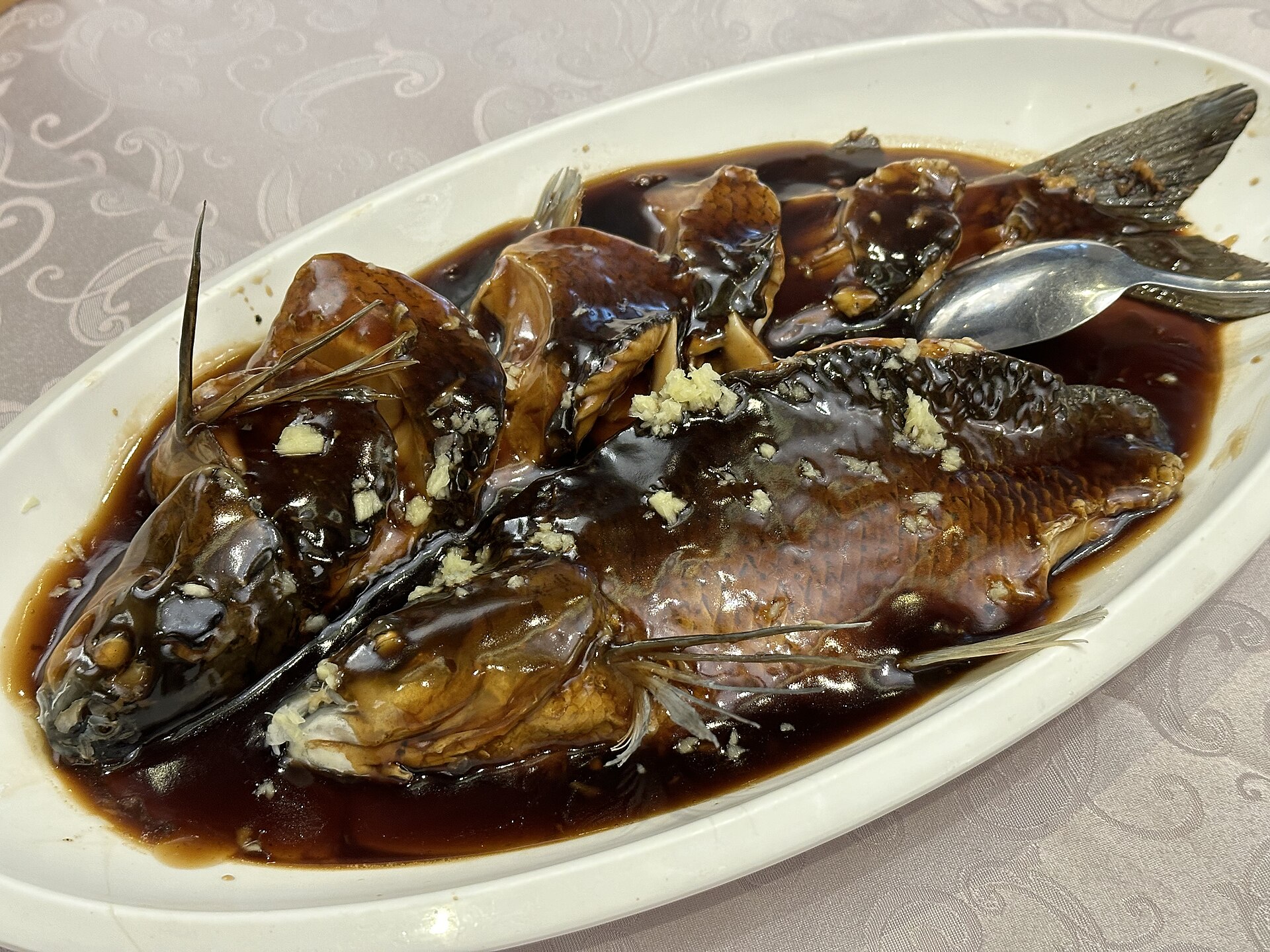
West Lake vinegar fish, Hangzhou — a whole freshwater fish poached and draped in a clear amber sweet-and-sour vinegar sauce on a long plate
West Lake Vinegar Fish (西湖醋鱼)
Freshwater fish in sweet-vinegar sauce · the lake on a plate

Freshwater grass carp from West Lake, poached to just-done and draped in a lightly sweet Zhenjiang-vinegar sauce — tender, clean, never fishy. Every lakeside restaurant has its version. Delicate in the true hangbang style. See where to try it at vinegar fish →

Price: ¥60–150 (~฿300–750) per plate
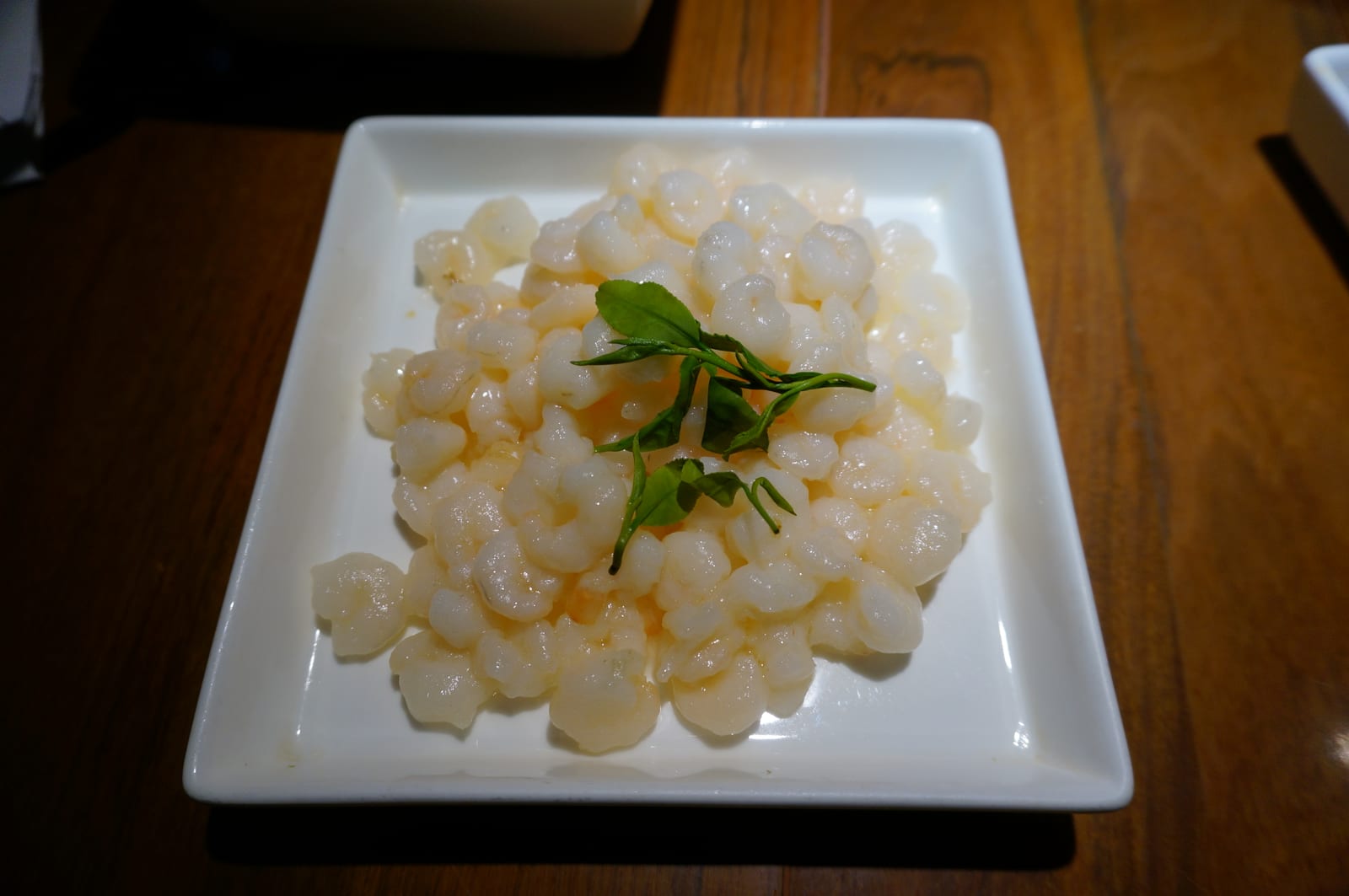
Longjing shrimp, Hangzhou — small translucent river shrimp stir-fried with fresh green Longjing tea leaves on a white plate
Longjing Shrimp (龙井虾仁)
River shrimp with green tea · the tea city on a plate

The dish that sums up Hangzhou — small river shrimp flash-fried with fresh Longjing tea leaves. The sweet snap of the shrimp plays against the faint grassy scent of the tea, with no heavy seasoning to get in the way. Letting the ingredients speak for themselves is the whole point of the cuisine here.

Price: ¥80–180 (~฿400–900) · see this dish →
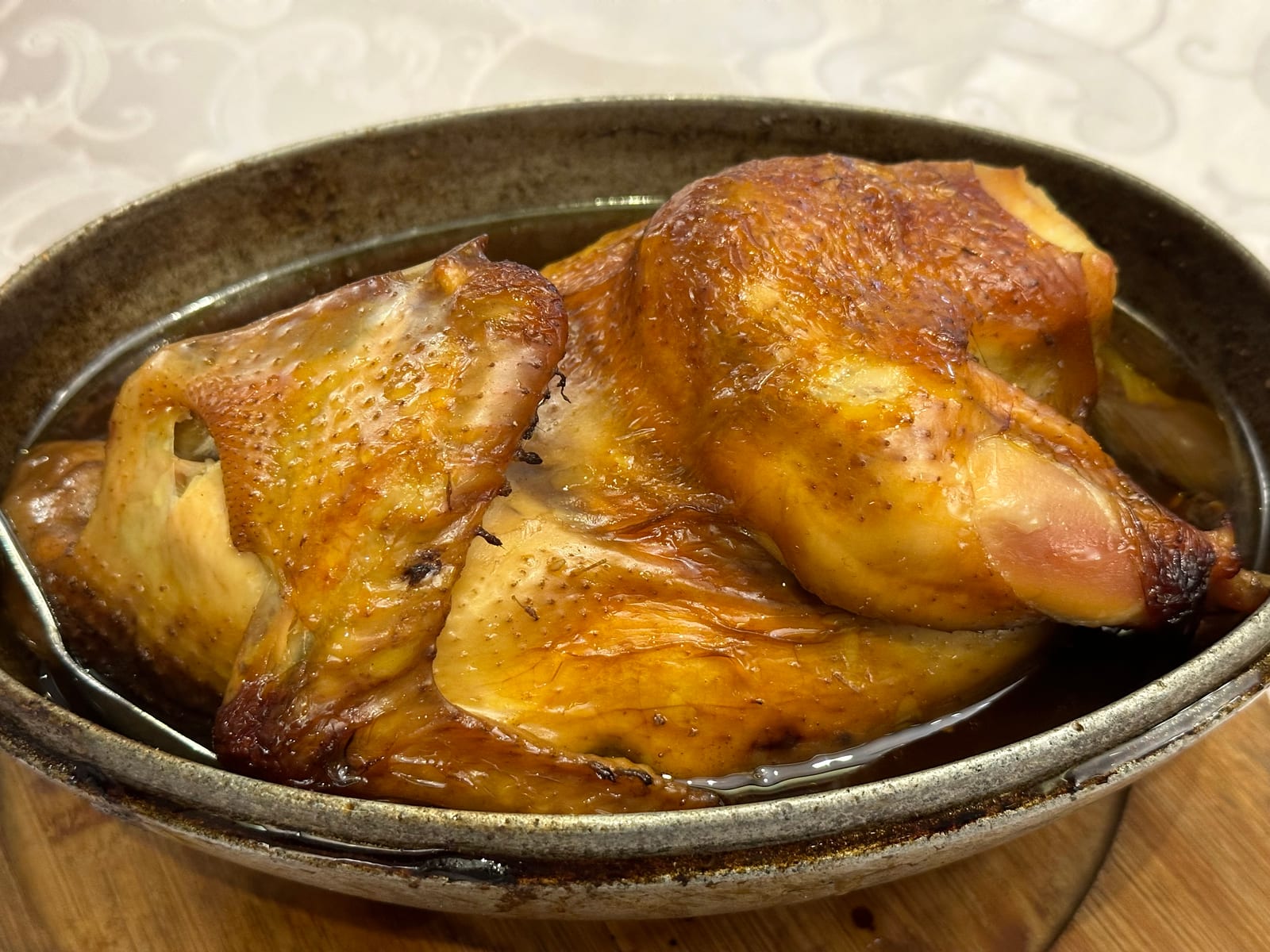
Beggar's chicken, Hangzhou — a whole chicken wrapped in lotus leaf and baked in clay, cracked open to reveal steaming juicy meat
Beggar's Chicken (叫化鸡)
Lotus-wrapped clay-baked chicken · a local classic

The story goes that a beggar caught a chicken, wrapped it in lotus leaf, packed it in clay and baked it in a fire — and a classic was born. The meat comes out juicy and scented with lotus leaf; the clay shell is cracked open at the table in a cloud of steam. It's both a dish and a small piece of theatre. Order ahead at some restaurants.

Price: ¥80–200 (~฿400–1,000) · see beggar's chicken →

More food resources: Hefang street food → · cafes and tea houses →

Trip costs

How much does Hangzhou cost?

Hangzhou works for almost any budget. West Lake and most of the major sights are free to walk, and the metro is cheap. At the other end, the lakeside and tea-hill resorts can run high. Full breakdown: Hangzhou trip budget guide →

Level Accommodation/night Food/day Approx. total/day
Budget ¥150–300 (~฿750–1,500) hostel or budget hotel ¥80–150 (~฿400–750) ¥250–500 (~฿1,250–2,500)
Mid-range ¥400–800 (~฿2,000–4,000) 3–4 star hotel ¥200–400 (~฿1,000–2,000) ¥700–1,300 (~฿3,500–6,500)
Luxury ¥1,800–6,000+ (~฿9,000–30,000+) lakeside / tea-hill resort ¥500–2,000+ (~฿2,500–10,000+) ¥2,800–9,000+ (~฿14,000–45,000+)

Metro fares of ¥2–9 per trip add very little to the daily total. Most sights around the lake are free, with exceptions like Lingyin Temple (~¥75) and Leifeng Pagoda (~¥40). More detail at China travel budget guide →

Practical heads-up

Six things first-timers get wrong

Google is blocked — prepare before you land
The single most common oversight

Google Maps, Gmail, Translate, YouTube, Facebook, Instagram, WhatsApp and LINE all stop working the moment you connect to a Chinese SIM or network, unless you have a working VPN. Set it up on your phone at home — configuring one from inside China is harder. Download Amap (Gaode Maps) for navigation — it works without a VPN and has English. For the internet itself, see VPN and eSIM guide →

Replacements: Amap for navigation · Apple Maps · WeChat instead of WhatsApp
Small shops take mobile payment only
Cash and cards won't always work

Hangzhou is the birthplace of Alipay, so the whole city runs on mobile payment. Street stalls, tea houses and small restaurants often have no card terminal at all — Alipay or WeChat Pay is the only option. The tourist version of Alipay accepts foreign Visa and Mastercard and takes a few minutes to set up. Alternatively, withdraw yuan from an ATM on arrival. Major chains and hotel restaurants accept credit cards without issue.

No metro to Lingyin Temple or the tea hills
Plan your route ahead

The metro covers the lake and the city centre well, but it does not reach Lingyin Temple or the Longjing tea fields directly — you'll need bus 7 or 27, or a DiDi. Allow extra time, especially on weekends when traffic builds. It's worth visiting Lingyin Temple early in the morning before the crowds arrive.

Popular sights may need advance booking
Some have a daily visitor cap

Many attractions in China use online real-name reservation systems, and some cap daily numbers — especially during long holidays. Check whether a site needs a booking before you go, and carry your passport, which you'll often need to verify your reservation at the gate. See each sight's opening hours and details at Hangzhou attractions →

Tip: Keep your passport on you — it doubles as ID for entry at many sites
Golden Week fills the lake
Book early or reschedule

During Golden Week (1–7 May for Labour Day, 1–7 October for National Day) and Chinese New Year (January or February, dates vary), domestic tourists travel in enormous numbers. West Lake and the Bai Causeway can become almost impassable, and hotel prices typically double or triple. If your dates overlap, book three to four months ahead. Full seasonal guide: when to visit →

Good months: March–May, September–November
Watch for the tea house invitation
The one scam worth knowing about

A friendly person — often a student who strikes up a conversation in good English — suggests visiting a tea house nearby. The experience ends with a bill for several hundred yuan that was never discussed. Hangzhou is a tea city, which makes the pitch sound natural, but the response is simple: thank them politely and keep walking. The city is genuinely safe in all other respects — this is the main thing to be aware of, mostly near the busy lakeside.

Rule: An uninvited invitation to an unplanned venue from a stranger = walk away
Frequently asked

FAQ · Before you go

How many days should I spend in Hangzhou as a first-timer?
Two to three days covers the main highlights comfortably: Day 1 walking around West Lake and a boat ride, Day 2 for Lingyin Temple and Feilai Feng in the morning then the Longjing tea hills, Day 3 for Hefang old street and the Grand Canal. With more time, add a high-speed-rail day trip to Suzhou or Shaoxing. See the full plans: 3-day itinerary · day trips
Do Thai nationals need a visa for Hangzhou?
As of 2026, Thai passport holders benefit from a 30-day visa-free arrangement for tourism in China. However, this policy can change, so verify the current requirements at China visa-free entry guide → before booking flights.
What if I don't have Alipay or WeChat Pay?
Large hotels and international restaurants accept Visa and Mastercard. For everything else — street food, local restaurants, tea houses — set up the tourist version of Alipay before you leave home (it accepts foreign bank cards). Hangzhou is the home of Alipay, so mobile payment is used almost everywhere. Alternatively, withdraw yuan from a Bank of China ATM on arrival. Full guide: paying in China →
Does Google Maps work in Hangzhou?
Google Maps and all Google services, Facebook, Instagram and WhatsApp are blocked in mainland China without a VPN. Download Amap (Gaode Maps) before you leave — it has English and works without a VPN. Apple Maps also functions in China. For VPN options see VPN and eSIM guide →
What is the best month to visit Hangzhou?
Spring (March–May), with peach blossom and willows along the causeways, and autumn (September–November), when sweet osmanthus scents the whole city under clear skies, give the best combination of weather and scenery. Avoid Golden Week (1–7 May and 1–7 October) and Chinese New Year, when West Lake gets overwhelmed and prices surge. Full breakdown at when to visit China →
Is Hangzhou safe for solo travellers?
Hangzhou is one of the safest cities in China for visitors. Crime rates are low, metro stations have English throughout, and walking around West Lake at night is not a concern. The main thing to watch for is the tea house invitation scam near the busy lakeside — a friendly stranger invites you to taste tea and presents an unexpectedly large bill. Politely decline and keep walking. That is genuinely the main thing to know.
Klook · Hangzhou Activities

Book Hangzhou tickets and tours in advance — skip the queues

West Lake boat cruises, Longjing tea-hill tours, the Impression West Lake show and Suzhou day trips — book ahead on Klook and arrive without the stress of sold-out queues.

Browse Hangzhou on Klook →
Wherebest is an affiliate partner of Klook — we may earn a commission when you book through our links, at no extra cost to you.