Home Hangzhou China Hangzhou Hotels About
Home  ›  China  ›  Hangzhou  ›  West Lake Vinegar Fish
Hangzhou Food Guide · 2026

West Lake Vinegar Fish (西湖醋鱼)
the dish Hangzhou is proudest of

A whole grass carp, starved for a day to clean its flesh, poached for barely four minutes, then lacquered in a glossy sweet-sour vinegar glaze. A plainly simple dish that is one of the hardest in China to get right — and the heart of West Lake cooking for over a century.

The basics

One dish that says everything about Hangzhou
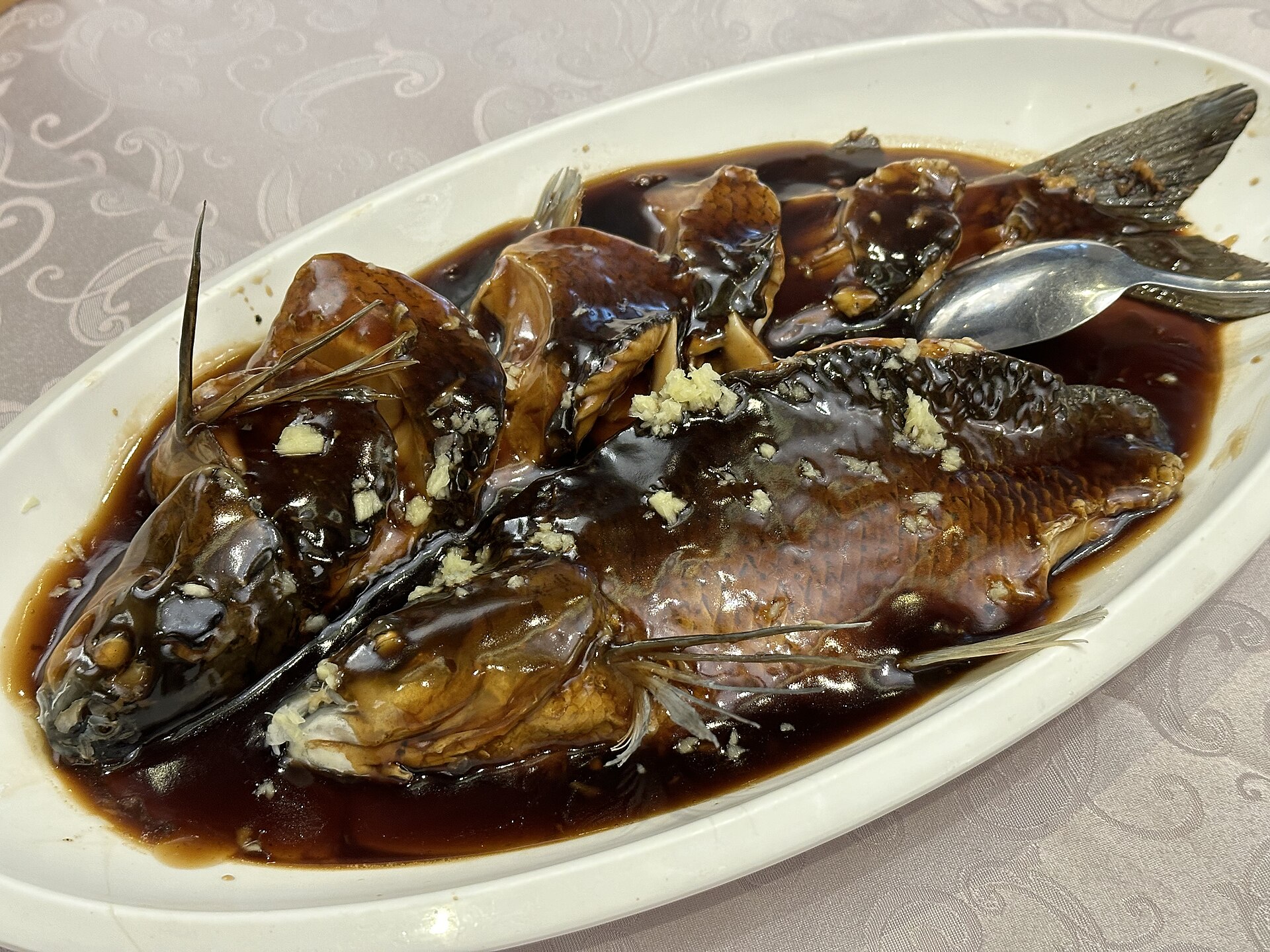
West Lake vinegar fish — a whole grass carp draped in a glossy dark vinegar-and-sugar glaze, scattered with minced ginger, on an oval white platter at Louwailou, Hangzhou
West Lake vinegar fish at Louwailou (楼外楼) on the shore of West Lake — a whole grass carp under a glossy sweet-sour glaze, finished with minced ginger.

If there is one dish a Hangzhou local would point to and say "this is our city", it is West Lake Vinegar Fish (西湖醋鱼, Xīhú cùyú) — a whole grass carp under a glossy dark glaze of rice vinegar and sugar, served head and tail intact on an oval platter. The name says it plainly: it comes from West Lake (西湖), the body of water that made this the most written-about city in the history of Chinese poetry.

It looks simple, and that is exactly the problem: this is one of the hardest dishes in China to cook well, because there is nowhere to hide. No high-heat wok, no deep-frying, no spice to cover anything. Just fresh fish, a sauce, and the cook's control of the heat. Done right, the flesh is soft and silky as set jelly, the sweet and sour balance against each other exactly, and there is a strange honeyed note the Chinese describe as crab-like. Locals have a saying for a good one: it is glossy without oil, salty without salt, and fresh without MSG.

The sourness has nothing to do with lemon or tamarind. It comes from Zhenjiang black vinegar (镇江香醋), a dark rice vinegar aged from glutinous rice that is softer and more aromatic than ordinary vinegar, combined with sugar, rice wine, ginger and scallion, reduced until thick and poured over the fish while it is still hot. The glaze coats the flesh to a high shine and makes the pectoral fin stand up — a sight Hangzhou diners have known for generations.

The legend

Sister Song and the fish that was a goodbye

A story that has travelled with this dish since the Southern Song dynasty (1127–1279), on the shores of West Lake.

A sweet-and-sour fish with a story inside it

The legend tells of two fishing brothers named Song who lived beside West Lake. A powerful, cruel man wanted the elder brother's wife for himself, so he had the elder brother killed. Before the younger brother fled for his life, the sister-in-law cooked him a farewell meal of fish dressed in sugar and vinegar — the sweetness meant to urge him to build a better life, the sourness to remind him never to forget the bitterness the family had endured.

Years later the younger brother returned to Hangzhou as an official. One day he was served a fish whose flavour stopped him cold — he recognised it instantly. He traced it back to the kitchen and found that the cook was his own sister-in-law, working there all along. Through one plate of fish, the two were reunited.

Food historians believe the dish grew out of "Sister Song's Fish Soup" (宋嫂鱼羹, Sòngsǎo yúgēng), which was famous on the lakeshore at the time — there is even a record of Emperor Gaozong of the Southern Song tasting it and approving. Whether the legend is true, nobody can say. But it means every mouthful of this fish carries a little of the story with it.

How it's made

Why a simple dish is so hard to get right

The four steps that separate a careful kitchen from a careless one.

Step 1 · the fish

A small grass carp

Grass carp (草鱼), a freshwater fish that feeds on grass, chosen at no more than 1.5 catties (about 750g) because a smaller fish has tender flesh and is easier to time. It has to be a live fish from the tank, never frozen.

Step 2 · the starving

The step most people miss

A serious kitchen keeps the fish in clean water and starves it for 1–3 days before cooking, so it voids its gut and sheds the muddy lake flavour, leaving the flesh clean and sweeter. This is the step that separates a good house from an ordinary one.

Step 3 · the poach

3–4 minutes, no more

The fish is split and scored along the body, then poached in barely-simmering water for just 3–4 minutes — the flesh has to set perfectly: soft and silky, never rubbery. Controlling the heat and timing here is pure skill. Too long and it falls apart; too short and it's raw.

Step 4 · the glaze

Sweet-sour and glossy

Zhenjiang black vinegar, sugar, rice wine, ginger and scallion are reduced until thick and poured over the fish while it's hot. The glaze coats it to a high shine — enough to make the pectoral fin stand up — finished with minced ginger and served immediately.

An honest word

A dish people love and hate in equal measure

⚠️ Choose a good restaurant, or you may be disappointed

Let's be honest: West Lake vinegar fish is one of the most divisive dishes in China. Some people fall for it and order it every time they come to Hangzhou; plenty of others try it once and wonder what the fuss is about. Reviews call it bland, or fishy, or jarringly sweet-and-sour, depending on where they ate it.

The reason comes down entirely to how much a kitchen cares. The dish has nowhere to hide, so when a place takes shortcuts and uses pre-marinated fish instead of fresh fish that has been properly starved, the flesh tastes muddy and fishy. To cover that up, the cook pours in too much vinegar and sugar until the balance is wrecked — and that is the version that gives people the wrong idea that Hangzhou food is dull.

The fix is easy: go to a place that is genuinely known for this dish — Louwailou, Zhiweiguan or Wai Po Jia — and eat it there, freshly made. Don't buy it from a tourist-strip stall that looks like it's churning plates out. Eat this dish from the hands of someone who cares about it, and you'll understand exactly why Hangzhou is so proud of it.

Where to eat

Restaurants that do it justice

The places Hangzhou locals and serious eaters treat as the benchmark for this dish.

1
Louwailou (楼外楼)
The original house · West Lake shore, foot of Gushan Hill · open since 1848

If you eat this dish once in your life, eat it here. Louwailou opened in 1848, founded by Hong Ruitang from nearby Shaoxing, on the shore of West Lake at the foot of Gushan Hill — the lake fills the windows. It is the most renowned kitchen in China for this dish and still starves its fish for 2–3 days to clean the flesh properly. The fish here is balanced, sweet-sour and silky, with the flesh melting off the bone. Beyond the vinegar fish it's also famous for Longjing tea shrimp and beggar's chicken. It sits on China's Black Pearl list — and more than a meal, it's a chance to taste a piece of Hangzhou's soul through flavour, history and the view.

Address: 30 Gushan Road, Xihu District · on the northern shore of West Lake
Hours: 11 am–2 pm / 5–8 pm · Price: fish ¥120–180/plate (~฿600–900) · meal for four around ¥800–1,000 (~฿4,000–5,000) · reservations recommended
2
Zhiweiguan (知味观)
Century-old Hangzhou institution · founded 1913 · several branches

An old Hangzhou name founded by Sun Yizhai in 1913, with over a century of history and branches across the city. It's where locals bring the family. The West Lake vinegar fish here follows the traditional recipe and isn't over-seasoned, and the kitchen is also known for its beggar's chicken and Hangzhou-style dim sum. Prices are friendlier than Louwailou's, which makes it a good place to try the dish without booking far ahead.

Address: several branches · the West Lake branch (Renhe Road) is the most convenient for visitors
Hours: ~10:30 am–9 pm · Price: ¥80–150/person (~฿400–750)
3
Wai Po Jia (外婆家 · Grandma's Kitchen)
Popular Hangzhou chain · budget-friendly · picture menu

If the budget is tight but you want to try a full spread of Hangzhou dishes, Wai Po Jia (the name means "Grandma's house") is the local and visitor favourite. It's far cheaper than the heritage houses, with a picture menu that makes ordering easy. The West Lake vinegar fish here is a solid, good-value version — not as deep as Louwailou's, but a sensible place to start if you're not sure you'll like the dish. The lakeside branches get long queues at dinner — go early or take a queue ticket ahead of time.

Address: branches across the city · several inside malls near West Lake
Hours: ~11 am–2 pm / 5–9 pm · Price: ¥50–100/person (~฿250–500) · expect queues at dinner
Payment and language: Most Hangzhou restaurants take WeChat Pay and Alipay primarily. Larger houses like Louwailou accept foreign cards and have an English menu, but smaller places may be Chinese-only — point at a picture or show the characters "西湖醋鱼" (Xīhú cùyú) and the staff will help. Download Alipay and link a Visa or Mastercard through its international mode before you travel.
Frequently asked

FAQ · Before you order West Lake vinegar fish

What is West Lake Vinegar Fish (西湖醋鱼)?
West Lake Vinegar Fish (西湖醋鱼, Xīhú cùyú) is Hangzhou's most famous dish. A whole grass carp (草鱼) no larger than 1.5 catties (about 750g) is starved for roughly a day before cooking to clean the muddy taste from its flesh, then gently poached for just 3–4 minutes and draped in a thickened glaze of black rice vinegar, sugar and ginger. The result is sweet-sour and delicate, the flesh soft and silky. Locals say a good one is "glossy without oil, salty without salt and fresh without MSG", with a sweetness they describe as crab-like.
Where can I eat the best West Lake vinegar fish in Hangzhou?
The original house is Louwailou (楼外楼) on the shore of West Lake at the foot of Gushan Hill, open since 1848 (30 Gushan Road) — the most renowned kitchen for this dish, and it still starves its fish for 2–3 days. The fish runs roughly ¥120–180 per plate (~฿600–900). Other reliable options are Zhiweiguan (知味观) and Wai Po Jia (外婆家), both cheaper. The key rule is to pick a place genuinely known for the dish — see the full Hangzhou food guide for more.
Why do some people say West Lake vinegar fish tastes bad?
Because it's one of the easiest dishes in China to get wrong. Everything rides on starving the fish until the flesh is clean and on controlling the poaching heat precisely. When a kitchen takes shortcuts and uses pre-marinated fish instead of fresh, the flesh tastes muddy and fishy, and the cook masks it with too much vinegar and sugar until the balance is ruined — which is how a lot of visitors come away disappointed. The fix is simple: go to a place genuinely known for the dish, and skip the tourist-strip stalls.
What is the legend behind West Lake vinegar fish?
The legend tells of two fishing brothers named Song during the Southern Song dynasty. A cruel, powerful man killed the elder brother to take his widow. Before the younger brother fled, the sister-in-law cooked him a farewell dish of fish in sugar and vinegar — the sweetness urging him to build a better life, the sourness reminding him not to forget the hardship. Years later he returned as an official, recognised her signature dish and tracked her down. It's thought to have grown from "Sister Song's Fish Soup" (宋嫂鱼羹), once famous on the lakeshore.
What fish is used, and why is it starved?
Grass carp (草鱼, cǎoyú), a freshwater fish that feeds on grass. The flesh is tender but tends to carry the muddy taste of the pond or lake. Serious kitchens keep the live fish in clean water and starve it for 1–3 days before cooking so it voids its gut and sheds that earthy flavour, leaving the flesh clean and sweeter. This single step separates a careful kitchen from a careless one, and it's why the same dish can taste worlds apart at two different restaurants.
Klook · Food Tours

Hangzhou Food Tours — eat the right things with someone who knows

Guided food walks with local experts: West Lake vinegar fish, Dongpo pork and the best lakeside eating — at places that actually cook it well, so you don't gamble on a careless kitchen, and no language barrier to worry about.

Browse Hangzhou Food Tours on Klook →
Wherebest is an affiliate partner of Klook — we may earn a commission when you book through our links, at no extra cost to you.