Hefang Street's Ming-and-Qing facades are genuinely lovely and fun to walk — but the main drag is touristy and pricey. This guide points you to all three spots worth your appetite: Hefang Street for photos and a couple of signature snacks, Wushan Night Market for skewers and buzz, and Gaoyin Street next door, where Hangzhou families sit down to eat.
Picture this — you've spent the afternoon circling West Lake, the light is going soft and your stomach is rumbling. You don't want another air-conditioned restaurant. You want to walk, catch the smell of frying stinky tofu, point at a pink glutinous-rice cake you can't name and just try it. That's exactly what the old-town streets around Wushan Hill are built for.
First, a bit of context. Hangzhou food is Zhejiang cuisine (浙菜) — light, faintly sweet, built on lake-and-river produce: freshwater fish, tiny river shrimp, lotus root, bamboo shoots. It is not spicy. So the street snacks here are gentler and more delicate than, say, Sichuan's — and that's the whole point.
Second, the honest bit. The main drag of Hefang Street (河坊街) is built for tourists — lots of souvenirs, lots of snacks knocked out fast for passers-by, and prices roughly 1.5–2x higher than elsewhere. This guide walks you through the three places worth your time: Hefang Street (for the architecture and a few standout snacks), Wushan Night Market (skewers and a lively crowd), and Gaoyin Street (高银街) right beside it — a quiet lane of sit-down restaurants where locals genuinely eat. Want to know which dishes define Hangzhou? Read our Hangzhou must-eat dishes guide alongside this one.
Ordered the way you'd actually walk it in one evening — old street first, then the night market, then the local lane.
1
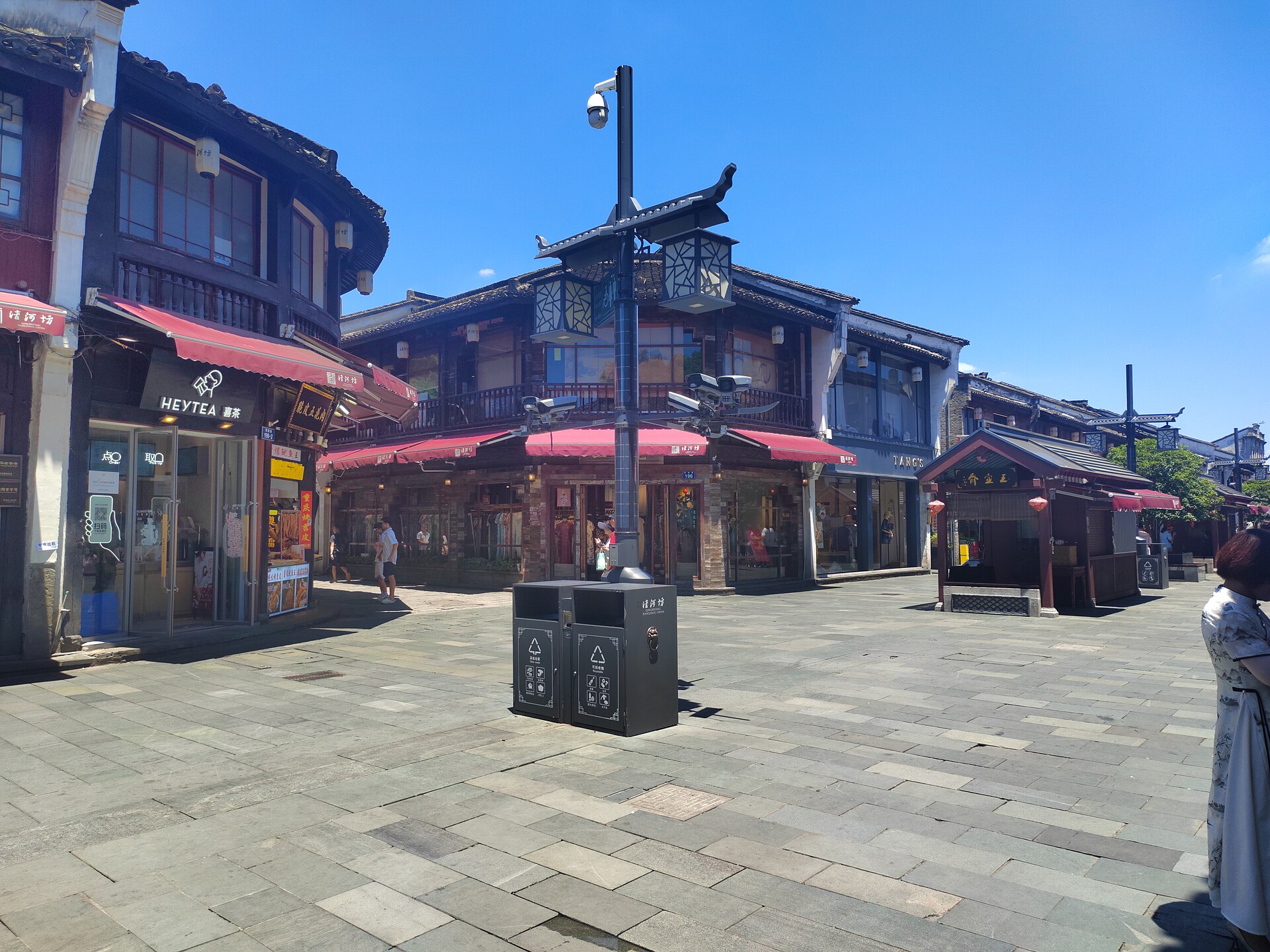
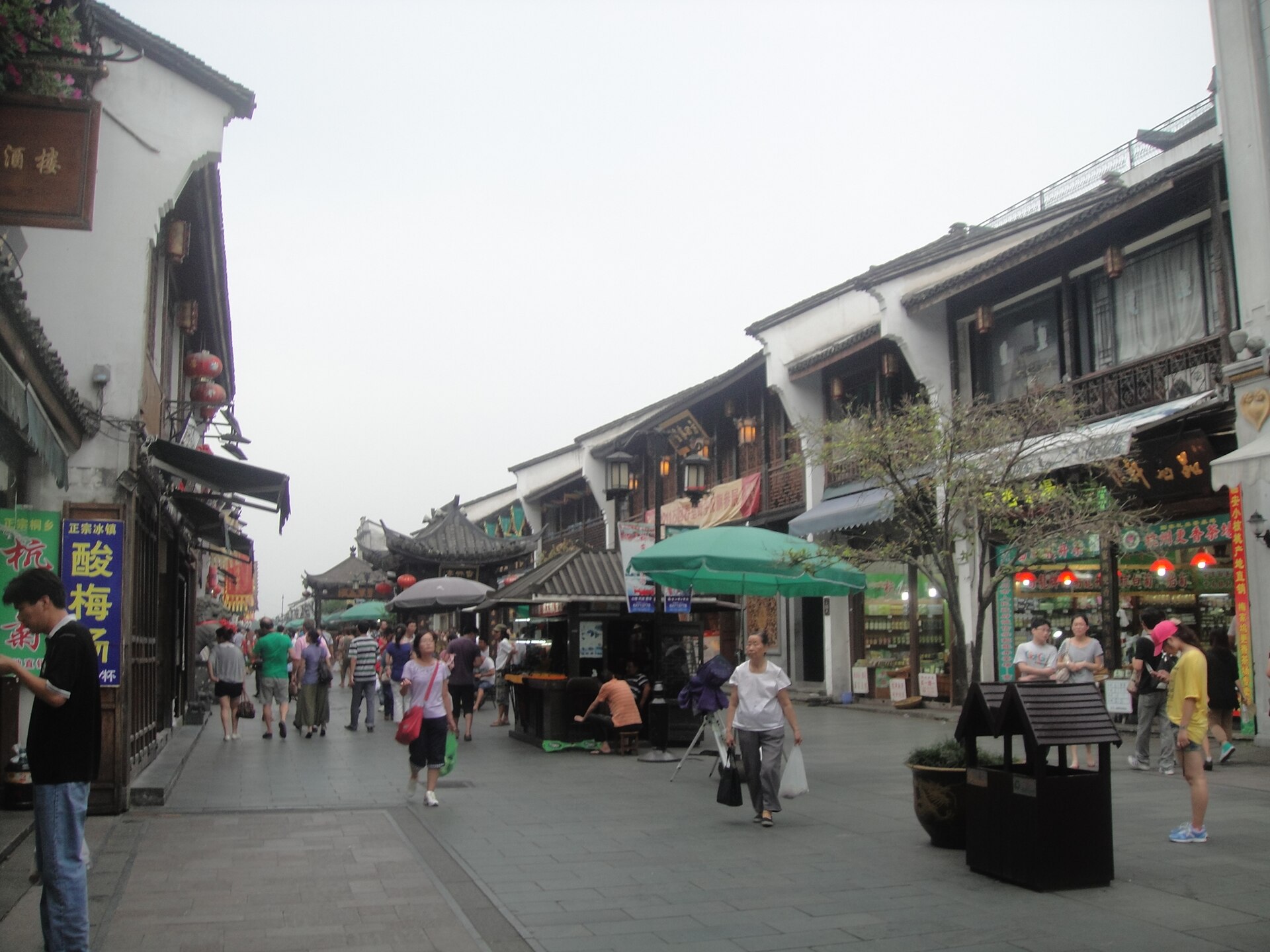
Let's be straight: this is Hangzhou's most famous old street, running from the West Lake shore to the foot of Wushan Hill. The late-Ming and early-Qing timber buildings lining both sides are genuinely beautiful, and after dark it's the most lit-up, buzzing street in the city. It's a joy to walk and great for photos — but the trade is a lot of souvenirs, fans, combs, loose tea, and snacks made for tourists.
What's worth tasting on the main street (pick the stalls with a queue): 葱包桧 cong bao gui — a fried dough stick wrapped in a thin crepe, pressed flat on a griddle and brushed with sweet-savoury and chilli sauce, crisp outside and soft within · 定胜糕 dingsheng cake — a pink steamed glutinous-rice sweet with red-bean filling, shaped like a flower and only lightly sweet, the city's lucky cake · 龙须糖 dragon-beard candy — sugar pulled into a thousand fine threads wrapped around crushed nuts · the historic medicine hall 胡庆余堂 Huqingyu Tang (founded 1874) on this street is also worth a look for the architecture alone.
2
A short stroll from the far end of Hefang Street brings you to Wushan Night Market — running for over 20 years, open every night of the year, roughly 6–11 pm. It's one of the city's oldest and liveliest night markets, with nearly 400 stalls packed shoulder to shoulder selling clothes, accessories and souvenirs, broken up by clusters of food stalls.
What to hunt down: fried stinky tofu (臭豆腐) — pungent from a distance, but crisp outside and soft and juicy within once fried, dipped in sweet chilli sauce · grilled skewers (烧烤) of meat, vegetables and mushrooms · pan-fried buns and little dumplings · fried-dough snacks and roadside sweets · candied hawthorn (糖葫芦) on bright-red skewers.
Here's the card most guidebooks skip. Gaoyin Street runs about 500 metres parallel to Hefang Street — you can cut between the two in a few steps — but the mood is a different world. There are almost no souvenir stalls here, just 30-odd sit-down restaurants, several of them time-honoured city institutions, where Hangzhou families come to eat. It has been a food quarter since the Southern Song dynasty.
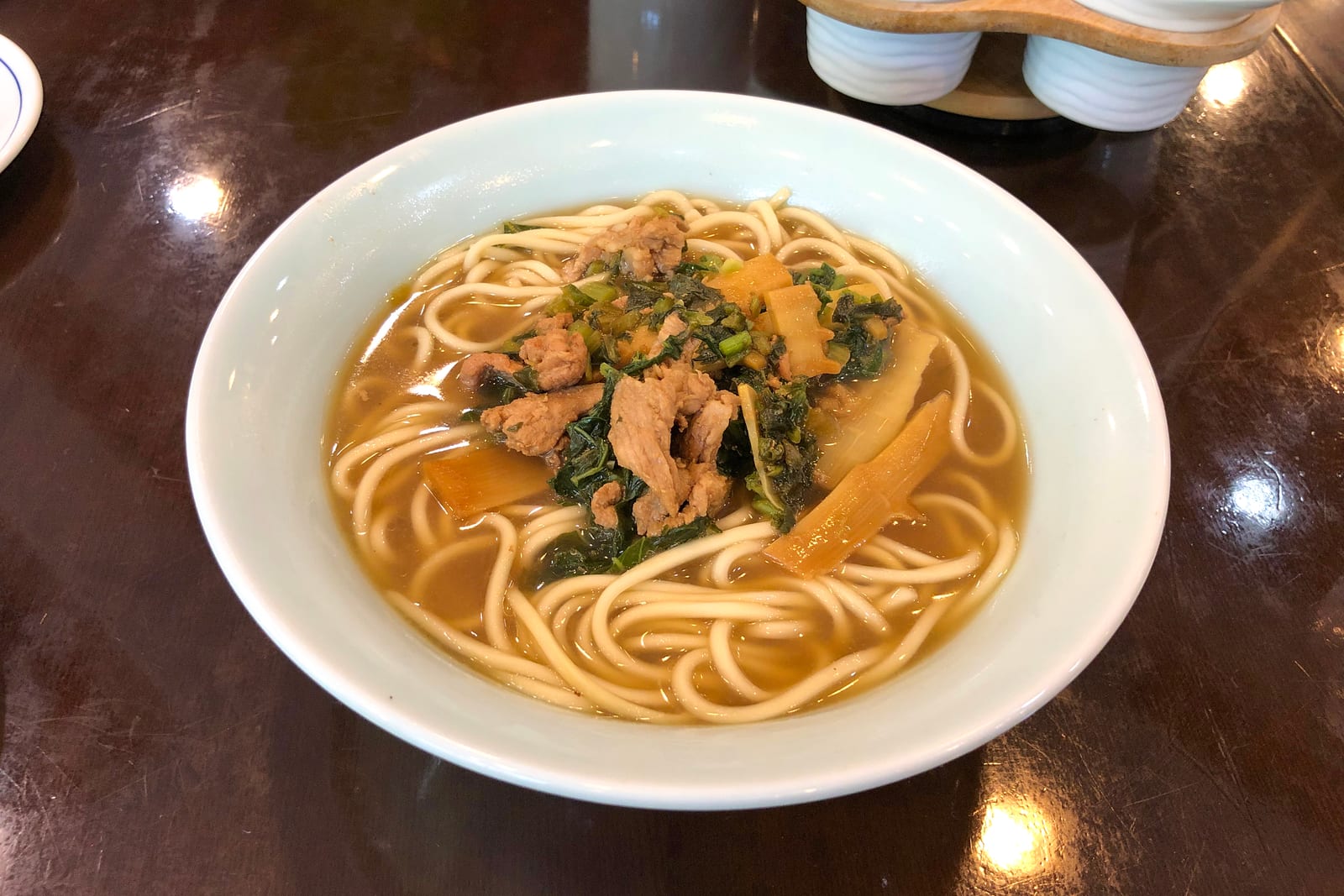
The names and dishes to know: 知味观 Zhiwei Guan (founded 1913) — Hangzhou's flagship house, with a ground-floor canteen serving steamed buns, dumplings and cat-ear noodles (猫耳朵), plus a takeaway counter for local cakes and snacks · 王润兴 Wang Runxing — an old Hangzhou home-cooking house doing Dongpo pork and West Lake vinegar fish · order a bowl of 片儿川 pian'er chuan, clear-broth noodles with pickled snow vegetable, pork and bamboo shoots — the city's everyday noodle, and a must.
A mix of grab-and-go bites on Hefang Street / Wushan Market and sit-down dishes on Gaoyin.

Clear-broth noodles with pickled snow vegetable (雪菜), sliced pork and bamboo shoots — gentle, simple, the bowl Hangzhou eats daily. Find it at Zhiwei Guan and the Gaoyin Street houses.
A fried dough stick and spring onion wrapped in a thin crepe, pressed flat and crisp on a griddle, brushed with sweet-savoury and chilli sauce — a classic Hefang Street grab-and-go.
A pale-pink steamed glutinous-rice cake with red-bean filling, shaped like a flower and only lightly sweet — Hangzhou's old lucky cake. Chewy, soft, easy to snack on all day.
You'll smell it before you see it, but fried until crisp and dipped in sweet chilli sauce, it's far more delicious than its reputation. A Wushan Night Market favourite.
Lotus root stuffed with glutinous rice, simmered in sugar and scattered with osmanthus blossom (桂花) — fragrant and mellow, a sweet tied to West Lake and the city's autumn.
Watch the maker pull a lump of sugar into a thousand fine threads wrapped around crushed nuts and sesame — fun to watch, melting to eat. A Hefang Street signature.
Flatbread baked against the oven wall until the top is crisp and sesame-flecked, in savoury (spring onion and minced pork) and sweet versions. Cheap and easy — grab one as you walk the old street.
Lotus-root starch whisked with hot water into a thick, glossy drink, topped with nuts, raisins and osmanthus. Warming and not too sweet — a hometown drink found all over the old quarter.