Sip new Longjing among terraces that climb the hillsides, a few snacks beside the glass, the hot-water pot endlessly refilled — then head back into the city for a specialty-coffee scene that keeps quietly growing around West Lake.
Picture the hills on the western side of West Lake, where rows of bright-green tea terraces step up the slopes until they run out of hillside. Along the edges sit old wooden teahouses, and in one of them you order a set of Longjing. The server brings a clear glass packed with long, flat green leaves, pours hot water over them, and the leaves slowly unfurl and rise. A gentle, nutty aroma reaches you before the first sip. That is the Meijiawu and Longjing tea villages of Hangzhou — and it is the single thing this city does better than anywhere on earth.
Hangzhou is China's tea capital. Longjing (龙井 — Dragon Well), the green tea grown on the hills around West Lake, is the most celebrated tea in the country. People have farmed it here for centuries, and sitting in a teahouse (茶馆) to drink it is a habit woven into the fabric of the city — not a tourist activity invented afterward.
And coffee? Honestly, Hangzhou is not Shanghai — tea is still the lead here. But over the past few years the specialty-coffee scene has grown into something real. Good independent cafés keep opening around West Lake, in the Binjiang district and in the university quarter, and young Hangzhou drinks more coffee every year. This guide takes you through both worlds — starting with the tea that is the city's root, then crossing into the coffee that is steadily coming into bloom.
The hills on the western side of the lake are where the tea fields, the old villages and the teahouses all live in one place.
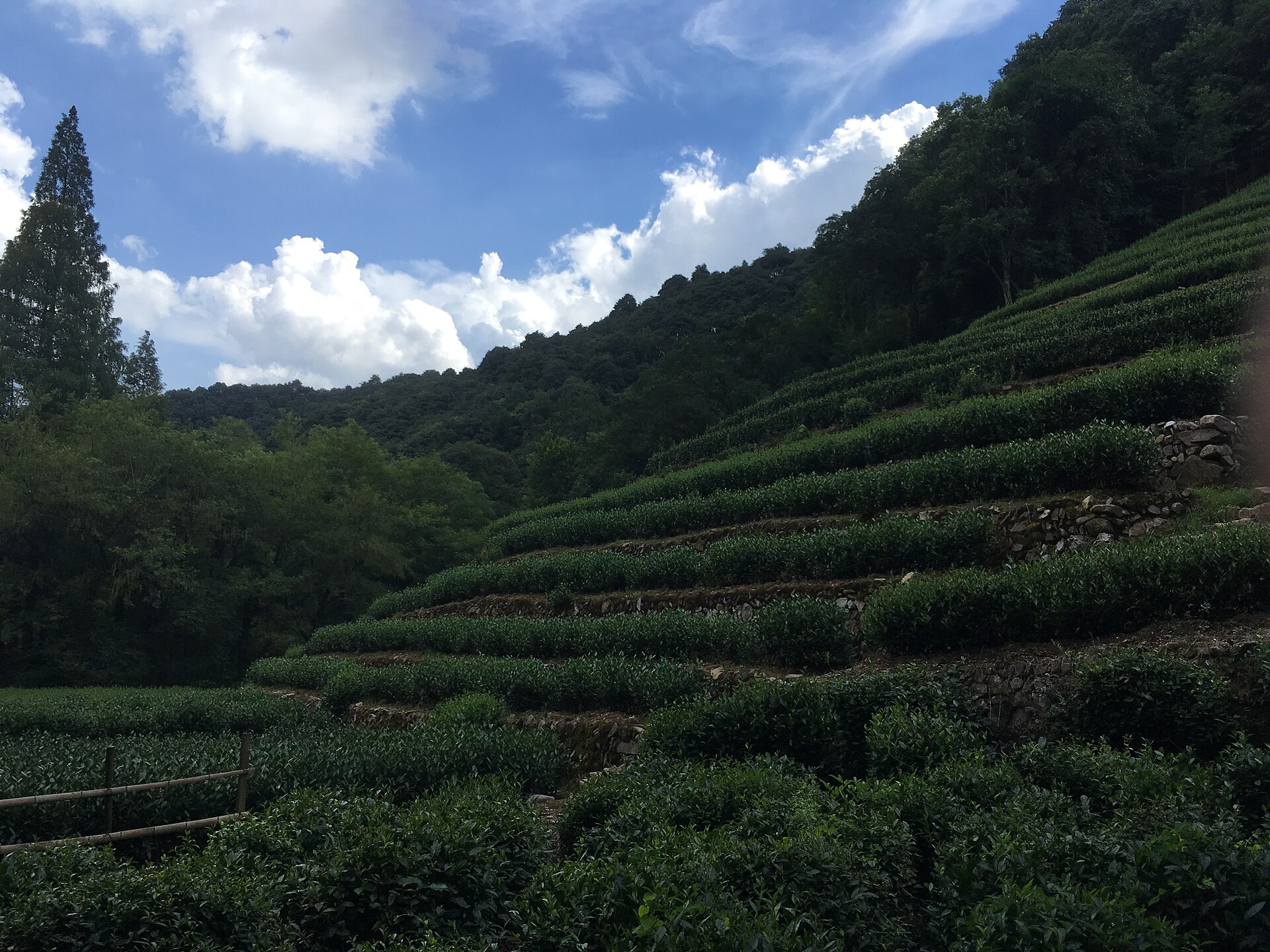
The Longjing tea fields spread across the hills to the west and south-west of West Lake. The heart of the area is three tea villages — Meijiawu (梅家坞) · Longjing village (龙井村) · Manjuelong (满觉陇) — each with a distinct character but linked by hill roads that put them minutes apart by car or DiDi.
Meijiawu is the largest and busiest: teahouses and restaurants line the village road, many with a balcony or back garden that opens onto a full sweep of terraces. Longjing village is where the tea took its name — quieter and more traditional, beside the China National Tea Museum. Manjuelong is the osmanthus valley, famous for the small golden flowers that bloom in autumn and fill the valley with scent alongside the smell of tea.
Understand the formats first, then choose where you want to sit today — in the terraces, by the lake, or at the museum.
The core of the Hangzhou tea experience is sitting in a teahouse in one of the tea villages, ordering a set of Longjing, and settling in for a long afternoon looking out at the terraces climbing the hills. Most serve the tea in a clear glass, the long green leaves suspended in the water, with a few snacks and a pot of hot water for endless refills. At Meijiawu, places like Yunjing Tianzhu have a balcony over a full sweep of fields. A tea set starts at around ¥40–80 and rises to ¥120 or more for a higher grade or an especially good view.
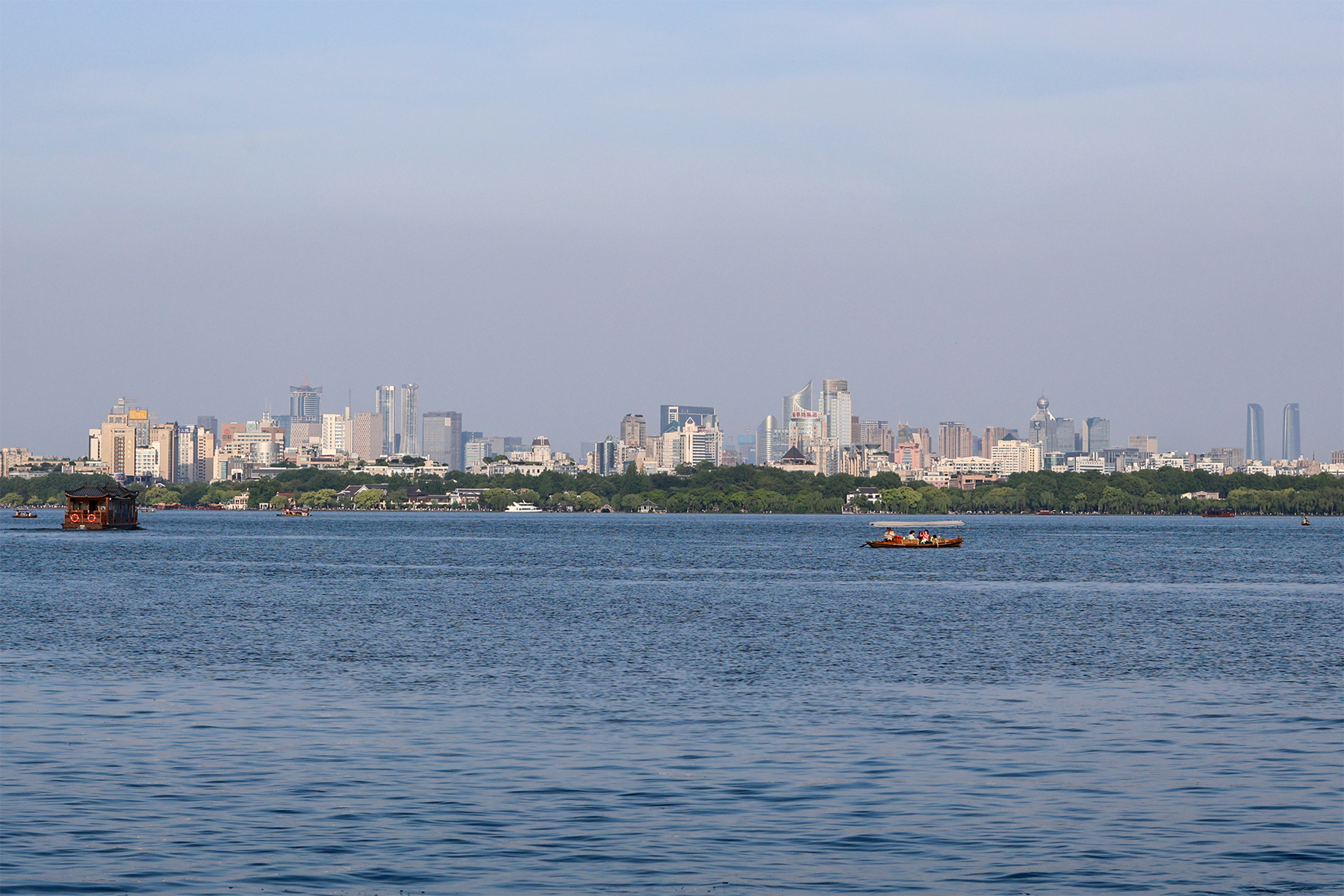
If you would rather not head up into the hills, the teahouses along West Lake are far easier to reach. Hupanju (湖畔居) is a long-established teahouse right on the water, looking out over the lake and its old bridges — classic in the traditional Chinese teahouse sense. Prices are higher than in the villages because of the location and service, but you are paying for a lake view that Chinese poets have written about for a thousand years. Ideal for an afternoon pause after a walk along the shore.
The China National Tea Museum (中国茶叶博物馆) sits among the tea fields near Longjing village and is free to enter. It tells the story of Chinese tea from its origins — how it is grown, how it is pan-fired, and the drinking culture across the whole country. There is a seating area for tea, and at times a tea-ceremony demonstration. It is an excellent first stop if you want to understand why Hangzhou is the tea capital before you sit down to drink in a village. Even just walking the grounds gives you the terraces for free.
If you can come in late March or April, you will see Hangzhou at its most alive: pickers spread across the hillsides, the leaves vivid and fresh, every teahouse pouring the new harvest. Mingqian Longjing (明前龙井) is picked before the Qingming Festival and is the highest grade — the youngest leaves, the freshest aroma — and several times the price of ordinary tea. But drinking it once, in the fields where it grows, is worth the trip on its own. The general harvest then runs through to early November.
Three tea villages around West Lake — each a different mood.
The most accessible village with the widest choice of teahouses. The main village road is lined with tea shops and restaurants, many with balconies overlooking the fields. It is the best pick for a first visit because there is so much to choose from and the atmosphere has real energy. You can walk uphill into the terraces for free — the stepped rows of tea photograph beautifully.
The village the tea is named after — quieter and more traditional than Meijiawu. It holds the Dragon Well (Longjing) spring that gave it its name, and many of its teahouses are growers' homes opened up for visitors to sit and drink. It is right beside the China National Tea Museum, so it pairs naturally into one trip: learn at the museum first, then walk over for tea in the village.
A small valley known for its osmanthus trees (桂花), which bloom in autumn and fill the whole valley with scent that mingles with the smell of the tea — the prettiest, most fragrant time of the year here. It has tea fields and small teahouses with a more private feel than the bigger villages. If you come in September or October, this is the place to make time for.
If you are short on time or would rather not head into the hills, the teahouses along West Lake are a good answer. Hupanju (湖畔居) is an old lakeside teahouse looking out over the water and the old bridges. Prices run higher than the villages because of the location, but you get a classic atmosphere and a view that exists nowhere else. Ideal as a tea break folded into a walk around the lake.
Honestly, still the newcomer next to tea — but growing fast, and the real thing.
West Lake — lakeside streets such as Nanshan Lu and Tiandi by West Lake hold many of the city's newer Western-style cafés
Hangzhou is not a thousand-café coffee capital like Shanghai. But as a tech city — home base to Alibaba — full of young students and professionals, its specialty-coffee scene has grown quickly in the past few years. Good independents keep opening, and a younger Hangzhou drinks more coffee every year, even as their parents still drink Longjing as a daily ritual.
The coffee scene clusters in three areas — around West Lake (especially Nanshan Lu and the Tiandi zone), lined with Western-style cafés; the Binjiang district on the south side of the Qiantang River, the newer business quarter; and the university quarter, where prices are friendly and the mood is relaxed. Specialty coffee generally runs ¥25–45 (~฿125–225) a cup — a touch cheaper than the equivalent in Shanghai.
Places with a genuine reputation in the city's coffee scene — not just photo spots.
Greybox is one of the first names serious local coffee drinkers mention. The menu covers a wide range of brew methods and bean types, from espresso through to pour-over, in a clean, minimal space that puts the cup ahead of the gimmickry. It has several branches across the city, including in the business districts. A reliable choice if you want genuinely good coffee without having to guess which place actually knows how to brew.
Drippers is a favourite among coffee people for its distinctive design — long wooden benches lined up like church pews — and its carefully made pour-overs. The draw is the rotation of beans from a range of roasters, including MOK Coffee, so you can taste something different from one visit to the next. A good fit if you care about pour-over quality and where the beans came from.
Dopamina+ sits a few kilometres out from the city centre, in a building that once housed Five Elephant. What makes it interesting is the selection of beans from a range of international roasters, served as pour-over — so the drip menu is varied and genuinely exciting for anyone following the specialty scene. Worth the short trip out if you take your pour-over seriously.
35mm is a film-camera-themed café whose storefront is designed to look like a roll of film and a camera lens. The ground floor is a coffee bar with plush sofas; upstairs is more intimate seating. The atmosphere is clearly a selling point, but the coffee holds up too — a good fit if you want both a decent cup and a photogenic corner in one place. It is a neat example of the newer wave of cafés Hangzhou is starting to see more of.
Nanshan Lu and the Tiandi by West Lake zone are where the newer wave of Western-style cafés clusters along the water. Many have outdoor seating with a lake view; some lean more on atmosphere than on the coffee, others manage both. The advantage is that they are an easy walk from the West Lake sightseeing area — ideal for a coffee break folded into a lakeside walk. Pick the place where locals are sitting rather than the one with the biggest English sign.
From fresh Longjing to the coffees that borrow the city's tea for themselves.
The number-one thing to drink in Hangzhou — genuine West Lake Longjing, served in a clear glass, the flat green leaves suspended in hot water and slowly unfurling. The taste is fresh and clean, with a soft nutty note and a sweetness that lingers on the tip of the tongue. Drink it plain; it needs nothing added. In the tea villages you get it at its freshest, especially in new-tea season — a different drink entirely from the bagged tea you may have had before.
Several of Hangzhou's newer cafés borrow the city's own Longjing to make coffee — a Longjing Latte is espresso with milk and Longjing tea, giving a drink with the soft nutty note of green tea set against the depth of the coffee. It is a handshake between the city's tea heritage and its growing coffee scene. If you see it on a menu, try one: drinking a Longjing latte in the city where Longjing actually comes from carries a different kind of meaning.
Osmanthus (桂花) is Hangzhou's signature autumn scent — the Manjuelong valley is full of the trees. Teahouses and cafés alike turn it into drinks, from osmanthus tea to osmanthus cold brew or latte, naturally sweet and fragrant without much added sugar. If you come in September through November when the flowers bloom, this is the seasonal flavour to seek out — a taste tied to a specific moment in the city's year.
Sipping tea in Hangzhou usually comes with small local snacks — dingsheng cake (定胜糕), a soft pink rice cake; sweets made with osmanthus and taro; melon seeds and roasted nuts to nibble between refills. Most teahouses bring a few snacks with the tea set already, but if you want to try more, order the local sweets alongside: their gentle sweetness sets off the fresh green tea nicely.
Hangzhou's payment infrastructure is very cashless — small teahouses in the tea villages and many cafés accept WeChat Pay and Alipay only, and some take no cash at all. Before you travel, set up Alipay and link a foreign Visa or Mastercard through its international mode (this works reliably for visitors). Read the full China payments guide here.
The best window for tea in the villages is a weekday morning, before the tour buses arrive — cool air, fresh fields, uncrowded teahouses. Visit in late March or April and you catch the new-tea season, when Hangzhou is at its most alive. Weekends and long holidays — especially Golden Week — see the tea villages and West Lake at their busiest.
If you need a VPN for general internet use in China (Google Maps, Instagram and so on), set it up before you arrive, as most VPN apps cannot be downloaded once you are inside the country. See our China internet and VPN guide. For getting around town and up to the tea villages, DiDi is the most convenient and affordable option.
Longjing terraces on the hills around West Lake — sitting down to fresh tea among fields like these is what Hangzhou does best
Staying in the West Lake area lets you walk the lakeshore and DiDi up to the tea villages in minutes.