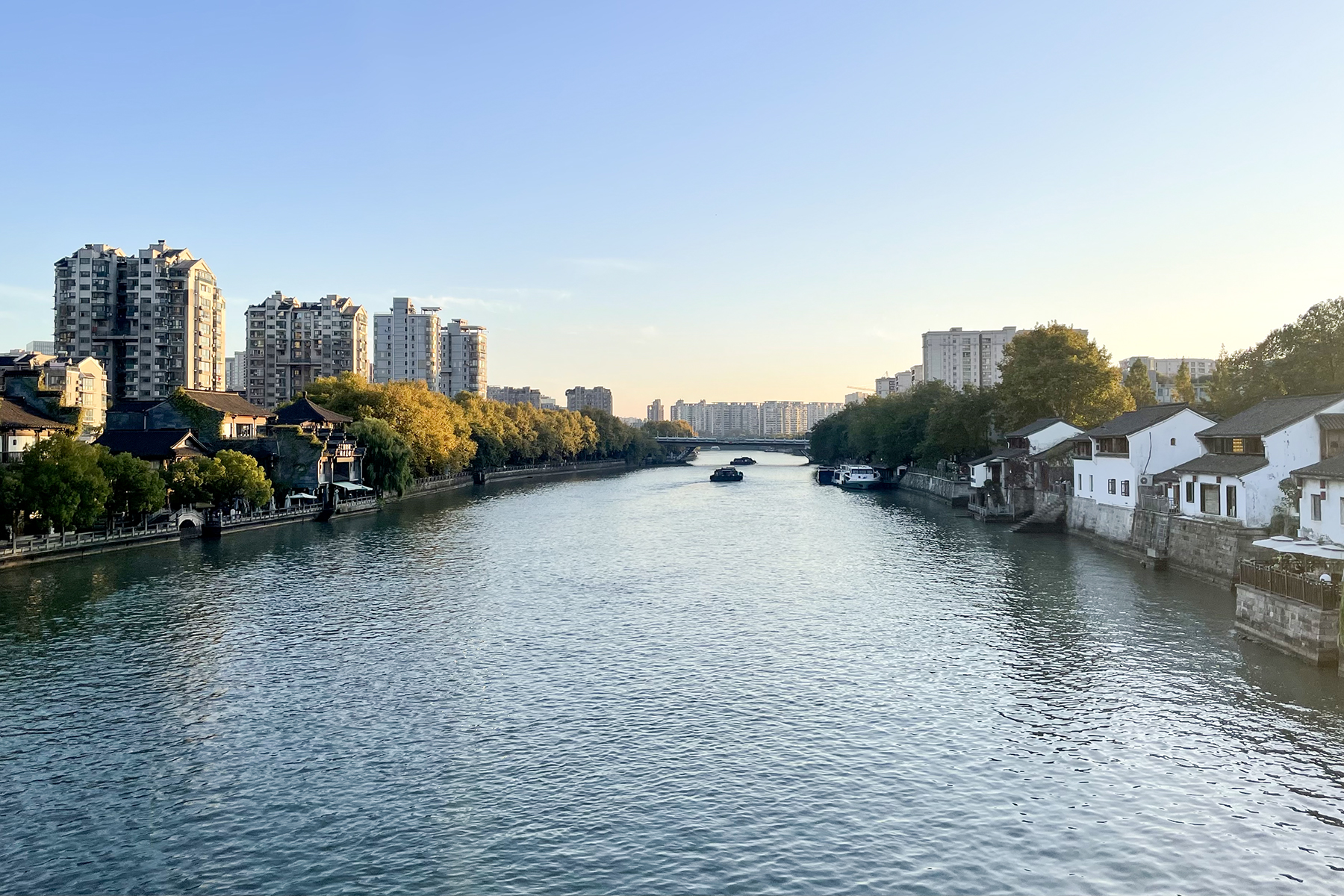
A lake that poets have written about for a thousand years, a 1,700-year-old temple tucked into a green valley, and tea hills that grow the most prized green tea in China — three days is exactly enough to take it all in.
There is an old Chinese saying — "Above there is heaven; below there are Suzhou and Hangzhou." People have repeated it since the Song dynasty, and the moment you stand at the edge of West Lake on a hazy morning, mist drifting over the water and an ancient pagoda on a far hill, you understand exactly why.
This plan is built for a first visit to Hangzhou. Day 1 is given over entirely to West Lake, the heart of the city. Day 2 heads west to the Lingyin Temple and the Longjing tea villages. Day 3 is flexible — choose between the Grand Canal and Xixi Wetland, or take a bus out to the thousand-year-old water town of Wuzhen. One thing that sets Hangzhou apart from other big Chinese cities: almost all of its highlights are free to enter, so this trip is gentler on the wallet than you might expect.
Want more time? See all Hangzhou attractions and add a slower lap of the lake or another day trip.
A bridge with a love legend, causeways built by poets, and the sun setting behind a golden pagoda — the day that explains why Hangzhou has been written into poetry for a thousand years.
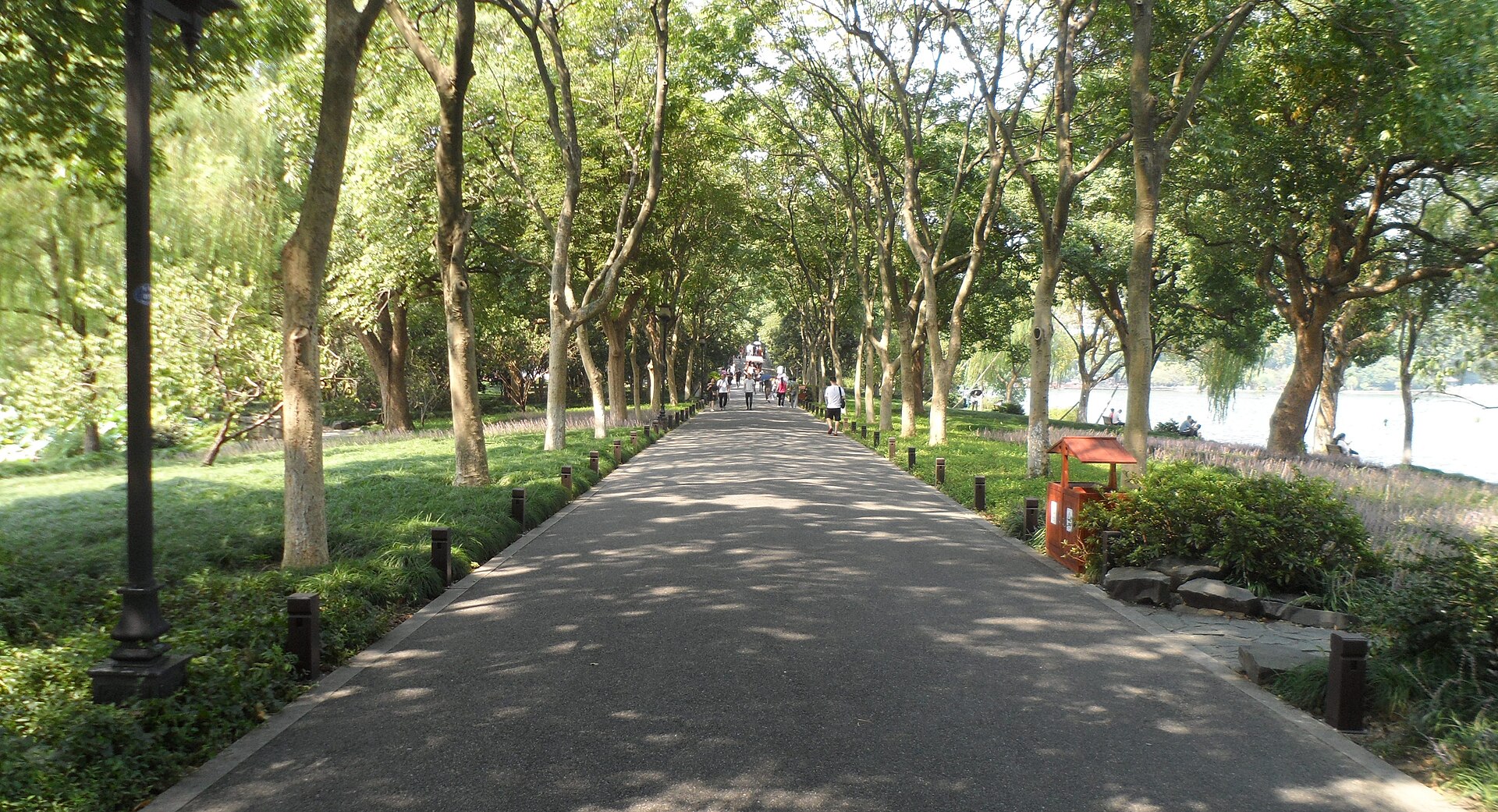
Start on the north shore of West Lake around 8:30 am at the Broken Bridge (断桥) — a small stone bridge that is not actually broken. It earned the name because, on a snowy day, snow on the sunlit half melts first, making the bridge look split in two. This is the setting of the "Legend of the White Snake," a love story every Chinese household knows. Mornings are quiet here and best for photos and a slow walk.
From the Broken Bridge, continue along the Bai Causeway (白堤), a long embankment the Tang poet Bai Juyi had built more than a thousand years ago, running out toward the mid-lake hills. Willows and peach trees alternate along both sides (at their best in spring). The far end rises to a small hill with a view over the whole lake.
After lunch by the lake, take a pleasure boat out to Xiaoyingzhou Islet (小瀛洲) — a small island ringed by water, with three little stone pagodas standing in the lake (the "Three Pools Mirroring the Moon" scene that appears on the ¥1 banknote). The ride is cool and breezy and shows you angles of the lake you cannot reach on foot. Allow about 1.5 hours including time on the island.
Back on shore, walk or cycle the Su Causeway (苏堤), a 2.8-kilometre embankment built by the poet Su Dongpo during his term as Hangzhou's governor. Six stone bridges punctuate its length, and it is one of the prettiest lakeside walks anywhere. Late afternoon, with the light softening, is the time to do it slowly.
The southern end of the Su Causeway brings you to Leifeng Pagoda (雷峰塔) on Sunset Hill. Ride up the pagoda (there are lifts inside) between 5 and 6:30 pm and you will catch the sun dropping behind the lake, with Baochu Pagoda visible on the far shore. This is one of the classic "Ten Scenes of West Lake," known as "Leifeng Pagoda in Evening Glow." From April to October the pagoda stays open until 8 pm, so you make the last light comfortably.
Come down and take the metro or a taxi to Hefang Street (河坊街) near Wushan Hill, on the south side of the lake — a pedestrianised old street lined with Longjing tea shops, centuries-old Chinese medicine halls, local snacks and street food. By night the lanterns light the whole street up, making it the perfect place to find dinner and walk it off to close out the day.
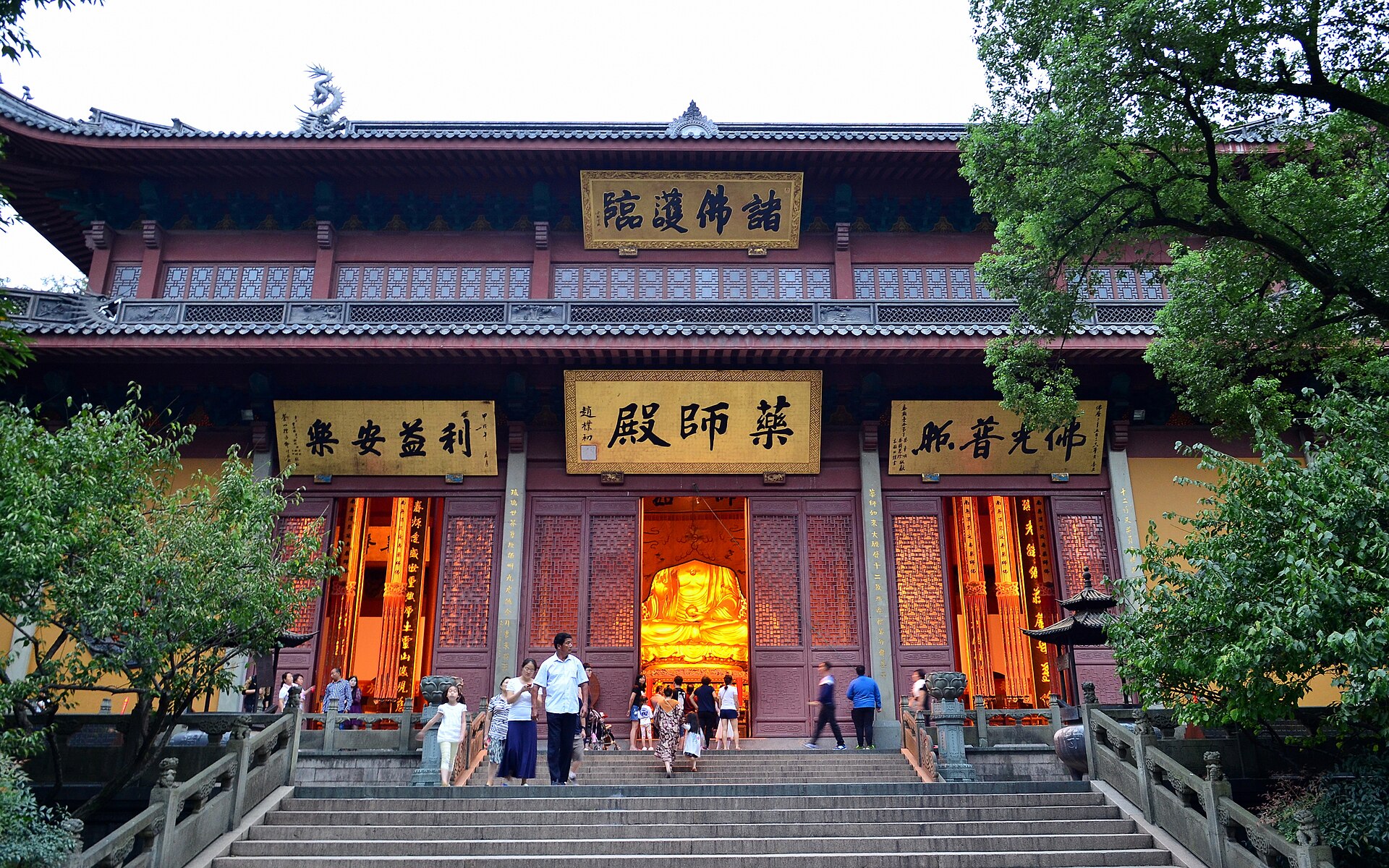
Incense drifting through a valley, Buddhist figures carved into a cliff a thousand years ago, and the hills that grow China's most prized tea — the day Hangzhou trades the city for the green.
Head out early to Lingyin Temple, the "Temple of the Soul's Retreat" — one of the oldest and most important Buddhist temples in China, founded in 328 AD and set in a lush green valley. In the morning the incense hangs in the air and the sound of chanting carries; the atmosphere is so calm it stops you in your tracks. Allow about 1.5 hours to walk through the various halls.
Opposite the temple entrance is Feilai Feng (飞来峰, "the Peak that Flew Here"), a limestone hill carved with more than 300 Buddhist figures across its cliffs and grottoes, dating from the Five Dynasties through the Yuan dynasty. Follow the cool forest path and stop at the carvings as you go.
This afternoon, find the Longjing tea villages — the home of "Longjing" (Dragon Well) green tea, widely held to be the finest in China. Ribbons of tea bushes run up the green hillsides as far as you can see. You can wander the villages for free and stop at small family tea houses for a freshly brewed cup (be a little wary of shops that hard-sell at high prices — always ask first). The picking weeks before the Qingming festival (late March to early April) are when the tea is at its best and the villages are at their liveliest.
Nearby is the China National Tea Museum (中国茶叶博物馆), free to enter, telling the story of Chinese tea from its origins to the tea ceremony, surrounded by working tea gardens. It makes a lovely spot to sit with a cup in the afternoon.
After a full day of temple and tea hills, this evening is made for a genuinely local Hangzhou dinner — Dongpo pork (东坡肉), pork belly braised in soy until it melts, named after the poet Su Dongpo; West Lake fish in sweet-and-sour sauce (西湖醋鱼); or Longjing shrimp (龙井虾仁), stir-fried with real leaves of the city's famous tea. Mid-range restaurants around the lake and in town are plentiful — see our Hangzhou food guide for specific recommendations.
An ancient canal through the city, a wetland where locals come to breathe, or a thousand-year-old water town beyond Hangzhou — the final day, shaped to fit you.
If you would rather stay in the city and see another side of Hangzhou, start the morning on the Beijing–Hangzhou Grand Canal (京杭大运河) — the longest man-made canal in the world and a UNESCO World Heritage Site whose southern terminus is right here. Take a water bus from Wulinmen Wharf and ride up to Gongchen Bridge (拱宸桥), an old arched stone bridge. The area around it is a preserved old quarter of riverside houses, small museums (knife-and-scissors, umbrellas, fans) and canal-side restaurants.
A more relaxed alternative is Xixi Wetland, China's first urban wetland park — a network of canals, ponds and small islands thick with reeds, lotus and waterbirds. It was the setting for Ang Lee's film Lust, Caution. Take an electric boat through the quiet waterways or follow the boardwalks on foot. It suits anyone who wants to escape the bustle of the lake and find some calm.
If you want to head out of town for a proper old water town, Wuzhen is the answer — a thousand-year-old canal town, among the best-preserved anywhere. Canals cut through the centre, grey timber houses line the water, and arched stone bridges link the lanes. The Xizha (西栅) zone is especially beautiful at night, when the lights reflect on the water. Buses run from Jiubao Passenger Transport Centre and take about 1.5 hours. It is a rewarding full-day trip if you still have the energy on Day 3 — see other options in our Hangzhou day trips guide.
For this itinerary, the east shore of West Lake (the Hubin area) is the most practical base — walk to the lake, shopping right there, and Line 1 of the metro connects everywhere. Wulin Square downtown is a second option. For quiet near nature, the Lingyin / West Hills side has the resorts. Compare them in our top 10 Hangzhou hotels or 6 luxury lakeside hotels.
Hangzhou has 12-plus metro lines, fares ¥2–9 per trip, paid with Alipay or WeChat Pay (scan QR at the gate). Line 1 runs past West Lake and Hangzhou East railway station. Lingyin Temple and the Longjing tea hills have no direct metro, though — transfer to bus 7/27 or take a DiDi. Signs are bilingual; Amap is the easiest map app.
Set up Alipay with a foreign Visa or Mastercard before you leave home (use the international version of the app). Most Hangzhou shops accept Alipay or WeChat Pay only — some take no cash at all — and don't forget to reserve your Lingyin Temple slot in the app. See the Alipay & WeChat Pay setup guide first.
| Category | Budget | Mid-range | Comfortable |
|---|---|---|---|
| Hotel (per night) | ¥100–200 (~฿500–1,000) |
¥300–600 (~฿1,500–3,000) |
¥800–1,800+ (~฿4,000–9,000+) |
| Food (3 meals) | ¥70–110 (~฿350–550) |
¥120–250 (~฿600–1,250) |
¥300–600 (~฿1,500–3,000) |
| Metro + bus | ¥10–20 (~฿50–100) |
¥15–35 (~฿75–175) |
¥40–80 (+ occasional DiDi) |
| Admission + boats | ¥0–40 (lake + tea hills free) |
¥100–180 (boat + pagoda + temple) |
¥180–350 (+ Wuzhen / Xixi) |
| Total per day (est.) | ¥180–370 (~฿900–1,850) |
¥535–1,065 (~฿2,675–5,325) |
¥1,320–2,830+ (~฿6,600–14,150+) |
Exchange rate used: ¥1 ≈ ฿5 · Prices are estimates and may vary by season · Leifeng Pagoda, Feilai Feng and Lingyin Temple ticketing changed in December 2025 — check before you go.