A freshwater lake in the heart of Hangzhou, ringed by willow-lined causeways, ancient pagodas and island gardens — free at any hour, and at its most beautiful at dawn and dusk.
Picture this: you are standing at the lakeshore at six in the morning. A thin mist hangs over the still water, the willows along the Bai Causeway trail their branches into the lake, a single wooden boat is being rowed slowly across, and far off rises the silhouette of Leifeng Pagoda on its hill. The scene has barely changed from the one Song-dynasty poets described a thousand years ago. This is exactly why the Chinese call Hangzhou "paradise on earth."
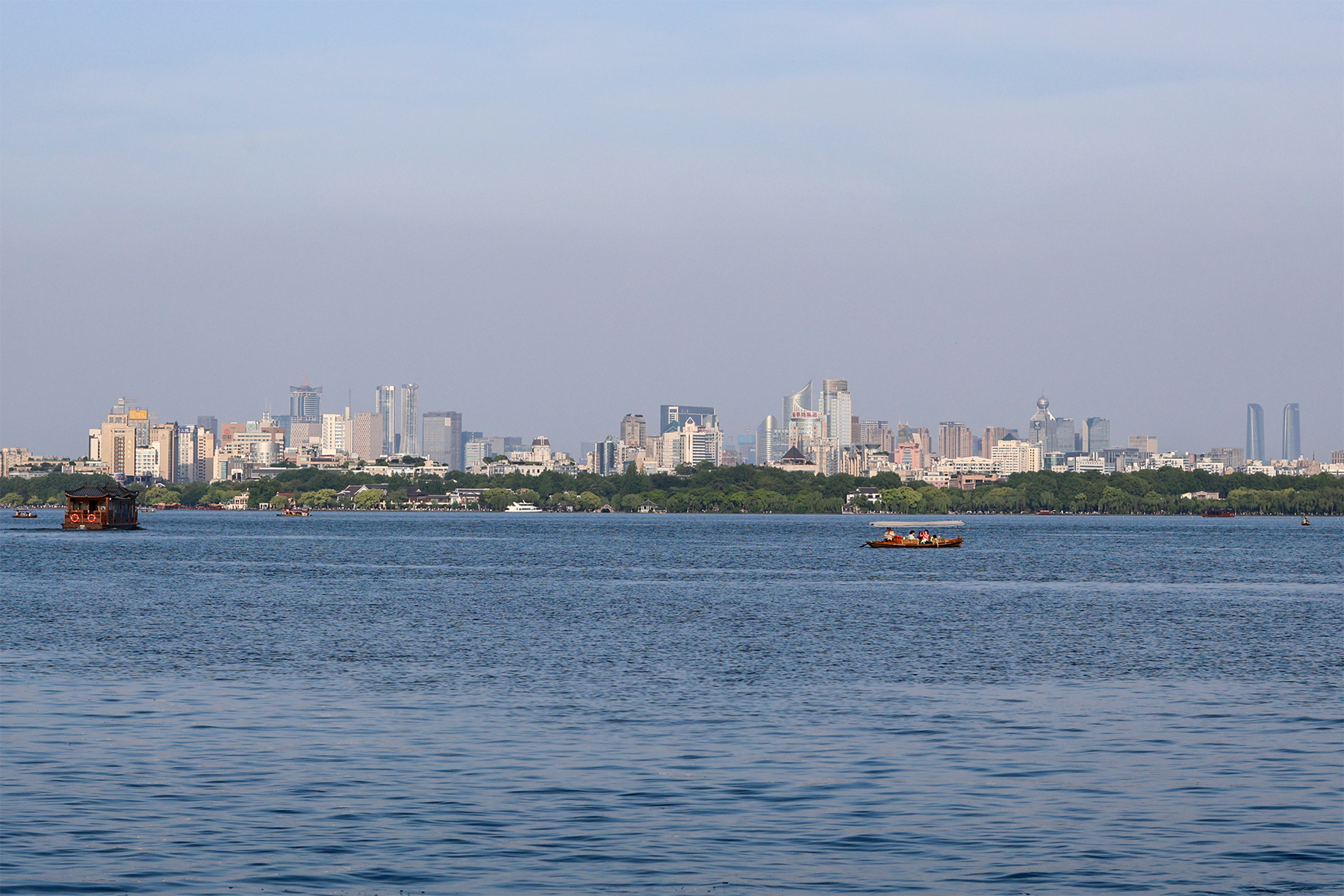
West Lake — Xi Hu (西湖), literally "the Western Lake" — covers about 6.4 square kilometres in the centre of Hangzhou, in Zhejiang Province. It was inscribed as a UNESCO World Cultural Heritage site in 2011 as a landscape that has shaped Chinese aesthetics for centuries, in painting, poetry and garden design alike. Two causeways cut across the water, islands sit at its centre, pagodas stand on opposite shores, and temples and classical gardens line the banks in an almost unbroken sequence.
What sets West Lake apart from an ordinary lake is simple: it is free, 24 hours a day, with no fence and no ticket gate. Hangzhou residents walk, jog and row here every day as if it were their back garden. We will tell you what is worth seeing, which stretch to walk and how to avoid the crowds.
The "Ten Scenes of West Lake" (西湖十景) is a set of classic views named by Chinese poets back in the Song dynasty — here are the five that are easiest to reach and clearest to appreciate.
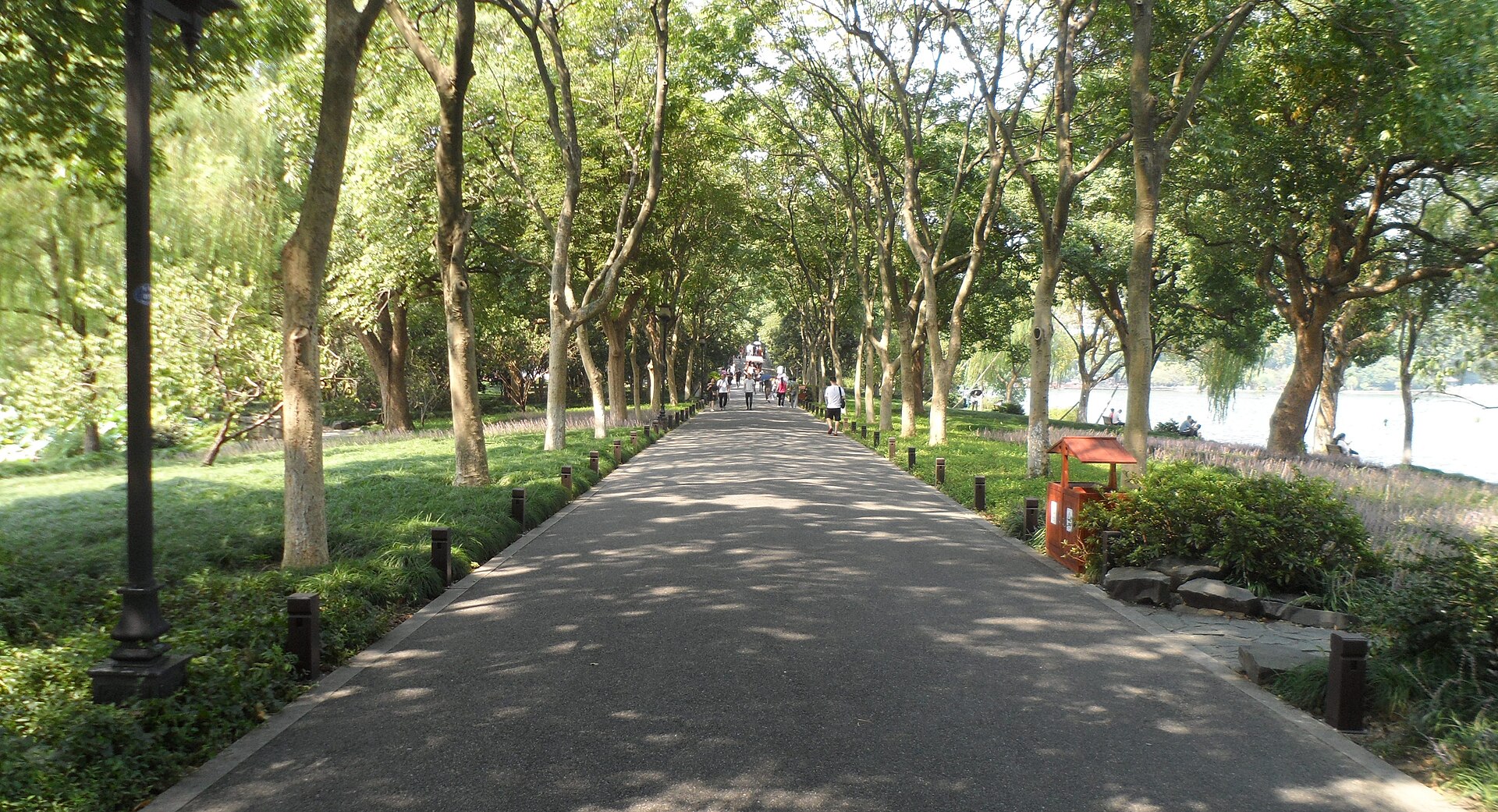
The causeway built by the scholar-poet and official Su Dongpo (1037–1101) from the silt dredged out of the lake. It runs 2.8 kilometres straight across the water from north to south, with six arched bridges and willows alternating with peach trees along its full length. Spring — when the peach blossom and the new willow leaves come together — is considered the most beautiful of all the Ten Scenes. Walk it or cycle it; no cars are allowed.
The Bai Causeway, named after the poet Bai Juyi, begins at the Broken Bridge (断桥) at its northern end. The name does not mean the bridge is broken — it comes from a winter image: when the snow on the sunlit side of the arch melts first and snow lingers on the shaded side, from a distance it looks as though half the bridge has gone. The bridge is also the setting of the Legend of the White Snake, a love story every Chinese visitor knows. The causeway leads on to Gushan Island, with its museums and gardens.
A small island near the centre of the lake, famous for three stone pagodas that rise out of the water beside it. On the full moon of the Mid-Autumn Festival, candles are lit inside the pagodas; the light through their round openings reflects on the water as multiple "moons," giving the scene its name. This is the image printed on the ¥1 banknote. The island can only be reached by sightseeing boat from the lakeside piers.
Look across the lake and you see two pagodas on opposite banks. Leifeng Pagoda stands on the south shore — broad and solid, glowing gold at dusk, the subject of "Leifeng Pagoda in Evening Glow," another of the Ten Scenes. Baochu Pagoda stands on a hill to the north — slender and tall, free to view. Locals describe the pair as "Leifeng like a monk, Baochu like a graceful woman." Together, the two pagodas are the visual anchors that give the lake its depth.
The corner most visitors miss — Viewing Fish at Flower Harbour (花港观鱼), a lakeside garden with ponds holding thousands of red goldfish and a peony garden. In high summer (July–August), lotus flowers fill the western inlet, the scene known as "Lotus in the Breeze on a Summer Day." Both sit near the southern end of the Su Causeway, link up on foot, and are free to enter.
The full loop around the lake is about 15 kilometres and takes 3 to 4 hours — most people do not walk all of it. The better approach is to pick one of the scenic stretches. The Su Causeway (2.8 km, six bridges) runs straight through the middle of the lake, quiet and shaded by willows; the Bai Causeway starts at the Broken Bridge and follows the northern shore to Gushan Island, shorter and closer to the city centre.
The best times are early morning (6–8 am), with thin mist, cool air and few people, or dusk after 5 pm, with golden light catching Leifeng Pagoda. Avoid the long Chinese public holidays (Chinese New Year, the National Day week of 1–7 October, and Labour Day), when the causeways get so crowded you can barely move.
The only way to land on Three Pools Mirroring the Moon island is by sightseeing boat from one of the lakeside piers (there are several, including near Hubin Park and on the Su Causeway side). A standard boat costs about ¥55 per person; a painted wooden boat, nicer to ride, is about ¥70 per person (~฿275–350). Both fares include landing on the island, and the round trip with time to walk takes roughly an hour.
If you just want to be out on the water without stopping at the island, loop ferries circle the lake and charge per segment, around ¥6–8 each, or you can hire a private rowing boat at about ¥150 an hour for a group.
Hangzhou has public bikes (and app-rental bikes) dotted right around the lake. Cycling the outer ring is an easy half-day — the path is flat with a separate lane, and it is quicker than walking and covers far more ground. It is the way to go if you only have half a day.
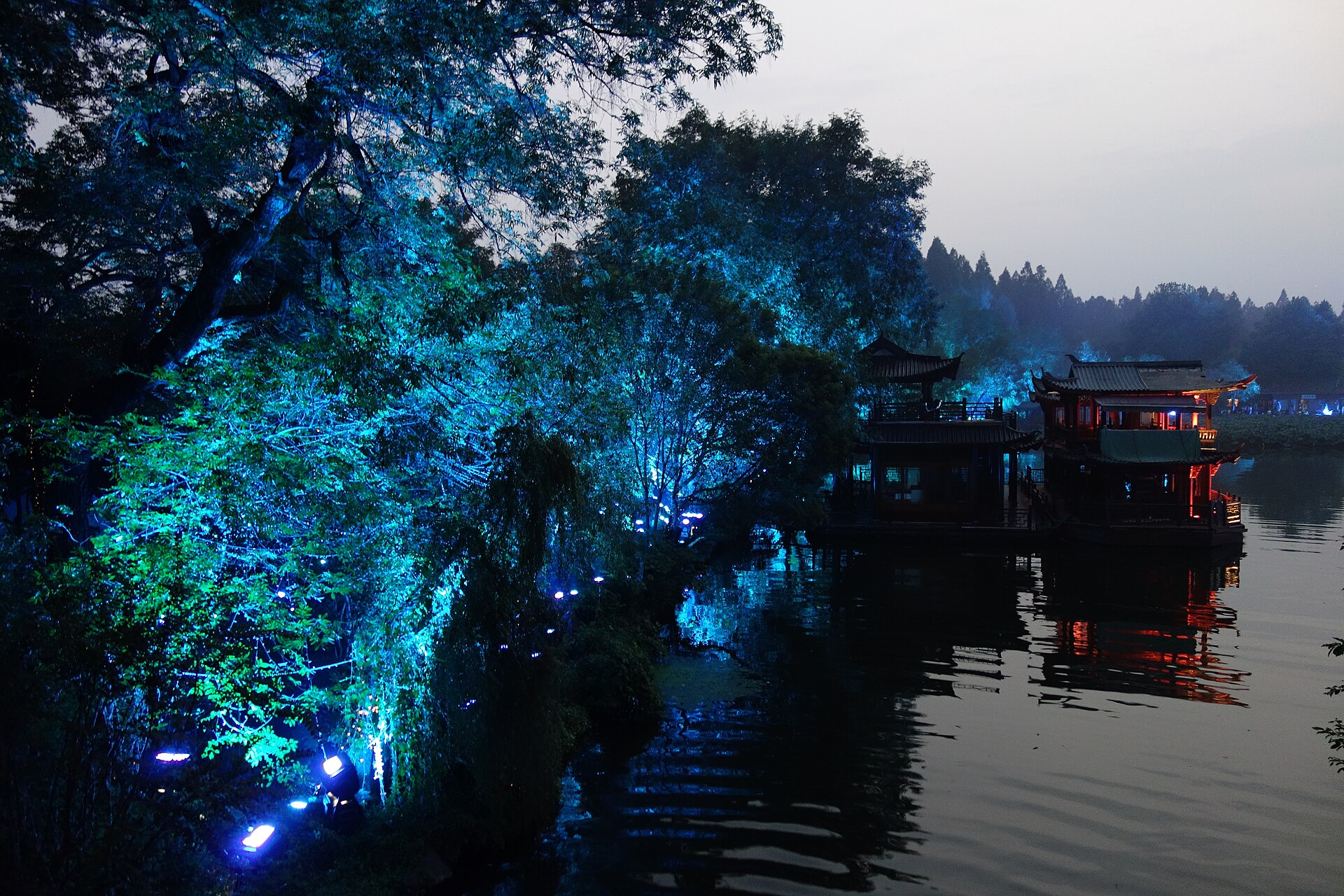
After dark, the trees and pavilions along the Hubin shore are lit in blue and green that reflect on the water, and the West Lake Musical Fountain runs in scheduled shows during the evening — check the show times on site, as they change with the season.
The metro is the quickest and most straightforward option, taking you right to the lakeshore.
Hangzhou's headline sights cluster around and just beyond the lake, an easy walk or short ride apart.
The Hubin and lakefront area — step out of the door and you are at the water, ideal for an early morning walk in the mist.