Green hills that have grown Longjing tea for over a thousand years, just a 25-minute bus ride from West Lake — walk the fields for free, drink fresh tea in a wooden teahouse, watch leaves roasted by hand. Hangzhou's slowest, quietest half-day.
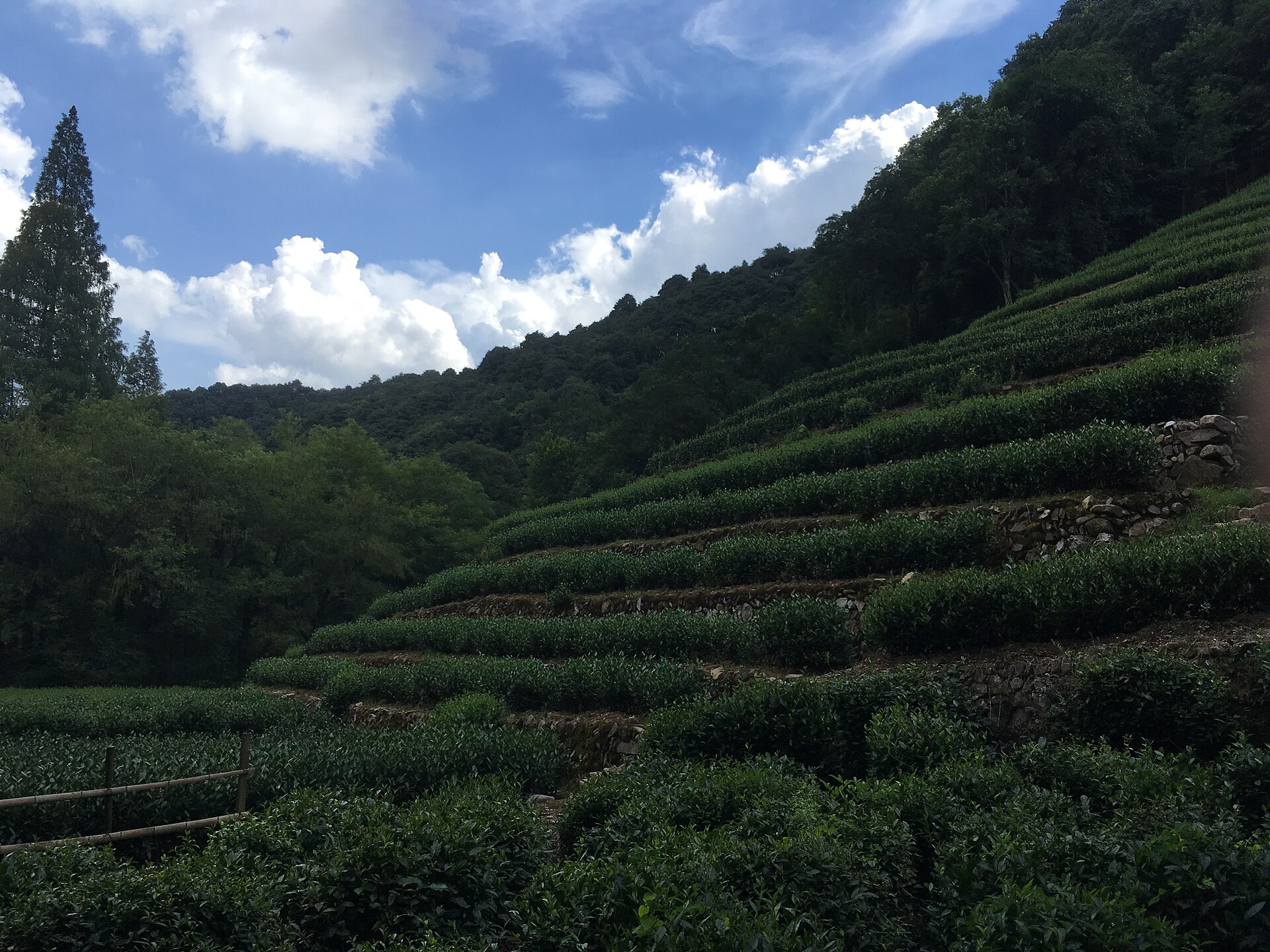
Picture this: you step off the number 27 bus at the end of the line, the air a touch cooler than in town, and in front of you the hillside rises in neat terraced rows of tea bushes that run up and out of sight. Somewhere among them, women in straw hats are picking the tender top leaves one by one, and on the breeze there is the smell of tea being roasted. This is Longjing (龙井), the origin of Longjing tea — Dragon Well green tea, the most celebrated green tea in China.
Longjing and its sister village Meijiawu (梅家坞) sit on the hills southwest of West Lake, where tea has been grown for over 1,200 years. The leaves here carry a protected origin name — West Lake Longjing (西湖龙井) — and the tea itself is flat, yellow-green, gently nutty in aroma and smooth rather than bitter. It has been the tea served to honoured guests since imperial times, and the Qianlong Emperor is said to have praised it personally.
What sets this apart from everything else in Hangzhou is that it is slow and quiet. No towers, no ticket queue — just tea slopes, wooden teahouses and time that seems to run more gently. You walk the fields for free, sit and drink freshly brewed tea in a house looking out over the terraces, and, if you come during the picking season, watch both the harvest and the hand-roasting happening in front of you.
All within walking distance, or one or two more stops along bus number 27.
The heart of it all is the tea slope rising up the hill in terraced rows, with narrow footpaths threading between the bushes so you can climb up, photograph and look back over the village — all for free. Mornings before 10 am are quiet with the best light. Come during the harvest and you will see pickers working their way across the whole slope.
A second tea village set in a western valley, quieter and more spread out than Longjing's main village. Teahouses line the lanes, so you can sit for tea right among the fields — ideal if you want to escape the tour crowds. Pair it with Longjing in a single trip; the two villages are only a few minutes apart by road.
The real draw of Longjing is sitting down to freshly brewed tea in a wooden house by the slopes, made with leaves picked from the hill behind. A good teahouse charges roughly ¥40–120 per person, including refills and a few snacks. Always ask the per-person price, and the price per gram if you plan to buy leaves, before you sit — and pick a place with genuine reviews on Dianping or Google.
China's only national tea museum tells the story of tea's history, how it is grown and roasted, and the culture of tea-drinking from ancient times to today. The building sits among the tea fields and is free to enter — a good place to start before walking the slopes. It is on the number 27 bus route, at the China National Tea Museum stop.
The Longjing Spring ("Dragon Well") gave the village its name, a natural spring ringed by small pavilions. Nearby are the "18 Imperial Tea Bushes" (十八棵御茶), said to have been planted at the order of the Qianlong Emperor during a visit. It is a small photo stop that adds a story to the tea trip. A few spots charge a small entry fee — check on the day.
The main activity, and the most free, is climbing the tea slope along the small paths that run between the bushes. The view from higher up looks back over the village and the fields in ribbons of green. A relaxed walk takes 1–2 hours; wear shoes that handle a slope. Come in late March or April and you will see villagers picking across the whole hillside at once.
The best time for quiet and light is before 10 am, before the tour groups arrive. The air on the slopes is cooler than in the city and there are far fewer people.
Drinking fresh Longjing, brewed with leaves from the slope behind the house, in a wooden teahouse that looks out over the fields — that is the experience people come to Longjing for. Sitting for tea costs around ¥40–120 per person (~฿200–600), including unlimited refills and a few snacks. Genuine West Lake Longjing is flat, yellow-green, with a roasted-nut aroma and a smooth finish.
Before you sit, always ask clearly: what is the price per person, and if you want to buy leaves, what is the price per gram or per 500g (jin). Choose teahouses with displayed prices and genuine reviews on the apps.
Longjing is roasted by hand in a hot wok — the roaster uses their palm to press and turn the leaves against the hot metal, halting oxidation and flattening each leaf into its signature shape. During the picking season, late March to early November (peaking before Qingming in early April), you have a good chance of seeing both the harvest on the slopes and the roasting happening in the village.
Tea picked before the Qingming festival is called míngqián (明前) and is the finest and most expensive of the year, because it is the first tender flush after winter.
The village sits on the hills behind West Lake, with no direct metro — but bus 27 carries you up to the end of the line easily.
Longjing is on the same side as West Lake and Lingyin Temple — easy to string together in one day.