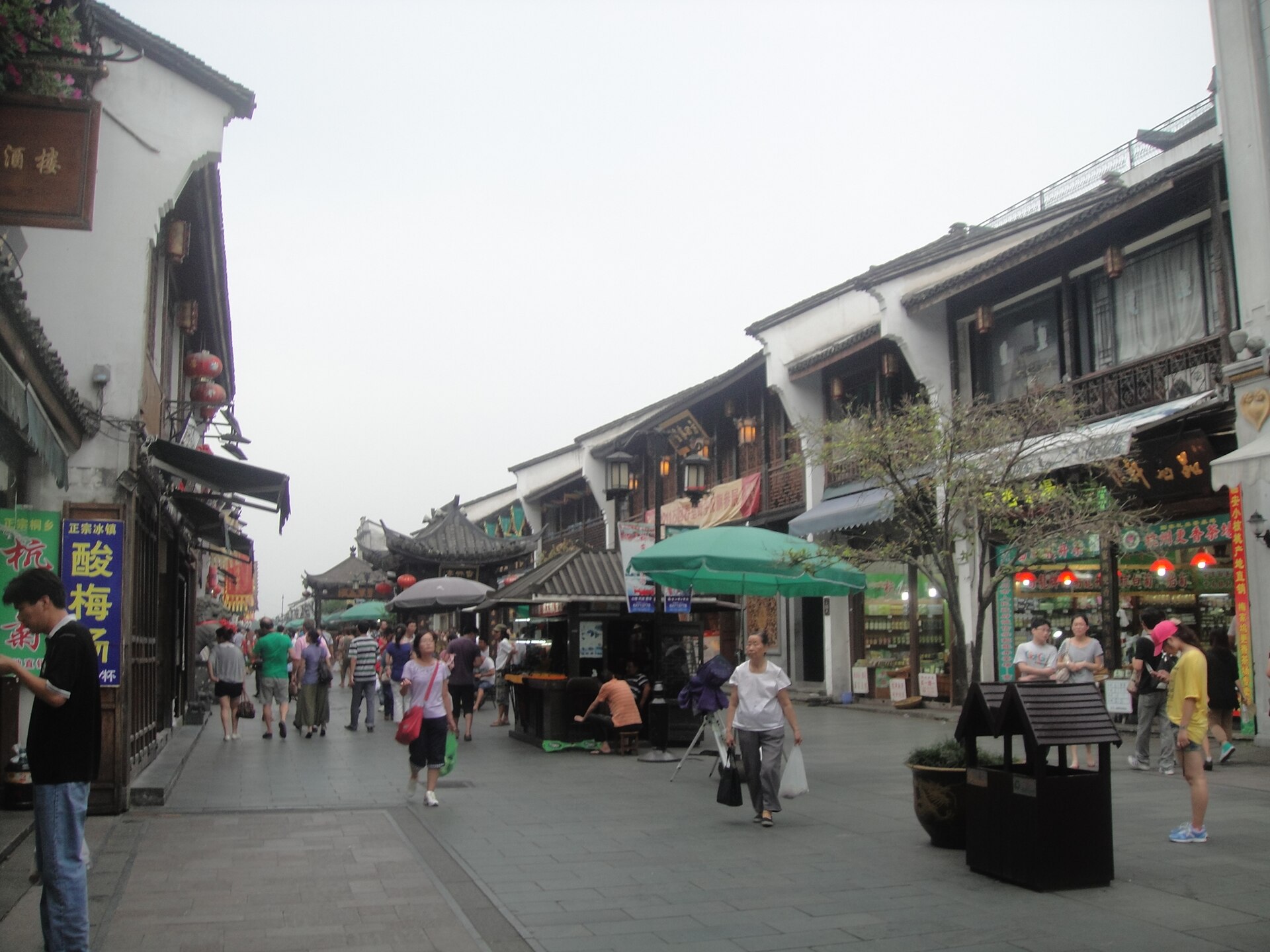
A near-two-kilometre stone street at the foot of Wushan Hill, lined with restored Qing-dynasty timber shophouses, a 150-year-old pharmacy still trading, sugar artists working in the open and the smell of roasting chestnuts — free, and an easy walk south from West Lake.
Walk south from the West Lake shoreline for about twenty minutes and the modern city suddenly resolves into a flagstone street: timber buildings with curved black-and-white roofs on both sides, red lanterns strung beneath the eaves, the smell of sugar-roasted chestnuts drifting from a stall ahead, a vendor calling out cold sour-plum drink, and a small crowd gathered around a craftsman pouring hot sugar into the shape of a dragon on a marble slab. That is Hefang Street.
Hefang Street (河坊街) — usually grouped with the surrounding quarter under the name Qinghefang (清河坊) — is a pedestrian old street running about 1.8 kilometres at the foot of Wushan Hill in Shangcheng District. This was Hangzhou's busiest commercial quarter as far back as the Southern Song dynasty, which is why the street is often described as "half of Hangzhou's history." Many of its old medicine halls, tea houses, fan shops and silk merchants have traded from the same spot for well over a century.
What sets Hefang Street apart from the usual staged "old town" is simple: it is free, with no ticket gate, and the people walking it are not only tourists. Hangzhou locals come here to buy herbal medicine, pick up tea, or find a snack — which keeps the atmosphere genuinely lively rather than manufactured, busy by day and by night.
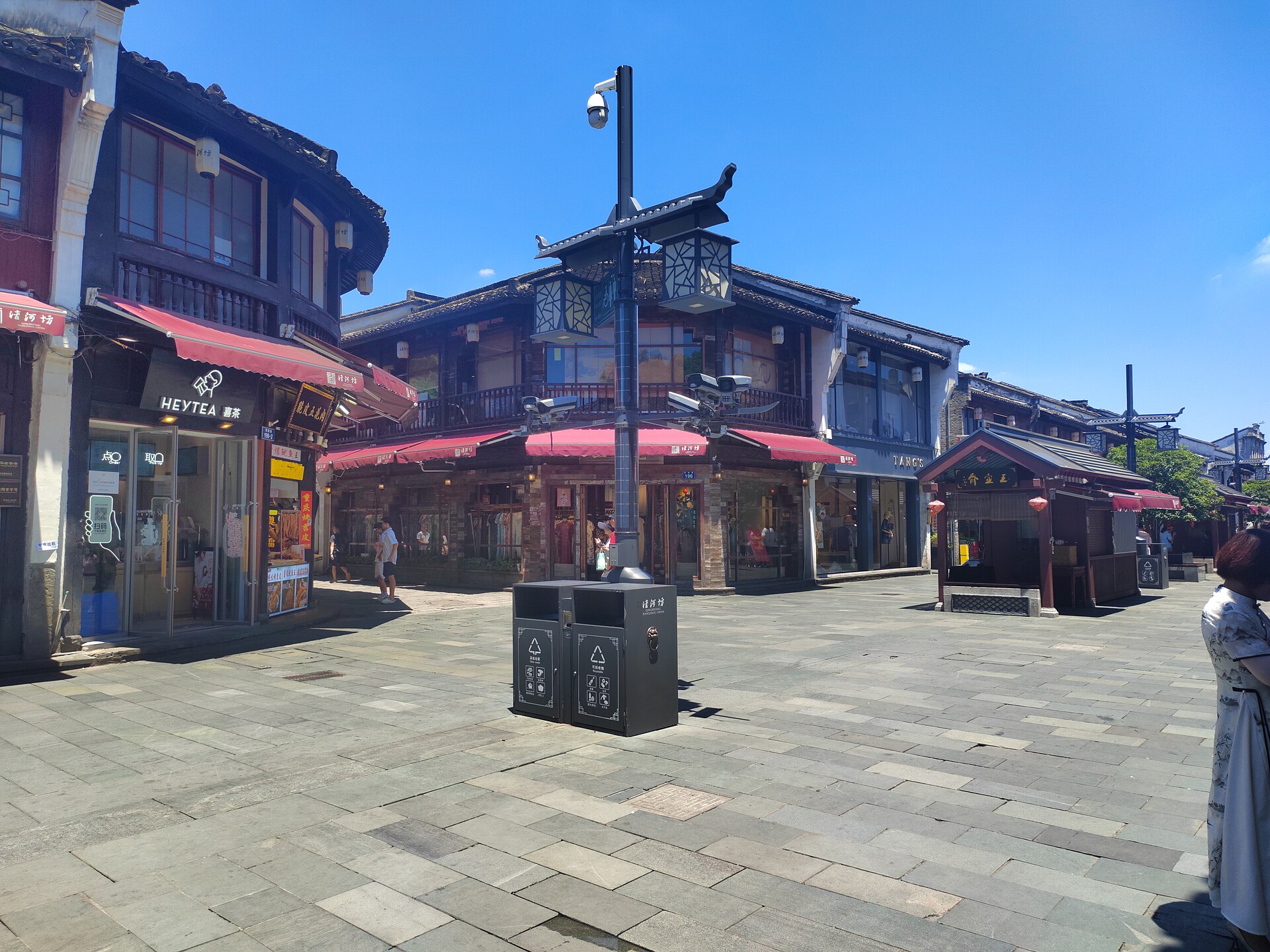
Walk in from the Wushan end and take it slowly — each of these has a century or more behind it.
Founded in 1874 by the merchant Hu Xueyan, Huqingyutang is both a working pharmacy and the country's first museum of traditional Chinese medicine. The building itself is a beautiful piece of carved timber architecture; inside are five exhibition halls and over 14,000 items, from antique grinding tools to towering wooden medicine cabinets. Admission is about ¥10, and there is free seasonal herbal tea to try at the entrance — half an hour here is well spent.
A scissors brand known across China, trading since 1663 in the reign of the Kangxi Emperor. The hand-forged steel blades have a long reputation for being sharp and durable — an unassuming souvenir that actually gets used and carries real history with it. The shop also stocks kitchen knives and nail scissors in plenty of styles.
The hand-made fan is one of Hangzhou's "three treasures," alongside scissors and silk umbrellas. Wang Xingji has been making paper and hand-painted silk fans for over a century, from the traditional black-lacquered style to fans painted with West Lake scenes — a light, lovely souvenir that travels home easily.
The whole length of the street has stalls selling sugar-roasted chestnuts, fried stinky tofu, skewers and big jugs of cold sour-plum drink (suanmeitang). The biggest crowds gather around the sugar painters (糖画), who pour hot sugar into animal shapes, and the dough-figurine artists (面人), who shape brightly coloured dough into cartoon characters and opera figures — free to watch, and you can buy the finished piece.
The western end of Hefang Street sits at the foot of Wushan Hill, and a short climb leads up to the Chenghuang (City God) Pavilion, a tall timber tower looking out over the old-town rooftops and, on a clear day, West Lake. It is a good add-on once you have finished the street — skip it if you are tired, but if you have the energy the view from the top rewards the climb.
The most enjoyable way to do Hefang Street is to walk slowly and graze as you go. The ones not to miss: hot sugar-roasted chestnuts, fried stinky tofu with chilli sauce, and xiaolongbao from a long-established name like Zhiwei Guan (知味观) nearby. Finish with cold sour-plum drink, sold by the jug at nearly every stall — sharp, sweet and exactly right on a hot day.
If you want a proper sit-down meal, there are authentic Hangzhou restaurants all along the street. Read our Hangzhou street food guide and full Hangzhou food guide first so you know which dishes to order.
Hefang Street is a quarter where Chinese-medicine houses have been rooted for centuries. The one to visit is Huqingyutang (胡庆余堂), both a pharmacy and a museum, open 8 am to 5 pm, admission about ¥10 (~฿50); inside it displays antique medicine-making tools and offers free herbal tea. There is also Fang Huichun Tang (方回春堂) and Baohe Tang, selling herbal remedies and health products from their own old timber halls.
Even if you buy nothing, simply walking in to see the wall of wooden medicine drawers, smell the herbs, and watch staff weigh out remedies on traditional Chinese scales is an experience you will not find in many other cities.
Hefang Street photographs well at two moments. By day you get the detail of the timber buildings, the curved rooflines and the brightly coloured shop signs. But the hour after sunset is the best of all, when the red lanterns under the eaves come on along the whole street and the timber facades turn warm in an instant.
The favourite frame is from the middle of the street, shooting down its length so the shophouses step away on both sides. For a high angle, walk up to the Chenghuang Pavilion on Wushan Hill at the western end and look back down over the old-town rooftops, which line up into a sea of dark tiles — striking on a clear day.
Hefang Street sits in the old town south of West Lake, reachable by metro or on foot from the lakeside.
Stay by West Lake or in the old-town centre — both put Hefang Street and the main sights within easy reach.