A UNESCO World Heritage Site that finishes in Hangzhou — the centuries-old Gongchen Bridge, the Qiaoxi old quarter with its free museums, and a ¥3 water bus that locals still ride every day.
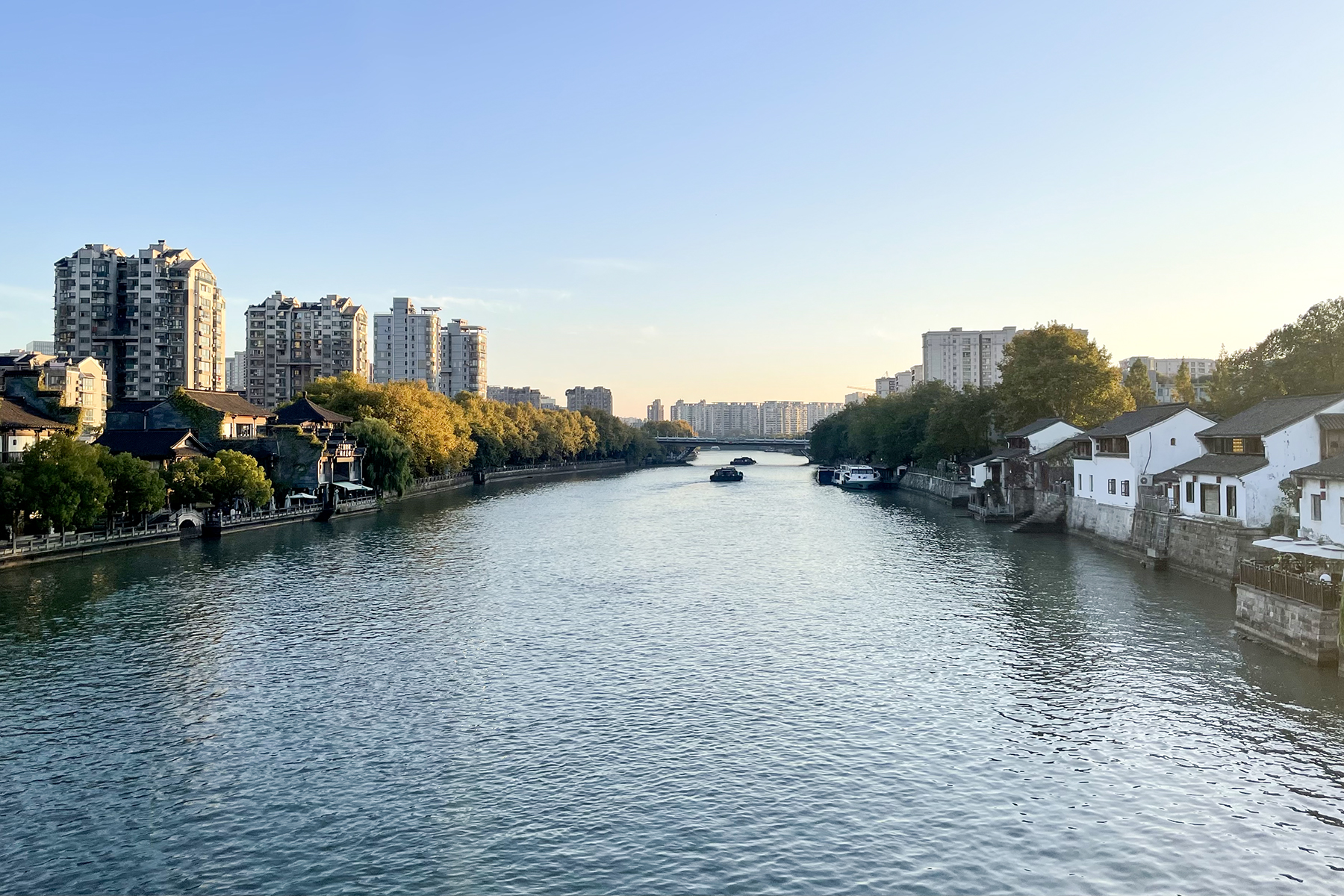
Picture this: you are standing on an old stone bridge around six in the evening. Below you, the canal still carries the occasional small boat sliding past. On both banks, timber houses and white-washed walls under grey-tiled roofs catch the last light of the day, and one by one they switch on warm lanterns. The smell of steamed buns drifts out of a shop in the lane behind you. This is not a museum reconstruction — it is Gongchen Bridge (拱宸桥), the southern end of the oldest canal on earth, on an ordinary working evening.
If West Lake is the Hangzhou every visitor knows, the Grand Canal is the quieter, deeper, more lived-in side of the city. It is the southern terminus of the Beijing–Hangzhou Grand Canal, the longest and oldest hand-dug waterway in the world — more than 1,700 kilometres of it, running all the way down from Beijing. For over a thousand years it carried the rice, salt and silk that held imperial China together, which is why UNESCO inscribed it as a World Heritage Site in 2014. The stretch through Hangzhou is around 29 kilometres long, and it is still a working canal today.
What sets the Grand Canal apart from every other Hangzhou sight is that it is still alive. Cargo boats still move along it, locals still take the water bus to work, residents still hang laundry along the lanes — and almost everything here is free, whether you are walking the Qiaoxi old quarter, crossing Gongchen Bridge, or stepping into the knife, umbrella and fan museums on the canal bank.
Walk from Gongchen Bridge into the Qiaoxi quarter — each has a story worth knowing.
A three-arch stone bridge about 98 metres long, built in the Ming dynasty and restored several times since. It is the tallest and longest arched bridge in Hangzhou, and once marked the point where imperial tribute boats entered the city. Stand at the crown of the bridge and the canal stretches away in both directions, with boats passing beneath; in the evening the lights under the arches reflect in the water. It is a favourite wedding-photo spot for Hangzhou locals.
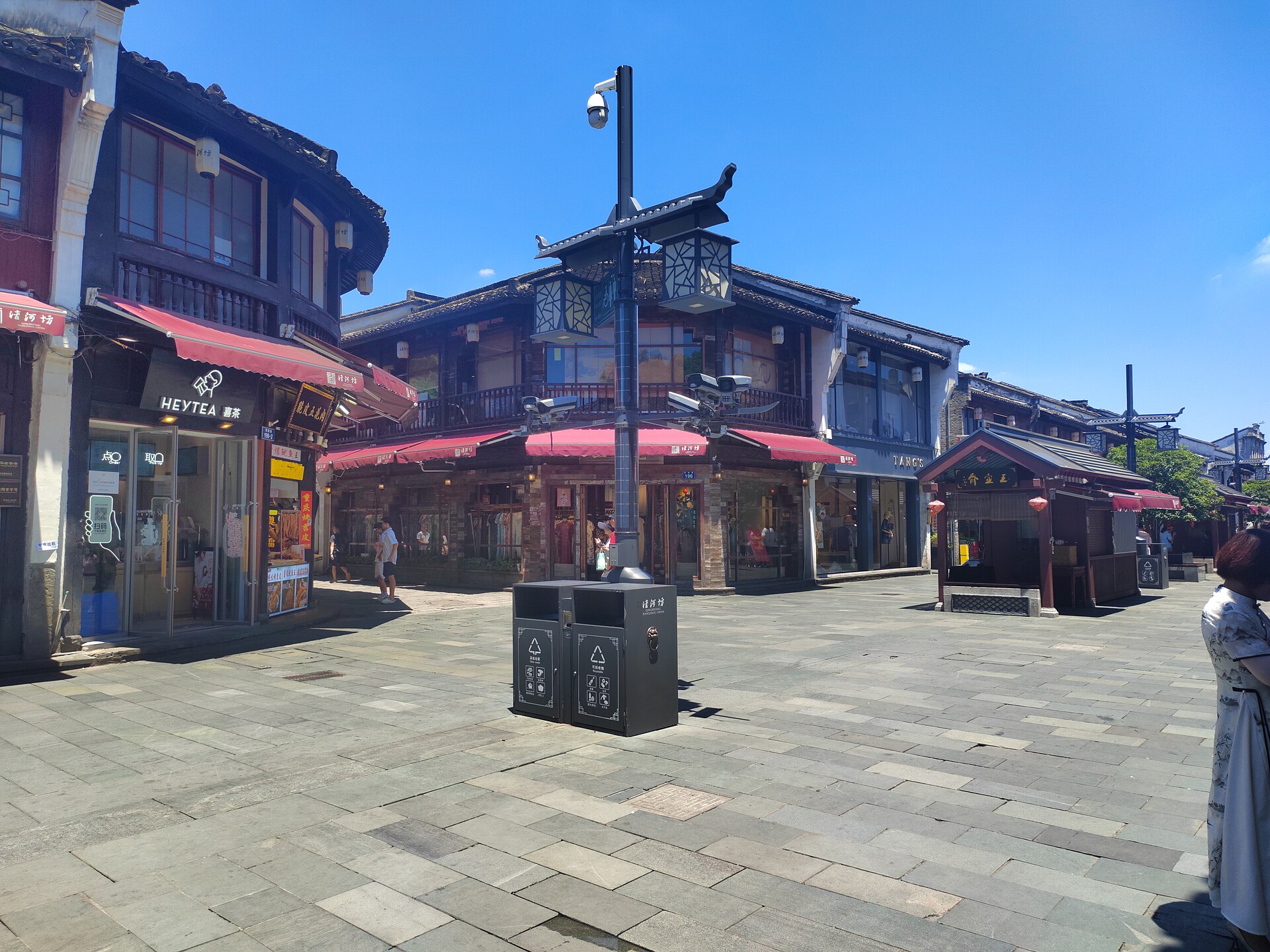
The west bank of Gongchen Bridge was once a busy trading market, and later an early-industrial factory district. Today it has been restored into smooth stone lanes lined with old timber houses, teahouses, cafés, craft workshops and small food shops. It is an easy place to wander for hours, day or night, and feels more genuine than old quarters that have been polished a little too hard.
The Qiaoxi quarter holds three national museums in a row — the China Knife, Scissors and Sword Museum, the China Umbrella Museum and the China Fan Museum. All three are free and tell the story of Chinese crafts that were tied to canal trade for centuries, with hands-on demonstration areas that work well for children. You do need to reserve a slot in advance via their official WeChat account, and all three close on Mondays.
Walk a little further north along the canal and you reach Xiaohe Street, a block of timber waterside houses sitting where the Grand Canal, the Xiaohe River and the Yuhang Tang River meet. It is calmer and less crowded than Qiaoxi, with real daily life still on show — laundry on poles, plants outside front doors. In the evening the red lanterns strung along the lanes are especially pretty.
The most local way to see the canal is to take the Water Bus Line 1 from Wulinmen Wharf in the city centre out to the Gongchen Bridge stop. The fare is just ¥3. You sit and watch the bridges and old canalside houses go by, one stretch at a time — cheaper and more atmospheric than a daytime tour boat. It is a great option if you want to travel both economically and enjoyably.
Start at Gongchen Bridge, cross to the west bank into the Qiaoxi old quarter and wander the stone lanes along the canal, stopping at the free knife, umbrella and fan museums. From there, follow the canal north to the quieter Xiaohe Street block. Walking both quarters with museum stops takes around 2 to 3 hours. The paths are flat and there are teahouses and cafés to rest at along the way.
The best window is 4 to 8 pm — walk in the soft afternoon light, then stay on as the canalside and lane lanterns come up; the old waterside quarters look their best after dark. For space and quiet, come between 8 and 10 am before the tour groups, and remember the museums close on Mondays.
The evening cruise departs from Wulinmen Wharf (武林门码头) in the city centre, sails along the canal past bridges and old quarters up to Gongchen Bridge, then returns. It takes about one hour and costs around ¥120 per person (~฿600), with reduced rates for children. Departures are usually in the 7.10 to 8.40 pm window, but the schedule shifts with the season — check current times and prices before you go. Evening is the best time, because the lights along the bridges and canalside houses all come on together.
You can buy tickets at the wharf, or book ahead through Klook to skip the queue.
The classic frame is from the crown of Gongchen Bridge at dusk, looking along the canal as it stretches away with a boat passing under the arch — you get the old stone curve and the canalside lights in one shot. Another strong angle is down at the water's edge on the Qiaoxi side, shooting the full arch of Gongchen Bridge from below with its reflection in the water.
For the old-quarter shots, step into the stone lanes of Qiaoxi or Xiaohe Street in the evening — the moment when the red lanterns have just come on and the sky still holds deep blue gives you the warmest, most dimensional images of a Chinese waterside quarter.
Metro is the most straightforward option, but for atmosphere, try arriving by water bus instead.
Pick somewhere near a metro line and both the Grand Canal and West Lake are easy to reach.