10 Hangzhou attractions worth your time
Ordered from the heart of the city out to the hills and tea country — tap any card for the full in-depth guide.
 1
1
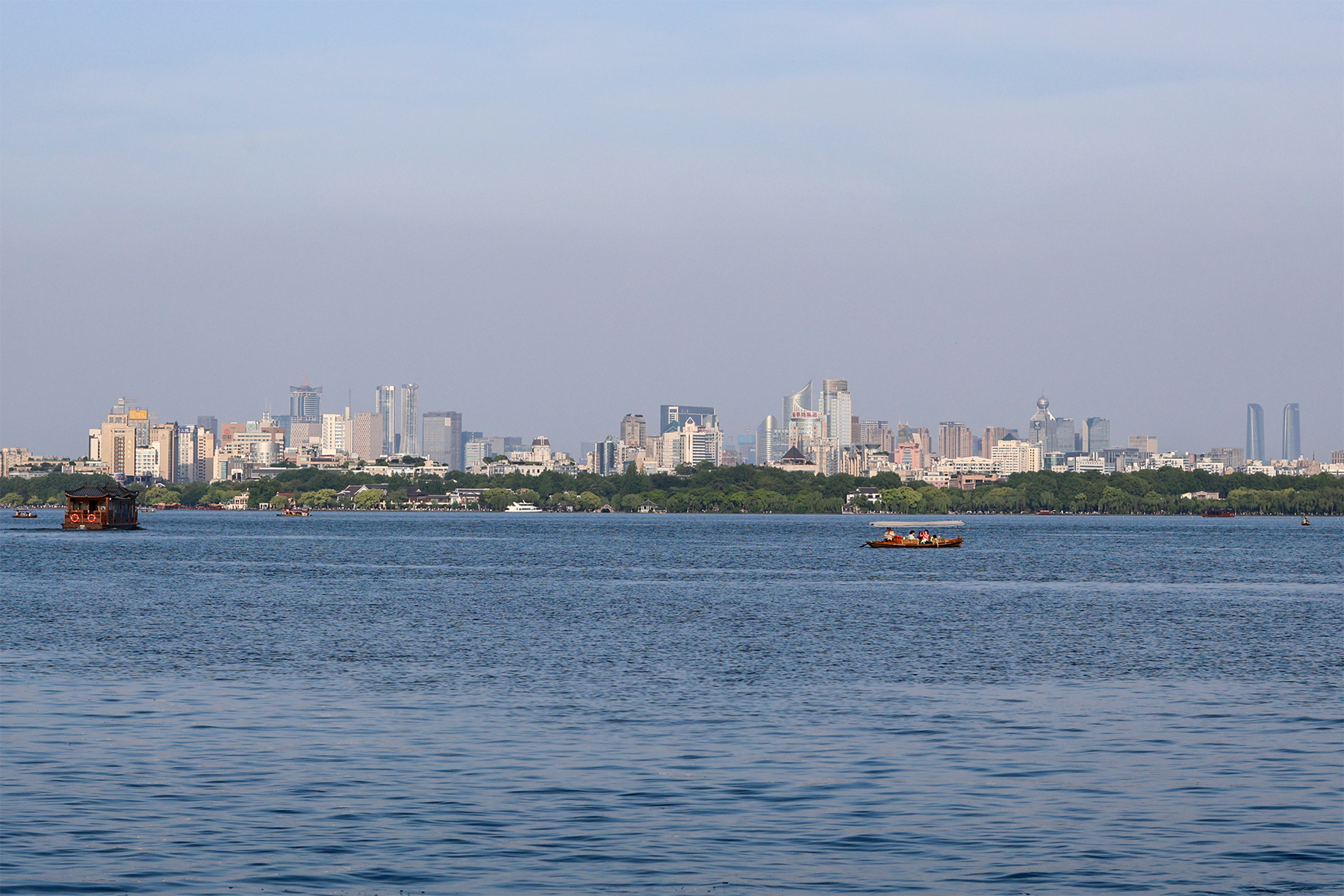
Picture standing on the Su Causeway (苏堤), a 2.8 km tree-lined path running straight across the lake. On one side, open water mirrors Leifeng Pagoda; on the other, green hills. Willows and peach trees alternate the entire length — this is the causeway the Song-dynasty poet Su Dongpo had built a thousand years ago. West Lake is the original "lake within a garden", a model whose influence spread across East Asia. Its Ten Scenes of West Lake are so famous Chinese children learn them by heart — the Broken Bridge under snow (断桥), the Three Pools Mirroring the Moon (三潭印月). Walk it, cycle it, or take a boat across. Entirely free.
Read the full West Lake guide →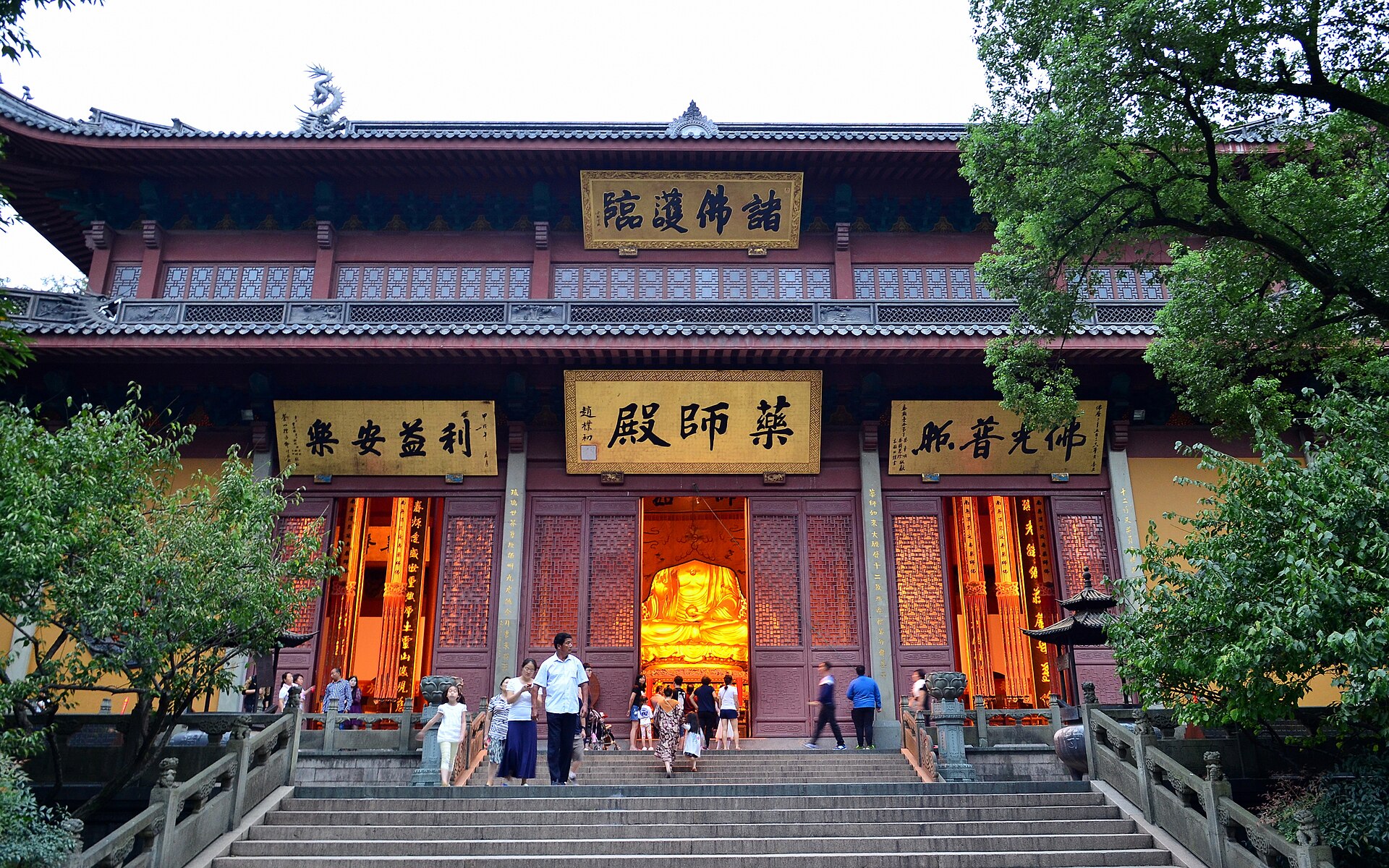 2
2
You walk into a forested valley where the trees nearly close out the sunlight, and you smell incense before you see the temple. Lingyin — the "Temple of the Soul's Retreat" — is one of the most important and oldest Chan (Zen) Buddhist temples in China, founded by an Indian monk in 328 AD. Its centrepiece is the Hall of the Great Hero (大雄宝殿), housing a 24.8-metre camphor-wood Buddha — one of the tallest wooden Buddha statues in the country. The temple sits within the same scenic area as Feilai Feng, so the two pair naturally in one visit. Go early; the halls get very busy by mid-morning.
Read the full Lingyin Temple guide →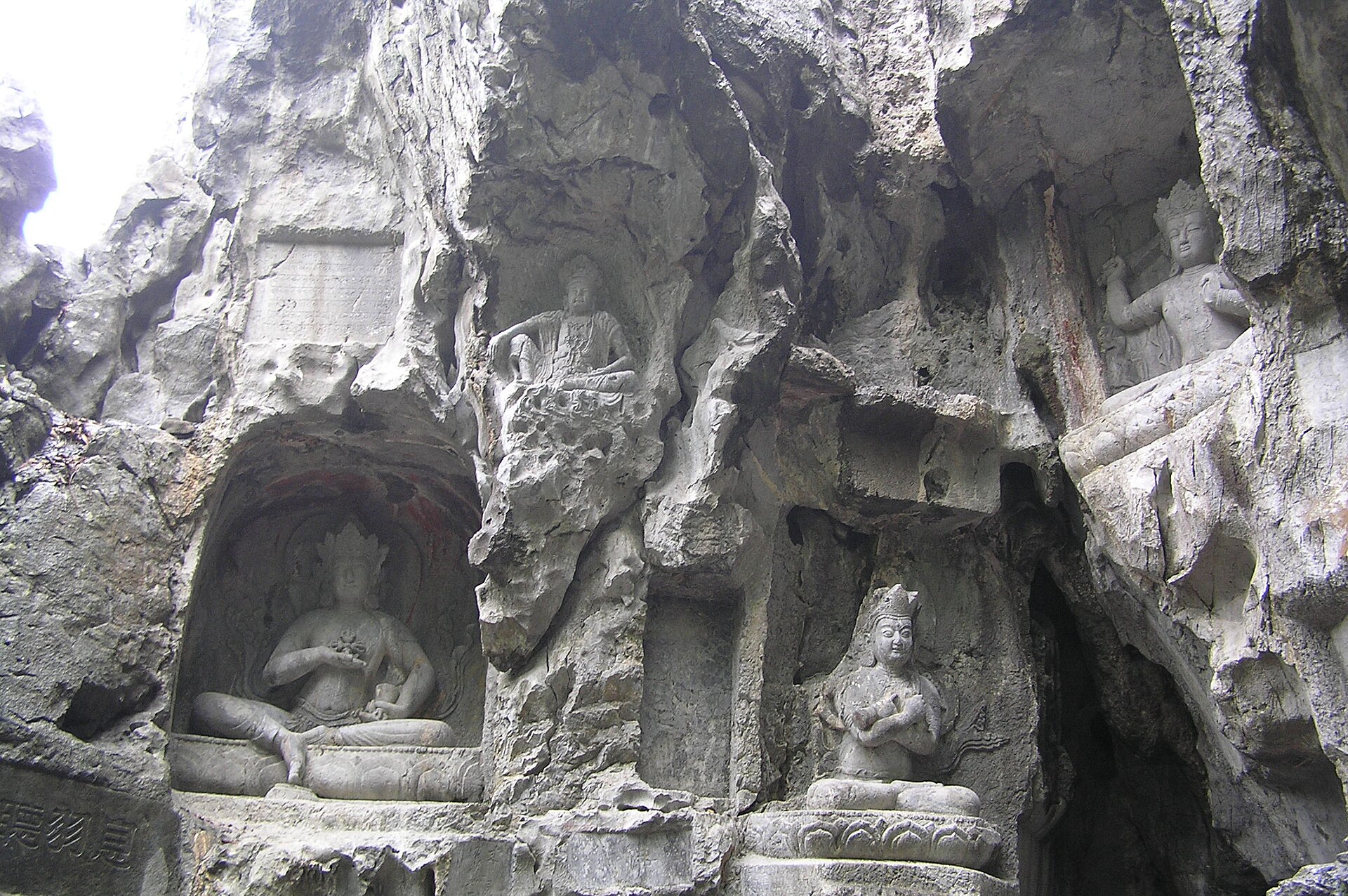 3
3
The name "The Peak That Flew From Afar" comes from a legend that the hill floated here from India overnight. Feilai Feng is a low limestone hill directly opposite Lingyin Temple, and what makes it remarkable is the more than 300 Buddhist figures carved in relief across its cliffs and inside its caves — created continuously from the Five Dynasties through the Yuan (roughly 900–1300 AD). The most photographed of them is a rotund, broadly grinning Maitreya — the "Laughing Buddha". Wandering the streams and grottoes is genuinely pleasant, and it slots into the same trip as Lingyin Temple.
Read the full Feilai Feng guide →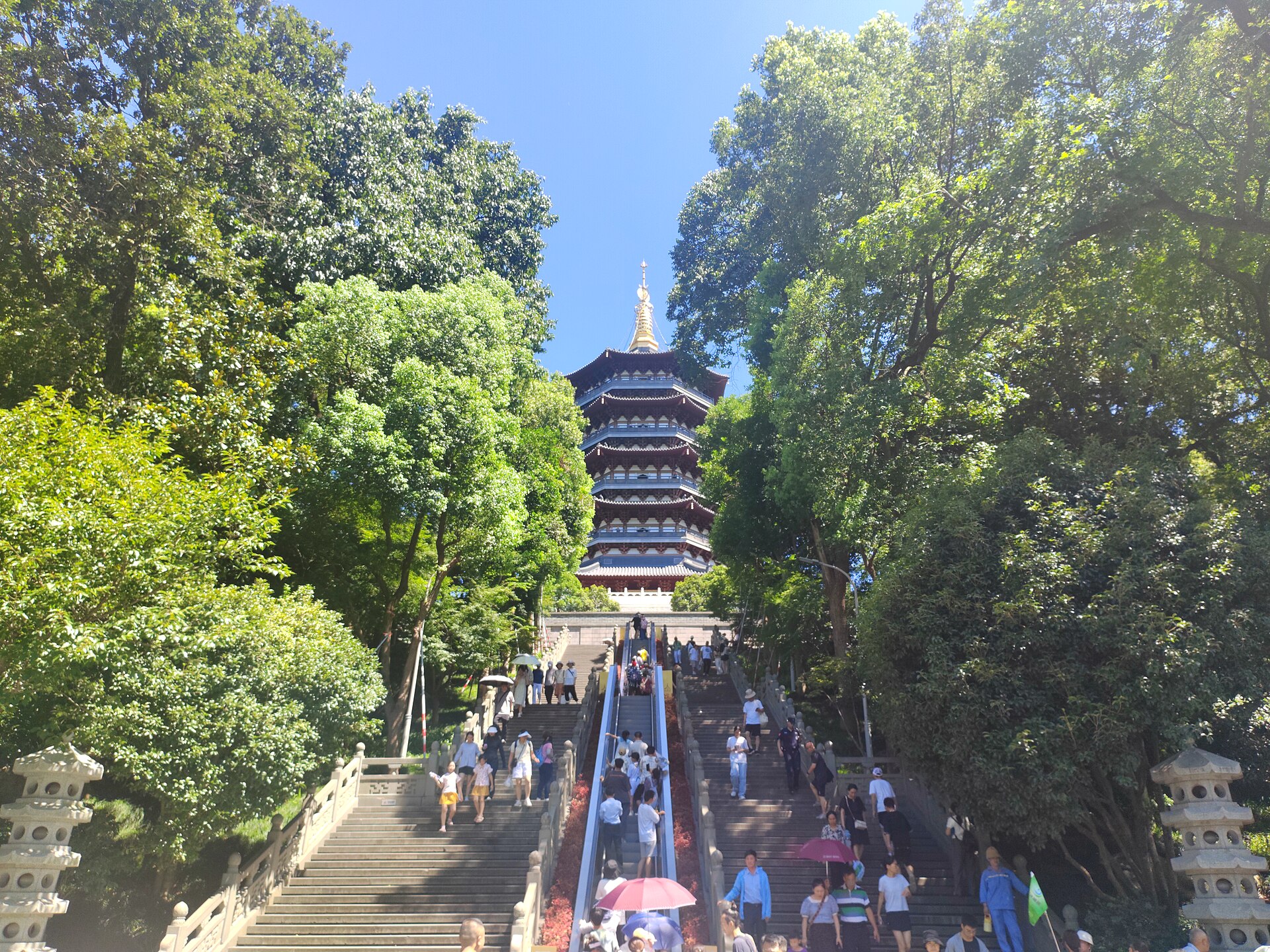 4
4
If you grew up with Chinese folk tales, you know the Legend of the White Snake (白蛇传) — and Leifeng Pagoda is where Madam White was imprisoned beneath the tower. It stands on a low hill on the south shore of West Lake. The original was built in 975 AD, collapsed in 1924, and was rebuilt in 2002 directly over the ancient relic crypt (with lifts and escalators inside, so the climb is easy). The view called "Leifeng at Sunset" (雷峰夕照) is one of the classic Ten Scenes of West Lake. From the upper level you see the whole lake and the city of Hangzhou in a single frame.
Read the full Leifeng Pagoda guide →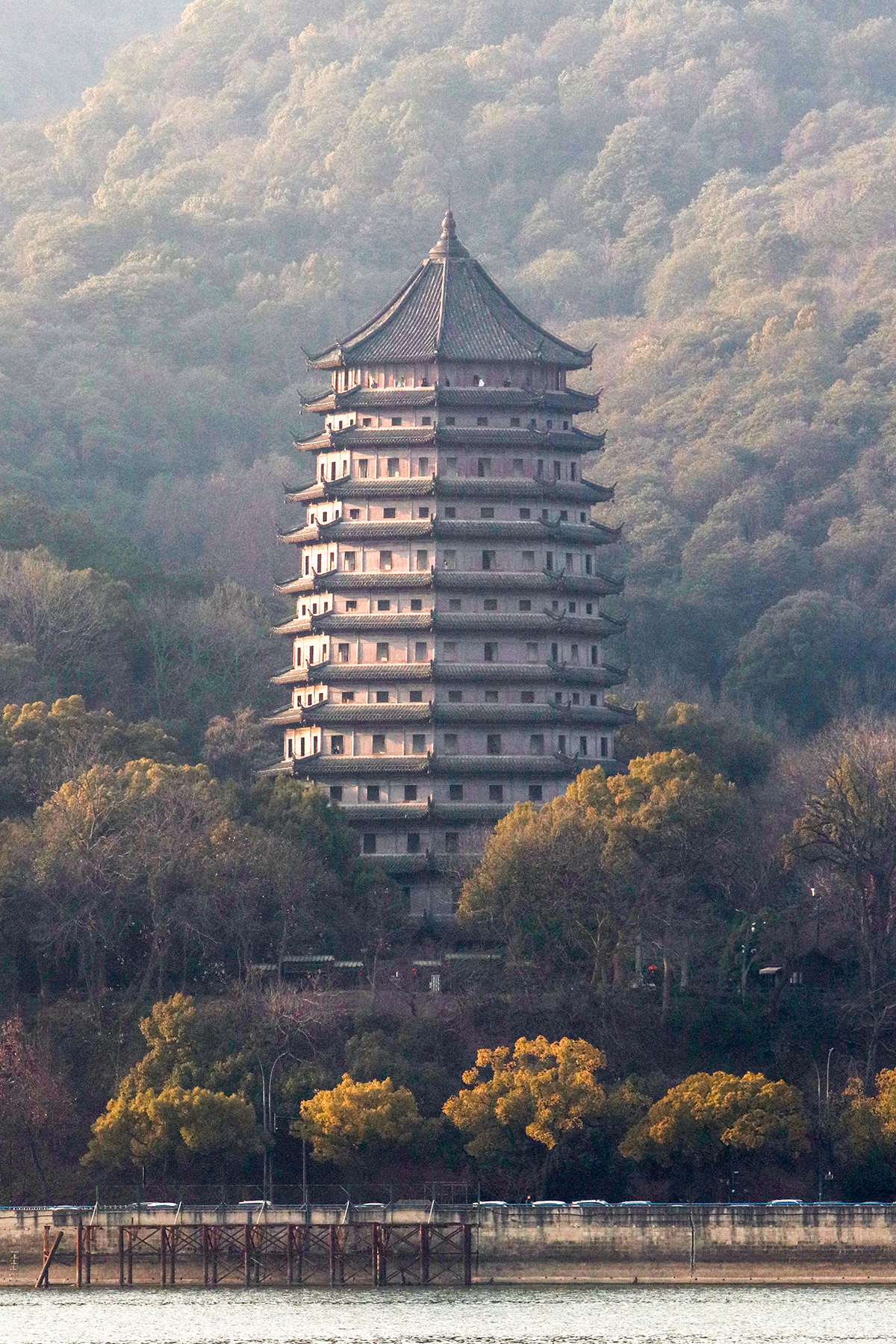 5
5
The Six Harmonies Pagoda stands on a hill above the Qiantang River (钱塘江), outside the West Lake area. It was built in 970 AD during the Northern Song dynasty, originally to "calm the tides" of the Qiantang — a river famous for its tidal bore, the giant wave best seen during the eighth-lunar-month festival (around September–October). The pagoda is roughly 60 metres tall and octagonal; from the outside it appears to have 13 storeys, but inside there are only 7. Climb to the upper levels for wide views of the river and the bridges spanning it.
Read the full Six Harmonies Pagoda guide →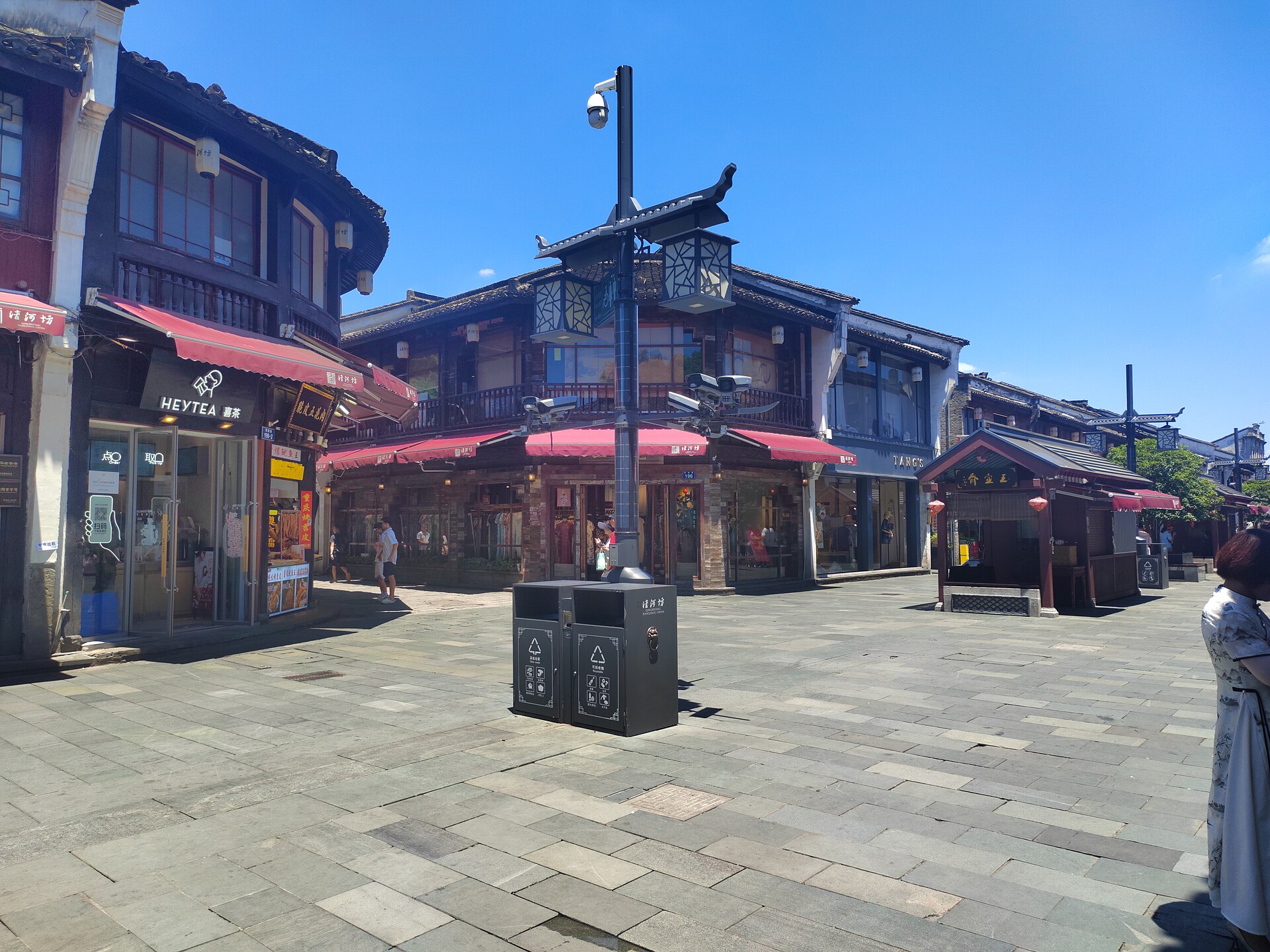 6
6
Hefang Street (Qinghefang) is where Hangzhou keeps its old-town atmosphere best — a pedestrian street of Qing-dynasty wooden buildings restored along its whole length, at the foot of Wushan Hill. The standout is the historic Chinese medicine hall Huqingyutang (胡庆余堂), open since 1874 and now also a museum of traditional medicine. Both sides of the street are lined with local snack stalls, tea shops, silk merchants, fan makers and street performers. It's good for grazing and wandering by day or night, and it's an easy walk south from West Lake. Free to enter.
Read the full Hefang Street guide →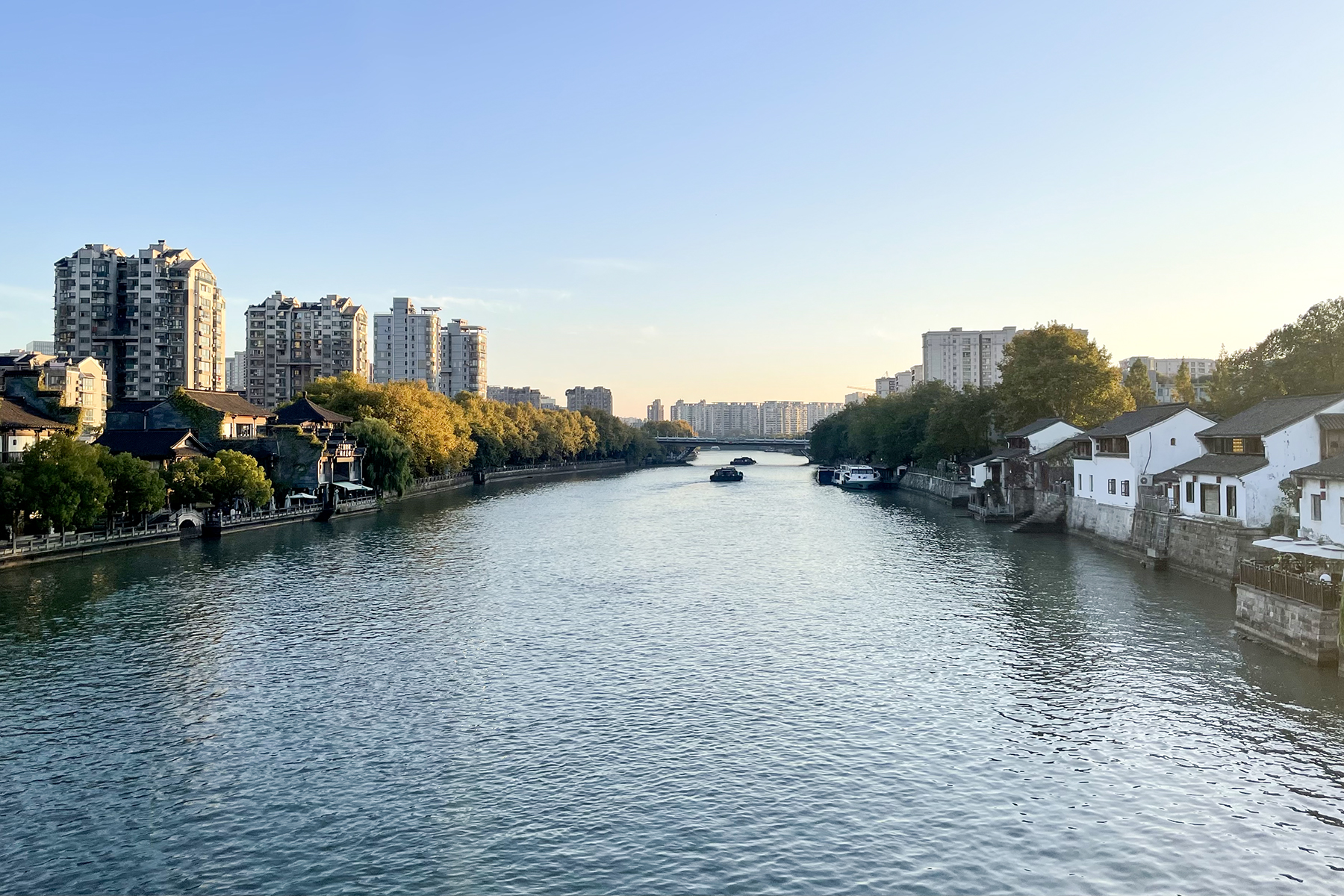 7
7
Many visitors don't realise Hangzhou is the southern terminus of the Beijing–Hangzhou Grand Canal, the longest man-made canal in the world (nearly 1,800 km), begun in the Sui dynasty and UNESCO-listed. The prettiest point is Gongchen Bridge (拱宸桥), a Qing-dynasty arched stone bridge still in everyday use. Around the canal sit a cluster of small, charming museums (the Knife/Scissors/Umbrella Museum and the Fan Museum) and Xiaohe Historic Street (小河直街), which still has its original waterside houses. Take a water-bus along the canal or an evening cruise. Mostly free.
Read the full Grand Canal guide →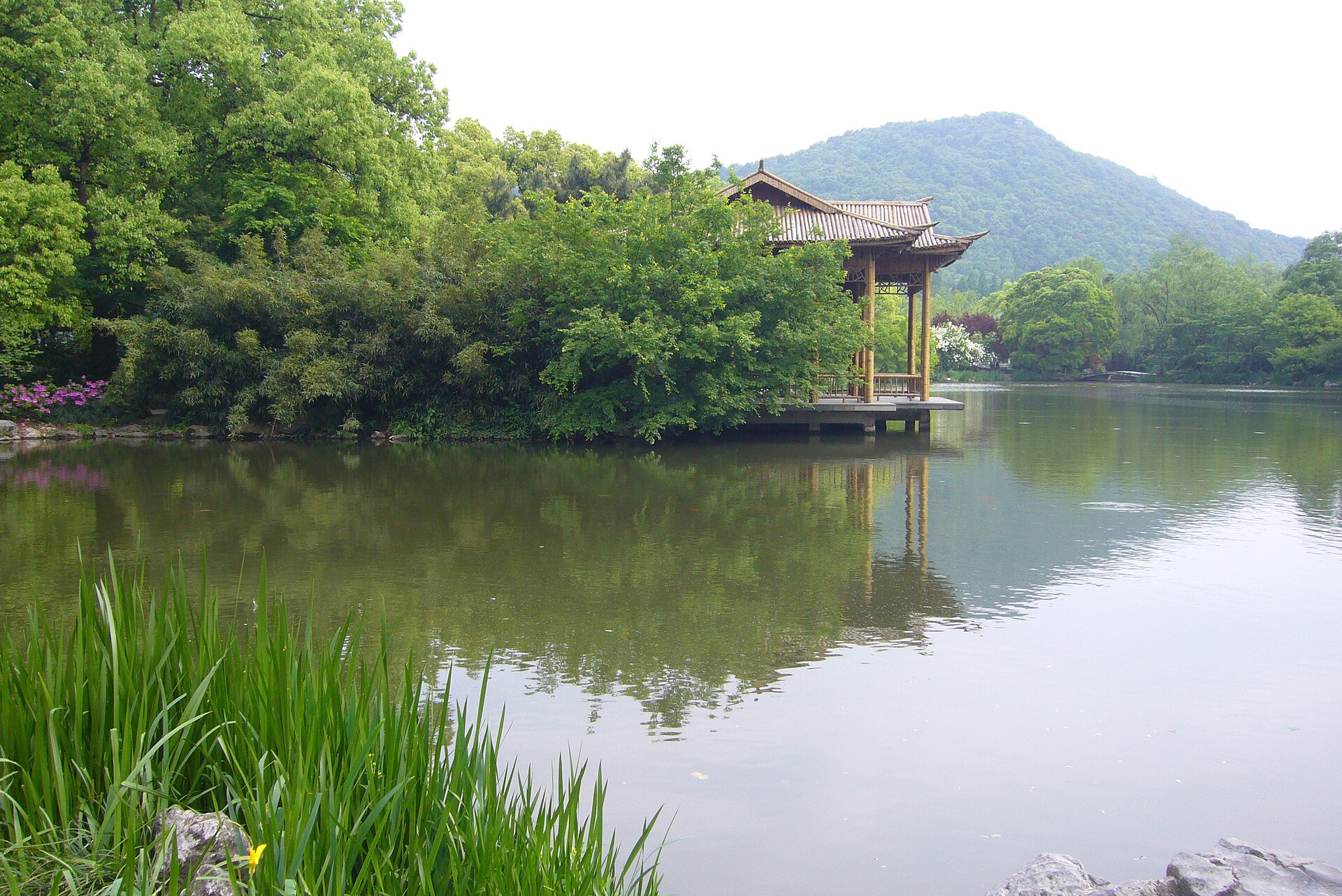 8
8
If West Lake is the Hangzhou the whole world knows, Xixi is the Hangzhou locals slip away to when they want to escape the crowds. It is China's first national wetland park — about 10 sq km of winding waterways, ponds, reed beds and small islands. Glide through it on an electric boat, or follow the boardwalk trails on foot. It's especially lovely during plum blossom (February–March) and persimmon season (October). It was also a filming location for "Dream of Red Mansions", and the Xixi Tiantang complex sits right alongside. An ideal unhurried half-day.
Read the full Xixi Wetland guide →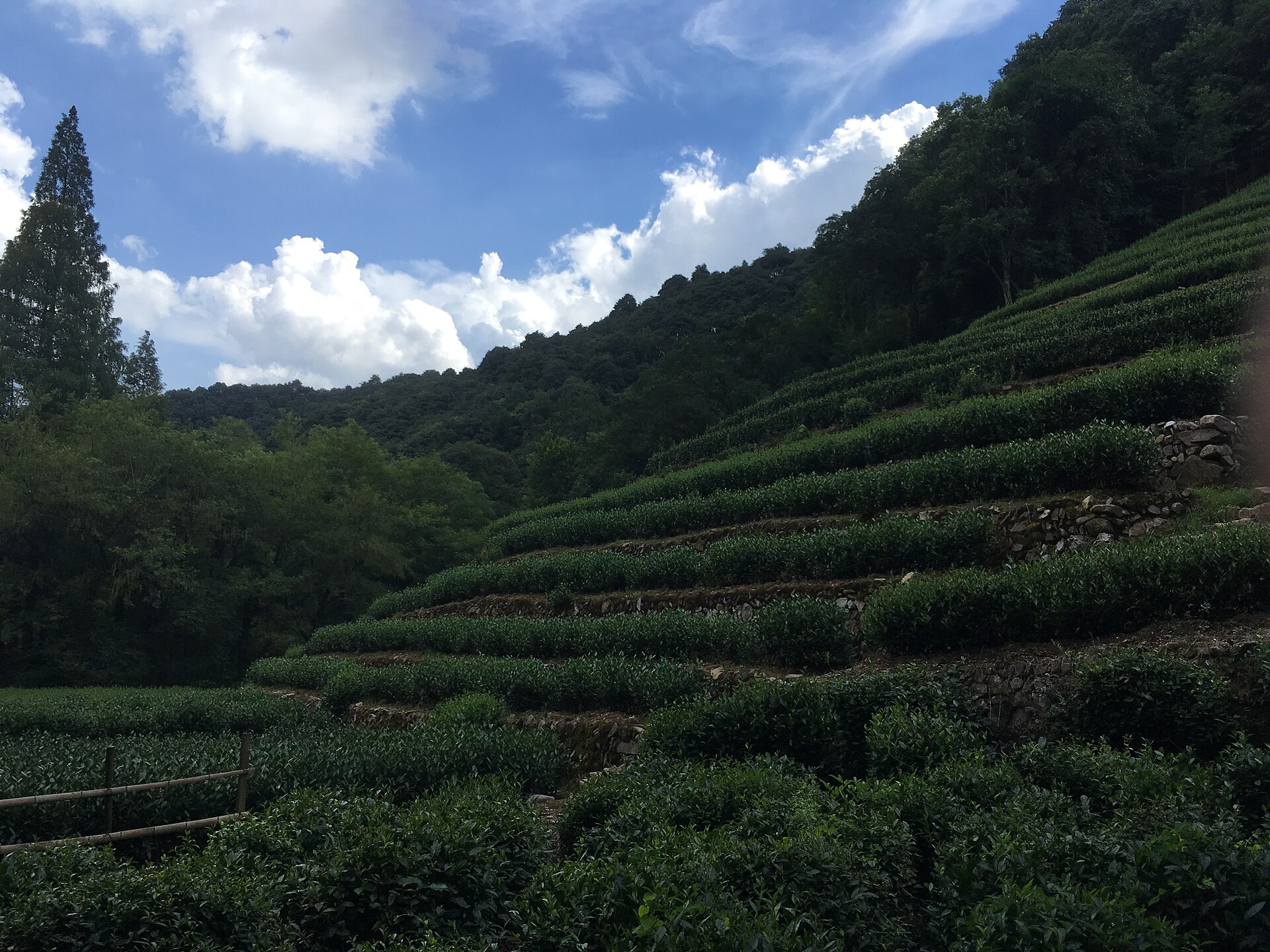 9
9
Longjing tea (龙井茶, "Dragon Well tea") is the green tea the Chinese rank above all others, and this is where it comes from — the hills southwest of West Lake. A few kilometres out of the city, the landscape turns into terraced tea fields as far as you can see. The villages of Longjing and Meijiawu (梅家坞) have teahouses where you can drink the leaf freshly brewed. The period just before the Qingming festival (late March) is when the prized new-leaf harvest is picked. Nearby are the free China National Tea Museum and the ancient Dragon Well spring itself. A relaxed half-day in tea country.
Read the full Longjing tea guide →Hangzhou sits at the heart of Jiangnan (江南), the region with China's loveliest water towns — and you can change the scenery in just over an hour. Wuzhen (乌镇) is one of the most beautifully restored: wooden houses over the canals, arched stone bridges, red lanterns at night, about 1.5 hours away by bus or train. Xitang (西塘) is a water town that people still actually live in, with a rawer, more lived-in feel. And for UNESCO-listed classical gardens, high-speed rail reaches Suzhou in roughly 25–90 minutes. We break down how to get to each and how long they take in the full day-trips guide.
See the Hangzhou day trips guide →