Home Hangzhou China Hangzhou Hotels About
Home  ›  China  ›  Hangzhou  ›  Attractions  ›  Six Harmonies Pagoda
Hangzhou · Attraction Guide

Six Harmonies Pagoda (六和塔)
A thousand-year tower on the Qiantang River — climbed for the bridge view

A 60-metre octagonal pagoda that Song-dynasty builders raised in 970 AD to calm the Qiantang River's tides. Today you climb seven floors inside for a sweeping view of the wide river and the long steel bridge crossing it.

What it is

Why the Six Harmonies Pagoda is worth the trip out

Stand at the base and look up: storey after storey of dark timber eaves stacked more than a dozen high, iron bells hanging at the corners and shifting gently in the wind off the river. Behind the pagoda, a green wooded hill. In front, the Qiantang River — so wide you can barely make out the far bank. It is a completely different mood from the busy crowds around West Lake, and that contrast is half the reason to come.

This is the Six Harmonies Pagoda (六和塔, Liuhe Ta), a roughly 60-metre octagonal brick-and-timber pagoda on Yuelun Hill on the north bank of the Qiantang River, southwest of West Lake. It was first built in 970 AD during the Northern Song dynasty for a reason that sounds like legend: people of the time believed the pagoda would "subdue" the giant tidal bore that surged into the river mouth every autumn. The name "Liuhe" (六和, Six Harmonies) comes from the six harmonies of Buddhist teaching.

What makes it special is a perspective you cannot get anywhere else in Hangzhou: you can climb seven floors up inside to look out over the Qiantang River and the Qiantang River Bridge, China's first modern road-and-rail bridge, stretching across the water. It is both a thousand-year-old monument and a genuine viewpoint in one place — ideal if you want to escape the West Lake crowds for half a day.
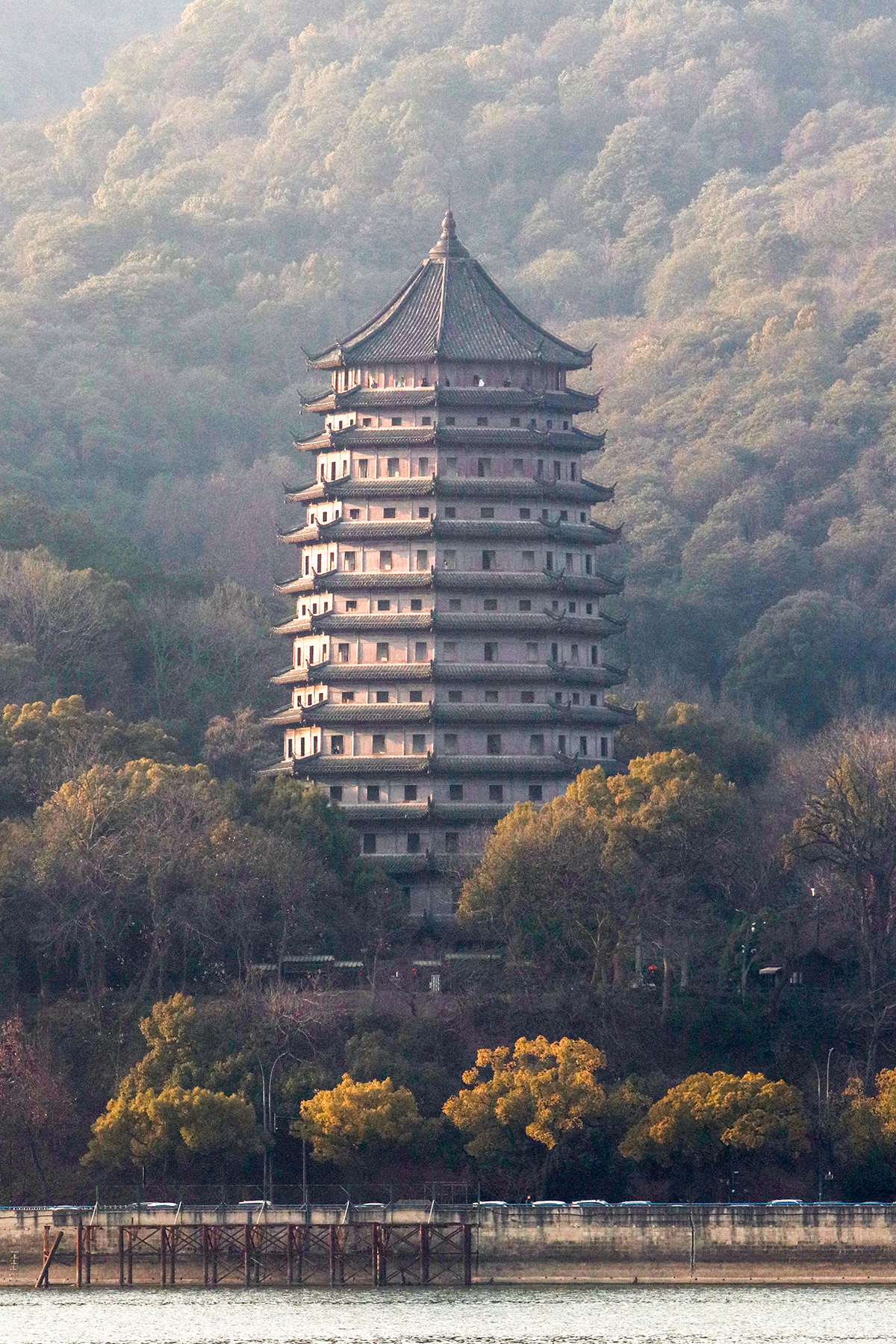
Six Harmonies Pagoda, Hangzhou — a 13-storey octagonal dark-brown pagoda standing on a green wooded hill above the Qiantang River
The Six Harmonies Pagoda on Yuelun Hill — 13 storeys from the outside, standing above the Qiantang River
🎫
Entry
~¥20 (~฿100)
Climbing the interior adds ~¥10 (~฿50)
🕕
Opening hours
~6:30 am–5:30 pm
Check current hours; earlier close in winter
🚕
From West Lake
Taxi ~15–20 min
Southwest of the lake, not on the shore
🏯
Height / floors
~60 metres
13 storeys outside · 7 floors to climb
📅
First built
970 AD
Northern Song dynasty
⏱️
Time needed
1–1.5 hours
Including the climb and the gardens
What to look for

5 things that set this pagoda apart

From the base to the top floor — each detail has a story worth knowing.

What to do here

Climb, watch the tidal bore — and where to go next

🪜 Climbing to the 7th floor

The highlight is the climb up the interior spiral staircase. There is a small extra fee of about ¥10 (~฿50) on top of grounds admission. The stone steps are steep and fairly narrow, but each floor has window openings on all eight sides to look out in every direction. The higher you climb, the wider the Qiantang River opens up, with the long steel bridge stretching to the horizon.

The best window is morning to early afternoon, when the light is soft and the sky is clear; on a bright day you can see all the way to the hills on the far side of the river. Come in autumn and the trees around the pagoda turn yellow and orange for a beautiful backdrop.

🌊 The Qiantang River tidal-bore season

The Qiantang River is famous for one of the world's largest tidal bores, at its most powerful around the Mid-Autumn Festival (mid-autumn, September–October). The Six Harmonies Pagoda has been a celebrated tide-watching spot since the Southern Song dynasty, precisely because it stands right on the riverbank.

Honestly, though, the biggest and most thrilling viewing point is in Haining, east of Hangzhou. If you are specifically here for the bore, check the tide timetable in advance and head to Haining. But if you just want the riverside atmosphere and the history, the pagoda delivers a wide-open river view year-round.

Tip: Day tours around Hangzhou and Qiantang tidal-bore trips during peak season can be booked ahead on Klook. Browse Hangzhou tours on Klook →
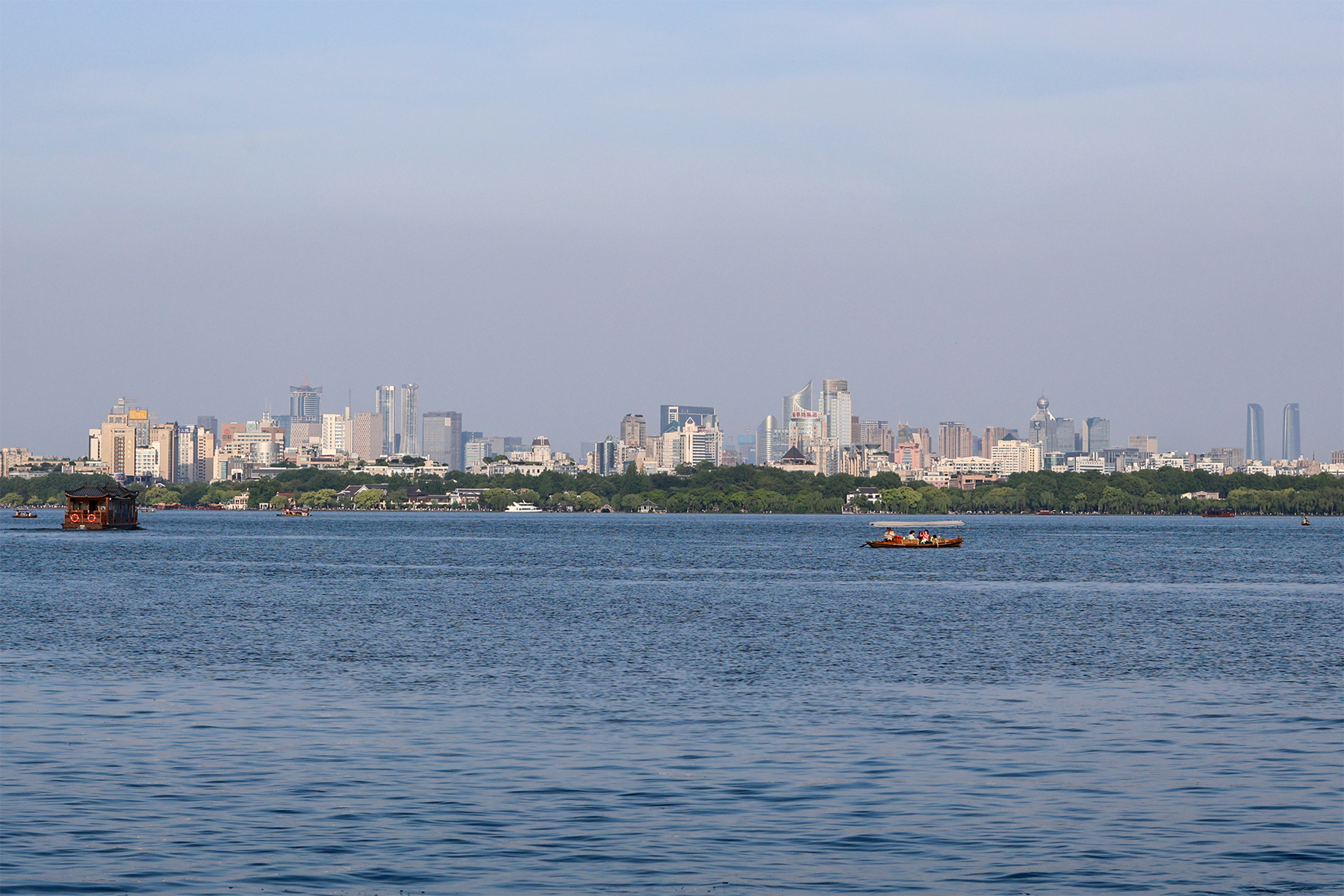
West Lake, Hangzhou — wide lake view with a pagoda and green hills behind, the city's main attraction
West Lake, the heart of Hangzhou — easy to pair with the Six Harmonies Pagoda in a single day

🚶 Combining it in one day

The Six Harmonies Pagoda sits southwest of West Lake, so it pairs naturally with the Longjing tea villages on the same side of the lake, or you can loop back to walk around West Lake itself and stop at Leifeng Pagoda on the lake's southern shore.

For a smooth itinerary, start at the Six Harmonies Pagoda in the morning when it is quiet, then head north toward the tea villages or the lake in the late morning and afternoon — the lakeside is at its liveliest and the light is at its best later in the day.

Getting there

How to reach the Six Harmonies Pagoda

The pagoda is not on the West Lake shore — you need to head a little south. There are three easy options: taxi, bus, or metro plus a short bus connection.

🚕
Taxi / DiDi
~15–20 min from West Lake
The most direct option and good value if you split it between a few people — drops you right at the entrance
🚌
Bus
Routes 4 / 308 / 504
Get off at Liuhe Ta (六和塔站) — several routes run along Zhijiang Road by the river
🚇
Metro + bus
Line 4 to Shuichengqiao (水澄桥)
Use Exit B, then transfer to a bus for 2–3 stops to the pagoda
Planning your day: If you are exploring the southwest side of West Lake in one day, start at the Six Harmonies Pagoda in the morning (it opens around 6:30 am and is quiet then), continue to the Longjing tea villages on the same side, then loop back to walk around West Lake in the late afternoon.
Nearby

What to see near the Six Harmonies Pagoda

Sights on the southwest side of West Lake that pair with the pagoda in a single day.

Frequently asked

FAQ · The Six Harmonies Pagoda

How much does it cost to visit the Six Harmonies Pagoda?
Entry to the grounds and the base of the pagoda is about ¥20 per person (~฿100). Climbing the interior up to the 7th floor costs an extra ¥10 (~฿50), so around ¥30 in total. Prices can change, so it is worth checking before you go.
What are the opening hours of the Six Harmonies Pagoda?
It generally opens around 6:30 am to 5:30 pm daily, though hours shift slightly by season and it may close earlier in winter. Come in the morning to early afternoon so you have time to climb the pagoda and walk the surrounding gardens. Check the latest hours before travelling.
How do I get to the Six Harmonies Pagoda from West Lake?
The pagoda is southwest of West Lake and is not on the lakeshore itself. The easiest option is a taxi or DiDi from the lakeside, about 15–20 minutes. By bus, take route 4, 308 or 504 to Liuhe Ta (六和塔站). By metro, take Line 4 to Shuichengqiao station (水澄桥), Exit B, then transfer to a bus for 2–3 stops.
How high can you climb inside, and what can you see?
You can climb the interior staircase up to the 7th floor (the pagoda shows 13 storeys from the outside but has 7 floors inside). From the top you look out over the wide Qiantang River and the steel bridge crossing it — the Qiantang River Bridge, China's first modern road-and-rail bridge — plus the green hills around the city. The stairs are steep and narrow, so wear comfortable shoes.
What is the connection with the Qiantang River tidal bore?
The Qiantang River produces one of the world's largest tidal bores, strongest around the Mid-Autumn Festival (September–October). The Six Harmonies Pagoda has been a famous tide-watching spot since the Southern Song dynasty because it sits right on the riverbank. That said, the biggest and most dramatic viewing point is actually in Haining, further east — if watching the bore is your main goal, check the tide timetable in advance.
Klook · Hangzhou

Hangzhou tours, Longjing tea-village trips and Qiantang tidal-bore tours — book ahead, skip the hassle

Book West Lake tours, Longjing tea-village visits and autumn Qiantang tidal-bore trips through Klook in advance — no figuring out the logistics on the day.

Browse Hangzhou activities on Klook →
Wherebest is an affiliate partner of Klook — we may earn a commission when you book through our links, at no extra cost to you.