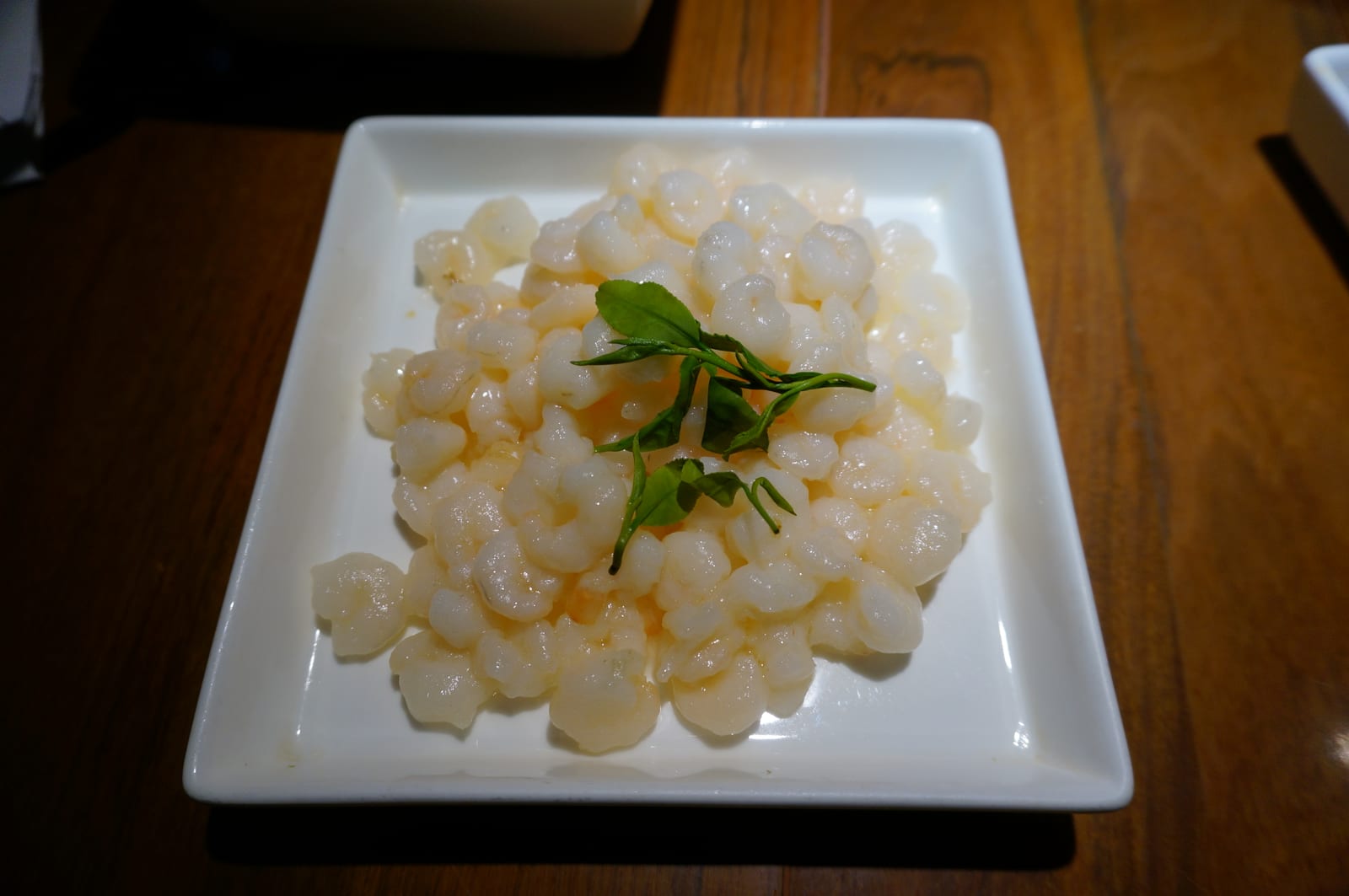
Tiny pinkish-white river shrimp, quick-fried with fresh Dragon Well tea leaves and a splash of brewed tea. Light, delicate and faintly grassy-sweet — the one dish that puts Hangzhou's famous tea and its West Lake shrimp on the same plate.
Hangzhou has two things the whole city talks about endlessly — West Lake and Longjing green tea, grown on the hills that ring it. There is one dish that puts both on a single plate: 龙井虾仁 (lóngjǐng xiārén), Longjing shrimp — small peeled river shrimp quick-fried with fresh Dragon Well tea leaves and a little of the tea it's just been brewed in.
Picture a white plate piled with tiny, translucent pinkish-white shrimp, a few bright green tea leaves scattered across the top. No thick sauce, no deep red colour — that is what the dish looks like when it's done right. The flavour is exceptionally light: the shrimp arrive first, springy and clean and faintly sweet, and then the Longjing fragrance drifts in behind, soft and grassy, like new growth in early spring. You finish a plate and your palate is clean rather than coated. This is the essence of Hangzhou (Zhejiang) cooking — light, clean, ingredient-forward — the opposite of Shanghai's sweet, oil-heavy braises or the fire of Sichuan.
The shrimp are small freshwater river shrimp (河虾) from the lake and the Jiangnan waterways, much smaller than sea prawns and sweeter for it. The tea must be fresh Longjing leaves, tender and aromatic. The dish is not technically difficult, but it is genuinely hard to do well, precisely because there is no sauce to hide behind. Everything has to be fresh and the timing exact. The pleasure here comes from how little is on the plate, not how much.
Look at the plate in the photo: small, translucent pinkish-white shrimp gathered together, a few fresh green tea leaves scattered over the top, no pool of sauce, no dark red or brown glaze. That restraint is the signal that the kitchen understands the dish.
The shrimp are coated in egg white and a thin film of starch, then poached briefly in warm oil (not deep-fried) until the flesh turns jade-white and springy. They are then stir-fried fast in a hot wok with a pinch of fresh Longjing tea leaves, a splash of the brewed tea and a little Shaoxing rice wine. The whole thing takes seconds. Speed is everything.
Many restaurants serve it with a small dish of vinegar for dipping, but a version cooked well barely needs it — the fresh shrimp and the tea fragrance are enough on their own.
A popular story traces the dish to the Qing-dynasty Qianlong Emperor (乾隆) on one of his southern tours of Hangzhou. As the tale goes, a cook dropped Longjing tea leaves into a plate of shrimp by mistake, thinking they were spring onion. The pearly pink shrimp against the bright green leaves, with the Longjing fragrance rising up, won the emperor over. It is only a legend — but it captures how tightly this dish is bound to the city and its tea.
Light, delicate, no thick sauce, no grease, not overly sweet. The shrimp must be fresh and springy, the main flavour coming from the shrimp itself, with the Longjing tea drifting in behind as a soft, grassy-sweet fragrance. The leaves on the plate are edible. If it arrives in a dark, thick sauce, or so sweet-savoury that the shrimp vanishes, the kitchen missed the point. The dish is famous for being "light yet deep" — and that balance is exactly what makes it hard.
Longjing shrimp is a light dish within a shared Hangzhou meal. Locals usually order it alongside something heavier to round out the table — Dongpo pork (东坡肉), rich and meltingly sweet; West Lake vinegar fish (西湖醋鱼) in its sweet-sour glaze; or beggar's chicken (叫化鸡) — then bring the shrimp in as the light, palate-cleansing plate. Eat it with plain steamed rice.
Portion: a small-to-medium plate, good for sharing among 2–3 people. Price: ¥68–108 per plate at a neighbourhood restaurant (~฿340–540); ¥128–188 (~฿640–940) at a classic lakeside house or where premium-grade shrimp are used. The price moves mainly with the quality and size of the shrimp.
The famous lakeside restaurants like Louwailou get extremely busy at weekends and over public holidays — book ahead or go outside peak hours. Several of the heritage houses have long queues at lunch and dinner.
Payment is mostly WeChat Pay and Alipay; link a Visa or Mastercard to Alipay's international mode before you arrive. The larger lakeside restaurants usually have a pictorial or English menu to make ordering easy. If you want to point, just show the staff the characters "龙井虾仁".
Classic restaurants that have cooked this dish for generations and are still operating — status verified.
If you want to eat a plate of Longjing shrimp in the most quintessentially Hangzhou setting possible, the whole city points to Louwailou first — a 170-year-old restaurant on the shore of West Lake at the foot of Gushan Hill. Longjing shrimp is a signature here, served alongside West Lake vinegar fish and beggar's chicken, with the lake spread out beyond the windows. It is the rare place that locals and visitors recommend in the same breath. Busy; book ahead, especially on holidays.
A more accessible, easier-on-the-wallet heritage option. Zhiweiguan has been going since 1913 and has several branches around the city; the Hubin branch by West Lake is the most convenient. The Longjing shrimp here is cleanly done — springy white shrimp, fresh green leaves — and it's a good choice if you want to try the dish without booking ahead or queuing for a high-end table. Open from morning to night, with Hangzhou snacks and dim-sum-style bites alongside.
To eat this dish among the tea fields themselves, the original Green Tea branch on Longjing Road is the answer — it sits right beside the Longjing tea plantation on the hill, with windows looking out over layers of green tea terraces, and during the picking season you can watch the farmers at work. The Hangzhou cooking is well-priced and the shrimp come out fresh and springy. It fills up at weekends because it delivers both the food and the view. A rare place that pairs the flavour with its own landscape.