11 things to eat before you leave Hangzhou
Ranked by how unmistakably Hangzhou they are — dishes you won't find done quite like this anywhere else.
 1
1
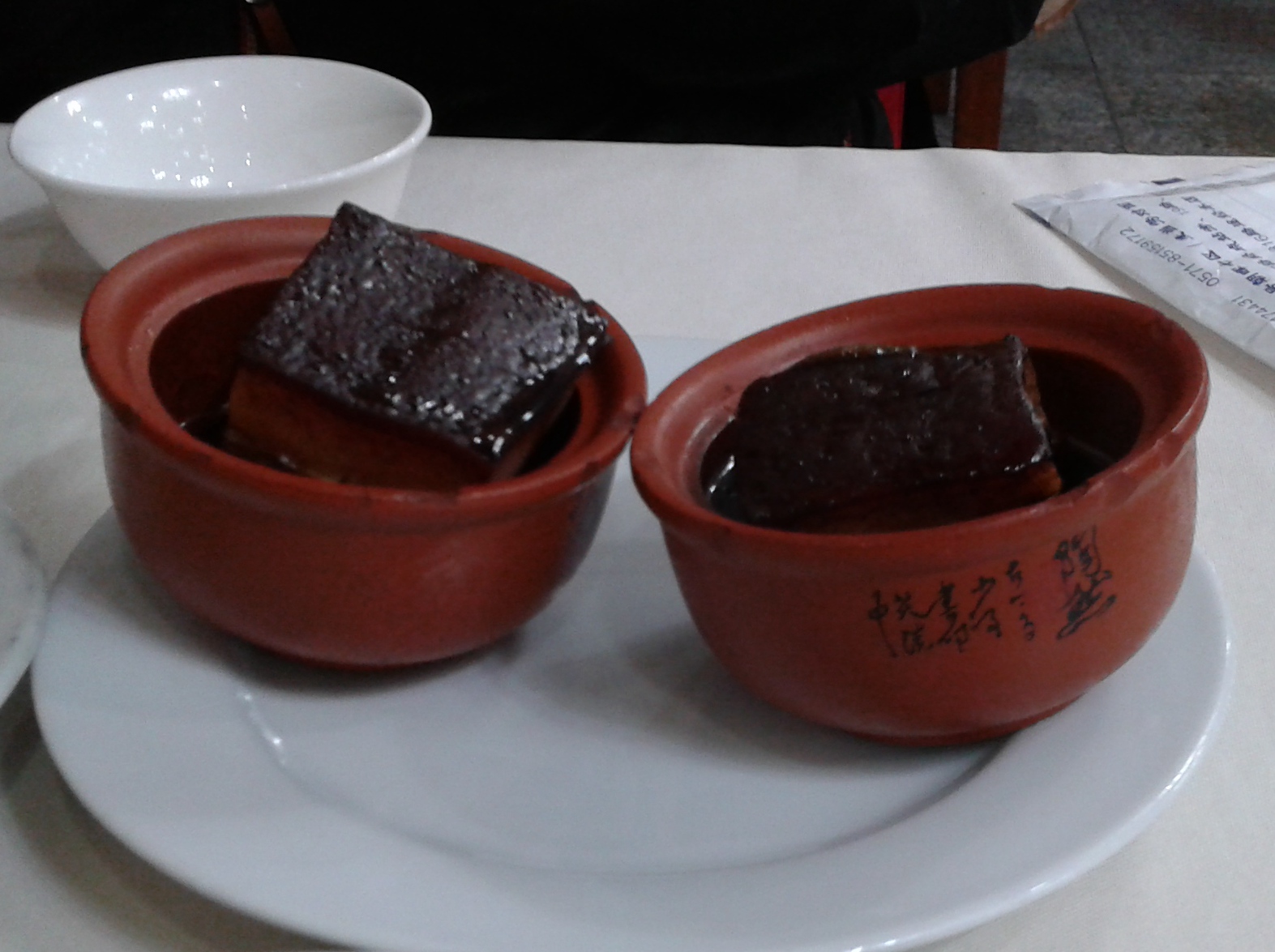
Hangzhou's signature dish. A neat cube of pork belly, braised slowly in Shaoxing wine, soy sauce and rock sugar until the fat turns to translucent silk that dissolves on the tongue, the skin trembles, and the meat glows a deep mahogany-red. The dish is credited to Su Dongpo, the poet and official who governed the city. It usually arrives as a single small cube per person in a little clay pot — eat it with a steamed bun or hot white rice to catch the sauce.
Read the full Dongpo pork story →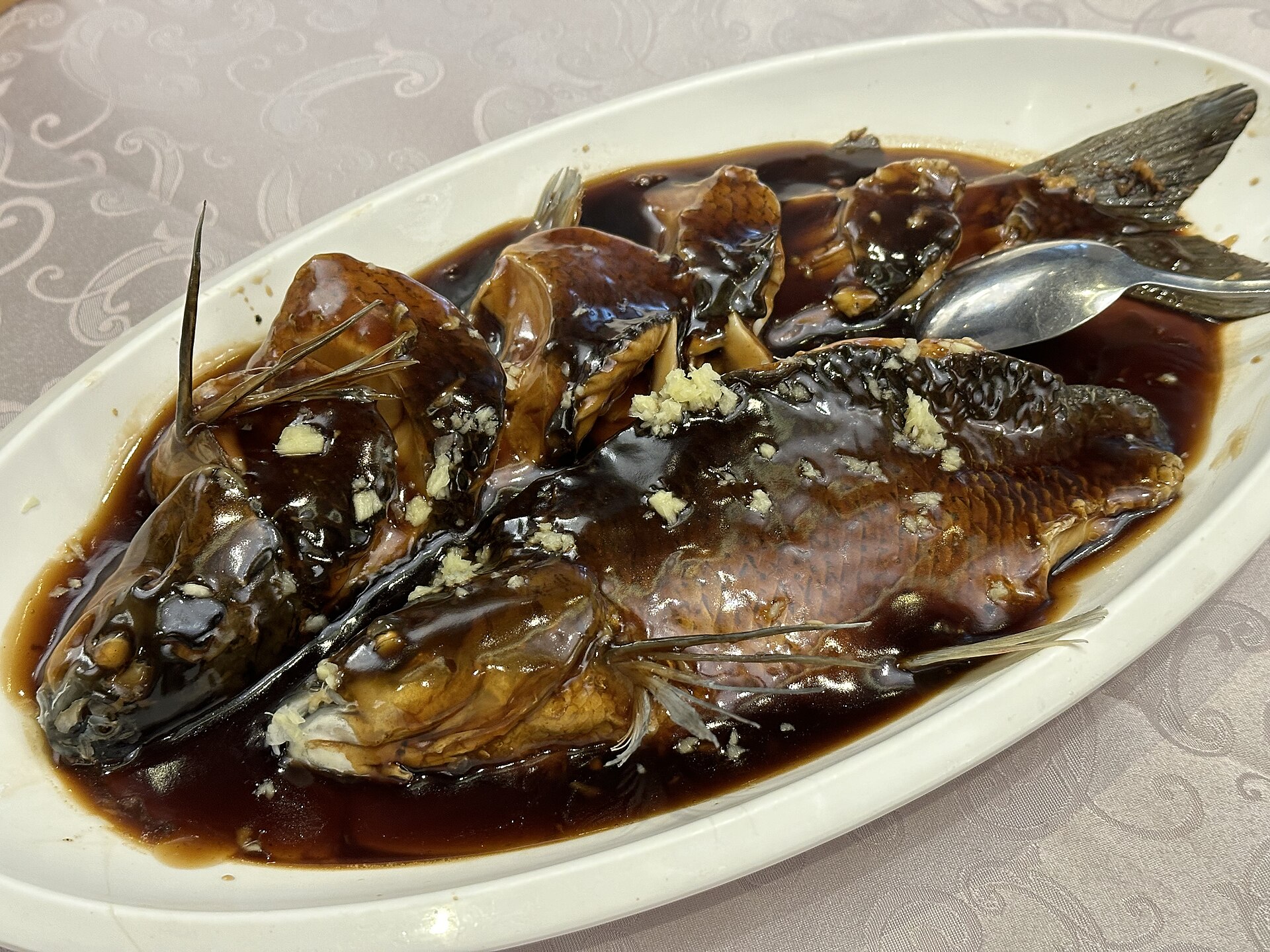 2
2
A grass carp poached so the flesh is just cooked, then bathed in a glaze of Zhenjiang vinegar and sugar reduced until glossy — sweet and sour and balanced, the fish silky underneath. The dish is bound up with the "sister-in-law" legend and has been served at Louwailou since 1848. Honestly, it divides people: done well it's deeply satisfying; done poorly, or with fish that isn't fresh, it can taste bland and muddy. Choose a good house that keeps its fish in clean water before cooking.
Read the full vinegar fish story →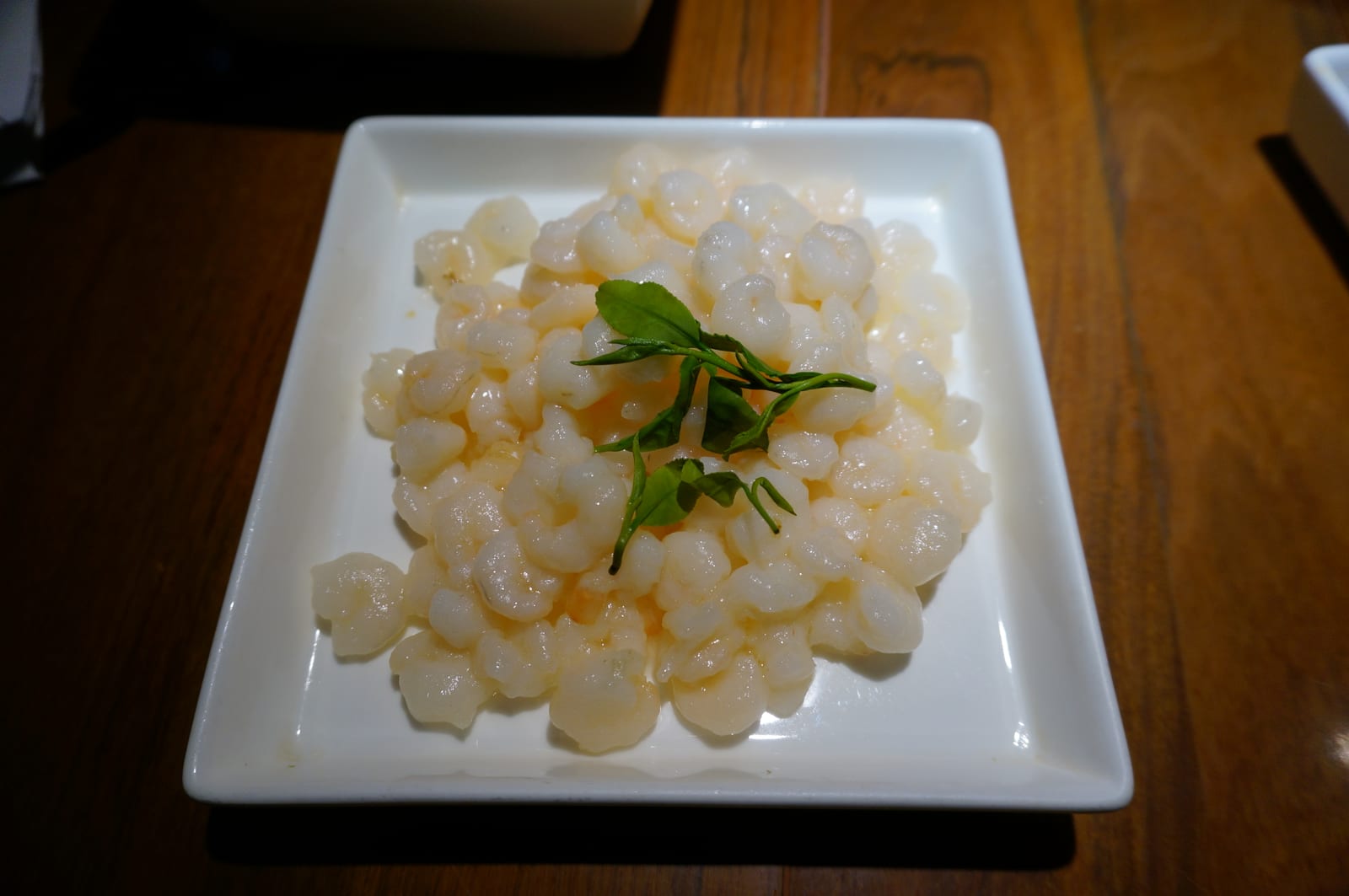 3
3
The dish that marries two of Hangzhou's signatures. Tiny river shrimp are coated in egg white and a whisper of starch, velveted in oil until plump and translucent, then stir-fried briefly with fresh Longjing tea leaves and a splash of the freshly brewed tea. The result is clean, faintly sweet, the shrimp snappy, the green tea drifting up in a gentle perfume. It's the most delicate dish on this list, and it's at its best in spring around Qingming, when the year's first Longjing leaves are picked.
Read the full Longjing shrimp story →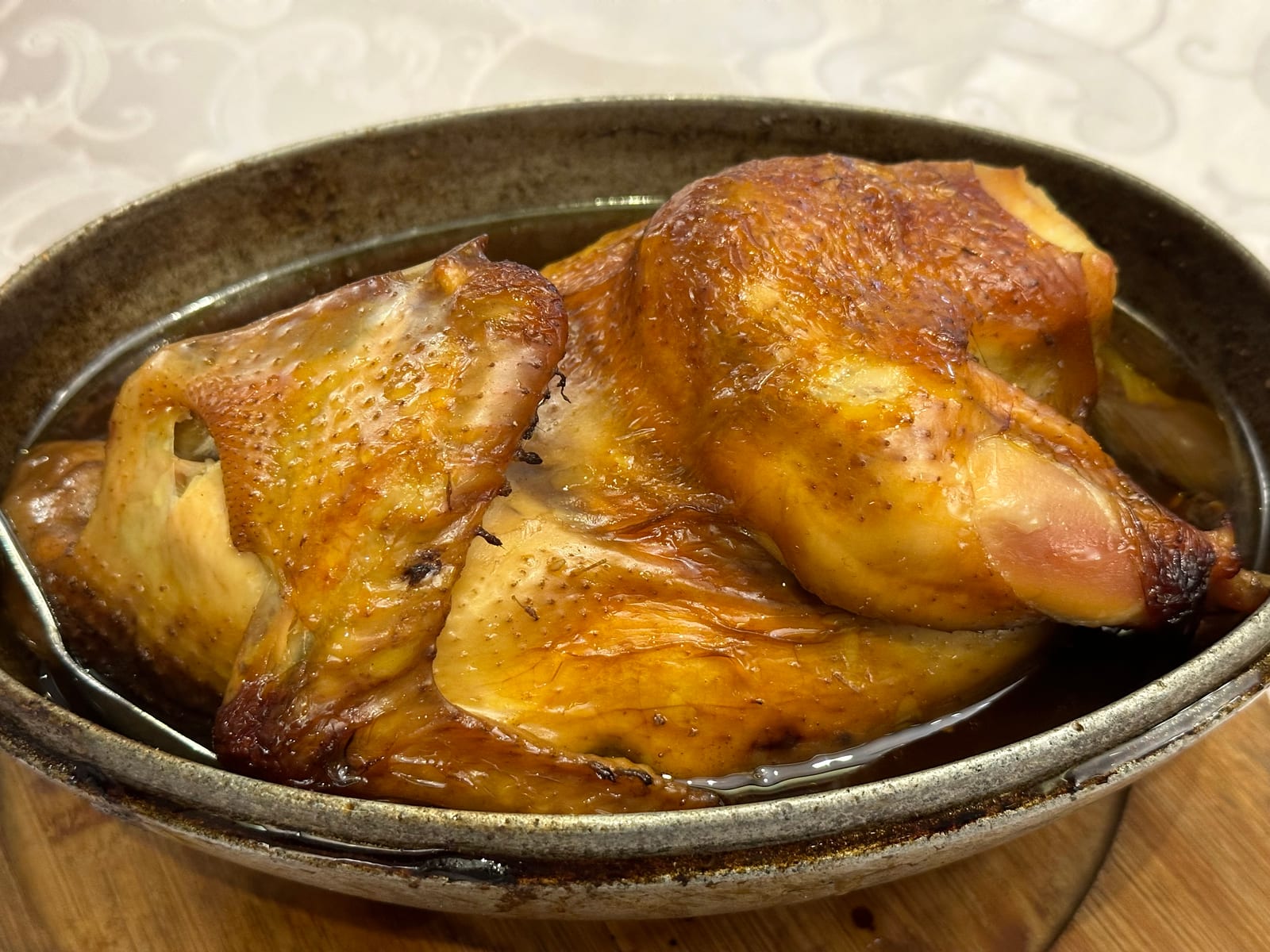 4
4
A whole chicken, stuffed, wrapped in lotus leaf and packed in clay (or foil), then baked slowly until the meat falls off the bone and takes on a soft lotus-leaf fragrance. The legend has it the dish was invented by a beggar who stole a chicken and had to encase it in mud to hide it. At a good restaurant they bring it to the table and crack the clay shell in front of you — steam and aroma rising together, half dinner, half performance. Even better eaten with a view of West Lake.
Read the full beggar's chicken story →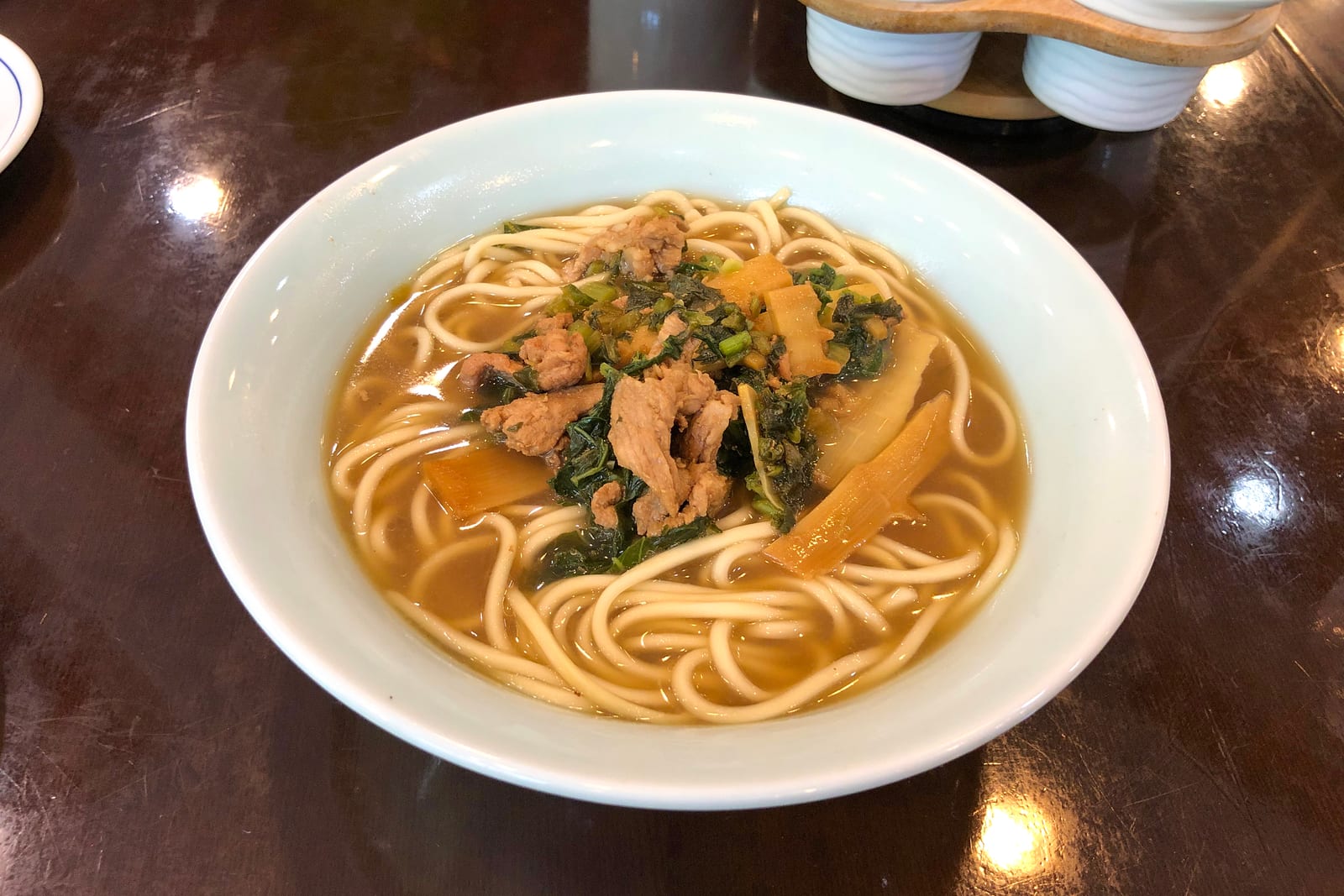 5
5
If the dishes above are Hangzhou in its formal clothes, pian'er chuan is Hangzhou's everyday breakfast. Wheat noodles in a clear broth with sliced bamboo shoots, pickled snow vegetable (雪菜) and thin slices of lean pork — warm, honest, the kind of bowl you could eat every day without tiring of it. There's a local saying: "If you've never had pian'er chuan, you haven't really been to Hangzhou." The legendary house is Kuiyuanguan, which has been making this bowl for over a century.
Water shield (莼菜) is a slippery aquatic leaf harvested from West Lake itself; the young leaves are coated in a clear mucilage that gives the soup its distinctive silky body. It's simmered into a clear broth with shredded chicken and slivers of ham — the pale green of the leaf, white chicken and red ham as pretty as a painting. The flavour is light, clean and easy on the stomach; locals treat it as a cooling soup in summer. No single dish says more about the refinement of this kitchen and its bond with the lake.
Lengths of lotus root packed with glutinous rice, simmered until tender, then sliced into rounds, drizzled with a thick syrup and scattered with amber osmanthus (gui hua 桂花) blossoms that carry a sweet, distinctive floral scent. Sweet and soft, chewy from the rice, it's a dessert Hangzhou is proud of — because both lotus root and osmanthus are emblems of this lakeside city. It's at its most fragrant in late autumn (September–October), when the osmanthus blooms across the whole city.
Small whole river shrimp, shell on, dropped into ferociously hot oil so the shells crisp in seconds, then tossed quickly with soy, sugar and rice wine into a glossy sweet-savoury glaze. The shells turn crunchy enough to eat whole, the meat inside still juicy and sweet. It's a showcase for the Hangzhou cook's command of a screaming-hot wok — it has to be fast and hot enough, or the shells go chewy instead of crisp. Eat it as a moreish snack with cold beer, or as a dish with rice.
A street snack with a story baked in. A fried dough cruller (you tiao) and spring onion are rolled inside a thin flour wrapper, then pressed flat on a griddle until both sides are crisp, and brushed with sweet bean sauce and chilli sauce. The "gui" in the name refers to the despised official Qin Hui — the story goes that locals shaped the dough into his likeness and griddled it to vent their anger. It's a cheap, satisfying bite from the stalls along Hefang Street and the morning markets: crisp outside, soft within, salty-sweet with a little heat.
A steamed cake, pale pink, made from rice flour blended with glutinous rice flour and a sweet red-bean paste centre — soft and chewy with a delicate fragrance, moulded into a shape resembling an old silver ingot. The name "dingsheng" means "certain victory": the story goes the cakes were made for soldiers before battle, as encouragement and a wish for a win. Today it's an auspicious sweet and a popular Hangzhou souvenir, easy to find freshly steamed along Hefang Street. Not too sweet, and best eaten warm.
Not noodles exactly, but little nubs of dough pinched and curled with the thumb until they look like a cat's ear — chewy and springy, fun to eat. They're cooked in a clear broth with dried shrimp, bamboo shoots, shiitake, ham and diced vegetables, somewhere between a snack and a light meal that Hangzhou kids adore for the shape alone. Zhiweiguan made this dish famous. It's a neat example of the kitchen's playful, refined side — turning plain dough into something you want to eat.