A megacity built across steep hills where the Yangtze and Jialing rivers meet — towers stacked so high a monorail runs straight through a residential block, and chilli-red hotpot bubbles all year round. This guide is built from verified facts and real visitor accounts to get you ready before you land.
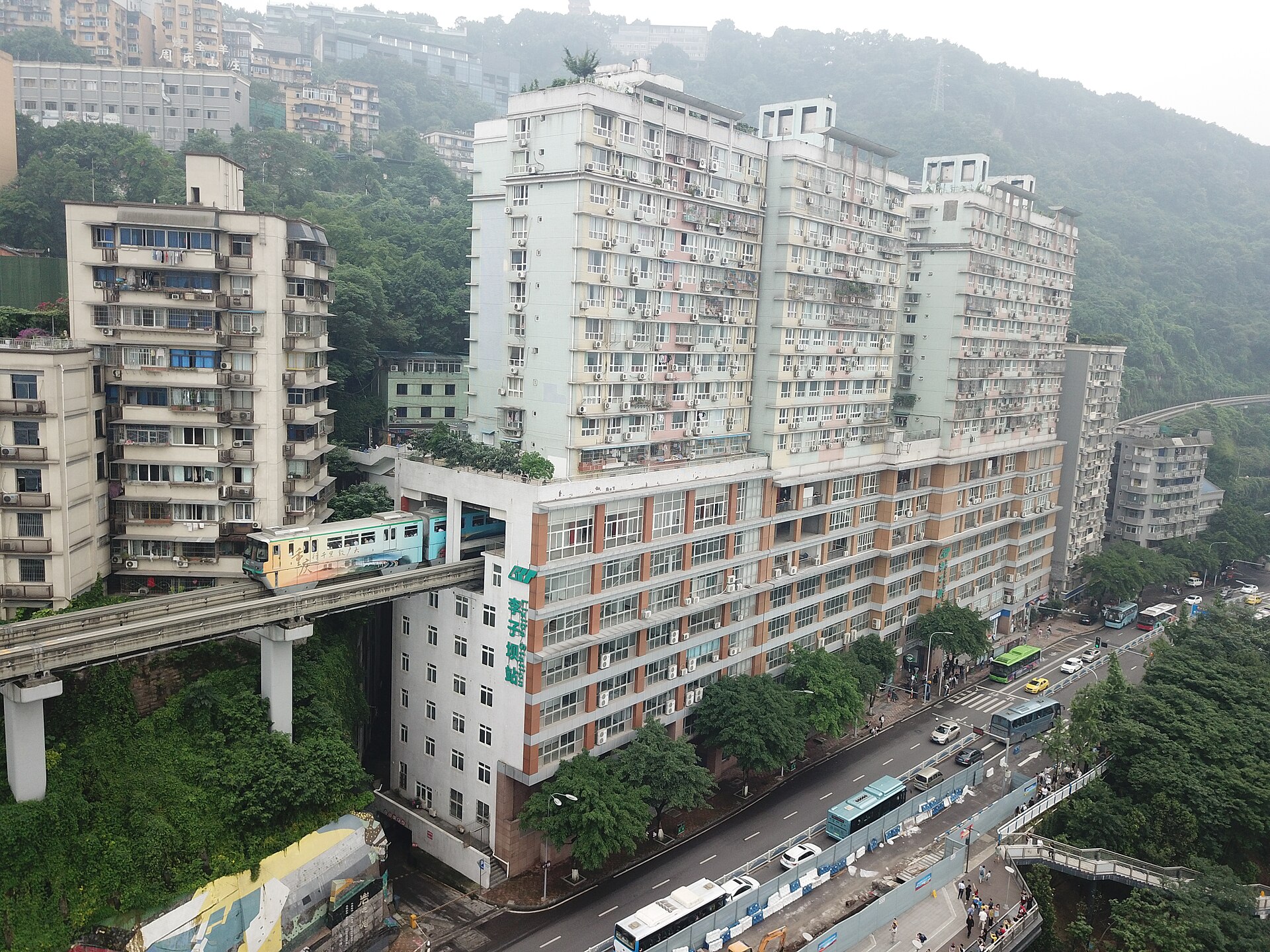
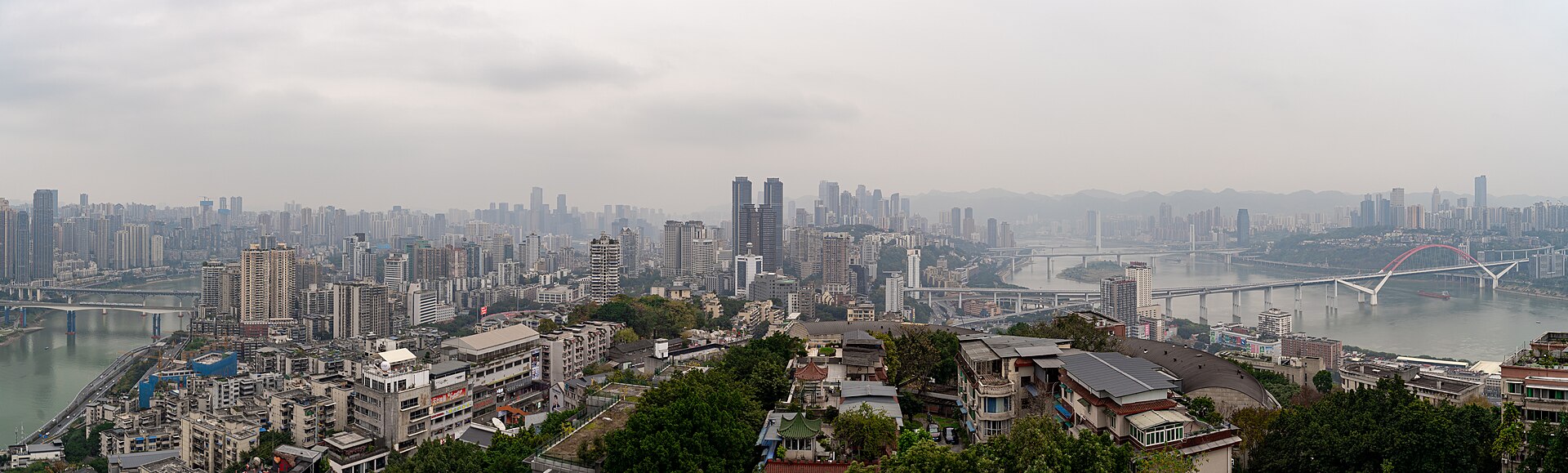
Seen the viral clip of a metro train passing clean through an apartment block? That is Chongqing — the largest mountain megacity in western China, built across hillsides at the meeting point of the Yangtze and Jialing rivers. Skyscrapers stack in layers so dramatic that locals call it the 8D city. There is barely any flat ground here: you can step out of a mall's ground floor and find yourself ten storeys above the street on the other side.
Easy on the metro — a network of around 13 lines including the famous monorail Lines 2 and 3, fares ¥2–12 (about ฿10–60) per ride, scan Alipay or WeChat at the gate. Safe — crime rates are low and the tourist areas stay lit up all night. Constantly surprising — in a single day you can ride a cable car across the Yangtze, take a train through a building, walk a cliffside old town and eat the chilli-red hotpot that Chongqing invented. See the full picture in our complete Chongqing guide →
The honest answer: two to three days covers the core city highlights — Hongyadong, the train-through-a-building at Liziba, Jiefangbei, the Yangtze cableway and Ciqikou old town. With four or five days you have room to slow down and add a day trip to the countryside or a World Heritage Site.
Day 1: Hongyadong after dark → river cruise → Jiefangbei. Day 2: the Liziba train-through-a-building → Yangtze River Cableway → Eling Park. Day 3: Ciqikou old town → Shancheng Alley → a hotpot dinner.
+Day 4: the Wulong karst (a Transformers filming location) or the Dazu Rock Carvings, both UNESCO World Heritage Sites, around 30–40 minutes by high-speed rail. +Day 5: a Yangtze Three Gorges cruise, or simply explore the city at your own pace.
There is a plan for every length of trip: 1 day (layover) · 2 days · 3 days · 4 days · 5 days
March to May brings mild weather around 15–28°C and clearer skies than winter. September to November is cool, crisp and quieter — the season most travellers rate the best. Summer (Jun–Aug) is brutal, 38–40°C and rainy: Chongqing is one of China's "furnace" cities. Winter (Dec–Feb) is cool but heavily fogged — hence its "fog city" nickname — though Hongyadong's lights still shine. See month-by-month detail in when to visit →
As of 2026, Thai passport holders enter China visa-free for short tourist stays. The policy can change, however, so check the latest at our China visa-free guide for Thais → before booking your flights.
Direct flights from Bangkok land at Chongqing Jiangbei Airport (CKG), about 21 km northeast of Jiefangbei. Most large flights use Terminal 3 — check which terminal you arrive at.
Metro Lines 3 + 10 — cheap and traffic-free, ¥3–7 (about ฿15–35), 40–60 minutes to Jiefangbei. Line 3 is the main north–south artery via Guanyinqiao (direct to Guanyinqiao in about 30 minutes); Line 10 stops at both Terminal 3 and Terminal 2. Airport Express buses run to Jiefangbei and Shangqingsi, ¥15–30 (about ฿75–150). Taxi or DiDi costs ¥60–90 (about ฿300–450) and takes 40–50 minutes — handy with heavy luggage.
Chongqing has three main stations — Chongqing North (重庆北), the big northern hub; Chongqing West (重庆西) in the Shapingba southwest; and the old central Chongqing station (重庆站). The metro links all three. Chengdu is as fast as 62–72 minutes (typically 1.5–2 hours), Guiyang ~2 hours, Xi'an ~4.5–5.5 hours, Wulong ~40 minutes, Dazu ~30 minutes. Book through Trip.com or the 12306 app.
A network of around 13 lines, ¥2–12 (about ฿10–60) per ride, scan an Alipay or WeChat QR at the gate. Key lines: Line 2 (the monorail via Liziba and Eling), Line 1 (Ciqikou, and Xiaoshizi for Hongyadong/Jiefangbei), Line 3 (the main spine to the airport). See detail in our Chongqing metro guide →
Most places run on Alipay and WeChat Pay. Hotels and larger venues take Visa and Mastercard, but local hotpot joints and street carts often accept mobile payment only. Set up the tourist version of Alipay before you leave (it links foreign cards), or keep some yuan from an ATM as backup. See the full guide to paying in China →
Chongqing is huge, but the main sights cluster in a handful of areas — learn the areas first and choosing a hotel gets much easier. The metro stitches them together in about 15–30 minutes. See real hotel reviews in our Top 10 Chongqing hotels →
The heart of the old city, within walking distance of Hongyadong and the Bayi snack street. You wake up in the middle of everything, with hotels from hostels to luxury towers. This is the answer if it is your first visit and you want to make the most of your time. More in our Chongqing attractions →
A modern shopping area with the IFS mall and the Niccolo hotel, on the same side as the airport line (Line 3 runs straight to CKG). A good pick if you want shopping and easy airport runs in and out.
Stay on the far bank and look back across the water at the skyscraper skyline and Hongyadong's lights — that is the appeal here. Nanbin Road is lined with riverside restaurants and the night views are superb. Ideal if you want a river-view room.
A university area in the southwest, home to Ciqikou old town and the Chongqing West high-speed rail station. A smart base if you plan to take the train onward to Chengdu or Wulong, or want to stay near the old-town atmosphere. More in Ciqikou old town →
Chongqing has plenty to see, but on a first visit these six are the core everyone should experience — see the full list in Chongqing attractions → or day trips from the city →
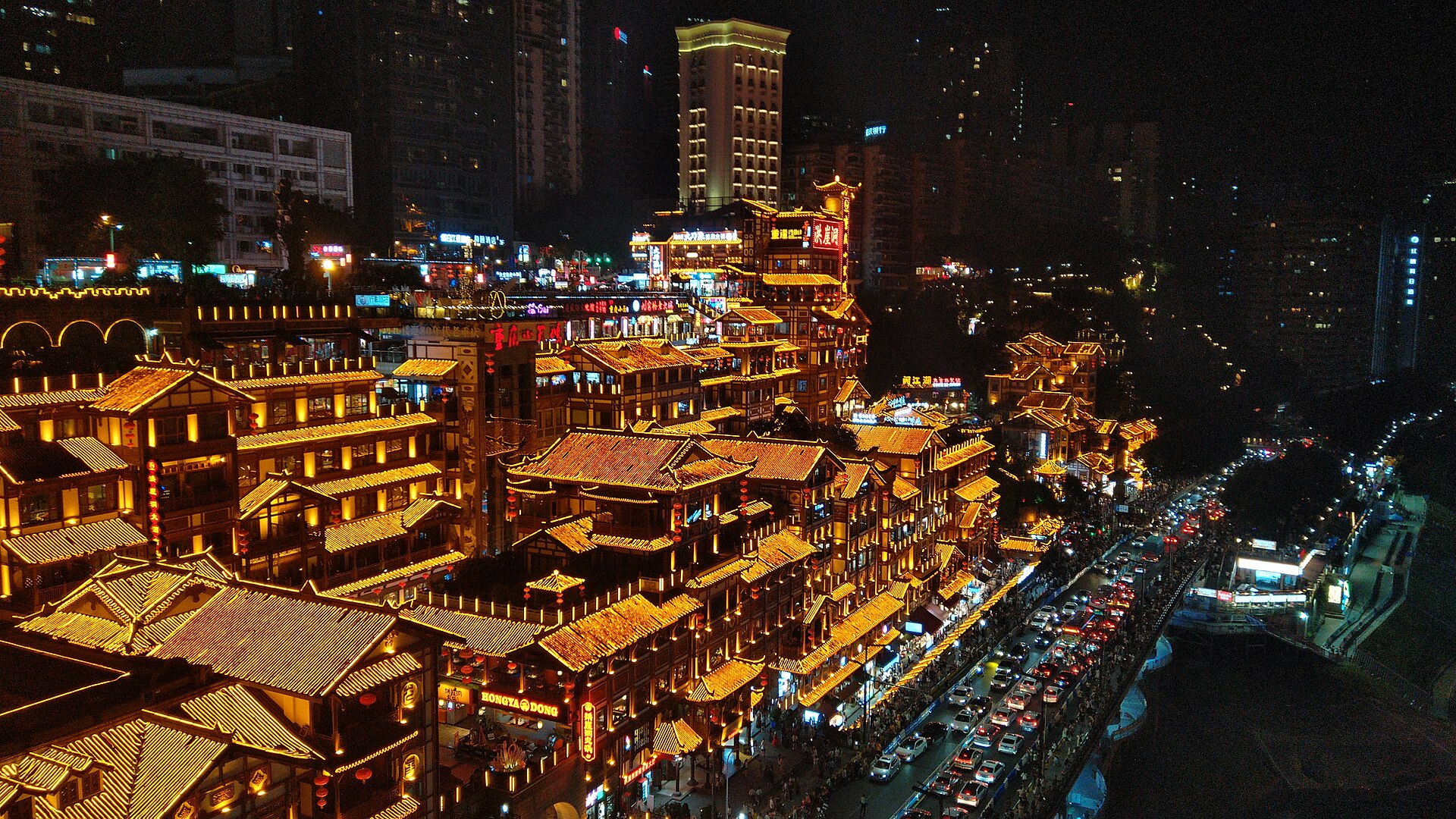
An 11-storey complex of traditional stilt houses clinging to the cliff above the river. When the lights come on at dusk it looks straight out of a Studio Ghibli film — the defining image of Chongqing, and everyone comes to photograph it. Free to enter, with multiple street-level exits.
Monorail Line 2 genuinely runs through floors 6 to 8 of a 19-storey apartment block — the viral clip that put Chongqing on the global map. There is a viewing platform below to film the train entering the building, or you can simply ride through it yourself.
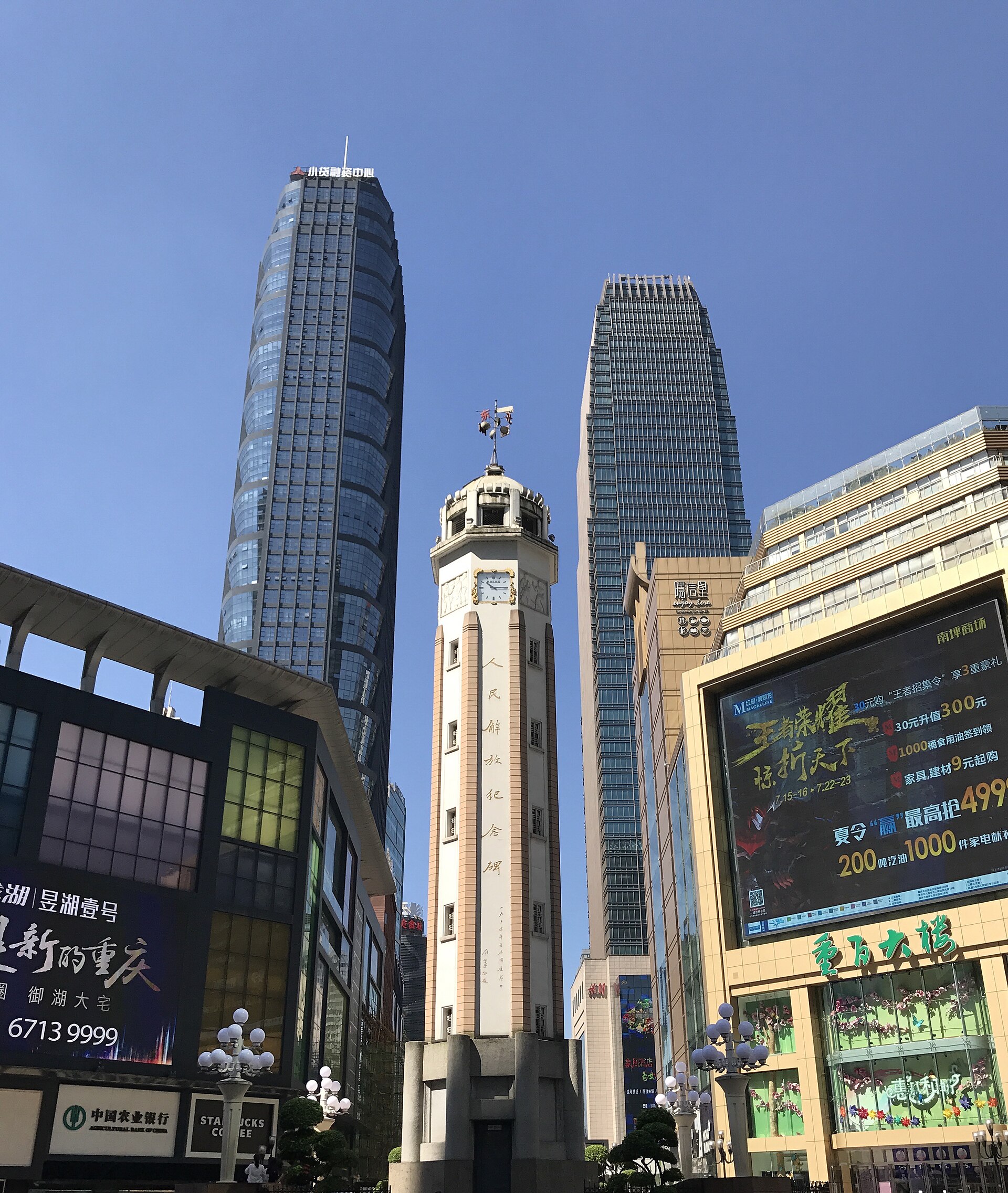
The Liberation Monument sits at the centre of Chongqing's busiest shopping district, ringed by malls and giant LED screens. It is the natural starting point for exploring the city, with the Bayi snack street a short walk away.
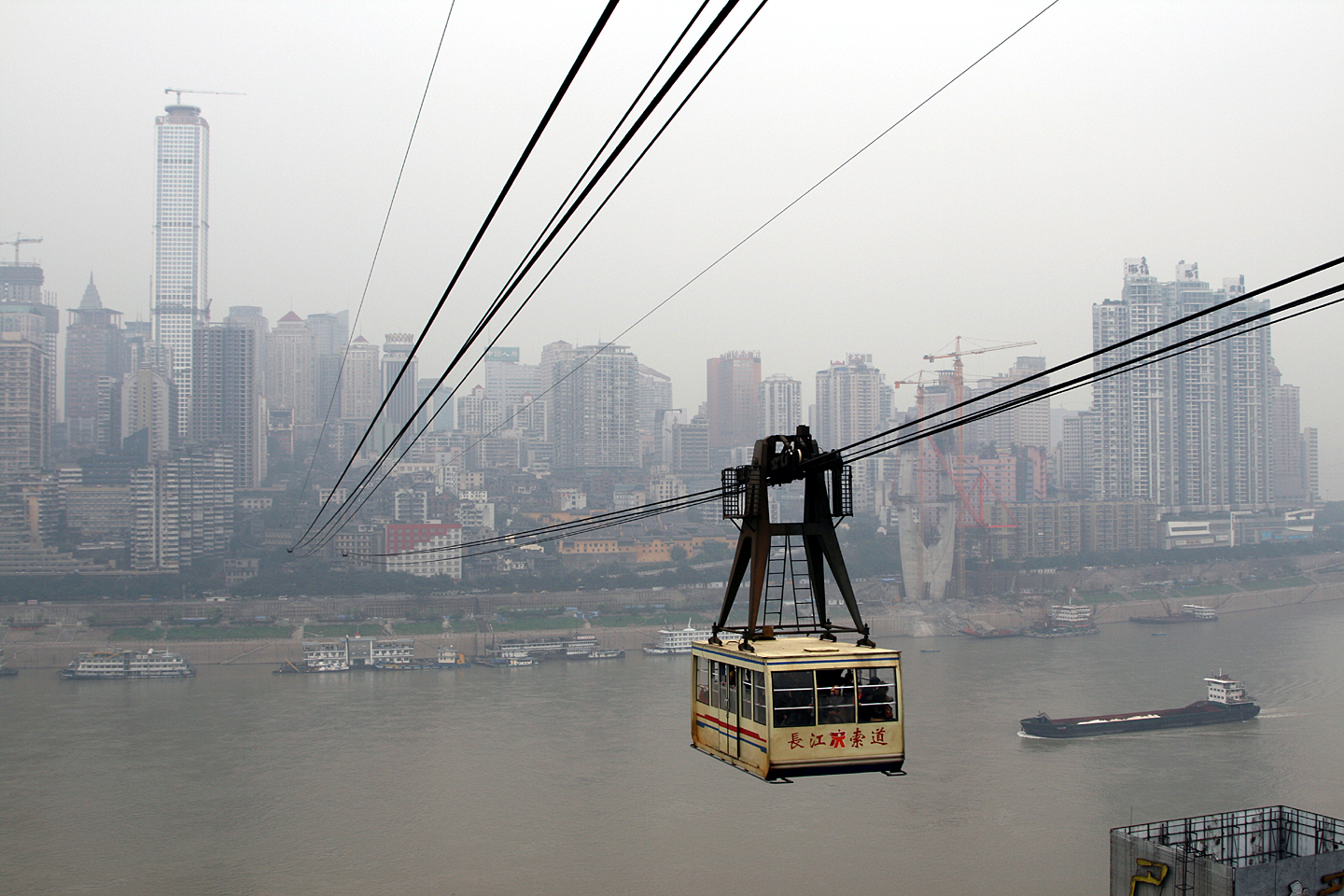
A cable car gliding across the Yangtze from the Yuzhong side to Nan'an. Once a commuter route, today it is a viewpoint suspended over the river with the skyline on both banks — especially beautiful after dark. Book ahead on Klook.
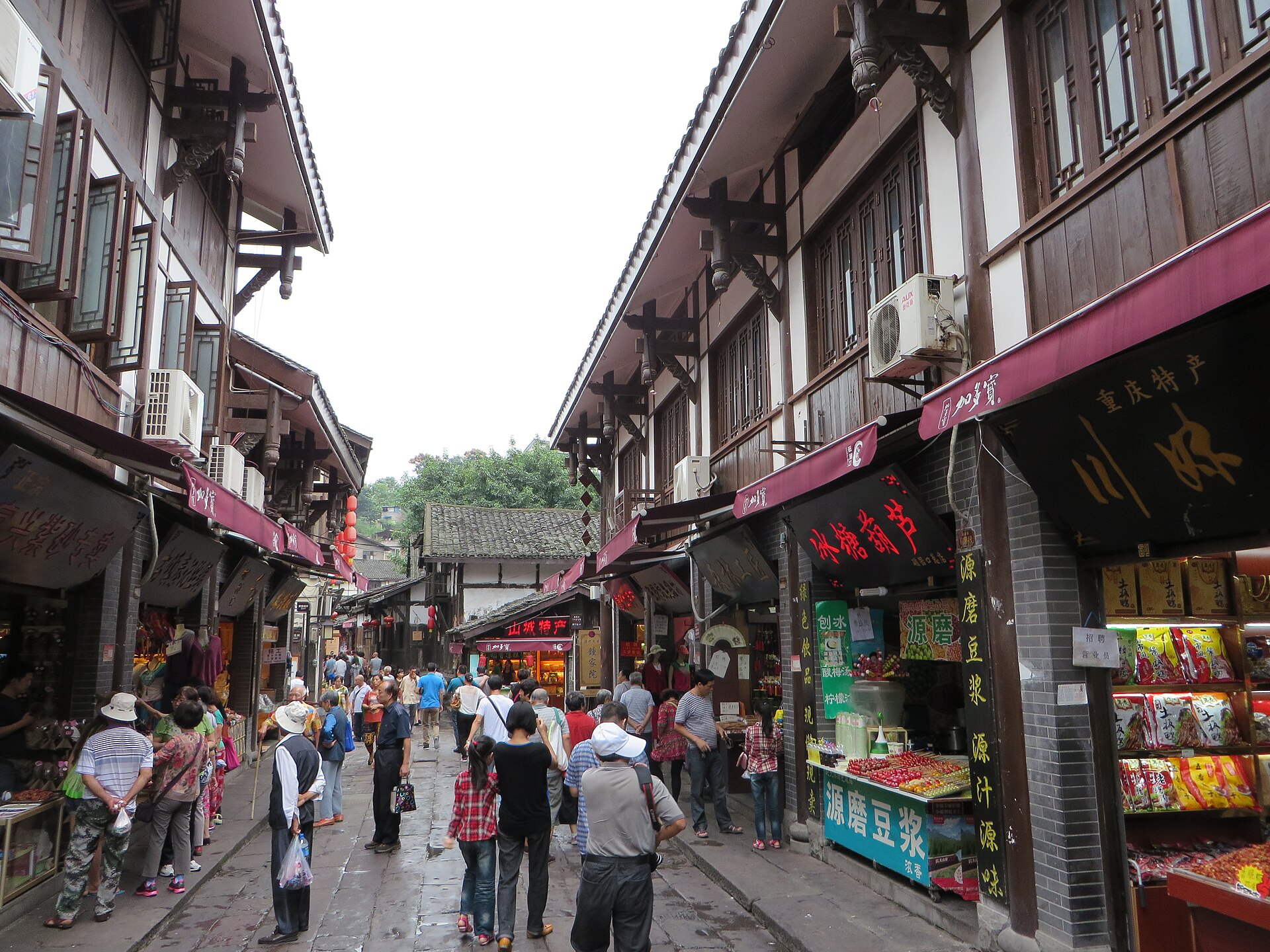
An ancient river port on the Jialing, its narrow stone lanes packed with stalls selling local sweets, flower tea and souvenirs. The smell of peanut brittle and mahua twists follows you the whole way — old Chongqing still very much alive.
A hilltop park with the widest panorama of the Yuzhong peninsula — the two rivers wrapping around the city and skyscrapers stacked in layers. The window between sunset and the city lights coming on is the most beautiful time to be here.
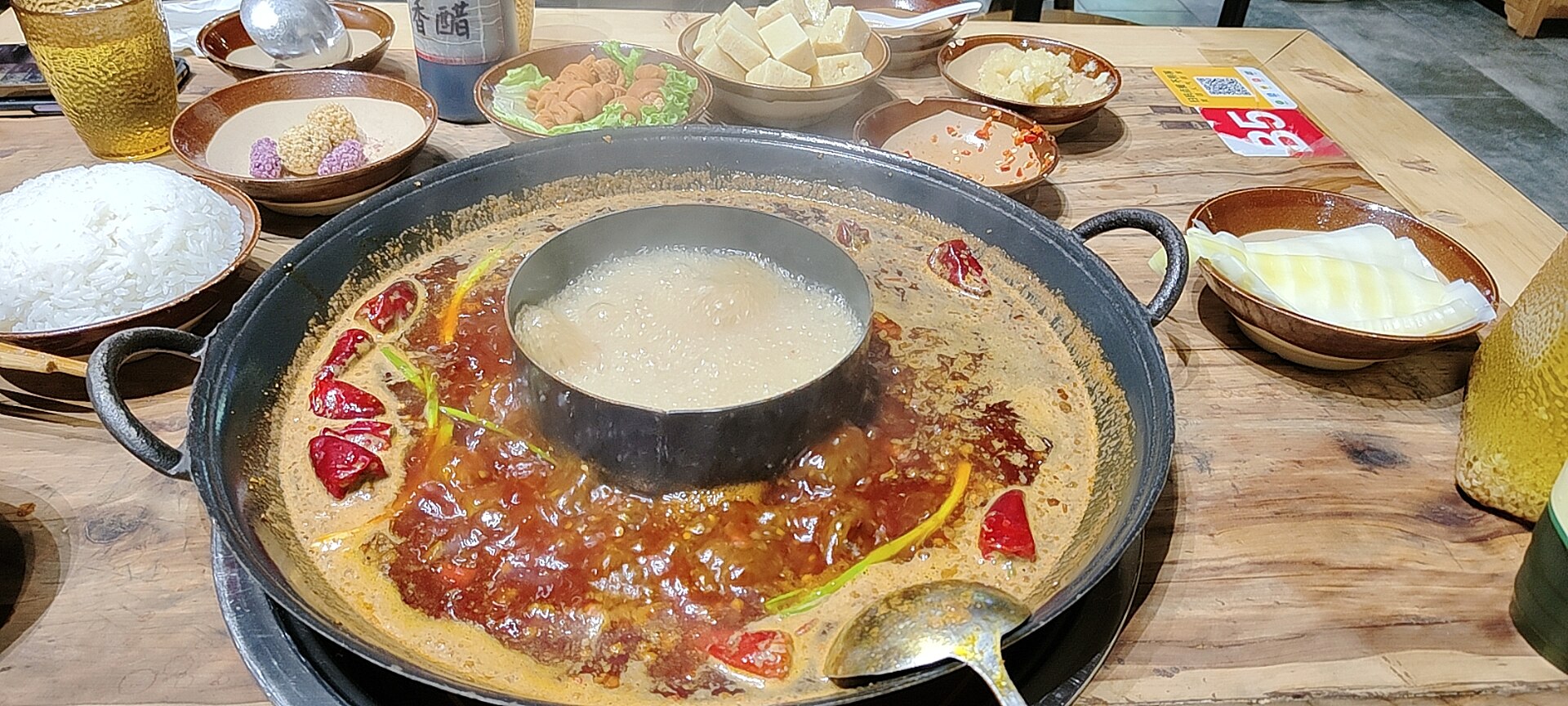
Chongqing is the capital of málà hotpot — the numbing-hot blend of chilli and Sichuan peppercorn. This is a city where fiery food is a way of life; locals eat hotpot all year, even at 40°C in summer. See more in our Chongqing food guide →
Everyone who comes to Chongqing agrees the hotpot here is the real original. A rich beef-tallow chilli broth, the tongue-numbing buzz of Sichuan peppercorn — order a "yuanyang" pot split half-spicy, half-mild, and dip your food in sesame oil with garlic. More in our Chongqing hotpot guide →
If hotpot is dinner, xiaomian is breakfast for the people of Chongqing — chewy noodles tossed in chilli sauce, peanuts and fragrant chilli oil, best eaten standing at a roadside stall for the full local feel. Very cheap. Try it with broth or dry. More in our xiaomian guide →
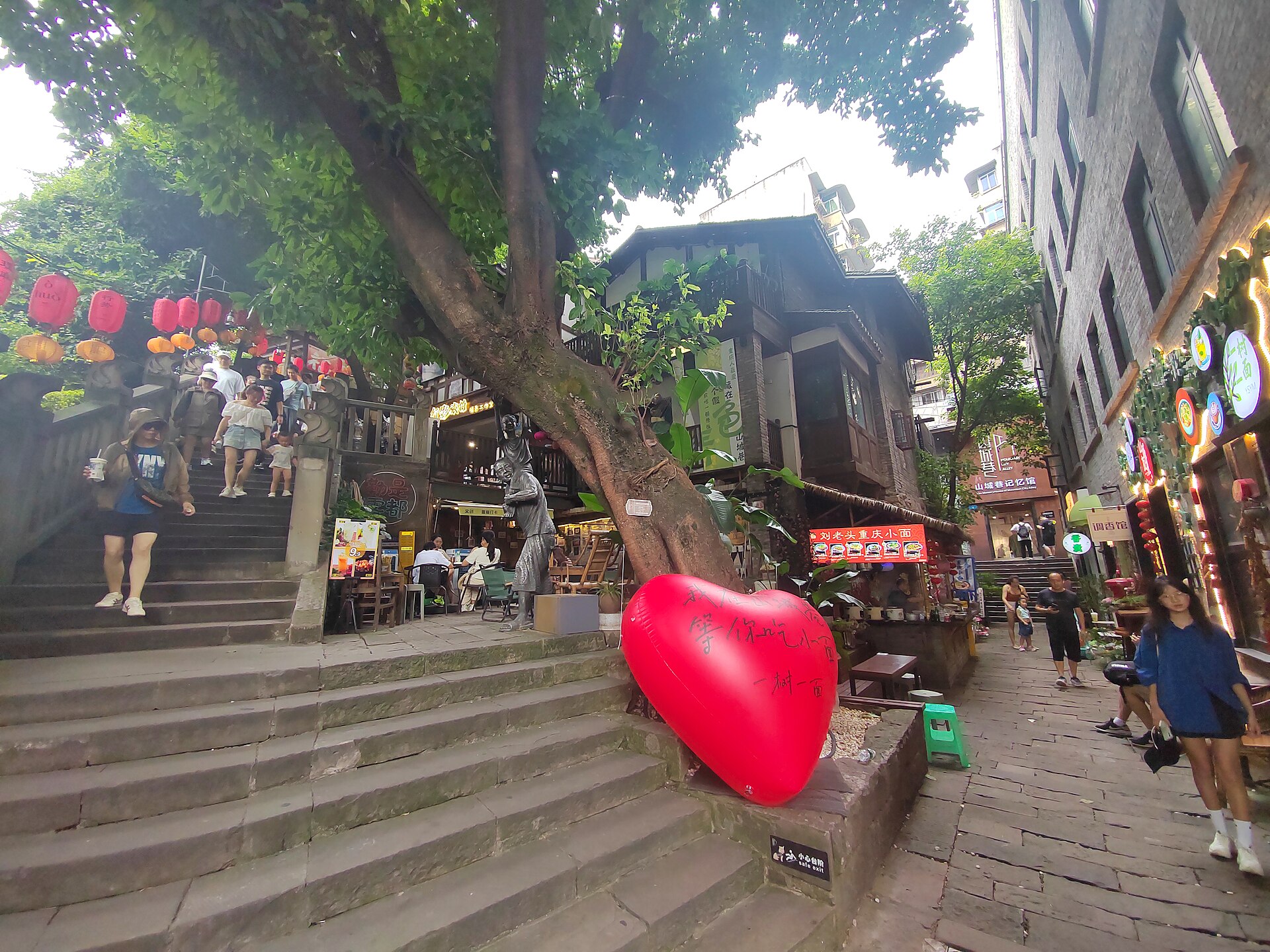
Chongqing's "jianghu" style is bold, rough-and-ready cooking with no fuss. Signature dishes include laziji — fried chicken buried under more dried chillies than chicken — and chilli-fried fish. Find it down the back lanes and old stairways like Shancheng Alley. More in jianghu cuisine →
A whole fish grilled until fragrant, then set over a tabletop burner in a pan of bubbling chilli broth, with seasonings and vegetables added to simmer — the evening dish Chongqing locals gather around a table to share. Hot, fragrant, rich and complete. See where to eat it in Chongqing grilled fish → · street food →
More Chongqing food: street food → · cafés →
Chongqing works on any budget — there are cheap places to stay, the metro is very inexpensive, and many of the top sights are free (Hongyadong, Jiefangbei, Liziba). If you want a luxury river-view room or hotpot at every meal, the cost climbs. See the full breakdown in our Chongqing trip budget →
| Tier | Stay / night | Food / day | Total / day (rough) |
|---|---|---|---|
| Budget | ¥120–280 (฿600–1,400) hostel or budget hotel | ¥70–140 (฿350–700) | ¥220–450 (~฿1,100–2,250) |
| Mid-range | ¥350–700 (฿1,750–3,500) 3–4 star hotel | ¥180–380 (฿900–1,900) | ¥600–1,200 (~฿3,000–6,000) |
| Luxury | ¥1,200–4,500+ (฿6,000–22,500+) river view | ¥450–1,800+ (฿2,250–9,000+) | ¥2,000–7,000+ (~฿10,000–35,000+) |
The metro is ¥2–12 a ride and many top sights are free, apart from the Yangtze cableway (~¥30) and the Wulong/Dazu tours you can book ahead. See more in the China travel budget guide →
Chongqing is built on hillsides with buildings stacked across many levels — step out of a mall's ground floor and you may find it is the tenth floor on the other side. Some metro stations are so deep they need several lift or escalator rides. A map may say 300 metres, but in reality that is eight flights of stairs. Allow more walking time than you think, and check your exit name in Amap every time.
China blocks all of Google's services (Maps, Gmail, Translate), Facebook, Instagram, LINE, YouTube and WhatsApp. Without a working VPN you are cut off from all of it. Set up a VPN on your phone before you leave, and download Amap (maps) and Baidu Translate. See the VPN + eSIM guide for China →
Local hotpot joints, xiaomian stalls and street carts mostly take Alipay or WeChat Pay only — there is no card terminal. Set up the tourist version of Alipay (it links foreign Visa and Mastercard), or withdraw some cash from an ATM as backup; ¥500–1,000 should cover small purchases.
Metro stations and the airport have English signs throughout, but most Chongqing taxi drivers can't read place names in English. Save your destinations in Chinese characters on your phone, or show the driver the screen in Amap.
Chongqing hotpot and food bring the numbing málà heat, far stronger than most spicy food. If you don't handle chilli well, order a "yuanyang" pot split half-spicy, half-mild, or ask the staff for "weila" (mild). Keep cold milk or water on hand to take the edge off.
During Golden Week (1–7 May and 1–7 October) the whole country travels at once; Hongyadong and Liziba get so packed you can barely move, and hotel prices double or triple. Over Chinese New Year (Jan/Feb) many places close. See detail in when to visit →