From the Chaotianmen wharf, sail downstream through the Qutang, Wu and Xiling gorges to Yichang — a 3–4 night voyage between thousand-metre cliffs. To be clear up front: this is not a day trip.
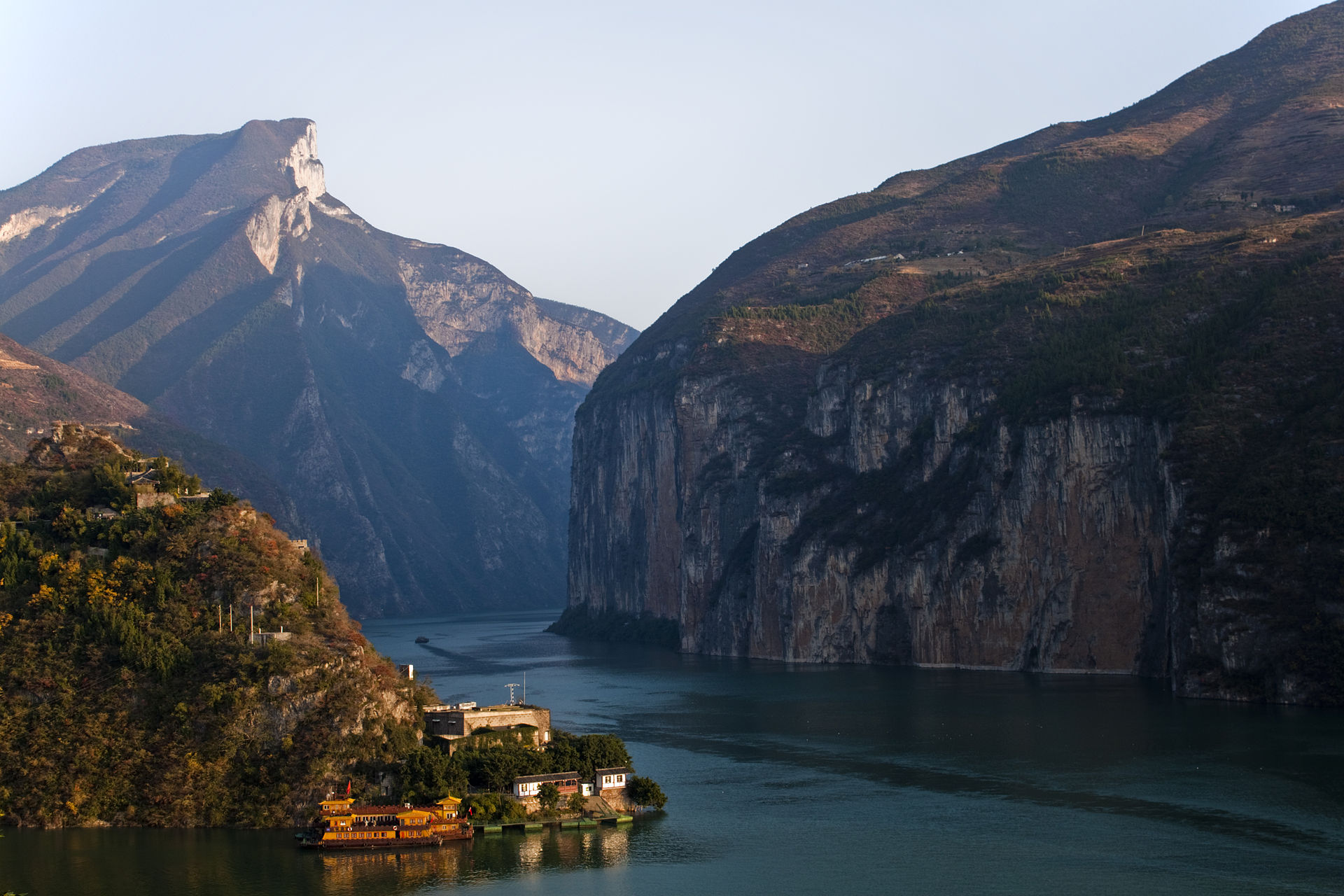
Picture this: one morning you wake on the boat, pull back the cabin curtain, and find sheer rock walls almost a thousand metres high standing on either side of a river that has narrowed so much the ship seems to thread the gap. Cloud clings to the mountains, the jade-green water drifts past — this is Qutang Gorge (瞿塘峡), the shortest and most dramatic of the three, and the very view printed on the back of China's ¥10 banknote.
The Three Gorges (长江三峡) is the collective name for three canyons where the Yangtze cuts between Chongqing and Hubei province — Qutang, the shortest and narrowest; Wu Gorge (巫峡), quiet and beautiful, its twelve peaks wrapped in mist; and Xiling Gorge (西陵峡), the longest, which opens out towards the city of Yichang. You don't cross the Three Gorges by car or on foot — you do it on a multi-day cruise that begins at Chongqing's Chaotianmen wharf, where the Yangtze and Jialing rivers meet.
Let's be honest from the start: this is an overnight voyage, not a day trip. The standard downstream route takes 3 nights and 4 days, with the ship pausing for shore excursions along the way — Fengdu Ghost City, the wooden Shibaozhai pagoda, the Lesser Three Gorges, and the colossal Three Gorges Dam. If this is what brought you to Chongqing, it earns every night you give it. If you are short on time, we cover the quick alternative at the end.
In the order a downstream ship actually reaches them, from Chongqing to Yichang
A hillside on Mingshan covered in temples, shrines and statues of ghosts and demons, drawn from Chinese folk beliefs about the afterlife. It's a popular early shore stop — strange and atmospheric, mixing Taoist and Buddhist tradition. You climb stone steps through gateways that spirits were said to pass on their way to the underworld.
A red, twelve-storey wooden pagoda built against a huge riverside rock — one of the most striking pieces of timber architecture on the route. Since the dam raised the water level, a protective wall now rings its base, so it appears to float on the river. Climb to the top for wide views across the Yangtze.
The shortest gorge (~8 km) but the narrowest and most dramatic, squeezing to roughly 150 metres at its tightest point. Its entrance, Kuimen (夔门), is flanked by sheer vertical cliffs — this is the exact scene printed on the back of the ¥10 note. Nearby sits the ancient Baidicheng (White Emperor City), the best vantage point over Kuimen. Have your camera ready here.
Wu Gorge runs ~25 km and is known for its quiet beauty; its twelve peaks (including the Goddess Peak) are often veiled in mist, the cliffs so steep that sunlight barely reaches the water. Most large ships pause here to let you board a small boat into the Lesser Three Gorges (小三峡) on the Daning tributary — clearer water, tighter channels, and a close-up look at riverside life of the local minority communities.
Xiling is the longest gorge and the final stretch before Yichang. The ship then passes through the ship locks of the Three Gorges Dam — the largest hydroelectric dam in the world. The shore excursion takes you to a viewing area above the dam, where you take in the sheer scale of the engineering before the voyage ends at Yichang's wharf.
Downstream (Chongqing → Yichang) is the route most people choose, because it's faster: 3 nights / 4 days, with the ship riding the current at around 29 km/h and usually docking overnight — which means a still, motion-free night's sleep. It suits you if you fly into Chongqing and want to set off straight away.
Upstream (Yichang → Chongqing) is slower (~16 km/h), taking 4 nights / 5 days, and ships sail at night to reach the scenic stretches in daylight. Its appeal is the gradual narrowing of the river towards the gorges, which feels like a slow discovery. Cabins of the same class generally cost the same in both directions — the difference is the number of nights and where you start and finish.
Several lines sail from Chongqing — among them Century (世纪), President (总统), Victoria Cruises, Yangtze Gold and others — ranging from standard ships to five-star vessels with a private balcony in every cabin, a spa and several restaurants. Most cabins are twins with a river-facing balcony, which is well worth it since the view is the whole point of this trip.
A standard 3-night / 4-day downstream cruise starts at roughly ¥1,800–3,500 per person (~฿9,000–17,500), depending on the line, cabin class and season; luxury ships run well above that. The fare usually includes your cabin, all meals on board and the main shore excursions, but tips/service charges, some optional excursions and drinks are typically extra at around ¥200–350 per day.
Spring (April–May) and autumn (September–October) are the prime seasons for the Three Gorges: cooler, clearer air and sharp views of the cliffs and peaks. Summer (June–August) tends to be hot, humid and hazy, which often obscures the scenery — even if some fares dip. In winter, ships still sail and crowds are thinner, though some days turn grey.
Avoid the Golden Week holiday (1–7 October) and Chinese New Year, when ships fill up, shore stops are crowded and prices climb. If you can, book a weekday outside the festival peaks for both a better price and more calm.
Almost all Three Gorges cruise ships depart from Chaotianmen Wharf (朝天门), at the tip of the Yuzhong peninsula where the Yangtze and Jialing rivers meet — the city's main wharf, right by the easy-to-spot Raffles City. After you book, the line will confirm your exact pier and boarding time (some board at Chaotianmen itself, others at a nearby wharf). Always check before you go.
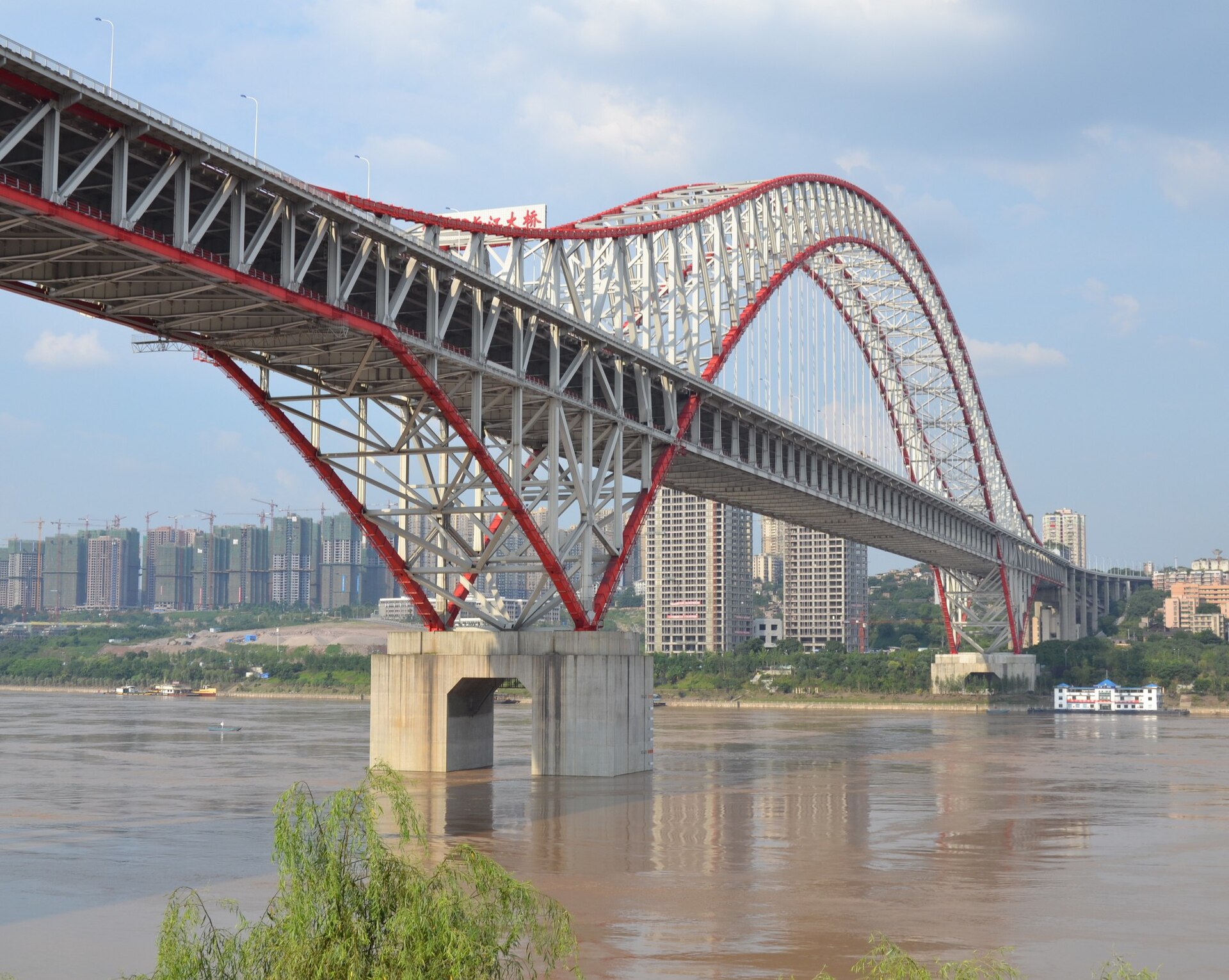
If you only have one evening in Chongqing and can't commit to a multi-day sailing, the best alternative is the Two Rivers Night Cruise (两江夜游) — an in-city loop along the Yangtze and Jialing, past Hongyadong, the Chaotianmen Bridge, the confluence of the two rivers, and the floodlit skyline of skyscrapers. It lasts just 45–60 minutes and costs around ¥138–198 per person (~฿690–990), departing Chaotianmen between roughly 19:00 and 21:00 (boats leave when full).
It isn't the Three Gorges, but it's the quickest and most beautiful way to understand in a single evening why Chongqing is called a "city of lights".
Arrive in Chongqing a night before the cruise — stay around Jiefangbei/Chaotianmen and walk to your boat the next morning