Ranked by popularity — out to see the real thing
Ordered by how popular they are, with an honest note on which is half a day, a full day, or an overnight.
 1
1
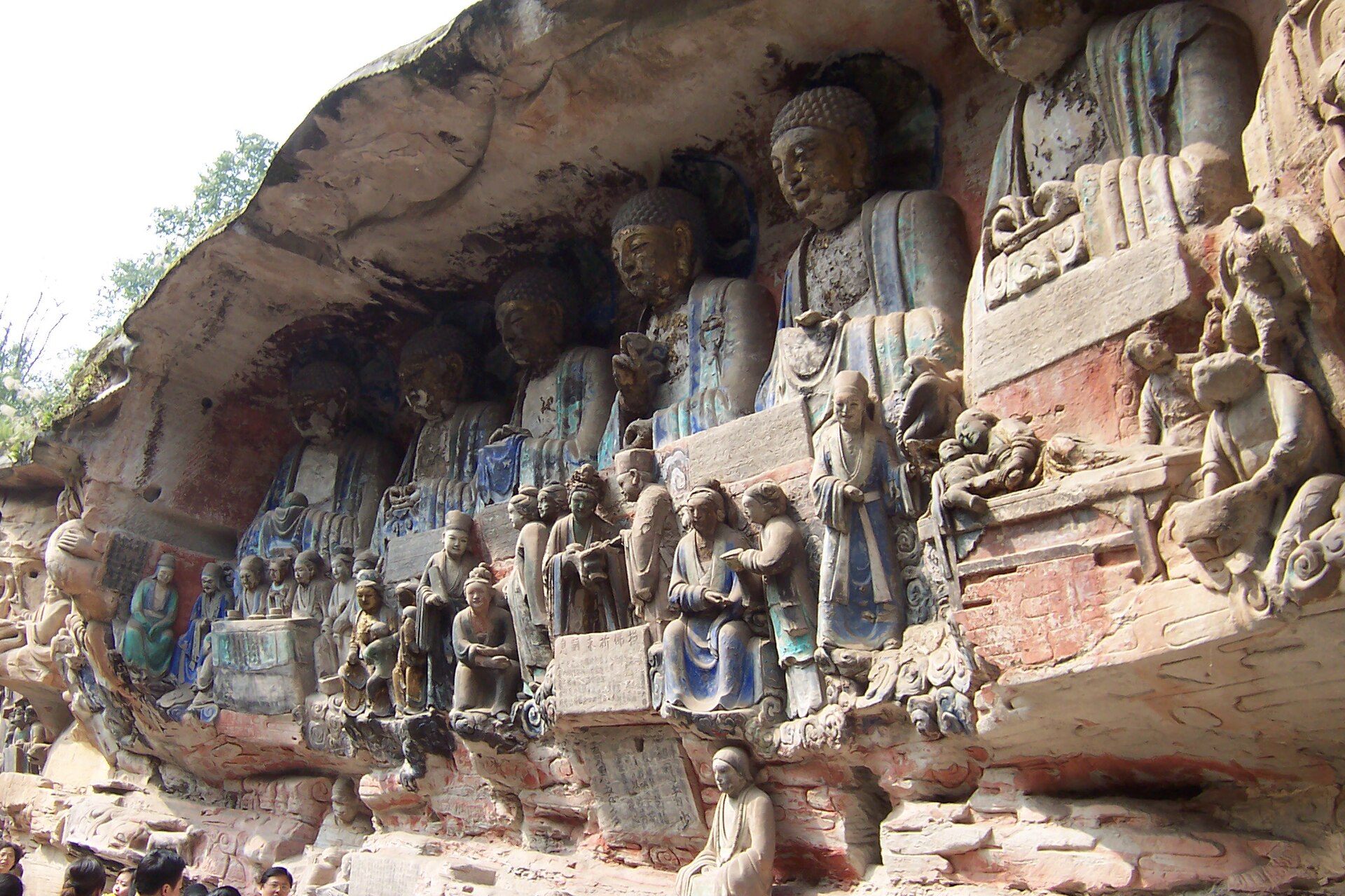
If you have ever been awed by the cliff carvings at Longmen or Dunhuang, the Dazu Rock Carvings belong in the same conversation — they are simply far less known to overseas visitors. These are Buddhist, Taoist and Confucian stone sculptures carved continuously from the 9th to the 13th century, across the Tang and Song dynasties, and a UNESCO World Heritage Site since 1999.
The site you cannot miss is Baodingshan (宝顶山), a long curved cliff covered with more than ten thousand figures. The highlights are a 31-metre reclining Buddha and a Wheel of Life carved so deeply it seems to push out of the rock. The second site, Beishan (北山), has smaller but exquisitely detailed grottoes. It is far quieter than anything in the city — if you want to escape the crowds of Hongyadong, this is the answer.
 2
2
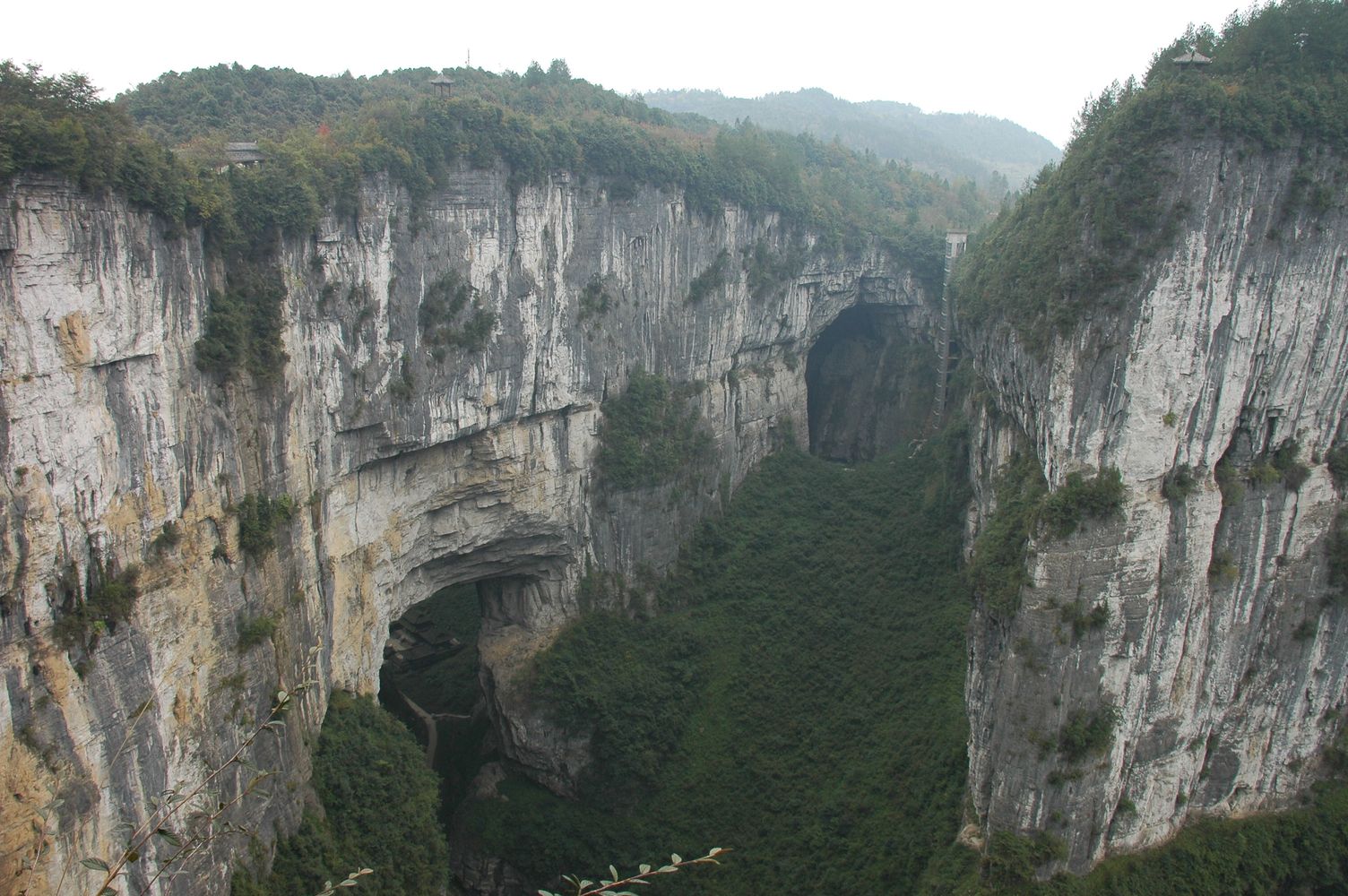
Picture limestone arches the height of a 30-storey building, curving over a gorge so deep you cannot see its floor — that is Wulong, part of the South China Karst World Heritage Site that Hollywood chose for Transformers: Age of Extinction and that Zhang Yimou used for Curse of the Golden Flower.
The centrepiece is the Three Natural Bridges (天生三桥): a walkway descends to the gorge floor and passes beneath all three colossal stone arches, with an old film-set courier station sitting in the middle. Nearby are the Longshuixia Fissure Gorge (龙水峡地缝), a deep earth crack; Furong Cave (see number 4); and the meadows of Fairy Mountain (仙女山). Since July 2025 a direct high-speed train serves Wulong, making it far easier to reach than before.
 3
3
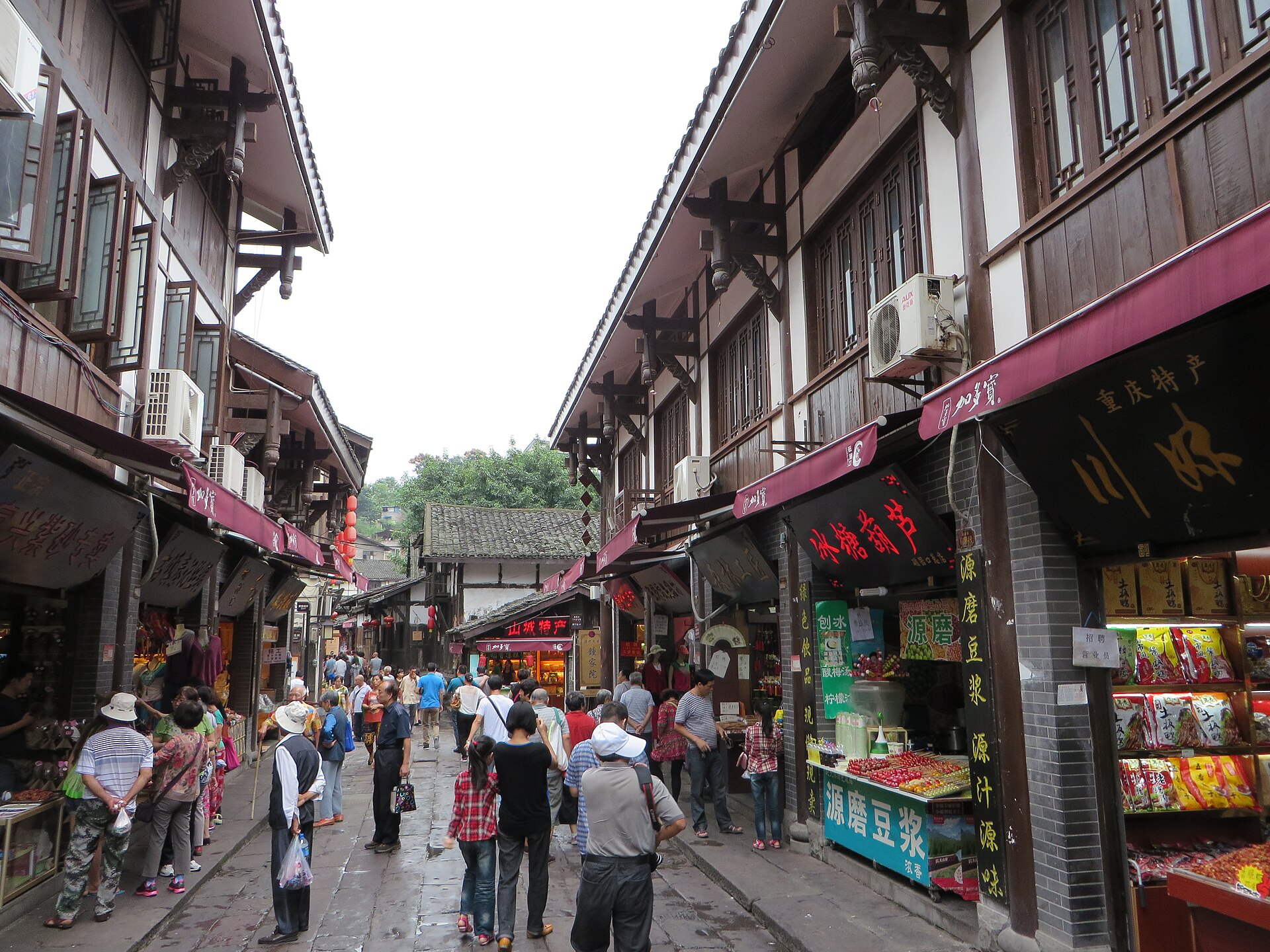
This one is special because you never leave the city — Ciqikou sits in Chongqing's Shapingba (沙坪坝) district, and Metro Line 1 drops you right at it. It was once a porcelain-trading river port, and the Ming and Qing dynasty stone lanes still run down to the Jialing River, lined on both sides with snack stalls, tea houses and craft shops.
The things to eat are chen mahua (陈麻花), crisp twisted-dough sticks sold in every flavour at every shop, and mao xue wang (毛血旺), a fiery blood-and-offal hotpot said to have originated here. Stop by Baolun Temple (宝轮寺) while you're in town too. I'll be honest: the lanes get genuinely packed late morning and on weekends — come on a weekday morning to catch the real old-town atmosphere before the crowds fill in. For a deeper look at the town, read our full Ciqikou guide.
If you're already going to Wulong, Furong Cave is the one to add — a vast limestone cavern in the same Wulong district, filled with stalactites, stalagmites, flowstone curtains and mineral crystals that glitter under the lights like another world. The trail through the cave runs about 1.8 kilometres and takes a relaxed hour to walk.
Be aware that Furong Cave sits in a different direction from the Three Natural Bridges — it's down in Furong town, south of Wulong. If you want to see both on one trip, plan for two days, or pick one if you only have a single day.
This is the site almost no foreign traveller knows, yet its story changed world history. Diaoyucheng is a clifftop riverside fortress in Hechuan county (合川) that, during the Southern Song dynasty, held off the Mongol army for more than 30 years. It was here that the Mongol leader Möngke Khan died in 1259 — an event that forced the Mongols to pull forces back from their campaigns in Europe and the Middle East. For that, it is known as the Troy of the East.
Today the fortress still has its stone walls, city gates and a beautiful view over the confluence of three rivers. You walk it quietly among old trees: a calm, rewarding half-day for anyone who loves history.
 6
6
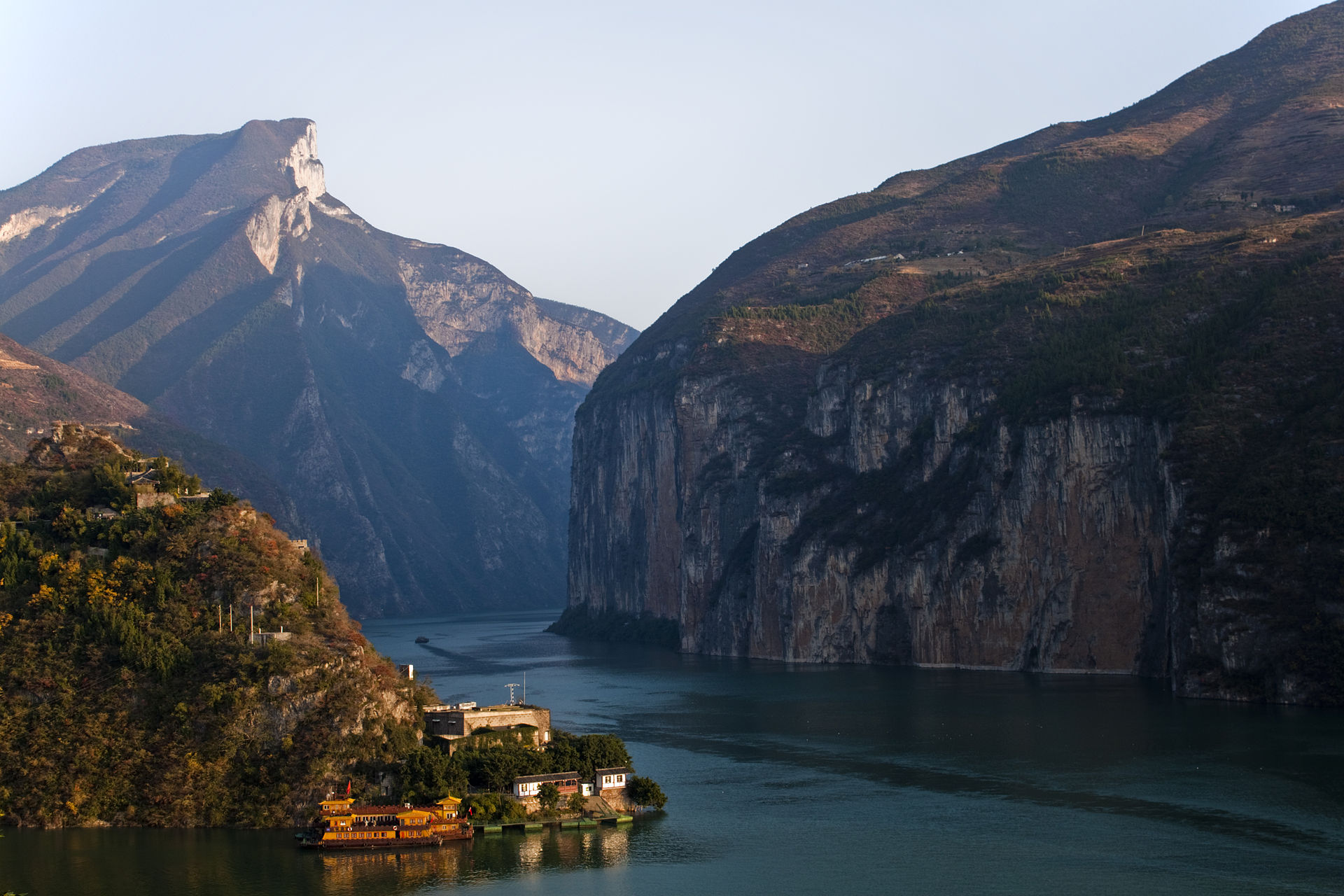
Let me say it straight away: this is not a day trip, but it is Chongqing's flagship experience, and plenty of people fly in specifically for it. The Three Gorges cruise means boarding a river ship at Chaotianmen dock (朝天门) in the heart of Chongqing and sailing the Yangtze eastward through the three great gorges — Qutang (瞿塘峡), Wu (巫峡) and Xiling (西陵峡) — ending at Yichang.
The downstream route (Chongqing → Yichang) typically takes 4 days and 3 nights aboard, with shore excursions to Fengdu Ghost City, Shibaozhai, the Lesser Three Gorges and the Three Gorges Dam. Several lines operate it (Century, Victoria, Changjiang), with prices from around US$400+ per person (about ฿14,000+) depending on cabin and season. If you're short on time and just want a glimpse of the Yangtze in the city, ride the cross-river cableway downtown instead.