Big platters, fierce mala heat, no fuss at all. Jianghu is the rustic, generous heart of Chongqing cooking — born in the wharfside kitchens of boatmen and roadside cooks, and the polar opposite of anything that calls itself fine dining.
If hotpot is the Chongqing everyone knows, jianghu is the Chongqing locals eat every day. Jianghu (江湖菜 jiānghú cài) translates literally as "rivers-and-lakes cooking". In Chinese, jianghu means the world of wanderers, fighters and river traders — people who lived outside official society — and that is exactly where this food comes from.
From the late Qing dynasty into the early 20th century, the Chaotianmen wharf and the riverbanks of Chongqing buzzed with boatmen, porters and merchants. These people needed food that was cheap, filling, fast to cook and bold enough to revive a tired body after long hours of labour. So the roadside kitchens threw in dried chillies, Sichuan peppercorn, garlic and fermented sauces with a heavy hand, cooked huge platters, and set them in the middle of the table to share. No ceremony, no delicate plating — just flavour fierce enough to send you back for more rice.
Jianghu belongs to the broader Sichuan school (川菜), but it has a clear identity of its own — spicier, oilier, heavier on beef tallow, and altogether rougher than Chengdu's version. Refined banquet Sichuan prizes balance and seven or eight layers of subtle flavour; jianghu prizes directness — if it is hot, it is hot all the way; if it is rich, it is rich without apology. The star dishes of the jianghu canon are names every Chongqing local knows by heart, from chilli chicken (laziji) to a fiery pot of bubbling duck blood (maoxuewang).
Ranked by their place in the jianghu canon — the dishes you cannot skip if you want to know the raw, real side of the Chongqing kitchen.
1
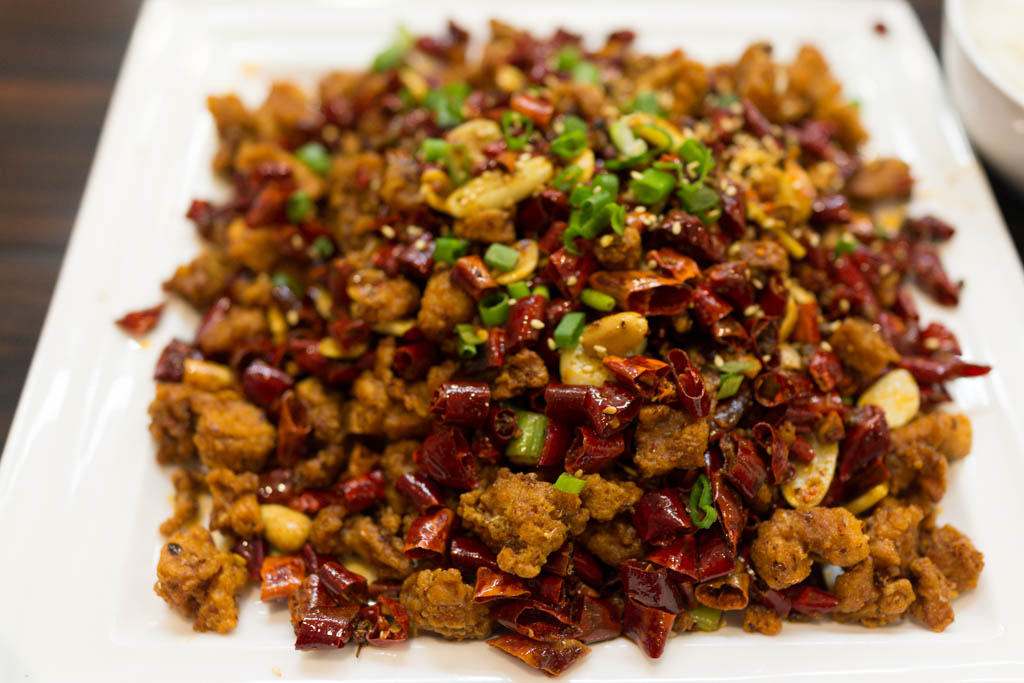
Picture a plate that arrives as a tall heap of dried red chillies, and you have to dig out the chicken one piece at a time with your chopsticks — that is laziji, Chongqing style. Bite-sized chicken is marinated and fried crisp on the outside, tender within, then tossed with garlic, ginger, Sichuan peppercorn and several times its own volume in dried chillies. The whole chillies are not for eating; they are fried to perfume the oil and push heat into every piece of chicken. The dish was born near Geleshan Hill around 1986, using free-range farm chickens, and has anchored the jianghu canon ever since.
2
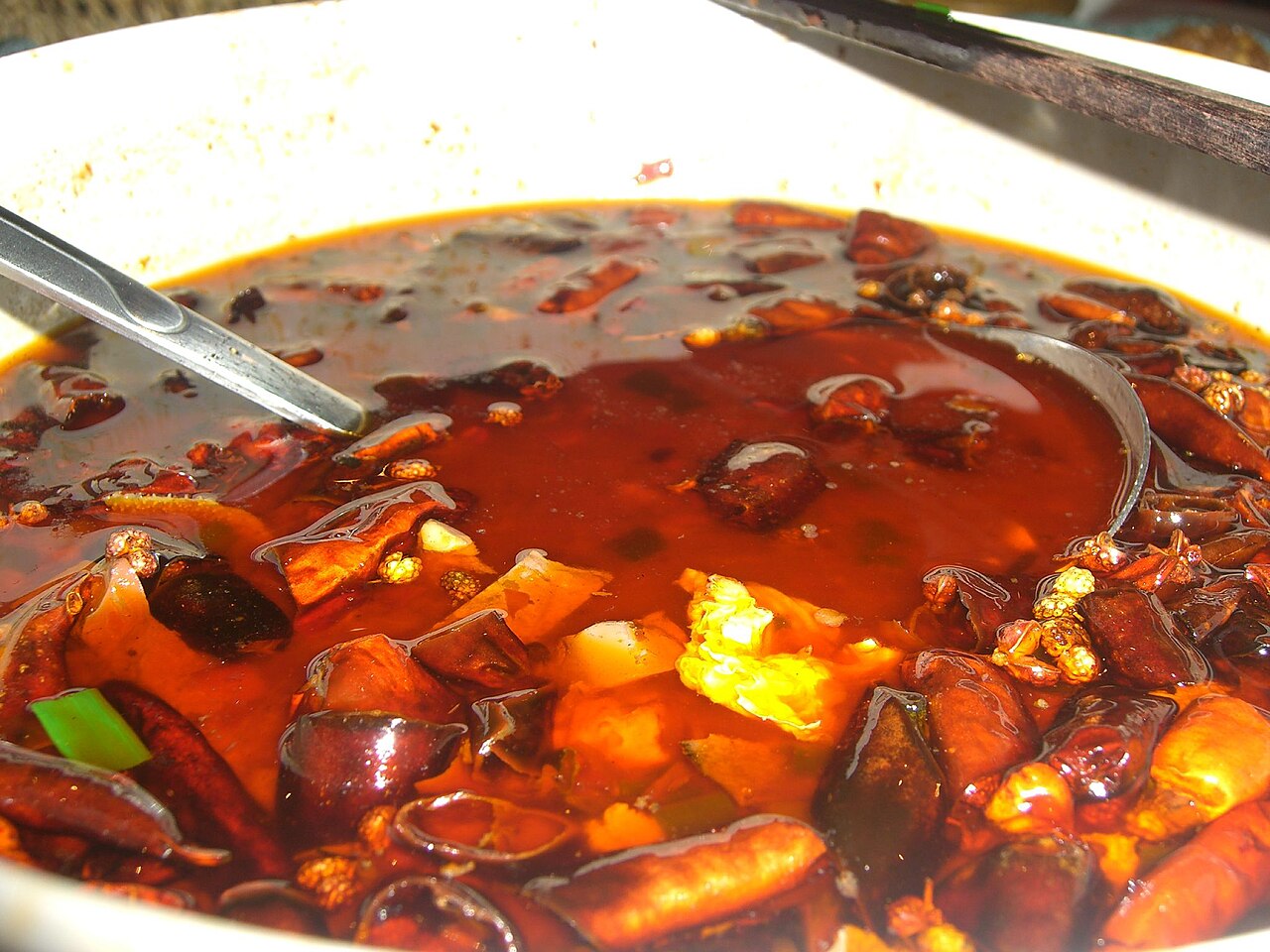
A big pot of deep-red chilli broth, bubbling away, packed with silky duck blood (the star), tripe, pork intestine, luncheon meat, bean sprouts and tofu skin, all sitting under a slick of chilli oil and Sichuan peppercorn. The dish was born at the Ciqikou wharf in the 1940s — a butcher's wife began boiling the leftover offal nobody wanted and selling it cheap, then one day dropped in fresh blood curd and found it grew more tender the longer it simmered. "Mao" (毛) means rough or slapdash in the Chongqing dialect, which fits the jianghu spirit perfectly: nobody is trying to be neat here.
The name means "water-boiled fish", but don't be fooled — what the fish is swimming in is not water but a bowl of fiery red chilli oil. Thinly sliced fish is marinated and poached briefly in a boiling broth until the flesh turns silky and tender, then topped with dried chillies and green Sichuan peppercorns and finished with a ladle of smoking-hot oil poured over the top so the spices sizzle and bloom across the whole bowl. It is searingly hot and mouth-numbing, yet the fish stays sweet and soft. The dish grew out of Chongqing hotpot fish, then went nationwide as a single dish — one of the few jianghu plates people far beyond Chongqing know well.
Shaojigong is a rooster chopped into big chunks and stewed in a pot with dried chillies, Sichuan peppercorn, ginger, garlic and spices until the meat turns tender and deeply seasoned, served in a pot kept warm over a tabletop burner. The fun of this dish is that you eat it in two acts: first the chicken in its thick, rich sauce, then once the meat is nearly gone you add stock and start dropping in vegetables, mushrooms, tofu, potato and glass noodles, turning it into a chicken hotpot. It is jianghu for a crowd — long, loud and convivial, the kind of meal that fills a noisy table for hours.
Quanshuiji means "spring-water chicken", a jianghu dish that rose to fame on Nanshan (南山), the southern hill that looks out over the city and the river. The original recipe is said to have used mountain spring water in the cooking. Free-range chicken is chopped and stir-fried with dried chillies, Sichuan peppercorn and seasonings until fragrant and hot, and is often served "one chicken, three ways" — dry stir-fried chicken, a chicken soup, and poached chicken blood. At its peak there was a whole street on Nanshan lined with quanshuiji restaurants, and Chongqing locals would drive up the hill to eat it with the city lights spread out below.
Taianyu, also known as "lump fish" (沱沱鱼), is a braised fish from the town of Tai'an, an important stop on the old Sichuan–Chongqing road where silver carp from the Jialing River are plentiful. The fish is cut into pieces, dusted in starch, then braised in a chilli-and-peppercorn sauce so the flesh stays silky and holds together while soaking up bold flavour. It comes either fully mala or made with pickled chillies (泡椒) for a sour-spicy edge. The dish has been listed as intangible cultural heritage in Chongqing — official confirmation that this is jianghu of the real, long-handed-down kind.
Laifengyu is fresh fish in the style of Laifeng town, in Bishan district — another key birthplace of jianghu cooking on the old Sichuan–Chongqing road. Whole fresh fish is cooked in a fierce, fragrant mala chilli sauce, the flesh staying firm and sweet because live river fish is used. Old restaurants in Bishan have been making this dish for more than forty years, and it counts as one of the three jianghu fish dishes Chongqing is proud of, alongside Tai'an fish and boiled fish in chilli oil. If you love your fish with serious heat, this is the one to seek out.
Jianghu food was never meant to be eaten alone — it exists to be shared by a group. A single dish is usually big enough for two to four people, set in the middle of the table for everyone to reach into. At a real jianghu place the room is loud, the tables are packed, diners are talking over each other and the staff are shouting orders across the floor — and that is exactly the atmosphere you want.
The ordering sequence is far less rigid than a formal banquet, but a safe formula is one hero dish (laziji, or shaojigong for a larger group), plus one fish or a maoxuewang with some broth, a stir-fried vegetable to cut the richness, and plenty of plain rice — jianghu heat needs rice underneath it.
Group size: four people can comfortably order three or four dishes plus a pot · two people just need a couple of dishes · Per person: a homely spot runs ¥60–120 (about ฿300–600) · a bigger meal with a shaojigong pot ¥100–180 (about ฿500–900).
Jianghu food is genuinely hot and fully mala. If you are not a strong spice eater you can ask for "wei la" (微辣, mild) or "zhong la" (中辣, medium), but some dishes — laziji especially — lose their character when toned down. The smarter move is to start with milder dishes like maoxuewang or shaojigong, keep tea, soy milk or yoghurt nearby to cool things off, and treat plain rice as a constant companion through the meal.
Paying: almost all jianghu restaurants run on WeChat Pay and Alipay, and some smaller places take cash in yuan, but very few accept foreign credit cards. Link a Visa or Mastercard to Alipay through its tourist mode before you go. Menus are mostly in Chinese — point at photos in the Dianping app, or just say you want "江湖菜" and let the restaurant steer you.
The best jianghu places aren't in glossy malls — they're in back lanes, in markets, and up on the hills where locals drive to eat.
For real jianghu food with a river view in the main tourist district, Bayu Jianghu sits on a lower level of Hongyadong — the stilted timber complex that has become Chongqing's signature postcard. It serves classic jianghu dishes in an old-city setting, at prices friendlier than the location would suggest. It works well for a group: order a hero dish and a pot to share, and you get the flavour and the view in one sitting.
Geleshan is where laziji was born — the western hill that once raised free-range farm chickens and has been lined with chilli-chicken restaurants for decades. This is where Chongqing locals go for the original dish: fresh farm chicken, fragrant chillies, piled high in the old style. Drive or take a taxi up and pick whichever restaurant is busiest; most are long-running family places still working the original recipe.
The old wharfside town where maoxuewang was born more than eighty years ago. These days Ciqikou is a popular strolling district full of restaurants and street snacks, and several places still make maoxuewang the old way — though to be honest the area is fairly touristy and some spots charge above the odds. Still, eating the dish where it was invented has its own pull. Pick a place full of local diners rather than a streetfront stall aimed purely at tourists.
Nanshan is the southern hill above Chongqing with a whole street lined with quanshuiji (spring-water chicken) restaurants. Locals love driving up to eat fiery chilli chicken with the city and the river spread out below at night — a jianghu experience tied specifically to the view. The mood is relaxed and family-friendly, the sort of place you come with relatives or a group of friends. Best saved for a clear evening when you want to escape the bustle downstairs and breathe some hilltop air.