The 8D city where cafés cling to cliffsides, rooftops and riverside terraces — one cup and you take in streets stacked in layers and the cable car gliding over the Yangtze. The old teahouses and cold sweets are the heritage that came long before.
Picture yourself by the upstairs window of a café in an old quarter, looking out at streets stacked three deep, towers rising out of a thin haze, and far below the Yangtze with a cable car drifting across it. By the time you finish your coffee, you have soaked up the whole 8D character of Chongqing. That is what makes a café here unlike anywhere else.
Chongqing is a city built in layers up the mountains between two rivers — the Yangtze and the Jialing. A floor that looks like the ground floor might really be the 22nd; a metro exit can open into mid-air. People call it the 8D city because its dimensions are too tangled to flatten onto a map. And its cafés are smart enough to use that terrain — clinging to cliffsides, rooftops and riverside terraces, where the view becomes the headline of the menu.
To be straight with you, Chongqing's specialty-coffee scene is still a few steps behind Shanghai or Chengdu, but it is real and growing fast. What matters more is that Chongqing has something other cities don't — skyline and river views you can barely find at a café anywhere else in China. The city's truly old heritage, meanwhile, is its teahouses and its cold sweets, both here long before coffee ever arrived.
In Chongqing you aren't only paying for the coffee — you're paying for a seat that sees the whole city.
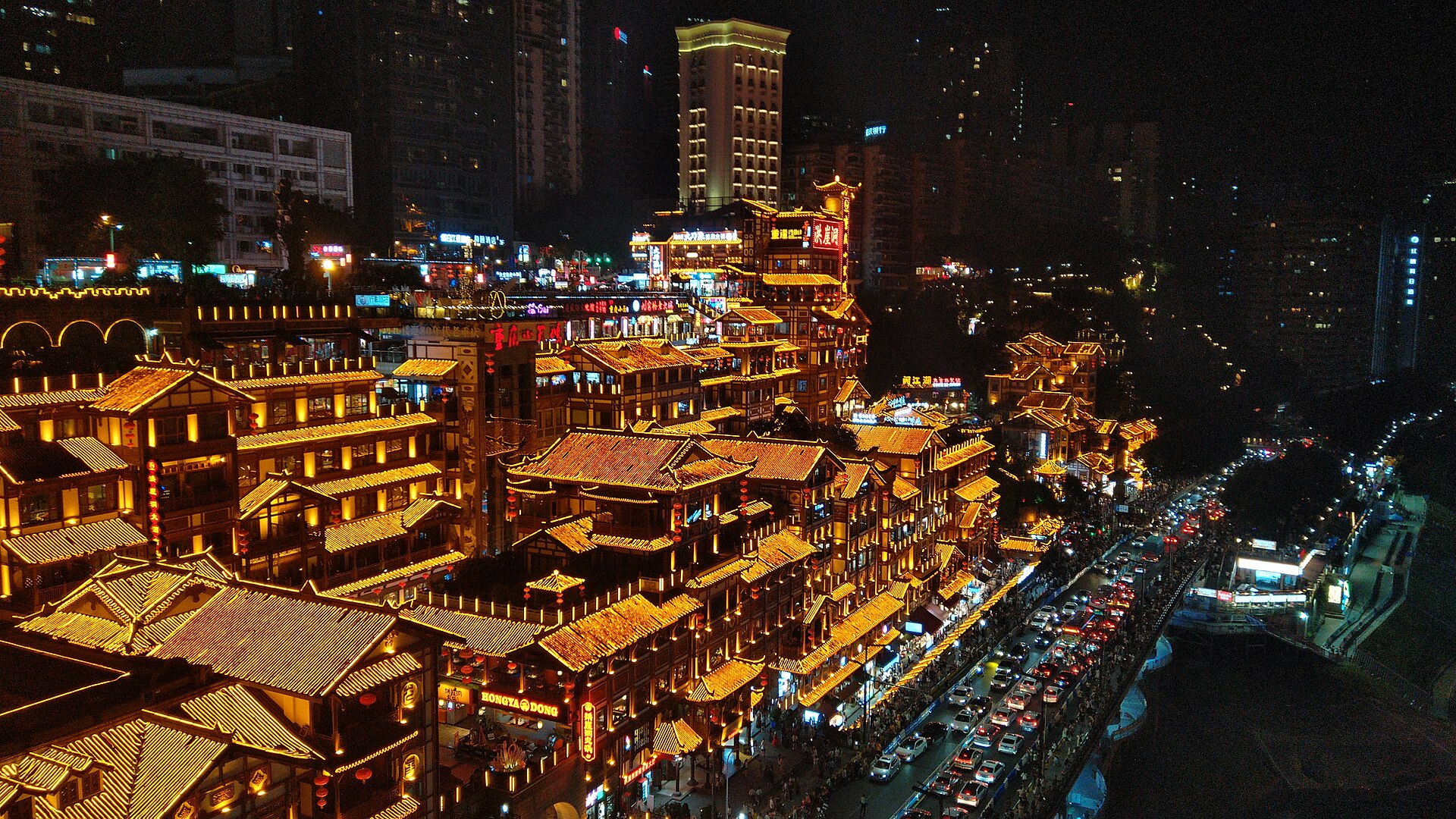
Hongyadong at night — the area offers both river-view cafés and riverside teahouses to choose from.
Chongqing's best views are spread across several areas — Hongyadong, the old stilt-house complex on the Jialing River that glows gold after dark; Nanbin Road, the south-bank riverside strip that looks straight across at the skyline; Eling Park, a hilltop garden with a panorama of the whole city; and Liziba, the district where the metro runs through a building. Many cafés in these areas angle their seats to face the view on purpose.
The trick locals know is that cafés tucked into old hillside lanes often give a better view than the famous spots on the main roads — they sit higher and quieter. From an upstairs window seat you can catch streets stacked three layers deep. In a city built in tiers like this, a seat up high is a seat with the best view.
Get the types straight first, then decide whether today is about the view, the old atmosphere, or a cooling sweet.
This is the kind of café you find mainly in Chongqing — shops clinging to a cliff, a rooftop or a riverside terrace, with seats angled to the view. Some have a cosy indoor ground floor and an open-air upper deck over the Yangtze. The coffee ranges from fine to genuinely good, but what people come for is the view. Nanbin Road, Hongyadong and the hills around Eling Park are where these are thickest on the ground.
Chongqing's specialty scene is young but more serious every year. Small independents are opening in old lanes and in areas like Xiahaoli and Jiefangbei, with owners roasting their own beans and pulling single-origin pour-overs. Young Bird Coffee in Xiahaoli is known for its minimalist look and specialty drinks. The roastery-style places put pour-over before lattes. If you take your coffee seriously, this is the group to watch.
Long before coffee, Chongqing had its teahouses — places where old folk sip tea from a lidded gaiwan bowl, play cards and chess, and talk all day. Jiaotong Teahouse (交通茶馆) in the Huangjueping area is the real legend, running since 1987 in the old canteen of a transport company: worn wood, dim light, and a feeling that time has stopped. The other style is a teahouse beside Hongyadong with pretty blue-and-white bowls and a river view — more touristy, but genuinely lovely.
Chongqing summers are hot and humid enough to demand something cold, and the answer is a street sweet. Bingfen (冰粉) is a clear ice jelly drenched in dark brown-sugar syrup and scattered with peanuts, sesame, Job's tears and hawthorn — cool, sweet and refreshing. Lianggao (凉糕) is a soft chilled rice pudding under brown sugar and sesame paste, mellower than bingfen. Both turn up at street stalls, markets and old quarters like Ciqikou — especially after a fiery hotpot.
If you want a decent cup cheaply before a day of climbing the city's slopes, the local chains are the answer. Luckin Coffee is on every corner and the cheapest; Manner Coffee, born in Shanghai, has reached Chongqing too, pouring a steady oat-milk latte for a small price; Cotti and M Stand are easy to find as well. Order ahead through the app or a WeChat mini-program and it is cheaper and quicker — handy in a city where you walk a lot.
In a city this devoted to mala (麻辣, numbing-spicy), a few newer cafés have fun bringing the hotpot vibe into the cup — some add Sichuan peppercorn (花椒, which leaves the tongue lightly numb), others play with chilli. It reads strange but it is playful, and it captures Chongqing well. Not every shop makes it, and not everyone likes it, but if you want a flavour you can barely find anywhere else in China, this is the one. Worth a single cup.
Four areas every view-and-coffee lover should know — each one a different experience.
A riverside strip running for kilometres along the Yangtze, lined with cafés, restaurants and bars that all face the water and look across at the whole Yuzhong skyline. The Longmenhao Old Street section has cafés like Banana, whose upper floor is an open-air terrace over the river. Night is best, when the lights of the far bank fill the water — this is Chongqing's finest riverside café strip.
Hongyadong is the towering wooden stilt complex on the Jialing River that glows gold at night — the iconic image of Chongqing. Around it you'll find both river-view cafés and riverside teahouses. Jiefangbei, the central pedestrian street, has mall cafés, rooftop spots and newer concept shops. The two areas are close enough to walk between, making this a good place to start if you want both view and coffee in one day.
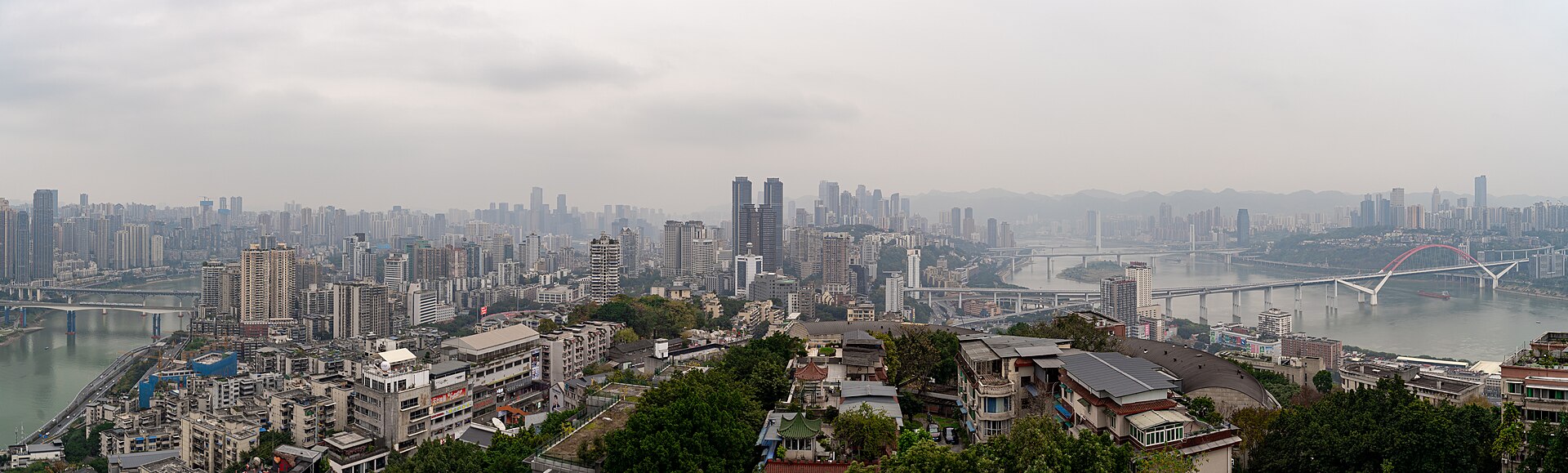
Eling Park is a hilltop garden and one of the best places to see the Chongqing skyline; the small cafés in the old lanes around it sit higher and quieter than the famous spots. Liziba is the district where the metro runs through a building, with cafés near the station where you can watch the train pass through. Some, like Coffee & Cake, give you a window seat looking at the cable car gliding across the Yangtze — a view only Chongqing can offer.
Huangjueping is an art district with one of China's longest graffiti walls, and home to Jiaotong Teahouse — the legendary old teahouse where art students, old regulars and visitors all sit side by side. If you want to understand old Chongqing, the pre-coffee version, this is the place: sip tea from a lidded bowl, watch the card games, then wander the street art nearby. It is half a day that feels completely different from the riverside view areas.
These places have a real name — some for the view, some for the old-school atmosphere.
The best-known old teahouse in Chongqing. It was once the canteen and bathhouse of a transport company before becoming a teahouse in 1987. Inside are worn wooden tables, light leaking through an old roof, and Chongqing regulars sipping tea, playing cards and chess, and talking all day. There's a charming local custom: leave a match or a stone on your bowl's lid to say "I'll be back, don't clear it away." Sipping from a lidded bowl here gives you a side of Chongqing that coffee never can.
If you want both the old tea ritual and a river view in one spot, a teahouse beside Hongyadong is the answer. It serves tea in blue-and-white covered (gaiwan) bowls neatly arranged, facing the Jialing River and the old stilt-houses of Hongyadong. It draws more tourists than Jiaotong and costs more, but the view and the setting are genuinely beautiful. Come in the evening, when Hongyadong's lights are on, for the best of it.
A small café that sells the view above all — window seats look straight out at the Yangtze Cableway gliding across the river, an image you can barely find at a café anywhere else in China. The window tables are the most wanted and fill up fast, so arrive early to claim one by the glass. Order a coffee and a slice of cake, then watch the cable car cross the water again and again. The coffee is fine, but you come here for the view.
One of the specialty shops Chongqing's coffee crowd talks about, set in Xiahaoli, an area turning into a cluster of independents. The look is minimalist and dark-toned, the focus is on specialty drinks and careful brewing, and the mood is quiet — good for sitting down to a serious cup with no view competing for your attention. If you want to see how far Chongqing's specialty scene has come, a place like this is the answer.
Not one shop but a whole culture — bingfen and lianggao stalls are all over Chongqing, especially in old quarters like Ciqikou and at markets. The vendor scoops clear ice jelly from a big vat, drowns it in dark brown-sugar syrup and tops it with peanuts, sesame and hawthorn right in front of you. It's how you cool down after a day of climbing slopes or a fiery hotpot. Cheap at ¥10–25 a bowl, it's a dessert Chongqing people have eaten since childhood.
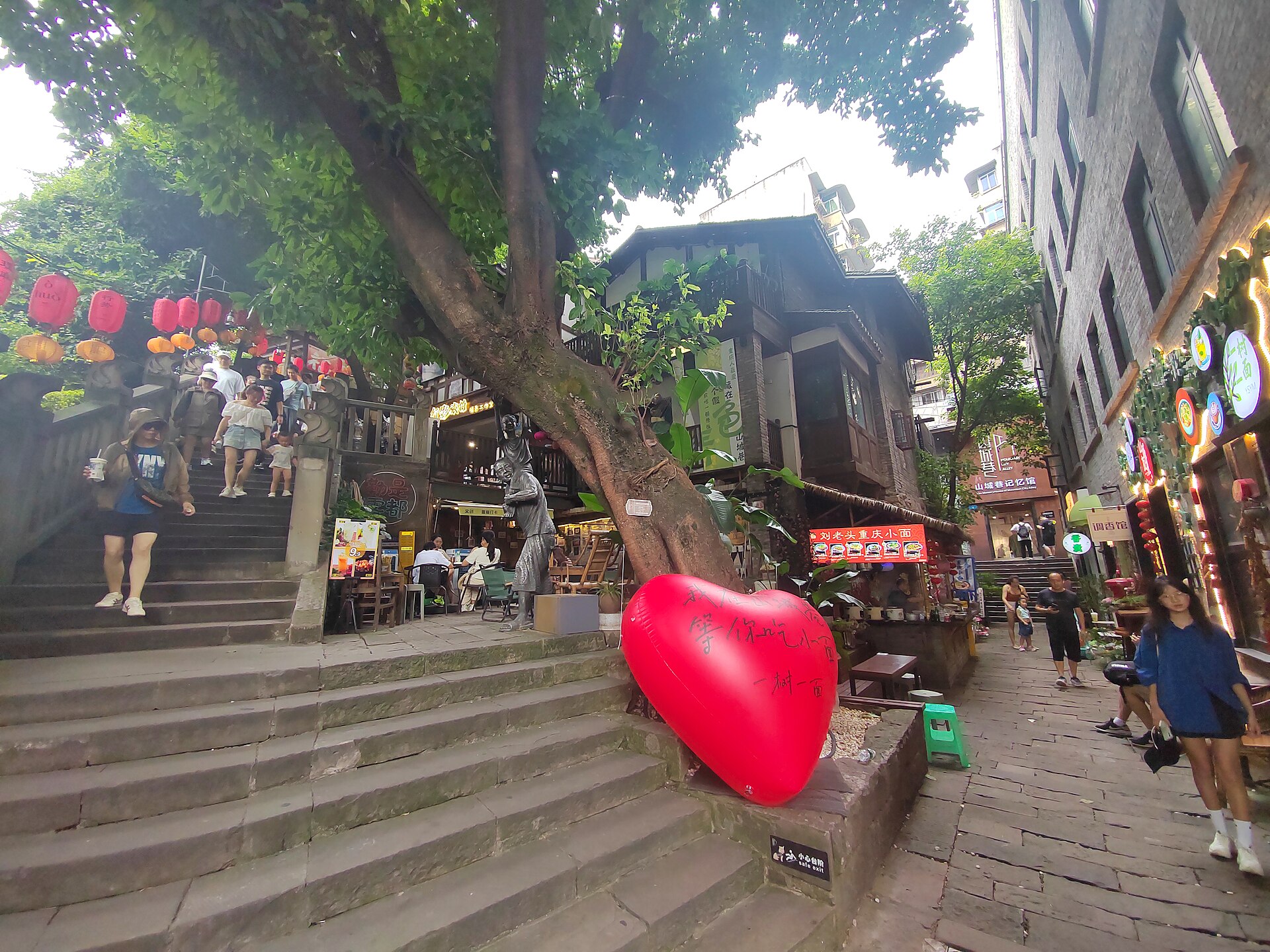
An old mountain-city stair lane — the kind of place where Chongqing's independent cafés and old teahouses tuck themselves away.
What you drink and eat in Chongqing that's hard to find elsewhere.
A drink that sums up Chongqing in a single cup — coffee carrying the numbing-spicy spirit of hotpot. Some shops add Sichuan peppercorn that leaves the tongue lightly tingling, others play with chilli. It sounds odd but it is fun, the work of the city's newer cafés in a place that worships mala. If you ever get the chance to try something you can't find elsewhere in China, this cup is it.
The Chongqing way with tea is the gaiwan — a ceramic bowl with a lid and a saucer, loaded with leaves (often tuo tea, the compressed tea from Sichuan) and topped up with hot water all day long. You use the lid to push the leaves aside before each sip. The way of drinking is simple but has its own rhythm. In an old teahouse, this is the star that lets you sit a whole afternoon for a few yuan.
Bingfen is a clear, soft, slippery jelly somewhere between Jell-O and water, drowned in dark brown-sugar syrup and loaded with toppings — crushed peanuts, toasted sesame, Job's tears, hawthorn, sometimes rose candy or red beans. That first cold, sweet spoonful is exactly why Chongqing people have always reached for it to beat the heat. Cheap, easy to find, and a perfect match for a hot, humid city.
Lianggao is a soft, springy chilled rice pudding, served under thick brown sugar and sesame paste — smoother and gentler than bingfen. Some vendors fold in fermented glutinous rice or soybean flour, or add a squeeze of lemon or watermelon juice for freshness. It is another cold sweet Chongqing people eat through the hot months, a touch lighter than bingfen — good to finish a meal or to snack on through an afternoon in the old quarters.
Chongqing is almost entirely cashless — most cafés, dessert stalls and teahouses take WeChat Pay and Alipay first, and many street stalls take WeChat Pay or cash only. Before you travel, set up Alipay and link a Visa/Mastercard through its international mode (it works for visitors · see our China payment guide).
The thing to understand about Chongqing is that it is a three-dimensional city — a map app may say a place is close, but you might need a lift, an escalator or a climb to actually reach it. Plenty of the best view cafés hide on hard-to-reach floors, so allow extra time to find your way and don't hesitate to ask people nearby. Amap or Apple Maps work better than Google Maps in China.
For view cafés, the golden window is sunset into evening, as the city lights and Hongyadong switch on — grab a window seat before dusk. For old teahouses, go late morning to afternoon on a weekday to catch the regulars at their card games. If you'll need general internet access in China, set up a VPN before you travel — see our China internet & VPN guide.
The skyline from Eling Park hill — small cafés in the surrounding lanes get a higher, quieter view than the famous spots.
Staying around Jiefangbei or by the river is the easiest way to reach the view cafés and the eating on foot.