Home Chongqing China Chongqing Hotels About
Home  ›  Asia  ›  China  ›  Chongqing  ›  Getting Around
🚇 Chongqing Transport Guide · 2026

Getting Around Chongqing
Monorail Through Buildings & More

A train that runs straight through a residential tower at Liziba, stations bored so deep the exits emerge on different floors of the city, a cable car across the Yangtze for ¥20 — Chongqing is the most fun city in China to travel through, once you learn its rules.

Before you go

An 8D mountain city that's a joy to move through

Chongqing is the city where the "ground floor" of one building is the 22nd floor of the next. Built across mountains and the meeting of two rivers — the Yangtze and the Jialing — its roads stack on so many levels that locals call it an "8D city." It sounds like a headache, but here's the good news: the transport network was built for exactly this terrain, and it's far more fun than getting around a flat city.

The backbone is the Chongqing Rail Transit, around 13 lines covering over 500 km, with both ordinary subways and the famous elevated monorail Lines 2 and 3 that hug the cliffs above the rivers. Line 2 even runs straight through the middle of a residential tower at Liziba station. Fares start at ¥2 and top out around ¥12. Station signage is in English throughout, and you can scan an Alipay QR code at the gate without buying a ticket.

But there's one very Chongqing quirk to know in advance: many stations are extremely deep — Hongtudi and Liyuchi are the deepest in China — with escalators that take a full minute, and the platform level is usually not the street you expect. Each exit can emerge on a different floor of the city. This guide walks you through the metro, the cable car, the ferries, DiDi and the right map app — get these straight and Chongqing becomes surprisingly easy to navigate.

Your main option

Metro + monorail — fast, cheap, English signs

The first choice for almost every route: clean, on time, ¥2–12 a ride — and some lines double as a sightseeing trip.

Chongqing Rail Transit runs from around 06:30 to roughly 22:30–23:00, with closing times varying by line — last trains on the longer lines leave earlier than that. If you plan to head back late, check the last-train time in a map app first. Fares are distance-based: they start at ¥2 and rise about ¥1 per 5–7 km, topping out around ¥10–12. Most rides within the city sit in the ¥2–6 range.
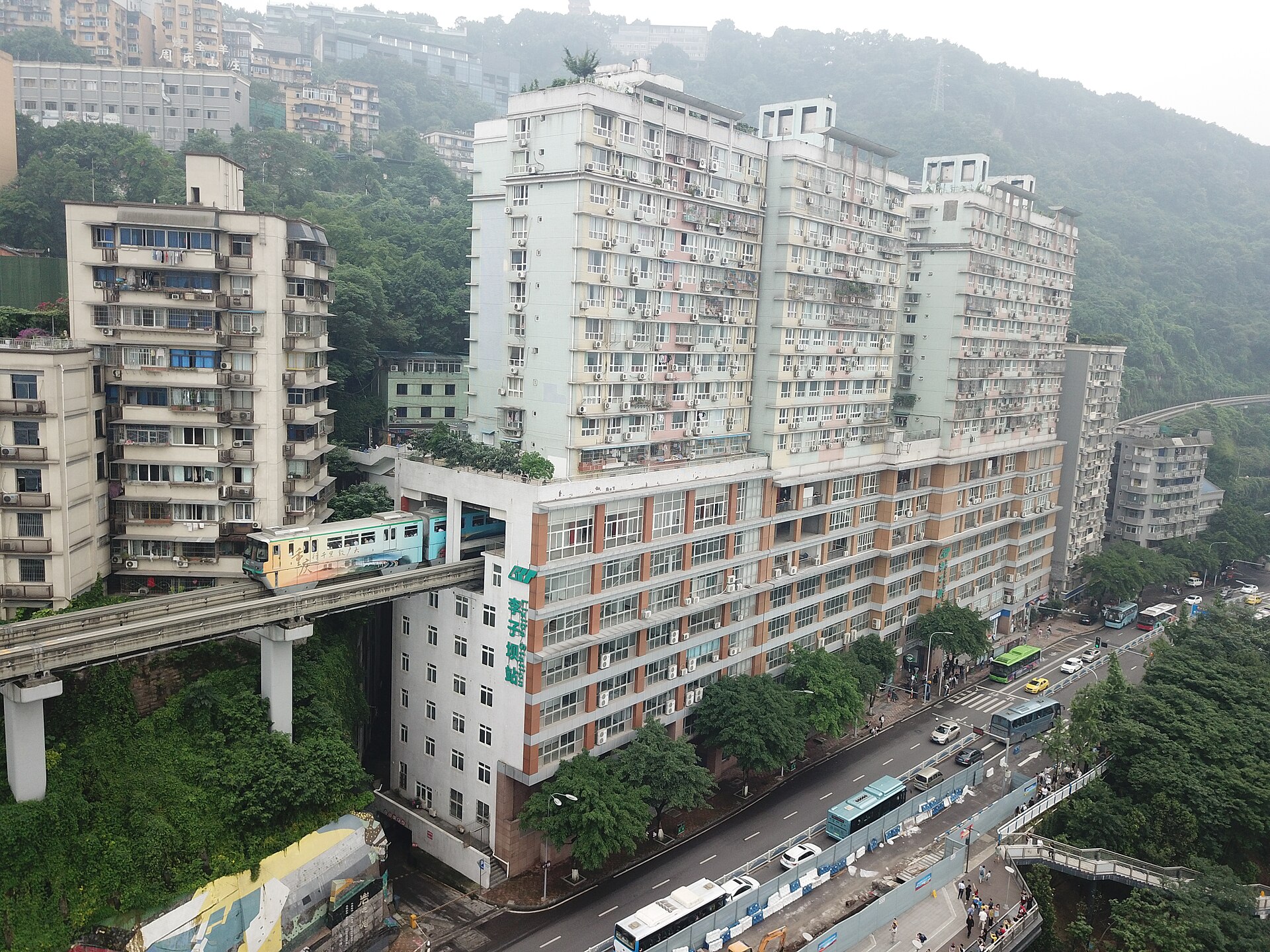
Chongqing Line 2 monorail running through the middle of a residential building at Liziba station above the Jialing River
Liziba station on the Line 2 monorail — the train genuinely passes through floors 6–8 of a 19-storey residential tower. It's both transport and Chongqing's most famous sight.
Key lines

The routes visitors use most

Line Type / route Highlights
Line 2 (monorail) Along the Jialing River, Yuzhong side Liziba (train-through-building) · Eling · Jiaochangkou · river views the whole way
Line 1 West ↔ centre Ciqikou (ancient town) · Xiaoshizi (transfer for Hongyadong / Jiefangbei)
Line 3 (monorail) Main north–south artery ↔ airport Jiangbei Airport T2 · Guanyinqiao (shopping) · Niujiaotuo · Lianglukou
Line 10 To the airport · deepest stations Jiangbei Airport T3 · Hongtudi (deepest) · Liyuchi · Chongqing North
Line 6 Cross-river link, Jiangbei ↔ Nan'an Xiaoshizi · Wulidian · transfers to several lines
Loop Line (环线) Circles the inner city Connects to almost every line · Shapingba (Chongqing West HSR)
The 8D-city tip that matters most: before you leave a station, always read the numbered exit signs (Exit A/B/C…), because each exit can surface on a different "floor" of the city — some on a clifftop, some mid-tower, some down by the river. Check Amap for which exit your destination is on and life gets much easier. At deep stations like Hongtudi and Liyuchi, allow 3–5 minutes for the long escalator ride up.
How to pay

Ways to pay your fare — pick what's easiest

📱
Alipay QR

Easiest by far. Open Alipay, tap "Transport", choose Chongqing, and scan the QR at the gate — no ticket needed. Set it up before you go.

💬
WeChat Pay

Same idea as Alipay. Open the transport mini-program in WeChat and scan at the gate. Works on every line.

🎫
Single token

Buy from a station machine — English menu, takes coins and notes. Handy if you haven't set up Alipay yet.

💳
Yiju card

The Yiju card (渝畅行) or the Chongqing Metro app, topped up in advance — worth it if you're staying several days and riding often.

Honestly, setting up Alipay before you travel is the single most useful thing you can do. Beyond the metro, it also pays for the cable car, the ferries, taxis, hotpot restaurants, convenience stores and DiDi — almost nobody in Chongqing carries cash. See how to link a foreign card in the Alipay & WeChat Pay guide.

Other options

Cable car, ferries, taxis and DiDi

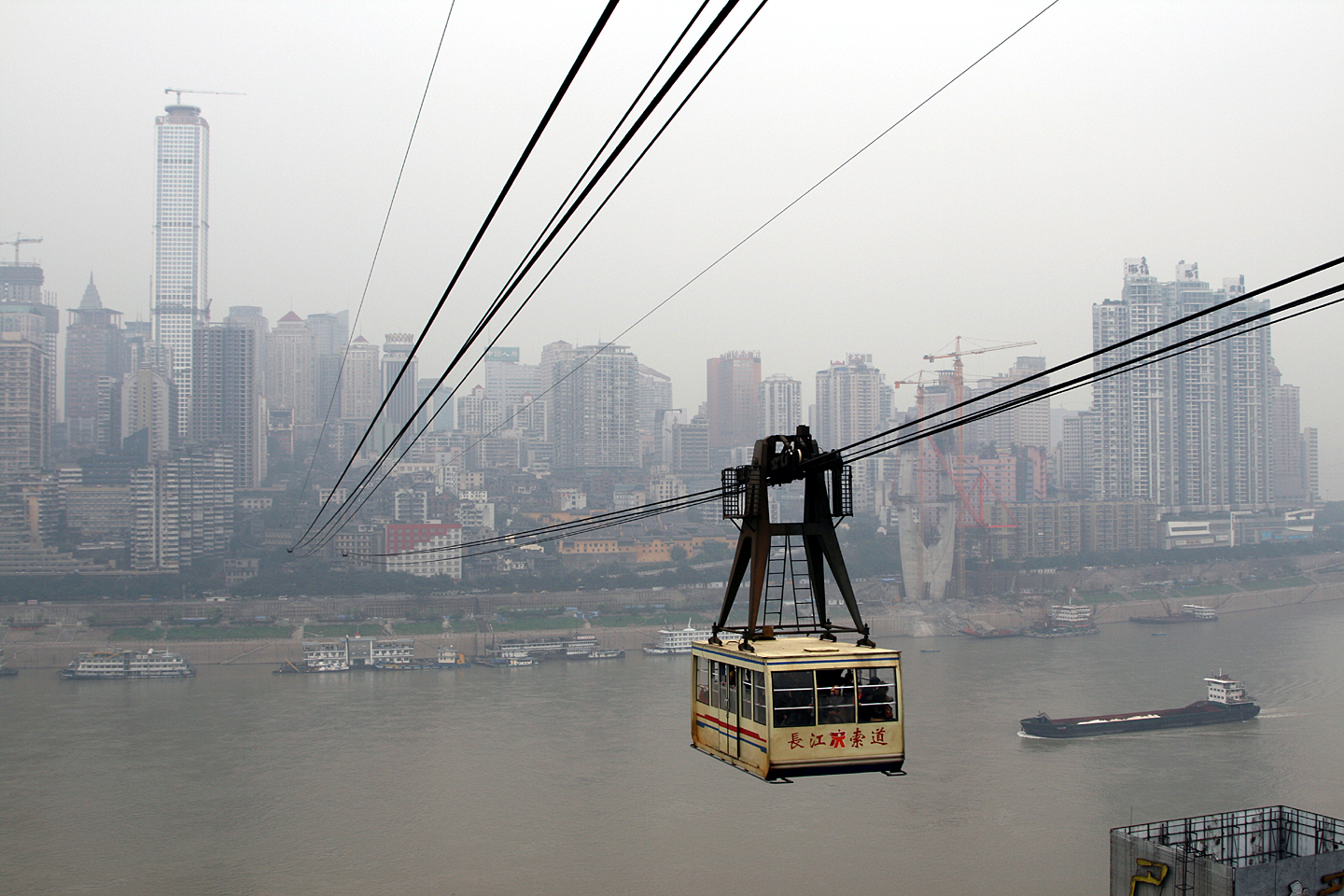
Yangtze River cable car in Chongqing crossing the river between the Yuzhong and Nan'an banks with the city skyline behind Cable car · real transport
Yangtze River cable car
长江索道 · river crossing + city view

The Yangtze Cableway isn't just a tourist ride — locals genuinely use it to cross the river. It glides from the Yuzhong bank to Nan'an in a few minutes, with a high-angle view over the mountain-city skyline. Fares are about ¥20 one-way · ¥30 return. Queues get long at peak times, so you can buy ahead on Klook.

Tip: ride at sunset or after dark for the best city-lights view — though that's also when the queue is longest. See our Yangtze cable car page for details.

Fare: ~¥20 one-way · ~¥30 return · pay by Alipay/WeChat
Stations: Yuzhong side (near Xiaoshizi) ↔ Nan'an side
Hours: roughly 07:30–22:00 · skip the queue with Klook
🚕
DiDi & metered taxis
滴滴出行 / 出租车 · English in the app

DiDi is China's Grab. The app has an English interface, you can type destinations in English, and it links straight to Alipay for payment. It's ideal when the metro has closed for the night or when you're carrying luggage. Metered taxis are cheap too, with a flagfall of about ¥10–11 — low compared with other big Chinese cities.

The mountain-city reality: journeys are often slower than the distance suggests, because roads wind up and down hills, bridges across the rivers jam, and a drop-off point may be on a different level from the map pin. Telling the driver a nearby metro exit or landmark works better than the pin alone — keep your destination in Chinese characters as backup.

DiDi: download before you fly, link Alipay in the app, English UI
Taxi: flagfall ~¥10–11 · metered · small late-night surcharge
Note: hills + bridges = slower than the distance; allow time
The Yangtze River and Chongqing skyline seen from mid-river, with a ferry crossing between the banks River ferry
Riverside ferries
轮渡 · ¥2–5 local river crossing

The commuter ferry (渡轮 dulun) is public transport that Chongqing locals use to cross the Yangtze and Jialing every day. It costs about ¥2–5 per trip. The piers most useful to visitors are Chaotianmen (where the two rivers meet, near Raffles City) and Shibanpo, crossing to the Nan'an bank.

In those few minutes on the water you get an eye-level view of the Chongqing skyline — towers tiered up the hillsides, city lights on the river — for a handful of yuan. Cheaper and more local than the cable car.

Fare: ~¥2–5 per trip · pay by Alipay/WeChat
Main piers: Chaotianmen (朝天门) · Shibanpo (石板坡)
Hours: roughly 06:30–21:00, varies by pier · not a tour boat
🚌
Public buses
公交车 · reaches hill areas the metro can't

Chongqing has hundreds of bus routes that climb into hillside pockets the metro doesn't reach. Fares are around ¥2 per trip, paid with a Yiju card, Alipay, or cash (no change given).

The honest truth: most stops and route numbers are in Chinese only. For visitors, the metro and DiDi are far easier. Buses are best for small hillside hops with no metro nearby — and they're far more usable if you pair them with Amap (Gaode), which has full Chongqing bus data.

Fare: ~¥2 per trip for most routes
Pay with: Yiju card · cash (no change) · Alipay on some routes
Tip: use Amap (Gaode) to plan bus routes
Maps & apps

Which app to use in an 8D city

This matters even more in Chongqing: in mainland China, Google Maps does not show accurate public-transit data, and in a city with roads stacked on multiple levels it's easy to get lost. A map might load with a VPN, but the metro and street-level data will be off. Two apps actually navigate properly here.

🗺️
Amap (高德地图 / Gaode)
The map app most people in China use

Amap has accurate, real-time data for Chongqing's metro, buses and street levels. You can search places in English, it has a dedicated Transit feature for planning routes, and it tells you which station exit matches your destination. Download it from the global App Store — and it works without a VPN.

Tip: download before you fly; app stores inside China need a VPN
🍎
Apple Maps
No extra app for iPhone users

Apple Maps uses Amap's underlying data in China, so its metro and transit information is accurate and it works without a VPN. Ideal for iPhone users who'd rather not install anything extra — even in a vertical city like this, it navigates well.

Note: on Android, full Google Maps won't work; install Amap instead

Want LINE, Instagram, Gmail or full Google Maps while you're in China? You'll need a VPN downloaded and tested before you travel, since most VPN websites are blocked inside the country. See the China internet & VPN guide for what to set up.

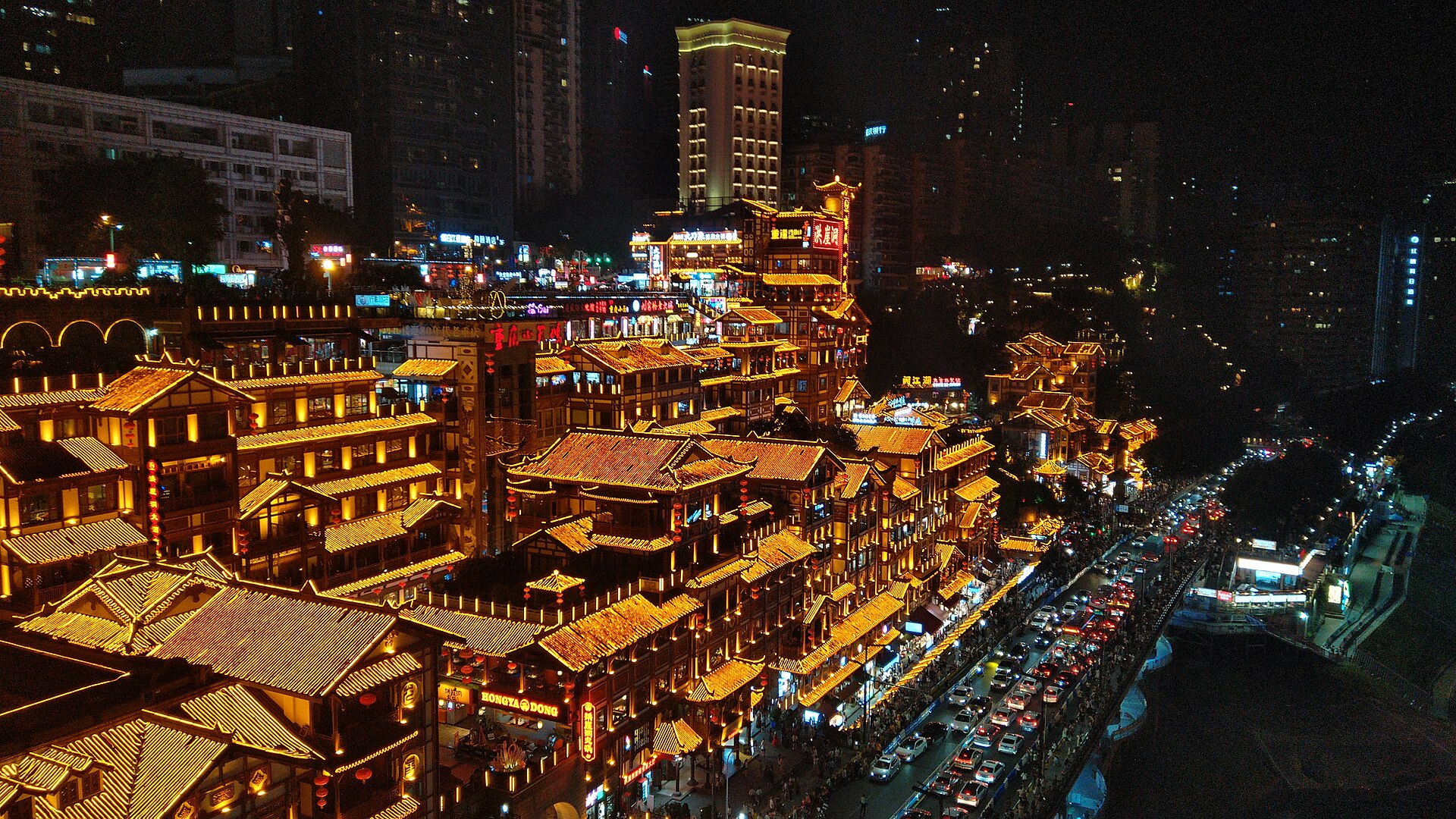
Hongyadong in Chongqing at night, its tiered stilt-house buildings lit in golden light beside the Jialing River
Chongqing after dark at Hongyadong — if you're out late, check the last-train time first and save DiDi as a backup.
Real-world tips

Know these three things and Chongqing gets easy

One — set up Alipay Transport QR before you go. Download Alipay, link a Visa or Mastercard through its international mode, then open "Transport" and select Chongqing to try it out. When you land, you won't be scrambling at the airport — just open the app, scan the QR at the gate and walk through. The same app pays for the cable car, ferries, DiDi and meals.

Two — make peace with multi-level exits. This is what trips people up most in Chongqing. The platform isn't the street, and each exit emerges on a different floor of the city. Before leaving a station, check Amap for which exit your destination is on and follow the numbered signs — don't guess. At deep stations like Hongtudi and Liyuchi, allow 3–5 minutes for the escalator climb.

Three — some lines are a sightseeing trip in themselves. The Line 2 monorail runs beautifully along the Jialing River, especially the Liziba–Eling stretch. If you have time, ride it end to end for a free, full-length city view — count it as an activity in its own right.

First time in Chongqing: Jiangbei Airport (CKG) is north of the city. You can reach the centre by metro Line 3 (¥2–9) from T2 or Line 10 (¥2–5) from T3, roughly 50–70 minutes; Line 3 passes Guanyinqiao with a transfer onward to Jiefangbei. A taxi or DiDi runs ~¥60–90 and takes 40–50 minutes. See the full Chongqing airport transfer guide, and pick where to stay in the 10 best-reviewed Chongqing hotels.
Frequently asked

FAQ · Getting around Chongqing

What are the Chongqing metro hours?
Most lines run from around 06:30 to roughly 22:30–23:00, but the exact closing time varies by line and direction. Last trains leave terminus stations well before closing. Check the last-train time for your return line in a map app before a late night out — in a mountain city, hailing a taxi at midnight can take longer than on flat ground.
How do I pay for the Chongqing metro?
Three main ways: (1) Alipay QR — open the app, tap Transport, choose Chongqing, scan at the gate; fastest for tourists. (2) WeChat Pay — same idea via a mini-program. (3) Single-journey token from a station machine, which has an English menu and takes coins and notes. The Yiju card (渝畅行) or the Chongqing Metro app suits longer stays. Fares are ¥2–12 by distance. Set up Alipay before you travel — see the Alipay & WeChat Pay guide.
Why are Chongqing metro stations so deep, and where is the exit?
Chongqing is an 8D mountain city, so many stations are bored deep into the hillside — Hongtudi and Liyuchi on Line 10 are the deepest in China, with long escalators and lifts. The platform level is often not the street level you expect, and each exit can emerge on a different "floor" of the city: some on a clifftop, some mid-tower, some down by the river. Before leaving a station, follow the numbered exit signs (Exit A/B/C) and check Amap for which exit and which ground floor your destination is on.
Can you really ride the Line 2 monorail through the Liziba building?
Yes. Liziba station (李子坝) on Line 2 sits on floors 6–8 of a 19-storey residential building, and the monorail genuinely runs straight through the middle of it. It works as both transport and a famous sight — just ride Line 2 and get off at Liziba. To photograph the train from outside, head to the viewing deck below the building near the Jialing River. See our Liziba monorail page for details.
Can I use Google Maps in Chongqing?
Google Maps can display a basic map (with a VPN), but its public transit data for mainland China is unreliable — and in a city with roads stacked on multiple levels it gets things wrong easily. Use Amap (Gaode / 高德地图) or Apple Maps instead; both have accurate metro and street-level data and neither needs a VPN.
Can you use the Yangtze cable car as transport, and what does it cost?
Yes. The Yangtze River Cableway (长江索道) is both a river crossing and a viewpoint, running between the Yuzhong and Nan'an banks for about ¥20–30 per trip. The commuter ferries (轮渡) at Chaotianmen and Shibanpo cost roughly ¥2–5 and are what locals actually use, running about 06:30–21:00. Both give you an eye-level view of Chongqing's skyline for very little money.