Chongqing is a city of weather extremes — a humid mountain basin where summer is one of China's "Three Furnaces", winter is the famous "Fog City", and spring and autumn are the golden windows in between. This guide tells you straight which month is worth your trip.
If you can only pick one month, pick October. Temperatures sit at a comfortable 16–22°C, rainfall is at its lowest, and — crucially — it is one of the few stretches when Chongqing's fog thins enough to actually see the famous 8D vertical city: the skyscrapers stacked in layers above two rivers, sharp and clear. The one catch: arrive after October 7. The first week is China's National Day Golden Week, when hundreds of millions of domestic travellers move at once and hotel prices peak.
If October doesn't fit, April runs it close — 15–24°C, fresh green hillsides, and far thinner crowds than autumn. Summer (June–August) and winter (December–February) each have their appeal, but you trade for it: searing heat in one, thick fog in the other.
The weather, what it delivers, and what you are trading for it — told straight.
Eling Park · Spring
Great
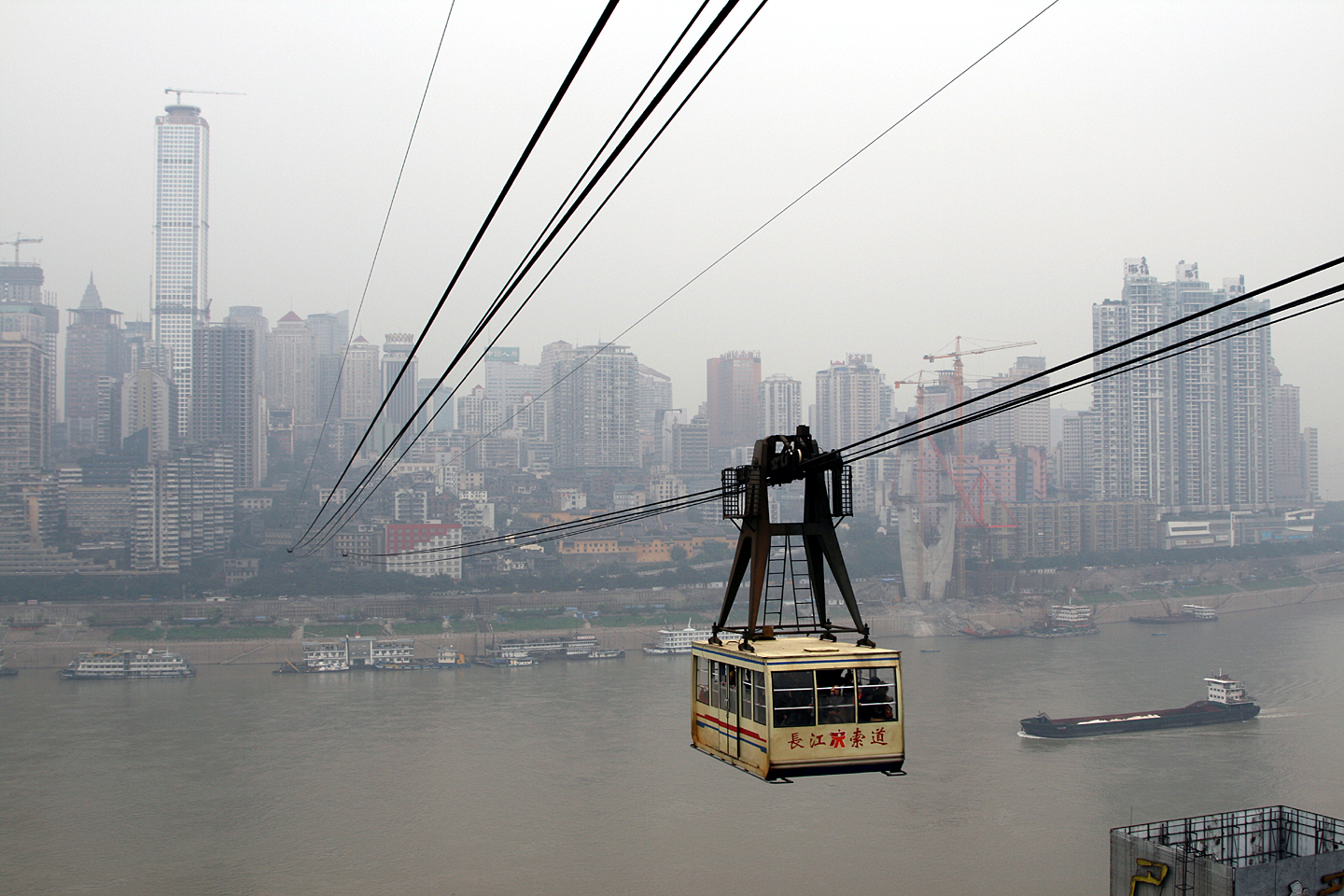
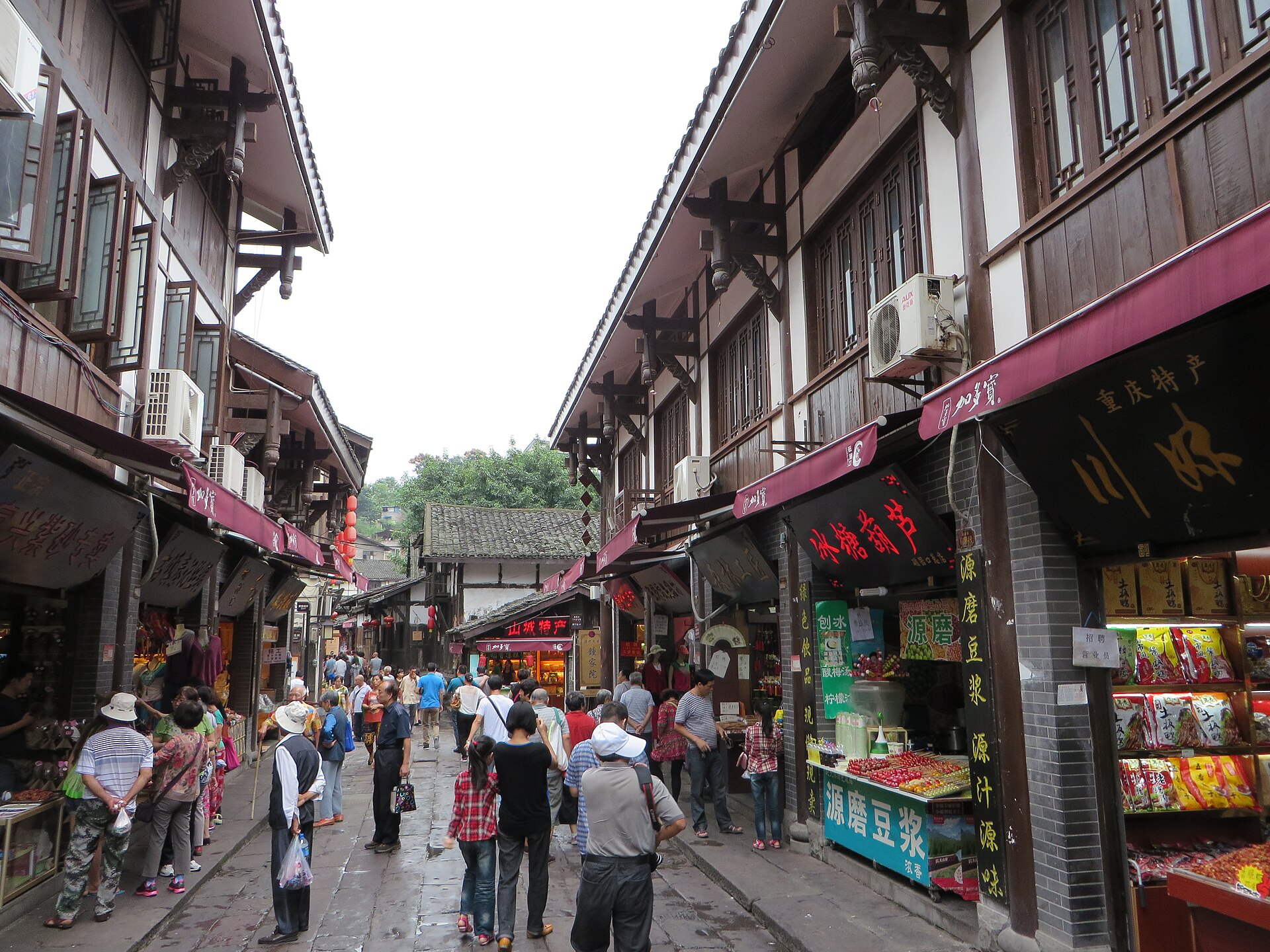
Chongqing's second-best season after autumn. The weather is mild and warms gradually from March through May, the hillsides green up, and parks like Eling and the approaches to the Yangtze cableway are pleasant to walk. The winter fog begins to lift, so views open up — making spring a good time to combine the city with a Yangtze cruise to the Three Gorges.
May climbs to 19–27°C and is still comfortable, though rain picks up towards the end of the month and the Labour Day Golden Week (1–5 May) brings a rush of domestic travellers.
Hongyadong · Summer
Come prepared
This is why Chongqing earns its nickname — one of China's Three Furnaces (火炉). In July and August daytime highs routinely reach 38–40°C (and hit 43°C in 2022). Humidity above 70% makes it feel considerably hotter than the thermometer reads. June is the wettest month of the year, with frequent thunderstorms. Daytime sightseeing is genuinely hard work.
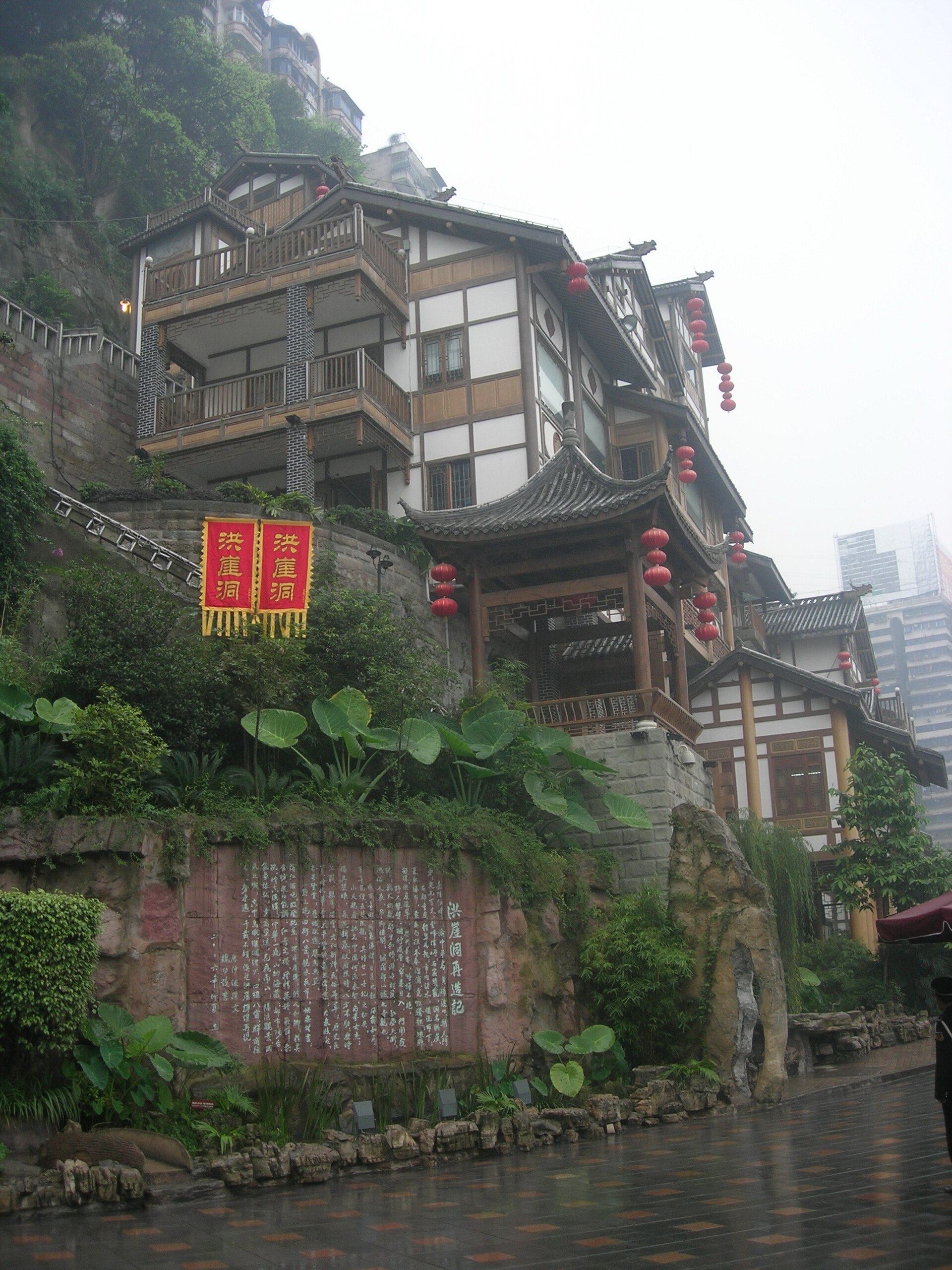
It isn't a write-off, though — just adjust the rhythm. Do your outdoor exploring early morning or after sundown, and retreat to air-conditioned malls and museums in the heat of the day. Once evening comes, Hongyadong lights up, the air cools, and you can eat riverside hotpot in comfort — exactly as the locals do, sweating cheerfully through it all year round.
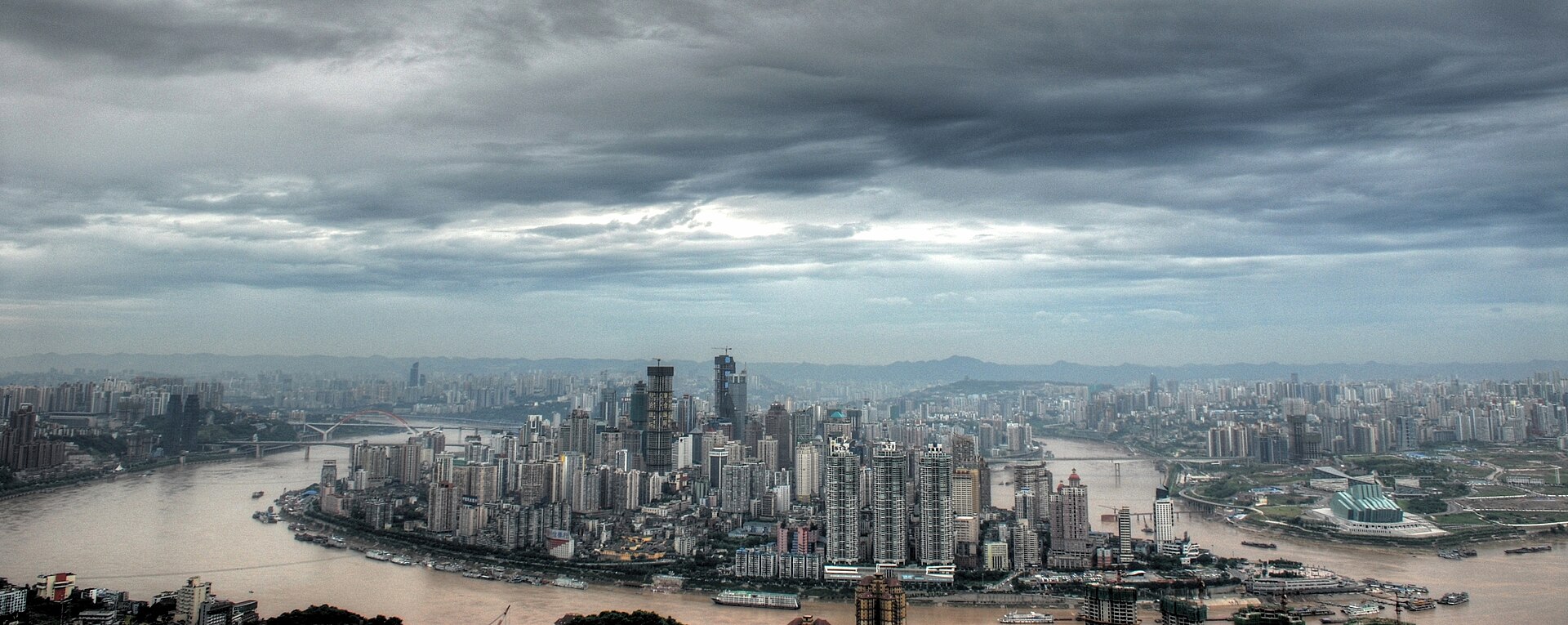
Chongqing skyline · Autumn
The best
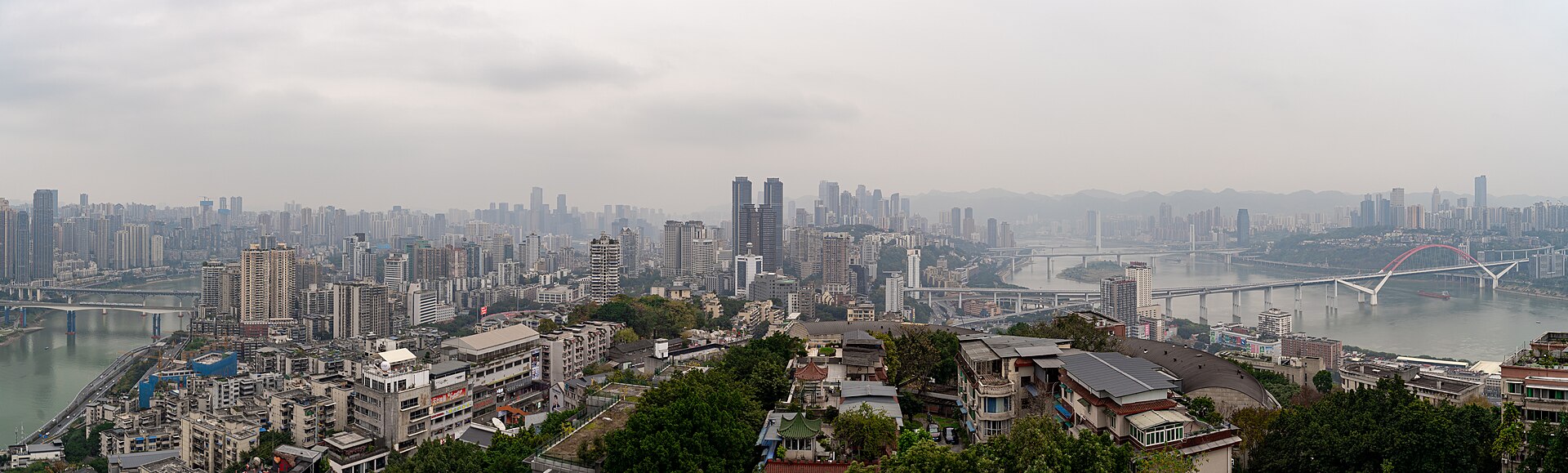
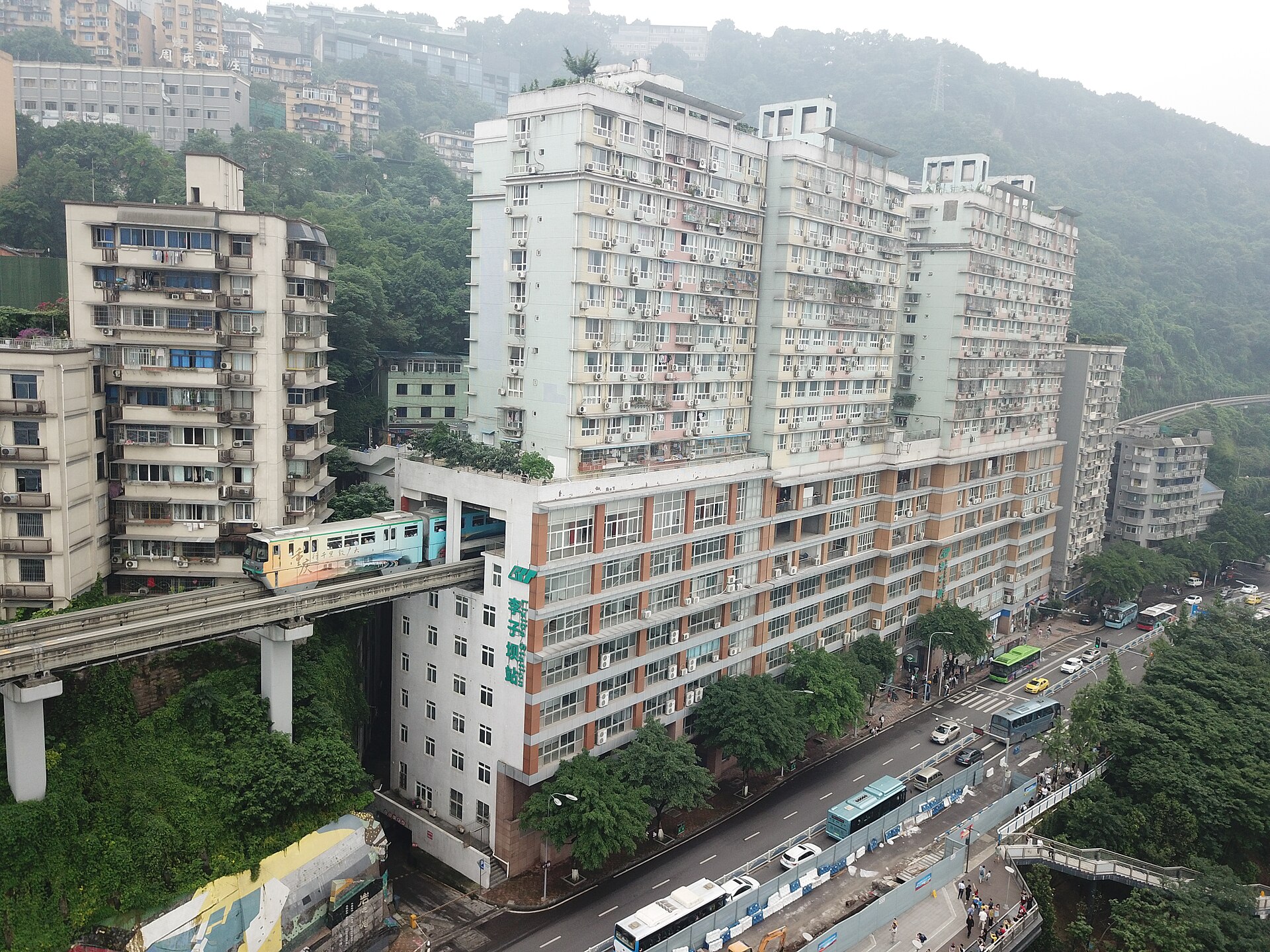
This is Chongqing at its finest. The summer heat breaks, the air turns cool and comfortable, rainfall drops sharply — and, most importantly, early September to early October is one of the few periods when the fog is thin enough to see the 8D vertical city clearly. The towers stacked above the two rivers are pin-sharp. You can walk Jiefangbei, Hongyadong and the Liziba train-through-a-building all day without flagging.
Late October into November cools further and the leaves begin to turn — this is the opening of the Yangtze cruise season for autumn foliage in the gorges. Be aware, though, that the fog starts returning in November; some days turn flat and grey all day.
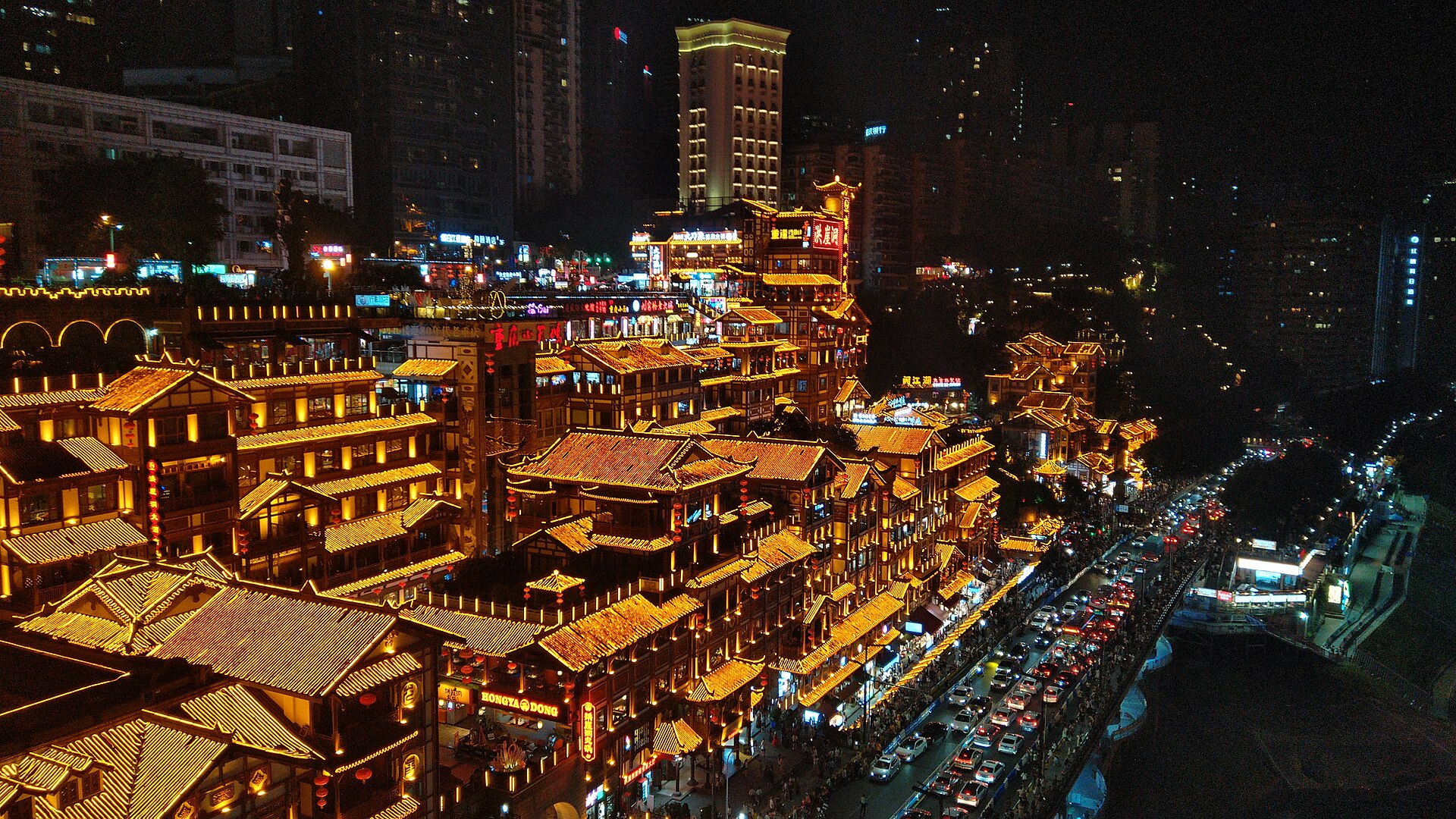
Hongyadong · Winter
Its own kind of charm
Chongqing winters are not as bitter as northern China — averages run 6–13°C — but high humidity and river wind make it feel colder than the numbers suggest. The defining feature is fog: this is the "Fog City" (雾都), with around 104 foggy days a year. From November through February the sun is rarely seen, skies are mostly flat and grey, and city views are often veiled.
The upside is real: few tourists, the lowest hotel prices of the year (outside Chinese New Year), and the fog actually lends the riverside light shows an atmospheric, mysterious glow. Steaming hotpot pairs perfectly with the cool air. Chinese New Year (late January or February) is festive but expensive, with many small shops closing for one to two weeks.
Temperature, rainfall, crowds and the verdict — in one table for easy comparison.
| Month | Temperature | Rain | Crowds | Verdict |
|---|---|---|---|---|
| January | 5–10°C | Low | Low | Cold, damp, foggy · cheapest hotels |
| February | 7–13°C | Low | High (CNY) | Chinese New Year — shops close, crowds · still foggy |
| March | 11–18°C | Moderate | Moderate | Fog lifting · weather warming up |
| April | 15–24°C | Moderate | Moderate | Excellent weather · Yangtze cruise season opens |
| May | 19–27°C | Moderate–heavy | High (Golden Week) | 1–5 May: Labour Day crowds · rain building |
| June | 22–29°C | Heavy (wettest) | Moderate | Rainiest month · frequent thunderstorms |
| July | 25–34°C | Heavy | Moderate | Furnace heat · can reach 40°C |
| August | 25–34°C | Moderate–heavy | High (holidays) | Hottest, most humid · busy domestic season |
| September | 21–28°C | Moderate | Moderate | Heat eases · weather improves quickly |
| October | 16–22°C | Low | High (Golden Week) | 1–7 Oct: peak crowds · after 8th: best of the year |
| November | 11–17°C | Low | Moderate | Autumn foliage in the gorges · fog returning |
| December | 7–12°C | Low | Low | Cool, foggy · low prices, beautiful night lights |
Figures are typical monthly high–low ranges drawn from multi-year climate data; any given year may differ. Check the forecast before you travel.
China's national holidays generate the largest annual human movements on Earth. Here is what that means for your trip.
China's largest holiday. Hundreds of millions of people travel to their home towns and tourist spots at once, and Chongqing is home to a huge number of them. The atmosphere is genuinely festive — lanterns, celebrations, colourful crowds. But hotels charge peak prices, small restaurants and local shops close for 7–14 days, and trains and flights book out weeks ahead. To experience the festival itself, plan everything well in advance. For a normal trip, pick a different time.
China's second major holiday window. Domestic tourism surges; honeypots like Hongyadong and the Liziba monorail become difficult to walk through, and queues for the Yangtze cableway grow long. Hotels fill and prices rise by 30–60%. If you must travel during this period, book accommodation 6–8 weeks ahead and brace for the crowds.
The largest Golden Week of the year — hundreds of millions of domestic trips occur in this single week, and Chongqing is one of the country's hottest destinations. Hongyadong and the major viewpoints become so crowded that walking slows to a shuffle, and hotel prices hit their annual peak. The weather is excellent, though, so if you book well ahead and accept the crowds it's not impossible — or simply wait for 8–31 October, when the weather stays just as good but the crowds thin noticeably.
These are reasons to time your visit, not reasons to avoid it.
Chongqing is the main departure port for Yangtze cruises down to the Three Gorges. April–May and September–November bring the best conditions — mild weather, low rainfall and clear gorge views. Autumn foliage in the Wu and Qutang gorges peaks from late October to early December. Winter cruises cost roughly half as much and the water runs clear, but it's colder and foggier. See our full Three Gorges cruise guide
Chongqing is a city that looks better after dark — the riverfront towers light up together and Hongyadong glows gold like a scene from an anime. The best part is that it doesn't depend on the season and isn't spoiled by the fog that veils the daytime views. Even in grey midwinter, the river at night is dazzling. Ride the Yangtze cableway or take a night cruise for the finest angles. Read about Hongyadong
Chongqing hotpot has no real season — locals eat it all year, even sweating through it in summer. But if you're choosing, the fiery beef-tallow broth pairs best with the cool air of autumn and winter. Pulling up a stool at a streetside joint on a November or December evening is exactly the kind of thing Chongqingers love. See our Chongqing hotpot guide
Not exhaustive — just the things that actually matter for Chongqing.
Whatever month you arrive, this 8D city always has something worth seeing.